European Union
Meet Poland’s out gay lawmaker fighting for LGBTQ rights
‘We are the most homophobic country’ in Europe
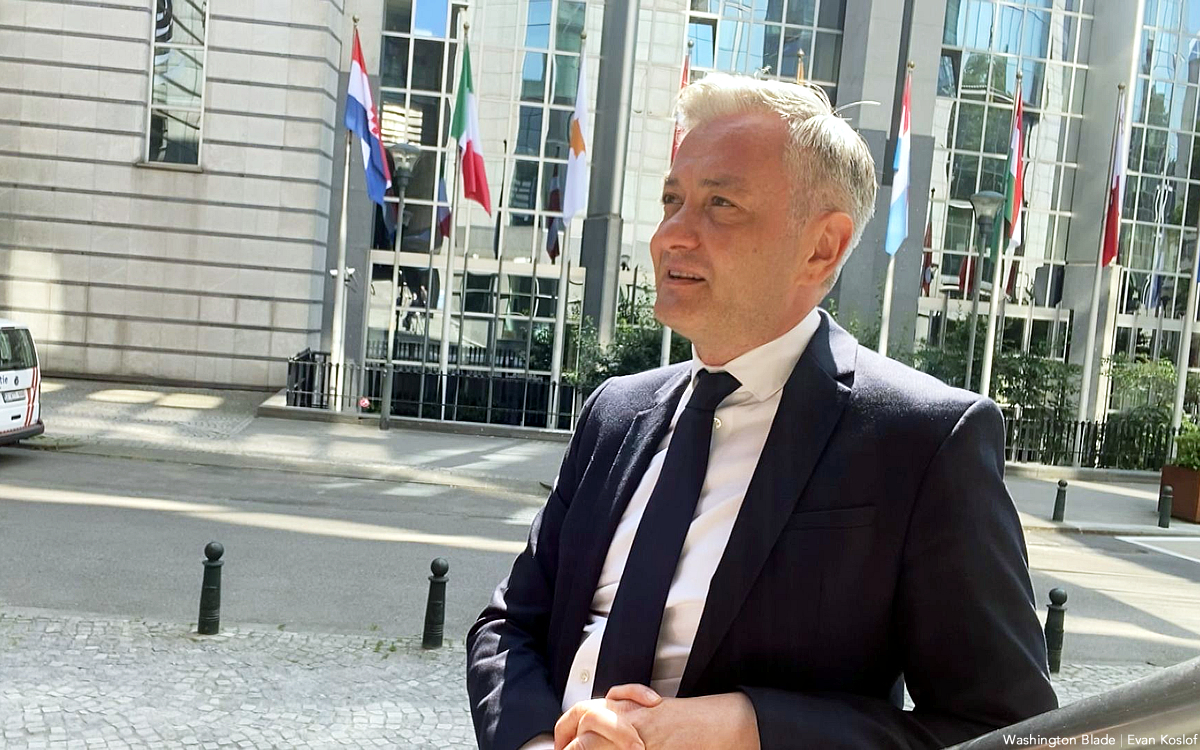
BRUSSELS — Speaking with the Washington Blade outside of the European Parliament building here, Polish lawmaker Robert Biedroń was quick to smile and exuded an unassuming confidence. The openly gay leader has become a well-known figure in the LGBTQ movement in Poland, even as the ruling party has gained international headlines for its anti-LGBTQ stances.
Biedroń grew up in the small southeast city of Krosno, about 80 miles from the Ukrainian border, where he said he struggled to find others who were like him. He said he did not know of a single gay person in his village.
“I was growing up in an area where there was a lot of forest,” he said. “And I had the chance to meet wolves, birds, and foxes. But never any gays.”
Eventually though, Biedroń found books about the LGBTQ experience, and learned of others who were living freely and openly. This opened his eyes and set the course for his career and life.
“The day I found out that there are people who are like me — who can live with dignity,” he said. “This was the day that I knew I’m unstoppable. And nothing will stop me from this fight.”
His home country stands out among European Union countries when it comes to LGBTQ policies. A May ranking by ILGA-Europe, placed Poland at the bottom of the EU, and 42nd of the 49 countries in Europe.
Same-sex couples cannot legally marry in Poland and Article 18 of the Polish Constitution defines marriage as “a union of a man and a woman.” During the 2020 presidential election, leaders of the ruling Law and Justice (PiS) Party made headlines, calling LGBTQ identity an imported “ideology.” During this timeframe, various local and regional governments in Poland established primarily symbolic “LGBT Ideology-Free Zones,” which were condemned by the EU.
“We are the most homophobic country on the map of Europe in the EU,” said Biedroń.
Poland is one of the most conservative countries in the European Union and is heavily Catholic. According to the U.S. State Department, roughly 85 percent of the country identifies as Roman Catholic.
Public opinion has lagged behind Western Europe when it comes to support of the LGBTQ community. Forty-seven percent said “homosexuality should not be accepted by society,” when the Pew Research Center conducted a poll, in between 2015 and 2016.
Despite all this, Biedroń, decided to enter activism, co-founding the Campaign Against Homophobia in 2001.
“Because I have only one life,” he said. “There is no other chance. If I wanted to live in dignity — if I wanted to live my full life — I had to do it. Because nobody else would do it. Besides I knew I’m the ‘only gay in the village.’ The wolves and birds will not fight for my life.”
After years of activism, Biedroń decided to enter politics. In 2011, he became the first openly gay member in the Sejm, the lower House of the Polish Parliament. In 2014, he became the first openly gay mayor in the country, taking the top leadership role in the northwest city of Słupsk.
Then in 2019, he founded a new political party called Spring “Wiosna,” which won more than six percent in the European elections. This election sent Biedroń into the European Parliament, as the first openly gay member from Poland.
“The thing I want to achieve,” he said. “Is that at the end of my life, I will say I’ve done everything to be happy. And if this could help other people it will multiply by millions my happiness.”
Poles are set to cast their votes in parliamentary elections this fall. A coalition led by the PiS currently has the majority in the Sejm. Aaron Korewa, the director of the Warsaw office at The Atlantic Council, said that the Sejm is the dominant chamber in Poland.
“It’s whoever wins the majority in the lower house, in the Sejm, that forms a government with a prime minister,” he said.
Biedroń’s domestic political party is called “The Left,” or “Lewica,” although Korewa said that this is not currently a major party. He said the two dominant parties are the PiS, which formed under an alliance called the “United Right,” and the (CO) “Civic Platform” Party.
Korewa said that these parties are dominated by two strong central figures, Jaroslaw Kaczyński from the PiS and Donald Tusk, from the CO.
“It’s basically Donald Tusk and Jaroslaw Kaczyński having at it again for the future of the country,” he said.
Poland does not have a presidential election until 2025. In 2020, Biedroń ran for president, garnering just over 2 percent of the vote. Biedroń remained coy when asked about his intentions to run for president again in the future.
“Of course it’s good to be a president,” he said. “It’s good to be a member of the parliament. But at the end of the day, the best is to be happy. And that’s what I’m fighting for.”
Biedroń’s fight in Brussels and Warsaw might seem far away from those in the United States, but the lawmaker argued that LGBTQ advocates should not become complacent.
“Democracy, human rights, rule of law,” he said, “they’re like beautiful flowers. You need to water them every day. Otherwise, they fade away. And this is the Polish reality of today.”



Bulgaria
Top EU court issues landmark transgender rights ruling
Member states must allow name, gender changes on ID documents
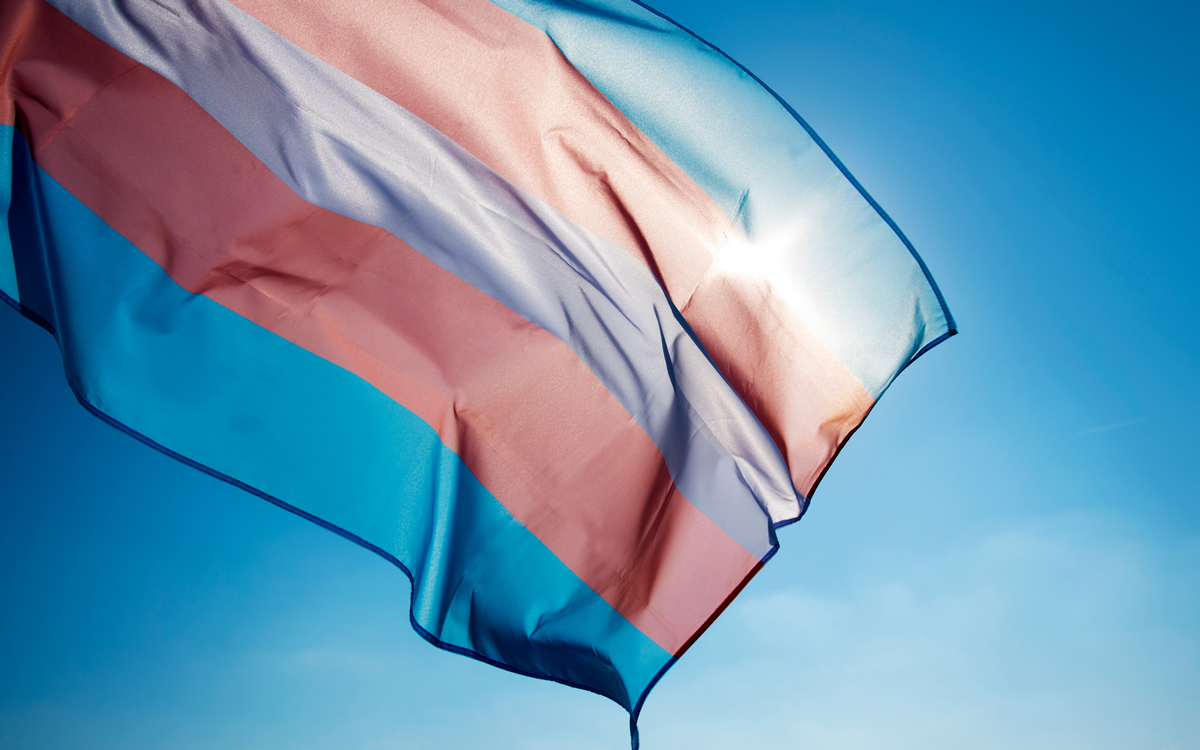
The European Union’s highest court on Thursday ruled member states must allow transgender people to legally change their name and gender on ID documents.
The EU Court of Justice in Luxembourg issued the ruling in the case of “Shipova,” a trans woman from Bulgaria who moved to Italy.
“Shipova” had tried to change her gender and name on her Bulgarian ID documents, but courts denied her requests for nearly a decade.
A ruling the Bulgarian Supreme Court of Cassation issued in 2023 essentially banned trans people from legally changing their name and gender on ID documents. Two Bulgarian LGBTQ and intersex rights groups — the Bilitis Foundation and Deystvie — and ILGA-Europe and TGEU – Trans Europe and Central Asia supported the plaintiff and her lawyers.
“Because her life in Italy also depended on her Bulgarian documents, the lack of documents reflecting her lived gender creates an obstacle to her right to move and reside within EU member states,” said the groups in a press release. “This mismatch between her gender identity and expression and her gender marker in her official documents leads to discrimination in all areas of life where official documents are required. This includes everyday activities such as going to the doctor and paying for groceries by card, finding employment, enrolling in education, or obtaining housing.”
Denitsa Lyubenova, a lawyer with Desytvie, in the press release said the case “concerns the dignity, equality, and legal certainty of trans people in Bulgaria.” TGEU Senior Policy Officer Richard Köhler also praised the ruling.
“Today, the EU Court of Justice has taken an important step towards a right to legal gender recognition in the EU,” said Köhler. “Member states must allow their nationals living in another member state to change their gender data in public registries and identity cards to ensure they can fully enjoy their freedom of movement. National laws or courts cannot stand in their way.”
“Thousands of trans people in the EU are breathing a sigh of relief today,” added Köhler.
European Union
European Parliament resolution backs ‘full recognition of trans women as women’
Non-binding document outlines UN Commission on the Status of Women priorities
The European Parliament on Feb. 11 adopted a transgender-inclusive resolution ahead of next month’s U.N. Commission on the Status of Women meeting.
The resolution, which details the European Union’s priorities ahead of the meeting, specifically calls for “the full recognition of trans women as women.”
“Their inclusion is essential for the effectiveness of any gender-equality and anti-violence policies; call for recognition of and equal access for trans women to protection and support services,” reads the resolution that Erin in the Morning details.
The resolution, which is non-binding, passed by a 340-141 vote margin. Sixty-eight MPs abstained.
The commission will meet in New York from March 10-21.
A sweeping executive order that President Donald Trump signed shortly after he took office for a second time on Jan. 20, 2025, said the federal government’s “official policy” is “there are only two genders, male and female.” The Trump-Vance administration has withdrawn the U.S. from the U.N. LGBTI Core Group, a group of U.N. member states that have pledged to support LGBTQ and intersex rights, and dozens of other U.N. entities.
European Union
Top EU court: Poland must recognize same-sex marriage from other European countries
Activists celebrate landmark decision
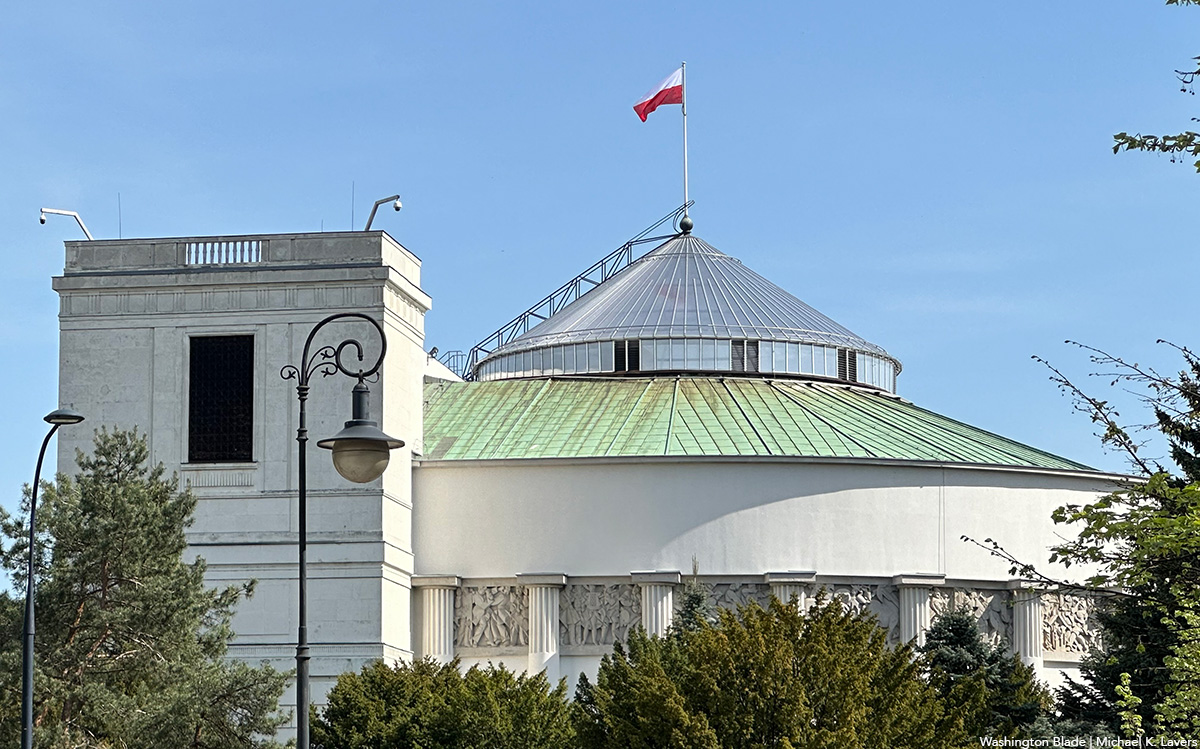
The European Union’s top court on Tuesday ruled member states must recognize same-sex marriages legally performed in other member states.
The EU Court of Justice in Luxembourg ruled in favor of a couple who challenged Poland’s refusal to recognize their German marriage.
ILGA-Europe notes Polish authorities refused “to transcribe into the civil register a certificate of same-sex marriage concluded” in Germany “between a Polish citizen and a Polish-German citizen … on the grounds that Polish law does not allow same-sex marriage.”
The couple who lives in Poland brought their case to Polish courts. The Polish Supreme Administrative Court referred it to the EU Court of Justice.
“Today’s ruling of the Court of Justice of the EU is of key importance not only for the couple involved in the case, but also for the entire LGBT+ community in Poland,” said the Campaign Against Homophobia, a Polish LGBTQ and intersex rights group, in response to the decision. “It clearly states that refusing to transcribe a marriage concluded abroad is incompatible with EU law. Therefore, regardless of the absence of registered partnerships and marriage equality, Poland must ensure the possibility of effective transcription.”
“With this judgment, the CJEU clearly states that the recognition of marriage status is key to enjoying EU citizens’ fundamental right to freedom of movement across the EU,” added ILGA-Europe Advocacy Director Katrin Hugendubel. “The EC now needs to ensure that this judgment is implemented quickly by the Polish state and across the EU.”
Sixteen EU countries — Ireland, Portugal, Spain, France, Luxembourg, Belgium, the Netherlands, Germany, Denmark, Austria, Slovenia, Malta, Greece, Sweden, Finland, and Estonia — have extended full marriage rights to same-sex couples. Poland, Romania, Bulgaria, and Slovakia are the EU countries with no legal recognition of same-sex couples.

Risking it all for love during World War II

Surviving spring cleaning

Iconic Eddie Izzard takes on 23 characters in ‘Hamlet’

How Pepper the courthouse dog helps victims of abuse

Women’s FEST returns to Rehoboth Beach next week

Kristi Noem ‘devastated’ as husband’s alleged fetish spending surfaces

D.C.’s affirming congregations to mark Holy Week, Easter

Glisten report details hostile climate for LGBTQ students

Supreme Court ruling against conversion therapy bans could affect Md. law

VIDEO: Gay journalist detained for booing Trumps at ‘Chicago’ opening night
-

 The White House4 days ago
Kristi Noem ‘devastated’ as husband’s alleged fetish spending surfaces
-
Local5 days ago
D.C.’s affirming congregations to mark Holy Week, Easter
-
Research/Study4 days ago
Glisten report details hostile climate for LGBTQ students
-
Maryland4 days ago
Supreme Court ruling against conversion therapy bans could affect Md. law