Sports
US eliminated from Women’s World Cup
Team USA loses in penalty kick shootout
Sweden’s superior goalkeeper, three missed penalty shots by Team USA and technology called the “Video Assistant Referee” combined to eliminate the Americans from the FIFA Women’s World Cup Sunday.
Sweden defeated the world’s top-ranked team, 5-4, on penalties after a scoreless draw in the round of 16, the first round of the knockout stage. The stunning result of their best performance so far in this tournament shocked the U.S. women, who had never finished worse than third at any previous World Cup.
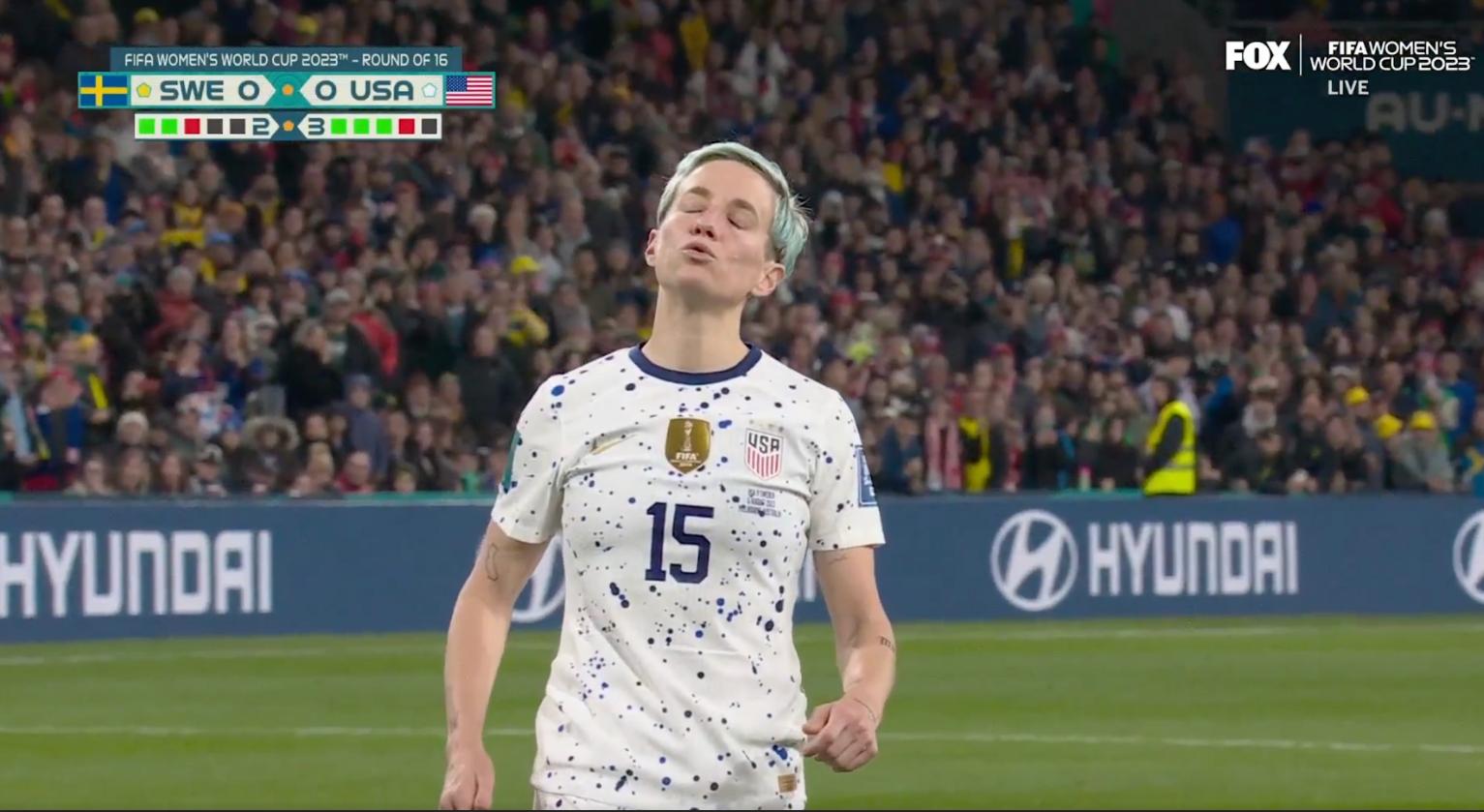
“This is like a sick joke,” said Megan Rapinoe, 38, as she reflected on what she’s said will be her final World Cup game. “For me personally, this dark comedy. I missed a penalty.”
When Rapinoe’s critical shot went over the crossbar, her immediate reaction was to hang her head and laugh at herself, before rejoining her teammates in tears.
Rapinoe misses the fourth!
🇺🇸:✅✅✅❌
🇸🇪:✅✅❌ pic.twitter.com/RVbhQoclla— FOX Soccer (@FOXSoccer) August 6, 2023
Then Sophia Smith went way wide, and Kelley O’Hara’s shot hit the post.
The deciding goal by Lina Hurtig was so close, the referees had to turn to technology to determine if it was good.
Goalkeeper Alyssa Naeher, who scored a penalty against Sweden’s goalkeeper Zecira Musovic of Chelsea for Team USA in the shootout, thought she had saved the game and extended it to an extra penalty kick period when she swatted Hurtig’s shot up and away from the net. But VAR showed the ball had fallen back down, just barely over the goal line, and all the way over, as is required by the rules.
Alyssa Naeher nearly kept it out 🧤 pic.twitter.com/DjpatlgCKD
— FOX Soccer (@FOXSoccer) August 6, 2023
“We just lost the World Cup by a millimeter,” said Naeher. “That’s tough… We had great chances, hats off to the Swedish goalkeeper for a number of great saves on her end to keep it at 0-0. I’m proud of the battle, proud of the group. We showed that American mentality again that’s been standard for this team. To come up short hurts, it’s going to hurt for a long time.”
As Naeher said, the match was scoreless through 90 minutes of regulation and 30 minutes of extra time, and Team USA came close so many times, especially when Alex Morgan, their leading goal scorer, was in control. But Musovic stood in her way as well as against Trinity Rodman and Lindsey Horan.
“I’m devastated, it feels like a bad dream,” said Morgan. “I feel like we dominated tonight but it doesn’t matter… we are going home, it’s the highs and lows of the sport of soccer.”
“I thought we played really well,” Rapinoe said. “I’m so happy for us that we went out like that, playing the way that we did, and having a ton of joy on the ball.”
But their biggest joy went unfulfilled. Rapinoe had gone into the tournament hoping to win her second World Cup, a third consecutive title for her team.
Sunday’s match was historic on multiple levels. No other team has dominated the World Cup like the U.S Women’s National Team. The Americans boast four titles in their trophy cabinet, the most by any women’s soccer team. And up until this game, in every World Cup appearance, the USWNT has managed to at least secure a spot in the semifinals. Their loss marks the earliest exit by the USWNT at any major tournament, having reached the semifinals at all but one World Cup and Olympics. In an eerie coincidence, it was at the 2016 Olympics in Rio that the USWNT lost on penalties to Sweden.
This was also the first 2023 World Cup game to go to extra time. Until Sunday, no 2023 World Cup game had gone to penalty kicks. And it took a seventh round of penalties to determine the winner.
So now the Americans head home and to their respective clubs, while Sweden advances to play Japan in a quarterfinal Friday in Auckland, New Zealand.
“This is the balance to the beautiful side of the game,” said Rapinoe after the match. “I think it can be cruel and, not our day, but I still feel really grateful and joyful and…” The out lesbian icon’s voice cracked as she paused to sum up her feelings to a Fox Sports reporter.
“I know it’s the end, and that’s sad, to know this is the only time I’ve been in one of these, this early, says so much about how much success I’ve been able to have, and just how much I’ve loved playing for this team and playing for this country. It’s been an honor.”
Rapinoe then wiped away tears, calling their victory to win equal pay, “changing the world forever” — as well as the teammates she’s played alongside — that is what has meant the most to her.
The USWNT thanked fans on social media and First Lady Jill Biden shared a message of thanks to Team USA.
— U.S. Women’s National Soccer Team (@USWNT) August 6, 2023
.@USWNT, you made this sport matter.
Today, you inspired us with your grit and determination. We are proud of you. Always remember that you encourage women and girls everywhere to show up and fight for their dreams. 💕 https://t.co/1vIkTaZ45n
— Jill Biden (@FLOTUS) August 6, 2023





Sports
New IOC policy bans trans women from Olympics
New regulation to be in effect at 2028 summer games in Los Angeles
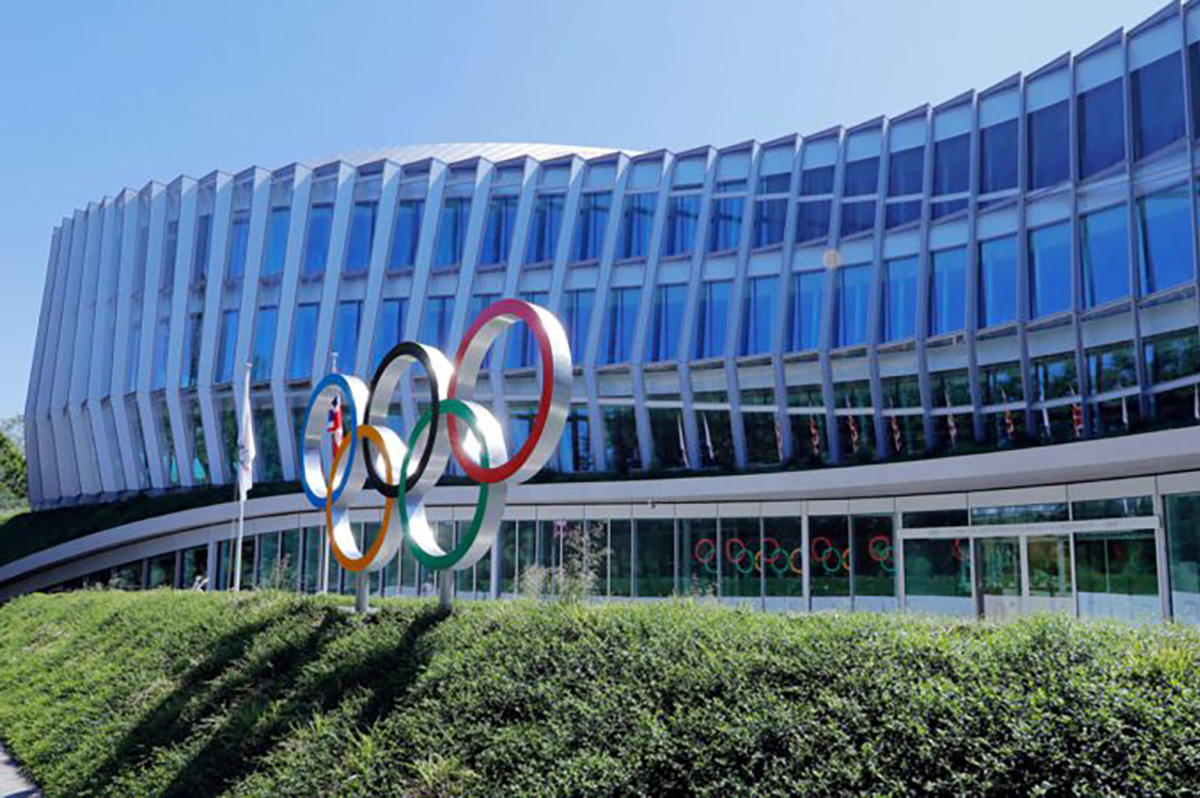
The International Olympic Committee on Thursday announced it will not allow transgender women from competing in female events at the Olympics.
“For all disciplines on the Sports Program of an IOC event, including individual and team sports, eligibility for any Female Category is limited to biological females,” reads the new policy.
The policy states “eligibility for the Female Category is to be determined in the first instance by SRY Gene screening to detect the absence or presence of the SRY Gene.”
“On the basis of the scientific evidence, the IOC considers that the SRY (sex-determining Region Y) Gene is fixed throughout life and represents highly accurate evidence that an athlete has experienced or will experience male sex development,” it reads. “Furthermore, the IOC considers that SRY Gene screening via saliva, cheek swab or blood sample is unintrusive compared to other possible methods. Athletes who screen negative for the SRY gene permanently satisfy this policy’s eligibility criteria for competition in the Female Category.”
The policy states the test “will be a once-in-a-lifetime test” unless “there is reason to believe a negative reading is in error.”
The new regulation will be in place for the 2028 Summer Olympics in Los Angeles.
“I understand that this a very sensitive topic,” said IOC President Kirsty Coventry on Thursday in a video. “As a former athlete, I passionately believe in the rights of all Olympians to take part in fair competition.”
“The policy that we have announced is based on science and it has been led by medical experts with the best interests of athletes at its heart. The scientific evidence is very clear: male chromosomes give performance advances in sport that rely on strength, power, or endurance,” she added. “At the Olympic Games, even the smallest margins can be the difference between victory and defeat. So, it is absolutely clear that it would not be fair for biological males to compete in the female category. In addition, in some sports it would simply not be safe.”
(Video courtesy of the IOC)
Laurel Hubbard, a weightlifter from New Zealand, in 2021 became the first trans woman to compete at the Olympics.
Imane Khelif, an Algerian boxer, won a gold medal at the 2024 Summer Olympics in Paris. Khelif later sued JK Rowling and Elon Musk for cyberstalking after they questioned her gender identity.
Ellis Lundholm, a mogul skier from Sweden, this year became the first openly trans athlete to compete in any Winter Olympics when he participated in Milan Cortina Winter Olympics in Italy.
President Donald Trump in February 2025 issued an executive order that bans trans women and girls from female sports teams in the U.S.
The U.S. Olympic and Paralympic Committee last July banned trans women from competing in female sporting events. Republican lawmakers have demanded the IOC ban trans athletes from women’s athletic competitions.
“I’m grateful the Olympics finally embraced the common sense policy that women’s sports are for women, not for men,” said U.S. Sen. Tom Cotton (R-Ark.) on X.
An IOC spokesperson on Thursday referred the Washington Blade to the press release that announced the new policy.
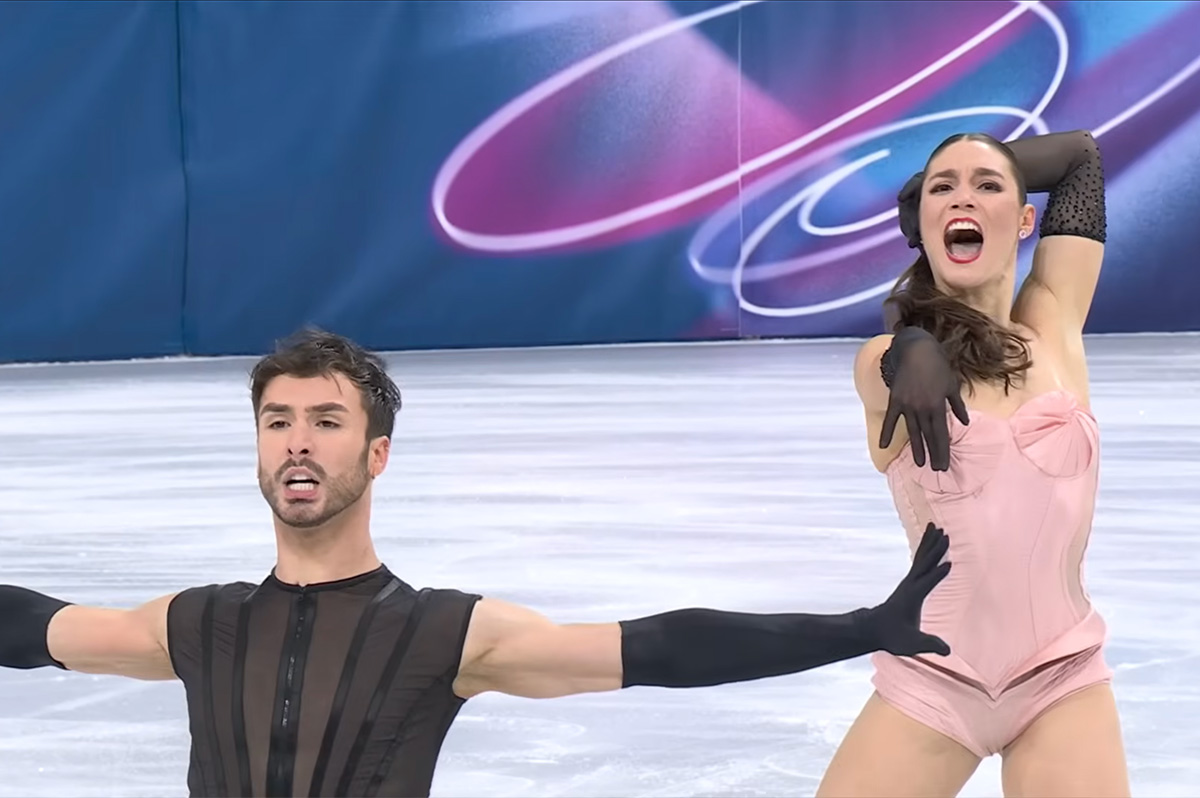
More than a dozen LGBTQ athletes won medals at the Milan Cortina Winter Olympics that ended on Sunday.
Cayla Barnes, Hilary Knight, and Alex Carpenter are LGBTQ members of the U.S. women’s hockey team that won a gold medal after they defeated Canada in overtime. Knight the day before the Feb. 19 match proposed to her girlfriend, Brittany Bowe, an Olympic speed skater.
French ice dancer Guillaume Cizeron, who is gay, and his partner Laurence Fournier Beaudry won gold. American alpine skier Breezy Johnson, who is bisexual, won gold in the women’s downhill. Amber Glenn, who identifies as bisexual and pansexual, was part of the American figure skating team that won gold in the team event.
Swiss freestyle skier Mathilde Gremaud, who is in a relationship with Vali Höll, an Austrian mountain biker, won gold in women’s freeski slopestyle.
Bruce Mouat, who is the captain of the British curling team that won a silver medal, is gay. Six members of the Canadian women’s hockey team — Emily Clark, Erin Ambrose, Emerance Maschmeyer, Brianne Jenner, Laura Stacey, and Marie-Philip Poulin — that won silver are LGBTQ.
Swedish freestyle skier Sandra Naeslund, who is a lesbian, won a bronze medal in ski cross.
Belgian speed skater Tineke den Dulk, who is bisexual, was part of her country’s mixed 2000-meter relay that won bronze. Canadian ice dancer Paul Poirier, who is gay, and his partner, Piper Gilles, won bronze.
Laura Zimmermann, who is queer, is a member of the Swiss women’s hockey team that won bronze when they defeated Sweden.
Outsports.com notes all of the LGBTQ Olympians who competed at the games and who medaled.
Sports
US wins Olympic gold medal in women’s hockey
Team captain Hilary Knight proposed to girlfriend on Wednesday
The U.S. women’s hockey team on Thursday won a gold medal at the Milan Cortina Winter Olympics.
Team USA defeated Canada 2-1 in overtime. The game took place a day after Team USA captain Hilary Knight proposed to her girlfriend, Brittany Bowe, an Olympic speed skater.
Cayla Barnes and Alex Carpenter — Knight’s teammates — are also LGBTQ. They are among the more than 40 openly LGBTQ athletes who are competing in the games.
The Olympics will end on Sunday.

Trump tells Fox News he won the ‘gay vote’ — but polls tell a different story

Anti-trans visa ruling echoes Nazi regime destroying trans documents

Japanese Supreme Court to consider marriage equality

The outrage economy is not the LGBTQ community

Calendar: March 27-April 2

Markwayne Mullin confirmed as next DHS secretary

D.C. goes gaga for Gaga

HRC to host National Rainbow Seder

Menaka Guruswamy celebrated as India’s first openly LGBTQ MP