Local
‘Archive Activism’ reveals efforts to recover hidden LGBTQ gov’t documents
Memoir by Charles Francis highlights ‘secrets’ held at LBJ Presidential Library
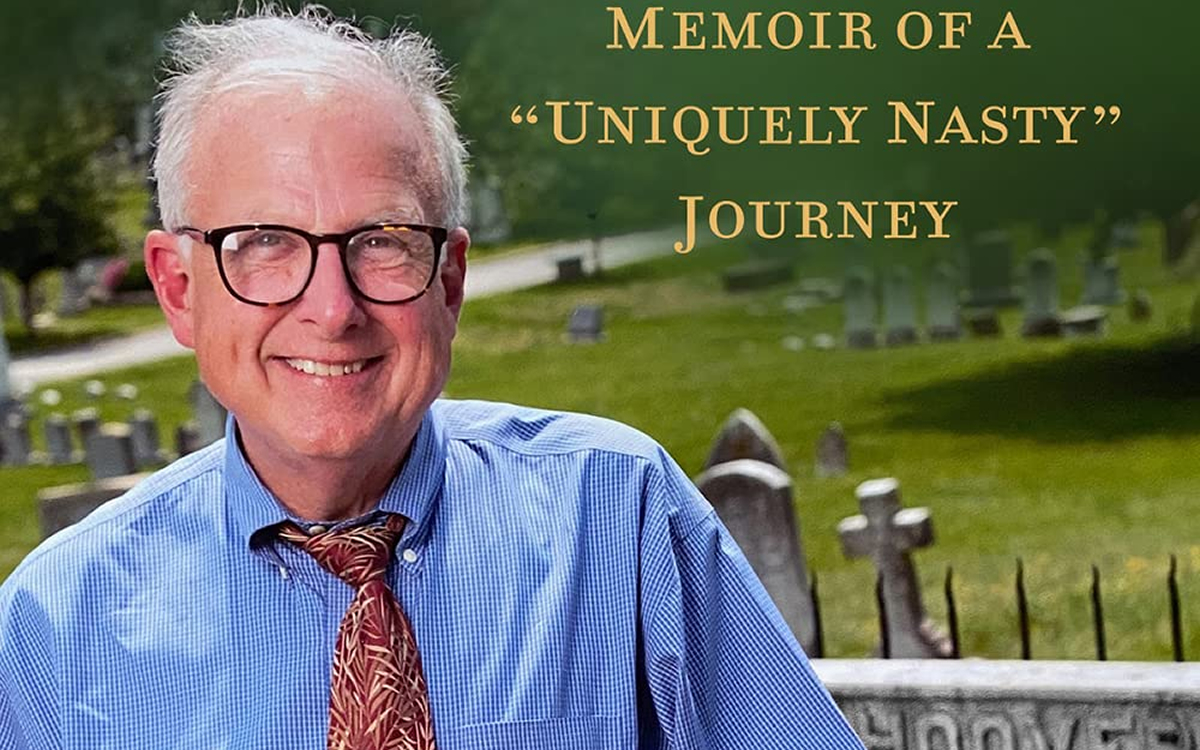
A newly released book called “Archive Activism: Memoir Of A ‘Uniquely Nasty’ Journey” describes the efforts by author Charles Francis and his supporters to uncover long hidden documents, among other things, revealing how LGBTQ federal workers were forced out of their jobs in the 1950s and 1960s.

Francis, a former public relations consultant and longtime Washington insider, co-founded in 2011 a repurposed Mattachine Society of Washington, D.C. as an advocacy group to uncover LGBTQ-related historical and archival documents while advocating for LGBTQ equality.
The original Mattachine Society of Washington was co-founded by pioneer D.C. gay rights advocate Frank Kameny in the early 1960s as D.C.’s first gay rights organization to become politically active and engage in gay rights protests.
Francis points out that the title of his book is taken, in part, from a 1964 document in which an attorney for the then U.S. Civil Service Commission named John Steele defended the longstanding policy of not allowing LGBTQ people to work for the government.
“What it boils down to is that most men look upon homosexuality as something ‘uniquely nasty,’ not just a form of immorality,” Steele states in the document.
“Archive Activism is the story of recovering forgotten, sealed – often deleted – LGBTQ history and using it to fight for equality and social justice at a time of historic erasure, book bans, and political assault,” Francis told the Washington Blade. “This is not a bland text about ‘LGBTQ history month,’” he said.
“It is about protecting ourselves, our families and political gains by understanding the shoulders we stand upon through original archival research,” he said in a statement. “A gay, ex-Republican raised in Texas in the ‘50s and ‘60s, I was awakened by the power of our history, our gay and lesbian legacy and the fight to save American democracy,” he said.
Francis’s book covers his early years in Washington working for nationally known public relations executive and Republican Party advocate Bob Gray, his efforts to help elect former Texas Gov. George W. Bush as U.S. president in the 2000 presidential election, and his subsequent disillusionment with Bush after Bush became an outspoken advocate for a federal constitutional amendment to ban same-sex marriage.
The book also tells how Francis in 2000 formed the Republican Unity Coalition, an LGBTQ supportive group that called on the Republican Party to make homosexuality a “non-issue” for the GOP. In a development that surprised many GOP officials, then U.S. Sen. Alan Simpson (R-Wyo.), former president Gerald Ford, and Mary Cheney, daughter of former U.S. Vice President Dick Cheney, signed on as members of the RUC group.
Francis describes in the book his early archive activism efforts that included co-founding the Kameny Papers Project, which arranged for the Library of Congress to acquire the voluminous collection of the documents of Frank Kameny. The Mattachine Society of Washington also arranged for the Library of Congress to acquire the papers and documentary films produced by D.C. LGBTQ rights advocate Lilli Vincenz.
A statement released by the book’s publisher, University of North Texas Press, says the book breaks ground in uncovering LGBTQ-related documents generated under President Lyndon Johnson.
“For the first time, ‘Archive Activism’ reveals how LGBTQ secrets were held for decades at the LBJ Presidential Library in the papers of President Johnson’s personal secretary, sealed until her death at age 105,” the statement says.
Francis and Mattachine Society of Washington co-founder Pate Felts went to Texas in 2016 to work with LBJ Library officials to find LGBTQ-related documents, including those showing that Johnson quietly fired a longtime Johnson family friend and White House staffer named Robert “Bob” Waldron after learning that Waldron had “engaged in homosexual acts,” according to one of the documents.
“‘Archive Activism’ is a rescue mission for primary archival materials located in archives and libraries, large and small, worldwide,” Francis says in the book. “It is a preservation-minded movement to recover and protect historical queer memory,” he writes. “Archive Activism is a populist mission to recover the erased past and to document the government animus that continues to course through LGBTQ political and policy history.”
The Blade may receive commissions from qualifying purchases made via this post.



District of Columbia
Judge issues revised order in Capital Pride stalking case
Defendant Darren Pasha agreed to accept less restrictive directive
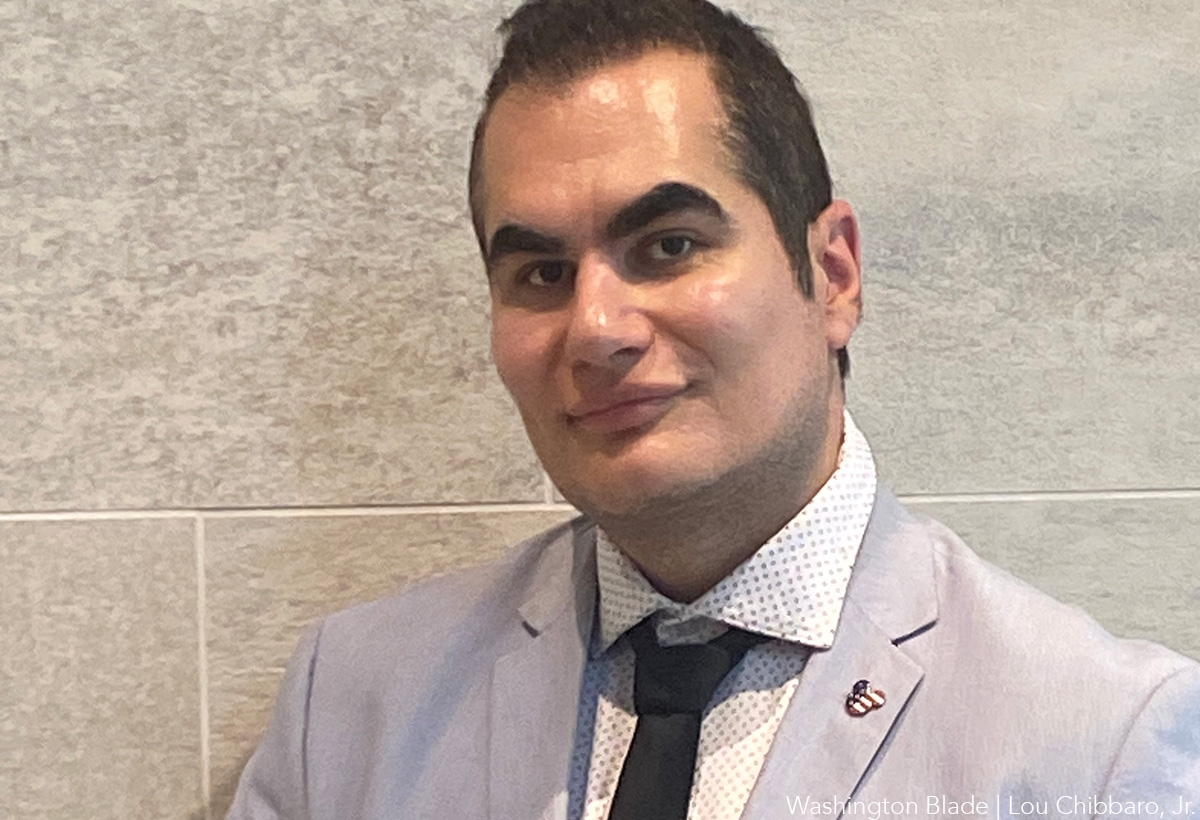
A D.C. Superior Court judge on April 30 reinstated an anti-stalking order requested by the Capital Pride Alliance against local gay activist Darren Pasha based on allegations that Pasha engaged in a year-long effort to harass, intimidate, and stalk the organization’s staff, board members, and volunteers.
The reinstated order by Judge Robert D. Okun followed an April 17 court hearing in which he rescinded a similar order he initially approved in February on grounds that more evidence was needed to substantiate the need for the order.
At the time he rescinded the earlier order he scheduled an evidentiary hearing for April 29 at which three Capital Pride staff members testified in support of the anti-stalking order. But Okun discontinued the hearing after Pasha, who was representing himself without an attorney, announced he was willing to accept a revised, less restrictive temporary restraining order.
The judge said Pasha’s decision to accept a restraining order made it no longer necessary to continue the evidentiary hearing. He then asked Capital Pride and Pasha to submit their suggested revisions for the order which they submitted a short time later.
The case began when Capital Pride Alliance, the D.C.-based LGBTQ group that organizes the city’s annual Pride events, filed a civil complaint on Oct. 27, 2025, against Pasha, accusing him of engaging in a year-long effort to harass, intimidate, and stalk Capital Pride staff, board members, and volunteers. It includes a 167-page addendum of “supporting exhibits” that includes multiple statements by unidentified witnesses.
Pasha, who has represented himself without an attorney, has argued in multiple court filings and motions that the stalking allegations are untrue. In his initial court response to the complaint, he said it appears to be a form of retaliation against him for a dispute he has had with Capital Pride and its former board president, Ashley Smith, who has since resigned from the board.
Similar to his earlier anti-stalking order against Pasha, Okun’s reissued order on April 30 states, a “Temporary Anti-Stalking Order is GRANTED, effective immediately and remaining in effect until further order of the Court or final disposition of this matter.”
It adds, “The defendant shall not contact, attempt to contact, harass, threaten, or otherwise communicate with any protected person, directly or indirectly, including through third parties, social media, electronic communication, or any other means.”
Unlike the earlier order, which did not identify the “protected persons” by name, the latest order includes a list of 34 people, 13 of whom are Capital Pride staff members or volunteers, including CEO Ryan Bos and Chief Operating Officer June Crenshaw. The other 21 people listed are identified as Capital Pride board members, including board chair Anna Jinkerson.
Possibly because Pasha addressed this in his suggested version of the order, the judge’s revised order says Pasha is allowed to visit the D.C. LGBTQ+ Community Center, where the Capital Pride office is located, if he gives the community center a 24 hour advance notice that he will be visiting the center, which hosts many events unrelated to Capital Pride. The earlier order required him to stay at least 100 feet away from the Capital Pride office.
The new order also prohibits Pasha from attending 21 named events that Capital Pride Alliance either organizes itself or with partner organizations that were scheduled to take place from April 30 through June 21. The order says he is allowed to attend the two largest events, the June 20 Pride Parade and the June 21 Pride Festival and Concert, in which 500,000 or more people are expected to attend.
It says Pasha is also allowed to attend the June 15 Pride At The Pier event organized by the Washington Blade.
But for those three events the order says he is restricted from entering “ticketed and controlled access areas.”
At the April 29 court hearing, Okun also scheduled a mandatory remote mediation session for July 23, in which efforts would be made to resolve the civil complaint case brought by Capital Pride without going to trial.
District of Columbia
Both sides propose revised orders in Capital Pride stalking case
Defendant Darren Pasha agreed to accept less restrictive directive
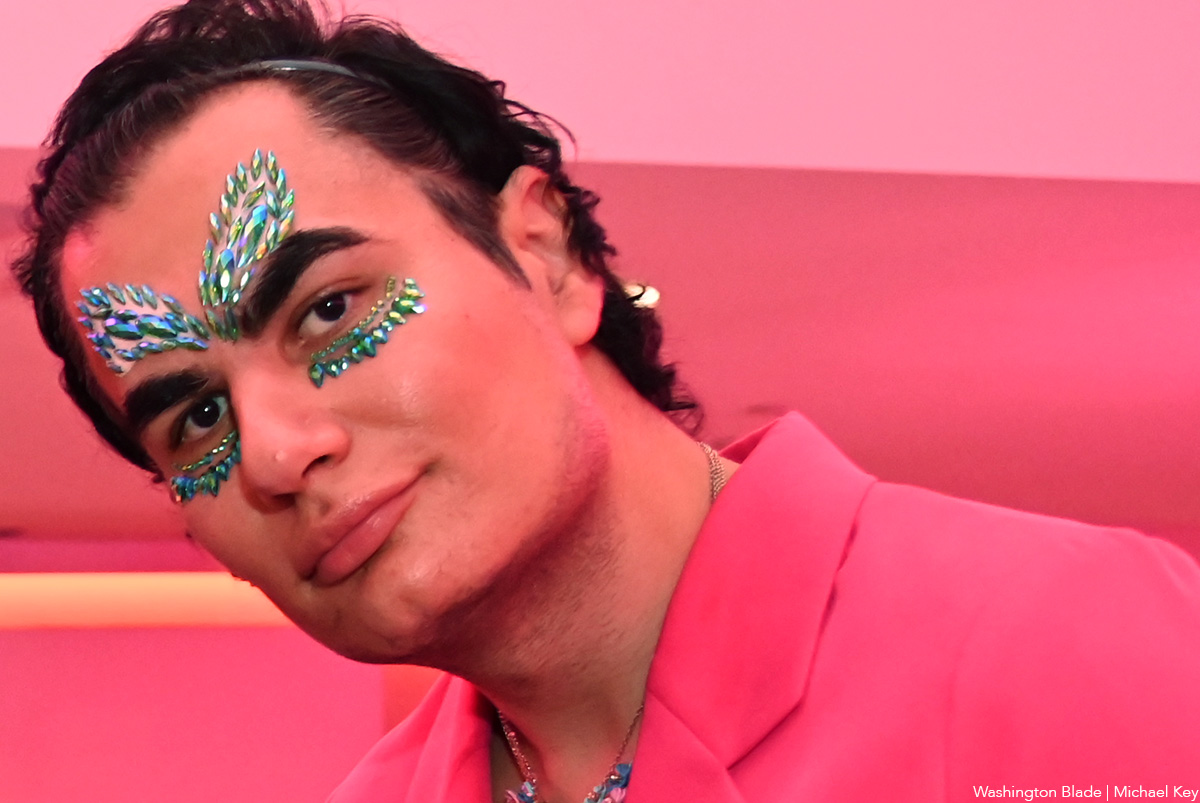
An evidentiary hearing in D.C. Superior Court on April 29 in which the Capital Pride Alliance presented three of four planned witnesses to testify in support of its civil complaint that D.C. gay activist Darren Pasha engaged in a year-long effort to harass, intimidate, and stalk its staff, board members, and volunteers ended abruptly at the direction of the judge.
Judge Robert D. Okun announced from the bench that the hearing, which was intended provide Capital Pride an opportunity to present evidence in support of its request to reinstate an anti-stalking order against Pasha that the judge temporarily rescinded on April 17, was no longer needed because Pasha stated at the hearing that he is willing to accept a revised, less restrictive temporary restraining order.
Pasha made that statement after two Capital Pride witnesses — June Crenshaw and Vincenzo Volpe — each testified in support of the stalking allegations against Pasha for over an hour under questioning from Capital Pride attorney Nick Harrison and under cross-examination from Pasha, who is representing himself without an attorney.
After Capital Pride’s third witness, Tifany Royster, testified for just a few minutes, and after the judge called a recess for lunch and to attend to an unrelated case, Pasha announced that after obtaining legal advice he determined that he was unsuited to continue cross-examining the witnesses. He said he would be willing to accept a significantly less restrictive temporary restraining order.
Okun then ruled that the evidentiary hearing was no longer needed and directed Capital Pride and Pasha to submit to him their version of a revised stay away order. He said he would use their proposed revisions to help him develop his own order, which he would issue after deliberating over the matter.
He also scheduled a mandatory remote mediation session for July 23, in which efforts would be made to resolve the case without going to trial. He then adjourned the hearing at 3:50 p.m.
The online Superior Court docket for the case stated after the hearing ended that the judge would issue “a new modified Temporary Protective Order,” but it did not say when it would be issued.
Shortly before the April 29 hearing began at 11 a.m., Harrison filed a “Draft Temporary Anti-Stalking Order” that included a list of 34 “Protected Persons” that Harrison said during the hearing were affiliated with Capital Pride Alliance as staff and board members, volunteers, and others associated with the group.
The proposed order stated, “The defendant shall not contact, attempt to contact, harass, threaten, or otherwise communicate with any protected person, directly or indirectly, including through third parties, social media, electronic communications, or any other means.”
The proposal represented a significant change from Capital Pride’s initial civil complaint against Pasha filed in February that Pasha claimed called for him to stay away at least 200 yards from all Capital pride staff, board members, and volunteers without naming them. Okun granted that stay away request in February but reduced the stay away distance to 100 feet.
Capital Pride attorney Harrison disputes Pasha’s interpretation of the order, saying the 100-foot stay-away was for events, not for individual Capital Pride staff, volunteers, or board members. He said the order prohibited Pasha from engaging in any way with the Capital Pride staffers, volunteers or board members.
But the proposed order Capital Pride at first submitted at the April 29 hearing also called for Pasha to stay away from and to not attend as many as 25 Capital Pride events scheduled to take place this year from April 30 through June 21 and for him to say away from the Capital Pride office located at 1827 Wiltberger St., N.W., which is the building in which it shares with the DC LGBTQ Community Center.
At the April 29 hearing, at Pasha’s request, Okun called on Capital Pride to consider allowing Pasha to attend at least the two largest events — the Capital Pride Parade and Festival — which draw over 500,000 participants.
Harrison said in a follow-up message to the judge following the hearing that Capital Pride would allow Pasha to attend those two events and one other as long as he stays away from “ticketed and controlled access areas.”
At an April 17 status hearing Okun rescinded the earlier stay away order at Pasha’s request, among other things, on grounds that it was too vague and didn’t provide Pasha with sufficient specific information on who to stay away from. It was at that hearing that Okun scheduled the April 29 evidentiary hearing, saying it would give Capital Pride a chance to provide sufficient evidence to justify an anti-stalking order and Pasha an opportunity to challenge the evidence.
In his own response to the initial civil complaint filed in February and in subsequent court filings, Pasha has strongly denied he engaged in stalking and has alleged that the complaint was a form of retaliation against him over a dispute he has had with Capital Pride and its former board president, Ashley Smith.
Like its initial complaint filed in February, Capital Pride filed a multipage document at the start of the April 29 hearing with written testimony from staff members and volunteers who allege that Pasha did engage in stalking, harassment, and intimidating behavior toward them and others.
Like Capital Pride, Pasha following the April 29 hearing, filed his own proposed version of the stay away order with significantly less restrictions than the Capital Pride proposal. Among other things, it calls for him to restrict his contact with Capital Pride CEO Ryan Bos and Crenshaw but says it “does not by its terms restrict the defendant’s communications with any other person, entity, governmental body, or media outlet.”
“Darren Pasha sent multiple messages to us and to the court after the proceedings asking for further modifications — which we are not accepting or responding to,” Harrison told the Blade in response to a request for further comment on Judge’s request for each side to submit proposed revisions of the stay away order.
“We appreciate the court’s time and careful attention to the evidence presented today,” Harrison told the Washington Blade in a written statement after the hearing. “This process was about bringing forward the experiences of individuals who reported a pattern of conduct that caused fear, serious alarm, and emotional distress,” he said.
“Capital Pride Alliance remains committed to ensuring that our events and community spaces are safe, welcoming, and free from harassment and we will continue to take appropriate steps to support and protect our community,” his statement says.
“I am happy with what we have accomplished so far,” Pasha told the Blade after the hearing. “I’m just waiting to see what will happen next. But I want to reiterate this goes back to when someone treats you wrong you speak up,” he said. “Even if I lose this case, I am glad that I spoke up and raised concerns.”
He added, “I will just be confident that in the next couple of months the truth will come out. But for now, I am happy with the progress that we have made regarding this.”
This story will be updated when the judge issues his revised stay away order.
Rehoboth Beach
Rehoboth’s Blue Moon sold; new owners to preserve LGBTQ legacy
‘They don’t want to change a thing’
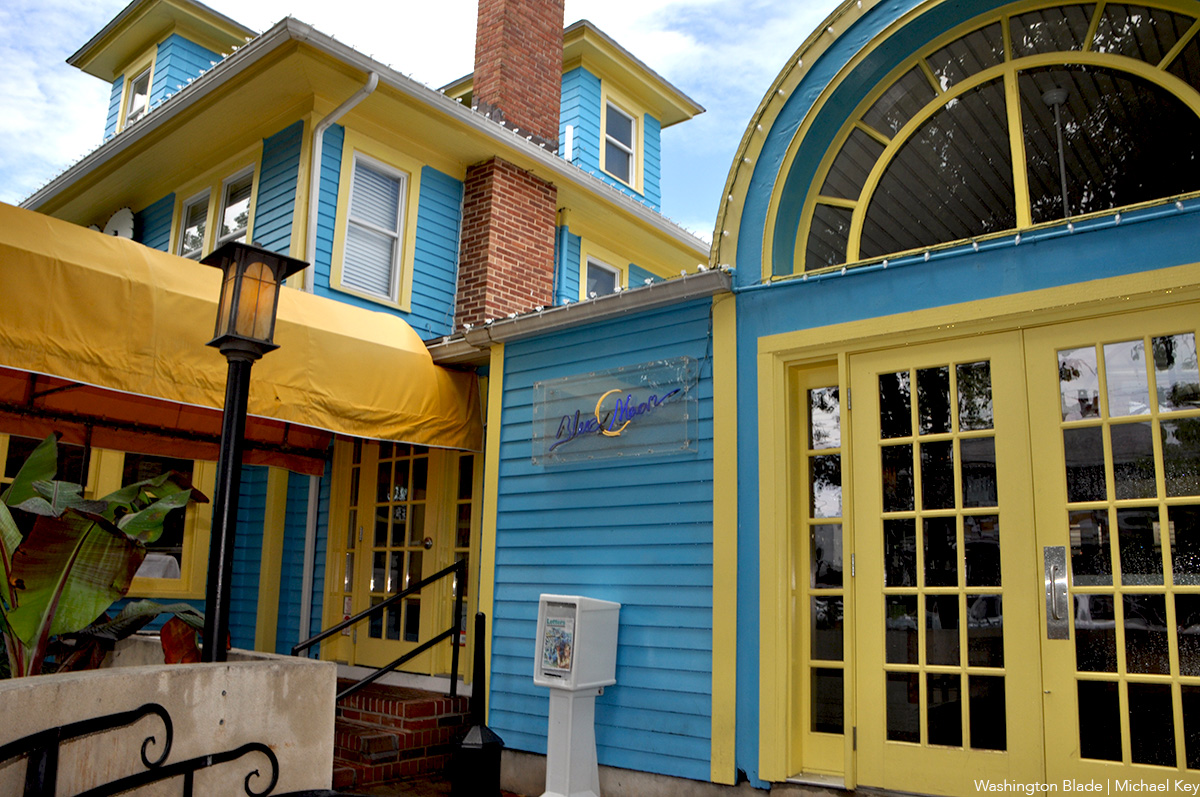
The iconic Blue Moon restaurant and bar in Rehoboth Beach, Del., has been sold to new owners who have pledged to keep it an LGBTQ-affirming space, according to longtime owner Tim Ragan.
Ragan and his partner Randy Haney sold the Blue Moon to Dale Lomas and Mike Subrick, owners of Atlantic Liquors on Route 1.
“They don’t want to change a thing,” Ragan said. “They’re local people, they live here. Dale worked his first job at Dolle’s.”
Ragan and Haney did not sell the business, only the real estate. The deal includes a 10-year lease with renewal options under which Ragan and Haney will continue to operate the Moon. He noted that the couple could opt to sell the business at any time.
“It’s going really well so I’m not in any hurry,” Ragan told the Blade. “It’s hard to run a business and manage a property that’s 120 years old — now someone else has to fix the air conditioning. Our responsibility will be to run the business.”
Ragan offered reassurances that the Moon will continue to be a gay-friendly destination.
“Dale’s comment was that Rehoboth has been good to us and we just want to give back. The Moon is part of Rehoboth’s history and we want to preserve that.”
He said there are no immediate changes planned for the structure, apart from a new roof in the atrium that was damaged in a hail storm. Ragan noted that the property comes with several apartment rental licenses that they have never exercised and the new owners may decide to rent those out.
The Blue Moon business, at 35 Baltimore Ave., dates to 1981 and is an integral part of Rehoboth’s LGBTQ community, hosting countless entertainment events, drag shows, and more over 45 years. Local residents have celebrated birthdays, anniversaries, weddings, and other special occasions in the acclaimed restaurant.
The two buildings associated with the sale were listed by Carrie Lingo at 35 Baltimore Ave., and include an apartment, the front restaurant (6,600 square feet with three floors and a basement), and a secondary building (roughly 1,800 square feet on two floors). They were listed for $4.5 million. The bar and restaurant business were being sold separately.
But then, earlier this year, the Blue Moon real estate listing turned up on the Sussex County Sheriff’s Office auction site. The auction was slated for Tuesday, April 21 but hours before the sale, the listing changed to “active under contract” indicating that a buyer had been found but the sale was not yet final.
Ragan said the issue was the parties couldn’t resolve how much was owed due to a disagreement with the bank. “We didn’t owe $3 million,” he said. “We said we’re not paying any more until we sell.”
The sale contract was written five months ago. It took three attorneys to get a payoff amount agreed to by the bank, he added.
“No one wanted to buy both things. We now have a longterm lease. We couldn’t be happier.”

Tennessee’s trans data bill a frightening omen

The queer appeal of ‘The Devil Wears Prada’

Lesbifriends Travel to host queer night out

Republicans attach five anti-LGBTQ riders to State Department funding bill

Calendar: May 1-7

House Republicans push nationwide ‘Don’t Say Gay’ bill

European Parliament backs EU-wide conversion therapy ban

Rep. Sarah McBride reflects on first year in Congress amid political backlash

LGBTQ people are leaving Orthodox Judaism behind

Democracy Forward files FOIA request for State Department bathroom policy records
-

 Federal Government5 days ago
House Republicans push nationwide ‘Don’t Say Gay’ bill
-
European Union3 days ago
European Parliament backs EU-wide conversion therapy ban
-
Delaware4 days ago
Rep. Sarah McBride reflects on first year in Congress amid political backlash
-
News5 days ago
LGBTQ people are leaving Orthodox Judaism behind