Movies
Sundance veteran takes a wild ride with ‘Rotting in the Sun’
Silva returns with outrageous film that satirizes modern culture
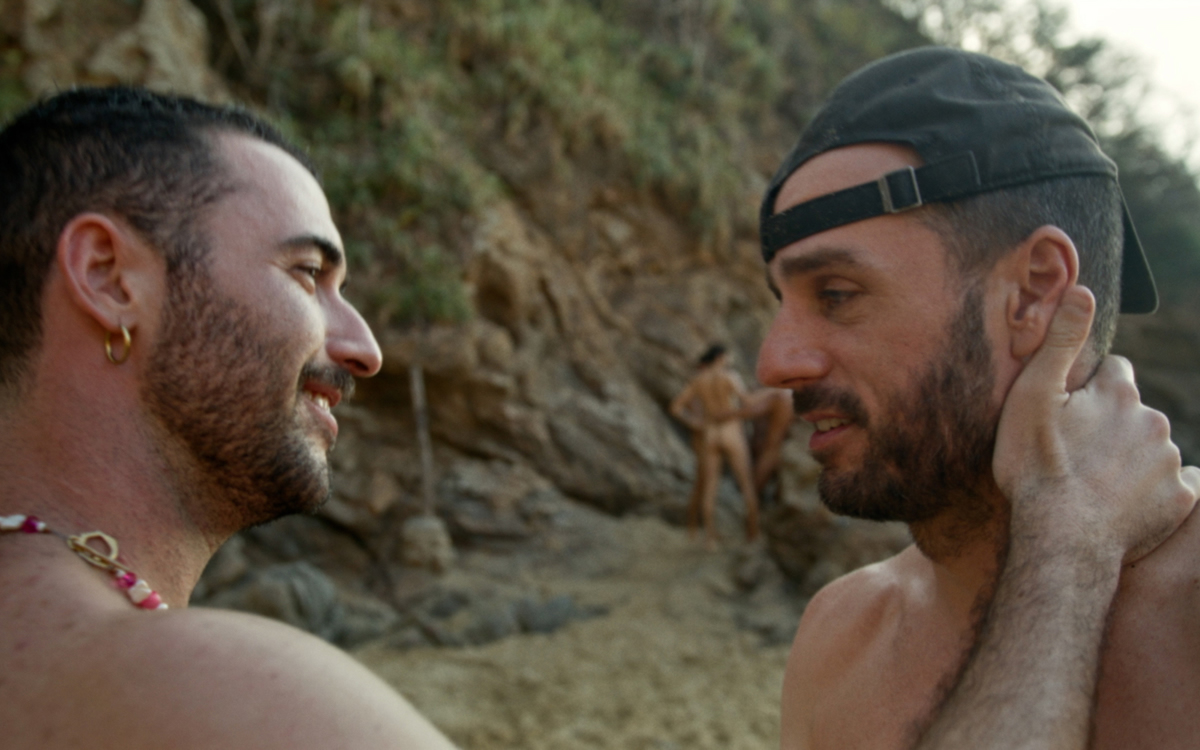
Unless you’re a follower of independent cinema or the international film festival circuit, the name Sebastián Silva may not be familiar to you – yet.
The gay, Chilean-born filmmaker – also known as a musician and illustrator – has enjoyed substantial spotlight on his work over the last decade and a half, starting with a win for Best Film at the 2008 Chilean Pedro Sienna Awards for his debut feature – “La Vida Me Mata” (“Life Kills Me”) – and following up with 2009’s “The Maid.” The latter launched him into the American Indie scene, earning a Grand Jury Prize at Sundance; it went on to pick up several other honors, including a Golden Globe nomination, and firmly established him as an up-and-coming young director. Since then, his reputation has lured “Indie favorite” actors like Kristen Wiig, Juno Temple, Michael Cera, Gaby Hoffman, and Alia Shawkat to star in his films, and he’s garnered more accolades and awards along the way.
Still, the kind of films Silva makes are not exactly the kind that cross easily over into the mainstream, and wider recognition has thus far eluded him. Nevertheless, he remains a festival favorite, having twice returned in triumph to Sundance for premieres of his work, most recently with “Rotting in the Sun,” which debuted at the festival earlier this year. Now set for a limited theatrical release on Sept. 8 before expanding to digital a week later, it just might be the movie that finally gets the multi-hyphenate filmmaker the attention he deserves – though perhaps not for the reasons he might wish.
Directed by Silva from a screenplay co-written with frequent collaborator Pedro Peirano, his cryptically titled film scores points for audacity from its premise alone. Casting himself and real-life social media star Jordan Firstman as fictional versions of themselves, the filmmaker weaves an outrageous stream-of-events narrative that savagely satirizes both the self-obsession and perpetually distracted state of modern culture, simultaneously skewering the business of filmmaking and “content creation” while offering a sharp, darkly humorous commentary on the impact of economic and social class in human experience.
That sounds like a lot to juggle in a single movie, especially one with a less-than-two-hour runtime, but Silva and Peirano’s script manages it deftly with a intricately crafted structure that carries us along through a twisting plot that begins when the fictional Sebastián – nihilistic, misanthropic, and addicted to ketamine and poppers – takes an impromptu trip to a nude gay beach resort on the advice of his best friend (Mateo Riestra). There, he encounters the gregarious and flamboyant Firstman, a fan of his work who aggressively courts him for a closer relationship, both personally and professionally. With his career stalled and his finances drying up, the reluctant Silva agrees to collaborate on a show, and invites Firstman to come and stay with him in Mexico City while they write it.
From there, things don’t go quite the way we expect. Though we’ve been primed for an “opposites-attract” romance, accompanied by a bemusing clash of Silva’s existential bleakness against the life-affirming positivity of his joyously hedonistic counterpart, an unexpected turn of events veers into a new course; rom-com tropes give way to a stark and harrowing mystery, with Silva’s longtime housekeeper Vero (Catalina Saavedra) at the center, and the film becomes a gripping thriller that blends suspense with social commentary and stark surrealism for a wild ride capable of making the heart pound and the head spin. We could say more – other reviewers have, making their jobs easier but spoiling some of the movie’s most electrifying surprises in the process – but to do so would be a disservice both to Silva’s painstaking efforts in crafting the narrative and the viewer’s enjoyment in experiencing it firsthand.
That does make it necessary to “talk around” some things; for instance, we can’t say all the things we’d like about Saavedra – returning to Silva’s fold after playing the title role in “The Maid” – and her performance without giving away key information; rigidly unsentimental, raw with emotions most of us find uncomfortable to watch, the movie hinges on her portrayal of this character, and she owns it completely.
We also can’t say much about the remarkable movement of the story, charted by the script and driven by the skillful, ever-flowing handheld camera approach of cinematographer Gabriel Díaz Alliende, which follows a singular thread of cause-and-effect through a course marked by random occurrence and inevitable consequence and plays out like an elaborate maze of falling dominoes; nor can we go into much detail about the observations the film makes about the divide between the privileged and the underclasses who serve them, who live in such different worlds that even the simplest interactions between them are often complicated by an inability to communicate or understand each other across the gap.
In a more general way, we can certainly talk about the movie’s appreciation for irony; indeed, its most sublime moments are dripping with it, and it provides the undercurrent for the tone of existential absurdism in which Silva steeps his film; for, make no mistake, in this “existential summer” marked by movies like “Asteroid City,” “Barbie,” and “Oppenheimer,” “Rotting in the Sun” fits right in – though, for what it’s worth, its inescapable dread is countered by a kind of humanistic compassion which, though it doesn’t exactly cast everything in a layer of sweetness and light, goes a long way toward leaving our hope for humanity at least somewhat intact.
Lastly, we can talk about the penises. Yes, there are a lot of them, and a few scenes of un-simulated gay sex, too; most of these take place in the early scenes at the resort, and while it would be wrong to say they are irrelevant to the larger purpose of Silva’s movie they certainly are not the point of it, prompting him to admit in a Variety interview that he was “a little bit scared that a lot of people will be centered on the cocks.” Predictably, most reviews (including this one, it appears) and much of the publicity for the film seem angled to let us know they are there.
Ultimately, “Rotting in the Sun” is about much more than cocks, of course; it’s also about much more than the various human pretensions, constructs, delusions, and dysfunctions it both sends up and seems to caution us about. Like all great films, it contains all those things within a larger picture that points toward a more all-encompassing perspective on life – and, admirably, doesn’t try to tell us what to think of it, though it might guide us to a smaller conclusion or two about how we treat each other along the way.
Be warned: though ostensibly a comedy, “Rotting in the Sun” is not a film for the faint-hearted, and it should be noted that it explores themes of suicidal ideation that might be triggering for some viewers.
If you’re not deterred by that – and if your interest is piqued by all the things we couldn’t say – then you are heartily encouraged to watch it at your first opportunity. We guarantee that afterward, you’ll remember the name Sebastián Silva.




Movies
Queer team brings girl power to fully baked ‘The Wrong Girls’
Perfect film for anyone who loves stoner comedies
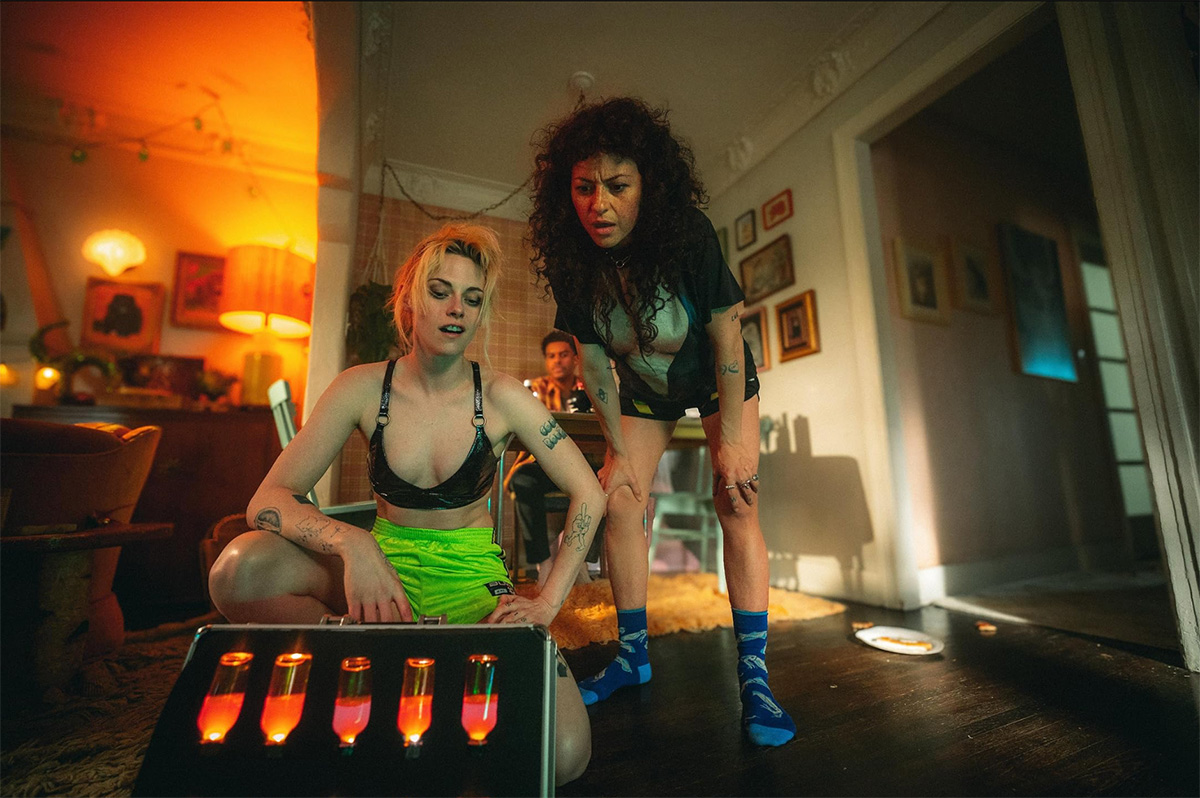
Generally speaking, the “Stoner Comedy” genre is aimed at an audience of “stoners,” and if you’re not one, you probably don’t get the appeal.
If you are, though, you’re likely to enjoy “The Wrong Girls,” the new indie from screenwriter Dylan Meyer in her directorial debut, which began a theatrical release on Aug. 14. The plot is ridiculous, the humor is lowbrow, and you won’t find any substance in it except for the ones that get consumed onscreen – but that’s exactly the reason why it’s pretty much perfect for anybody who loves stoner comedies, and the fact that everyone involved commits to it whole-heartedly might just makes it all the more so.
Starring Kristen Stewart (Meyer’s real-life spouse) opposite Alia Shawkat as a pair of broke, directionless best friends who share an L.A. apartment and spend an impressive amount of effort finding new and elaborate ways of consuming cannabis, it opens with them facing a financial crisis; Frankie (Stewart) is thousands of dollars in debt for a scholarship to Stanford – even though she failed out before graduating – and Molly (Shawkat), who dreams of being a professional chef, channels her creative cooking skills into creating off-the-wall recipes for cannabis-infused snacks. To make matters worse, rent is due, and – as usual – they are short.
Their situation gets a sudden surprise windfall when Frankie (through a freak case of mistaken identity) ends up in possession of a briefcase full of a mysterious liquid they assume is some kind of drug. Thinking they can sell it for rent money, they decide to try it for themselves, first, resulting in a pink-and-bubbly hallucinogenic experience in which they can hear each other’s thoughts (and their cats’ thoughts, too) – an effect that lingers even after the “trip” subsides.
Their plan to sell the substance hits a snag, however, when a cadre of gun-toting Euro-thugs in dark suits show up on the scene trying to get their hands on it. Forced to go on the run, they eventually learn that the substance they took is a top-secret experimental drug, developed by a scientist (Kate McKinnon) researching human consciousness – and that the Europeans work for a dangerous rival who wants the formula for his own nefarious purposes. Can two 20-something stoners successfully elude and overcome a team of international mercenaries on a mission? Probably not, but the superpowers they seem to be developing might improve their chances – if they can figure out how to use them, that is.
Cut from the same cloth as every weed-centric movie farce you’ve ever seen, “The Wrong Girls” leans into most of the genre’s usual formula points, first and foremost of which is that it doubles as a buddy comedy. From Cheech and Chong, through Jay and Silent Bob, to Harold and Kumar, these films have always relied on the goofy chemistry between two friends, and Mayer (who wrote as well as directed) makes a special point of following that blueprint – because it’s also where her film sets itself apart from most of the other examples within a traditionally male-dominated genre by making the buddies female instead.
It’s a simple switch, and it really doesn’t have any significant impact on the general “vibe” of the story; the dynamic is more or less the same familiar back-and-forth banter between two people who have spent years getting high together, and their antics are just as stupid. Even so, in another way, flipping the usual gender of its protagonists makes an essential difference, simply because we’re so accustomed to seeing it the other way around – but women also like to get high, so why shouldn’t we see them doing it in the movies? After all, the now-legendary Comedy Central series “Broad City” (to which “The Wrong Girls” also owes a debt of inspiration) brought a pair of stoner chicks to TV over a decade ago with the epic pairing of Ilana Glazer and Abbi Jacobson, so it’s high time (if you’ll pardon the pun) we see the same on our big screens, too.
There are other twists that spruce up the formula too – a boyfriend (Zack Fox) who sparks girl buddy jealousy by asking Molly to move in with him, the crashing of a party thrown by a corporate douchebag (Tony Hale) and provides a great target for the anti-establishment satire that’s almost obligatory for the genre, and a plot thread about giant squid biochemistry that adds an air of comedic mysticism while tapping into the “cephalopod awareness” trend that has wriggled its way into our cultural discourse around ethical seafood consumption. All of it is written and executed with a cleverness that makes it easy to laugh at all the “dumb” comedy without it feeling too much like a guilty pleasure.
Steward and Shawkat, needless to say, carry the film; they find just the right blend of authentic friendship and “train wreck” energy to make their relationship both wacky and relatable. LaKeith Stanfield brings an admirable seriousness to his role as the guy who delivers the briefcase to the wrong person before becoming a comic foil as he ends up being a reluctant ally; stoner movie veterans Seth Rogan and Kumail Nanjiani amusingly lend their voices to the girls’ two cats; but it’s McKinnon who raises the bar, entering the story late in the game to become the hands-down MVP in a comedy that is only improved by her proven gift for stealing every scene she’s in. It’s worth noting that Geena Davis turns up for a memorable appearance that feels like a nod to that grandmother of all girl-buddy films, “Thelma and Louise.”
It’s also worth mentioning the strong imprint of queer creativity that exudes from “The Wrong Girls,” which casts two queer stars in a queer-written-and-directed comedy that also features several other prominent cast members who are queer (or queer adjacent), despite not having any specifically queer story elements. Maybe it’s the camp sensibility, or the obvious lampooning of overtly toxic heterosexual “types,” or just a general feeling of irreverence and a sharply counter-cultural edge – but somehow, the whole thing comes across as an expression of queer perspective that manages to run circles around the banality that might otherwise easily have turned the movie into an unfunny slog through a territory we’ve all seen plenty of times before.
All that said, it’s important to return to the original point that stoner movies are not necessarily meant for everyone – and fresh as it might feel, “The Wrong Girls” is definitely a stoner movie. There’s a lot of humor (and we mean A LOT) that will fall flat for those who don’t “get it,” and a considerable amount of absurdity and excess which will probably only frustrate viewers without a natural taste for it. Like even the best of the genre, it’s not intended to be deep, or even coherent – it’s all just for the sake of mindless, feel-good fun for those with a taste for it. So be warned by that caveat if you think it applies to you – otherwise, we suggest you grab a pack of edibles and jump on board for the ride.
Movies
‘Maddie’s Secret’ defies campy expectations
An over-the-top, old-school melodrama combined with modern satire
Sometimes, when you think you know what to expect from a movie, it doesn’t match those expectations. What do you do then?
I’m not talking about the unmet expectations of fans, like those who complain that Kubrick’s “The Shining” made sweeping changes from Stephen King’s novel, or start a social media campaign trashing the latest “Star Wars” or “Marvel” film because of a plot twist they don’t like. Those are complaints about content, about a story not going the way it is “supposed” to go.
I’m referring to the expectations we have when we walk into a movie thinking that it’s going to have a particular tone, a specific style, a familiar formula – essentially that it is going to easily fit into a comfortable box, and stay there. What happens when it doesn’t?
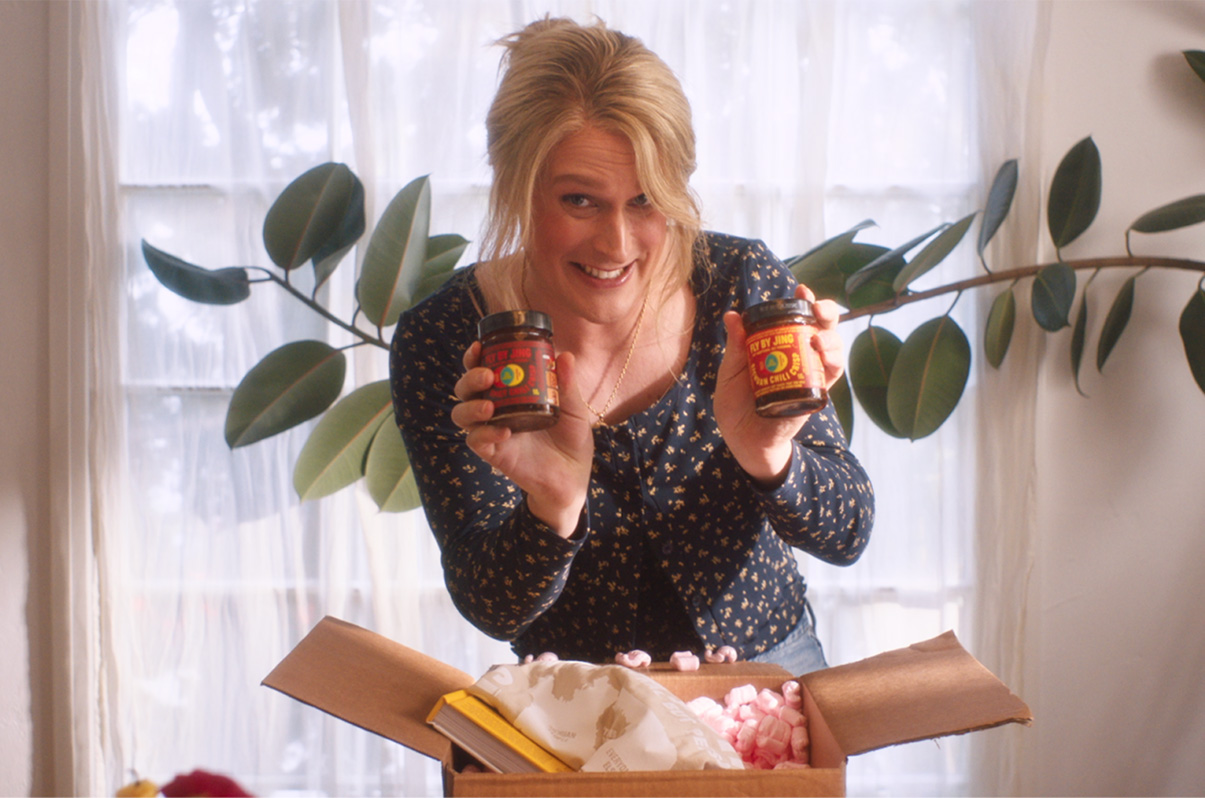
That’s the question I found myself asking as I watched “Maddie’s Secret,” the directorial debut from gay actor/comedian John Early, which is now screening in a limited theatrical release. It’s the story of a humble housewife whose doting husband persuades her to turn her love of cooking into a career as a virally popular “food influencer,” only to find that her sudden success triggers traumatic feelings from her childhood; clearly a contemporized hybrid of the melodramatic “woman’s pictures” of Old Hollywood and the “Afterschool Special” style cautionary dramas of ‘70s/’80s TV, it has all the earmarks of being an exercise in “camp” – especially since Early himself stars as Maddie.
To put it plainly, it’s an over-the-top old-school melodrama combined with modern-day satire of online social media fame, with a gay man in a dress playing the lead. What could be campier than that?
And it is campy, make no mistake. Yet at the same time, somehow, it isn’t. From its opening scene (which shows us Maddie as she jogs to her dishwashing job at the headquarters of an LA test kitchen/content studio named “Gourmaybe”), we expect things to get wacky. The ingredients are definitely present for it, like her aggressively butch co-worker/BFF Deena (Kate Berlant), who is clearly nursing a serious “girl crush”; bitchy TikTok star Emily (Claudia O’Doherty), who demeans her and ridicules her ambitions of being a chef; and boss Zach (Connor O’Malley), a womanizing corporate “bro” who enthusiastically embraces all the toxic traits we associate with that description.
As the story opens up beyond her workplace, there are more elements that feel ripe for the kind of histrionic humor we might expect from a film by John Waters, or the stylish old-school parody of Charles Busch, or even the radicalized sexual transgression of Bruce La Bruce: Maddie’s adorably bearish husband Jake (Eric Rahill) could be made into a goofy caricature with a food fetish, and her estranged, abusive mother Beverlee (Kristen Johnston in a deliciously grotesque performance) is easily monstrous enough to be at the campy center of any “hag horror” from the ‘60s.
And when we finally discover her “secret” (spoiler alert: it’s an eating disorder that returns when the pressures of being a popular social media chef bring up old feelings about her relationship with food), it’s easy to imagine a different filmmaker taking the whole thing in a thoroughly savage direction; the potential for tasteless, excessive, and deliberately juvenile comedy might be limitless, in the hands of a director unafraid of being branded “offensive.”
It’s hard not to see all these possibilities on hand as we watch Early’s film – which he also wrote – and (for myself, anyway) hard not to hope they all play out to maximum outrageous effect.
They don’t. Instead, “Maggie’s Secret” does something so unexpected that it feels, at first, like a mistake: it decides to play things straight.
It’s still a comedy, make no mistake, but it’s not the kind of comedy we think it’s going to be. It doesn’t go for over-the-top anarchy; it doesn’t go for the bitch-slapping catfight between rival divas, or for the running parade of filthy double-entendres, or for the absurd “gross-out” humor that might have emerged from its scenes of binge-and-purge overeating. Well, okay, maybe it does go for that last one, a little bit.
What all this comes down to, perhaps, is that the film gets its laughs – and there are quite a lot of them – without making fun of itself or, more importantly, its characters. The comedy here is built into the story; it comes from its send-up of social media influencers, corporate content creation, media tie-ins, and all the other interlocked microcosms of our “new, now, next” digital culture; it comes from the foibles and fumbles of its characters as they pursue their objectives in the story, from the qualities and quirks of their personalities, from their simply being funny because they feel like being funny; and yes, it sometimes comes from the obvious cliches of form that we recognize, the plot formulas and sudden revelations and shocking twists that have emerged time and time again in these kinds of domestic melodramas, but it does so good-naturedly, in a way that feels like laughing “with” the movie than laughing “at” it.
It also never diminishes or ridicules the seriousness of Maddie’s eating disorder, nor the experiences that come for her when she (spoiler alert, again) ends up going into an inpatient facility to be treated for it; though these later scenes come populated with their own set of stereotypical characters, ready to be exploited, the movie may poke gentle fun, but it humanizes them, too, helping build the film toward an emotional climax that leaves us with the kind of satisfying uncertainty we don’t quite expect from a movie like this one.
Most significantly, perhaps, it never gets its laughs out of the fact that Maddie is being played by a man – and it’s this that makes Early’s film feel more profound than we expect it to be. It’s not a “drag” movie, or a cross-dressing comedy, or anything to do with Maddie’s gender at all. She is a woman, presented without exaggeration or irony, and she just happens to be portrayed by a male actor instead of a female one. There’s no joke involved, just an excellent performance.
This is an apt approach, considering that Early cites Waters’ 1974 “Female Trouble” as his inspiration for “Maddie’s Secret.” Though he sets aside the extremes of that classic in favor of nuance and kindness, he takes his cue from its star – the incomparable Divine, who never called himself a drag queen but considered himself an actor playing a part. Early does the same, and it makes his film into a kind of full-circle moment in queer “underground” cinema (if a premiere at the 2025 Toronto International Film Festival, where “Maddie’s Secret” screened to enthusiastic response, can be called “underground”) which pays homage to the legacy of a past icon while picking up the mantle and carrying it in a new – and unexpected – direction.
That’s the thing about expectations: sometimes they are left unfulfilled – and in answer to my own question, as I watched this uniquely winning queer indie gem, what happens just might be something wonderful.
Movies
Greg Araki still wants your sex
Shrewd, sexy film may be the most fun you’ll have this summer

Greg Araki may not have been solely responsible for the “New Queer Cinema” movement of the 1990s, but he certainly gave it an edge.
From early low-budget groundbreakers like “The Living End” (1992) through his “Teen Apocalypse Trilogy” (1993-97) and beyond, his films have subverted cinematic tropes with queer characters and themes and co-opted them into his own unique brand of filmic storytelling — extreme, campy, and transgressive – in which his queer characters were usually framed as sexual outlaws, flawed and anti-heroic outsiders who disregard not only sexual conventions, but often the law and the social order itself.
In subsequent decades, he’s continued to bring that same fiercely counter-cultural swagger to a surprisingly diverse array of projects, from the melancholy and critically acclaimed “Mysterious Skin” (2004) to the first-ever Cannes Queer Palm winner “Kaboom” (2010). And though it’s been 12 years since his last feature film release (“White Bird in a Blizzard”), he’s brought his twisted talents under the radar to helm episodes of popular TV shows like “13 Reasons Why,” “Riverdale,” and “Monster: The Jeffrey Dahmer Story.”
Now, he’s back to the big screen with “I Want Your Sex,” a new erotic comedy-thriller that proves he hasn’t lost that edge. In fact, he may have honed it to a sharpness that cuts deeper than ever — and he’s aimed it not only at the moralistic posturing of mainstream attitudes around carnality, but at the thinly veiled high end consumerism that drives the world of avant-garde art.
Structured with a nod to “Sunset Boulevard” – it begins with a shocking “face down in a swimming pool” moment that is then explained in flashback – and flavored with the kind of sexual anarchy that rarely manages to penetrate the cultural mainstream, it’s the quintessentially “L.A.” story of Elliot (Cooper Hoffman), a perennially down on his luck 23-year-old would-be podcaster who manages to land a job as an assistant to multi-media artist Erika Tracy (Olivia Wilde), known as much for her domineering personality as for her highly sexualized (and deliberately provocative) work. At first, he is just one of a small army of fellow assistants tasked with helping prepare for an exhibition of new work at her gallery, which ranges from writing emails and scheduling interviews to chewing gum for a conceptual artwork depicting her vagina; but something about him catches her eye, and he soon finds himself taking on the additional duty of being her sexual plaything.
It’s strictly a business arrangement, of course, and all under cover of an NDA he signed before ever being hired; she needs the sexual outlet to keep her focused on her work, and he – thanks to his unsatisfying relationship with disinterested girlfriend Minerva (Charlie XCX) and his desire to finally pay his share of rent for the apartment he shares with BFF Apple (Chase Sui Wonders) – is happy to be of service. At first, it all feels like a dream come true, as he crosses his own boundaries to become enmeshed in a Dom/sub dynamic with an older woman on whom he’s long had a crush; she’s the Dom, of course, and he soon discovers he has more than just a mild taste for being submissive. But as things progress, he begins to “catch” the feelings he was never allowed to have, while Erika’s manipulation and humiliation of him starts to cross lines that threaten to undermine his tenuous sexual liberation, simultaneously eroding the comfortable relationships that have kept him feeling grounded, if perennially dIsappointed, up until now. Needless to say, things get progressively twisted, and Elliott finds himself ever more haplessly exploited as the story winds back to that “swimming pool moment” with all the inevitability of a train wreck experienced in irresistibly delicious slow motion.
Yes, it’s all deliberately “shocking” in the sense that it takes us places – both sexually and psychosexually – that a lot of audiences might never have thought they’d be expected to go. There’s plenty of nudity, the kinky sex is “explicit” in the sense that we have no doubt about the physical logistics of what’s happening even if we don’t see it, and the overall sense of “ethics” is pretty much “who cares?” In today’s world of “purity politics,” that might actually be the most transgressive thing of all about Araki’s film.
It’s not all just thumb to the nose at 21st century morality, however; nor is it merely a chance to undermine our faith in concepts like “consent” or suggest that inappropriate sexual dynamics in the workplace are anything other than toxic. Erika is most definitely a kind of beautiful monster – all the more because her angle, from the beginning, is all about increasing the value of her “brand” – but to frame her as a villain is missing a crucial point in what is essentially, despite its coy pretense at being a thriller, a coming-of-age story wrapped in a dark and de-romanticized rom-com.
Central to Araki’s story is the oft-cited observation that Gen Z people, having come of age in a time of social isolation in which private indiscretion can frequently lead to public shame, are afraid of sex. Elliot himself discusses this generational trope, yet he exposes himself to betrayal and humiliation anyway – and while that choice may take him down a rocky road, it also takes him on the journey of sexual self-discovery that he’s always wanted to have. Erika facilitates this, however unethically she may go about it, and even makes some discoveries about herself along the way; and despite the fact the journey ends up with police interrogations, tabloid scandal, and reversals of fortune not even she can see coming, the sex itself is never really to blame. After all, it’s only sex.
Maybe that’s the main point of “I Want Your Sex,” if there is one: all the stigma, all the prudish judgments and standards of moral “decency” become absurd in the face of the act itself, which – for most humans, at least – only comes naturally and, when stripped of unnecessary shame, can be a joyful experience, no matter how “kinky” it gets.
In fact, it’s not so much the sexual “deviance” or betrayals that Araki positions as the driving force in his movie, but the pretensions of a commercialized art world in which notoriety, controversy, and even tragedy can boost fame and fortune overnight – something that savvy artists, like Erika (and perhaps Araki himself) understand and exploit without qualm. One can make judgments about that, too, but in the end, isn’t that just part of how capitalism works?
In any case, “I Want Your Sex” doesn’t make judgments about any of it, just observations – with wit, slyness, and a refreshingly sex-positive attitude. Wilde and Hoffman deliver superb performances, as does the entire cast – which, apart from others previously mentioned, includes Mason Gooding as Elliot’s super-gay co-worker, Daveed Diggs as Erika’s haughty business manager, and Margaret Cho and Johnny Knoxville in admirably deadpan roles as a pair of police detectives. Shrewd, sexy, and all in good fun, it might well be the most fun you’ll have at the movies this summer.

Exploring Renée Richards’s life through lens of a trans author

Log Cabin Republicans remove transgender rights from mission

Not all trans people are the same

Queer team brings girl power to fully baked ‘The Wrong Girls’

Democrat Maureen ‘Mo’ Madden takes on longtime GOP stronghold in Delaware’s 38th

Russian LGBTQ rights group to shut down

Winsome Earle-Sears ‘Life and Marriage Tour’ to include Northern Va. stops

White House targets gender-affirming care funding, states fight back

Madonna nominated for 11 MTV VMAs

Man charged with anti-gay assault in D.C. accepts plea offer
-

 Russia5 days ago
Russian LGBTQ rights group to shut down
-
Virginia5 days ago
Winsome Earle-Sears ‘Life and Marriage Tour’ to include Northern Va. stops
-
White House5 days ago
White House targets gender-affirming care funding, states fight back
-
Celebrity News4 days ago
Madonna nominated for 11 MTV VMAs