European Union
Hungarian magazine places gay married couple with their baby on cover
Elle Hungary defended decision

The September issue of fashion and culture magazine Elle Hungary features a prominent gay married couple with their infant child on the cover.
While seemingly innocuous, the photograph of Hungarian restaurateur Hubert Hlatky Schlichter and his neurosurgeon husband Laszlo Szegedi kissing their daughter Hannabel is in open defiance of the homophobic government of Prime Minister Viktor Orbán.
On June 15, 2021, a Hungarian law purportedly aiming at taking stricter action against pedophile offenders and amending certain laws to protect children was adopted. Some of the new provisions target and limit the access of minors to content and advertisements that “promotes or portrays” the so-called “divergence from self-identity corresponding to sex at birth, sex change or homosexuality.”
Orbán has been criticised by international human rights groups as discriminating against LGBTQ people with this law which European Commission President Ursula von der Leyen called a “disgrace.”
Orbán, who has publicly proclaimed that he is a “defender of traditional family Catholic values,” has been criticized by international human rights groups as discriminating against LGBTQ people.
Publishing the cover on its Instagram account Monday, Elle Hungary stated that the magazine’s intention was to “contribute to the acceptance of rainbow families” and help the publication to “campaign all over the country for love and all forms of family.”
(Translated from Hungarian):
Every child deserves to grow up in a safe, caring and supportive environment, and no one can prevent that because of their parents’ gender identity or sexual orientation.
On the cover of our latest issue, we present a Hungarian rainbow family: we can get to know the story of their becoming a family, their honest and loving everyday life with their little girl, Hannabell. Hubert Hlatky-Schlichter and Dr. László Szegedi confess honestly about the difficulties and prejudices they had to face as a gay couple at home and how fate-changing the arrival of their daughter was for them. With their story, we want to send a message to everyone who has felt that they or their loved ones have been attacked more recently: You are not alone, and there is a positive scenario!
We hope that with our current issue, even if on a small scale, we contribute to the acceptance of rainbow families, and manage to give inspiration, encouragement and support to the many thousands of readers who share the same values with us. The slogan of our cover page sums up our message beautifully: Born From Love, because families, regardless of their structure, are rooted in deep, unconditional love. Join the conversation by using the hashtag #BornFromLove to campaign for all forms of love and family across the country!
In the featured article written by Elle Hungary Editor-in-Chief Vivien Mádai that accompanies the cover, the couple discussed the division of parental roles, and candidly about discrimination they’ve faced in Hungary, particularly as they welcomed their infant daughter into the world.
PinkNewsUK noted that while a same-sex couple featured on a British or U.S.-based magazine would seem innocuous, in Hungary, it marks a landmark step for positive queer representation in the media.
On Instagram, the magazine’s comment section has been flooded with people celebrating the cover.
This past April, Hungarian President Katalin Novak vetoed a legislation that included a provision for citizens to anonymously report on same-sex couples who are raising children. In a rare departure from the policies of Orbán whom she generally supports, Novak returned the bill to Parliament telling lawmakers to strike that provision.
The country’s constitution states that the institution of marriage is “between one man and one woman,” and notes that “the mother is a woman, the father a man.”
This law’s passage and Novak’s veto came after the country’s Constitutional Court issued a ruling in February that will continue to block new applications from transgender people for legal gender recognition. The judgment effectively creates two categories of trans people in Hungary: those who applied early enough to pursue gender recognition and those who did not.
A spokesperson for the German government told the media earlier this year that Germany and France joined with other EU member states in the European Commission lawsuit over a Hungarian law which discriminates against people on the basis of their sexual orientation and gender identity.
The move by Elle to feature the gay couple on its cover follows a July incident where Hungary’s second-largest bookstore chain was fined for violating the nation’s 2021 law that limits the access of minors to books, media content and advertisements that “promotes or portrays” the so-called “divergence from self-identity corresponding to sex at birth, sex change or homosexuality.”
The chain was fined for selling copies of British author Alice Oseman’s LGBTQ graphic novel series “Heartstopper,” a global phenomena due to the runaway hit Netflix show based on her books in the series.
The Budapest Metropolitan Government Office fined Lira Konyv bookstore chain for placing the book series in its youth literature section, and for failing to place it in wrapped plastic packaging as required by the 2021 law.
The bookstore chain was fined 12 million forints ($33171.59.)
The French daily afternoon newspaper Le Monde reported that as a result, bookshops have decided that books deemed “sensitive” must be wrapped in plastic or moved them to the adult section, if they have not decided to refrain from selling them altogether.






Bulgaria
Top EU court issues landmark transgender rights ruling
Member states must allow name, gender changes on ID documents
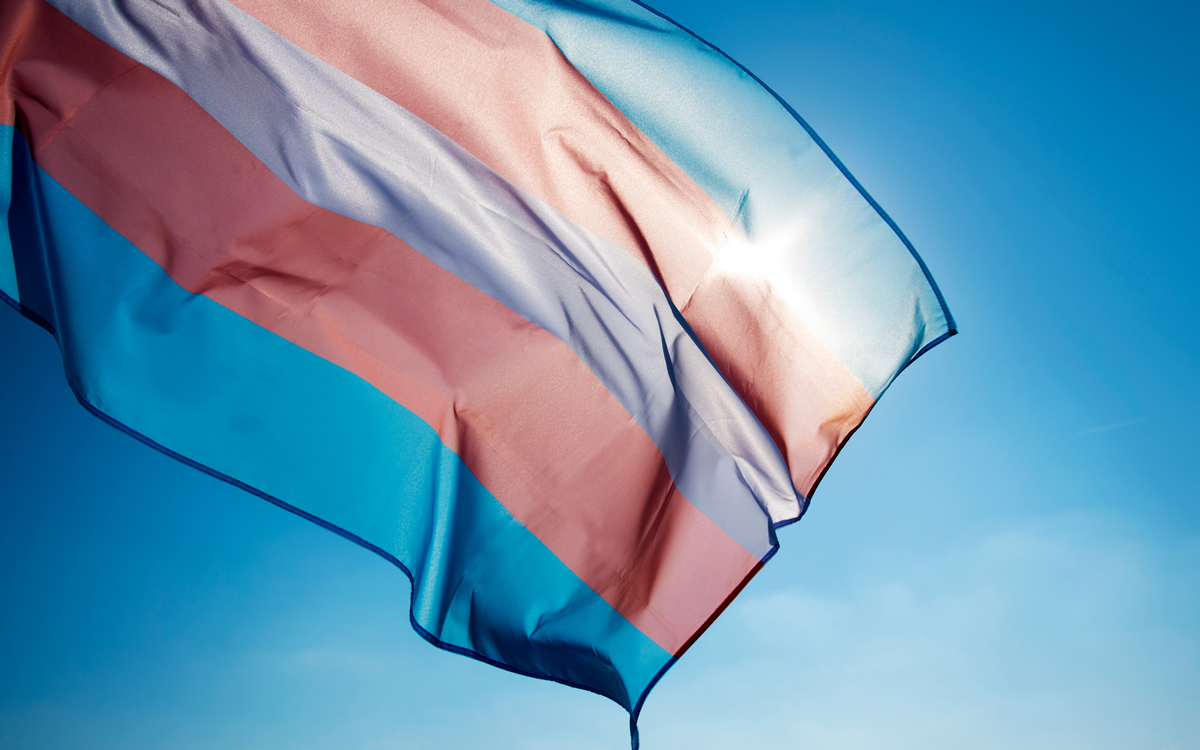
The European Union’s highest court on Thursday ruled member states must allow transgender people to legally change their name and gender on ID documents.
The EU Court of Justice in Luxembourg issued the ruling in the case of “Shipova,” a trans woman from Bulgaria who moved to Italy.
“Shipova” had tried to change her gender and name on her Bulgarian ID documents, but courts denied her requests for nearly a decade.
A ruling the Bulgarian Supreme Court of Cassation issued in 2023 essentially banned trans people from legally changing their name and gender on ID documents. Two Bulgarian LGBTQ and intersex rights groups — the Bilitis Foundation and Deystvie — and ILGA-Europe and TGEU – Trans Europe and Central Asia supported the plaintiff and her lawyers.
“Because her life in Italy also depended on her Bulgarian documents, the lack of documents reflecting her lived gender creates an obstacle to her right to move and reside within EU member states,” said the groups in a press release. “This mismatch between her gender identity and expression and her gender marker in her official documents leads to discrimination in all areas of life where official documents are required. This includes everyday activities such as going to the doctor and paying for groceries by card, finding employment, enrolling in education, or obtaining housing.”
Denitsa Lyubenova, a lawyer with Desytvie, in the press release said the case “concerns the dignity, equality, and legal certainty of trans people in Bulgaria.” TGEU Senior Policy Officer Richard Köhler also praised the ruling.
“Today, the EU Court of Justice has taken an important step towards a right to legal gender recognition in the EU,” said Köhler. “Member states must allow their nationals living in another member state to change their gender data in public registries and identity cards to ensure they can fully enjoy their freedom of movement. National laws or courts cannot stand in their way.”
“Thousands of trans people in the EU are breathing a sigh of relief today,” added Köhler.
European Union
European Parliament resolution backs ‘full recognition of trans women as women’
Non-binding document outlines UN Commission on the Status of Women priorities
The European Parliament on Feb. 11 adopted a transgender-inclusive resolution ahead of next month’s U.N. Commission on the Status of Women meeting.
The resolution, which details the European Union’s priorities ahead of the meeting, specifically calls for “the full recognition of trans women as women.”
“Their inclusion is essential for the effectiveness of any gender-equality and anti-violence policies; call for recognition of and equal access for trans women to protection and support services,” reads the resolution that Erin in the Morning details.
The resolution, which is non-binding, passed by a 340-141 vote margin. Sixty-eight MPs abstained.
The commission will meet in New York from March 10-21.
A sweeping executive order that President Donald Trump signed shortly after he took office for a second time on Jan. 20, 2025, said the federal government’s “official policy” is “there are only two genders, male and female.” The Trump-Vance administration has withdrawn the U.S. from the U.N. LGBTI Core Group, a group of U.N. member states that have pledged to support LGBTQ and intersex rights, and dozens of other U.N. entities.
European Union
Top EU court: Poland must recognize same-sex marriage from other European countries
Activists celebrate landmark decision
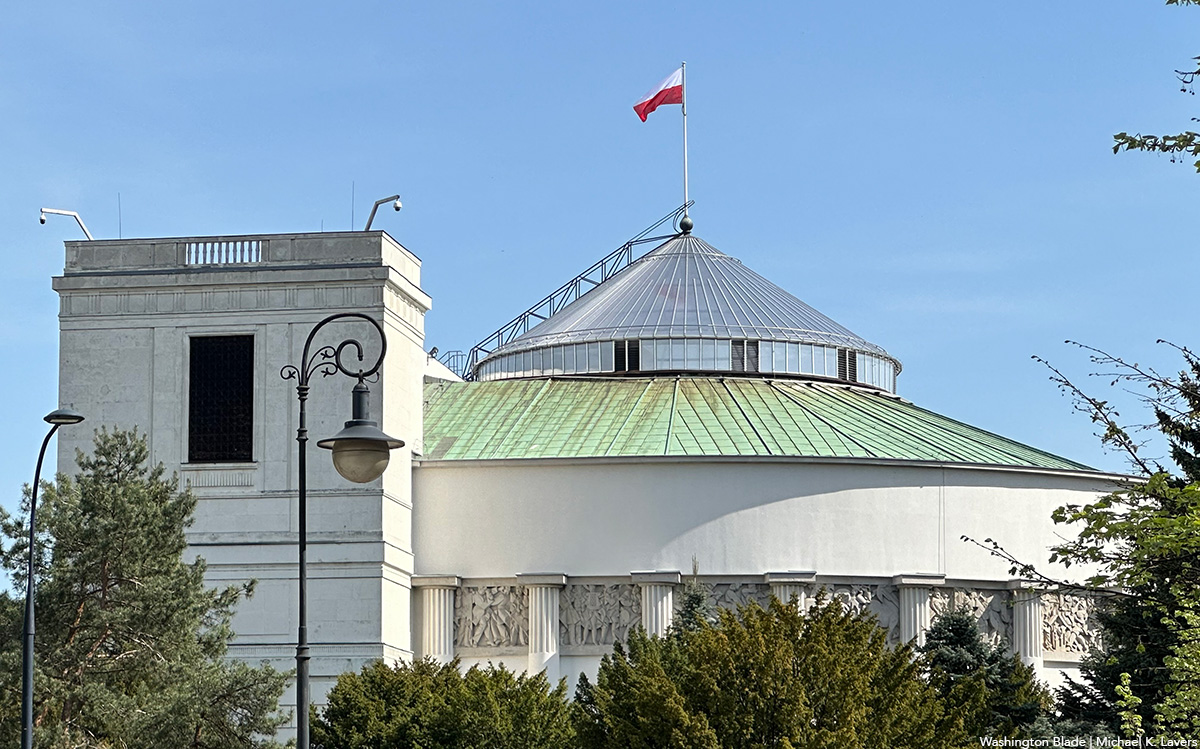
The European Union’s top court on Tuesday ruled member states must recognize same-sex marriages legally performed in other member states.
The EU Court of Justice in Luxembourg ruled in favor of a couple who challenged Poland’s refusal to recognize their German marriage.
ILGA-Europe notes Polish authorities refused “to transcribe into the civil register a certificate of same-sex marriage concluded” in Germany “between a Polish citizen and a Polish-German citizen … on the grounds that Polish law does not allow same-sex marriage.”
The couple who lives in Poland brought their case to Polish courts. The Polish Supreme Administrative Court referred it to the EU Court of Justice.
“Today’s ruling of the Court of Justice of the EU is of key importance not only for the couple involved in the case, but also for the entire LGBT+ community in Poland,” said the Campaign Against Homophobia, a Polish LGBTQ and intersex rights group, in response to the decision. “It clearly states that refusing to transcribe a marriage concluded abroad is incompatible with EU law. Therefore, regardless of the absence of registered partnerships and marriage equality, Poland must ensure the possibility of effective transcription.”
“With this judgment, the CJEU clearly states that the recognition of marriage status is key to enjoying EU citizens’ fundamental right to freedom of movement across the EU,” added ILGA-Europe Advocacy Director Katrin Hugendubel. “The EC now needs to ensure that this judgment is implemented quickly by the Polish state and across the EU.”
Sixteen EU countries — Ireland, Portugal, Spain, France, Luxembourg, Belgium, the Netherlands, Germany, Denmark, Austria, Slovenia, Malta, Greece, Sweden, Finland, and Estonia — have extended full marriage rights to same-sex couples. Poland, Romania, Bulgaria, and Slovakia are the EU countries with no legal recognition of same-sex couples.

How Pepper the courthouse dog helps victims of abuse

Women’s FEST returns to Rehoboth Beach next week

Belarusian lawmakers approve bill to crackdown on LGBTQ rights

Calendar: April 3-9

How new barriers to health care coverage are hitting D.C.

‘Out for McDuffie’ event held at D.C. gay bar

Thousands attend ‘No Kings’ protests in D.C.

Ghanaian president welcomed to Philadelphia amid backlash over anti-LGBTQ bill

PHOTOS: ‘No Kings’ rally and march