District of Columbia
Activists hail new documentary on gays in the military after D.C. showing
‘Serving in Secret’ to premier nationally on MSNBC on Nov. 12
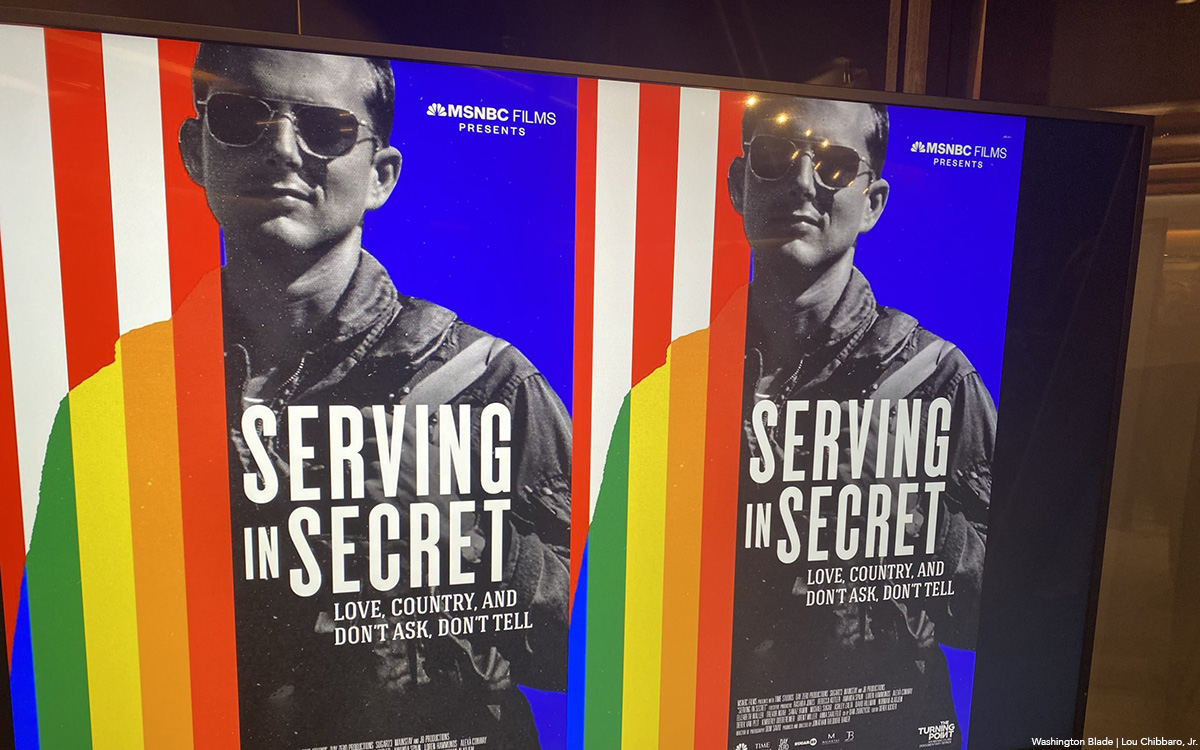
About 150 people, including LGBTQ rights advocates, their supporters and friends, turned out Wednesday for a premier D.C. showing of a new documentary film called “Serving In Secret: Love, Country and Don’t Ask, Don’t Tell.”
A production of MSNBC Films and Time Studios, the film chronicles the hardships and discrimination faced by LGBTQ people serving in the U.S. military going back to the early years of the nation’s armed forces up through the passage by Congress of the controversial “Don’t Ask, Don’t Tell” law and the eventual repeal of that law under the administration of President Barack Obama.
The repeal by Congress of “Don’t Ask, Don’t Tell” cleared the way for the first time in U.S. history for gays, lesbians and bisexuals to serve openly in the military.
The film showing, which was organized by D.C. Mayor Muriel Bowser’s Office of LGBTQ Affairs, took place at the auditorium of the recently opened John Hopkins University Bloomberg Center at 555 Pennsylvania Ave., N.W.
Two of the leading figures in the film’s production, U.S. Naval Academy graduate and former Marine Corps fighter pilot Thomas Carpenter, and his nephew, filmmaker Jonathan Baker, who served as producer and director of the film, appeared as guest speakers on stage following the showing of the film.
A discussion with the two, which included questions from the audience, was moderated by Ryan Bos, executive director of D.C.’s Capital Pride Alliance.
Moving and sometimes highly emotional on-camera interviews with Carpenter make up a significant part of the film, which focuses on his personal story as a gay man who had to hide his sexual orientation during his distinguished tenure as a military officer.
Carpenter’s story includes his love relationship with fellow military member Courtland Hirschi, which the two had to keep secret, and Hirschi’s discharge from the military after authorities discovered he was gay. Carpenter also tells of his struggle in coping with Hirschi’s discharge and the emotional toll when Hirschi, who he considered his spouse, died of AIDS in the early years of the epidemic in the 1980s.
Others who appear in interviews in the film include former U.S. House Speaker Nancy Pelosi (D-Calif.); U.S. Transportation Secretary Pete Buttigieg, who served in the military; former Army Secretary Eric Fanning; LGBTQ activist David Mixner, who spoke out against “Don’t Ask, Don’t Tell” when President Bill Clinton first embraced it; and Aubrey Sarvis, former executive director of the Servicemembers Legal Defense Network, which led the lobbying effort for the repeal of “Don’t Ask, Don’t Tell.”
“Serving In Secret” is scheduled to be shown nationwide on Nov. 12 on MSNBC and on Nov. 13 on Peacock.
Bowser, who attended the film showing, thanked Carpenter, Baker and others involved in the production of the film.
“This is the great team that brought this project to life and made sure that our nation’s LGBTQ+ veterans have their story told,” Bowser said in remarks on stage at the conclusion of the film. “So, I want to thank you for your courage and for sharing your story as well.”
In response to Bos’ question, Carpenter told the audience how he felt in watching what was said to be his first viewing of the final edited version of the film.
“Well, as you can imagine, the making of this film was a double-edge sword in the sense that it brought back a lot of very, very difficult memories for me,” he said. “But at the same time, the good side of its was we were able to accomplish something very significant.”
Carpenter added, “And what I walk away with after seeing this final cut, how in hell they put all that history in 43 minutes is beyond me.” His comment drew laughter and loud applause from the audience.
Baker, who is a twice Emmy-nominated producer and acclaimed filmmaker, thanked the others who played an important role in making the film.
“It’s just been an incredible team effort, including the studio and the network that everybody knows gave us the opportunity to tell the story,” he said. “And to me it’s been profound because I remember growing up with my uncle and I remember loving him dearly as a kid growing up.”
Baker said he was grateful that Carpenter, his uncle, agreed to take part in the film knowing it would bring back difficult memories but at the same time it would include an “inspirational ending,” which included Carpenter playing an important role in joining the nation’s leading LGBTQ rights organizations to successfully obtain the repeal of “Don’t Ask, Don’t Tell.”

District of Columbia
LGBTQ advocates optimistic about D.C.’s expected new mayor
Janeese Lewis George cites strong record of support as Council member
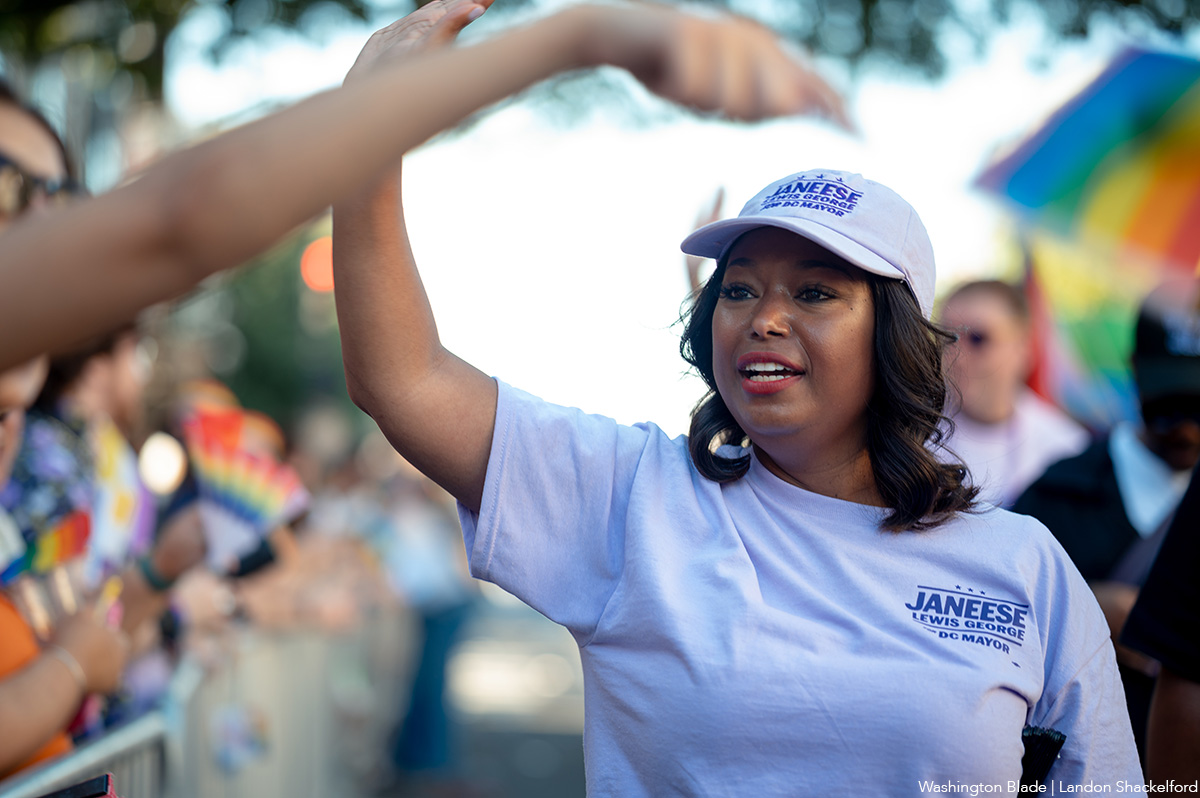
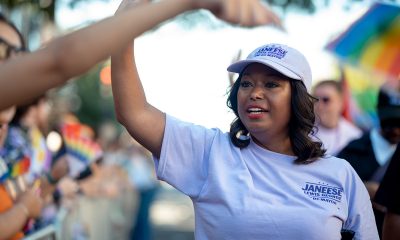
Several prominent D.C. LGBTQ community advocates said they are optimistic that Democratic mayoral nominee Janeese Lewis George, who is expected to easily win election as mayor in the city’s Nov. 3 general election, will continue her strong record of support on LGBTQ issues from her current role as a Ward 4 D.C. Council member.
But most of the seven LGBTQ advocates who responded to an informal Washington Blade survey of community leaders and activists said they would be observing Lewis George’s transition plans for her expected mayoral administration to determine if she will follow through with her campaign promises to put in place policies and funding to strongly support the LGBTQ community.
Lewis George emerged as the decisive winner in the city’s June 16 Democratic primary with 54 percent of the vote in a six-candidate race, with her lead opponent, former D.C. Council member Kenyan McDuffie (D-At-Large) receiving around 37 percent and four lesser-known candidates receiving 4 percent or less.
In a city with an overwhelmingly Democratic electorate, virtually all political observers believe Lewis George will win the November general election to become the city’s next mayor.
In the primary, she received the endorsement of the Capital Stonewall Democrats, the city’s largest local LGBTQ political organization, and received the highest possible candidate rating of +10 from GLAA DC, formerly known as the Gay and Lesbian Activists Alliance of Washington.
With Lewis George, McDuffie, and the four lesser-known candidates in the Democratic primary, including one who identified as bisexual, expressing strong support on LGBTQ issues, LGBTQ advocates acknowledged that most queer voters chose a candidate to support based on non-LGBTQ issues.
And Lewis George’s LGBTQ supporters have said they believe Lewis George received the largest share of the LGBTQ vote based on her outspoken support for social justice related issues, including policies to address the need for affordable housing, which she said impacts LGBTQ people in need, especially queer people of color and transgender residents.
“I think she understands a theory of community and economic development that is both inclusive of LGBTQ people but not exclusive about us,” said Benjamin Brooks, president of GLAA D.C. Brooks also currently serves as interim director of policy for one of the divisions of Whitman-Walker Health, D.C.’s LGBTQ supportive medical clinic and health services organization.
“I think that she represents a change in administration that will see more dollars to public programs that are more pro social,” Brooks said. “We’re going to be looking at who she appoints to the different agencies that we’re interested in and making sure that LGBTQ people are centered in that conversation,” he said.
Brooks added, “We know LGBTQ people were featured heavily in her campaign as organizers and as her staff members. So, I think we should expect to see us included, and she has put out a platform that lifts up all Washingtonians.”
Longtime D.C. gay Democratic activist John Klenert said he, too, will be watching to see if and how Lewis George follows up her campaign promises on LGBTQ issues.
“My number one concern will be with the budgets being what they are in the city, will she continue to fiscally support the Mayor’s Office of LGBTQ Affairs?” he told the Blade. “Number two, will she continue to support the HIV type places like Whitman-Walker,” he said.
Acknowledging that Lewis George has expressed support for these types of programs during the election campaign, Klenert added, “Words are cheap. Let’s see on paper her proposals.”
D.C. gay Democratic activist Peter Rosenstein is among the few LGBTQ activists who publicly raised concern over Lewis George’s status as a Democratic Socialist and member of the controversial Democratic Socialists of America (DSA) national organization.
“I congratulate Ms. George on winning the primary and hope she will do a great job as our next mayor,” Rosenstein told the Blade in a statement. “But the issues I promulgated in the primary still go unanswered,” he said, noting that he is unaware of Lewis George saying whether she disagrees with the DSA’s platform opposing the existence of the state of Israel, not talking to any pro-Israel Zionist organizations, and, among other things, defunding U.S. police departments.
Rosenstein also noted that Lewis Geroge, as far as he knows, has not publicly rebuked one of her supporters who endorsed her for mayor, Ward 8 community activist Jauhar Abraham, who has publicly referred to gay people as “sissies” and “fags” who should not be allowed to teach in the city’s public schools.
“Will she really stand up for the LGBTQ community, or does she agree with those like Jauhar Abraham,” Rosenstein said in his statement. “These are issues she owes the voters answers to.”
Ward 8 gay longtime Democratic and community activist Phillip Pannell, who just won election in the Democratic primary as the city’s Democratic National Committeeman, is among the LGBTQ activists who supports Lewis George’s candidacy for mayor. He told the Blade that Lewis George, while not saying so directly, has made it clear she does not support what he describes as Jauhar Abraham’s anti-gay slurs.
When asked if the Abraham issue as raised by Rosenstein was a concern for him, Pannell said, “No, because I know that Jauhar Abraham’s homophobic statements are in no way in alignment with Janeese Lewis George’s support for our community.”
He added, “You can’t always judge a candidate or basically indict a candidate because of the support of some individuals. There is no way Janeese supports the type of stuff Jauhar spews.”
Like some of the other LGBTQ advocates who spoke to the Blade about Lewis George’s potential impact on the LGBTQ community, Pannell said he is optimistic about her actions as mayor.
“I expect that she will at least maintain the type of support that we are getting under Mayor Bowser if not more so,” he said. “And a good indication of her level of support would be the votes that she has cast in support of our community while she has been a member of the Council,” Pannell said.
Also, like other LGBTQ supporters of Lewis George, Pannell said he is not troubled over her role as a Democratic Socialist. “There are many people who are associated with the Democratic Party who would be very much aligned with Democratic Socialist organizations,” he said. “So that doesn’t bother me at all.”
Ashley Gibbs, who serves as board co-chair of the D.C. LGBTQ+ Community Center, is among the activists who said they are uncertain about Lewis George’s expected impact on the community.
“Certainly, I expect her to win in November given the demographics of D.C.,” she said. “I have to admit I live in Maryland now, so I am less clued into D.C. politics than I used to be,” she added. “So, I think it’s a big unknown. I think we’re just going to have to wait and see what happens and how well Janeese can make things given the federal government.”
David Perruzza, owner of the D.C. LGBTQ bars Pitchers and A League of Her Own, located in the Adams Morgan neighborhood, like other LGBTQ bar owners, said he preferred not to comment on the ins and outs of the race for mayor
But similar to other nightlife related small businesses in the city, including bars and restaurants, Perruzza said he was deeply troubled over what he believed to be Lewis George’s support for ending the so-called tip wage system for bars and restaurants. He said most LGBTQ bar owners believe doing that could force them to go out of business due to excessive labor costs.
Under the tip wage system, which has been in place in D.C. and other cities and states for many years, businesses that employ servers who receive tips can pay them a significantly lower minimum wage called the tip wage compared to the regular minimum wage, which is now $18.40 per hour in D.C. At the initiative of local labor groups, D.C. voters in 2022 approved for the second time Initiative 82, which called for raising the minimum wage for tipped workers to the full minimum wage over a phase-in period of 10 years or more.
Organizations representing local restaurants and bars said most tipped workers make close to if not more than the full minimum wage in tips, and that under the current D.C. law, businesses are required to pay tipped workers the difference if they don’t make the equivalent of the full minimum wage in tips.
They argued that the initial raising of the tip wage from just over $5 per hour to several dollars more an hour created a financial hardship that was forcing many of them to go out of business. The mayor and D.C. Council responded by repealing Initiative 82 and later putting in place in 2025 a compromise law supported by the business owners that brought the tip minimum wage to $10.30 per hour as of July 1, 2026.
The new law calls for the tip minimum wage to increase to 60 percent of the full minimum wage by 2028 and increase incrementally by 5 percent until it reaches 75 percent of the full minimum wage in 2034.
D.C. Council records show that Lewis George voted against the compromise bill when the Council approved it in July of 2025 as an amendment to the city’s Fiscal Year 2026 budget.
Local nightlife advocate and small business owner Salah Czapary, who served as Mayor Bowser’s director of the D.C. Office of Nightlife and Culture from 2022 to 2024, said Lewis George told a group of nightlife business operators and owners during a meeting in May that she opposes yet another ballot measure proposed by the labor advocacy group One Fair Wage that calls for raising the city’s minimum wage for all workers to $25 per hour and for eliminating the subminimum wage for tipped workers.
“I was in the room when she explained to a room full of nightlife small business, arts, and cultural operators that she has spoken with experts in the field,” Czapary told the Blade. He said Lewis George told the gathering that she did not support the latest wage initiative that was attempting to get on the ballot, which was a concern to business owners at the time.
“And I think that’s actually quite impressive for a lawmaker to do when everyone assumes you would support a certain initiative,” he said in referring to Lewis George. “To have one view and then assess the reality that might have changed. And then say that while I agree with the idea of raising the wages — I think most people do — we also don’t live in a vacuum. We have to deal with the realities of the economy,” Czapary said.
“I think D.C., as we know, has been a safe haven for LGBTQ individuals from across the country and has been very progressive on its treatment of LGBTQ people,” he said. “I think we will not expect that to change under our new mayor,” he added. “She was endorsed by many LGBTQ individuals and organizations, and she will continue to build on that progress we’ve made as a city, and we will continue to be that safe haven for people.”
Edmund Morris, president of the D.C. Equality Chamber of Commerce, which he said represents more than 100 LGBTQ+ and allied businesses serving the D.C. Metro area, released a short statement in response to the Blade’s request for comment on the impact his group expects Lewis George to have on the LGBTQ community.
“Janeese Lewis George has emphasized inclusive policies and support for local small businesses, priorities that align with our mission,” the statement says. “We look forward to productively engaging a future administration on how best to support aspiring and active entrepreneurs to flourish in the city that they serve,” it says.
Nick Tsusaki, founder and owner of the D.C. LGBTQ bar Spark Social, said he preferred not to comment on the impact Lewis George will have on policy related to LGBTQ issues. But he said he was impressed by Lewis George’s visits to several LGBTQ bars during the primary campaign.
“I’m really excited for her” he said, “I think she made a point in her last week of campaigning to do like an LGBTQ bar crawl. She came to Spark, to Trade and Bunker,” he said referring to two other D.C. LGBTQ bars. “And really showing dedication to the community in a way that went above and beyond what I had expected –really meeting the community where we’re at.”
He added, “And so, for her to drop in on a Friday night and just talk to – get on the microphone and talk about why she’s excited to fight for our community was really cool to see in an authentic way.”
In response to requests by the Blade and Capital Stonewall Democrats seeking statements from each of the mayoral candidates during the primary campaign, Lewis George submitted these comments, which are excerpted from a longer statement.
“As mayor, I will protect our LGBTQ+ neighbors against federal attacks on their identity, including their health care. … On the Council I have been a strong supporter of pro-LGBTQ+ bills, including making D.C. a sanctuary for people seeking gender-affirming health care as well as addressing discrimination and harassment in nightlife and hospitality…And as mayor, I am prepared to move up and win those fights – a fight for D.C. statehood, a fight for our true economy, and a real opportunity to uplift our Black queer and trans youth.”
District of Columbia
D.C. Council approves increased funding for Mayor’s Office of LGBTQ Affairs
Increase attached to 2027 budget bill

The D.C. Council on July 14 gave final approval for the city’s fiscal year 2027 budget that includes an amendment calling for increasing the number and size of funding grants that the Mayor’s Office of LGBTQ Affairs provides for local organizations providing services for the LGBTQ community.
The amendment, called the “LGBTQ Community Grant Amendment Act of 2026,” was introduced earlier this year by D.C. Council member Zachary Parker (D-Ward 5), the Council’s only gay member.
The D.C. LGBTQ Budget Coalition called the Parker amendment “a historic measure that establishes the District’s most sustainable model for a vehicle for investing in LGBTQ communities.”
The Council approved the version of the FY 2027 budget bill with the attached Parker amendment in its first of two required votes on June 9. Shortly after voting unanimously to give final approval of an earlier version of the two-part budget measure on July 7 that includes the Parker amendment, the Council sent the bill to Mayor Muriel Bowser for her signature.
Bowser has expressed strong opposition to several provisions in the $22 billion budget measure passed by the Council that are unrelated to the Parker amendment regarding the Office of LGBTQ Affairs. The mayor has yet to say whether she will sign, veto, or choose not to sign the bill.
The latter option would allow the bill to become law if Congress does not choose to overturn it during its required 30-day legislative review period for all D.C. bills. Political observers believe the Council will vote to override a veto if Bowser chooses to veto the bill.
When contacted by the Washington Blade on July 22 to determine where the mayor stands on the budget bill, mayoral spokesperson Daniel Gleick said only, there was “no update on the budget just yet.”
Among other things, the Parker amendment calls for the Mayor’s Office of LGBTQ Affairs to issue a $980,000 grant in FY 2027 to a private, nonprofit organization in partnership with the office “for the purpose of supporting programs that promote the welfare of the lesbian, gay, bisexual, transgender, and questioning community.”
It would allocate $680,000 of that funding total from existing funds from the city’s community affairs grants program and calls for $200,000 in newly appropriated funds.
It says the organization selected would also initiate its own fundraising effort to expand the amount of funds beyond the amount the office would provide, enabling it to provide larger grants to a greater number of local LGBTQ organizations.
“The legislation arrives at a critical moment, as LGBTQ-serving organizations face unprecedented uncertainty,” the D.C. Budget Coalition said in its comment on the Parker amendment. “Growing demand for services is colliding with shrinking resources, federal attacks on LGBTQ programs, and ongoing threats to local funding streams,” the coalition’s statement says.
In what some observers have called a highly controversial action; the budget bill approved by the Council reverses and restores millions of dollars in budget cuts proposed by Bowser in the budget she submitted to the Council earlier this year.
Among other things, the Council’s budget preserves the current level of funding for housing vouchers, childcare, paid family leave, and other programs slated to be cut in the mayor’s proposed budget, according to a report by the Washington Post.
Bowser points out that the Council approved budget bill calls for using $150 million from the city’s reserve fund, which she and others have said could put the city in jeopardy in future years. The mayor has said the cuts were needed to prevent a major funding shortfall brought about by the action by Republicans in Congress to cut the city’s budget by over a billion dollars.
District of Columbia
Is the Metro safe for riders?
WMATA says crime dropped 37 percent on system in 2025

I was inside Benning Road train station in April waiting for my train with two friends on the way to school. It usually took me 25-30 minutes to get from Benning Road Station to school at Congress Heights. As I waited for the train, I kept noticing that every train that got to five minutes away would disappear from the Metro screen before it got to my stop.
I found out from one of my friends that a Metro work vehicle had crashed into a train at Metro Center and that all trains were now delayed. While my friends were able to call their family to pick them up, I had no such luxury. The train was my only option. It took me more than an hour to get to school. I missed my first period because of it and had to make up my work later in the day. I was marked absent because when a student misses one class, they’re marked absent for the day and an email is sent to their parents. I felt irritated knowing that I had to deal with all of these problems that weren’t even my fault due to an incident that happened on a different side of town.
The incident at Metro Center isn’t the only incident that I have experienced on the subway. I have experienced kids fighting and almost pushing me on the tracks, massive delays because a woman was passed out on the train and Metro police pulling out their assault rifles and arresting someone in the station, which caused people to panic and start running.
I later learned the crash that led to me being late to school caused 11 injuries to people who were on the train, according to media reports. And the Metro has experienced other dangerous incidents this year. A man was beaten so badly on Cinco de Mayo that he needed staples in his head and another man was beaten to death by a stranger at the Addison Road station.
However, I’ve never experienced any incident that has led to me getting hurt, nor actually seen anyone get hurt.
So, is the Metro safe?
Metro experienced the lowest crime rate in its history in 2025, the Washington Metropolitan Area Transit Authority said. The crime rate decreased by 37 percent in 2025 compared to 2024.
Last year, the Metro Transit Police Department increased enforcement efforts department-wide by more than 25 percent, Metro said. WMATA said it is in the process of installing upgraded video systems on our 6000 and 7000-series rail cars, which make up most of the cars in the system. This new camera system allows for live video access to rail cars from Metro’s Integrated Command and Communications Center.
Asked if he felt unsafe using the Metro, Dr. Aruna Rajam, a teacher at Bard High School Early College DC and George Washington University, recalled being on the train with a man who was smoking weed and yelling.
“It didn’t turn physically violent, but it was alarming and made me feel like the situation could go sideways quickly,” said Rajam, who takes the train to both of his jobs, traveling day and night.
Incidents like these are what make Rajam feel unsafe occasionally when he is riding the subway at night: “Late at night — like my 8:45 ride from Foggy Bottom to Springfield — it’s a different atmosphere.”
Jayden Payne, a rising sophomore at Bard, worries even more.
“There was a man who seemed intoxicated, moving around his phone, pretending it was a gun-all up in ladies’ faces,” he said in an interview.
When asked if he would recommend the subway to others, he gave a firm “no” due to all of the incidents that he has heard about that have happened on the Metro.
Erin Bray, who graduated from Bard in June, recalled an incident when a man brought a gun on the train when she was on it. Asked if she felt safe on the subway, Bray said: “No, because there’s not enough security and people keep bringing [weapons] on there.”
Metro said it launched a Safety Risk Reduction Plan to improve riders’ safety and employs several other safety tactics, including Safe Passage patrols to help students in D.C. get to and from school safely.
While all of the people interviewed said that they saw or experienced an uncomfortable incident, Metro said it is increasing its security and safety protocols.
WMATA data coincides with what one of my interviewees said about his experience on Metro.
“I feel safer now than I felt riding the Metro today than I did 10 years ago,” Dr. Samuel Slattery, a social science teacher at Bard High School Early College, said.
He spoke of his experience with the Southeastern Pennsylvania Transportation Authority subway in Philadelphia in comparison: “… That’s what an unsafe train system feels like,” Slattery said.
The week before he was interviewed in May, Slattery said he was on SEPTA and there was a woman “eating beans off the floor of the train,” a homeless man “passed out in the middle of the train,” and a mentally ill woman yelling in his and other passengers’ faces that, “‘Jesus was watching her’ and the rest of us were in contact with demons.” This incident agitated Slattery so much that he said, “Screw this” to his friend and decided to pay extra for an Uber.
Metro riders who want to report an incident or safety concern can call Metro Transit Police (MTPD) at 202-961-2121 or text MYMTPD (696783). Metro also posts a daily Crime Blotter on its website where the public can see the calls MTPD responded to on a given day. The Crime Blotter can be found here: https://www.wmata.com/about/transit-police/crime-stats.cfm
Christian Jennings, a 2026 graduate of Bard High School Early College DC, is a rising freshman at North Carolina State University, where he plans to major in nuclear engineering. He worked with journalist-instructors at Youthcast Media Group on this article.

Suzanne Goode is not good for Rehoboth Beach

Continue to engage in community after Pride month

Doug Ollivant to face Eugene Vindman in Va. 7th Congressional District

LGBTQ advocates optimistic about D.C.’s expected new mayor

Progressives score victory as El-Sayed wins Mich. Senate primary

PHOTOS: Amsterdam Pride Canal Parade

Amsterdam Pride Canal Parade draws hundreds of thousands

Reggie White relishing first season as artistic director of Woolly Mammoth

Madonna headlines World Pride Music Festival in Amsterdam

PHOTOS: Petal Release Party
-

 Photos5 days ago
PHOTOS: Amsterdam Pride Canal Parade
-
Netherlands5 days ago
Amsterdam Pride Canal Parade draws hundreds of thousands
-
Theater4 days ago
Reggie White relishing first season as artistic director of Woolly Mammoth
-
Celebrity News4 days ago
Madonna headlines World Pride Music Festival in Amsterdam