Sports
Gay Games 11 begin in Hong Kong and Mexico
Registrations are reportedly far below expectations
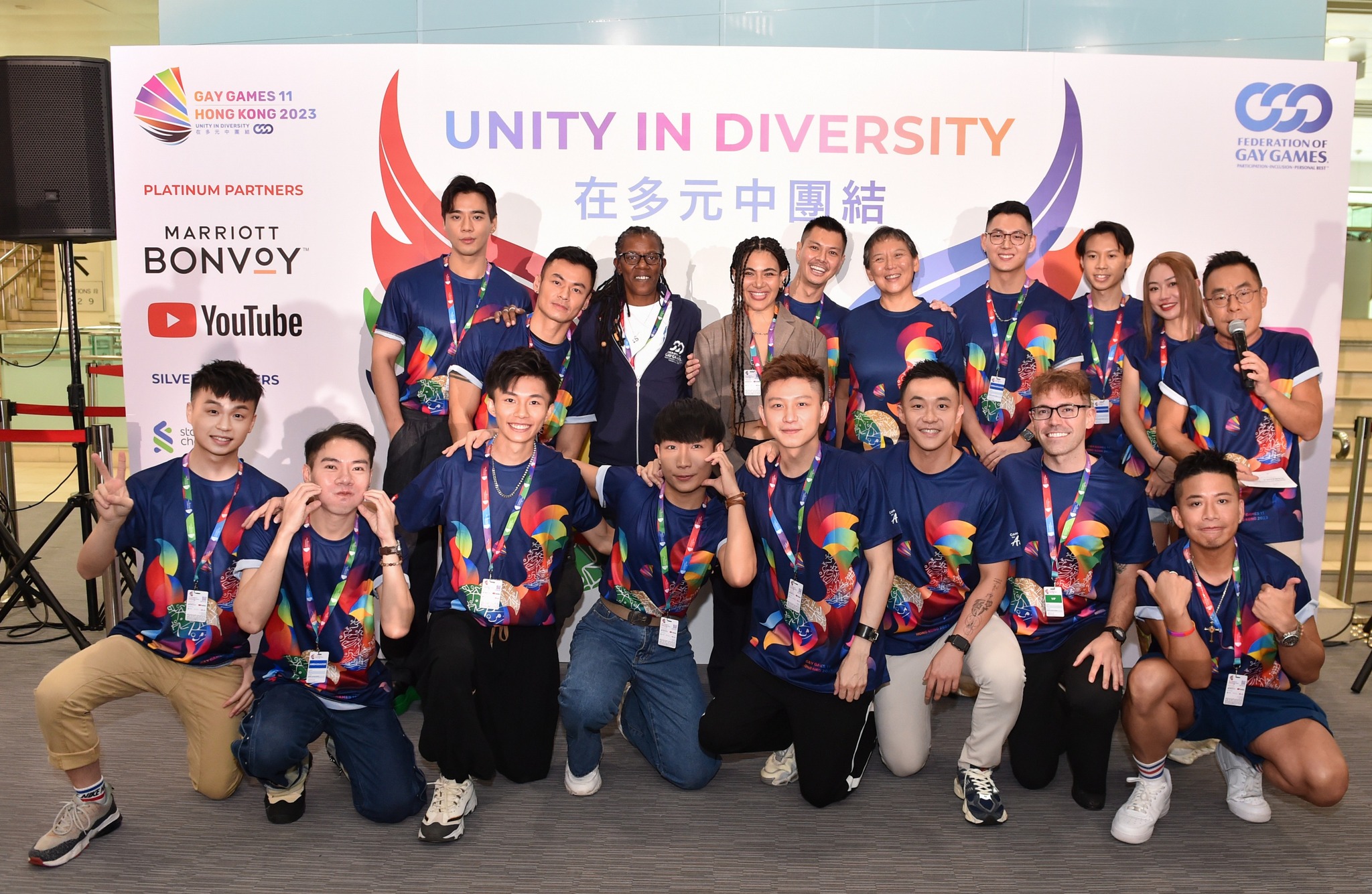
Organizers call it the world’s largest inclusive sports, arts and culture event: The 11th Gay Games, delayed by a year and cohosted by the cities of Hong Kong and Guadalajara, Mexico. They got underway Friday, and for the first time in the 40-year history of the games, they are being held in a city in Latin America and another city in Asia.
More than 2,300 athletes from 45 countries, including the U.S, Britain, South Korea and China are expected to take part in the Hong Kong games, according to organizers. Soccer is the main event this weekend.
Dodgeball, soccer, swimming, powerlifting and track-and-field are among the events this weekend in Guadalajara, according to that event’s website.
But according to reports, the number of athletes and spectators at both venues is far below the standards set in previous Gay Games.
These games were originally planned for just one city, Hong Kong, this time last year. The intent was for Gay Games 11 to serve as what organizers called “a beacon of hope” for the LGBTQ community in a Chinese-ruled region that challenges restrictions on gay rights.
While it is legal to be gay in China and many of its major cities have thriving LGBTQ social scenes, same-sex marriage and adoption by gay people are illegal and there are no legal protections against LGBTQ discrimination.
To many Chinese government officials, being gay is “a malign foreign influence that is stopping youth from getting married and having children,” Darius Longarino, a senior fellow at the Paul Tsai China Center at Yale Law School, recently told NBC News.
That and the summer shutdown of the Beijing LGBT center by the government in May, affirmed the decision to divide Gay Games 11 across two continents, which was at first driven by Hong Kong’s strict COVID-19 protocols, as Reuters reported. Organizers postponed the games for 12 months due to the city’s strict COVID-19 protocols, and it was decided to divide the competitions with runner-up bidder Guadalajara in western Mexico.
Despite the locales being more than eight thousand miles apart, organizers have coordinated a series of sporting events under the slogan, “unity in diversity.”
“Everyone aged 18/+ is welcome to participate,” according to the Hong Kong venue’s website, “regardless of sexual orientation, gender identity, ethnicity or even training level.”
Inclusion isn’t as much of a problem at this Gay Games as is the lack of participants and spectators.
Original estimates for the 2022 event in Hong Kong was for 12,000 participants, 75,000 spectators and 3,000 volunteers from 100 countries. The 36 events were to include Dragon Boat Racing, Dodgeball and eSports.
But for 2023, Reuters reports registrations fell far below expectations, due in part to ongoing worries about COVID-19 and LGBTQ rights in China and concerns over safety in Guadalajara, where crime and kidnappings are common.
One week ago, organizers in Guadalajara had registered only 2,458 participants, and Hong Kong had under 2,400, for a combined 4,839 athletes. It’s unheard of for a Gay Games to have fewer than 8,000 participants.
The games were first held in San Francisco in 1982. Organizers boast this is “one of the largest global events of their kind,” according to the Gay Games 11 website, bringing people together” to experience unforgettable moments of joy through a unique combination of sport, community and culture.”
But according to Reuters, what is bringing people together in Guadalajara are the criminals who prey upon visitors. The city is located in the state of Jalisco, where drug cartels operate freely.
Wayne Morgan, a senior Australian athlete who has competed in six prior Gay Games, told Reuters he was drugged and robbed last year when he visited Guadalajara for a planning conference related to this year’s games. He said he made his way to the police station and found himself in a long queue of other crime victims, where he was told: “This happens a lot.”
A spokesperson for the Federation of Gay Games told Reuters the decision to split the event had a “significant impact on registration numbers” but added that the organizers believed the choice of two locations “allows even more people from around the world to celebrate LGBTQ+ sports with us.”
But to Morgan, splitting the host cities was “a mistake” and that low numbers could deter corporate sponsorship in the future.
“In my heart of hearts, I wish the whole thing was canceled and we could skip to Valencia in 2026,” he said. The next games are planned for Valencia, Spain.
Taiwan’s competitors withdrew their registration from the Hong Kong event in August, citing fears their participants could be arrested if they display the island’s flag or use its name. Human rights activists called for the games in Hong Kong to be canceled, accusing organizers of aligning themselves with “pro-authoritarian figures responsible for widespread persecution against the people of Hong Kong.”
In response to the low registration numbers, Hong Kong organizers canceled several events, including field hockey and Rugby 7s as well as some in the category of track-and-field.
Gay Games 11 runs through Nov. 11.





Sports
New IOC policy bans trans women from Olympics
New regulation to be in effect at 2028 summer games in Los Angeles
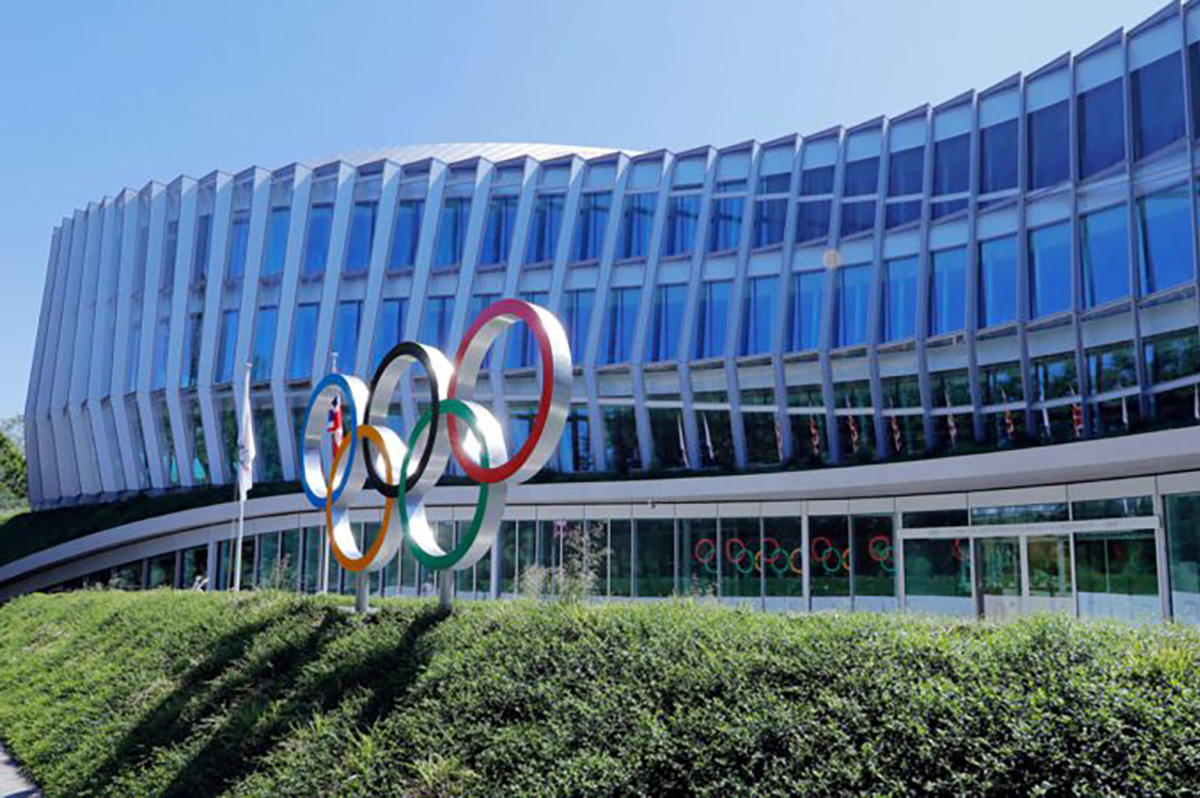
The International Olympic Committee on Thursday announced it will not allow transgender women from competing in female events at the Olympics.
“For all disciplines on the Sports Program of an IOC event, including individual and team sports, eligibility for any Female Category is limited to biological females,” reads the new policy.
The policy states “eligibility for the Female Category is to be determined in the first instance by SRY Gene screening to detect the absence or presence of the SRY Gene.”
“On the basis of the scientific evidence, the IOC considers that the SRY (sex-determining Region Y) Gene is fixed throughout life and represents highly accurate evidence that an athlete has experienced or will experience male sex development,” it reads. “Furthermore, the IOC considers that SRY Gene screening via saliva, cheek swab or blood sample is unintrusive compared to other possible methods. Athletes who screen negative for the SRY gene permanently satisfy this policy’s eligibility criteria for competition in the Female Category.”
The policy states the test “will be a once-in-a-lifetime test” unless “there is reason to believe a negative reading is in error.”
The new regulation will be in place for the 2028 Summer Olympics in Los Angeles.
“I understand that this a very sensitive topic,” said IOC President Kirsty Coventry on Thursday in a video. “As a former athlete, I passionately believe in the rights of all Olympians to take part in fair competition.”
“The policy that we have announced is based on science and it has been led by medical experts with the best interests of athletes at its heart. The scientific evidence is very clear: male chromosomes give performance advances in sport that rely on strength, power, or endurance,” she added. “At the Olympic Games, even the smallest margins can be the difference between victory and defeat. So, it is absolutely clear that it would not be fair for biological males to compete in the female category. In addition, in some sports it would simply not be safe.”
(Video courtesy of the IOC)
Laurel Hubbard, a weightlifter from New Zealand, in 2021 became the first trans woman to compete at the Olympics.
Imane Khelif, an Algerian boxer, won a gold medal at the 2024 Summer Olympics in Paris. Khelif later sued JK Rowling and Elon Musk for cyberstalking after they questioned her gender identity.
Ellis Lundholm, a mogul skier from Sweden, this year became the first openly trans athlete to compete in any Winter Olympics when he participated in Milan Cortina Winter Olympics in Italy.
President Donald Trump in February 2025 issued an executive order that bans trans women and girls from female sports teams in the U.S.
The U.S. Olympic and Paralympic Committee last July banned trans women from competing in female sporting events. Republican lawmakers have demanded the IOC ban trans athletes from women’s athletic competitions.
“I’m grateful the Olympics finally embraced the common sense policy that women’s sports are for women, not for men,” said U.S. Sen. Tom Cotton (R-Ark.) on X.
An IOC spokesperson on Thursday referred the Washington Blade to the press release that announced the new policy.
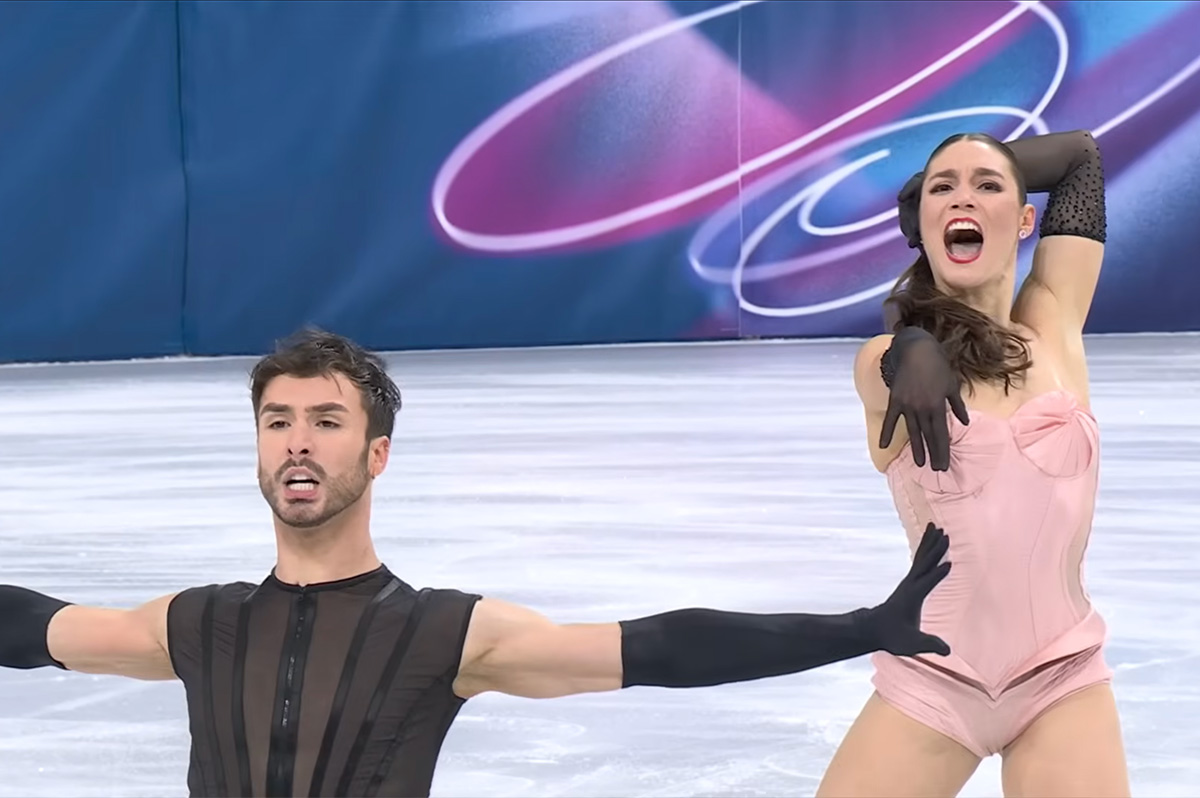
More than a dozen LGBTQ athletes won medals at the Milan Cortina Winter Olympics that ended on Sunday.
Cayla Barnes, Hilary Knight, and Alex Carpenter are LGBTQ members of the U.S. women’s hockey team that won a gold medal after they defeated Canada in overtime. Knight the day before the Feb. 19 match proposed to her girlfriend, Brittany Bowe, an Olympic speed skater.
French ice dancer Guillaume Cizeron, who is gay, and his partner Laurence Fournier Beaudry won gold. American alpine skier Breezy Johnson, who is bisexual, won gold in the women’s downhill. Amber Glenn, who identifies as bisexual and pansexual, was part of the American figure skating team that won gold in the team event.
Swiss freestyle skier Mathilde Gremaud, who is in a relationship with Vali Höll, an Austrian mountain biker, won gold in women’s freeski slopestyle.
Bruce Mouat, who is the captain of the British curling team that won a silver medal, is gay. Six members of the Canadian women’s hockey team — Emily Clark, Erin Ambrose, Emerance Maschmeyer, Brianne Jenner, Laura Stacey, and Marie-Philip Poulin — that won silver are LGBTQ.
Swedish freestyle skier Sandra Naeslund, who is a lesbian, won a bronze medal in ski cross.
Belgian speed skater Tineke den Dulk, who is bisexual, was part of her country’s mixed 2000-meter relay that won bronze. Canadian ice dancer Paul Poirier, who is gay, and his partner, Piper Gilles, won bronze.
Laura Zimmermann, who is queer, is a member of the Swiss women’s hockey team that won bronze when they defeated Sweden.
Outsports.com notes all of the LGBTQ Olympians who competed at the games and who medaled.
Sports
US wins Olympic gold medal in women’s hockey
Team captain Hilary Knight proposed to girlfriend on Wednesday
The U.S. women’s hockey team on Thursday won a gold medal at the Milan Cortina Winter Olympics.
Team USA defeated Canada 2-1 in overtime. The game took place a day after Team USA captain Hilary Knight proposed to her girlfriend, Brittany Bowe, an Olympic speed skater.
Cayla Barnes and Alex Carpenter — Knight’s teammates — are also LGBTQ. They are among the more than 40 openly LGBTQ athletes who are competing in the games.
The Olympics will end on Sunday.

Colo. activists condemn SCOTUS conversion therapy ruling

Is Ghana’s selective justice a human rights contradiction?

Supreme Court ruling against conversion therapy bans could affect Md. law

Glisten report details hostile climate for LGBTQ students

As mayor’s race takes shape, candidates endorse LGBTQ equality

‘Out for McDuffie’ event held at D.C. gay bar

The Oscar-losing performance that’s too good to miss

‘Jonah’ an undeniably compelling but unusual memory play

Ghanaian president welcomed to Philadelphia amid backlash over anti-LGBTQ bill

PHOTOS: ‘No Kings’ rally and march
-

 District of Columbia2 days ago
‘Out for McDuffie’ event held at D.C. gay bar
-
Movies3 days ago
The Oscar-losing performance that’s too good to miss
-
Theater3 days ago
‘Jonah’ an undeniably compelling but unusual memory play
-
Ghana2 days ago
Ghanaian president welcomed to Philadelphia amid backlash over anti-LGBTQ bill