Virginia
Two lawsuits filed against Va. guidelines for transgender, nonbinary students
Republican Gov. Glenn Youngkin sought regulations

The American Civil Liberties Union of Virginia and a private law firm on Thursday filed two lawsuits against the state’s guidelines for transgender and nonbinary students.
One of the plaintiffs, a high school student in York County to whom the press release refers as “Jane Doe,” claims “at least one teacher refused to address by her correct first name.” The second plaintiff, “Lily Loe,” a middle school student in Hanover County, “is not allowed to participate in a girls’ sports team.”
“When you look at the ways that VDOE’s (Virginia Department of Education) model policies are hurting transgender and nonbinary students like our clients, it’s hard to avoid the conclusion that their authors were purposefully trying to erase gender non-conforming students from the classroom,” said Andrew Ewalt, co-counsel and partner at Freshfields Bruckhaus Deringer LLP, which has an office in D.C. “That flouts both existing nondiscrimination law and the Virginia law that directed VDOE to develop model policies in the first place.”
The Virginia Department of Education last July announced the new guidelines for which Republican Gov. Glenn Youngkin asked.
Equality Virginia and other advocacy groups claim the guidelines, among other things, would forcibly out trans and nonbinary students. Arlington County Public Schools, Fairfax County Public Schools and Prince William County Schools are among the school districts that have refused to implement them.
“It was clear since the day that he took office that Gov. Youngkin and his Department of Education would target LGBTQ+ Virginians and single out transgender and nonbinary students for discrimination, and now that some school boards are implementing and enforcing their model policies for public schools, it’s even more clear that the harm is real,” said Equality Virginia Executive Director Narissa Rahaman on Thursday in a statement.
“We applaud the ACLU of Virginia for taking on these harmful policies and for fighting for the health and well-being of students,” added Rahaman. “We’re proud to work toward those goals, together.”




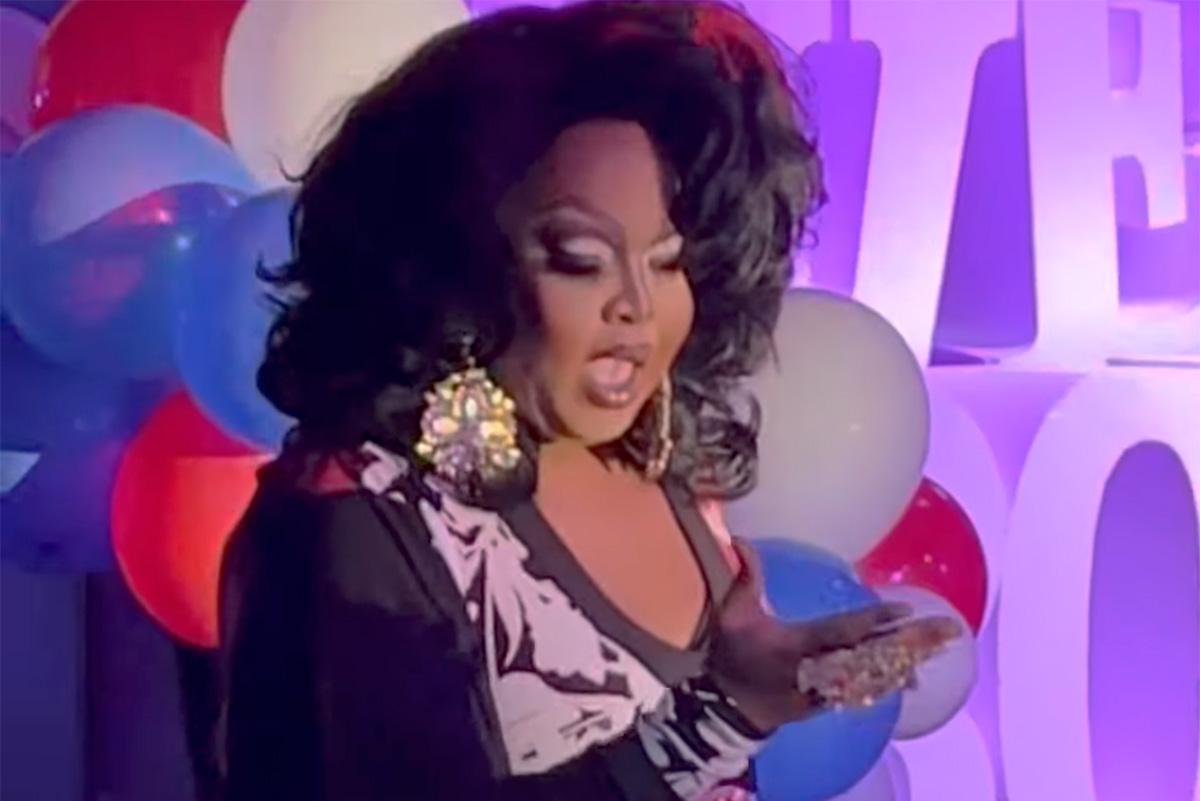
A gay man was murdered in Petersburg, Va., on March 13.
Shyyell Diamond Sanchez-McCray, who was also known as Saamel and Mable, was a drag queen who won the Miss Mayflower EOY pageant in 2015. Reports also indicate Sanchez-McCray, 42, was a well-known community activist in Virginia and in North Carolina.
Local media reports indicate police officers found Sanchez-McCray shot to death inside a home in Petersburg.
Sanchez-McCray’s brother, Jamal Mitchell Diamond, in a public statement the Washington Blade received from Equality Virginia and GLAAD, said Sanchez-McCray was not transgender as initial reports indicated.
“Our family has always embraced the fullness of who he was. He used the names Saamel, Shyyell, and Mable interchangeably, and we honor all of them. There is no division within our family regarding how he is being represented — only a shared commitment to preserving his truth with love and respect,” said Diamond.
“He was also deeply committed to community work through Nationz Foundation, where he worked and completed multiple state-certified programs to support marginalized communities,” added Diamond. “That work meant a great deal to him.”
Authorities have not made any arrests.
The Petersburg Bureau of Police has asked anyone with information about Sanchez-McCray’s murder to call Petersburg-Dinwiddie Crime Solvers at 804-861-1212.
Virginia
Virginia General Assembly’s 2026 legislative session ends
Voters in November will consider repealing marriage amendment
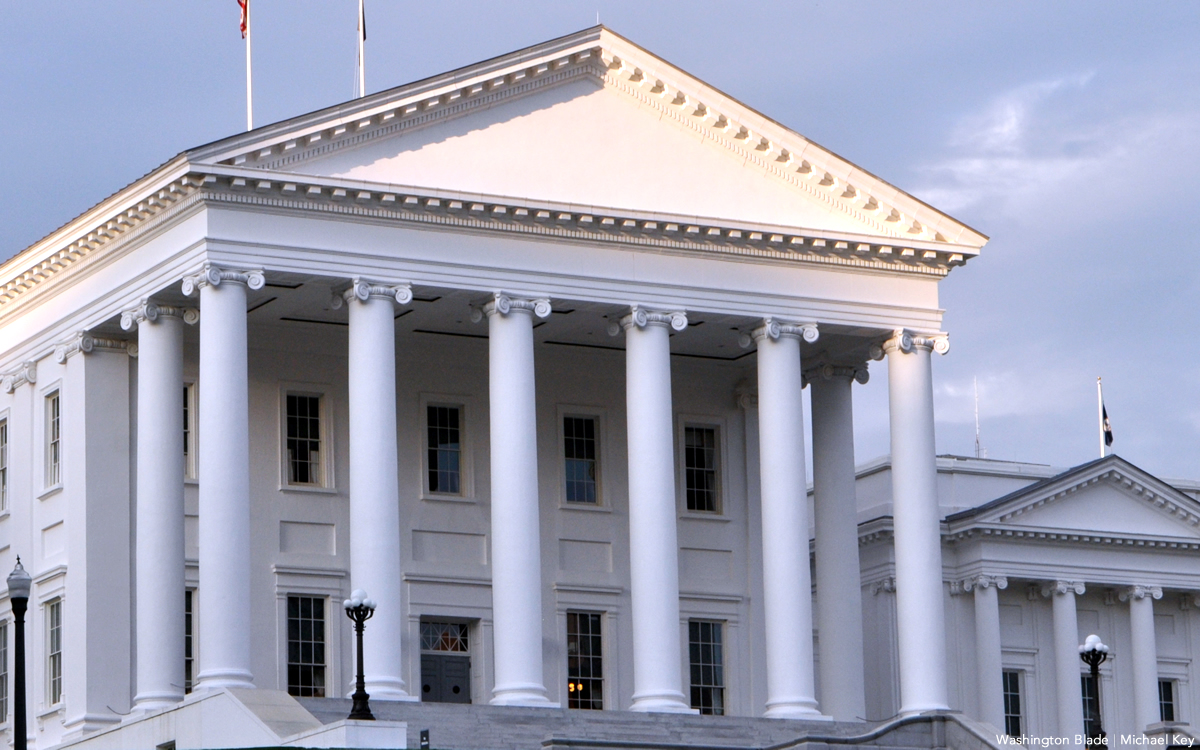
The Virginia General Assembly’s 2026 legislative session ended on March 14.
Lawmakers have yet to approve a budget, but they did pass a resolution that paves the way for a referendum on whether to repeal the state’s constitutional amendment that defines marriage as between a man and a woman. Lawmakers also advanced House Bill 60, which would protect PrEP users from insurance discrimination.
Democratic Gov. Abigail Spanberger has until April 13 to decide to pass, amend, or veto legislation before it goes back to the House of Delegates on April 22.
Spanberger on Feb. 6 signed the bill that sets the stage for the marriage amendment referendum. Voters will consider whether to “remove the ban on same-sex marriage; (ii) affirm that two adults may marry regardless of sex, gender, or race; and (iii) require all legally valid marriages to be treated equally under the law?”
Equality Virginia has been working during this legislative cycle to urge lawmakers to allocate funding towards LGBTQ rights. The budget would expand funding for schools, competency training for the 988 suicide hotline, and funding to provide gender affirming care to LGBTQ youth.
“As the budget moves through conference and the Reconvene Session approaches on April 22, Equality Virginia remains focused on ensuring our victories this session translate into durable protections,” Equality Virginia Executive Director Narissa Rahaman told the Washington Blade in a statement. “Progress on marriage equality, nondiscrimination protections, and HIV care funding was essential, but Virginia must do more.”
Virginia
Va. lawmakers consider partial restoration of Ryan White funds
State Department of Health in 2025 cut $20 million from Part B program
The Virginia General Assembly is considering the partial restoration of HIV funding that the state’s Department of Health cut last year.
The Department of Health in 2025 cut $20 million — or 67 percent of total funding — from the Ryan White Part B program.
The funding cuts started with the Trump-Vance administration passing budget cuts to federal HIV screening and protection programs. Rebate issues between the Virginia Department of Health and the company that provides HIV medications began.
Advocates say the funding cuts have disproportionately impacted lower-income people.
The Ryan White HIV/AIDS Program, a federal program started in 1990, provides medical services, public education, and essential services. Part B offers 21 services, seven of which remained funded after the budget cuts.
Equality Virginia notes “in 2025, a 67 percent reduction severely destabilized HIV services across the commonwealth.”
Virginia lawmakers have approved two bills — House Bill 30 and Senate Bill 30 — that would partially restore the funding. The Ryan White cuts remain a concern among community members.
Both chambers of the General Assembly must review their proposed changes before lawmakers can adopt the bills.
“While these amendments aren’t a full restoration of what community-based organizations lost, this marks a critical step toward stabilizing care for thousands of Virginians living with HIV,” said Equality Virginia Executive Director Narissa Rahaman. “Equality Virginia plans to continue their contact with lawmakers and delegates through the conference and up until the passing of the budget.”
“We appreciate lawmakers from both sides of the aisle who recognized the urgency of this moment and will work to ensure funding remains in the final version signed by the governor,” added Rahaman.

‘No Kings’ protests set for D.C.

Border to border: modern slavery and human trafficking in refugee movements across East Africa

New IOC policy bans trans women from Olympics

Introducing the Torchbearers Awards honoring queer, trans women and nonbinary people

Pa. House passes bill to codify marriage equality in state law

PHOTOS: Capital Stonewall Democrats 50th anniversary

‘Inherit the Wind’ isn’t about science vs. religion, but the right to think

Small is beautiful: subcompact SUVs

Polish court rules country must recognize same-sex marriages from EU states

Capital Stonewall Democrats 50th anniversary gala draws sold out crowd
-

 Photos3 days ago
PHOTOS: Capital Stonewall Democrats 50th anniversary
-
Theater4 days ago
‘Inherit the Wind’ isn’t about science vs. religion, but the right to think
-
Autos4 days ago
Small is beautiful: subcompact SUVs
-
Poland3 days ago
Polish court rules country must recognize same-sex marriages from EU states