Florida
Settlement and clarification reached in Fla. ‘Don’t Say Gay’ law
Republican Gov. Ron DeSantis signed statute in 2022
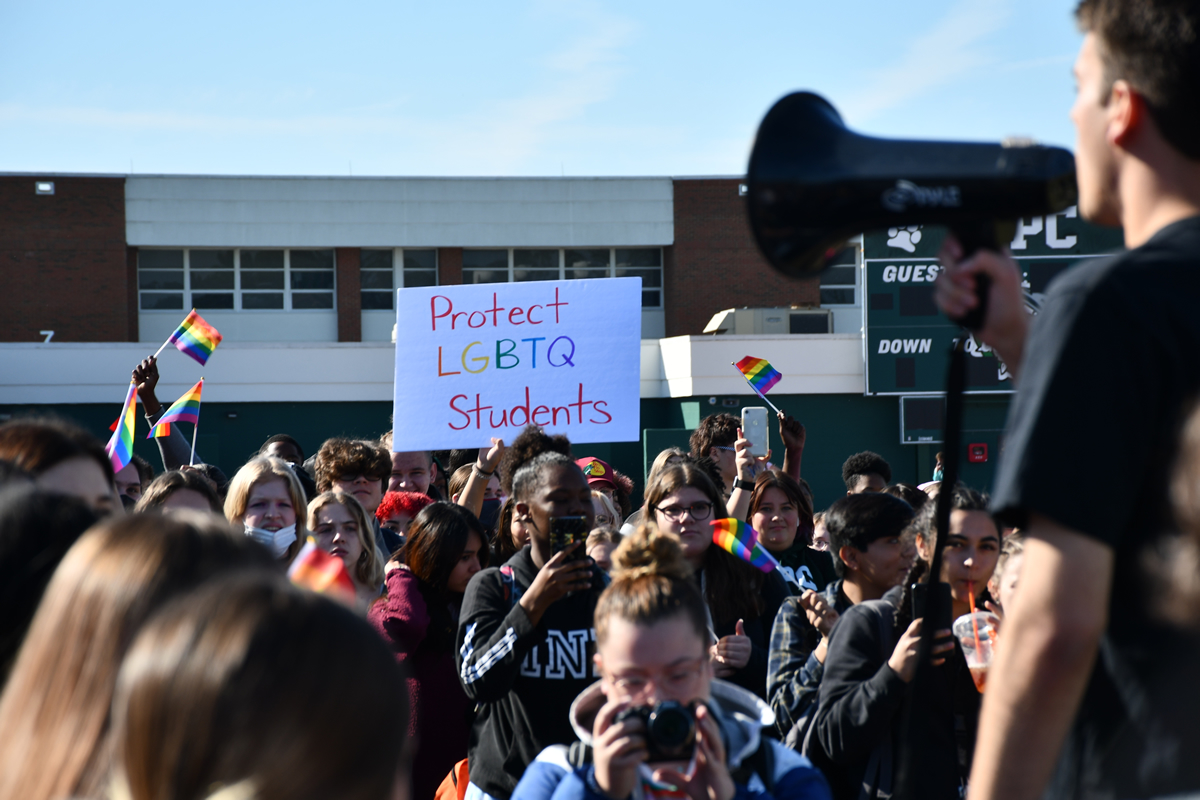
A settlement reached with the Florida State Board of Education, Florida Department of Education and various school districts and the attorneys and plaintiffs clarifies what is allowed in Florida classrooms under the state’s controversial “Parental Rights in Education” law colloquially referred to as the “Don’t Say Gay” law.
The plaintiffs’ lawyers at Kaplan Hecker & Fink LLP and the National Center for Lesbian Rights filed the agreement with the 11th U.S. Court of Appeals on Tuesday. The agreement effectively nullifies the most dangerous and discriminatory impacts of the law, and makes clear that the law must be applied neutrally and is no license to discriminate against or erase LGBTQ+ families.
Cameron Driggers and Jack Petocz, who led the statewide student protest against the ‘Don’t Say Gay’ law in March 2022, reacted in a text message to the Washington Blade saying:
“LGBTQ+ students and allies are breathing a sigh of relief today in response to the news that litigation has successfully mediated some of the most extreme aspects of Gov. DeSantis’ ‘Don’t Say Gay’ legislation. Just about two years ago, we led a statewide school walkout all across the state of Florida in response to that bill. We knew then that it infringed on the basic civil liberties of students and teachers and we look forward to future challenges to other pieces of authoritarian legislation.”
“The settlement restores the ability of students, teachers and others in Florida schools to speak and write freely about sexual orientation and gender identity in class participation and schoolwork,” the legal teams noted in a statement. “It also restores safeguards against bullying on the basis of sexual orientation and gender identity, and reinstates Gay-Straight Alliances (GSAs). Critically, the settlement also requires the State Board of Education to send today’s agreement to every school district, and to make clear that the settlement reflects the considered position of the state of Florida on the scope and meaning of this law.” the statement continued.
Specifically, the historic settlement agreement clarifies the following:
- Classroom references. The law does not prohibit references to LGBTQ+ persons, couples, families, or issues, including in literature, in classroom discussion (such as student-to-student speech or teachers responding to students’ questions), in students’ academic work product or teachers’ review of the same, in teachers identifying same-sex or transgender spouses or partners, or in any other context in which a teacher is not “instructing” on the subject of sexual orientation or gender identity.
- Nondiscrimination. The law does not target LGBTQ+ persons, couples, families or issues. Rather, it requires neutrality and prohibits “classroom instruction” on the subjects of sexual orientation or gender identity, whether the subject addresses heterosexuality, homosexuality, bisexuality, cisgender identities, transgender identities or otherwise. It would violate the law, then, to instruct that heterosexuality is superior to other sexualities, or that cisgender identities are superior to transgender identities.
- Anti-bullying and acceptance. The law does not prohibit instruction or intervention against bullying on the basis of sexual orientation or gender identity, nor does it require the removal of safe space stickers or elimination of safe space areas for the benefit of LGBTQ+ persons.
- Extracurricular activities. The law does not prohibit Gay-Straight Alliances, including student attendance or participation by teachers or other faculty members. The law also does not prohibit book fairs that include LGBTQ+ focused books, musicals or plays with LGBTQ+ references or characters, participation and expression by LGBTQ+ persons in other extracurricular events like school dances, or the wearing of clothing that is affiliated with LGBTQ+ persons or issues or that does not conform with one’s perceived gender identity.
- Library books. The law does not apply to library books, so long as those books are not being used in the classroom to instruct on the subjects of sexual orientation or gender identity.
- Third parties. The law does not apply to non-school-personnel, including parents, other family members, and guest lecturers, so long as the school is not delegating to such third party the role of providing classroom instruction on the subjects of sexual orientation or gender identity.
“We made a promise to LGBTQ+ families, students and educators across the state to ensure that they received equal dignity under the law, and to protect our schools from a censorship agenda that harms the education system as a whole,” said Equality Florida Executive Director Nadine Smith. “Florida has already endured nearly two years of book banning, educators leaving the profession and safe space stickers being ripped off of classroom windows in the wake of this law cynically targeting the LGBTQ+ community. This settlement is a giant step toward repairing the immense damage these laws and the dangerous political rhetoric has inflicted on our families, our schools and our state. The message to school districts, superintendents and teachers alike is clear: Protect every student and respect every family.”
In early 2022, Republican Gov. Ron DeSantis signed House Bill 1557, commonly known as the “Don’t Say Gay” bill. The plaintiffs sued the next day, alleging that the law was impermissibly vague, was obviously motivated by hostility to LGBTQ people and families and created an enforcement system that enabled discrimination and discouraged efforts to fight it. The plaintiffs claimed that the law violated their rights to equal protection, due process, and free speech. The plaintiffs litigated aggressively, and engaged in months of negotiations with the state’s lawyers to forge Monday’s historic settlement.
“This settlement is a huge victory for our community, both in Florida and nationally. It not only reverses the censorship and intimidation created by Florida’s ‘Don’t Say Gay or Trans’ law, it codifies important new protections that were not previously clearly established, such as the right of teachers and staff to talk about LGBTQ people, to put safe space stickers in their classrooms, and to be open about their own LGBTQ identities or same-sex partners, just as straight teachers are able to be,” said NCLR Legal Director Shannon Minter in a phone statement to the Blade. “I am thrilled to be part of this historic moment, which is a strong sign that the tide of anti-LGBTQ hatred and persecution is turning, thanks to the hard work of so many.”
Human Rights Campaign National Press Secretary Brandon Wolf issued the following statement:
“This is more evidence: The tide is turning on the anti-LGBTQ+ agenda. In state legislatures and courtrooms in Florida and beyond, discriminatory policies are starting to collapse. The DeSantis administration was forced to acknowledge that their vague, broad law was having sweeping consequences. And this settlement makes clear that every student deserves a safe, welcoming school environment where their families are treated with the respect that they deserve — and that what applies to LGBTQ+ people must apply to others equally. Thank you to the legal team and courageous plaintiffs for challenging this discriminatory law.”




Florida
Fla. House passes ‘Anti-Diversity’ bill
Measure could open door to overturning local LGBTQ rights protections

The Florida House of Representatives on March 10 voted 77-37 to approve an “Anti-Diversity in Local Government” bill that opponents have called an extreme and sweeping measure that, among other things, could overturn local LGBTQ rights protections.
The House vote came six days after the Florida Senate voted 25-11 to pass the same bill, opening the way to send it to Republican Gov. Ron DeSantis, who supports the bill and has said he would sign it into law.
Equality Florida, a statewide LGBTQ advocacy organization that opposed the legislation, issued a statement saying the bill “would ban, repeal, and defund any local government programming, policy, or activity that provides ‘preferential treatment or special benefits’ or is designed or implemented with respect to race, color, sex, ethnicity, sexual orientation, or gender identity.”
The statement added that the bill would also threaten city and county officials with removal from office “for activities vaguely labeled as DEI,” with only limited exceptions.
“Written in broad and ambiguous language, the bill is the most extreme of its kind in the country, creating confusion and fear for local governments that recognize LGBTQ residents and other communities that contribute to strength and vibrancy of Florida cities,” the group said in a separate statement released on March 10.
The Miami Herald reports that state Sen. Clay Yarborough (R-Jacksonville), the lead sponsor of the bill in the Senate, said he added language to the bill that would allow the city of Orlando to continue to support the Pulse nightclub memorial, a site honoring 49 mostly LGBTQ people killed in the 2016 mass shooting at the LGBTQ nightclub.
But the Equality Florida statement expresses concern that the bill can be used to target LGBTQ programs and protections.
“Debate over the bill made expressly clear that LGBTQ people were a central target of the legislation,” the group’s statement says. “The public record, the bill sponsors’ own statements, and hours of legislative debate revealed the animus driving the effort to pressure local governments into pulling back from recognizing or resourcing programs targeting LGBTQ residents and other historically marginalized communities,” the statement says.
But the statement also notes that following outspoken requests by local officials, sponsors of the bill agreed to several amendments “ensuring local governments can continue to permit Pride festivals, even while navigating new restrictions on supporting or promoting them.”
The statement adds, “Florida’s LGBTQ community knows all too well how to fight back against unjust laws. Just as we did, following the passage of Florida’s notorious ‘Don’t Say Gay or Trans’ law, we will fight every step of the way to limit the impact of this legislation, including in the courts.”
Florida
Fla. Senate passes ‘Anti-Diversity’ bill that could repeal local LGBTQ protections
Bipartisan coalition urges Florida House to reject ‘extremism’ measure

The Florida Senate on March 4 voted 25-11 to approve an “Anti-Diversity in Local Government” bill that critics have called a sweeping and extreme measure that, among other things, could repeal local LGBTQ rights protections.
According to Equality Florida, a statewide LGBTQ advocacy organization, if approved by the Florida House of Representatives and signed by Republican Gov. Ron DeSantis, the bill “would ban, repeal, and defund any local government programming, policy, or activity that provides ‘preferential treatment or special benefits’ or is designed or implemented’ with respect to race, color, sex, ethnicity, sexual orientation, or gender identity.”
In a March 4 statement, Equality Florda added that the bill would also threaten city and county officials with removal from office “for activities vaguely labeled as DEI,” with only limited exceptions.
The Florida House was scheduled to vote on the bill on Monday, March 9, with opponents hopeful that a broad coalition of both Democratic and Republican lawmakers would secure enough votes to defeat the bill.
“Once again, Gov. DeSantis and Florida lawmakers are advancing one of the most sweeping and extreme bills in the country — this time threatening decades of local progress supporting diverse communities, including the LGBTQ community,” said Equality Florida Senior Political Director Joe Saunders. “This legislation is a sledgehammer aimed at cities and counties that recognize and address the diversity of the people they serve,” he said.
Among the LGBTQ organizations that could be adversely impacted by the bill is the highly acclaimed Stonewall National Museum, Archives and Library located in Fort Lauderdale.
Robert Kesten, the Stonewall organization’s president and CEO, told the Washington Blade the organization receives some funding from Broward County, in which Fort Lauderdale is located, and the city of Fort Lauderdale has provided support by purchasing tables at some of the museum’s fundraising events.
“Based on this legislation, hose things would be gone,” he said. “We also are based in a government building. So, we don’t know what potential side effects that could have.” He noted that the building in question is owned by Broward County and leased by Fort Lauderdale, with the bill’s vaguely worded provision making it unclear whether Stonewall would be forced to leave its building.
“It’s unknown, and we’re really in unchartered waters,” he said.

The Comings & Goings column is about sharing the professional successes of our community. We want to recognize those landing new jobs, new clients for their business, joining boards of organizations and other achievements. Please share your successes with us at [email protected].
Congratulations to Gil Pontes III on his recent appointment to the Financial Advisory Board for the City of Wilton Manors, Fla. Upon being appointed he said, “I’m honored to join the Financial Advisory Board for the City of Wilton Manors at such an important moment for our community. In my role as Executive Director of the NextGen Chamber of Commerce, I spend much of my time focused on economic growth, fiscal sustainability, and the long-term competitiveness of emerging business leaders. I look forward to bringing that perspective to Wilton Manors — helping ensure responsible stewardship of public resources while supporting a vibrant, inclusive local economy.”
Pontes is a nonprofit executive with years of development, operations, budget, management, and strategic planning experience in 501(c)(3), 501(c)(4), and political organizations. Pontes is currently executive director of NextGen, Chamber of Commerce. NextGen Chamber’s mission is to “empower emerging business leaders by generating insights, encouraging engagement, and nurturing leadership development to shape the future economy.” Prior to that he served as managing director of The Nora Project, and director of development also at The Nora Project. He has held a number of other positions including Major Gifts Officer, Thundermist Health Center, and has worked in both real estate and banking including as Business Solutions Adviser, Ironwood Financial. For three years he was a Selectman, Town of Berkley, Mass. In that role, he managed HR and general governance for town government. There were 200+ staff and 6,500 constituents. He balanced a $20,000,000 budget annually, established an Economic Development Committee, and hired the first town administrator.
Pontes earned his bachelor’s degree in political science from the University of Massachusetts, Dartmouth.

A season of renewal for D.C. theater

Ensuring safer drinking water

BMA celebrates enduring influence of Henri Matisse

Gay Venezuelan man ‘forcibly disappeared’ to El Salvador files claim against White House

Trump proclamation targets trans rights as State Dept. shifts visa policy

Capital Stonewall Democrats set to celebrate 50th anniversary

Fla. House passes ‘Anti-Diversity’ bill

Housewives head to Capitol Hill to promote PrEP coverage

Far-right Chilean President José Antonio Kast takes office