Africa
Senegalese NGO claims new president discussed LGBTQ rights with top EU official
Jamra Ong Islamique demands government expedite anti-LGBTQ law
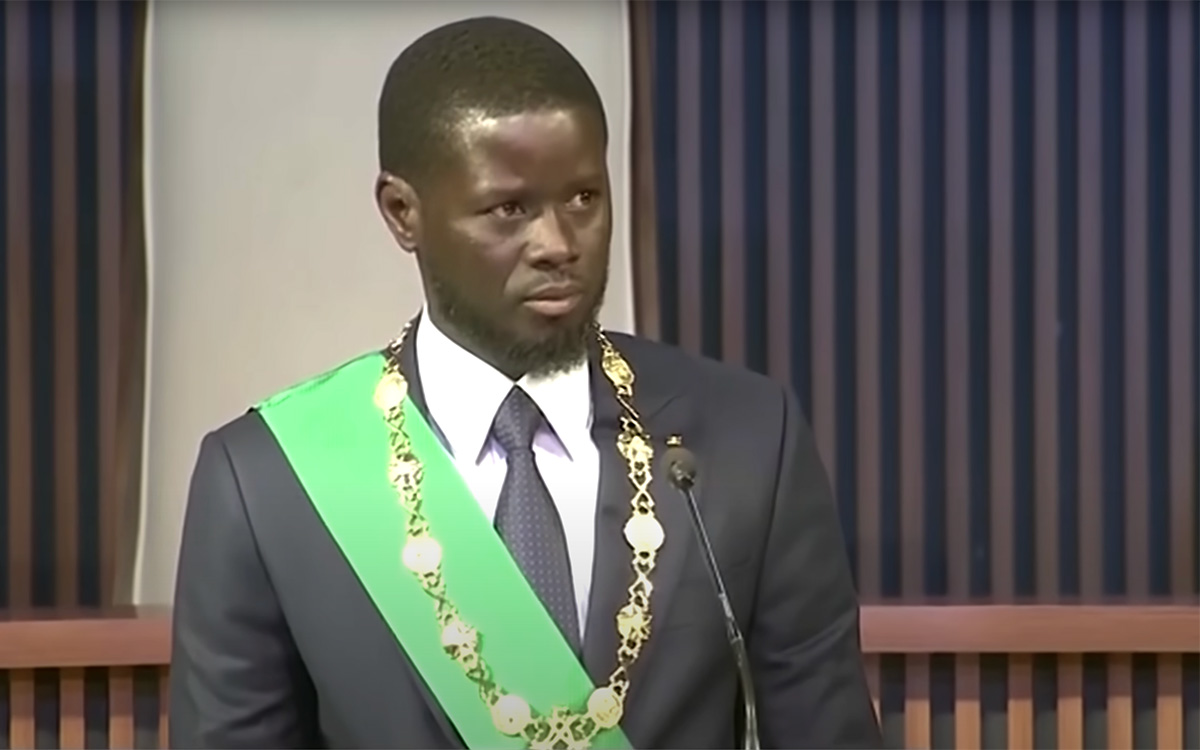
A Senegalese NGO has called on the government to expedite the process of enacting an anti-LGBTQ law after the country’s new president met with a top EU official.
Jamra Ong Islamique made the call during a press conference last Wednesday after newly elected Senegalese President Bassirou Diomaye Faye met with European Council President Charles Michel.
Mamae Makhtar Gueye of Jamra Ong Islamique claimed the meeting between the two dignitaries involved an acknowledgment of LGBTQ rights in Senegal. Gueye said Michel is an LGBTQ ally who wants to change Senegal’s cultural customs that do not condone LGBTQ rights.
“His ardent proselytism for the expansion of LGBT ideology could not leave Jamra indifferent,” said Gueye. “Countries including Gabon, Central African Republic, and Mauritius, amongst others, that underestimated the nuisance of these propagandists of homosexuality paid dearly for it because these global lobbyists ended up legalizing this abomination, so beware.”
Gueye, however, has received a lot of backlash and has been accused of not raising the same sentiments during the tenure of former President Macky Sall, who also met with Michel.
“Did he come as a defender of the LGBT cause or as a European official? Did he come to talk about LGBT rights or partnership agreement between the European Union and Senegal?,” asked Ahmadou Diaw, a Senegalese academic. “Mr. Gueye should know when to alert and when to shut up.”
Cheikh Maï Niang, a social commentator, described Jamra as a “useless organization” that is focused on restricting the freedom of the Senegalese people.
“They are absolutely good for nothing apart from eating the taxpayer’s money,” said Niang. “Where is the democracy we cry about everyday? Seems like they are here to restrict the freedom of the Senegalese people.”
“Not everyone is interested in religion,” added Niang. “We wasted too much time with these useless things. Let’s talk about developing the country. People should live their lives in the manner they want.”
Jamra has previously made proclamations against the LGBTQ community.
The organization in February — before Senegal’s presidential election that took place on March 24 — accused the EU Electoral Observation Mission to Senegal of wanting to indoctrinate Senegalese people with their pro-LGBTQ narrative.
Senegal does not have a law that specifically criminalizes those who identify as LGBTQ or advocate for them. Article 319 of the country’s penal code criminalizes consensual same-sex sexual relations with a fine and between one and five years in prison.
Some Senegalese lawmakers have sought to increase the prison sentence to 10 years for anyone convicted of engaging in homosexuality. These efforts thus far have not been successful.
Samm Jikko Yi (Together for the Safeguarding of Values), an Islamic lobby group that includes many organizations, in 2022 organized an anti-LGBTQ demonstration in Dakar, the country’s capital. Protesters called for harsher penalties for Senegalese who identify as LGBTQ and/or advocate for LGBTQ rights.
The Washington Blade in 2022 noted LGBTQ people have suffered physical and sexual abuse while in prison.
Senegal’s deep religious roots, which are largely Islamic, have contributed to the lack of tolerance of LGBTQ people in the country. This reality has prompted LGBTQ Senegalese to either flee the country or remain in the closet.
Media reports indicate there are fewer bars, clubs and other places where LGBTQ people can freely socialize.


Ghana
Ghanaian president welcomed to Philadelphia amid backlash over anti-LGBTQ bill
Lincoln University cancelled event with John Mahama

Ghanaian President John Dramani Mahama, known for making anti-LGBTQ legislative promises, was scheduled to appear at two local colleges this week — but plans have changed. Although Mahama will still attend a community dialogue at Temple University, he will no longer be honored at Lincoln University — a Chester County HBCU. He will, however, be presented with an award by the World Affairs Council of Philadelphia. The cancellation of the Lincoln event came shortly after LGBTQ activists spoke out about his appearances.
“Due to unforeseen circumstances, the university is cancelling the visit from President John Dramani Mahama,” Athena Griffith-Howard, associate vice president of marketing and communications at Lincoln University, told PGN.
According to a press release about the scheduled event, Mahama was set to receive an honorary doctorate from Lincoln University on Thursday, March 26, “in recognition of his outstanding contributions to public service, democratic governance, peaceful international and inter-African relationships, and global advocacy for justice, equality, and education.”
Although Griffith-Howard did not respond to additional questions about the matter, Joy News — an independent news organization that markets itself as the “most credible” journalism in Ghana — reports that the university has rescinded his honorary degree and cancelled the visit due to Mahama’s anti-LGBTQ stance.
“It is both surprising and regrettable that, just hours ago, the Embassy received a communication from the university indicating that concerns had been raised by a group regarding President Mahama’s perceived position on Ghana’s Human Sexual Rights and Family Values Bill,” a statement released by the Ghana Embassy on March 24 reads.
Mahama has repeatedly vowed to sign the Human Sexual Rights and Family Values Bill into law if it passes out of parliament. He has also made statements against queer and transgender people.
“The position of my government [is that] marriage is between a man and a woman. A person’s gender is determined at birth. And then also, that the family is the foundation of our nation. That is our position,” Mahama said in a speech on Nov. 18, 2025.
Intimacy laws — which criminalize LGBTQ sex and the use of sex toys — already hold a three-year prison sentence under Ghana law, stemming from legal frameworks that previously governed the country when it was controlled by the British government. Ghana became the first African country to gain independence from European colonization in 1957 — but rather than repeal the antiquated law, leaders chose to incorporate it into their own penal code in 1960. The country’s supreme court upheld the law in 2024.
The Human Sexual Rights and Family Values Bill — often simply referred to as “the anti-LGBTQ+ bill” — would further criminalize LGBTQ people and expression and add new risks for allyship. If passed, the punishment for intimacy violations would increase to a possible five-year prison sentence. LGBTQ people could also be punished for simply identifying as LGBTQ with a new three-year prison sentence.
The proposal would also ban LGBTQ serving organizations, even those that only partly serve LGBTQ people. Violations would include up to five years in prison. Allies could face 10 years in prison for supporting LGBTQ people or promoting LGBTQ rights online, in newspapers, or through other verbal or written communications. Journalists who report on LGBTQ topics are also at risk.
The bill would force families and community members to report those found in violation of the statute to local law enforcement.
“If the parliament of the people of Ghana endorse the bill and vote on it and pass it and it comes to me as president, I will sign it,” Mahama said during his November speech.
Since the Human Sexual Rights and Family Values Bill was introduced in 2021, LGBTQ Ghanaians and allies have experienced widespread discrimination and physical violence — including harassment and arrests, raids on LGBTQ centers (which have led to at least one closure), as well as a hostile media landscape. When the bill was first passed by parliament in 2024, anti-LGBTQ incidents more than doubled.
The proposal was not signed into law by the former President Nana Akufo-Addo, who characterized the proposal as a backsliding of human rights. At the time, Ghana’s finance ministry also warned that signing the bill would place several billions of dollars in funding in jeopardy as a similar anti-LGBTQ bill in Uganda led the World Bank to suspend new funding to that country.
This threat would be especially difficult for Ghana to bear given recent funding cuts made by the Trump administration, which have been especially problematic for some African countries.
Ghana previously relied on USAID funding for social programs and health services, but Trump’s funding cuts led to a $156 million loss — including approximately $78 million that previously funded malaria prevention, maternal and child health, family planning, reproductive health, nutrition, and the fight against HIV/AIDS.
Despite the funding cuts, anti-LGBTQ leaders — including those in Ghana — have been emboldened and empowered by the Trump administration’s own anti-LGBTQ efforts, citing that they no longer fear economic sanctions if their own anti-LGBTQ bill passes.
According to activists, Mahama urged parliament to reintroduce the bill after he took office in January 2025 — around the same time Trump began issuing executive orders, which have negatively impacted LGBTQ Americans.
Mahama is currently in the U.S. to lead a delegation at the United Nations to advocate for reparatory justice for the Transatlantic Slave Trade. He will present a landmark resolution to the United Nations General Assembly in New York City on March 25 — seeking a formal declaration of the Transatlantic Slave Trade as a crime against humanity. The visit also includes a wreath-laying ceremony to honor the lives of enslaved Africans who perished in the U.S.
LGBTQ rights advocates keenly understand the importance of holding the U.S. accountable as direct drivers of the Transatlantic Slave Trade and for the atrocities that occurred to African people on American soil as the country built its economic and social power off of their oppression.
In a press release about Mahama’s visit to Philadelphia, a growing coalition of Philadelphia’s LGBTQ and allied leaders — including Philly Pride 365, GALAEI and ACT UP Philadelphia — called the invitation to speak at Temple University “even more concerning” given the human rights focus of the delegation.
“You cannot come to a global stage calling for justice, repair and recognition of historical harm while simultaneously supporting or advancing policies that criminalize and endanger another marginalized group,” said Tyrell Brown of Philly Pride 365 in the joint statement. “That contradiction is not just political. It reflects a fundamental failure to understand intersectionality and the interconnected nature of oppression.”
“Justice is not selective. Human rights are not conditional,” Brown continued. “If we are serious about repair, it must extend to all people — especially those currently being targeted by state-sanctioned harm.”
There is a colonialist link between the continued oppression of LGBTQ Africans with harmful rhetoric and money coming from the U.S. At least 20 US-based conservative Christian groups, which have spent over $54 million since 2007 on anti-LGBTQ efforts in Africa, are linked to anti-LGBTQ bills and laws across the continent.
“We support the reparations resolution. The argument it rests on is morally sound,” reads a press release issued by JustRight Ghana — a Ghana-based human rights organization. “The transatlantic slave trade classified human beings as property based on what they were born as. It said that certain categories of people, by virtue of their birth, had no rights, no dignity, and no protection from the power of the state.”
“That is the same logic that runs through every clause of the Human Sexual Rights and Family Values Bill 2025. Section 3 says that being born with a particular sexual orientation makes you a criminal,” the press release goes on to state. “The moral architecture is identical. The only thing that has changed is who the target is.”
The World Affairs Council of Philadelphia still intends to present Mahama with its International Statesperson Award on March 27.
A blurb about the award on the institution’s website reads, “The International Statesperson Award of the World Affairs Council of Philadelphia is the highest honor the Council bestows — a tribute for global leadership. It is presented periodically and awarded to distinguished international figures and world leaders whose work has advanced the twin goals of peace and freedom and resulted in a significant positive impact on world affairs.”
Mahama is also still invited to participate in a community dialogue event that will be held at Temple University on the evening of March 26. The event is advertised as celebrating Ghanaian music and artistic culture, comedy, and heritage — featuring celebratory performances as well as a dialogue with Mahama and other national leaders.
“Attendees will have the opportunity to hear firsthand from the president on Ghana’s vision and emerging opportunities, engage in conversations that help shape diaspora partnerships, and explore business, investment, and cultural collaboration opportunities,” reads an Instagram post about the event. “The evening also marks a historic moment as part of the president’s first official visit to Philadelphia.”
The event was planned before Lincoln University canceled its conferment and according to a press release, Mahama intends to convene with people of the Ghanaian diaspora during the Temple University visit.
“This conversation reflects something bigger than a single event,” reads an Instagram post published by Temple University Black Alumni Alliance about the event. “It represents connection across the diaspora, leadership across borders, and the importance of creating spaces where global perspectives and lived experiences can meet.”
In response to PGN’s request for comments and answers to questions, Steve Orbanek, Temple University’s executive director of communications and media relations, emailed the following statement:
“Temple University unequivocally opposes the exclusion of or discrimination against members of the LGBTQIA+ community. Temple takes pride in providing an inclusive and welcoming environment for all students, faculty, staff, alumni, neighbors and friends regardless of their race, nationality, religion, gender, sexual orientation or identity.
“President Mahama will be in the United States to attend the United Nations General Assembly during the International Day of Remembrance of the Victims of Slavery and the Transatlantic Slave Trade. The US-Ghana Chamber of Commerce invited him to participate in a community event and approached Temple about using a venue on campus.
“As a public university, Temple regularly provides space for speakers as part of our ongoing commitment to academic inquiry, open dialogue and public service. We have made venues available for third-party organizations, including political parties or campaigns, regardless of their political viewpoint or stance. The presence of any speaker on campus is not an endorsement by Temple University of the speaker or their views.
The Human Sexual Rights and Family Values Bill that has been recently reintroduced in Ghana’s Parliament is deeply troubling and runs counter to the mission and values of Temple University. Temple’s strength is its people, and every member of our community adds to the cultural richness of our institution. We are committed to cultivating an educational environment founded on respect, open-mindedness, and the appreciation of others.”
The Philadelphia coalition of LGBTQ leaders rejects the idea that hosting a speaker does not reflect the views of the host institution and underlined that platforming political leaders with ties to problematic policies still produces harm.
“Providing a platform to a leader advancing policies that endanger LGBTQ lives and undermine HIV prevention is deeply irresponsible. Institutions of higher education should not normalize or legitimize harm under the guise of dialogue,” said Sam Sitrin of ACT UP Philadelphia in the joint statement.
“Universities should be spaces that uphold human rights and evidence-based public health,” added Jose Demarco of ACT UP Philadelphia. “Hosting leaders associated with policies that criminalize LGBTQ people and undermine HIV prevention sends the wrong message at a time when lives are at stake.”
Temple’s Center for Anti-Racism — an initiative of Temple’s Office of Institutional Diversity, Equity, Advocacy, and Leadership (IDEAL) — which is promoted on flyers and social media as hosting the event, has not responded to PGN’s questions or requests for comments. The event, which was previously included on the university’s events listings, is no longer visible but has not been canceled as of Wednesday, March 25. It is unclear if the university is taking any steps to protect or uplift LGBTQ students during the event.
The Philadelphia coalition of LGBTQ leaders called the decision to host the event in light of the local community’s response “harmful and careless.” They also raised concerns about Temple University’s process to repair wounds and are pressuring Temple to cancel the event and formally apologize to Philadelphia’s LGBTQ community.
“According to organizers, the university had knowledge of the concerns surrounding President Mahama’s [anti-LGBTQ] record as early as Thursday [March 19] but did not conduct meaningful outreach to community partners, nonprofits, or local leaders most impacted by the issue,” the coalition’s press release reads.
“When institutions fail to proactively engage communities on issues of this magnitude, it reveals a disconnect between stated values and actual practice.”
Coalition members joined additional Philadelphia-based leaders in sending a letter to Temple University’s IDEAL initiative and Center for Anti-Racism — noting their concern for the event but also openness to dialoguing directly with the event’s organizers to seek intentionality and transparency.
“This is not an abstract policy discussion. It is about the safety, dignity, and survival of LGBTQ people globally. For many in our communities, including African and Caribbean diaspora members here in Philadelphia, these policies have direct emotional, familial, and cultural impact,” the letter reads. “Hosting this dialogue without intentional accountability risks legitimizing rhetoric and policies that endanger lives.”
Those who signed the letter described themselves as leaders who are Black and Brown, LGBTQ, representatives of HIV/AIDS organizations, and individuals working in government, civil society and DEI spheres in Philadelphia. They include activists of ACT UP Philadelphia, representatives from SMUG International and Bebashi, Ronda Goldfein of the AIDS Law Project of Pennsylvania, Jacen Bowman of Philadelphia Black Pride, Andre Ford of The COLOURS Organization, Sappho Fulton of Womxn Beyond Borders, Hazel Edwards of GALAEI, Simon Trowell of Mazzoni Center, José Benitez of Philadelphia FIGHT, Tyrell Brown of Philly Pride 365, Darius McLean of William Way LGBT Community Center, state Rep. Andre Carroll, state Rep. Malcolm Kenyatta, Philadelphia Councilmember Kendra Brooks, and Philadelphia Councilmember Rue Landau.
They underline that proceeding without addressing concerns would risk harm to the very students and communities IDEAL purports to support.
“As Black and Brown and African LGBTQ leaders, with the support of our allies, we are requesting that the organizers of this event include questions about this truly dangerous legislation and highlight the real world impact on Ghanaian LGBTQ people, their families and their communities,” the letter insists. “Though we believe in autonomy for all nations, and that Americans should not dictate the policy of other nations, we also believe that these deadly policies should not go unquestioned or unchallenged, especially since this event is sponsored by IDEAL, which has a strong commitment to the BIPOC, LGBTQ, and Ghanaian students at Temple.”
They underlined that questions about the matter should come directly from the event’s organizers rather than become the responsibility of the community during a Q&A. The signed leaders hope to receive a response by Wednesday evening — and PGN will follow up with continued reporting when more information about the university and community’s plans are known.
“Silence, in this moment, is not neutrality: it is complicity,” the letter emphasizes.
Botswana
Lorato ke Lorato: marriage equality, democracy, and the unfinished work of justice in Botswana
High Court considering marriage equality case

As Botswana prepares for the resumption of a landmark marriage equality case before the High Court on July 14–15, the country finds itself at a critical constitutional crossroads.
At first glance, the matter may appear to be about whether two women, Bonolo Selelelo and Tsholofelo Kumile, can have their love legally recognized. At its core however, this case is about something far more profound: the dismantling of patriarchy, the decolonization of law, and the integrity of Botswana’s constitutional democracy.
Beyond marriage: a question of power
Marriage, as a legal institution, has never been neutral. It has historically functioned as a mechanism for regulating women’s bodies, sexuality, and social roles within a patriarchal order. To deny LBQ (lesbian, bisexual, and queer) women access to marriage is not merely to exclude them from a legal benefit, it is to reinforce a hierarchy of relationships, where heterosexual unions are deemed legitimate and all others invisible. This case therefore challenges the very foundations of who gets to love, who gets to belong, and who gets to be protected under the law.
As feminist scholars have long argued, patriarchy is sustained through institutions that appear ordinary but are deeply political. The law is one such institution. And it is precisely here that this case intervenes: by asking whether Botswana’s legal system will continue to uphold exclusion, or evolve to reflect the constitutional promise of equality.
A constitutional journey: Botswana’s courts and human dignity
This is not the first time Botswana’s courts have been called upon to affirm the dignity of LGBTQI+ persons. Over the past decade, the judiciary has built a progressive body of jurisprudence grounded in equality, nondiscrimination, and human dignity.
In Attorney General v. Rammoge and Others (Court of Appeal Civil Appeal No. CACGB 128-14, 2016), the Court of Appeal upheld the right of LEGABIBO to register as an organization. The court affirmed that:
“The refusal to register the appellant society was not only unlawful, but a violation of the respondents’ fundamental rights to freedom of association.”
This was followed by the ND v. Attorney General of Botswana (MAHGB-000449-15, 2017) case, where the High Court recognized the right of a transgender man to change his gender marker. The court held:
“Gender identity is an integral part of a person’s identity … and any interference with that identity is a violation of dignity.”
In Letsweletse Motshidiemang v. Attorney General (MAHGB-000591-16, 2019), the High Court decriminalized same-sex activity, declaring sections of the Penal Code unconstitutional. Justice Leburu powerfully stated:
“Human dignity is harmed when minority groups are marginalized.”
This decision was affirmed by the Court of Appeal in Attorney General v. Motshidiemang (CACGB-157-19, 2021), where the court emphasized:
“The Constitution is a dynamic instrument … it must be interpreted in a manner that gives effect to the values of dignity, liberty, and equality.”
These cases collectively establish a clear principle: the Constitution of Botswana protects all persons, not just the majority.
The marriage equality case now asks a logical next question: If LGBTQI+ persons are entitled to dignity, identity, and freedom from criminalization, why are their relationships still denied recognition?
Decolonizing the law: What is truly ‘UnAfrican’?
Opponents of marriage equality often argue that homosexuality is “unAfrican.” This claim, while politically powerful, is historically inaccurate. Same-sex relationships and diverse gender identities have existed across African societies long before colonial rule. What is foreign, however, are the laws that criminalize these identities.
Botswana’s anti-sodomy laws were inherited from British colonial legal systems, not from indigenous Tswana culture. As scholars of African history have demonstrated, colonial administrations imposed rigid Victorian moral codes that erased and suppressed existing sexual diversity. To claim that homosexuality is unAfrican, while defending colonial-era laws, is therefore a contradiction.
A truly decolonial approach to the law requires us to ask: Whose morality are we upholding? And whose history are we erasing?
Marriage equality, in this sense, is not a Western imposition: it is part of a broader project of reclaiming African dignity, plurality, and humanity.
Democracy on trial: the question of separation of powers
This case also raises important questions about the health of Botswana’s democracy.
Following the 2021 Court of Appeal decision affirming the decriminalization of same-sex relations, Botswana witnessed public demonstrations, including marches led by groups such as the Evangelical Fellowship of Botswana (EFB), opposing the judgment and calling for the retention of discriminatory laws.
While public participation is a cornerstone of democracy, these events raise deeper concerns about the separation of powers. Courts are constitutionally mandated to interpret the law and protect fundamental rights, even when such decisions are unpopular. When judicial decisions grounded in constitutional principles are publicly resisted on moral or religious grounds, it risks undermining the authority of the courts and the rule of law itself.
Democracy is not simply about majority opinion: it is about the protection of minority rights within a constitutional framework.
Botswana is not a theocracy
It is also important to clarify a recurring misconception: Botswana is not a Christian nation.
Botswana is a secular constitutional democracy and more accurately, a pluralistic society that recognizes and respects diversity of belief, culture, and identity. The Constitution does not elevate one religion above others, nor does it permit religious doctrine to dictate legal rights. The law must serve all citizens equally, regardless of faith.
To frame marriage equality as a threat to Christianity is therefore misplaced. The question before the courts is not theological, but constitutional: Does the exclusion of same-sex couples from marriage violate the rights to equality and nondiscrimination?
Love, equality, and the future of justice
At its heart, this case is about love, but it is also about power, history, and justice. It asks whether Botswana is prepared to move beyond colonial legal frameworks and patriarchal norms, and to embrace a future grounded in equality, dignity, and inclusion.
It asks whether the Constitution will continue to be interpreted as a living document, one that evolves with society, or remain constrained by outdated moral assumptions. Ultimately, it asks whether Botswana’s democracy can hold true to its founding promise: that all persons are equal before the law.
As the High Court prepares to hear this case in July 2026, the nation has an opportunity to affirm not only the rights of two individuals, but the broader principle that love, in all its diversity, deserves recognition, and protection.
Lorato ke lorato.
Love is love.
Justice, if it is to mean anything at all, must make space for it.
Nozizwe is the CEO of LEGABIBO (Lesbians, Gays and Bisexuals of Botswana)
State Department
Report: US to withhold HIV aid to Zambia unless mineral access expanded
New York Times obtained Secretary of State Marco Rubio memo
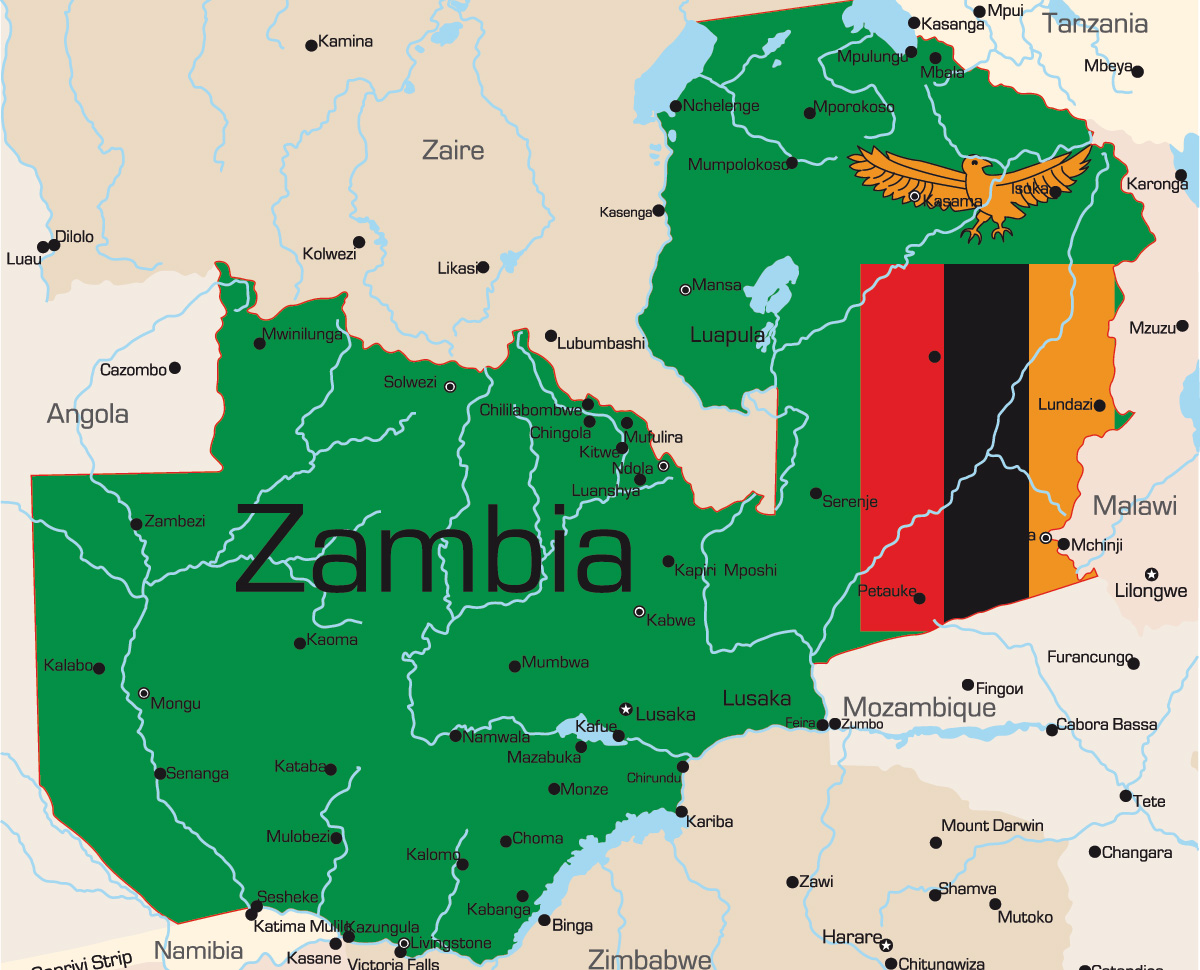
The State Department is reportedly considering withholding assistance for Zambians with HIV unless the country’s government allows the U.S. to access more of its minerals.
The New York Times on Monday reported Secretary of State Marco Rubio in a memo to State Department’s Bureau of African Affairs staffers wrote the U.S. “will only secure our priorities by demonstrating willingness to publicly take support away from Zambia on a massive scale.” The newspaper said it obtained a copy of the letter.
Zambia is a country in southern Africa that borders Tanzania, Malawi, Mozambique, Zimbabwe, Botswana, Namibia, Angola, and the Democratic Republic of Congo.
The Times notes upwards of 1.3 million Zambians receive daily HIV medications through PEPFAR. The newspaper reported Rubio in his memo said the Trump-Vance administration could “significantly cut assistance” as soon as May.
“Reports of (the) State Department withholding lifesaving HIV treatment in return for mining concessions in Zambia does not make us safer, stronger, or more prosperous,” said U.S. Sen. Jeanne Shaheen (D-N.H.), the ranking member of the Senate Foreign Relations Committee, on Tuesday. “Monetizing innocent people’s lives further undermines U.S. global leadership and is just plain wrong.”
The Washington Blade has reached out to the State Department for comment.
Zambia received breakthrough HIV prevention drug through PEPFAR
Rubio on Jan. 28, 2025, issued a waiver that allowed PEPFAR and other “life-saving humanitarian assistance” programs to continue to operate during a freeze on nearly all U.S. foreign aid spending. HIV/AIDS service providers around the world with whom the Blade has spoken say PEPFAR cuts and the loss of funding from the U.S. Agency for International Development, which officially closed on July 1, 2025, has severely impacted their work.
The State Department last September announced PEPFAR will distribute lenacapavir in countries with high prevalence rates. Zambia two months later received the first doses of the breakthrough HIV prevention drug.
Kenya and Uganda are among the African countries have signed health agreements with the U.S. since the Trump-Vance administration took office.
The Times notes the countries that signed these agreements pledged to increase health spending. The Blade last month reported LGBTQ rights groups have questioned whether these agreements will lead to further exclusion and government-sanctioned discrimination based on sexual orientation and gender identity.

Thousands attend ‘No Kings’ protests in D.C.

Blade contributor, husband exchange vows in D.C.

Ghanaian president welcomed to Philadelphia amid backlash over anti-LGBTQ bill

PHOTOS: ‘No Kings’ rally and march

‘Out for McDuffie’ event held at D.C. gay bar

Pa. House passes bill to codify marriage equality in state law

Introducing the Torchbearers Awards honoring queer, trans women and nonbinary people

New IOC policy bans trans women from Olympics

A surtax would end this war quickly

‘No Kings’ protests set for D.C.
-

 Pennsylvania5 days ago
Pa. House passes bill to codify marriage equality in state law
-
a&e features5 days ago
Introducing the Torchbearers Awards honoring queer, trans women and nonbinary people
-
Sports5 days ago
New IOC policy bans trans women from Olympics
-
Opinions5 days ago
A surtax would end this war quickly