India
Fewer Indian MPs are ‘vocal’ on LGBTQ issues
Parties backed relationship recognition, trans rights ahead of general election
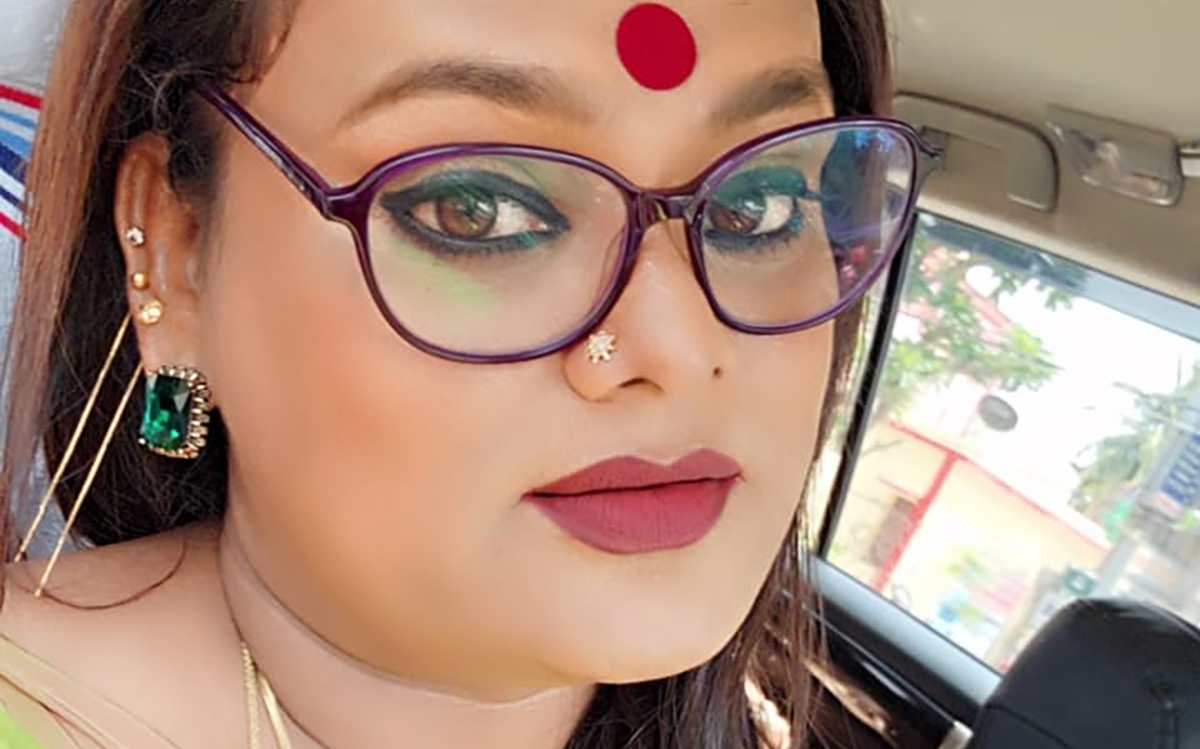
The Indian LGBTQ community is gradually gaining momentum in their fight for rights; bolstered by increasing support from courts, the public, NGOs, and even some politicians.
According to Pinklist India’s 2024 report, which archives politicians supporting LGBTQ rights, only 108 MPs have been vocal on LGBTQ issues, a notable decline from the 161 MPs in the previous parliament. In this context, “vocal” means that politicians have made public statements on LGBTQ issues, whether positive, negative, or controversial.
As India prepared for the 2024 general election, various political parties included LGBTQ concerns in their platforms.
The Indian National Congress, for example, has promised to introduce a bill that would recognize civil unions for LGBTQ couples after wide consultation. Similarly, the Communist Party of India has pledged several commitments, including amending the Transgender Persons (Protection of Rights) Act 2019 to address community concerns and ensure legal recognition and protection for same-sex couples similar to marriage.
The Prime Minister Narendra Modi-led Bharatiya Janata Party and its coalition partners, meanwhile, had promised in their campaign platform to include the transgender community in the Ayushman Bharat Yojana, a national health insurance program for low-income citizens. The BJP also pledged to incorporate the trans community into the Garima Greh program, which provides shelter, food, medical care, and recreational facilities for destitute and abandoned trans people.
No official records exist on the LGBTQ population in India, but the 2012 Census estimated it at 2.5 million. Population data on LGBTQ people is scarce, with the government only tracking those who identify as “third gender” or “transgender” and are registered.
Only a few LGBTQ candidates ran in this year’s general election, with the majority of them withdrawing. Of the three candidates who ran, none secured a sixth of the total valid votes, resulting in all of them losing their deposits.
Election Commission of India (ECI) data indicates there are 48,000 registered trans voters. Only 20 percent of them participated in the general election.
Pinklist India data in 2020 revealed that only 27.8 percent of 543 MPs had addressed LGBTQ issues in their political careers. The highest number of these MPs belonged to the Nationalist Congress Party, the Indian National Congress, and the Communist Party of India. Pinklist India also created interactive tiles on India’s map, titled “State of QUnion,” recording statements on LGBTQ issues made by each MP.
Data from 2020 offers deeper insights into how politicians’ stances on LGBTQ issues evolve after joining a particular party.
Jothimani Sennimalai, an Indian National Congress MP from Karur, Tamil Nadu, for example, has consistently supported queer issues both before and after entering politics. Conversely, Bengaluru South BJP MP Tejasvi Surya, who previously supported marriage equality, has remained silent on the issue since his election. The Washington Blade reached out to Surya multiple times for an interview, but received no response.
Interestingly, previous data revealed a curious trend among many MPs.
Although they were vocal about trans issues outside parliament, they never engaged in debates on trans laws within it. Their silence in parliamentary chambers contrasted sharply with their public statements, painting a complex picture of political advocacy.
The Blade uncovered a striking disparity: Despite political parties pledging inclusion of the LGBTQ community in their election platforms, no major politicians addressed LGBTQ concerns during their campaign rallies. It was as if these promises, vibrant on paper, vanished into thin air when it came time to speak on the campaign trail.
The Blade reached out to Meera Parida, a trans politician from Odisha’s Biju Janata Dal, for her thoughts on the issue.
“It is very sad that it has happened,” she said with a mix of disappointment and resolve.
Parida lamented that during the passage of the Transgender Persons (Protection of Rights) Act in 2019, only regional parties stood in support of the bill, highlighting a gap in broader political commitment.
“Unfortunately, we have to meet and sensitize new parliamentarians about the issue,” said Parida. “It is very sad that those leaders and members of Parliament are doing this who are supposed to raise voices for everyone including LGBTQ people of the country. We say that India is the world’s biggest democracy, we talk about equality, we talk about Sabka Sath Sabka Vikash (inclusion and development for all, a slogan Modi used during the election campaign), so does LGBTQ people not come under ‘all’? If parliamentarians behave like this, what will be the impact on the society?”
She raised a question stating that LGBTQ people are born naturally just like males or females, so why there is so much stigma regarding the community? Parida told the Blade that despite so many Supreme Court rulings and parties including LGBTQ issues in their election platforms, not a single party gave the opportunity to LGBTQ people to fight the election from the party platform.
Ankush Kumar is a reporter who has covered many stories for Washington and Los Angeles Blades from Iran, India, and Singapore. He recently reported for the Daily Beast. He can be reached at [email protected]. He is on Twitter at @mohitkopinion.


India
Menaka Guruswamy celebrated as India’s first openly LGBTQ MP
Constitutional lawyer elected to Rajya Sabha on March 9
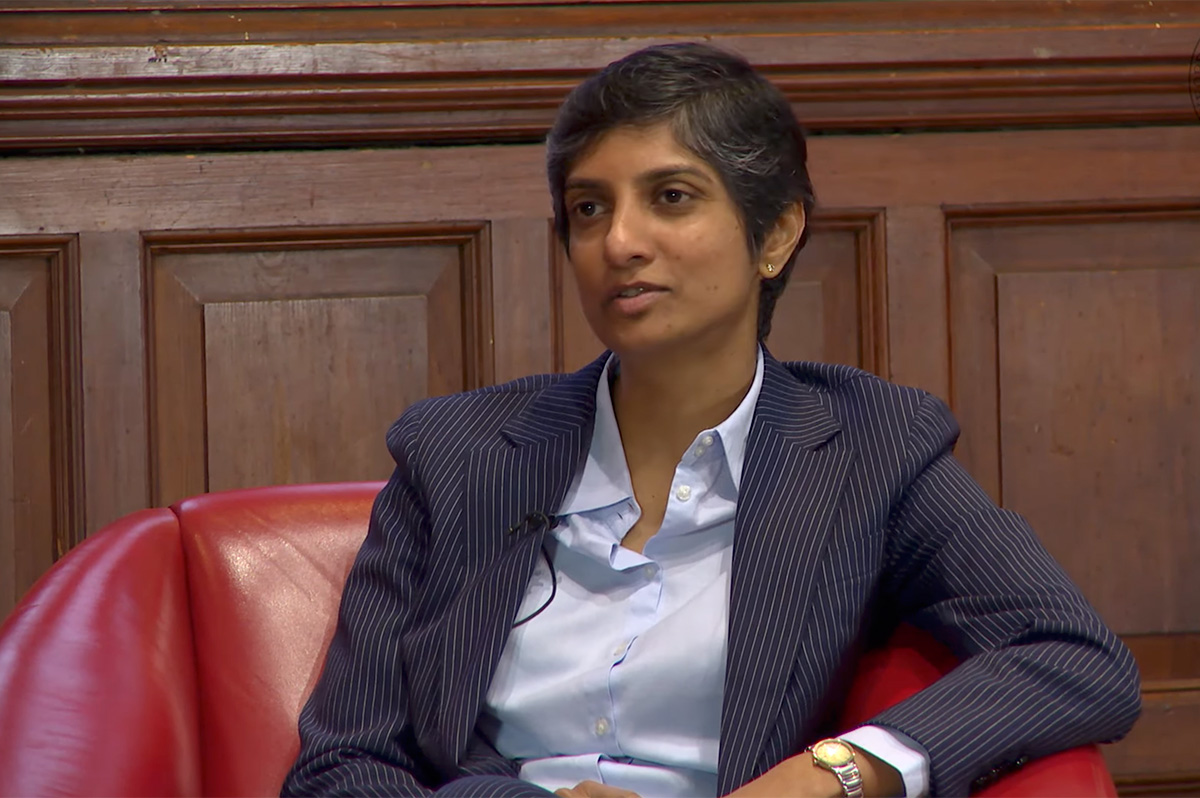
India’s LGBTQ community has found renewed hope in the election of Menaka Guruswamy, a lawyer who has argued before the Supreme Court, as the country’s first openly LGBTQ MP.
Guruswamy was declared elected unopposed to the Rajya Sabha, the upper house of Parliament, on March 9, representing West Bengal. The All India Trinamool Congress, the regional party that governs the state, nominated her.
Guruswamy is a constitutional lawyer who studied at Oxford University, Harvard Law School, and the National Law School of India University. She has argued several significant cases before the Supreme Court and is widely known for her work on constitutional law, civil liberties, and LGBTQ rights.
Guruswamy was part of the legal team that successfully challenged Section 377 of the Indian Penal Code, a colonial-era law that criminalized consensual same-sex sexual relations, which the Supreme Court struck down in 2018. She has also written and spoken extensively on issues of democracy, rights and institutional accountability.
Ankit Bhupatani, a global diversity, equity and inclusion leader and LGBTQ activist, welcomed Guruswamy’s election.
“This is significant not because Parliament needed a queer person, but because a queer person needed Parliament,” Bhupatani told the Washington Blade.
India has seen LGBTQ representation in elected office at the state and local levels, though it has remained limited.
In 1998, Shabnam Mausi was elected to the Madhya Pradesh Legislative Assembly from the Sohagpur constituency, becoming one of the first openly transgender people to hold public office in India. Mausi’s election marked a rare moment of visibility for trans people in the country’s political system, where representation has historically been sparse. Since then, a small number of openly trans candidates have contested and, in some cases, won local and state elections, but no openly LGBTQ person had been elected to Parliament before Guruswamy.
Guruswamy and her partner, Arundhati Katju, who is also a lawyer, were part of the legal team that played a central role in the Section 377 decision.
Representing one of the plaintiffs, the two lawyers helped frame the case around constitutional guarantees of equality, dignity, and privacy. The Navtej Singh Johar v. Union of India ruling marked a watershed moment for LGBTQ rights in India.
“For too long, we have fought our battles only in courtrooms and on streets. Now, there is a seat at the table where laws are written,” said Bhupatani. “Whether that seat produces change depends entirely on how it is used. Representation without substance is decoration. But as a beginning, yes. This matters.”
Guruswamy later represented the plaintiffs in the Supreme Court’s 2023 marriage equality case, Supriyo v. Union of India, which a 5-judge panel heard in the spring of 2023.
Along with other lawyers representing same-sex couples, she advanced arguments rooted in constitutional guarantees of equality, dignity, and personal liberty. The Supreme Court in a 3-2 decision on Oct. 17, 2023, declined to recognize same-sex marriage — holding that such a change falls within Parliament’s domain — but did acknowledge LGBTQ people face discrimination. The Blade previously reported the ruling underscored the court’s view that it could interpret the law, but could not create a new legal framework for marriage rights.
Bhupatani said Guruswamy’s election should not be seen as an immediate shift toward legislative action on LGBTQ rights, cautioning that such expectations may not align with political realities. He said her presence in Parliament could help sustain the issue in a way it has not been before, even as broader legal change is likely to take time.
“What she can do is keep the question alive inside Parliament in a way that it hasn’t been before,” Bhupatani said. “Legislative change in India on social questions usually takes longer than advocates want and shorter than skeptics predict. The 377 decriminalization seemed impossible until it wasn’t. Partnership rights will follow the same pattern eventually.”
Bhupatani added that while Guruswamy’s election may influence the pace of change, it does not, on its own, constitute a broader political movement.
“One person in Parliament, however extraordinary, is not a movement. She is an opening,” he said. “The 2023 ruling created a responsibility. Guruswamy’s election creates an opportunity to fulfill it from inside. Whether opportunity becomes outcome is entirely a question of human will.”
Guruswamy has served as a visiting faculty member at leading American institutions that include Yale Law School, Columbia Law School, and New York University School of Law. She has also worked with international organizations, advising the U.N. Development Fund for Women in New York and the U.N. Children’s Fund in both New York and South Sudan.
According to her professional profile, Guruswamy has been involved in a range of significant cases before the Indian Supreme Court that include matters related to bureaucratic reform and accountability.
One case is connected to the AgustaWestland helicopter deal, an investigation into alleged bribery in a multimillion-dollar defense procurement contract; litigation arising from the Salwa Judum case, in which the court examined the state-backed use of civilian militias in counterinsurgency operations in central India; and cases involving the implementation of the Right to Education Act, a law guaranteeing free and compulsory education for children between the ages of six and 14.
More recently, Guruswamy represented the All India Trinamool Congress in legal proceedings challenging searches conducted by India’s Enforcement Directorate, a federal agency responsible for investigating financial crimes, including money laundering and violations of foreign exchange laws. The searches were carried out at the offices of the Indian Political Action Committee, or I-PAC, a political consulting firm that provides data-driven campaign strategy and election management services to political parties. The case raised questions about the scope of investigative powers and the use of federal agencies in politically sensitive matters.
Guruswamy’s engagement with LGBTQ rights has extended beyond courtroom advocacy into public constitutional discourse.
On July 11, 2018, during hearings in the Section 377 case, she argued the criminalization law could not be justified on the basis of “social morality,” describing it as subjective and incompatible with constitutional guarantees, and framing the case as one fundamentally about “our humanity.” The Thomas Jefferson Foundation Medal in Law at the University of Virginia in February 2023 recognized Guruswamy and Katju for their work on LGBTQ rights.
Guruswamy has not responded to the Blade’s multiple requests for comment about her election.
India
Activists push for better counting of transgender Indians in 2026 Census
2011 count noted 488,000 trans people in country
India is preparing to conduct a nationwide Census in April, the first since 2011.
Interim projections based on the previous Census placed India ahead of China as the world’s most populous country. A Technical Group on Population Projections projection in July 2020, chaired by the Registrar General of India, estimated the country’s population in 2023 was 1.388 billion. Transgender Indians are now raising concerns about the data collectors and their sensitization.
Activists have raised concerns about whether data collectors are adequately sensitive to the community ahead of the Census. Government training material emphasizes household engagement, data privacy and sensitivity while asking personal questions, but publicly available flyers do not outline specific guidance or training related to recording trans identity during enumeration.
Concerns around the counting of trans people in India are not new.
The 2011 Census recorded around 488,000 trans people, a figure activists and researchers have described as a likely undercount due to stigma, misclassification, and a reluctance to self-identify. Subsequent surveys and field reports have pointed to inconsistencies in how gender identity is recorded and the absence of uniform sensitivity among Census data collectors. Rights groups and policy researchers have also warned that gaps in official data affect access to welfare schemes, legal recognition, and targeted public policy, making accurate counting central to future Census exercises.
A decade after the 2011 Census formally recorded trans people as a distinct category, multiple studies have continued to document entrenched socio-economic disparities. Research has pointed to lower literacy rates, limited workforce participation and barriers to healthcare access within the community.
A National Human Rights Commission-supported study cited in subsequent reporting found a significant proportion of trans respondents reported employment discrimination, underscoring the gap between formal recognition and lived economic inclusion.
Educational exclusion has remained a persistent concern within the trans community. Studies have documented higher dropout rates, lower literacy levels and barriers to continuing education, often linked to stigma, discrimination and limited institutional support. Policy researchers note that despite formal recognition in official data after 2011, targeted interventions addressing school retention and access for trans people have remained uneven.
Access to housing schemes has reflected similar gaps.
The Washington Blade in December reported only a small number of trans people have benefited from India’s flagship low-income housing program, despite its nationwide rollout and eligibility provisions. The findings underscored continuing barriers to inclusion in welfare delivery systems.
The Social Justice and Empowerment Ministry and the Office of the Registrar General and Census Commissioner did not respond to the Blade’s multiple requests for comment regarding sensitization measures for Census data collectors and the recording of trans identity in the upcoming Census.
Karnataka state in southern India last September conducted its first statewide baseline survey of gender minorities. The Department of Women and Child Development, in collaboration with the Karnataka State Women’s Development Corporation, launched the initiative to document the lives of trans people across 31 administrative districts.
When the results were released, the survey identified 10,365 trans people. The country’s 2011 Census, by comparison, recorded 20,266 trans people in Karnataka, nearly double the 2025 figure. The discrepancy raised questions about how the state’s recorded trans population appeared to decline over 14 years.
The discrepancy in Karnataka’s survey has intensified scrutiny over how gender minorities are counted. Reports questioned the methodology used in the 2025 exercise, which was conducted over 45 days beginning in mid-September. Instead of door-to-door enumeration, trans people were required to report to designated registration sites — primarily district-level public hospitals and sub-district government health facilities. The approach presented barriers for potential participants, particularly those in rural areas, those without reliable transportation, those wary of institutional settings due to prior discrimination, or those who did not know about the count, raising the possibility of exclusion.
Bihar state in eastern India in January 2023 conducted a caste-based survey that included trans respondents.
The final report identified 825 trans people in the state, compared with 40,827 recorded in the 2011 Census. Activists disputed the figure, calling it inaccurate and pointing to community estimates that suggested higher numbers, including in Patna, the state capital, raising concerns about significant undercounting.
The 2011 Census marked the first attempt to enumerate trans people at the national level, but researchers and activists have described the exercise as limited in scope.
It recorded 487,803 people under the “other” category, a classification used for respondents who did not identify as male or female. Analysts have argued that the figure likely underestimated the community’s size.
The Census questionnaire provided three sex categories — “male,” “female,” and “other” — a framework that critics said did not fully capture the diversity of gender identity and may have affected how some respondents chose to identify.
During the 2011 Census, enumeration practices varied across regions.
In states such as Tamil Nadu, local reporting indicated estimates were at times derived from existing administrative records, including state-issued trans identity cards, rather than solely through door-to-door identification. Such approaches risked excluding individuals who did not possess identity documentation or were not registered with welfare boards, raising concerns about gaps in coverage.
Official data from the Social Justice and Empowerment Ministry shows only a few hundred trans people as of early 2025 have been issued identity cards through the national portal, despite nearly 2,000 applications being submitted. Many are still pending or have been rejected.
Critics of the 2011 Census said many Census data collectors were not adequately trained or sensitized to engage with gender identity beyond traditional binary classifications. Similar, detailed guidelines specific to trans sensitization have not been publicly made available for the 2026 Census, according to an examination of training materials and official circulars.
Akkai Padmashali, a trans rights activist, told the Blade that Census data collectors in earlier exercises were often not sensitized and lacked awareness of intersex people and gender-diverse communities. She said trans people and other gender and sexual minorities continue to face social exclusion and require careful handling during door-to-door data collection. Padmashali called for targeted training of data counting officers and said the government should treat the issue as a priority, adding the trans population is likely to be higher than what was recorded in 2011 and efforts to make officials more sensitive to the community are necessary.
“We will definitely join our hands with this move the government of India has taken,” said Padmashali. “I think there should be proper guidance from the main in-charge people who are conducting this enumeration, and if no such proper information is given to these Census data collectors, it is difficult to gather any sort of information concerned.”
“This whole issue of self-identification — I think India, in its current situation, is not in such a way that it openly accepts people’s identities,” she added. “It will be challenging, it will be difficult, it will be a struggle to offer people the opportunity to express their identities as concerned. But to make sure those who are part of the sexual minority community are counted, I think we also take responsibility for educating people to be part of the enumeration.”
Padmashali said many people are not accustomed to using mobile devices and only a limited number are familiar with them. She said technology should not mislead or misguide the collection of information. Padmashali added she and other trans people plan to engage with Census data collectors and officials who organize the Census.
“Government should have local meetings,” said Padmashali. “Government should hold regional consultations on why the national enumeration is important, because we also know that from 2011 to 2026 is almost 15 years, and now we are here.”
“The government should hold local meetings, especially in their constituencies,” she added. “If the government meets with non-government organizations and civil society groups, this could become a more inclusive exercise across the country. India has a population of more than 1.4 billion, and I think this is the appropriate time to bring accurate statistics to help draft policies in the context of the larger community concerned.”
India
Trans students not included in new India University Grants Commission equity rules
Supreme Court on Jan. 29 delayed implementation
The University Grants Commission is a regulatory body under India’s Education Ministry that is responsible for coordinating and maintaining standards in higher education. The University Grants Commission Equity Regulations, 2026, aim to address discrimination and promote the inclusion of lower castes, tribes, people with disabilities, those who are economically disadvantaged, and other marginalized groups in higher education.
The regulations quickly triggered controversy.
Students, faculty and civil society groups criticized them, largely around concerns about potential discrimination against students and the absence of certain procedural safeguards. Yet, even as the debate intensified, there was little public discussion about the lack of explicit mention of transgender students in the framework. The omission, though not central to the overall controversy, raised questions among some advocates about the scope of the regulations and who they ultimately protect.
According to the All India Survey on Higher Education, trans student enrollment in universities and colleges rose from 302 in the 2020-2021 academic year to 1,448 in the 2022-2023 academic year, reflecting a sharp increase but still representing a very small share of India’s overall higher education population.
The Supreme Court in its 2024 National Legal Services Authority v. Union of India affirmed trans people are entitled to full constitutional protection, including equality, dignity and access to education, and directed governments to treat them as a socially and educationally disadvantaged group eligible for quota-based protections in education and public employment. The ruling recognized gender identity as integral to personal autonomy and held that discrimination on this ground violates fundamental rights under Articles 14, 15, 16, and 21.
Against this legal backdrop, the regulations do not explicitly reference trans students, an omission that has drawn attention in discussions on how constitutional protections are implemented within higher education institutions.
In the Indian constitutional framework, Articles 14, 15, 16, and 21 collectively form the foundation of equality and personal liberty.
Article 14 guarantees equality before the law and equal protection of laws; Article 15 prohibits discrimination on grounds such as religion, race, caste, sex or place of birth; Article 16 ensures equality of opportunity in public employment; and Article 21 protects the right to life and personal liberty, which courts have interpreted to include dignity, autonomy, and access to education. These provisions underpin judicial recognition of protections for marginalized communities, including trans people, within public institutions.
Judicial and policy frameworks in India have increasingly recognized the need for institutional support for trans students, underscoring the contrast with the absence of explicit mention in the University Grants Commission Equity Regulations, 2026, regulations.
The Madras High Court has directed educational institutions to implement measures such as gender-neutral restrooms, mechanisms to update name and gender in official records, inclusion of trans identities in application forms and the appointment of LGBTQ-inclusive counselors for grievance redressal alongside enforcement of the Transgender Persons (Protection of Rights) Act and its Rules.
Policy instruments have echoed similar priorities.
The National Youth Policy 2014 acknowledged trans youth as a group facing social stigma and called for targeted interventions, while the National Education Policy 2020 emphasized reducing dropout rates and ensuring equitable access to education. The University Grants Commission itself has previously indicated that universities should adopt affirmative steps and institution-specific plans to support trans people, making their absence from the current regulatory text more pronounced.
Research and policy analyses have consistently documented structural barriers faced by trans students in India’s education system. The Center for Development Policy and Practices and other academic studies note that discrimination, bullying, and the absence of gender-sensitive infrastructure contribute to high dropout risks among trans students in both school and higher education. Census data underscore this disparity.
The 2011 Census recorded a literacy rate of about 56.1 percent among trans people, significantly lower than the national average of roughly 74 percent, reflecting long-standing barriers to access and retention in formal education.
The controversy intensified after the Supreme Court on Jan. 29 stayed the implementation of the University Grants Commission Equity Regulations, 2026, and agreed to examine their constitutional validity.
A bench led by Chief Justice Surya Kant observed the regulations raised serious legal questions, including concerns that some provisions appeared vague and potentially open to misuse, and sought responses from the federal government and the University Grants Commission. The court directed that the earlier 2012 anti-discrimination framework would remain in force in the interim and listed the matter for further hearing, signalling the need for detailed judicial scrutiny.
Public and political reactions followed, with student groups, academics, and political actors divided over the stay and the broader policy direction. The federal government, led by Prime Minister Narendra Modi, maintained the regulations were intended to address caste-based discrimination and strengthen accountability within higher education institutions even as debate intensified nationally.
The regulations go beyond paperwork. They require universities to create on-campus equity monitoring teams and designated officers responsible for identifying incidents of discrimination, receiving complaints and reporting them to institutional committees for action. However, while the framework spells out protections for certain caste and social categories, it does not explicitly include trans students within this structure. In practice, that absence could leave uncertainty about whether routine monitoring, reporting and grievance mechanisms would extend to them with the same clarity, particularly in campuses where implementation already varies widely.
The regulations also prescribe penalties for faculty and staff found responsible for discrimination, including suspension, withholding of promotions, or termination of service following institutional inquiry. For students, disciplinary action may range from warnings to suspension depending on the severity of the misconduct. Where an incident amounts to a violation of existing statutory or criminal law, institutions are required to refer the matter to law enforcement authorities, placing responsibility on universities to escalate cases beyond internal mechanisms when warranted.
The regulations do not create new criminal offences but require institutions to escalate cases to law enforcement when conduct violates existing statutes. These may include the Scheduled Castes and Scheduled Tribes (Prevention of Atrocities) Act, relevant provisions of the country’s penal code, such as criminal intimidation, assault or sexual harassment, disability rights protections, workplace harassment laws, and statutes addressing campus hazing. The framework is therefore stringent: campus inquiries can lead to disciplinary action, and, where legal thresholds are met, mandatory reporting to police. In the absence of explicit mention of trans students within the framework, questions remain about how individuals from the community would navigate complaint systems, interact with authorities, and access consistent institutional protections under these processes.
The Scheduled Castes and Scheduled Tribes (Prevention of Atrocities) Act, 1989 is among India’s strictest anti-discrimination criminal laws and applies to students, staff and any individual accused of caste-based offences. It criminalizes acts such as intentional insults or humiliation, social exclusion, threats, physical assault and other forms of harassment directed at members of specific castes or tribes. Offenses under the law can lead to arrest, non-bailable charges in several categories, and imprisonment that may extend from months to years depending on the severity of the conduct, along with fines. The law also restricts anticipatory bail in many cases and mandates prompt registration of complaints, which is why it is often viewed as a powerful legal safeguard for marginalized communities while also being regarded by some as carrying serious legal consequences once invoked.
Nishikant Dubey, a member of India’s ruling Bharatiya Jana Party, welcomed the Supreme Court’s decision to stay the regulations, stating the judges had acted appropriately and that the matter required careful legal scrutiny. Indrani Chakraborty, an LGBTQ rights activist and mother of a trans woman, told the Washington Blade the University Grants Commission Equity Regulations, 2026, is a welcome step toward supporting vulnerable students.
“The saddest part is that the transgender community is excluded which is very unfair,” said Chakraborty. “Presently, the transgender community is the most vulnerable and not mentioning the community in the act. I regard it as the biggest discrimination and will never help in changing the scenario of the transgender students.”
Chakraborty told the Blade the trans community, as a minority facing persistent social stigma and taboo, is often overlooked and must repeatedly advocate even for basic rights.
“I believe that grouping of individuals under caste, religion, gender, etc., is the base of discrimination. Personally, I disagree with naming and tagging any individual. Equity over equality is the need now for the most vulnerable. And the transgender community faces discrimination the most. Discrimination against any individual in educational institutions needs immediate attention and preventive measures should be necessarily implemented.”
Chakraborty said the absence of explicit inclusion of trans students amounts to discrimination, undermining equality in education and violating human dignity.
Ankit Bhupatani, a global diversity, equity and inclusion leader and LGBTQ activist, told the Blade that debate around the University Grants Commission Equity Regulations, 2026, has largely centered on concerns raised by relatively privileged students, particularly those in the unreserved category, while communities with limited visibility in higher education have received far less attention. Bhupatani also referenced the All India Survey on Higher Education statistics.
“According to Queerbeat, more than half of these 1,448 students are clustered in a few states and several large states still report almost no transgender students at all. Any serious equity regime has to guard every individual, including upper-caste students who are unfairly targeted or stereotyped , but the public conversation cannot pretend this tiny, highly vulnerable group does not exist,” said Bhupatani. “When outrage dominates headlines and the most marginalized are barely mentioned, the word ‘equity’ starts to lose meaning.”
Bhupatani told the Blade that the University Grants Commission Equity Regulations, 2026, define gender to include the “third gender” and prohibit discrimination on that basis, but then repeatedly identify lower castes, tribes, economically disadvantaged groups, people with disabilities, and women as specific groups, while trans students and teachers are not explicitly listed. Bhupatani said that for a young trans person reading the regulations, the message can feel indirect — that others are clearly recognized while their protections depend on interpretation. He added that explicitly naming trans people as a protected group would not dilute safeguards for others, but would instead ensure those already facing stigma are not left to seek recognition case by case.
“Transgender people sit at the intersection of legal vulnerability and social prejudice, so if they are not named and centered in large regulatory exercises, they quickly disappear from view,” said Bhupatani. “Campus rules need to start with a simple moral intuition. No one, whether Dalit or Brahmin, trans or cis, rich or poor, should be harassed, excluded or denied opportunity because of who they are. The University Grants Commission (Promotion of Equity in Higher Education Institutions) Regulations, 2026 already move in this direction by defining discrimination broadly for all students and staff and by listing grounds such as caste, gender, religion, disability, and place of birth. That universal shift is essential.”
Bhupatani said a fair equity framework should operate on two levels. First, it must guarantee that any individual, regardless of background, can seek redress if treated unfairly. Second, it should explicitly identify groups that face entrenched barriers — including lower castes and tribes, people with disabilities, and trans people — and build specific safeguards for them. He added that concerns about misuse could be addressed through clearer definitions, transparent procedures, trained inquiry committees, representation from diverse groups, and meaningful penalties for false or malicious complaints.
Kalki Subramaniam, a trans activist and artist, told the Blade that trans students face layered vulnerabilities — including social stigma, harassment, and systemic neglect — that often go unaddressed on campuses. When policies do not explicitly name them, she said, it signals that their struggles are not seen as warranting recognition, reinforcing isolation, and undermining their ability to access safe and dignified education.
“I have faced this and I really do not want this generation of transgender students to go through the same kind of exclusion and treatment,” said Subramaniam. “If the government truly believes in inclusive education, transgender students must be explicitly recognised in every policy conversation. Otherwise, we remain erased from the very spaces that claim to be suitable. We will certainly urge the government to ease and prioritise education for transgender community students.”
Subramaniam said limiting protections primarily to caste categories reflects a narrow approach to justice, noting that discrimination on campuses can also be shaped by gender, class, disability, and sexuality. She said a more expansive framework would protect any student facing discrimination, regardless of identity, and emphasized that equity must operate universally for campuses to function as spaces of learning rather than exclusion.

How Pepper the courthouse dog helps victims of abuse

Women’s FEST returns to Rehoboth Beach next week

Belarusian lawmakers approve bill to crackdown on LGBTQ rights

Calendar: April 3-9

How new barriers to health care coverage are hitting D.C.

‘Out for McDuffie’ event held at D.C. gay bar

Thousands attend ‘No Kings’ protests in D.C.

Ghanaian president welcomed to Philadelphia amid backlash over anti-LGBTQ bill

PHOTOS: ‘No Kings’ rally and march