Sports
Every MLB team except this one celebrated Pride
Right-wingers react to ‘backlash’ against Rangers: ‘Bullying is unacceptable’
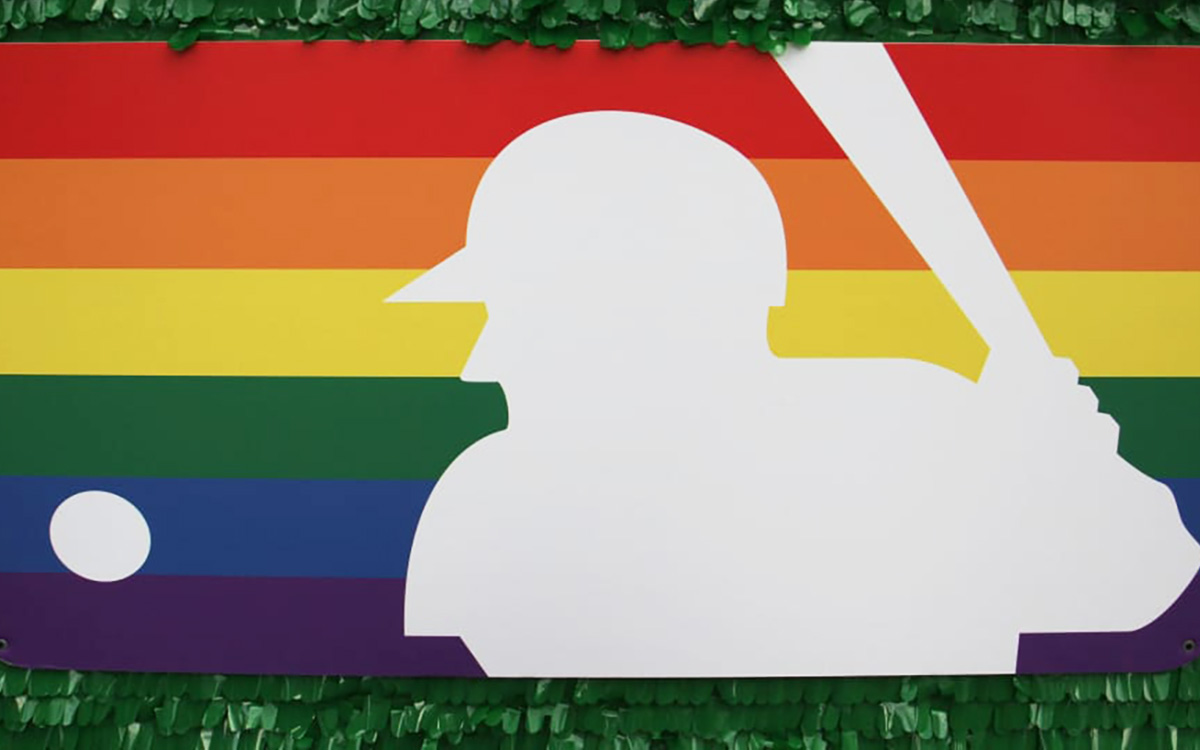
Once again, the Texas Rangers opted not to celebrate Pride last month with a dedicated day or night on its 2024 promotion schedule. And once again, the American League West team is the only Major League operation to do so.
This repeated omission by the reigning World Series champs has sparked what one conservative news site calls a “ridiculous backlash.” As the Washington Examiner’s Kimberly Ross wrote this week:
“There is no getting away from these ubiquitous celebrations. Instead of ‘to each his own,’ major league teams are nearly required to give in and perform in an effort to placate the loudest crowds. It’s not good enough to include everyone at all times. You must kowtow or else. This kind of bullying is unacceptable, and it’s worth pushing back against whether you’re a regular citizen or the 2023 World Series champion Texas Rangers.”
But the only evidence of the “backlash” was a balanced report by Schuyler Dixon of the Associated Press that appeared on the website of KSAT-TV in San Antonio, detailing the frustrations of local LGBTQ advocates and fans. His report was posted by the AP under the headline: “Why are the Texas Rangers the only MLB team without a Pride Night?” The virulently anti-trans British tabloid, the Daily Mail rehashed that same AP piece but added that LGBTQ groups were “FURIOUS” without substantiating that claim with a single quote.
At most, DeeJay Johannessen, chief executive of the HELP Center, an LGBTQ organization based in Tarrant County, where the Rangers play, told the AP he felt “kind of embarrassed.” The Daily Mail headline writer was apparently “kind of” clickbaiting.
“It’s kind of an embarrassment to the city of Arlington that their team is the only one that doesn’t have a Pride night,” Johannessen said. Local advocate Rafael McDonnell said, “It pains me that this remains an issue [after] all these years.”
How painful? McDonnell told the AP he considered not attending the championship parade with his boyfriend when the Rangers celebrated their first World Series championship last fall. Ultimately, he decided to go. So much for “FURIOUS.”
McDonnell is the communications and advocacy manager for the Resource Center, which is an organization that grew out of the AIDS crisis in the 1980s. He added that his group has worked with the Rangers, at their invitation, to help them develop a policy of inclusion, starting about five years ago.
The team has sent employees to volunteer for programs supporting its efforts in advocating for marriage equality and transgender rights.
Although McDonnell said members of the Rangers staff keep in contact with him, he told the AP he can’t recall any conversations with the team since its five-game victory over the Arizona Diamondbacks in last year’s World Series.
“For a long time, I’ve thought that it might be somebody very high up in the organization who is opposed to this for some reason that is not clearly articulated,” McDonnell said. “To say that the Rangers aren’t doing anything for the community, well, they have. But the hill that they are choosing to stake themselves out on is no Pride night.”
The Rangers did celebrate Mexican heritage during a game last month, and also host nights throughout the season dedicated to other groups as well as the Boy Scouts, the Girl Scouts, first responders, teachers, and the military. The team also recognizes universities from around the Dallas-Fort Worth area and other parts of the Lone Star State. But not Pride.
Why? The Rangers issued a statement, very similar to one from 2023. It lists various organizations the team has sponsored and steps it has taken internally to “create a welcoming, inclusive, and supportive environment for fans and employees.”
“Our longstanding commitment remains the same: To make everyone feel welcome and included in Rangers baseball — in our ballpark, at every game, and in all we do — for both our fans and our employees,” the team said. “We deliver on that promise across our many programs to have a positive impact across our entire community.”
“I think it’s a private organization,” said Rangers fan Will Davis. “And if they don’t want to have it, I don’t think they should be forced to have it.” Davis is from Marble Falls, about 200 miles southwest of the stadium in Central Texas and attended a recent game with his son’s youth baseball team.
“I think if it were something where MLB said, ‘We’re not participating in this,’ but the MLB does participate in it. And the Rangers have chosen not to,” said Rangers fan Misty Lockhart, who lives near told the ballpark. Lockhart told the AP she attends almost three dozen games every season. “I think that’s where I take the bigger issue, is they have actively chosen not to participate in it.”
While Lockhart says she doesn’t see Pride night as a political issue, she suggested there would be more pressure on the Rangers if their stadium was downtown, in the heart of Dallas County, where the majority of elected officials are Democrats. Tarrant County, home to Arlington, Fort Worth and Global Life Stadium, is generally more conservative, just like the governor, lieutenant governor, legislature, and fans like Will Davis.
“In something like this, this is a way for people to go as a state,” Davis told the AP. “We don’t want the political stuff shoved down our throats one way or the other, left or right. We’re coming out here to have a good time with friends or family and let it be.”
Unfortunately, some Rangers fans decided they could not “let it be” the one time the team welcomed local LGBTQ groups to a game as part of a fundraising event, as it does for other groups. This was in September 2003, two years after the Chicago Cubs hosted what is considered the first-ever Pride game. At that time, Rangers fans raged about the invitation on a website, and showed up to protest outside the stadium before that game.
The Rangers never extended that invitation again.




Sports
New IOC policy bans trans women from Olympics
New regulation to be in effect at 2028 summer games in Los Angeles
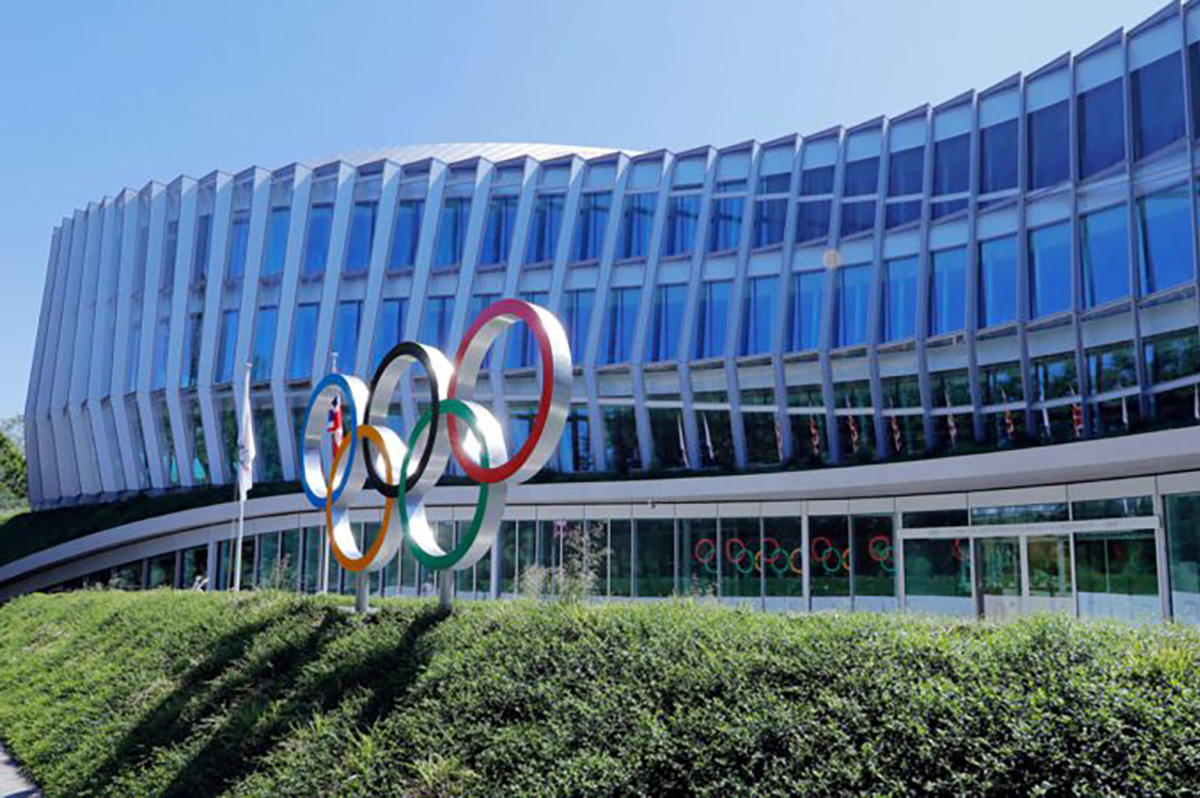
The International Olympic Committee on Thursday announced it will not allow transgender women from competing in female events at the Olympics.
“For all disciplines on the Sports Program of an IOC event, including individual and team sports, eligibility for any Female Category is limited to biological females,” reads the new policy.
The policy states “eligibility for the Female Category is to be determined in the first instance by SRY Gene screening to detect the absence or presence of the SRY Gene.”
“On the basis of the scientific evidence, the IOC considers that the SRY (sex-determining Region Y) Gene is fixed throughout life and represents highly accurate evidence that an athlete has experienced or will experience male sex development,” it reads. “Furthermore, the IOC considers that SRY Gene screening via saliva, cheek swab or blood sample is unintrusive compared to other possible methods. Athletes who screen negative for the SRY gene permanently satisfy this policy’s eligibility criteria for competition in the Female Category.”
The policy states the test “will be a once-in-a-lifetime test” unless “there is reason to believe a negative reading is in error.”
The new regulation will be in place for the 2028 Summer Olympics in Los Angeles.
“I understand that this a very sensitive topic,” said IOC President Kirsty Coventry on Thursday in a video. “As a former athlete, I passionately believe in the rights of all Olympians to take part in fair competition.”
“The policy that we have announced is based on science and it has been led by medical experts with the best interests of athletes at its heart. The scientific evidence is very clear: male chromosomes give performance advances in sport that rely on strength, power, or endurance,” she added. “At the Olympic Games, even the smallest margins can be the difference between victory and defeat. So, it is absolutely clear that it would not be fair for biological males to compete in the female category. In addition, in some sports it would simply not be safe.”
(Video courtesy of the IOC)
Laurel Hubbard, a weightlifter from New Zealand, in 2021 became the first trans woman to compete at the Olympics.
Imane Khelif, an Algerian boxer, won a gold medal at the 2024 Summer Olympics in Paris. Khelif later sued JK Rowling and Elon Musk for cyberstalking after they questioned her gender identity.
Ellis Lundholm, a mogul skier from Sweden, this year became the first openly trans athlete to compete in any Winter Olympics when he participated in Milan Cortina Winter Olympics in Italy.
President Donald Trump in February 2025 issued an executive order that bans trans women and girls from female sports teams in the U.S.
The U.S. Olympic and Paralympic Committee last July banned trans women from competing in female sporting events. Republican lawmakers have demanded the IOC ban trans athletes from women’s athletic competitions.
“I’m grateful the Olympics finally embraced the common sense policy that women’s sports are for women, not for men,” said U.S. Sen. Tom Cotton (R-Ark.) on X.
An IOC spokesperson on Thursday referred the Washington Blade to the press release that announced the new policy.
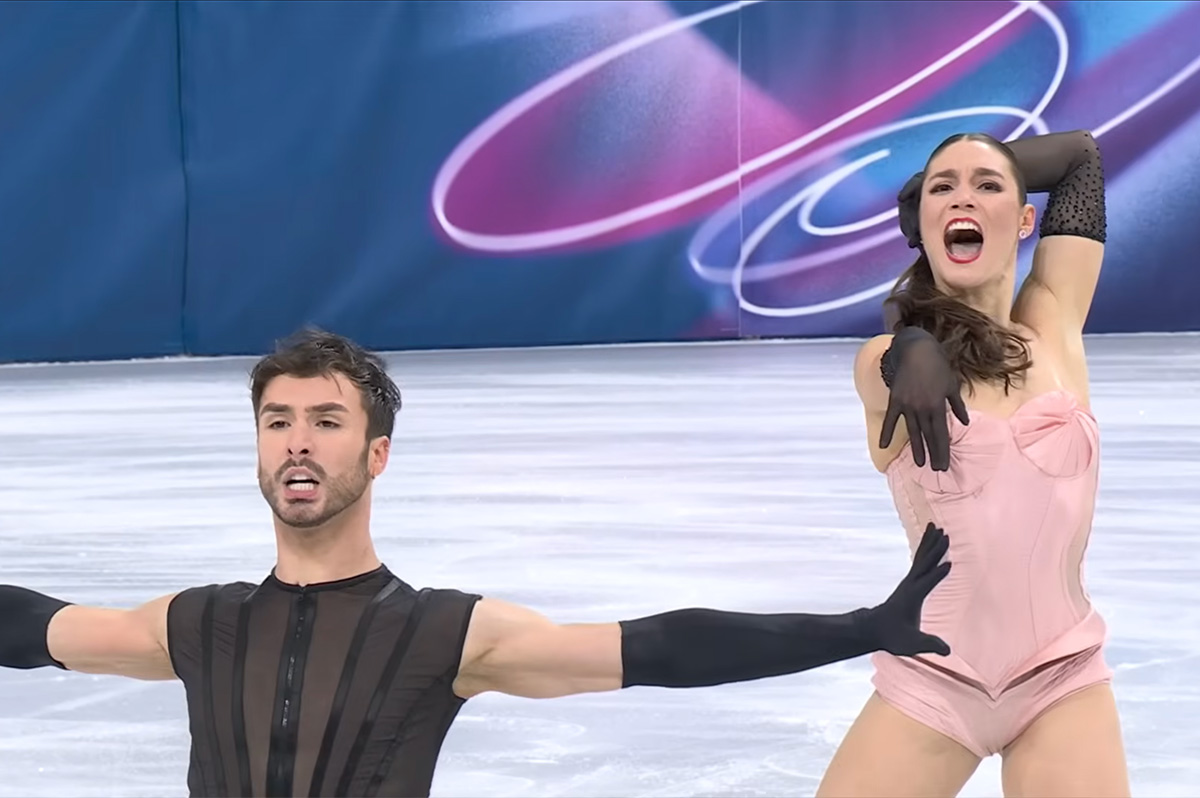
More than a dozen LGBTQ athletes won medals at the Milan Cortina Winter Olympics that ended on Sunday.
Cayla Barnes, Hilary Knight, and Alex Carpenter are LGBTQ members of the U.S. women’s hockey team that won a gold medal after they defeated Canada in overtime. Knight the day before the Feb. 19 match proposed to her girlfriend, Brittany Bowe, an Olympic speed skater.
French ice dancer Guillaume Cizeron, who is gay, and his partner Laurence Fournier Beaudry won gold. American alpine skier Breezy Johnson, who is bisexual, won gold in the women’s downhill. Amber Glenn, who identifies as bisexual and pansexual, was part of the American figure skating team that won gold in the team event.
Swiss freestyle skier Mathilde Gremaud, who is in a relationship with Vali Höll, an Austrian mountain biker, won gold in women’s freeski slopestyle.
Bruce Mouat, who is the captain of the British curling team that won a silver medal, is gay. Six members of the Canadian women’s hockey team — Emily Clark, Erin Ambrose, Emerance Maschmeyer, Brianne Jenner, Laura Stacey, and Marie-Philip Poulin — that won silver are LGBTQ.
Swedish freestyle skier Sandra Naeslund, who is a lesbian, won a bronze medal in ski cross.
Belgian speed skater Tineke den Dulk, who is bisexual, was part of her country’s mixed 2000-meter relay that won bronze. Canadian ice dancer Paul Poirier, who is gay, and his partner, Piper Gilles, won bronze.
Laura Zimmermann, who is queer, is a member of the Swiss women’s hockey team that won bronze when they defeated Sweden.
Outsports.com notes all of the LGBTQ Olympians who competed at the games and who medaled.
Sports
US wins Olympic gold medal in women’s hockey
Team captain Hilary Knight proposed to girlfriend on Wednesday
The U.S. women’s hockey team on Thursday won a gold medal at the Milan Cortina Winter Olympics.
Team USA defeated Canada 2-1 in overtime. The game took place a day after Team USA captain Hilary Knight proposed to her girlfriend, Brittany Bowe, an Olympic speed skater.
Cayla Barnes and Alex Carpenter — Knight’s teammates — are also LGBTQ. They are among the more than 40 openly LGBTQ athletes who are competing in the games.
The Olympics will end on Sunday.

How Pepper the courthouse dog helps victims of abuse

Women’s FEST returns to Rehoboth Beach next week

Belarusian lawmakers approve bill to crackdown on LGBTQ rights

Calendar: April 3-9

How new barriers to health care coverage are hitting D.C.

‘Out for McDuffie’ event held at D.C. gay bar

Thousands attend ‘No Kings’ protests in D.C.

Ghanaian president welcomed to Philadelphia amid backlash over anti-LGBTQ bill

PHOTOS: ‘No Kings’ rally and march