Commentary
Recurring characters in a polyamorous world
Your relationship is about as customizable as your latte

As I worked on this piece, I received a rare WhatsApp notification on my phone. What did it say? Stay tuned, but first:
Ever imagine your life as a sitcom? Like most writers with Main Character Syndrome, I do all the time. I reflect on my setting, my episodic plots, my seasonal arcs, and the supporting cast making life more interesting. However minor the role these recurring characters play, one thing is certain: they shape our universe, for better or worse.
Often, my daily episodes start in a setting familiar to many: a coffee shop greeting me with the aroma of freshly ground beans and the chatter of patrons ready to seize their day. Well, that’s the romanticized version, anyway. Since I work late at a bar, it’s usually early afternoon by the time I stroll in. By now the morning rush is long gone while I’m in disheveled clothes that may as well be pajamas, but regardless, my day’s first recurring character remains: my barista, Spencer.
With Technicolor dreads, anime memorabilia, and punny Steven Rhodes T-shirts, it’s evident Spencer marches to the beat of their own drum. It makes sense, then, that Spencer became a welcomed friend when I moved into the neighborhood during the pandemic. Our encounters often made the 10-minute walk worth the overpriced cold brew.
Yet as I got to know Spencer, I found myself confused by their relationship status. They would recount their weekend speaking of their boyfriend, their daughter, their girlfriend, their partner, or their other partner. At first, I figured my memory was shit (partially true), until I finally learned that Spencer is in a polyamorous relationship.
Over the years, the term “poly” has been casually tossed into relationship conversations. Typically, the natural follow-up is, “what exactly is poly?” Turns out polyamory is a catchall term, so poly relationships can take various configurations. Open relationships, throuples, and even polygamy can be considered polyamorous, but the common theme is this: polyamory rejects the notion of a singular love in life and accepts that people can love multiple partners at the same time. Now polyamory is so widespread your barista might even partake, proving these days your relationship is about as customizable as your latte.
So, how exactly do these relationships start? It’s hard enough for me to get serious with one person, let alone two or more. Through my conversations I learned it’s a gradual count as simple as one, two, three. This was the case for Spencer, since their boyfriend and girlfriend were a couple before they entered the picture. “We had some mutual friends who introduced us,” Spencer told me. “We talked on and off for about a year and a half before they invited me over for dinner and vibes, which led to us hanging out more and more, until my boyfriend asked me to join the relationship.”
Earlier this year, I read an article in the Atlantic about the rise of polyamory, which described the lifestyle as a luxury of the elite. “From their gilded pedestals,” wrote the author of the rich, “they declare polyamory superior to monogamy.” From what I see, however, this is simply untrue. Perhaps our awareness of polyamory coincided with online images shared by the elite, but that doesn’t make it elite-only. Case in point: Spencer has been in their polyamorous relationship for nearly three years.
Moreover, Spencer is not an exception. Beyond baristas, coworkers appear in our sitcoms more often than friends or family sometimes. In a previous piece I wrote about Kelsey, our bar’s stylish door girl, who I learned was in a polyamorous relationship nearly a decade ago, exploring the trend before the trend was a trend.
Like Spencer, Kelsey’s throupling didn’t happen overnight. “Back in college, I was exploring my bisexuality but hadn’t come out yet,” said Kelsey. “I started casually dating a guy who casually dropped the bombshell that he was in an open relationship. I saw a picture of his partner and knew I had to meet her. When we finally met, sparks flew, and the three of us started hanging out. Before long, we were inseparable.”
And Just Like That, Kelsey’s sitcom went from “Felicity” to “Three’s Company.” What I didn’t know until recently was the extra curveball thrown in. “Fast forward,” she started, “they got pregnant, and we were all raising the baby together.”
I was surprised to find not one but two polyamorous relationships raising a child. This might sound messy, but it works better than I thought. “We run into a lot of the challenges most monogamous parents run into,” Spencer explained. “The main benefit I’d say is that [our daughter] has three parents who love and support her, will defend her, and will always take care of her. She has three people she can talk to or cry to, and we have all different opinions and experiences, so we’re able to give her unique advice or teachings.”
This highlights another important aspect of polyamorous relationships: they are often more than fleeting affairs. To reach this label requires serious thought, deep conversation, and mutual agreement. The rest of us can snicker or balk at these triads all we want, but they easily become as serious as monogamous couplings, if not more so.
In fact, polyamory can even resolve the woes of monogamy. “I used to feel the pressure of having to be everything to one partner,” said Kelsey, “and vice versa, but with two partners, that weight lifted. If one partner wanted to do an activity I didn’t want to, they could enjoy those activities together while I got to opt-out guilt-free.”
Interestingly, while poly is considered solidly queer, homosexual relations are not a requirement. For both Kelsey and Spencer, there was at least one in their trio who remained heterosexual. This is because throuples often find a balance enabling all involved to be their optimal sexual selves. “I didn’t know at the time,” Kelsey recounted, “but I’m definitely a vers and got to express both my submissive and dominant sides.” This makes sense, for sexual dynamics are complex. It can be a tall order to expect one person to satisfy everything we want.
That said, polyamory doesn’t come without its own complications, one being the perceptions of others. “My mom didn’t really understand our dynamic at first,” said Spencer, “but once I explained our dynamic, she’s been super supportive. I have run into judgment from strangers who have ‘traditional’ family values.”
This echoed Kelsey’s experience. “When we moved in together, my friends were initially shocked but ultimately accepting. For work events or family gatherings, it was always stressful figuring out if it was OK for all of us to go or only two.”
And as in all relationships, emotions are entangled, which ultimately ended Kelsey’s experience. “After about two years, I noticed the romance between the two of them started to fizzle. Their date nights became as rare as a unicorn sighting, eventually disappearing altogether. I felt like a referee in a never-ending match of jealousy and tension.” Naturally, more people mean more feelings to manage, so the work that relationships require never truly goes away.
Relationship drama — now that I can relate to, bringing me back to WhatsApp. The notification turned out to be a message from a special friend in South Africa. He and I met nearly a decade ago, when I studied abroad in the UK. Our chemistry was instant, and although we live separate lives in separate places, we’ve managed time for friendly banter, romantic getaways and, on occasion, a quasi-lovers quarrel, which was the case just over a year ago.
We have barely spoken since our spat, yet here he was reaching out with an apology. I promptly apologized back. We both recognized that, at the end of the day, we still care about one another.
So, as I wrote this piece like some anthropologist analyzing a vastly different polyamorous culture, it struck me how the notion of “many loves” may not be as distant as I thought. I, like many queers, have experienced romantic connections that never truly went away. These few individuals check in on me, consistently root for me, and refuse to turn their back on me, even if we go a while without speaking. They know me well, often better than family, and they’re almost always worth an apology.
I’d venture to say most of us have this kind of recurring character in our sitcoms. Perhaps someone comes to mind as you read this. Perhaps they’ve stayed in your orbit because the best is yet to come or, like Janice to Chandler or that creepy scientist to Phoebe, to help clarify what you truly want.
Perhaps, then, we’re all a little polyamorous, and the details of how and when we balance the loves of our lives are trivial at best. A polyamorous society of queers and queers-adjacent? Now that’s a twist I can get behind.
Jake Stewart is a D.C.-based writer and barback.






Commentary
Is Ghana’s selective justice a human rights contradiction?
Country’s commitment to human rights appears inconsistent
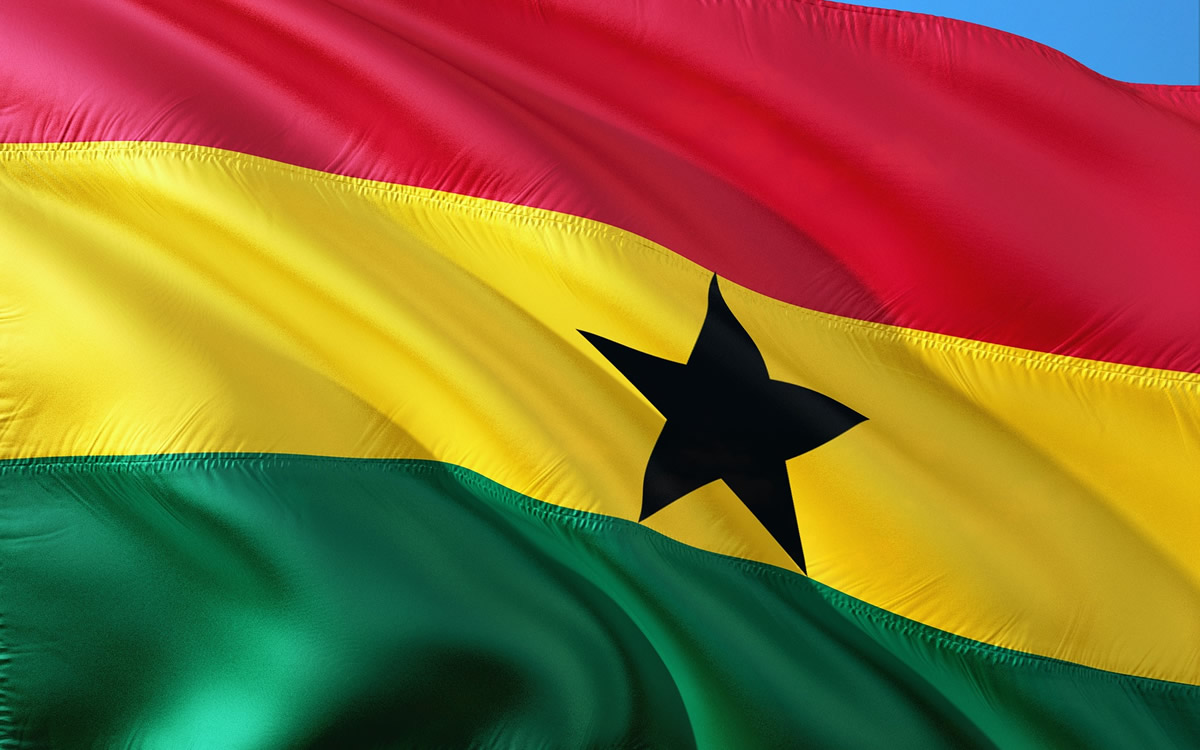
Ghana’s mission to have the United Nations recognize the trafficking of enslaved Africans and racialized chattel enslavement as the gravest crime against humanity is a historic milestone. The resolution adopted on March 25, 2026, with 123 out of about 180 countries in support, marks a major step toward global acknowledgement of the brutality and inhumanity of slavery. A 2022 report by the Equal Justice Initiative, “The Transatlantic Slave Trade,” highlights how during the slave trade, Africans who were enslaved had no rights, freedom, recognition or protection under the law. They had no voice, no bodily autonomy, no respected identity and could be brutally violated with no legal protection. This history represents a grave crime against humanity.
In my opinion, Ghana and the other countries that voted in favor are entirely right to say that such historic events cannot be sanitized or reduced to diplomatic language. Recognition is the first step towards accountability. This matter is important because it is arguably the foundation of the modern-day injustice and inequality people experience, including wealth inequality, racism, sexism, xenophobia, and queerphobia.
The double standard
Yet, despite this important step on the world stage, Ghana’s commitment to human rights appears inconsistent. The same government advocating for justice for enslaved Africans is enacting laws that jeopardies the rights of Africans today. This contradiction between Ghana’s international stance and its domestic policies is at the heart of the discussion.
In February 2026, the Ghanaian parliament formally received the Human Sexual Rights and Family Values Bill. The bill is a grave threat to the rights to nondiscrimination, protection under the law, privacy and freedom of association, assembly, and expression. It expands criminalization of LGBTQ+ people, and anyone associated with them. This Human Sexual Rights and Family Values Bill calls for a three-year imprisonment for anyone who identifies as LGBTQ+, anyone who has gender affirming treatment, anyone who enters into a same-sex marriage or attends a same-sex wedding and anyone who promotes equal rights for LGBTQ+ people. It turns enforcement into a societal obligation rather than just a state function, encouraging people to report anyone who looks suspicious or different. This further legitimizes the brutal attacks on LGBTQ+ people socially, which leaves the people of Ghana with blood on their hands.
Ghana’s proposed and reintroduced anti-LGBTQ+ legislation is said to be among the most restrictive in the world and will result in the inhumane treatment of LGBTQ+ people. It not only further criminalizes consensual same-sex relations but also targets civil society organizations that are perceived to be supporting equal rights for LGBTQ+ people. So, if this law passes, it will be illegal to support equal rights and challenge the inhuman treatment of queer Ghanaians and allies. Is this not a double standard? Ghana seeks justice for the ill-treatment of Africans during the transatlantic slave trade but is actively in the process of seeking to harm its own people.
This is not theoretical harm; it is practical harm. According to the Human Rights Watch, LGBTQ+ people in Ghana already face systemic stigma, discrimination, harassment and violence, often enabled by both legal frameworks and social stigma, resulting in a hostile climate.
Ghana falls short of upholding human rights at home
On the global stage, Ghana is arguing that the dehumanization of Africans through slavery was so severe that it constitutes the gravest possible violation of human dignity. This argument rests on a core principle that reducing people to less than fully human is unacceptable under any circumstances.
Back at home, the state is endorsing laws that do exactly that to LGBTQ+ people. Criminalizing identity, suppressing expression, clamping down on civic space, monitoring and surveilling citizens and advocating for social exclusion. These are elements of dehumanization signaling that some are less deserving of protection, dignity, respect, and justice. That is the definition of a double standard.
Supporters of these laws often frame homosexuality as un-African, but this claim does not hold up under scrutiny. In his article, “The ‘Deviant’ African Genders That Colonialism Condemned”, Mohammed Elnaiem emphasizes that historical and anthropological evidence shows that diverse sexualities and gender expressions existed across African societies long before colonial rule. Ironically, many of the laws used to criminalize LGBTQ+ people today trace directly back to the colonial-era. This is even supported by the African Court, which, in December 2020, through its Advisory opinion, made it clear that these colonial-era laws are discriminatory and perpetuated marginalization. The African Court also called on African states to take action in this regard.
It is no secret that anti-rights actors are actively operating in Ghana and supporting leaders to advance their anti-rights agenda. They are increasingly organized, visible, well-funded, and influential in shaping state policy. The upcoming 4th African Inter-Parliamentary Conference on Family and Sovereignty, scheduled to take place in Accra from May 27-30, 2026, is a clear example of this coordination. The conference endorses the so-called African Charter on Family Values, a deeply contested initiative that frames LGBTQ+ people as a threat to children and positions queer identities as foreign ideologies. This platform is being used to legitimize and advance anti-LGBTIQ+ legislation, restrict comprehensive sexuality education and roll back sexual and reproductive health rights. In this context, the treatment of LGBTQ+ people in Ghana cannot be viewed as isolated policy choices, but rather as part of a broader coordinated anti-rights agenda that normalizes and legalizes discrimination. It fuels increasingly inhumane conditions for queer communities and civil society. Ghana is simultaneously rejecting colonial injustice in one breath while enforcing colonial-era morality laws in another.
There is also a legal inconsistency worth noting. Ghana’s own Constitution guarantees the right to life, protection from violence, the right to personal liberty, the right to human dignity, equality and freedom from discrimination and the right to a fair trial. Yet, in practice these rights are not equally applied to LGBTQ+ individuals. Depriving equal rights to LGBTQ+ persons is the same as what the slave owners did to slaves.
You cannot build a credible human rights position on selective application
To be clear, recognizing slavery as a crime against humanity is not diminished by pointing out this contradiction. Both truths can coexist: the UN resolution is a victory and Ghana’s domestic policies remain deeply troubling. In fact, holding both realities together is necessary if the language of human rights is to mean anything at all. Ghana has taken a powerful stand on the global stage. The question now is whether it is willing to apply that same moral clarity at home.
Bradley Fortuin is a consultant at the Southern Africa Litigation Center and a human rights activist.
Commentary
The cost of speaking one’s mind
Colombian artist José Miel’s recent comments on Pride, LGBTQ community sparked controversy
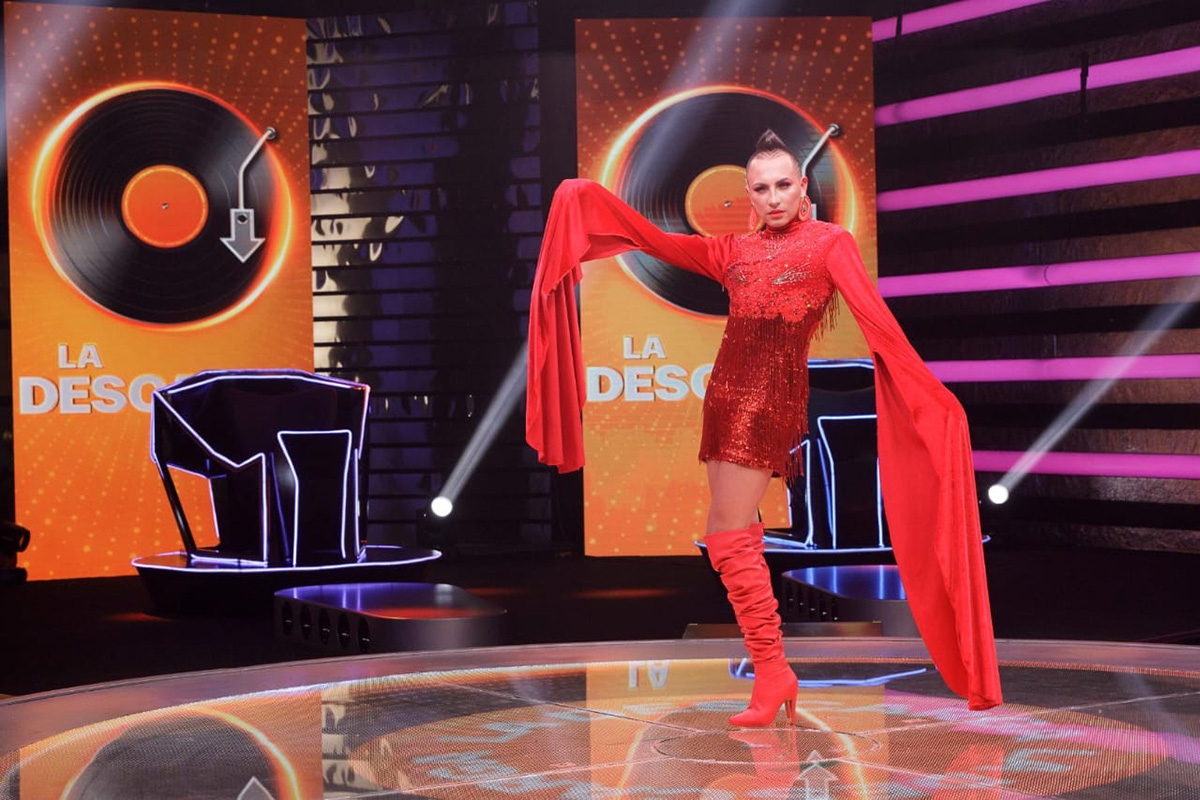
Colombian artist José Medina, known professionally as José Miel, 34, originally from Bogotá, is going through one of the most complex moments of his public career. Following his exit from “La casa de los famosos Colombia,” his name has been placed at the center of a controversy that has gone beyond the realm of entertainment and into a broader terrain: the debate over freedom of expression, diversity, and the limits of dissent within a society that defines itself as inclusive.
Miel is not an improvised figure. His trajectory in music, acting, and television reflects a sustained process of training, work, and exposure across different platforms. He participated in “Yo me llamo” (2019) and “La Descarga” (2022), establishing himself as a versatile artist within the Colombian entertainment industry. His career has been built through effort, in an industry that does not guarantee permanence without discipline.
However, the recent focus is not on his artistic work, but on his statements.
On March 15, the program “La Red” on Caracol Televisión released an interview on its digital platforms in which the singer spoke openly about the difficult moment he is facing, stating that his words — referring to comments he made after leaving “La casa de los famosos” — “cost him dearly.” His opinions on Pride, inclusive language, and the LGBTQ acronym triggered an immediate and polarized reaction.
From that moment on, the debate moved beyond the content of his words and opened another angle that cannot be overlooked.
Miel is known for the precision, firmness, and clarity with which he expresses his ideas. He is not an improvised artist, neither in discourse nor on stage. However, amid this controversy, a question also arises — one that deserves consideration from a journalistic standpoint:
What was the intention of the journalist, commentator, or media outlet that posed the questions leading to these statements?
This is not about shifting responsibility for what was said, but about understanding the context in which it occurred. At a moment in his career marked by multiple opportunities and projects, Miel’s responses placed him at the center of a controversy with real consequences.
In that sense, it is worth asking whether these were genuine questions within an open dialogue, or whether they followed a more provocative line, aimed at generating headlines or exposing the interviewee in a sensitive terrain.
This is not a minor question.
In media environments where every word can be amplified, the role of the one asking the questions is also part of how the story is constructed.
Within this context, this outlet held a phone conversation with the artist this Wednesday in order to gather his position directly. What follows are his responses to three central themes: the consequences of his words, his identity, and his call for respect.
Regarding the personal cost of expressing his opinion, Miel was clear:
You are now paying a high price for speaking your mind.
Do you regret having spoken out, or do you still believe your voice is non-negotiable?
Response:
“I believe that as human beings we all know that giving an opinion on any topic will bring problems. That’s the problem with society: it doesn’t respect other people’s opinions, because many think they are always right, and that’s not the case. Everyone has their reasons, everyone has their opinions, and those must be respected — even if you disagree.
What I expressed was an opinion without discrimination, without harming anyone, without stepping on anyone. And yet the opposite has been done to me: I’ve been trampled on, harmed, threatened, sent very ugly messages, harassed, hate coming from everywhere.
I knew what I was getting into. I knew what could happen. But I am proud of myself. I am proud of my conviction, and I will defend it until the end, because I truly believe in what I said. I do not regret it.”
When addressing his stance on labels, Pride, and how he defines himself, the artist stated:
You say you don’t identify with certain expressions of Pride or with the acronym.
So how do you define who you are, without labels or molds?
Response:
“Well, I don’t identify with Pride marches because they don’t represent me at all. They would represent me if they were respectful and appropriate, because many families attend — children, grandparents, parents … everyone is there.
And it’s quite disrespectful to see many people — not all, I emphasize — exposing their bodies, wearing very little clothing, drinking alcohol, intoxicated, using drugs. I don’t think that’s the way I would seek respect and equality.
I don’t like the term LGBTIQ+ community or all the letters that keep being added, because I feel that these acronyms make people discriminate more. I understand why they exist, because I know that what is not named does not exist, but I feel it is not the right way.
To me, everyone is part of society. We are human beings.
I don’t have labels or molds. I am a man, I am homosexual, and that’s it. The fact that I wear makeup or more feminine clothing is part of my artistic work, part of the stage. My everyday life is completely different.”
Finally, when referring to the reactions he has received, Miel insisted on a point that runs throughout his position:
You speak about respect, yet you’ve received attacks even from within the same community. What do you say today to those who call for inclusion but do not respect when someone thinks differently?
Response:
“I realized that the same community discriminates against itself. Many gay people have written to support me, telling me how brave I am, that they think the same way but don’t dare to speak.
To those who disagree with my opinion, I say: respect it, even if you don’t like it. You can express your opinion because we live in a free country, but do it with arguments, from your perspective, without stepping on others.
Because that is not the way.
I understand the struggles, I understand what is being sought, but I feel that if other ways of fighting were heard, many things could be achieved through respect and equality.
Everyone is free to think and say what they want — but always with respect. It’s that simple.”
Beyond his statements, what the artist is currently facing was also exposed in the March 15 interview on “La Red.” In that space, Miel described in his own words what he called a “string of problems”: constant harassment on social media, direct threats, hate messages, canceled performances, loss of contracts, and stalled projects due to external pressure and boycott warnings.
This situation not only highlights the media impact of his words, but also the material consequences that expressing an opinion can have in today’s digital environment.
His statements also drew reactions from the political sphere. Colombian Congressman Mauricio Toro wrote on social media:
“Hate and discrimination are learned. Sometimes they are so deeply rooted that they turn against oneself. José Miel, neither you nor I have anything to hide or to be ashamed of. Being free and loving without fear is the greatest thing you can experience as a human being.”
However, this position was also criticized. A significant number of users — even those who do not agree with the artist’s statements — have insisted that his right to express his views must be respected, pointing to a growing tension between inclusive discourse and tolerance for dissent.
The case of José Miel goes beyond a media controversy. It reflects a broader reality: the difficulty of sustaining respect when opinions do not align, even within spaces that promote diversity.
In a context where social media amplifies every stance, reactions to difference become immediate and, in many cases, disproportionate.
Beyond individual positions, what happened raises a deeper question:
Is it possible to speak of inclusion if we are not capable of respecting difference?
The philosopher Voltaire left behind an idea that remains relevant:
“I disagree with what you say, but I will defend to the death your right to say it.”
That is the point.
Because if a society is not capable of upholding the right of others to express themselves — even when it is uncomfortable — then it is not building inclusion; it is merely managing agreement.
And in that scenario, the case of José Miel stops being an isolated episode.
It becomes a test.
A test of how far we are willing to go in respecting others when they do not think like us.
Support does not mean agreement.
In this case, support means something more basic and more necessary: defending the right to exist, to think, and to express oneself without being destroyed for it.
Botswana
Lorato ke Lorato: marriage equality, democracy, and the unfinished work of justice in Botswana
High Court considering marriage equality case
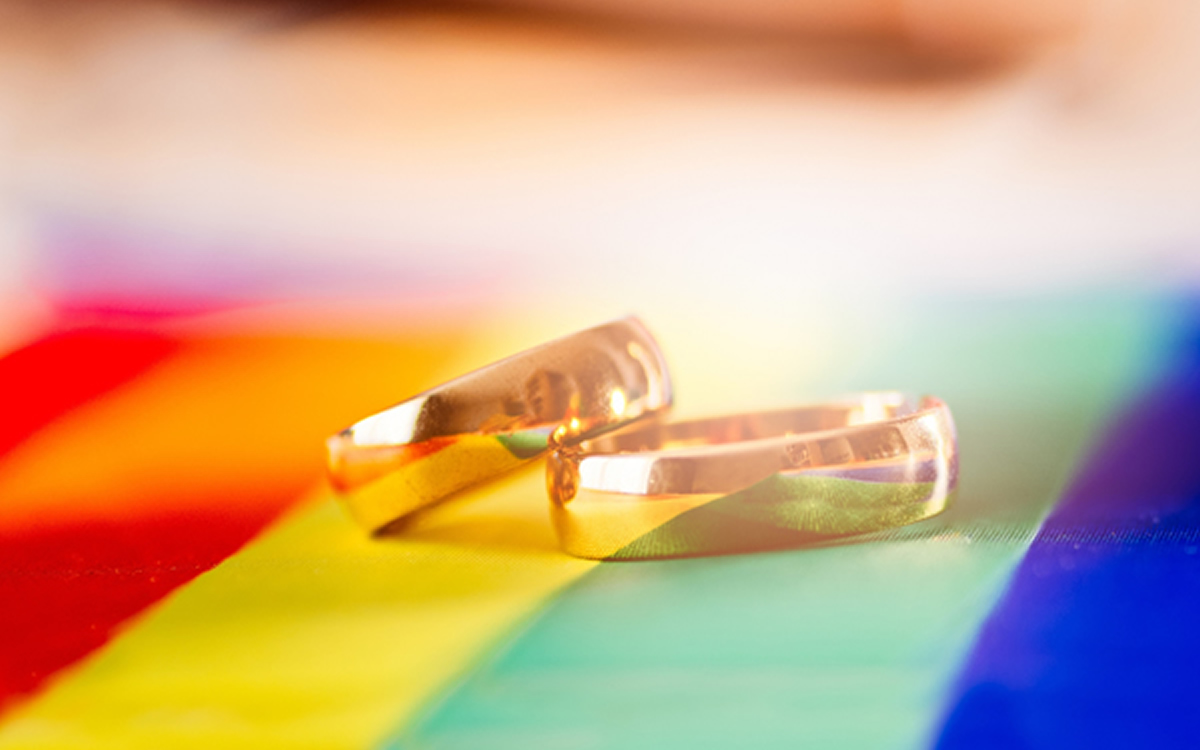
As Botswana prepares for the resumption of a landmark marriage equality case before the High Court on July 14–15, the country finds itself at a critical constitutional crossroads.
At first glance, the matter may appear to be about whether two women, Bonolo Selelelo and Tsholofelo Kumile, can have their love legally recognized. At its core however, this case is about something far more profound: the dismantling of patriarchy, the decolonization of law, and the integrity of Botswana’s constitutional democracy.
Beyond marriage: a question of power
Marriage, as a legal institution, has never been neutral. It has historically functioned as a mechanism for regulating women’s bodies, sexuality, and social roles within a patriarchal order. To deny LBQ (lesbian, bisexual, and queer) women access to marriage is not merely to exclude them from a legal benefit, it is to reinforce a hierarchy of relationships, where heterosexual unions are deemed legitimate and all others invisible. This case therefore challenges the very foundations of who gets to love, who gets to belong, and who gets to be protected under the law.
As feminist scholars have long argued, patriarchy is sustained through institutions that appear ordinary but are deeply political. The law is one such institution. And it is precisely here that this case intervenes: by asking whether Botswana’s legal system will continue to uphold exclusion, or evolve to reflect the constitutional promise of equality.
A constitutional journey: Botswana’s courts and human dignity
This is not the first time Botswana’s courts have been called upon to affirm the dignity of LGBTQI+ persons. Over the past decade, the judiciary has built a progressive body of jurisprudence grounded in equality, nondiscrimination, and human dignity.
In Attorney General v. Rammoge and Others (Court of Appeal Civil Appeal No. CACGB 128-14, 2016), the Court of Appeal upheld the right of LEGABIBO to register as an organization. The court affirmed that:
“The refusal to register the appellant society was not only unlawful, but a violation of the respondents’ fundamental rights to freedom of association.”
This was followed by the ND v. Attorney General of Botswana (MAHGB-000449-15, 2017) case, where the High Court recognized the right of a transgender man to change his gender marker. The court held:
“Gender identity is an integral part of a person’s identity … and any interference with that identity is a violation of dignity.”
In Letsweletse Motshidiemang v. Attorney General (MAHGB-000591-16, 2019), the High Court decriminalized same-sex activity, declaring sections of the Penal Code unconstitutional. Justice Leburu powerfully stated:
“Human dignity is harmed when minority groups are marginalized.”
This decision was affirmed by the Court of Appeal in Attorney General v. Motshidiemang (CACGB-157-19, 2021), where the court emphasized:
“The Constitution is a dynamic instrument … it must be interpreted in a manner that gives effect to the values of dignity, liberty, and equality.”
These cases collectively establish a clear principle: the Constitution of Botswana protects all persons, not just the majority.
The marriage equality case now asks a logical next question: If LGBTQI+ persons are entitled to dignity, identity, and freedom from criminalization, why are their relationships still denied recognition?
Decolonizing the law: What is truly ‘UnAfrican’?
Opponents of marriage equality often argue that homosexuality is “unAfrican.” This claim, while politically powerful, is historically inaccurate. Same-sex relationships and diverse gender identities have existed across African societies long before colonial rule. What is foreign, however, are the laws that criminalize these identities.
Botswana’s anti-sodomy laws were inherited from British colonial legal systems, not from indigenous Tswana culture. As scholars of African history have demonstrated, colonial administrations imposed rigid Victorian moral codes that erased and suppressed existing sexual diversity. To claim that homosexuality is unAfrican, while defending colonial-era laws, is therefore a contradiction.
A truly decolonial approach to the law requires us to ask: Whose morality are we upholding? And whose history are we erasing?
Marriage equality, in this sense, is not a Western imposition: it is part of a broader project of reclaiming African dignity, plurality, and humanity.
Democracy on trial: the question of separation of powers
This case also raises important questions about the health of Botswana’s democracy.
Following the 2021 Court of Appeal decision affirming the decriminalization of same-sex relations, Botswana witnessed public demonstrations, including marches led by groups such as the Evangelical Fellowship of Botswana (EFB), opposing the judgment and calling for the retention of discriminatory laws.
While public participation is a cornerstone of democracy, these events raise deeper concerns about the separation of powers. Courts are constitutionally mandated to interpret the law and protect fundamental rights, even when such decisions are unpopular. When judicial decisions grounded in constitutional principles are publicly resisted on moral or religious grounds, it risks undermining the authority of the courts and the rule of law itself.
Democracy is not simply about majority opinion: it is about the protection of minority rights within a constitutional framework.
Botswana is not a theocracy
It is also important to clarify a recurring misconception: Botswana is not a Christian nation.
Botswana is a secular constitutional democracy and more accurately, a pluralistic society that recognizes and respects diversity of belief, culture, and identity. The Constitution does not elevate one religion above others, nor does it permit religious doctrine to dictate legal rights. The law must serve all citizens equally, regardless of faith.
To frame marriage equality as a threat to Christianity is therefore misplaced. The question before the courts is not theological, but constitutional: Does the exclusion of same-sex couples from marriage violate the rights to equality and nondiscrimination?
Love, equality, and the future of justice
At its heart, this case is about love, but it is also about power, history, and justice. It asks whether Botswana is prepared to move beyond colonial legal frameworks and patriarchal norms, and to embrace a future grounded in equality, dignity, and inclusion.
It asks whether the Constitution will continue to be interpreted as a living document, one that evolves with society, or remain constrained by outdated moral assumptions. Ultimately, it asks whether Botswana’s democracy can hold true to its founding promise: that all persons are equal before the law.
As the High Court prepares to hear this case in July 2026, the nation has an opportunity to affirm not only the rights of two individuals, but the broader principle that love, in all its diversity, deserves recognition, and protection.
Lorato ke lorato.
Love is love.
Justice, if it is to mean anything at all, must make space for it.
Nozizwe is the CEO of LEGABIBO (Lesbians, Gays and Bisexuals of Botswana)

Cuba under pressure and without answers

Police mental health struggles gain growing attention

Man faces first S.C. ‘hate intimidation’ charge

Trump budget would codify expanded global gag rule

D.C. is the place for the Democratic Socialists of America

VIDEO: Gay journalist detained for booing Trumps at ‘Chicago’ opening night

Pam Bondi ousted as attorney general

Idaho Gov. signs harshest anti-trans bathroom bill in the country

JD Vance to travel to Hungary next week

Mayor Bowser signs bill requiring insurers to cover PrEP
-

 The White House5 days ago
VIDEO: Gay journalist detained for booing Trumps at ‘Chicago’ opening night
-
The White House5 days ago
Pam Bondi ousted as attorney general
-
Idaho5 days ago
Idaho Gov. signs harshest anti-trans bathroom bill in the country
-
Hungary5 days ago
JD Vance to travel to Hungary next week