District of Columbia
Bill to repeal D.C. home rule would jeopardize LGBTQ rights: activists
Measure introduced by homophobic lawmakers

U.S. Sen. Mike Lee (R-Utah) and U.S. Rep. Andy Ogles (R-Tenn) on Feb. 6 introduced legislation in the Senate and House calling for repealing the D.C. Home Rule Act, which would eliminate the city’s limited home rule government with a mayor and city council.
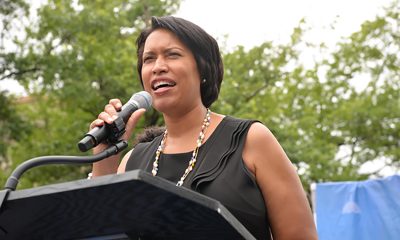
The two lawmakers named the bill the “Bringing Oversight to Washington and Safety to Every Resident Act” or the “BOWSER Act,” saying in a statement that D.C. Mayor Muriel Bowser was responsible, in part, for leaving “our nation’s Capital in crime-ridden shambles.”
Lee and Robles each received a “0” rating, the lowest possible rating, on the Human Rights Campaign’s Congressional Scorecard, which assesses the record of members of Congress on LGBTQ related issues.
Most political observers point out that far-right Republican lawmakers have introduced similar bills in the past, including one in 2024, which have died in committee with little support.
Both Democratic and some Republican lawmakers expressing opposition to the previous bills noted that under the existing D.C. Home Rule Act, Congress retains full authority to reject any legislation passed by the D.C. Council and signed by the mayor. They note that Congress also retains authority to impose any law it wishes on D.C.
But some observers, including LGBTQ rights advocates, say the prospects of the current bill could go further with the current GOP-controlled Congress and at a time when President Donald Trump raised the issue of alleged “out of control” crime in D.C. during his presidential campaign. Trump has said he plans to issue one or more executive orders targeting D.C. home rule.
The bill introduced by Lee and Ogles does not address or propose who or what federal entity would operate D.C.’s local government after the Home Rule Act of 1973 is repealed. The two-page-long bill states, “Effective on the date that is 1 year after the date of enactment of this Act, the District of Columbia Home Rule Act (Public Law 93-198) is repealed.”
Prior to the passage of the Home Rule Act of 1973, which Congress approved under the administration of then-President Richard Nixon, the city was governed by a commission whose members were appointed by the U.S. president and approved by Congress. A “commissioner-mayor” appointed by the president served as the head of the commission.
LGBTQ rights activists believe a similar type of governing body under the current Republican Congress and the Trump administration could pose a threat to the LGBTQ rights laws currently on the books in D.C., including the city’s Human Rights Act, which bans discrimination based on sexual orientation and gender identity.
“Repeal of Home Rule at this time can only be a negative for the LGBTQ community, especially the transgender community, because of the virulent antagonism toward that community of the MAGA Republicans in control of Congress,” according to D.C. gay Democratic activist Peter Rosenstein.
Howard Garrett, president of the Capital Stonewall Democrats, D.C.’s largest local LGBTQ political organization, also expressed concern that repeal of D.C. home rule would pose a threat to the local LGBTQ community.
“Repealing D.C. home rule would be a direct attack on our city’s ability to govern itself and protect the rights of all residents, especially the LGBTQ+ community,” Garrett told the Washington Blade. “Washington, D.C. has been a leader in advancing LGBTQ+ rights, from nondiscrimination protections to access to affirming healthcare,” he said. “If Congress were to strip away our autonomy, it would leave us vulnerable to reactionary policies that do not reflect the values of our residents.”
Garrett added, “This latest attempt to revoke home rule is nothing more than political interference that undermines democracy.”
In a joint statement released on the day they introduced their D.C. home rule repeal bills, Lee and Ogles denounced what they called a “radically progressive regime” of Bowser and the City Council.
“Washington is now known for its homicides, rapes, drug overdoses, violence, theft, and homelessness,” Ogles said n the statement. “Bowser and her corrupt Washington City Council are incapable of managing the city,” he said.
Lee stated, “The corruption, crime, and incompetence of the D.C. government has been an embarrassment to our nation’s capital for decades. It is long past time that Congress restored the honor of George Washington to the beautiful city which bears his name.”
Daniel Solomon, co-founder of D.C. Vote, a local nonpartisan group that advocates for D.C. statehood, said in a statement that supporters of the home rule repeal bill were putting out misleading information about crime in D.C.
“Make no mistake: This bill is a thinly veiled attempt to punish D.C. for political differences under the guise of public safety,” he said. “We all agree that public safety is paramount, but dismantling home rule will do nothing to make our communities safer,” his statement continues.
“Instead, it will silence the voices of D.C. residents and threaten the progress we’ve made on criminal justice reform, economic growth, and local accountability,” he said.
Bowser, who has declined to comment specifically on the current bill to repeal D.C. home rule, has pointed out that violent crime in D.C. dropped by 35 percent from 2023 to 2024 and property related crime declined by 11 percent during that same period.

District of Columbia
Capital Stonewall Democrats set to celebrate 50th anniversary
Mayor Bowser expected to attend March 20 event

D.C. Mayor Muriel Bowser, members of the D.C. Council, and local and national Democratic Party officials are expected to join more than 150 LGBTQ advocates and supporters on March 20 for the 50th anniversary celebration of the city’s Capital Stonewall Democrats.
A statement released by the organization says the event is scheduled to be held at the Pepco Edison Place Gallery building at 702 8th St., N.W. in D.C.
“The evening will honor the people who built Capital Stonewall Democrats across five decades – activists who fought for rights when the odds were against them, public servants who opened doors and refused to let them close, and a new generation of leaders ready to carry the work forward,” the statement says.
Founded in 1976 as the Gertrude Stein Democratic Club, the organization’s members voted in 2021 to change its name to the Capital Stonewall Democrats.
Among those planning to attend the anniversary event is longtime D.C. gay Democratic activist Paul Kuntzler, 84, who is one of the two co-founders of the then-Gertrude Stein Democratic Club. Kuntzler told the Washington Blade that he and co-founder Richard Maulsby were joined by about a dozen others in the living room of his Southwest D.C. home at the group’s founding meeting in January 1976.
He said that among the reasons for forming a local LGBTQ Democratic group at the time was to arrange for a then “gay” presence at the 1976 Democratic National Convention, at which Jimmy Carter won the Democratic nomination for U.S. president and later won election as president.
Maulsby, who served as the Stein Club president for its first three years and who now lives in Sarasota, Fla., said he would not be attending the March 20 anniversary event, but he fully supports the organization’s continuing work as an LGBTQ organization associated with the Democratic Party.
Steven McCarty, Capital Stonewall Democrats’ current president, said in the statement that the anniversary celebration will highlight the organization’s work since the time of its founding.
“Capital Stonewall Democrats has been fighting for LGBTQ+ political power in this city for 50 years, electing people, training organizers, holding this community together through some really hard moments,” he said. “And right now, with everything going on, that work has never mattered more. This gala is the first moment of our next chapter, and I want the community to be a part of it.”
The statement says among the special guests attending the event will be Democratic National Committee Vice Chair Malcolm Kenyatta, who became the first openly gay LGBTQ person of color to win election to the Pennsylvania General Assembly in 2018.
Other guests of honor, according to the statement, include Mayor Bowser; D.C. Council member Zachary Parker (D-Ward 5, the Council’s only gay member; D.C. Council member Anita Bonds (D-At-Large); Earl Fowlkes, founder of the International Federation of Black Prides; Vita Rangel, a transgender woman who serves as Deputy Director of the D.C. Mayor’s Office of Talent and Appointments; Heidi Ellis, director of the D.C. LGBTQ Budget Coalition; Rayceen Pendarvis, longtime D.C. LGBTQ civic activist; and Phillip Pannell, longtime D.C. LGBTQ Democratic activist and Ward 8 civic activist.
Information about ticket availability for the Capital Stonewall Democrats anniversary gala can be accessed here: capitalstonewalldemocrats.com/50th
District of Columbia
Owner of D.C. gay bar Green Lantern John Colameco dies at 79
Beloved businessman preferred to stay ‘behind the scenes’
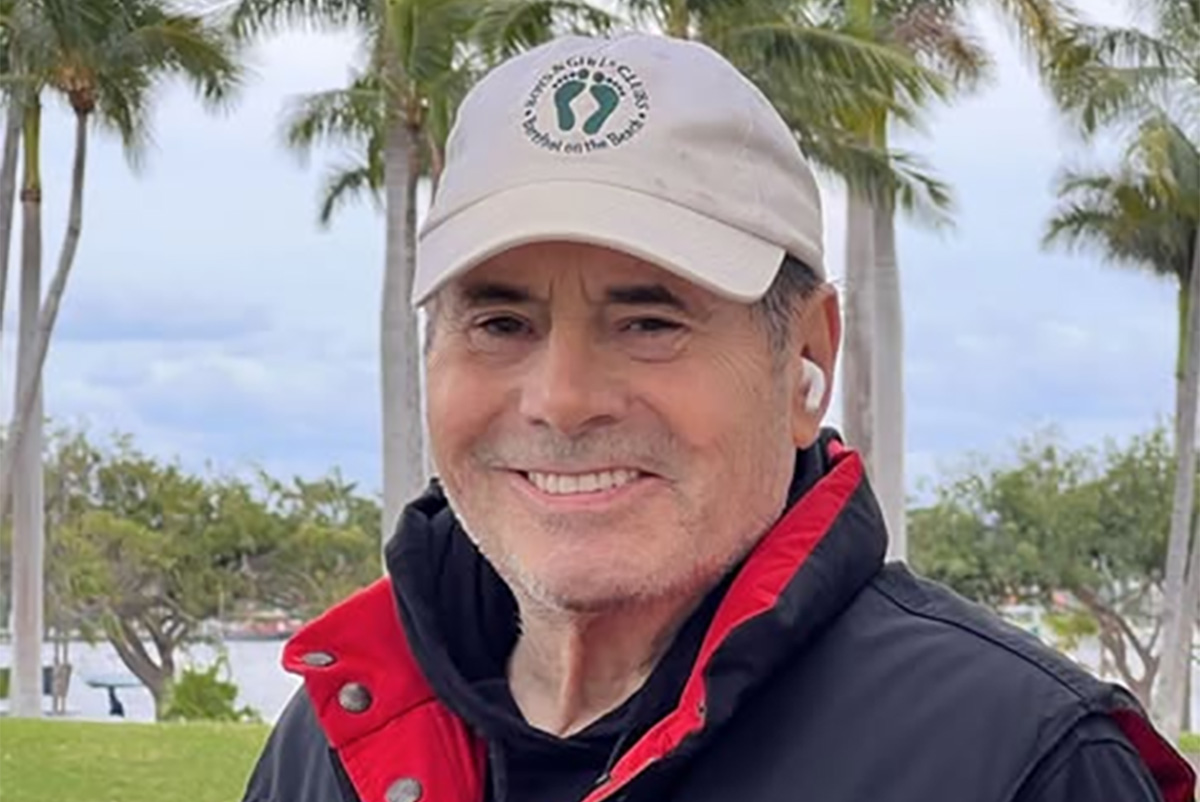
John Colameco, owner of the popular D.C. gay bar Green Lantern, has died, according to a March 7 announcement posted on the bar’s website and Instagram account. The announcement didn’t provide a date of his passing or a cause of death.
Green Lantern manager Howard Hicks said Colameco was 79 at the time of his passing.
“It is with great sadness that Green Lantern announces the death of our beloved owner, John Colameco,” the announcement says. “Most of our patrons might have heard John’s name, but might not have known his face,” it says.
“He was a ‘behind-the-scenes’ kind of guy who avoided the limelight,” the announcement continues. “He preferred to stay in the back of the house with staff and team ensuring everything was running smoothly so that everyone out front was having a good time.”
The announcement adds, “As a veteran and businessman, John wasn’t a member of the LGBTQ + community, but he was one of the best damn allies our community has ever had.”
It says he “long provided spaces for the queer community to come together” since the 1990s when he owned and operated a popular restaurant on 17th Street, N.W. called Peppers.
According to the announcement, Colameco and his then business partner Greg Zehnacker opened the Green Lantern in 2001 in an alley off of 14th Street, N.W., between Thomas Circle and L Street, N.W.
The announcement points out that the Green Lantern first opened in the same location in the early 1990s before it later closed when the original owners decided to purchase and open other bars, one of which was the gay bar Fireplace near Dupont Circle. Colameco and Zehnacker were able to reopen the bar with the Green Lantern name.
“When Greg died unexpectedly in February 2014, John remained steadfastly committed to carrying on their vision and ensuring that Green Lantern remained part of the fabric of D.C.’s queer community,” the announcement says.
“Over the years, through Green Lantern, John has provided support to many community organizations, most notably Stonewall Sports, the Gay Men’s chorus of Washington, and ONYX Mid-Atlantic with Green Lantern serving as a gathering hub for their activities,” it states.
The announcement adds that Colameco’s family was planning a memorial for him in his hometown of Philadelphia.
“His Green Lantern family will celebrate his life by operating the bar as usual and we encourage you to stop by and join us,” it says. “Community coming together and having a good time – it’s exactly what John would want.”
District of Columbia
D.C. Black Pride theme, performers announced at ‘Speakeasy’
Durand Bernarr to headline 2026 programming
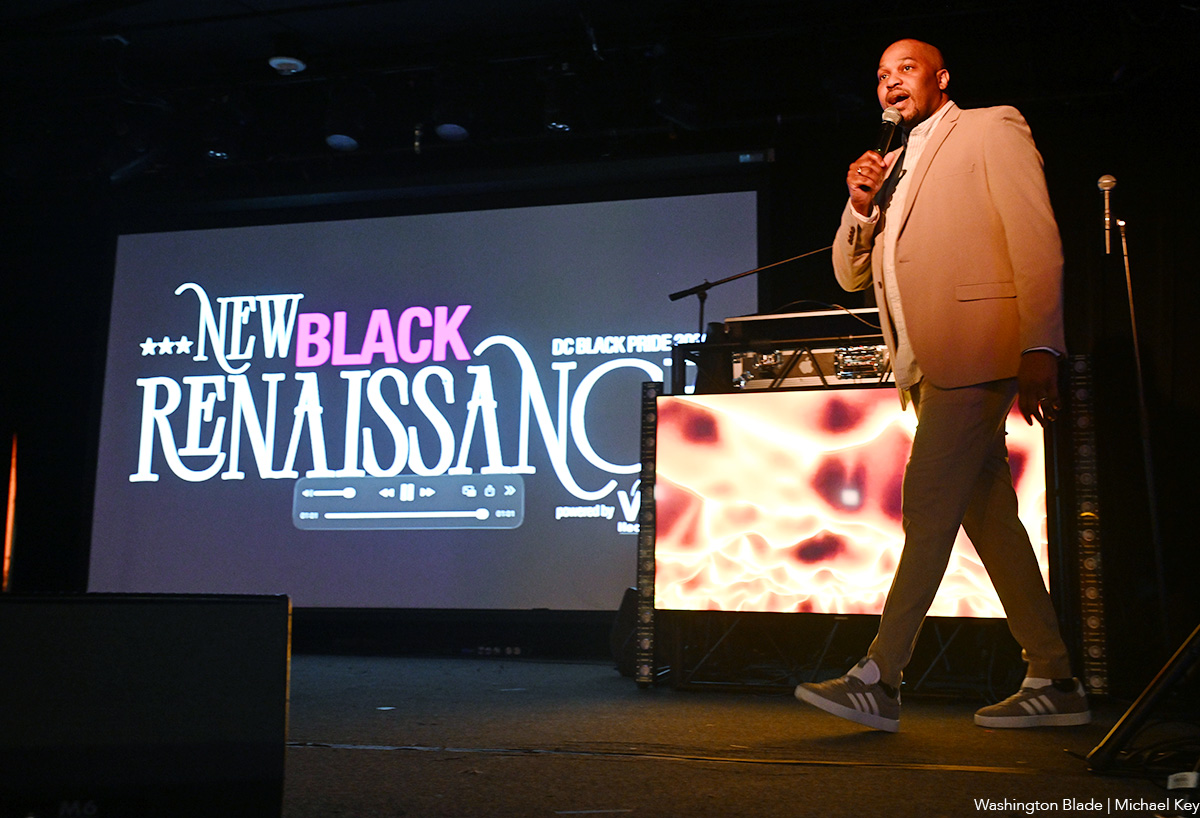
The Center for Black Equity held its 2026 DC Black Pride Theme Reveal event at Union Stage on Monday. The evening, a “Speakeasy Happy Hour,” was hosted by Anthony Oakes and featured performances by Lolita Leopard and Keith Angelo. The Center for Black Equity organizes DC Black Pride.
Kenya Hutton, Center for Black Equity president and CEO, spoke following the performances by Leopard and Angelo. Hutton announced this year’s theme for DC Black Pride: “New Black Renaissance.”
Performers for 2026 DC Black Pride were announced to be Bang Garcon, Be Steadwell, Jay Columbus, Bennu Byrd, Rue Pratt and Akeem Woods.
Singer-songwriter Durand Bernarr was announced as the headliner for the 2026 festivities. Bernerr gave brief remarks through a video played on the screen at the stage.
DC Black Pride is scheduled for May 22-25. For more information on DC Black Pride, visit dcblackpride.org.

Far-right Chilean President José Antonio Kast takes office

Capital Stonewall Democrats set to celebrate 50th anniversary

Housewives head to Capitol Hill to promote PrEP coverage

Fla. House passes ‘Anti-Diversity’ bill

Ukrainian Supreme Court recognizes same-sex couple as a family

In D.C. comedy, be sure to shop local

Comings & Goings

Too afraid to leave home: ICE’s toll on Latino HIV care

Intense doc offers transcendent treatment of queer fetish pioneer