Kenya
Queer Kenyans, Ugandans celebrate Pride month
Pan-African Conference on Family Values took place in Nairobi in May
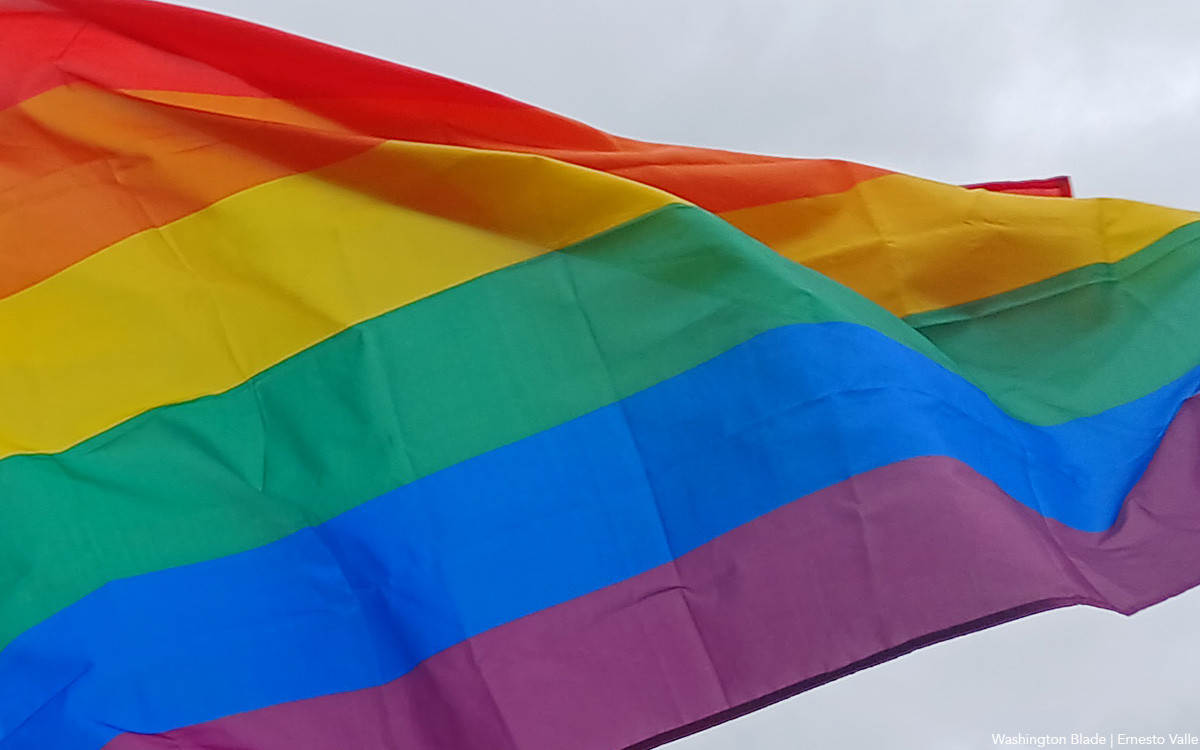
As queer people around the world celebrate Pride month, their Kenyan and Ugandan counterparts are also marking it with a strong message of defiance and resistance.
Their agitation for “dignity, safety, and liberation” in homophobic environments follows last month’s second Pan-African Conference on Family Values in Nairobi, whose delegates were concerned about the push to normalize so-called LGBTQ practices on the continent and resolved to resist.
The Initiative for Equality and Non Discrimination, a Kenyan LGBTQ rights organization, for instance cites Pride’s founding spirit of protest to resist the attempt to “erase, silence and oppress” queer people.
“In a world that tries to diminish our existence, choosing joy becomes a radical act. Queer joy is not just a celebration, it is resistance. It is healing. It is a bold declaration; we are here, we are whole, and we deserve to thrive,” INEND states.
It affirms that queer people have space for rage, resistance, softness, and joy as they honor the roots of Pride packed with a variety of activities for the group throughout the month.
“We demand inclusion, we bask for visibility and we dance through the fire. This, too, is revolution,” INEND says.
During the Pan-African Conference on Family Values meeting, which delegates from national governments, anti-LGBTQ lobby groups, academic and religious institutions, and international partners attended, Kenyan National Assembly Speaker Moses Wetang’ula affirmed the country’s position on marriage between a man and a woman as the constitution states. Wetang’ula advocates for laws that protect the “traditional family” and cultural values against what he described as Western imports.
“I urge our legislators that they should shield the good provisions of our constitution on family from ideological redefinitions of marriage seeking to recognize outlawed same-sex relationships,” Wetang’ula said.
He also asked lawmakers to enact laws to prohibit comprehensive sexuality education in schools and only permit a science-based curriculum that is appropriate to the age, development level, and cultural background of school children without normalizing same-sex sexual acts and relationships.
“In modern times, across all nations, there have emerged two forces: one fighting for, and the other pursuing ideologies, positions, and acts that are against the traditional family,” Wetang’ula said.
The delegates during the conference, which sparked criticism from Kenyan queer groups committed to resist the imposition of LGBTQ rights and other so-called external values under the pretense of development aid, international agreements, or donor partnerships that conflict with national laws and cultural integrity. They also committed to establishing, strengthening, and coordinating “pro-family” advocacy platforms and multi-sector coalitions at national, regional, and continental levels to engage with policymakers, legislators, and public education players.
This pledge was in response to the delegates’ concerns over external manipulation of national legislative processes through covert or overt efforts to influence or bypass national parliaments in adopting judicial decisions that redefine family, life, and gender. They were also concerned over the global push to normalize gender fluidity and “non-biological” sexual identities in law, education, and healthcare, contrary to established biological, African culture, and religious norms.
The delegates asked the African governments, parliaments, the African Union, and regional economic blocs to urgently undertake legislative reviews and reforms to ensure all national laws align with constitutional protections for the family, life, and parental rights. The Initiative for Equality and Non Discrimination, however, argue that describing queerness as un-African is a lie and a tool of imperialism used as a weapon to justify violence, exclusion and erasure, which should be rejected as it was enacted by colonial powers.
Kenya’s queer community has nevertheless lined up a month’s worth of Pride events in Nairobi, the country, and across the country. Some of the locations are not publicly disclosed because of security reasons.
The events calendar that Galck, a group of 16 LGBTQ rights organizations, released includes entertainment and socializing every Friday evening in various places for queer party lovers. The celebrations also include queer community networking events to empower each other, meet-ups in safe places for soft, acoustic jam sessions and reflection, queer community days where the group gather to connect and celebrate queer lives.
The calendar also invites queer people to participate in an open conversation with Galck, a trivia and karaoke event with the National Gay and Lesbian Human Rights Commission, a supportive healing circle termed ‘Healing out Loud’ for distressed queer people, and a queer community potluck for the group to enjoy food, fun and connection.
Other Pride events include queer love edition for singles, an art exhibition that includes rainbow- themed painting, a healing-centred therapy workshop termed “Chosen Family, Chosen Self,” a literary forum for bookworms to celebrate queer African literature, and movie night for film lovers.
The Cosmopolitan Affirming Community, a Nairobi-based church for queer people, has organized Gospel Sunday. Trek Tribe Kenya, an outdoor activity organizer, is also organizing activities that include climbing Mount Kenya, Africa’s second-highest mountain, hiking the gorges of Hell’s Gate National Park, and enjoying a “Pastel in the Park” wellness treat.
“Respect the spaces you attend as they are safe, affirming environments, and take care of oneself and each other during Pride fun fare celebration,” Galck urges.
‘Pride is not just parades or celebrations’
Their queer counterparts in Uganda are also having an eventful Pride month, despite persistent challenges.
“Pride is not just parades or celebrations. It is solidarity for many who cannot celebrate or march. It means refusing to be erased and choosing to simply be who you are,” said Sexual Minorities Uganda, which LGBTQ activist Frank Mugisha leads.



Kenya
Kenyan advocacy groups launch LGBTQ voter mobilization campaign
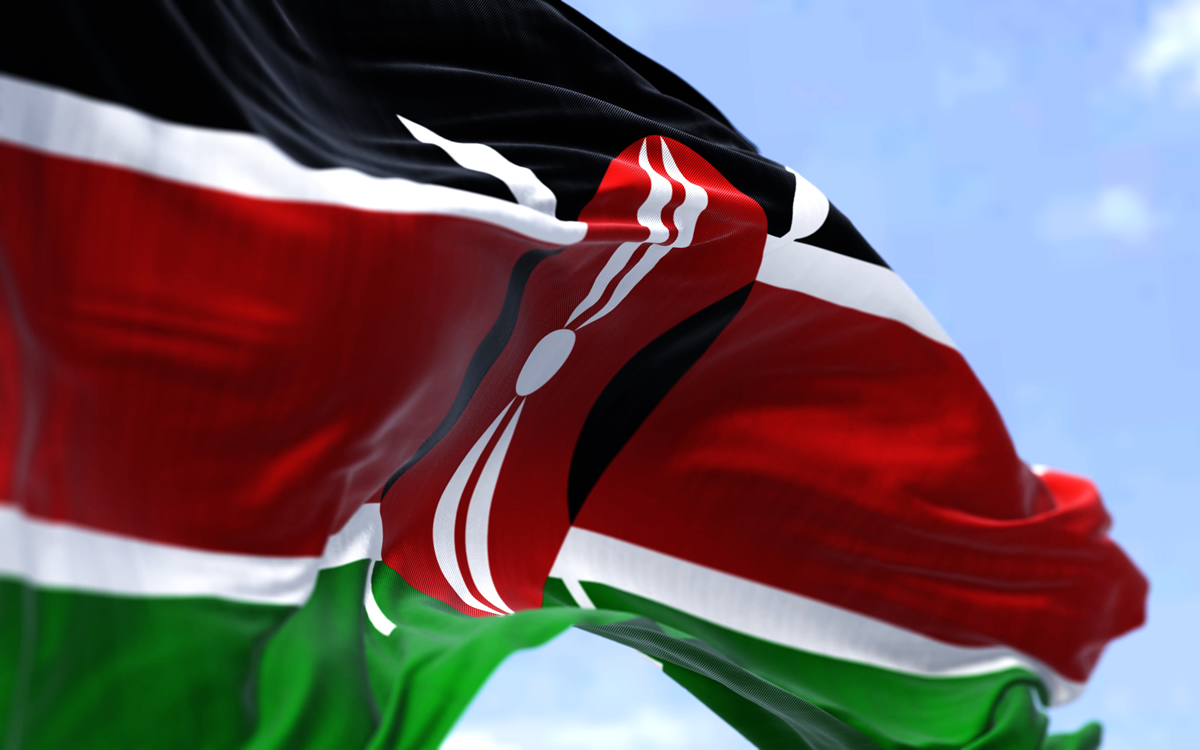
As Kenya prepares for next year’s August general election, local queer rights groups have joined Gen Zers in also mobilizing their members to register as voters.
The groups’ drive began ahead of the electoral commission’s official launch of a one-month nationwide mass voter registration on March 30, targeting 6.5 million new voters to bring the total to more than 28 million.
The groups — led by the Initiative for Equality and Non-Discrimination (INEND) and Galck+ — note that politics is not optional, but rather it is “our responsibility” to use the ballot to put an end to bad leadership and discriminatory laws against them.
“Voting is one of the most powerful ways we exercise our autonomy and remind the State that our human rights are not ‘Western imports’; our struggles for housing, employment, safety, and dignity are fundamentally Kenyan issues,” INEND states.
It reminds queer individuals that the nation entrusts them with an identity card at age 18 as a recognition of their ability to make decisions, follow laws, and take responsibility for the country’s future.
INEND also notes that despite this honor, LGBTQ people get kicked out of their homes due to homophobia, are discriminated against at work, and face violence in public places due to the punitive laws that the same State legislates.
“As queer Kenyans, our vote matters,” INEND states. “Our voice belongs in the democratic and governance conversations, and true democracy includes everyone.”
Some voter mobilization initiatives the queer lobby groups have been using include ‘Queering the Ballot’ Podcasts on civic participation, dubbed ‘Your Vote is Your Future’. The topics explored include how laws shape their lives, the relationship between lived experiences of common citizens, discrimination fatigue, distrust in government systems, and voter apathy.
The groups through the mobilization drive hope to create a queer voting bloc to actively participate in restructuring and reconstructing the existing governance system they argue has been a problem for them. They maintain the queer community navigates a system that was not built for them from its questioning of their right to exist, yet the Kenyan Constitution clearly states that no citizen should be discriminated against based on sexual orientation or gender identity.
The Court of Appeal next month will hear a case challenging the constitutionality of provisions in Kenya’s Penal Code that criminalize consensual same-sex relationships among adults. The appeals court postponed the case after adjourning on Feb. 4, its first substantive hearing since the High Court judgement in 2019.
“Change requires more than pointing fingers. It requires reflection, action, and showing up, especially at the ballot box as LGBTQ Kenyan citizens and declaring that this is our country, our business, and we can no longer watch from the sidelines,” INEND states.
The group notes that they want a governance system that embraces queer people as they go about their daily lives without any form of homophobic discrimination, harassment, or arrests. Queer people are therefore urged to pick the right leaders who listen to them in Kenya’s six elective positions, from the president down to the local government representatives, as their decisions while in power affect them.
“It is very irresponsible for any human being, even around the world, to assume that they don’t have political responsibility. It is easy and sounds fancy to say ‘I don’t like politics,’ but it does not make one good as it makes one abandon their political responsibility as a citizen,” INEND states.
The groups are also concerned with the existing homophobia among Kenyans, especially whenever they join them in street protests against the government’s punitive measures or advocating for change. However, they maintain that the LGBTQ community won’t be left behind despite being marginalized in society, yet they are the most affected group when the government raids people’s pockets for taxes.
“Now we are moving from the margins to the centre of this political conversation early enough to ensure that our community sees the sense because if we live in a country that doesn’t work, we will be the most affected,” INEND states.
INEND, with the National Gay and Lesbian Human Rights Commission and Galck+, last November launched the second Queering the Ballot Campaign and the 2024 Situation Report on queer participation in Kenya’s democracy.
The report surveyed 14 of the country’s 47 local governments, whose key findings affirm that queer Kenyans are not outsiders to democracy but its heartbeat.
“The title ‘Our Vote, Our Future: LGBTQ+ Inclusion in Democratic and Governance Processes’ in Kenya is an ode to the spirit of the queer movement in Kenya; unshaken in the face of adversity, determined in its pursuit of justice, and unrelenting in demand to be seen, heard and counted in democratic and political processes,” reads the report forwarded by former Chief Justice Willy Mutunga.
The report calls on Parliament, the Independent Electoral and Boundaries Commission, the County Assemblies, and every Kenyan to make inclusion not symbolic but systemic.
Kenya
Kenyan judge rules government must legally recognize transgender people
Trans athlete challenged arrest, detention, forced medical examination
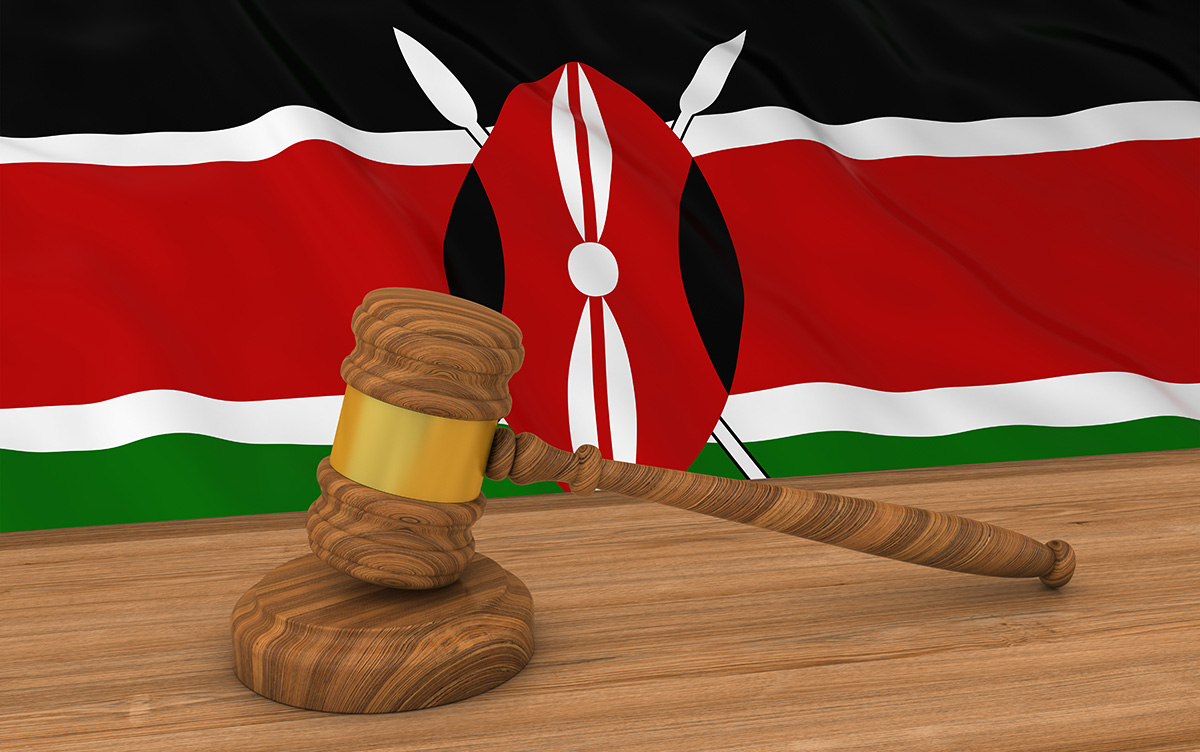
A Kenyan judge has directed the government to legally recognize transgender people and to guarantee their constitutional rights are protected.
Justice Reuben Nyakundi of the Eldoret High Court in western Kenya in his Aug. 20 judgment holds trans people have the right to determine their “self-identified gender” and the government’s legal system should recognize it.
Nyakundi made the directive after a years-long case of a trans athlete and government agencies over an unwarranted arrest, detention, and forced medical examination to determine her gender in 2019.
Government officials sued the director of Public Prosecutions, attorney general, commissioner general of prisons, and the Moi Teaching and Referral Hospital, which conducted the medical examination following her arrest in Eldoret. The petitioner, only identified as S.C. in the case, was arrested at the same health facility for allegedly impersonating a woman.
“That it is proposed the State consider undertaking appropriate legislative measures to address the rights and protections of individuals within its borders, in line with Article 27(4) of the constitution, which prohibits discrimination on any grounds, including race, sex, social origin, gender, birth, or other status,”Nyakundi ruled. “In this regard, the enactment of a Transgender Protection Rights Act is recommended as a potential mechanism to ensure equal protection and recognition for transgender persons.”
The 34-year-old plaintiff, who is also a board member of Jinsiangu, a local trans rights organization, (“My gender” in Swahili), told the court about the mistreatment to which she was subjected while in custody and demanded compensation for the violation of her rights.
For instance, S.C., who said she realized she was a woman when she was 5-years-old, told the court that police officers forced her to remove her clothes when she was in their custody and ridiculed her for “pretending” to be a woman after they saw male genitals.
She was transferred to a men’s ward before being escorted to her home.
S.C. said officers ransacked it in search of doping drugs they said she used while mocking her female clothes. The plaintiff also stated officers repeatedly slapped her to coerce her to produce her birth certificates and national identity cards. She described the experience as “humiliating and traumatizing.”
The plaintiff also noted that while in the men’s ward, inmates abused and slapped her while some attempted to remove her clothes. They backed off when she screamed to attract officers’ attention before they transferred her to an isolated hallway for her safety.
Nyakundi in his ruling awarded her $10,000 in damages over violation of her privacy and dignity. The court also directed the government to undertake policy reforms to protect the rights of detained trans people in prisons.
“That a declaration be and is hereby made that there is a compelling sense of urgency for the state in the interim to make provision of the physical and structural facilities at the police stations and the prison facilities for these ‘third gender’ who may be in conflict with the law because of their gender identity with a view to guarantee their constitutional rights as envisioned in this judgment,” Nyakundi stated.
He further directed parliament to enact the law that protects and recognizes trans people while also directing the proposed Intersex Persons Bill 2024 be another alternative to identify the rights of the trans community in the country. Intersex people in Kenya are legally recognized as a third gender with an “I” marker, and the community has an intersex representative in the country’s human rights body to champion their interests.
Transgender Education and Advocacy, Jinsiangu, Amka Africa Justice Initiative, and the Kenya Human Rights Commission are among the human rights NGOs that represented S.C. in the case.
Jinsiangu, which works closely with the intersex group, welcomed the decision as one of the “landmark” rulings marking a growing judicial recognition of trans rights in Kenya’s constitutional framework.
“This is the first time a Kenyan court has explicitly ordered the state to create legislation on transgender rights, and a first in the African continent,” Jinsiangu said in a statement. “If implemented, it could address decades of legal invisibility and discrimination faced by transgender persons by establishing clear legal recognition of gender identity, protection against discrimination in employment, housing, healthcare, and education, and access to public services without bias or harassment.”
The trans rights group has committed to monitoring the state’s compliance with the ruling to ensure the legal framework to protect the group is put in place.
“We commit to working hand-in-hand with lawmakers, civil society, and the public to ensure the legislation is inclusive, evidence-based, and enforceable,” Jinsiangu affirmed.
Kenya
Kenyan queer groups want MPs to dismiss anti-LGBTQ petition
Activists claim motion lacks evidence
Kenyan queer rights groups want MPs to dismiss a petition by anti-LGBTQ activists and religious organizations seeking a crackdown on what they describe as a proliferation of homosexuality in the country.
The groups in their written submissions to the National Assembly’s Public Petitions Committee argue the petition presented to parliament in February last year lacks evidence to back up the claims.
“The raft of allegations is presented on their own strength and have no documents to substantiate the said claims,” reads part of the submissions led by KELIN, a coalition of health and human rights bodies. “They claim diseases attributed to the community without any medical proof of the same. The community requests parliament not to be swayed by opinions, preferences, and biases in considering the petition.”
Mohamed Ali, an MP from Kenya’s ruling party that fiercely opposes LGBTQ rights, is the representative of the petitioners as one who presented the measure in the House for probe. The petitioners comprise a group of more than 70 Kenyans from anti-LGBTQ lobby groups and religious bodies under the Kenya Christians Professional Forum and the Muslim Council of Imams and Preachers of Kenya.
The parliamentary committee on Aug. 5 had invited queer rights groups, including KELIN, GALCK+, the Center for Minority Rights and Strategic Litigation, and Initiative for Equality and Non-Discrimination for a hearing.
“We arrived with partners prepared to make submissions opposing the petition by Hon. Mohamed Ali on the so-called ‘proliferation of LGBTQ persons in the country.’ The committee was not ready to proceed and rescheduled to Aug. 7,” CMRSL Legal Manager Michael Kioko said.
The rescheduled meeting was again postponed indefinitely to an unclear date because the Public Petitions Committee was “illegally constituted” and the queer rights groups were told to wait until members elect its leadership to be duly composed.
The prolonged delay by the committee to inquire into the petition, while the groups wait to appear before it, has been further extended after the parliament on Aug. 20 proceeded on a long break of one month.
The LGBTQ rights groups’ submissions the Washington Blade has seen acknowledge the petitioners’ constitutional right to engage parliament on legislative matters as the people’s representatives, while noting the House should not be used as a platform to discriminate against the queer community.
“The community points out that the petitioners, while relying on the Constitution to approach parliament, are deliberately orchestrating unconstitutional actions against the community,” the queer rights groups state.
They also argue that the petitioners’ bid to have the queer rights curtailed violates national laws under the Bill of Rights forbidding any form of discrimination and the international conventions like the Universal Declaration on Human Rights, which Kenya has ratified.
The respondents, while challenging the petitioners over the accusation that the Supreme Court overstretched its mandates in an attempt to legalize homosexuality from its recent rulings in favor of the queer community, argued that the anti-LGBTQ lobby groups were simply “fear-mongering” on the effects of the judges’ decisions. They accuse the petitioners of spreading misinformation and note that the court only granted the queer community their constitutional freedom of association by allowing the registration of their LGBTQ organization blocked by the NGOs’ regulator.
“The community prays that parliament, in considering the petition, is guided by the same ruling as actually summarized and with regard to the right of association and all other rights of the community as members and simply as human beings,” the submissions read.
On the petitioners’ plea for MPs to probe what they describe as an infiltration of the LGBTQ agenda into the Kenyan school books for children to “confuse and mislead them,” the queer rights groups term the claim “far-fetched” for not being backed by evidence from the body overseeing the school curriculum.
The respondents also note the petitioners did not provide any proof of having shared their concerns with the Kenya Institute of Curriculum Development on the alleged LGBTQ materials in school books.
While asking MPs to reject the petition “in toto” over lack of proof, the queer rights groups note that LGBTQ people have faced harassment and systemic derogation of their rights guaranteed under the constitution and various international laws.
“The petitioners have now resorted to parliament to pass their discriminatory agenda against the LGBTQ community,” the submissions read.
The parliamentary committee, when fully constituted to inquire into the petition, will also hear from several government ministers, including Education, Health, Foreign Affairs, Labor and Social Protection, and the Police Inspector General.

PHOTOS: The Bonnet Ball

Risking it all for love during World War II

Surviving spring cleaning

Iconic Eddie Izzard takes on 23 characters in ‘Hamlet’

How Pepper the courthouse dog helps victims of abuse

Kristi Noem ‘devastated’ as husband’s alleged fetish spending surfaces

D.C.’s affirming congregations to mark Holy Week, Easter

Glisten report details hostile climate for LGBTQ students

VIDEO: Gay journalist detained for booing Trumps at ‘Chicago’ opening night

Supreme Court ruling against conversion therapy bans could affect Md. law
-

 The White House5 days ago
Kristi Noem ‘devastated’ as husband’s alleged fetish spending surfaces
-
Local5 days ago
D.C.’s affirming congregations to mark Holy Week, Easter
-
Research/Study5 days ago
Glisten report details hostile climate for LGBTQ students
-
The White House4 days ago
VIDEO: Gay journalist detained for booing Trumps at ‘Chicago’ opening night