Sports
Gay speedskater racing toward a more inclusive future in sports
Conor McDermott-Mostowy says anti-DEI push is driving away corporate sponsors
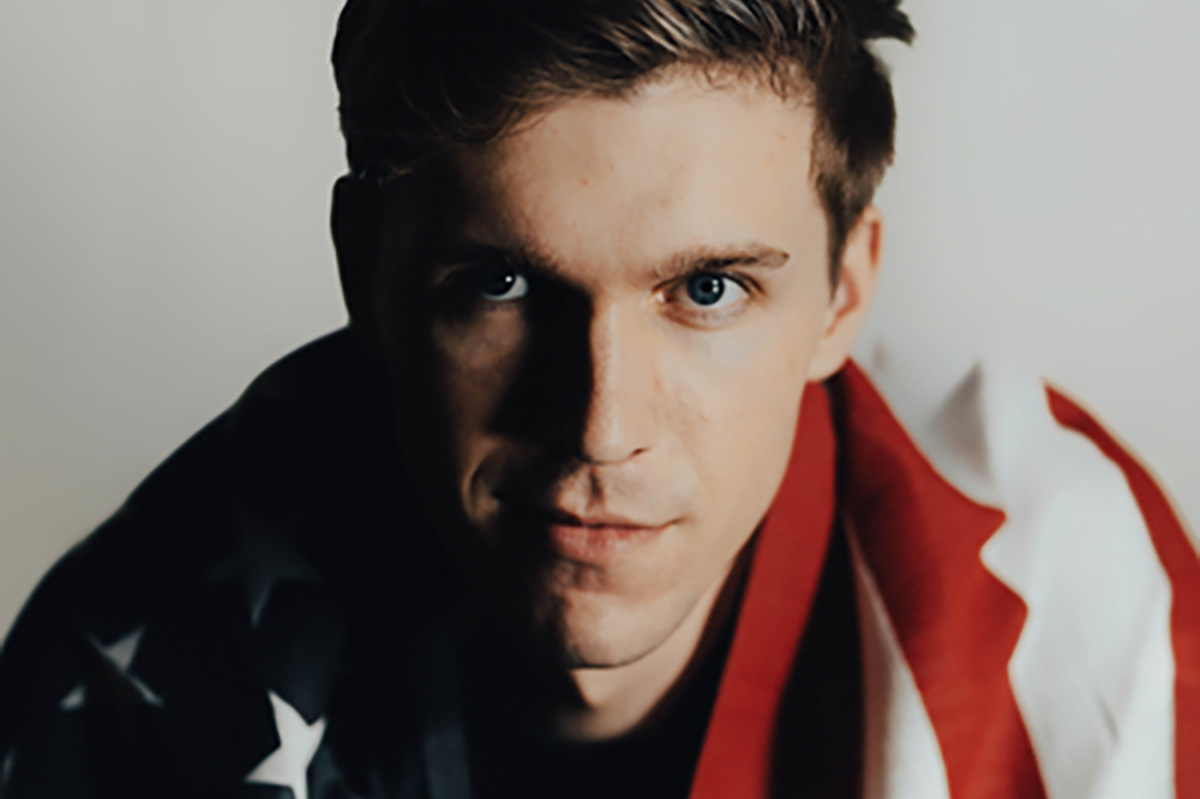
LOS ANGELES — As the countdown begins to the February Winter Olympic Games in Milan, Pride House LA is shining a spotlight on queer athletes who are breaking boundaries both on and off the field. Among them is Team USA speedskater Conor McDermott-Mostowy – a fierce competitor and proud member of the queer community. With blistering speed on the ice and a steadfast commitment to equity in sports, Conor is doing so much more than winning medals – he’s redefining what it means to represent one’s country while representing one’s community.
McDermott-Mostowy is one step closer to the 2026 Winter Olympics after winning the recent silver and bronze medals at the U.S. Championships in speedskating. He appeared at a Nov. 1 event presented by Out Athlete Fund/Pride House LA in the organization’s efforts to raise funds to support Conor and other out athletes as they pursue their Olympic dreams in Milan 2026 and beyond.The Blade spoke to the star athlete to talk about resilience, representation, and the legacy he hopes to leave one day.
Blade: Huge congrats, Conor! Winning a World Cup gold is no small feat. Do you feel like this win proved something to the world – or more importantly, to yourself?
McDermott-Mostowy: Winning gold with my team last year was definitely a major goal achieved. That said, the event we won isn’t yet an Olympic event. The races that have had the most profound impact on me actually happened two years ago.
The first was the team pursuit in Obihiro, Japan. I’d always been more of an alternate for that event, since it’s typically raced by skaters who compete in both the 1500m and 5000m. But I’d been itching for the opportunity to race it at the World Cup level. I finally got that chance when a teammate had to pull out at the last minute due to a back issue. We led the race through six of eight laps, ultimately finishing third. While it was a little disappointing to fall out of the lead, I was proud to prove that I could contribute meaningfully and help the team medal.
The second race was later that year in Salt Lake City, my home ice. After competing in Japan, I came down with a lung infection that affected my performance at the next few World Cups. Fortunately, I had time to recover before the North American World Cups and World Championships. At the Salt Lake City World Cup, I was balancing competition with completing my undergraduate degree. I didn’t know what to expect, but I ended up finishing fifth in the 1000m—my highest individual finish ever—and posted a time of 1:06.91. That’s a very significant time in speedskating; only three other Americans have gone under 1:07 in that event, all of whom became world champions. That result felt like a turning point, showing me that an Olympic or World Championship medal wasn’t just a dream—it was within reach.
Blade: This PrideHouse LA event is a huge moment. What does that support from the queer community mean to you?
McDermott-Mostowy: It’s incredibly meaningful. Being queer in Olympic sport can be very isolating, both inside and outside the sport. I barely have time to socialize outside of skating, and relocating to Salt Lake City doesn’t exactly help when it comes to queer community. So having that kind of solidarity and support from the wider LGBTQ+ community really means a lot.
Blade: Do you remember the moment you realized skating could take you all the way to the Olympics?
McDermott-Mostowy: There hasn’t been one single moment. It’s been a series of them. Over the years, I’ve had many races that shattered the limits I thought I had and inspired me to reach higher. That Salt Lake City race was one of them. It made me realize I shouldn’t just aim for the Olympics. I should aim for medals.
Another key moment came in 2018 at my last Junior World Cup, when my teammate and I finished 2nd and 3rd in the mass start. That event is similar to short track but held on a long track. It was my first full year focusing on long track after previously dabbling in it, and we had no expectation of medaling. But after we did, I realized I might actually have a future in this discipline—and that I could be competitive on the world stage. It was a pivotal realization, especially as I was trying to decide whether to continue skating or pursue a traditional college experience.
Blade: What initially drew you to speedskating? How did you get into the sport—and what’s kept you motivated?
McDermott-Mostowy: I grew up on skates. I started at age two and became a strong skater early on. But I never had any interest in hockey or figure skating. One winter, I was skating with my family on the C&O Canal in Washington, D.C., when a guy skated past us on these wild-looking speed skates. I was immediately intrigued. My parents found a local club, which happened to be run by three-time Olympian Nathaniel Mills, and I was hooked.
What’s kept me going is simple: I love it. This isn’t a sport you get rich in. I’ve only earned more than $20,000 a year twice in my career, and you can’t use it to pay for college either. The motivation has to come from within—the pursuit of excellence, the dream of going to the Olympics, and pure love for the sport.
Blade: What’s been your toughest race to date, and what did it teach you?
McDermott-Mostowy: That would be the team pursuit in Japan. I wasn’t expecting to race it and had already competed in a full weekend of events before getting the call. Team pursuit is arguably the toughest event in speedskating. Stepping up without being mentally or physically prepared was a challenge, but I did it. It showed me I could push through, even under extreme circumstances.
Blade: You’ve made headlines not just for your speed, but for your openness. What was it like coming out publicly in the world of elite sport?
McDermott-Mostowy: By the time I was publicly identified as gay, I had already been out to anyone who asked. So “coming out” doesn’t feel like the right term. It wasn’t a big declaration. I had the benefit of growing up seeing openly gay athletes and being part of a supportive community. I never felt the need to hide who I was.
Eventually, as I started achieving more on the ice, people began noticing me and the content I posted, and they put two and two together. When I was asked to speak publicly about being an openly gay athlete in speedskating, I didn’t hesitate.
Blade: What have been the biggest challenges in your career – physically, mentally, or otherwise?
McDermott-Mostowy: Honestly, my entire career has been about overcoming challenges. The two biggest obstacles have been illness and finances.
I’ve dealt with asthma, a norovirus that derailed my chances in 2022, and a fatigue condition last season that affected my performance. These setbacks take a toll. Not just physically, but mentally. When you invest everything into your sport, being forced to pause or scale back is a huge emotional hurdle.
Financially, speedskating is a tough path. Even as a consistent top-20 skater in the world, I’ve only broken $20k twice in a year, and we’re paid for just nine months, even though we train year-round. I’ve leaned on friends and family for support many times just to make ends meet.
Blade: Have you ever been told – explicitly or implicitly – that being openly gay could hurt your chances with sponsors or coaches?
McDermott-Mostowy: Never with coaches. In our sport, selections are based on the clock, not someone’s opinion. My coaches have always been great.
But when it comes to sponsorships, especially over the past year, I’ve noticed a shift. As anti-DEI sentiment grows, brands are backing away from anything that could be seen as “controversial.” Being openly gay seems to fall into that category now. Since most of our income comes from sponsorships, that retreat is deeply felt.



More than a dozen LGBTQ athletes won medals at the Milan Cortina Winter Olympics that ended on Sunday.
Cayla Barnes, Hilary Knight, and Alex Carpenter are LGBTQ members of the U.S. women’s hockey team that won a gold medal after they defeated Canada in overtime. Knight the day before the Feb. 19 match proposed to her girlfriend, Brittany Bowe, an Olympic speed skater.
French ice dancer Guillaume Cizeron, who is gay, and his partner Laurence Fournier Beaudry won gold. American alpine skier Breezy Johnson, who is bisexual, won gold in the women’s downhill. Amber Glenn, who identifies as bisexual and pansexual, was part of the American figure skating team that won gold in the team event.
Swiss freestyle skier Mathilde Gremaud, who is in a relationship with Vali Höll, an Austrian mountain biker, won gold in women’s freeski slopestyle.
Bruce Mouat, who is the captain of the British curling team that won a silver medal, is gay. Six members of the Canadian women’s hockey team — Emily Clark, Erin Ambrose, Emerance Maschmeyer, Brianne Jenner, Laura Stacey, and Marie-Philip Poulin — that won silver are LGBTQ.
Swedish freestyle skier Sandra Naeslund, who is a lesbian, won a bronze medal in ski cross.
Belgian speed skater Tineke den Dulk, who is bisexual, was part of her country’s mixed 2000-meter relay that won bronze. Canadian ice dancer Paul Poirier, who is gay, and his partner, Piper Gilles, won bronze.
Laura Zimmermann, who is queer, is a member of the Swiss women’s hockey team that won bronze when they defeated Sweden.
Outsports.com notes all of the LGBTQ Olympians who competed at the games and who medaled.
Sports
US wins Olympic gold medal in women’s hockey
Team captain Hilary Knight proposed to girlfriend on Wednesday
The U.S. women’s hockey team on Thursday won a gold medal at the Milan Cortina Winter Olympics.
Team USA defeated Canada 2-1 in overtime. The game took place a day after Team USA captain Hilary Knight proposed to her girlfriend, Brittany Bowe, an Olympic speed skater.
Cayla Barnes and Alex Carpenter — Knight’s teammates — are also LGBTQ. They are among the more than 40 openly LGBTQ athletes who are competing in the games.
The Olympics will end on Sunday.
Sports
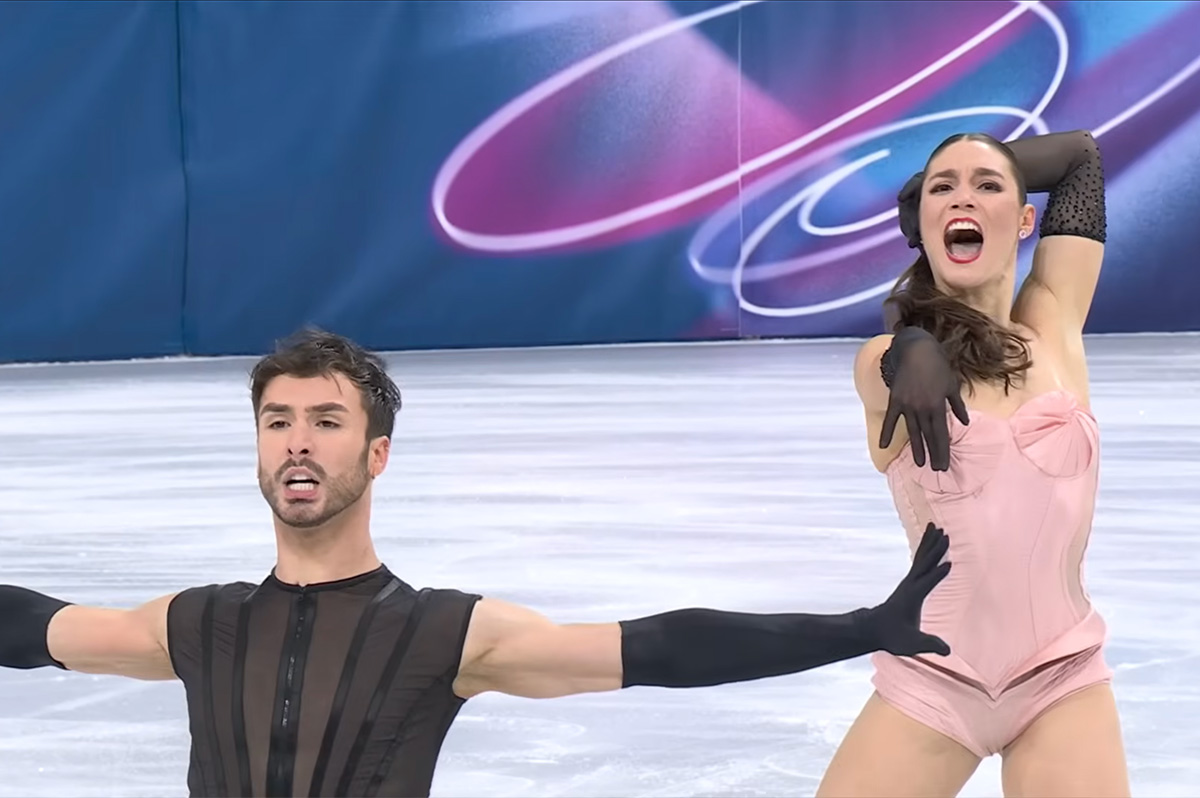
Attitude! French ice dancers nail ‘Vogue’ routine
Cizeron and Fournier Beaudry strike a pose in memorable Olympics performance
Madonna’s presence is being felt at the Olympic Games in Italy.
Guillaume Cizeron and his rhythm ice dancing partner Laurence Fournier Beaudry of France performed a flawless skate to Madonna’s “Vogue” and “Rescue Me” on Monday.
The duo scored an impressive 90.18 for their effort, the best score of the night.
“We’ve been working hard the whole season to get over 90, so it was nice to see the score on the screen,” Fournier Beaudry told Olympics.com. “But first of all, just coming out off the ice, we were very happy about what we delivered and the pleasure we had out there. With the energy of the crowd, it was really amazing.”
Watch the routine on YouTube here.

Man stuck in Lebanon as Iran war escalates

CAMP Rehoboth hires new executive director

Claudia López wins primary in Colombian presidential race

Too afraid to leave home: ICE’s toll on Latino HIV care

Intense doc offers transcendent treatment of queer fetish pioneer

13 HIV/AIDS activists arrested on Capitol Hill

PHOTOS: Sydney Gay and Lesbian Mardi Gras Parade

Fla. Senate passes ‘Anti-Diversity’ bill that could repeal local LGBTQ protections

Ugandan activist named Charles F. Kettering Foundation fellow

Liza Minnelli makes surprise appearance at GLAAD Media Awards
-

 National5 days ago
13 HIV/AIDS activists arrested on Capitol Hill
-
Photos5 days ago
PHOTOS: Sydney Gay and Lesbian Mardi Gras Parade
-
Florida4 days ago
Fla. Senate passes ‘Anti-Diversity’ bill that could repeal local LGBTQ protections
-
Uganda4 days ago
Ugandan activist named Charles F. Kettering Foundation fellow