Connect with us

District of Columbia

Acclaimed bisexual activist, author Loraine Hutchins dies at 77

Lifelong D.C.-area resident was LGBTQ rights advocate, sex educator
Published

on

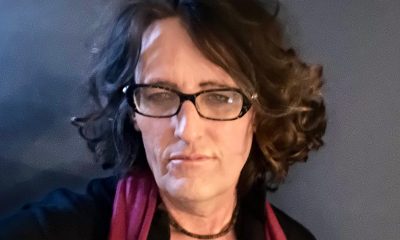
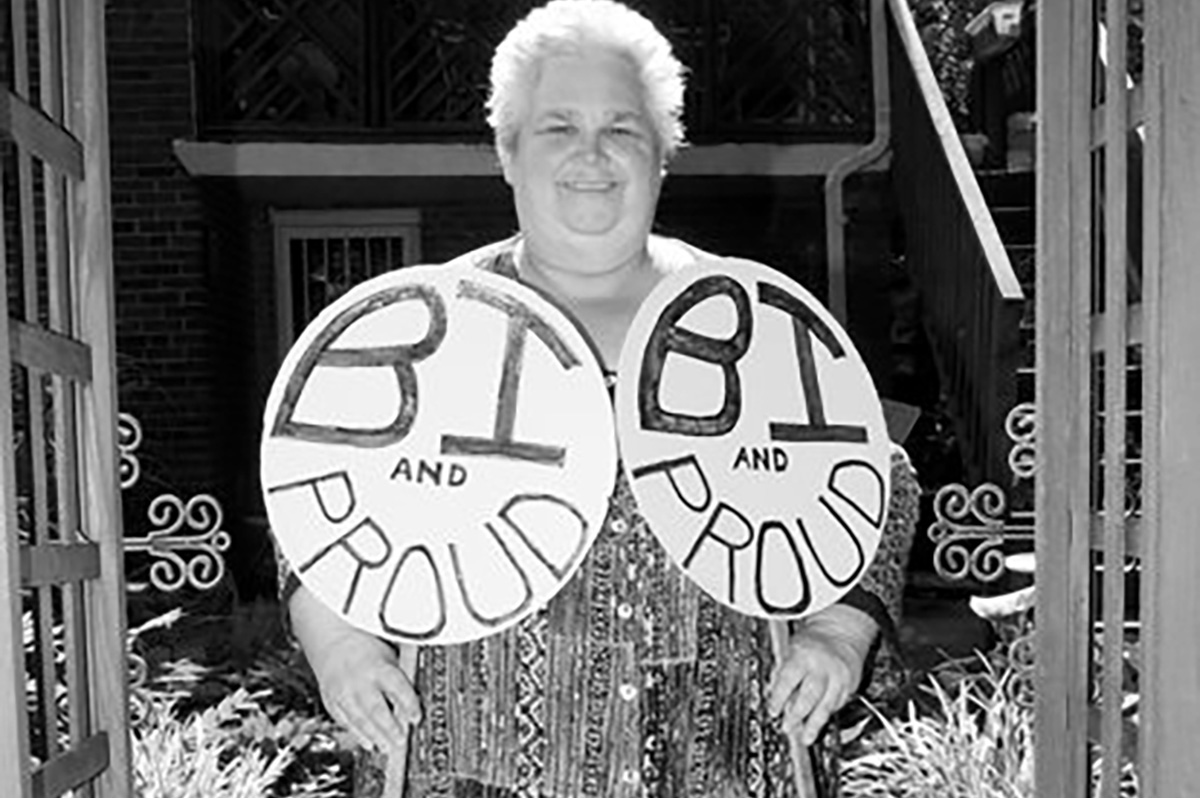
Loraine Hutchins (Photo courtesy of Hutchins)

Loraine Adele Hutchins, a nationally known and acclaimed advocate for bisexual and LGBTQ rights, co-author and editor of a groundbreaking book on bisexuality, and who taught courses in sexuality, and women’s and LGBTQ studies at a community college in Maryland, died Nov. 19 from complications related to cancer. She was 77.

Hutchins, who told the Washington Blade in a 2023 interview that she self-identified as a bisexual woman, is credited with playing a lead role in advocating for the rights of bisexual people on a local, state, and national level as well as with LGBTQ organizations, many of which bi activists have said were ignoring the needs of the bi community up until recent years.

“Throughout her life, Loraine dedicated herself to working and speaking for those who might not be otherwise heard,” her sister, Rebecca Hutchins, said in a family write-up on Loraine Hutchins’s life and career.

Born in Washington, D.C., and raised in Takoma Park, Md., Rebecca Hutchins said her sister embraced their parents’ involvement in the U.S. civil rights movement.

“She was a child of the ‘60s and proudly recalls attending Martin Luther King’s ‘I Have a Dream’ speech with her mother on the D.C. Mall,” she says in her write-up.  “She was steeped in the civil rights movement, was a member of the Student Non-Violent Coordinating Committee, and was proud to say she had an FBI record.”

The write-up says Hutchins received a bachelor’s degree from Shimer College in Mount Carroll, Ill. in 1970, and a Ph.D. in 2001 from Union Institute. It says she was also a graduate of the Institute for the Advanced Study of Human Sexuality’s Sexological Bodyworkers certification training program.

The family write-up says in the 1970s Hutchins became involved with efforts to assist tenants, including immigrant tenants, in affordable housing programs in D.C.’s Adams Morgan neighborhood. 

“In 1991, she co-authored the groundbreaking book, ‘Bi Any Other Name: Bisexual People SPEAK OUT’ with friend and colleague Lani Ka’ahumanu,” the write-up says. It notes that the acclaimed book has been republished three times and in 2007 it was published in Taiwan in Mandarin.

According to the write-up, Hutchins delivered the keynote address in June 2006 at the Ninth International Conference on Bisexuality, Gender and Sexual Diversity. In October 2009, D.C.’s Rainbow History Project honored her as one of its Community Pioneers for her activist work.

“Loraine is one of the few people who has explained, defended and championed bisexuality and made sure the “B” got into the LGBT acronym,” the Rainbow History Project says on its website in a 2009 statement. “Sensitivity to bisexual issues, civil rights, and social justice issues is Loraine’s life work,” the statement concludes.

The write-up by her sister says that up until the time of her retirement, Hutchins taught women’s and LGBT studies as well as health issues in sexuality at Montgomery Community College and Towson University in Maryland.

“She was a friend and mentor to many in the LGBTQ community,” it says. “She thoroughly enjoyed adversarial banter on the many topics she held dear: sexuality, freedom of speech, civil rights, needs and support of those with disabilities, especially in the area of mobility, assisted housing, liberal politics and many other causes,” it points out.

She retired to the Friends House community in Sandy Springs, Md., where she continued her activism, the write-up concludes. 

Hutchins was among several prominent bisexual activists interviewed by the Washington Blade at the time of her retirement in June 2023 for a story on the status of the bisexual rights movement. She noted that, among other things, in her role as co-founder the organizations BiNet USA and the Alliance of Multicultural Bisexuals, she joined her bi colleagues in prodding national LGBTQ advocacy organizations to improve their advocacy work for bisexuals, which Hutchins said had been inadequate in the past but had been improving in recent years.

Hutchins is survived by her sister, Rebecca Hutchins; her husband, Dave Lohman; nephew, Corey Lohman and his wife Teah Duvall Lohman; and cousins, the family write-up says.  

It says a private memorial service was scheduled for December and a public memorial service recognizing her contributions to the LGBTQ community will be held in the spring of 2026.

Advertisement
FUND LGBTQ JOURNALISM
SIGN UP FOR E-BLAST

District of Columbia

D.C. students need academic support, diverse connections for economic mobility

Region offers array of resources for families in need of assistance

Published

on

From local financial and educational assistance programs to strengthening diversity among educators, advocates are fighting for better economic mobility in D.C. schools. (Photo by sumnersgraphicsinc/Bigstock)

Education is the blueprint of good economic mobility.

But when students aren’t set up with the proper resources to secure a quality education, it’s often low-income families that suffer the most, For Love of Children (FLOC) Executive Director LaToya Clark said. Children from low-income families on average grow up to earn $25,600 annually, according to Opportunity Insights.

D.C. families need better economic mobility, and experts say that starts with kids getting an education and breaking generational poverty cycles. Students without a high school diploma earn $738 per week on average, while those who graduated high school earn roughly $930 per week, according to the U.S. Bureau of Labor Statistics. Contrarily, those with bachelor’s degrees earn about $1,543 per week.

Students from low-income backgrounds have fewer financial advantages on their paths to securing an education, and hardships faced by public schools make it difficult for them to catch up, Clark said.

From local financial and educational assistance programs to strengthening diversity among educators, here are a few ways researchers and advocates are fighting for better economic mobility in D.C. schools. 

Student assistance programs

For many students, falling behind academically is because of circumstances outside of their control, Clark said.

She said teacher shortages, large classrooms and scarce funding can lead to an educational environment not fully equipped to set students on the right path. A one-dimensional education can then hinder future professional opportunities and give students limited economic mobility.

That’s where local organizations like FLOC come in –– to fill in the academic and social gaps often left open by schools. 

Clark said FLOC has multiple services that give underserved students a more individualized academic experience. For the Neighborhood Tutoring Program, students are assessed at the grade level at which they’re performing, not what grade they are in. They’re then matched with a volunteer –– ranging from college students to retirees –– who follows a curriculum that matches the student’s performance level.

There’s also the Pathways Forward Program, an afterschool opportunity for D.C. youth in 7th to 12th grades designed to increase high school graduation rates. The program supports those at risk of academic failure to find a successful way forward, and those in 10th to 12th grades to prepare for graduation or transition to postsecondary programs. Both Neighborhood Tutoring and Pathways Forward are free.

“Everything we offer is designed to close achievement gaps, help our students boost their confidence and ensure young people have the skills and support that they need to succeed in schools and beyond,” Clark said.

And that design is working for students. Clark recalled a young girl who was the oldest of six who felt a need to help her mom take care of her siblings. She was falling behind in school until she found FLOC. The girl credited her ability to go to college and find a professional job to FLOC’s individualized and accessible approach to education. 

FLOC is a reliable resource for D.C. youth to get academic help, but there are numerous other organizations working to close educational gaps and improve the future economic mobility of students.

Minds Matter D.C. helps underserved students find accessible pathways to prepare for and succeed in college. The organization offers mentoring, SAT prep, access to summer enrichment programs and guidance through the college application and financial aid process.

The work Minds Matter does addresses a disproportionate statistic: While roughly 89% of students from “well-off” families attend college, only 51% of students from low-income families do so, according to a report published by Brookings. Minds Matter reported that 100% of its students attended a four-year college or university.

The D.C. Schools Project, a program of the Center for Social Justice, offers academic help and English-language tutoring for low-income and immigrant families. Each semester, roughly 60 tutors assist about 100 students, their families, and other D.C. immigrants. 

D.C. CAP Scholars has a mission to connect youth with financial and academic opportunities that will help them succeed in college. Registration is now open for the organization’s Ward 7 & 8 scholarship, a $12,000 annual scholarship for students who attended high school in those D.C. wards. Those areas encompass communities such as Congress Heights, Deanwood and Anacostia, which are some of the city’s poorest areas.

RISE offers tutoring and college mentoring to underserved populations. Its primary focus is on opportunity academies, including the three in D.C.: Ballou STAY, Luke C. Moore and Garnet-Patterson STAY. These academies are “second chance” schools for students who didn’t complete high school on a traditional timeline.

RISE Executive Director Ricardo Cooper said the organization offers real-time tutors for students in these academies through its Keep Up Tutoring program. RISE also provides summer literacy “bootcamps” and college prep for underserved students.

As a native Washingtonian, Cooper said he wishes opportunities like RISE were available to him as a kid. That’s why it’s so special for him to lead the organization and help D.C. youth rise above the academic and economic barriers he used to face.

“We know that going to college and getting a degree makes you more money,” Cooper said. “Being able to have these programs to support youth in school, to make sure that they feel confident once they graduate high school, to go to college, to feel confident in completing their coursework and just understanding the material is important to raise that poverty line.”

While these programs are crucial to many students’ success, Matthew Shirrell, associate professor of educational leadership at George Washington University, said there are many fundamental solutions to supporting kids that schools should recognize.

Diverse learning opportunities

Shirrell’s research has identified a key link to the positive relationships between teachers and students: diversity.

“Having a more diverse teaching workforce would certainly benefit all students, because it’s like their teachers having access to a library with a whole bunch of different perspectives,” Shirrell said.

He said teachers have a continuously growing list of responsibilities not just academically, but in dealing with social and emotional issues that students bring to school. By having a diverse team of educators in each school, teachers are better equipped to connect with students to turn potential barriers into new pathways.

But achieving this is about more than championing diversity –– it’s a way for students to secure better futures and stay out of the criminal justice system, Shirrell said.

Shirrell pointed to the idea of “exclusionary discipline.” In his research, Shirrell found that Black and LatinX students were significantly less likely to be suspended from school when they had teachers who shared their racial or ethnic background. 

Teachers of different backgrounds than their students tend to rely on harsh disciplinary action, when in reality the situation could come down to cultural misunderstandings or misconceptions, Shirrell said. 

In the long run, this disciplinary bias can disproportionately impact underserved communities. Shirrell said relentless discipline can lead to the students making poor decisions outside of school and potentially ending up in the criminal justice system.

At such a formative age, students need the support, understanding and guidance that only a diverse population of educators can bring.

“You really can’t get that from a book,” Shirrell said. “The best way to learn that is from working alongside somebody who you know is doing things differently than you. There’s tremendous value to having a diverse workforce, whether that be racial, linguistic or economic.”

Securing an education from open-minded teachers is especially important in underserved pockets of D.C., such as Wards 7 and 8. D.C. youth can experience completely different lives and opportunities just by living around the block. Diverse educators can help fill social gaps, but having students from different economic backgrounds share a classroom pushes them to see different points of views and develop their critical thinking skills, Shirrell said. 

Luckily, that sentiment rings true in D.C., a city with high social capital –– or the likelihood of low-income people and high-income people becoming friends or crossing paths. About 50% of the friends of low-income people have high incomes, and low-income people are only 4.7% less likely to friend high-income people they meet, according to Opportunity Insights.

Though there’s never one simple solution in growing economic mobility for students and their families, Cooper, the RISE executive director, said having educators who embody multiple perspectives –– as well as ensure students are aware of the financial and academic support programs available to them –– are strong ways to set a child on a brighter financial and professional path.

“There are a lot of factors that also go along with [improving economic mobility], but chances are better once students feel confident in who they are, confident in what they can do and go to college and excel,” Cooper said.

Continue Reading

District of Columbia

Capital Pride announces change in date for 2026 D.C. Pride parade and festival

Events related to U.S. 250th anniversary and Trump birthday cited as reasons for change

Published

on

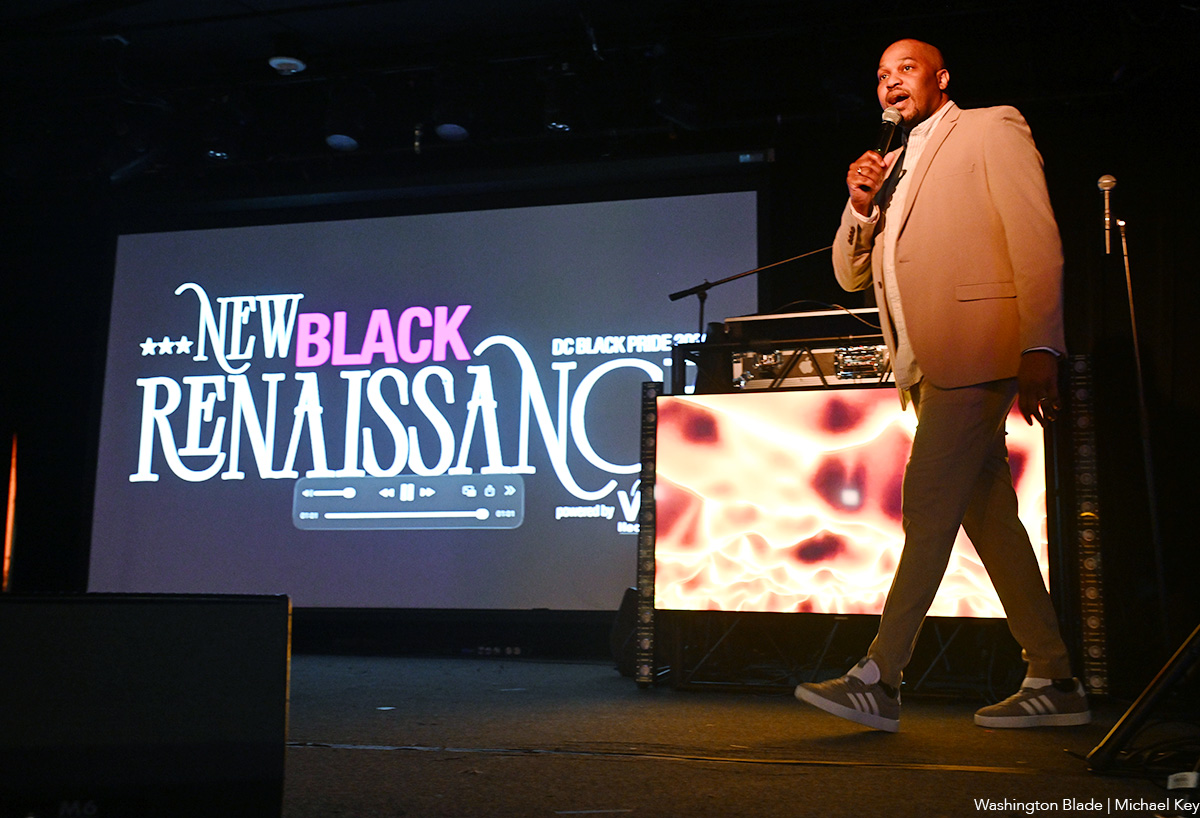
A scene from the 2024 Capital Pride Festival. (Washington Blade file photo by Emily Hanna)

The Capital Pride Alliance, the D.C. based group that organizes the city’s annual LGBTQ Pride events, has announced it is changing the dates for the 2026 Capital Pride Parade and Festival from the second weekend in June to the third weekend.  

“For over a decade, Capital Pride has taken place during the second weekend in June, but in 2026, we are shifting our dates in response to the city’s capacity due to major events and preparations for the 250th anniversary of the United States,” according to a Dec. 9 statement released by Capital Pride Alliance.

The statement says the parade will take place on Saturday, June 20, 2026, with the festival and related concert taking place on June 21.

“This change ensures our community can gather safely and without unnecessary barriers,” the statement says. “By moving the celebration, we are protecting our space and preserving Pride as a powerful act of visibility, solidarity, and resistance,” it says.

Ryan Bos, the Capital Pride Alliance CEO and President, told the Washington Blade the change in dates came after the group conferred with D.C. government officials regarding plans for a number of events in the city on the second weekend in June. Among them, he noted, is a planned White House celebration of President Donald Trump’s 80th birthday and other events related to the U.S. 250th anniversary, which are expected to take place from early June through Independence Day on July 4.

The White House has announced plans for a large June 14, 2026 celebration on the White House south lawn of Trump’s 80th birthday that will include a large-scale Ultimate Fighting Championship (UFC) event involving boxing and wrestling competition.  

Bos said the Capital Pride Parade will take place along the same route it has in the past number of years, starting at 14th and T Streets, N.W. and traveling along 14th Street to Pennsylvania Ave., where it will end. He said the festival set for the following day will also take place at its usual location on Pennsylvania Avenue, N.W., between 2nd Street near the U.S. Capitol, to around 7th Street, N.W.

“Our Pride events thrive because of the passion and support of the community,” Capital Pride Board Chair Anna Jinkerson said in the statement. “In 2026, your involvement is more important than ever,” she said.

Continue Reading

District of Columbia

Three women elected leaders of Capital Pride Alliance board

Restructured body includes chair rather than president as top leader

Published

on

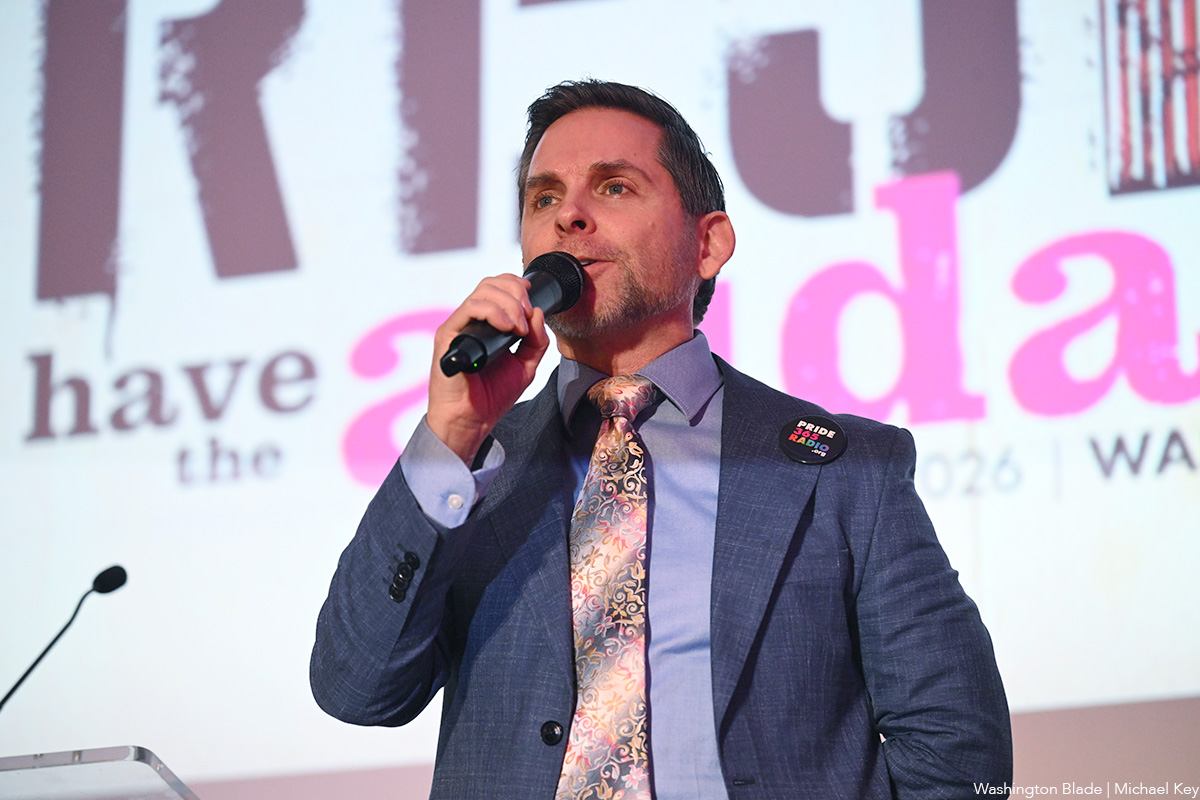
Capital Pride Alliance announced three women will lead its board. (Washington Blade file photo by Michael Key)

The Capital Pride Alliance, the D.C.-based group that organizes the city’s annual LGBTQ Pride events, announced it has restructured its board of directors and elected for the first time three women to serve as leaders of the board’s Executive Committee.

 “Congratulations to our newly elected Executive Officers, making history as Capital Pride Alliance’s first all-women Board leadership,” the group said in a statement.

 “As we head into 2026 with a bold new leadership structure, we’re proud to welcome Anna Jinkerson as Board Chair, Kim Baker as Board Treasurer, and Taylor Lianne Chandler as Board Secretary,” the statement says.

In a separate statement released on Nov. 20, Capital Pride Alliance says the restructured Board now includes the top leadership posts of Chair, Treasurer, and Secretary, replacing the previous structure of President and Vice President as the top board leaders.

It says an additional update to the leadership structure includes a change in title for longtime Capital Pride official Ryan Bos from executive director to chief executive officer and president.

According to the statement, June Crenshaw, who served as acting deputy director during the time the group organized WorldPride 2025 in D.C., will now continue in that role as permanent deputy director.

The statement provides background information on the three newly elected women Board leaders.

 • Anna Jinkerson (chair), who joined the Capital Pride Alliance board in 2022, previously served as the group’s vice president for operations and acting president. “A seasoned non-profit executive, she currently serves as Assistant to the President and CEO and Chief of Staff at Living Cities, a national member collaborative of leading philanthropic foundations and financial institutions committed to closing income and wealth gaps in the United States and building an economy that works for everyone.”

• Kim Baker (treasurer) is a “biracial Filipino American and queer leader,” a “retired, disabled U.S. Army veteran with more than 20 years of service and extensive experience in finance, security, and risk management.”  She has served on the Capital Pride Board since 2018, “bringing a proven track record of steady, principled leadership and unwavering dedication to the LGBTQ+ community.” 

• Taylor Lianne Chandler (Secretary) is a former sign language interpreter and crisis management consultant. She “takes office as the first intersex and trans-identifying member of the Executive Committee.” She joined the Capital Pride Board in 2019 and previously served as executive producer from 2016 to 2018.

Bos told the Washington Blade in a Dec. 2  interview that the Capital Pride board currently has 12 members, and is in the process of interviewing additional potential board members. 

“In January we will be announcing in another likely press release the full board,” Bos said. “We are finishing the interview process of new board members this month,” he said. “And they will take office to join the board in January.” 

Bos said the organization’s rules set a cap of 25 total board members, but the board, which elects its members, has not yet decided how many additional members it will select and a full 25-member board is not required.

The Nov. 20 Capital Pride statement says the new board executive members will succeed the organization’s previous leadership team, which included Ashley Smith, who served as president for eight years before he resigned earlier this year; Anthony Musa, who served for seven years as vice president of board engagement; Natalie Thompson, who served eight years on the executive committee; and Vince Micone, who served for eight years as vice president of operations.

“I am grateful for the leadership, dedication, and commitment shown by our former executive officers — Ashley, Natalie, Anthony, and Vince — who have been instrumental in CPA’s growth and the exceptional success of WorldPride 2025,” Bos said in the statement.

“I look forward to collaborating with Anna in her new role, as well as Kim and Taylor in theirs, as we take on the important work ahead, prepare for Capital Pride 2026, and expand our platform and voice through Pride365,” Bos said.

Continue Reading

Popular