The White House
Trump’s shocking East Wing amputation—and the painful fallout Americans won’t ignore
Gay Social Secretary Jeremy Bernard talks about importance of civility
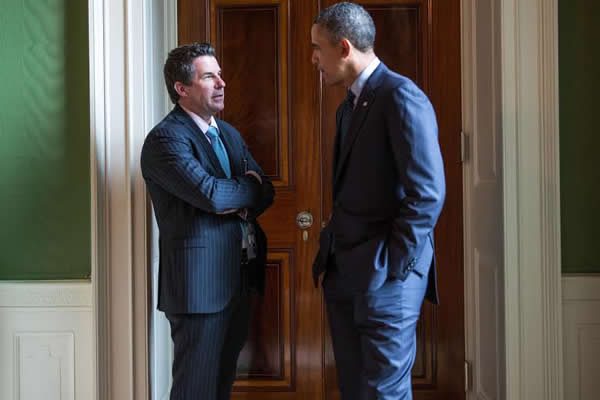
Since Jan. 20, 2025, life in Donald Trump’s divided America has been a series of jaw-dropping split-screen scenarios, flashing at an even faster pace since the resounding anti-Trump, pro-affordability Democratic electoral victories on Nov. 4. But while the weeks before Thanksgiving have injected hope that the No Kings marches, the rule of law, and the 2026 midterms will uphold democracy, Trump’s violently oriented MAGA and Christian National base and his committed Project 2025 backers continue remaking the federal government and fighting the culture wars.
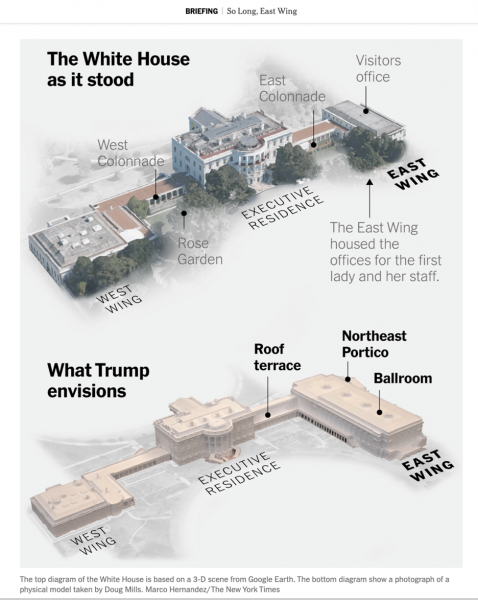
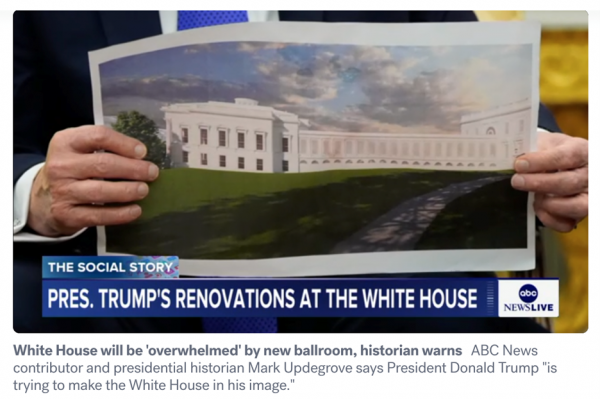
Luxuriating in his own narcissism, Trump ordered the clandestine demolition of the East Wing on Oct. 23 to make way for his 90,000 square foot ballroom. He apparently didn’t care about the national shock at the brutal amputation of America’s beloved cultural arm that balanced the hard political arm of the People’s House.
“This isn’t a real estate deal. This is a living, breathing building. It actually hurts, as a citizen. It’s us. It’s our home. This doesn’t belong to anybody except the blood, the sweat and the tears of every president,” new D.C. resident Roseanne Siegel told NPR.
“For historians and for Americans who love their history, this is a big blow,” said ABC News presidential historian Mark Updegrove.
According to an Oct. 30 poll from the Washington Post, ABC News, and Ipsos, 56 percent of respondents disagreed with Trump’s move while 28 percent favored it. An earlier Yahoo/YouGov poll found 61 percent of respondents rejected Trump’s ballroom plan while 25 percent supported it.
Trump lied. “It won’t interfere with the current building,” Trump said last July about his ballroom plans. “It will be near it, but not touching it. And pays total respect to the existing building, which I’m the biggest fan of. It’s my favorite He was dishonest about his intent in terms of we’re not going to touch anything, like it’s going to be close, but not touching,” Kevin Wade, a 52-year-old tech tourist from Texas, told Reuters. “And then now we’re completely demolishing it.”
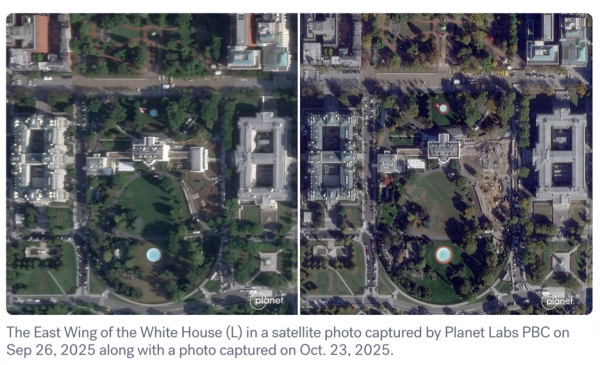
The East Wing emptiness is now a tourist attraction, a PTSD imprint that — with the rapid developments leading up to Thanksgiving — may inspire a turning point in Trump’s presidency.
On Tuesday, Nov. 18, after a 43-day government shutdown to avoid this moment, the U.S. House of Representatives voted 471-1 to compel the Justice Department to release all files on convicted child sex offender Jeffrey Epstein.
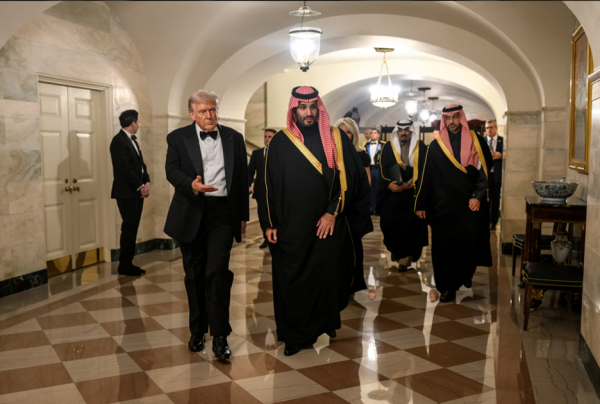
Meanwhile at the White House, Trump gleefully hosted Saudi Arabia Crown Prince Mohammed bin Salman, who US intelligence believes approved the gruesome 2018 murder of Washington Post columnist Jamal Khashoggi. The president scolded ABC News journalist Mary Bruce for embarrassing “guest” MBS with “a horrible, insubordinate” question about Khashoggi’s murder. “Whether you like [Khashoggi] or didn’t like him, things happen.”
In Bob Woodward’s 2020 book, “Rage,” Trump reportedly bragged about shielding MBS: “I saved his ass,” getting Congress “to leave him alone.”
Meanwhile, after the House vote, Epstein survivors huddled at a news conference, holding up photos of themselves as teenagers and young women, asking if Trump is innocent, what is he hiding? Why won’t he release the files now? Suddenly, thrilled survivors learned that the U.S. Senate had unanimously passed the Epstein Files Transparency Act and sent it to Trump for his signature.
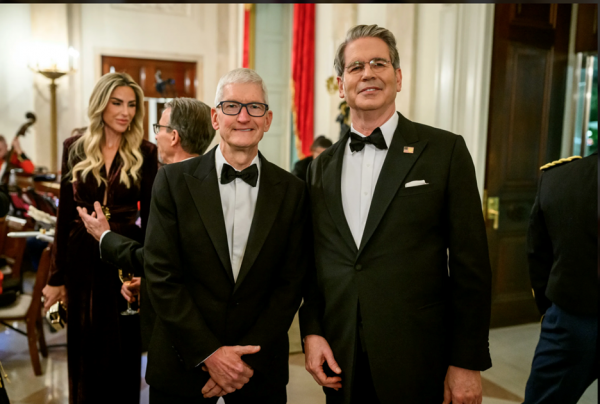
Cut to Trump hosting a black-tie dinner for MBS with lots of rich men who do business with the Saudis. The next morning, he announced that he had signed the Epstein bill, with a 30-day deadline.
“It was a remarkable turn of events for what was once a far-fetched effort,” AP reported. “Trump did a sharp U-turn on the files once it became clear that congressional action was inevitable.”
Trump needed a distraction.
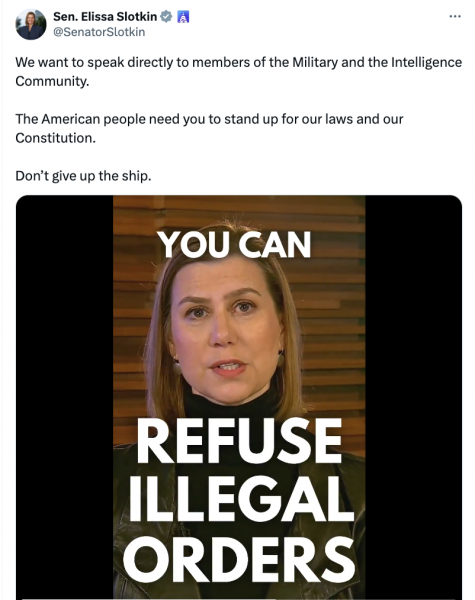
Early Tuesday morning, Nov. 18, U.S. Sen. Elissa Slotkin (D-Mich.) posted a 90-second video on her X account calling on U.S. servicemembers to not obey unlawful orders.
“The American people need you to stand up for our laws and our Constitution,” said Slotkin with five other fellow military veterans — U.S. Sen. Mark Kelly (D-Ariz.), and U.S. Reps. Jason Crow (D-Colo.), Chris Deluzio (D-Pa.), Maggie Goodlander (D-N.H.), and Chrissy Houlahan (D-Pa.). “Don’t give up the ship.”
The Uniform Code of Military Justice says troops who disobey a direct order will be punished. But servicemembers and officers also have an obligation to reject any order they deem is unlawful, a reference to the “I was only following orders” Nazi defense during the Nuremberg trials.
There is cause for concern. In his first term, Trump asked about shooting unarmed civilians protesting the murder of George Floyd. In his second term, Trump has threatened to use the Insurrection Act to deploy troops, “unleashed” police, federalized National Guard, and masked and violent ICE and Border Patrol agents in American cities.
“The president was enraged,” Trump’s 1st term Defense Secretary Mark Esper told NPR. “We reached that point in the conversation where he looked frankly at [Joint Chiefs of Staff] Gen. [Mark] Milley and said, ‘Can’t you just shoot them, just shoot them in the legs or something?’ … It was a suggestion and a formal question. And we were just all taken aback at that moment as this issue just hung very heavily in the air.”
Trump found his distraction on Thursday, Nov. 20, reposting a Washington Examiner story about the Democratic lawmakers’ video, adding that it was “really bad, and Dangerous to our Country. Their words cannot be allowed to stand. SEDITIOUS BEHAVIOR FROM TRAITORS!!! LOCK THEM UP???” In another post he said it was “SEDITIOUS BEHAVIOR, punishable by DEATH.”
Trump also reposted a @P78 comment: “HANG THEM GEORGE WASHINGTON WOULD !!” Bomb and death threats against the Democratic vets “surged.” Senate Democratic Leader Chuck Schumer said Trump was ‘lighting a match in a country soaked with political gasoline.’”
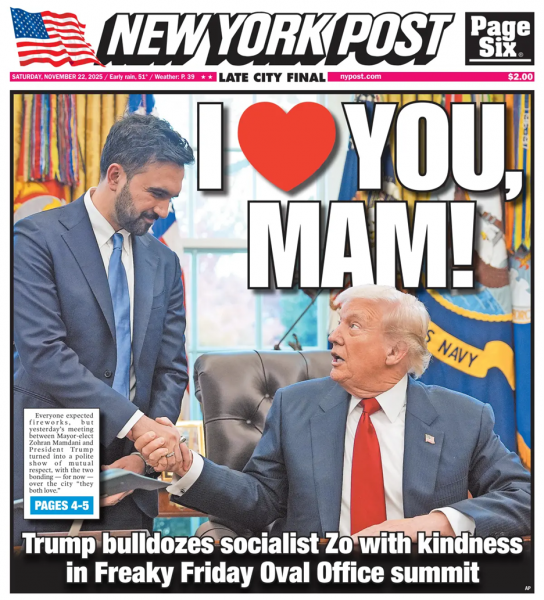
Cut to Friday. 34-year-old New York City Mayor-elect Zohran Mamdani met with Trump, who had vilified the Democratic Socialist. But inexplicably, the meeting turned into an Oval Office lovefest, with an almost giddy Trump, 79, saying it was “OK” that Mamdani had called him a fascist. He promised to help the city.
That night, longtime Trump and MAGA loyalist U.S. Rep. Marjorie Taylor Greene (R-Ga.) announced she’s resigning from Congress, effective Jan. 5, 2026.
Greene criticized Trump over “America First” and health insurance policies but a major split occurred when she sided with Epstein survivors over him. Trump called her a “traitor” and vowed to back a primary challenger.
“Loyalty should be a two-way street,” Greene said in her 10-minute video. “I refuse to be a battered wife hoping it all goes away and gets better.”
No one knows what’s coming next.
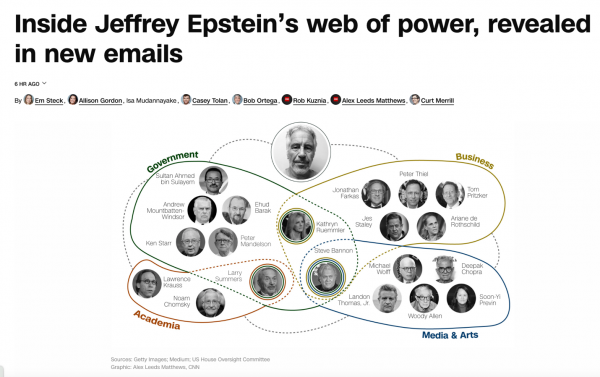
But for the LGBTQ community, there are other important split screens amid Project 2025 erasure – such as U.S. Rep. Robert Garcia (D-Calif.)’s key role as ranking member of the House Oversight Committee focused on transparency and justice for Epstein survivors.
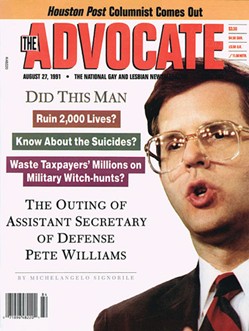
And while Trump was threatening Democratic lawmakers with death on Thursday, Pete Williams, a former NBC News correspondent and press secretary for Vice President Dick Cheney, spoke at Cheney’s funeral at the National Cathedral. Williams told the mostly old-fashioned Republicans how he offered to resign in 1991 when the Advocate was about to out him as gay. Cheney — who loved his semi-out lesbian daughter Mary — said no and checked on him after the story was published. During the horrific AIDS crisis in the early 1990s, ANGLE (Access Now for Lesbian and Gay Equality) fundraised and worked to elect pro-gay politicians. In 1991, longtime gay politico David Mixner introduced ANGLE to his friend, Arkansas Gov. Bill Clinton, whom the group helped elect as president.
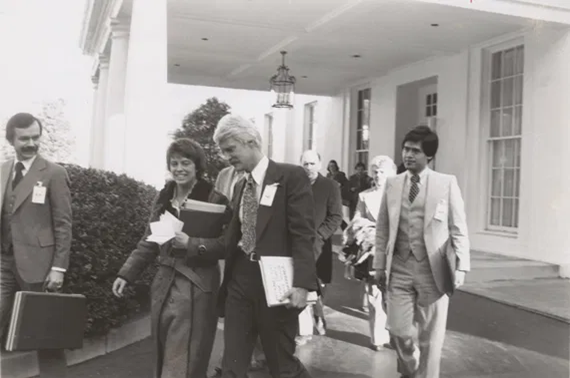
Gay people were not welcome at the White House until Clinton, other than one historic visit on March 26, 1977. Decades later, when ANGLE’s Jeremy Bernard was being interviewed by first lady Michelle Obama for the job of Social Secretary, he recalled how difficult it was to get through the East Wing visitors’ entrance during Clinton’s administration.
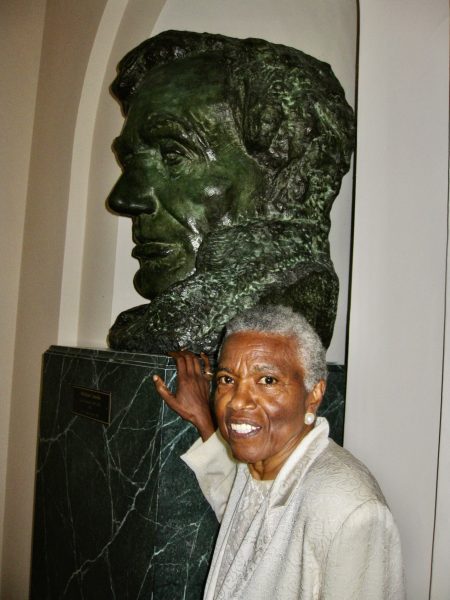
“I said to Mrs. Obama, ‘It takes a lot to get in these doors. And I think it’s very important for people to feel very welcomed,’” Jeremy says during a recent conversation.
The first lady agreed and “wanted to make sure as many people that never had been to the White House and never thought they would be, got the experience to do it.”
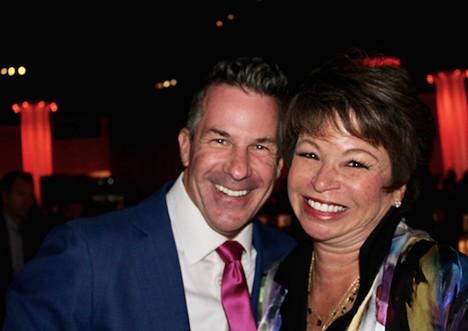
Bernard worked for Obama’s presidential campaign in 2008, then as White House Liaison to the National Endowment for the Humanities before serving as Senior Advisor to the US Ambassador to France. On Feb. 25, 2011, he became the first male and first openly gay person to serve as Social Secretary.
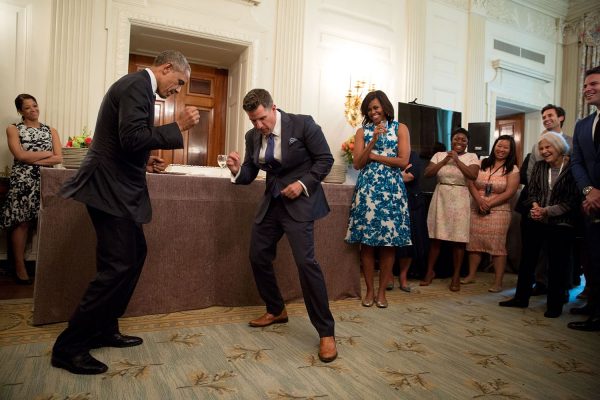
“Jeremy shares our vision for the White House as the People’s House, one that celebrates our history and culture in dynamic and inclusive ways. We look forward to Jeremy continuing to showcase America’s arts and culture to our nation and the world through the many events at the White House,” Obama said in a press release.
“My office was in the East Wing, and I had what I thought was the best office. I looked over toward the South Lawn, but I also had the roof of the East Colonnade below me. I had a window that actually would open like a door, and you could walk out onto the roof as if it was a patio,” Bernard recalls, noting that he was warned to call the Secret Service before going out to avoid getting shot.
“I was so shocked,” Bernard says about the East Wing being demolished. “When I first heard there were bulldozers, I was like, well, what is it they’re knocking down from it?” — finding out later, “the whole thing” was gone.
He felt “some self-sorrow” and “numb” remembering his office. “It really is a part of history, not just for those of us that worked there, but for virtually everyone – whether you were there for a state dinner, a holiday party, or a reception for St. Patrick’s Day, LGBT celebration — whatever it was, everyone came through the East Wing.”
California Gov. Gavin Newsom said it well, Bernard says. “Compared to what ICE is doing and all that, it may not rank up there, but it’s symbolic of what’s happened in our country.”
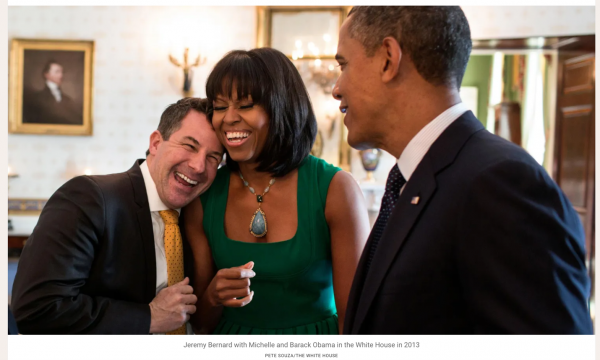
Michelle Obama said it well, too. “We always felt it was the people’s house,” she told CBS “The Late Show” host Stephen Colbert. “I am confused by what are our norms? What are our standards? What are our traditions? I just feel like, what is important to us as a nation anymore? Because I’m lost.”
And, Michelle Obama continued, “I hope that more Americans feel lost in a way that they want to be found again, because it’s up to us to find what we’re losing.”
“The West Wing was work — sometimes it was sadness, it was problems. It was the guts of the White House,” she said. “The East Wing was where you felt light.”
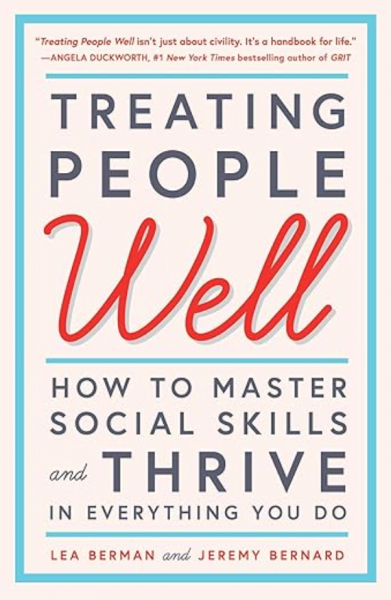
Bernard and Lea Berman, social secretary in the George W. Bush White House, have some suggestions in their book “Treating People Well,” subtitled “How to Master Social Skills and Thrive in Everything You Do.”
“It was important to us to see that despite our differences in how we viewed policy, Lea and I and Lea’s husband — who is an operative in the Republican Party — were very close,” Bernard says.
“I think about what this must be like for kids,” Bernard says. “We always looked at these presidents as a certain type of person.”
But now people hear Trump say, “’I hate my enemies. I want revenge.’ What is that teaching kids?” Bernard asks. “The president of the United States is saying that. I think it’s really frightening. We can’t let that stand.”
“I think we’ve got to go back to the way we were brought up about how you treat other people,” Bernard says. “It’s really important that we focus on the more positive characteristics of human beings … Most communities are very different and we celebrate that. But you can only celebrate it with civility.”
Karen Ocamb is a veteran LGBTQ journalist and former news editor for the Los Angeles Blade. This article was originally posted on her Substack LGBTQ+ Freedom Fighters. Her extended conversation with Jeremy Bernard, who talks more about the East Wing, ANGLE and the Obamas, is embedded in the post.


The White House
Report: Grenell wants Russian ambassadorship
Country’s anti-LGBTQ record a reported barrier

Richard Grenell, President Donald Trump’s special envoy for “special missions,” is making it known that he is interested in the Russian ambassadorship.
According to reporting by the Daily Mail, Grenell has “floated” his interest in the role to coworkers, but issues surrounding the former German ambassador’s sexuality have made securing the position more difficult.
“He had an interest in the job — or at least he floated the idea to select colleagues. But Putin’s regime is extremely anti–LGBTQ, so I’m sure they didn’t take that thought too seriously,” one source close to Grenell told the Daily Mail. “That would never happen anyway.”
Grenell has long been one of Trump’s closest allies and was the first openly gay person to hold a Cabinet-level position. He was ousted last month as acting director of the Kennedy Center, a position he had held since Trump reestablished the board to be composed of his political supporters in 2025.
In addition to leading the nation’s cultural arts center, Grenell previously served as the U.S. ambassador to Germany from 2018 to 2020, and as the special presidential envoy for Serbia and Kosovo peace negotiations from 2019 to 2021. He was also a State Department spokesperson to the U.N. under the George W. Bush administration and a Fox News contributor.
Russia has a longstanding history of being anti-LGBTQ.
In 2013, the country passed a law banning any public endorsement of “nontraditional sexual relations” among minors. In December 2022, Putin signed legislation expanding the ban, making it illegal to promote same-sex relationships or suggest that non-heterosexual orientations are “normal” for people of any age, widening censorship across media and public life.
The Russian courts have also supported the restriction of LGBTQ identity in the country. In November 2023, Russia’s Supreme Court granted a request from the Justice Ministry to outlaw the “international LGBT movement” as “extremist,” allowing authorities to criminalize advocacy and potentially prosecute individuals for expressions of LGBTQ+ identity or support.
In addition to LGBTQ rights issues, the war between Russia and Ukraine has become a global concern. Ukraine, which was part of the former Soviet Union, includes the territory known as Crimea, which Russia annexed in 2014. The annexation remains a major point of international dispute over sovereignty. Since 2022, Russia’s large-scale invasion of Ukraine has escalated the conflict, drawing global attention and sanctions while straining U.S.-Russia relations.
The U.S. has spent $188 billion in total related to the war in Ukraine since the Russian invasion in February 2022, according to the Council on Foreign Relations.
The Russian ambassadorship seems to be a difficult role to fill, according to additional information presented by the Daily Mail. With Trump already being seen as relatively positive by Russian President Vladimir Putin, and with close ties to members of his Cabinet and family — like son-in-law Jared Kushner — the ambassadorship is complicated and viewed as less critical than in previous administrations.
“There is no rush to fill that role because it has now been deemed unnecessary,” another source told the U.K.-based publication.
Bob Foresman, a seasoned businessman with decades-long ties to the Kremlin, was reportedly once the frontrunner, according to the Daily Mail. Foresman served as vice chair of UBS Investment Bank and Deputy Chairman of Renaissance Capital between 2006 and 2009, and earlier led investment banking for Russia at Dresdner Kleinwort Wasserstein from 1997 to 2000.
“This is a pattern, especially in the Trump administration — special envoys big–footing the ambassadors,” a source told the Daily Mail. “It is shocking that we are already in April and we don’t have an ambassador to one of the most important countries in the world.”
Iran
LGBTQ groups condemn Trump’s threat to destroy Iranian civilization
Ceasefire announced less than two hours before Tuesday deadline

The Council for Global Equality is among the groups that condemned President Donald Trump on Tuesday over his latest threats against Iran.
Trump in a Truth Social post said “a whole civilization will die tonight” if Tehran did not reach an agreement with the U.S. by 8 p.m. ET on Tuesday.
Iran is among the handful of countries in which consensual same-sex sexual relations remain punishable by death.
Israel and the U.S. on Feb. 28 launched airstrikes against Iran.
One of them killed Supreme Leader Ayatollah Ali Khamenei. Iran in response launched missiles and drones against Israel and other countries that include Kuwait, Bahrain, Qatar, the United Arab Emirates, Jordan, Saudi Arabia, Azerbaijan, and Cyprus.
Gas prices in the U.S. and around the world continue to increase because the war has essentially closed the Strait of Hormuz, a strategic waterway that connects the Persian Gulf and the Gulf of Oman through which roughly 20 percent of the world’s crude oil passes.
Trump less than 90 minutes before his deadline announced a two-week ceasefire with Iran that Pakistan helped broker.
“We the undersigned human rights, humanitarian, civil liberties, faith-based and environmental organizations, think tanks and experts are deeply alarmed by President Trump’s threat regarding Iran that ‘a whole civilization will die tonight’ if his demands are not met. Such language describes a grave atrocity if carried out,” reads the statement that the Council for Global Equality more than 200 other organizations and human rights experts signed. “A threat to wipe out ‘a whole civilization’ may amount to a threat of genocide. Genocide is a crime defined by the Genocide Convention and by the Rome Statute of the International Criminal Court as committing one or more of several acts ‘with intent to destroy in whole or in part a national, racial or religious groups as such.'”
The statement states “the law is clear that civilians must not be targeted, and they must also be protected from indiscriminate or disproportionate attacks.”
“Strikes on civilian infrastructure — such as the recent attack on a bridge and the attacks President Trump is repeatedly threatening to carry out to destroy power plants — have devastating consequences for the civilian population and environment,” it reads.
“We urge all parties to respect international law,” adds the statement. “Those responsible for atrocities, including crimes against humanity and war crimes, can and must be held accountable.”
The Alliance for Diplomacy and Justice, Amnesty International USA, Human Rights Watch, the American Civil Liberties Union, the NAACP, MADRE, and the Robert and Ethel Kennedy Human Rights Center are among the other groups that signed the letter.
Hungary
Vance speaks at Orbán rally in Hungary
Anti-LGBTQ prime minister trailing ahead of April 12 vote
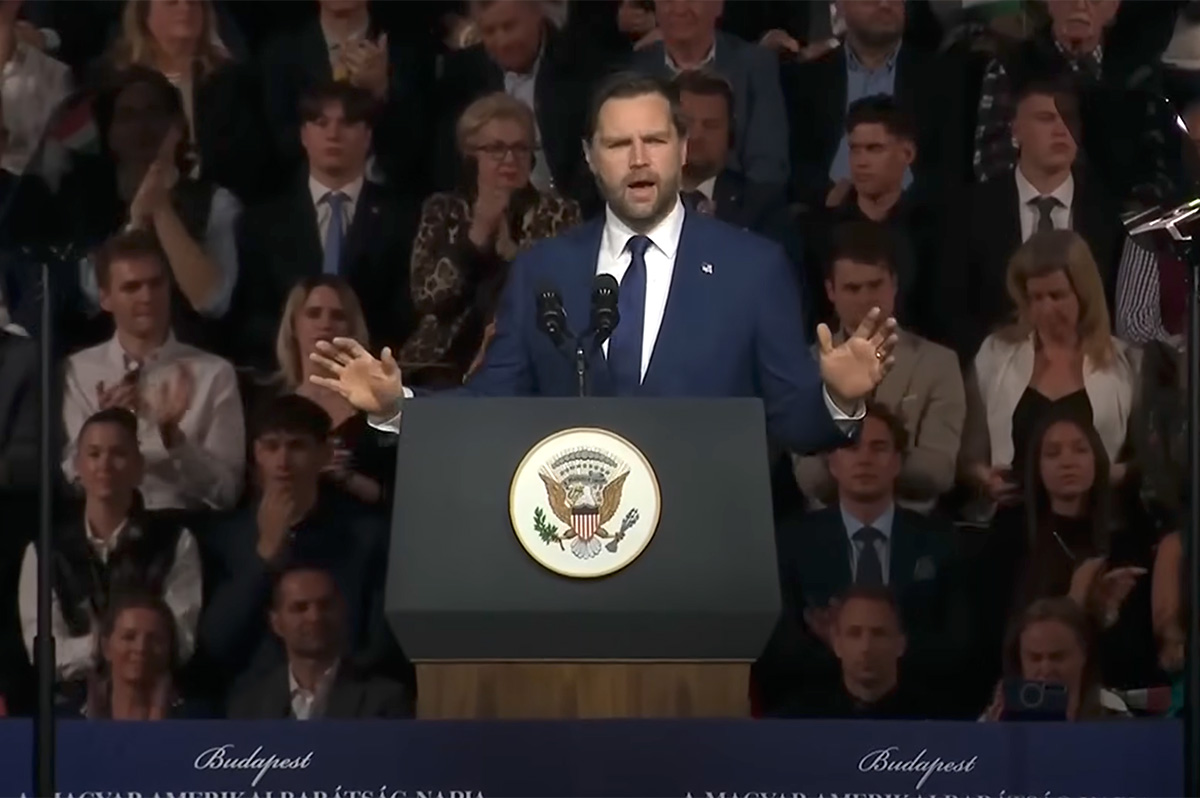
Vice President JD Vance on Tuesday urged Hungarians to support Prime Minister Viktor Orbán in the country’s April 12 elections.
“We have got to get Viktor Orbán re-elected as prime minister of Hungary,” Vance told Orbán supporters who gathered at Budapest’s MTK Sportpark.
Vance and Orbán on Tuesday met before they held a press conference in Budapest. Orbán also spoke at the rally.

The U.S. vice president after he took to the stage called President Donald Trump, who told the crowd he is “a big fan of Viktor” and is “with him all the way.” Vance, as he did during Tuesday’s press conference with Orbán, criticized the European Union.
“We want you to make a decision about your future with no outside forces pressuring you or telling you what to do. I’m not telling you exactly who to vote for, but what I am telling you is that the bureaucrats in Brussels, those people should not be listened to,” said Vance. “Listen to your hearts, listen to your souls, and listen to the sovereignty of the Hungarian people.”
Vance in his speech noted “across the West, we’ve got a small band of radicals” who, among other things, “condemn children to mutilization and sterilization in the name of gender care.” Vance also criticized a “far-left ideology given quarter in university circles, in the media, and in our entertainment industry, and increasingly among bureaucrats on both sides of the Atlantic.”
Vice President JD Vance speaks at MTK Sportpark in Budapest, Hungary, on April 7, 2026
Orbán has been in office since 2010. He and his Fidesz-KDNP coalition government have faced widespread criticism over its anti-LGBTQ crackdown.
A Hungarian activist with whom the Washington Blade previously spoke said it is “impossible to change your gender legally in Hungary” because of a 2020 law that “banned legal gender recognition of transgender and intersex people.” Hungarian MPs the same year effectively prohibited same-sex couples from adopting children and defined marriage in the country’s constitution as between a man and a woman.
The European Commission in 2022 sued Hungary, which is a member of the EU, over the country’s anti-LGBTQ propaganda law.
Hungarian lawmakers in March 2025 passed a bill that banned Pride events and allowed authorities to use facial recognition technology to identify those who participate in them. MPs later amended the Hungarian constitution to ban public LGBTQ events.
Upwards of 100,000 people last June defied the ban and marched in Budapest’s annual Pride parade.
Polls indicate Orbán is trailing Péter Magyar and his center-right Tisza party ahead of the April 12 election. Vance at Tuesday’s rally told Orbán supporters that he and Trump “want you to make a decision about your future with no outside forces pressuring you or telling you what to do.”
“I’m not telling you exactly who to vote for, but what I am telling you is that the bureaucrats in Brussels, those people should not be listened to,” said Vance. “Listen to your hearts, listen to your souls, and listen to the sovereignty of the Hungarian people.”
“Unlike some of the leadership of Brussels, I’m not threatening you or telling you that we’re going to withhold funds to which you’re legally entitled,” he added. “You will make the decision about Hungary’s future.”
Magyar on Tuesday appeared to dismiss Vance’s comments.
“No foreign country may interfere in Hungarian elections. This is our country. Hungarian history is not written in Washington, Moscow, or Brussels — it is written in Hungary’s streets and squares,” said Magyar on his X account.
A spokesperson for the Háttér Society, a Hungarian LGBTQ rights group, told the Blade that neither Magyar, nor his party have reached out to the organization.
The spokesperson said the group does not “campaign directly for them or for any other political party.” The Háttér Society, however, is encouraging LGBTQ Hungarians to vote.
“Ahead of election day, we will encourage everyone on our social media channels to go out and vote, as this is the only way we can act against a system that has been working against the LGBTQI community for many years,” said the spokesperson.

Report: Grenell wants Russian ambassadorship
Log Cabin Republicans to honor Scott Presler

Cuba bajo presión y sin respuestas
Tenn. lawmakers pass transgender “watch list” bill