Texas
Talarico beats Crockett in Texas primary
Pro-LGBTQ seminarian hopes to turn seat blue

Texas state Rep. James Talarico won a hard-fought primary Tuesday to become the state’s Democratic nominee for U.S. Senate, defeating U.S. Rep. Jasmine Crockett in one of the year’s most closely watched and competitive Democratic contests.
Talarico, a Presbyterian seminarian and three-term lawmaker from Round Rock, was declared the winner by the Associated Press early Wednesday morning after a closely tracked vote count that drew national attention.
“Tonight, the people of our state gave this country a little bit of hope,” Talarico told the AP. “And a little bit of hope is a dangerous thing.”
With 52.8% of the vote to Crockett’s 45.9%, Talarico secured the nomination outright, avoiding a runoff and capping months of sharp contrasts between the two candidates over strategy, messaging, and how best to compete statewide in Texas. Democrats hope the competitive primary — and the relatively narrow margin — signals growing momentum in a state that has not elected a Democrat to the U.S. Senate since 1988.
Talarico has long expressed support for the LGBTQ community, a position he highlights prominently on his campaign website. Under the “Issues” section, he directly addresses assumptions that might arise from his faith and background as a seminarian in a deeply conservative state.
“My faith in Jesus leads me to reject Christian Nationalism and commit myself to the project of democracy,” his website reads. “Because that’s the promise of America: a democracy where every person and every family — regardless of religion, race, gender, sexual orientation, or any other difference between us — can truly be free and live up to their full potential.”
Crockett struck a conciliatory tone following her defeat, emphasizing party unity ahead of November.
“This morning I called James and congratulated him on becoming the Senate nominee,” Crockett told Politico. “Texas is primed to turn blue and we must remain united because this is bigger than any one person. This is about the future of all 30 million Texans and getting America back on track.”
Talarico also drew national attention earlier in the race when “Late Show” host Stephen Colbert said he was initially unable to air an interview with the state legislator due to potential FCC concerns involving CBS. The episode sparked a broader political debate.
Brendan Carr, chair of the Federal Communications Commission, appointed by President Donald Trump, told reporters the controversy was a “hoax,” though he also acknowledged Talarico’s ability to harness the moment to build support as an underdog candidate. The interview was later released online and garnered millions of views, boosting Talarico’s national profile.
In November, Talarico will face the winner of the Republican primary between incumbent Sen. John Cornyn and Texas Attorney General Ken Paxton, who have been locked in a bruising GOP contest. Rep. Wesley Hunt was also in the Republican primary field. The GOP race is expected to head to a May runoff.
In a joint statement, Senate Minority Leader Chuck Schumer and Democratic Senatorial Campaign Committee Chair Kirsten Gillibrand praised Talarico’s victory and framed him as a candidate capable of broad appeal.
“As an eighth-generation Texan, former middle school teacher, and Presbyterian seminarian, James will be a fighter for Texans from all walks of life and of all political stripes,” they said. “In November, Texans will elect a champion for working people: James Talarico.”

Texas
Texas Supreme Court rules judges can refuse to marry same-sex couples
Decision published on Oct. 24.

Texas judges will now be permitted to refuse to officiate same-sex weddings based on their “sincerely held religious beliefs,” following a ruling issued Oct. 24 by the Texas Supreme Court.
The state’s highest court — composed entirely of Republican justices — determined that justices of the peace who decline to marry LGBTQ couples are not violating judicial impartiality rules and therefore cannot be sanctioned for doing so.
In its decision, the court approved an official comment to the Texas Code of Judicial Conduct clarifying that judges may opt out of performing weddings that conflict with their personal religious convictions. This clarification appears to directly conflict with existing provisions that prohibit judges from showing bias or prejudice toward individuals based on characteristics such as race, religion, or sexual orientation.
“It is not a violation of these canons for a judge to publicly refrain from performing a wedding ceremony based upon a sincerely held religious belief,” the court’s comment states.
The original code explicitly bars judges from showing favoritism or discrimination, declaring that they must not “manifest bias or prejudice, including but not limited to bias or prejudice based upon race, sex, religion, national origin, disability, age, sexual orientation, or socioeconomic status.”
The case traces back to McLennan County Justice of the Peace Dianne Hensley, who was publicly reprimanded in 2019 after refusing to marry same-sex couples while continuing to perform ceremonies for heterosexual ones, the Texan reported.
The State Commission on Judicial Conduct found that her actions cast doubt on her ability to act impartially, but Hensley has spent the past six years challenging that reprimand in court, arguing that she was punished for adhering to her Christian beliefs.
In a statement responding to the Oct. 24 ruling, Texas House LGBTQ Caucus Chair Jessica González expressed disappointment with the decision.
“The Texas House LGBTQ Caucus is disappointed, but not surprised, to learn that the Texas Supreme Court is not willing to stand up for the rights of LGBTQIA+ Texans,” she said. “Our right to marriage should never depend on someone else’s religious beliefs. This change in the Judicial Conduct Code will only further erode civil rights in Texas.”
The Texas Supreme Court is also currently reviewing a related matter referred by the 5th U.S. Court of Appeals. That case involves another judge, Keith Umphress, who similarly refused to perform same-sex weddings for religious reasons. The 5th Circuit has asked the Texas justices to clarify whether the state’s judicial conduct code actually forbids judges from publicly declining to officiate same-sex weddings while continuing to perform ceremonies for straight couples — a question that could further define the boundaries between religious liberty and judicial impartiality in Texas.
Texas
Democrats block anti-trans legislation by breaking quorum in Texas
Lawmakers flee state to halt GOP-backed redistricting and anti-trans policies
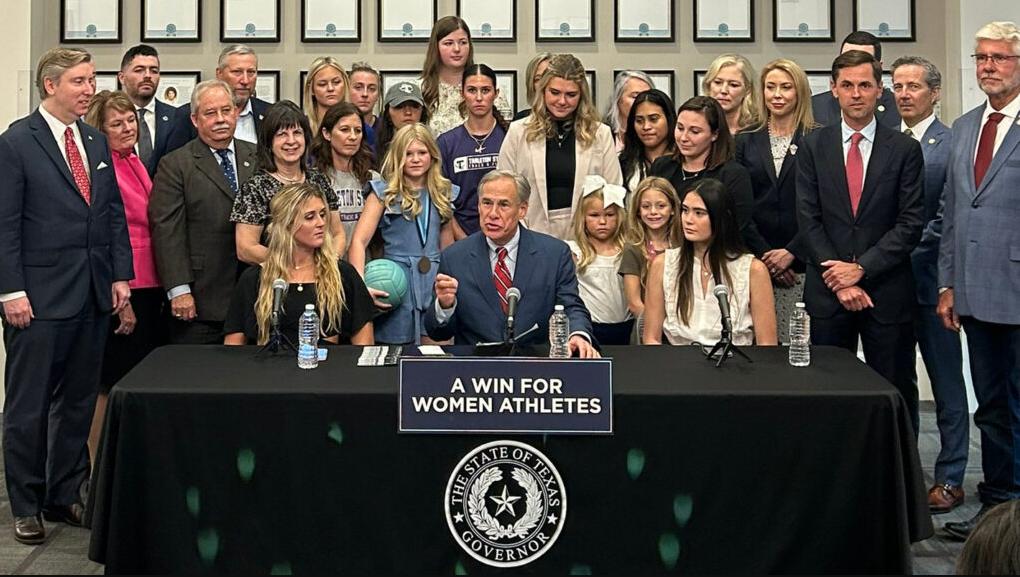
As Texas House Democrats fled the state to prevent Republicans from gerrymandering Democratic-held districts to flip seats, they also blocked anti-transgender legislation from being considered simply by not showing up.
More than 50 House Democrats left Texas on Sunday in an attempt to pause—if not kill—recent Republican-proposed and Trump-encouraged measures making their way through the state House.
This move by Democrats is called “breaking quorum,” and means the Texas House has fewer than the required minimum number of representatives present to conduct business. In total, the Texas House has 150 seats. Republicans hold only 88 seats—less than the 100 required to meet quorum—pausing the legislative session.
The Democratic legislators traveled to Illinois and New York, two Democratic strongholds with outspoken governors vowing to protect them and prevent Republicans from gaining an unfair advantage in the middle of the legislative calendar—at Trump’s behest.
The major issue Texas Democrats are drawing attention to is the recent redistricting plan, which would flip five Democratic U.S. House of Representatives seats to Republican ones through the use of gerrymandering, or strategic manipulation of district boundaries. This gerrymandering would likely result in Republicans retaining control of the U.S. House in the 2026 midterms.
In addition to redistricting, Republicans have proposed Senate Bill 7 (SB7), also known as “The Trans Bathroom Ban.” This bill mandates that people use the bathroom in government buildings, schools, and women’s violence shelters that corresponds with their sex at birth, rather than their gender identity. The bill would also require incarcerated individuals to be placed in facilities that match their sex at birth.
Proponents of the bill, like Fran Rhodes, the president of True Texas Project—a hardline conservative group that opposes LGBTQ rights and immigration—argue that without SB7, “we put women and girls at risk.”
This proposed legislation has been denounced by Equality Texas, which says it would not only put trans women at risk, but also cis women, who would be subject to “invasive gender inspections.” They argue this would undermine the Republicans’ stated intent of the bill by subjecting women to unnecessary scrutiny rather than protecting them.
Multiple cis women have come out in opposition to the bill, including Wendy Davis, a lawyer and former member of the Texas State Senate, who called the bill “a solution without a problem.”
Davis continued, saying that “Our trans sisters deserve to be safe in the restroom, just like we deserve to be safe in the restroom.”
Additionally, some Black Texans have sounded the alarm on this bill, likening it to Jim Crow-era segregation legislation—but instead of skin color, it uses gender identity to discriminate.
As the clock runs out on this 30-day special session ending Aug. 19, there is a chance Republican Gov. Greg Abbott could extend the session, as it is within his power as governor.
Texas Democrats hope this will pressure Republicans to work with them to reach a compromise on both redistricting and killing the anti-trans bill.
Texas
Texas lawmaker introduces bill to criminalize identifying as transgender
Republican’s proposal unlikely to pass
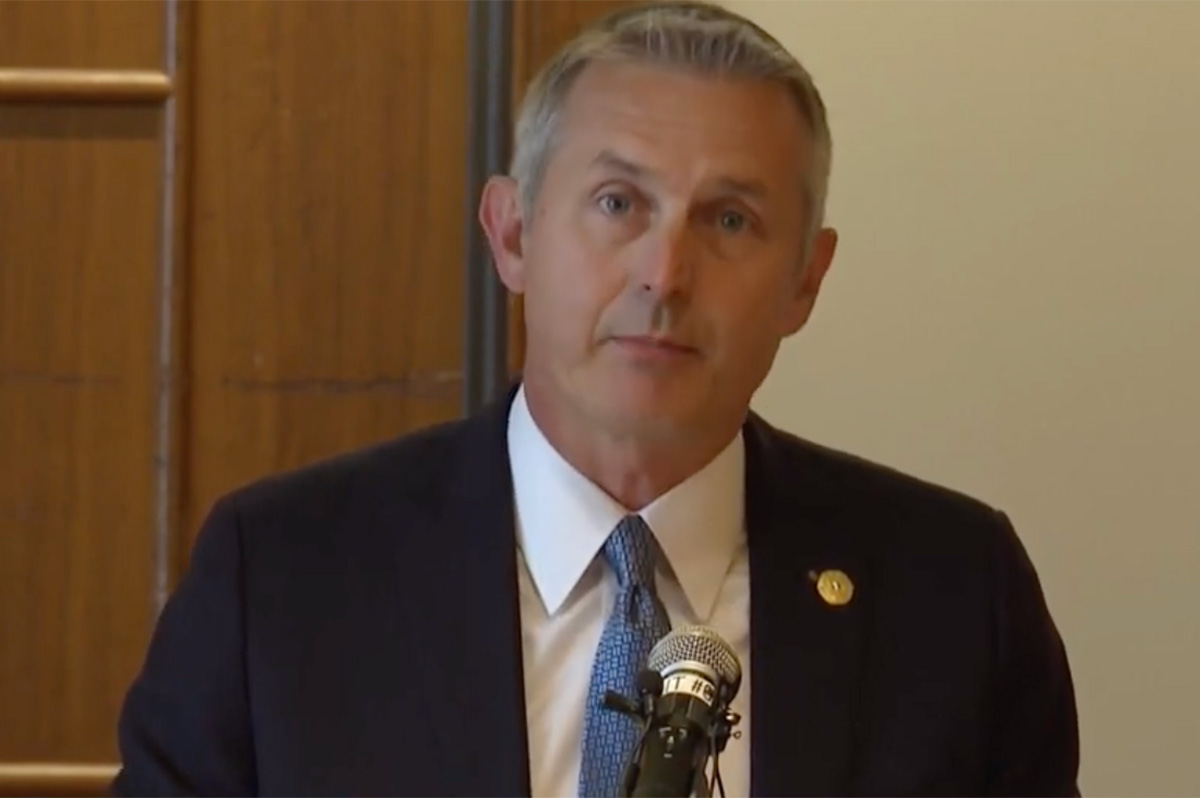
Republican Texas state Rep. Tom Oliverson introduced a bill last week that would prohibit Texans from identifying themselves as transgender on official documents.
The legislation would classify as a state felony the act of “knowingly [making] a false or misleading verbal or written statement” by identifying one’s birth sex incorrectly to a governmental entity or to an employer.
While the bill, according to the Houston Chronicle, does not yet have any cosponsors and is considered unlikely to pass, the effort underscores conservative lawmakers’ turn toward increasingly extreme measures targeting the trans community, particularly in Texas.
For example, Republican state Rep. Brent Money introduced a bill last month that would have expanded the 2023 law barring gender affirming health treatments for minors by also prohibiting providers from offering puberty-suppressing medication, hormone therapy or surgeries to adults if the purpose is to affirm their gender identity.
Equality Texas reports that the state legislature has seen more than 170 bills targeting the LGBTQ community so far this year.
Oliverson in 2024 unsuccessfully challenged the chamber’s Republican speaker, Dade Phelan.

Kristi Noem ‘devastated’ as husband’s alleged fetish spending surfaces

Colo. activists condemn SCOTUS conversion therapy ruling

Is Ghana’s selective justice a human rights contradiction?

Supreme Court ruling against conversion therapy bans could affect Md. law

Glisten report details hostile climate for LGBTQ students

‘Out for McDuffie’ event held at D.C. gay bar

The Oscar-losing performance that’s too good to miss

‘Jonah’ an undeniably compelling but unusual memory play

Ghanaian president welcomed to Philadelphia amid backlash over anti-LGBTQ bill

PHOTOS: ‘No Kings’ rally and march
-

 District of Columbia2 days ago
‘Out for McDuffie’ event held at D.C. gay bar
-
Movies3 days ago
The Oscar-losing performance that’s too good to miss
-
Theater3 days ago
‘Jonah’ an undeniably compelling but unusual memory play
-
Ghana2 days ago
Ghanaian president welcomed to Philadelphia amid backlash over anti-LGBTQ bill