Texas
Democrats block anti-trans legislation by breaking quorum in Texas
Lawmakers flee state to halt GOP-backed redistricting and anti-trans policies
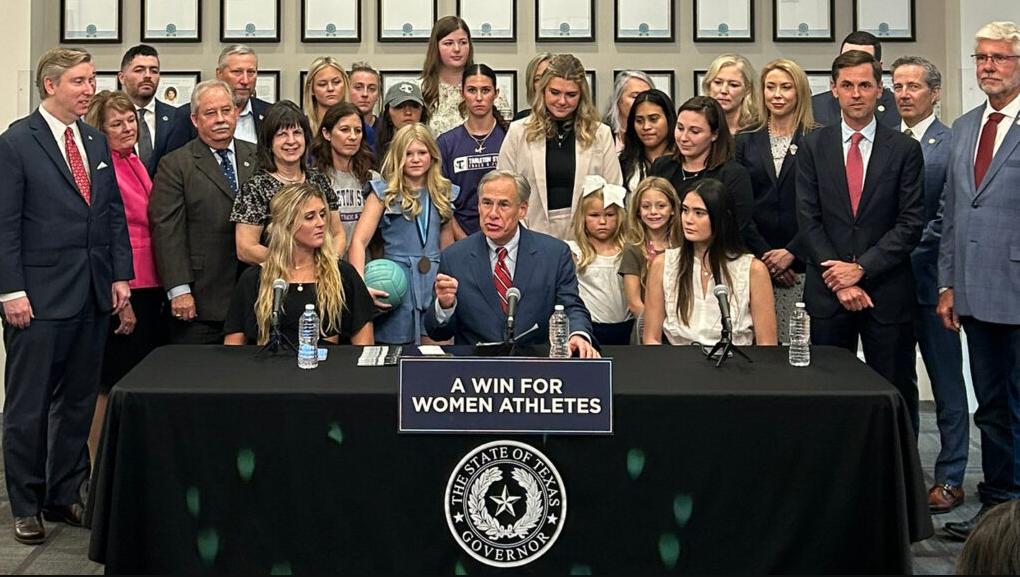
As Texas House Democrats fled the state to prevent Republicans from gerrymandering Democratic-held districts to flip seats, they also blocked anti-transgender legislation from being considered simply by not showing up.
More than 50 House Democrats left Texas on Sunday in an attempt to pause—if not kill—recent Republican-proposed and Trump-encouraged measures making their way through the state House.
This move by Democrats is called “breaking quorum,” and means the Texas House has fewer than the required minimum number of representatives present to conduct business. In total, the Texas House has 150 seats. Republicans hold only 88 seats—less than the 100 required to meet quorum—pausing the legislative session.
The Democratic legislators traveled to Illinois and New York, two Democratic strongholds with outspoken governors vowing to protect them and prevent Republicans from gaining an unfair advantage in the middle of the legislative calendar—at Trump’s behest.
The major issue Texas Democrats are drawing attention to is the recent redistricting plan, which would flip five Democratic U.S. House of Representatives seats to Republican ones through the use of gerrymandering, or strategic manipulation of district boundaries. This gerrymandering would likely result in Republicans retaining control of the U.S. House in the 2026 midterms.
In addition to redistricting, Republicans have proposed Senate Bill 7 (SB7), also known as “The Trans Bathroom Ban.” This bill mandates that people use the bathroom in government buildings, schools, and women’s violence shelters that corresponds with their sex at birth, rather than their gender identity. The bill would also require incarcerated individuals to be placed in facilities that match their sex at birth.
Proponents of the bill, like Fran Rhodes, the president of True Texas Project—a hardline conservative group that opposes LGBTQ rights and immigration—argue that without SB7, “we put women and girls at risk.”
This proposed legislation has been denounced by Equality Texas, which says it would not only put trans women at risk, but also cis women, who would be subject to “invasive gender inspections.” They argue this would undermine the Republicans’ stated intent of the bill by subjecting women to unnecessary scrutiny rather than protecting them.
Multiple cis women have come out in opposition to the bill, including Wendy Davis, a lawyer and former member of the Texas State Senate, who called the bill “a solution without a problem.”
Davis continued, saying that “Our trans sisters deserve to be safe in the restroom, just like we deserve to be safe in the restroom.”
Additionally, some Black Texans have sounded the alarm on this bill, likening it to Jim Crow-era segregation legislation—but instead of skin color, it uses gender identity to discriminate.
As the clock runs out on this 30-day special session ending Aug. 19, there is a chance Republican Gov. Greg Abbott could extend the session, as it is within his power as governor.
Texas Democrats hope this will pressure Republicans to work with them to reach a compromise on both redistricting and killing the anti-trans bill.





Texas
How anti-trans backlash to James Talarico spread like wildfire
Texas Democrat is challenging state Attorney General Ken Paxton
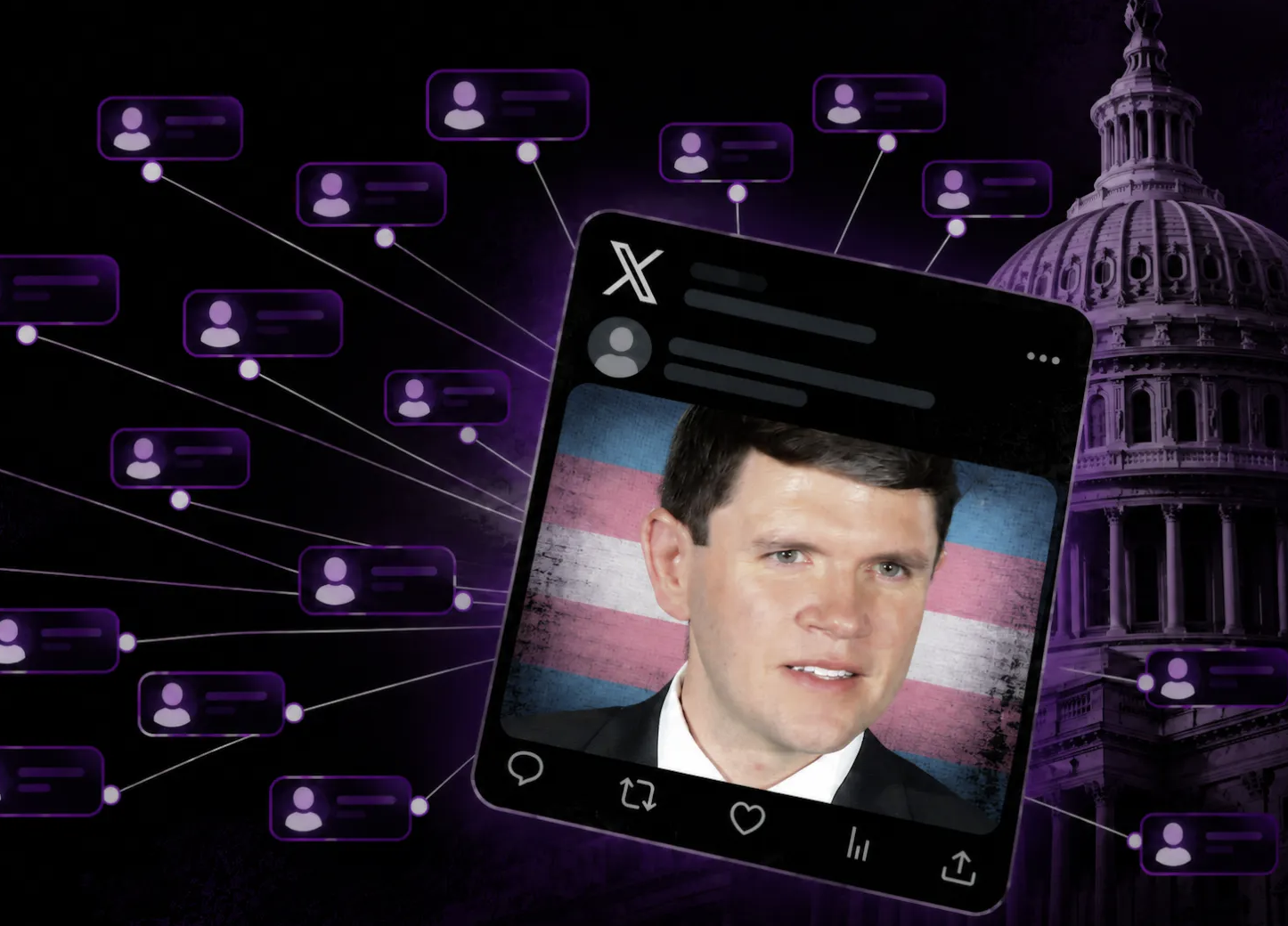
Uncloseted Media published this story on Oct. 21.
This story was reported in partnership with The 19th, a nonprofit newsroom reporting on gender, politics and policy.
By HOPE PISONI | Texas’s Senate race has become one of the most-watched elections of the year. MAGA Republican nominee Ken Paxton pulled off a rare primary defeat against a well-established 24-year incumbent, while challenger James Talarico has been polling well enough to ignite hopes of electing a Democrat to represent Texas in the Senate for the first time since 1993.
This election could have a major impact on issues like education and healthcare prices, which rank as Texas voters’ top priorities. But an outsized amount of coverage of the race has centered instead on transgender people. Paxton’s campaign and its supporters have run several AI-generated ads attacking Talarico’s pro-trans positions. That focus has shaped reporting on the race, both by right-wing media like Fox News and in mainstream outlets like The Washington Post, with many describing Talarico’s stances on trans issues as a liability. Talarico himself has walked back some of his positions in response to controversy, expressing support for some restrictions on trans athletes and rescinding a promise to co-sponsor the pro-LGBTQ Equality Act.
This outsized focus didn’t come out of nowhere — on March 3, when Talarico was declared the winner of the Democratic primary, there was a stunning increase in traffic on X related to his takes on trans issues.
In the three days leading up to his primary win, Uncloseted Media and The 19th could only find four posts about Talarico’s take on trans issues. But in just over 24 hours after Talarico won the primary, the newsrooms identified nearly 200 posts. Most of this was driven by three viral videos that were initially posted and amplified by GOP-affiliated politicians and strategists before being circulated by right-wing influencers, media personalities and activists. The spike shows how an army of accounts work together to amplify attacks that can shape the political debate in key races — and perpetuate harmful rhetoric.
“It is a match made in heaven, the business model of social media and people pushing hate,” Sarah Oates, a professor of communications at the University of Maryland, told Uncloseted Media and The 19th. “Because the social media companies know that these are the things that engage people.”
So how did the proliferation of this narrative happen? The following is a play-by-play of how the videos and their accompanying narrative spread in the 26 hours after Talarico’s primary win. The timeline is accompanied by analysis from experts in political communications and strategy.
What are people saying, and where did it come from?
Five minutes after election analyst Dave Wasserman calls the primary for Talarico, Republican Rep. Brandon Gill of Texas posts a clip from a 2021 debate in the Texas legislature where Talarico says that “God is nonbinary.” This is one of two clips which suddenly go viral despite having existed for years — the other, which comes from a 2021 hearing where Talarico says that there are “six really common biological sexes,” is posted by Gill the next morning to a similarly large reach. Talarico has since walked back both statements.
As Gill’s post spreads, the replies are increasingly filled with animus. In one reply, Lynn Conrad writes that “this false prophet speaks with a forked tongue and will lead many from the truth.”
Prior to Talarico’s win, these clips had gotten a small amount of media coverage and appeared in an attack ad by Terry Virts, one of Talarico’s primary opponents. However, Republicans seemingly waited to boost them further until after the primary. Matthew Sheffield, political analyst and a former right-wing political consultant, says this strategy is common.
“Sometimes candidates will decline to reveal [opposition research] that they have for other-party candidates until the general election,” Sheffield told Uncloseted Media and The 19th. “When that’s done, it’s usually because they perceive that the other-party candidate would be severely damaged by the disclosure and they actually want that person to win their party’s nomination.”
Eight minutes after Gill’s first post, the same clip is posted by Greg Price, a political consultant who held a leading role in President Donald Trump’s 2024 campaign and worked at the White House in 2025. Within the next hour, accounts with direct connections to the Republican Party and the Trump administration post the clip and spread anti-trans talking points. This includes the National Republican Senate Committee; their regional press secretary and senior adviser; and Steve Guest, Texas Sen. Ted Cruz’s former communications adviser, who posted the clip and wrote: “James Talarico is a radical trans activist who weaponizes Christianity to push a far-left agenda to mutilate children.” Overall, 12.1 percent of the posts we analyzed came from such accounts.
At least 23 other accounts go on to post Gill and Price’s version of the clips, helping their message go viral. The posts above are also reposted by accounts with millions of followers, including conservative writers Dinesh D’Souza and Ann Coulter, fundamentalist Christian radio host Jenna Ellis and an account called End Wokeness.
About an hour later, Andrew Kolvet, a spokesperson for Turning Point USA and the co-host of The Charlie Kirk Show, posts the “God is nonbinary” clip while calling Talarico a “beta male white boy” and a “compliant little lap dog.” Right-wing media figures are quick to jump on these talking points, with 18.7 percent of all the posts we analyzed coming from them.
Sheffield says that right-wing outlets scour the internet for stories that could “forward their narratives.”
“They do this not just with trans issues, they do this all the time with anyone who puts an argument forward that is helpful to them, and I personally experienced this myself,” says Sheffield, who entered into politics after his small anonymous right-wing website was covered by far-right heavyweights Rush Limbaugh and Bill O’Reilly mere days after its launch.
As the nonbinary video spreads like wildfire overnight, a new clip drops around 8 a.m. the morning after. This clip, which shows a sermon in which Talarico says that “our trans community needs abortion care too,” is the only one we analyzed which hadn’t surfaced prior to the Democratic primary. It’s first posted by ATX data, an anonymous account that bills itself as providing “conservative news and public policy covering local Austin and Texas issues.” While the account has less than 6,000 followers, the clip is picked up quickly: Fox News anchor Will Cain posts it within an hour and Kolvet and Price do so within two, allowing it to rack up over one million views.
Sheffield says that while Democratic leaders tend to prefer to establish rhetoric and positions in-house, Republican leaders more frequently look to grassroots supporters for talking points.
“That’s what this was an example of — they found something that seemed effective to conservatives, so they started picking it up and using it,” Sheffield says.
As lunchtime approaches, influencers and political commentators, who make up 18.1% of the posts analyzed, begin boosting the clips. Accounts with millions of followers, including Libs of TikTok, End Wokeness and podcast host Matt Walsh, help them go viral. The three aforementioned accounts rack up a combined 1.26 million views on their posts about Talarico.
Ashley St. Clair, the mother of a child with Elon Musk and a former MAGA influencer who has since left the right-wing online ecosystem and has spoken out about its “very coordinated” nature, says influencers are incentivized to repost right-wing talking points with momentum on social media because they can make bank from ad revenue, brand deals and practices like paid retweets.
“I worked with [Libs of TikTok], and that’s a business where she makes money hand over fist from this type of content,” St. Clair told Uncloseted Media and The 19th. “It’s become an obsession where she spends all day scouring the dark corners of the internet to make a minority seem like the rule.”
Libs of TikTok did not respond to a request for comment.
Between 10 p.m. on March 3 and 11 a.m. on March 4, Uncloseted Media and The 19th identified 48 posts about Talarico that use similar anti-trans talking points, including 26 separate posts of the three clips that would amass millions of combined views. In contrast, we identified zero pro-trans posts about Talarico in the same time period. Oates finds this sharp turn in the discussion suspicious.
“When you see a shift in a discourse on a particular platform that’s quite abrupt and moves from one side to another and then stifles all dissent, that’s generally gonna be inauthentic,” she says. “That’s generally gonna be led by people who are pushing propaganda or political messaging. … It’s not reflective of general public opinion on the issue.”
This perspective reflects statements by St. Clair. She told the Washington Post that she joined large group chats where influencers would receive “marching orders” from the Trump administration and congressional Republicans. She also shared direct messages with The Post that showed White House staffers asking her to boost talking points and Republican strategists offering her money to amplify posts. Based on Uncloseted Media and The 19th’s findings, she says it’s likely that the anti-trans attacks against Talarico were coordinated in this way.
“I’d be willing to bet there was money put behind it in a paid campaign, because this is how MAGA operates,” St. Clair says. “Most people don’t understand that a lot of these MAGA influencers have access to a dashboard through certain companies where they can just log on and see any campaign that they can sign on to … and all they have to do is push out messaging, which means they don’t have to disclose that they’re paid.”
Sheffield says that many right-wing actors have such closely aligned interests that they don’t need to work together to act in concert.
“Probably most of it is not intentional when you see something go big,” Sheffield says. “They all have a movement mentality on the right, so when they see something that looks effective, then they’re gonna repeat it.”
As the morning progresses, the same talking points are adapted to French, Portuguese and Spanish, the last of which 28.5 percent of Texans speak at home. Like in English, they’re primarily spread by right-wing actors, including political strategist Emmanuel Rincon, who has nearly 620,000 followers on X and is the first to post the sermon clip to a Spanish-speaking audience. By the end of the day, the Spanish news media had also picked up the story.
One especially viral post comes from Collin Rugg, co-owner of the right-wing news site Trending Politics. Rugg stitches together a video that includes numerous clips of Talarico speaking on different topics, including the three trans-focused clips. In his post, he incorrectly says that Talarico claimed there were six genders rather than “biological sexes,” a misquote later repeated in an article by the Daily Caller, Fox News anchor John Roberts, and later Trump.
Matthias Kettemann, a professor of internet law at the University of Innsbruck in Austria, says that social media optimized for engagement allows misinformation to spread easily.
“Untrue information is usually more emotionally charged, and therefore there is a prima facie advantage,” Kettemann told Uncloseted Media and The 19th.
Shortly after noon, these posts begin moving outside of X and social media. The Charlie Kirk Show, broadcast on the streaming and cable channel Real America’s Voice, airs the nonbinary and six sexes clips. Later in the day, anti-trans talking points about Talarico make it onto Newsmax’s “The Big Take,” “Ed Henry: The Briefing,” and “The Pulse” as well as Fox News’ “The Will Cain Show.” By 8:30 p.m., “Jesse Watters Primetime,” which is the second most-watched cable news show in America, discusses Talarico’s stances on trans issues to an audience of roughly 4 million.
Shortly after the clips air on The Charlie Kirk Show, the conservative print media starts picking them up. At 12:35 p.m., the Washington Examiner publishes an article titled “FLASHBACK: James Talarico said there are six sexes while opposing ban on men in women’s sports.” Later in the afternoon, the Daily Caller, the Daily Signal, The Gateway Pundit, and Voz all post articles about the clips, with three of them citing X posts from earlier in the day.
Howard Polskin, president and founder of TheRighting, a website that tracks and analyzes right-wing media, says that right-wing social media and traditional media narratives tend to support each other.
“It’s a virtuous cycle,” Polskin told Uncloseted Media and The 19th. “If something gets written about in an extremist right-wing website, it might be posted on social media, then more social media outlets will pick that up and it might go viral.”
Matt Whitlock, a former senior adviser to the National Republican Senate Committee and the current senior vice president at CRC advisers, a PR firm known for serving conservative organizations, plays a key role in getting these anti-trans talking points on TV. He is the first one to introduce them on Fox News and Newsmax.
“The problem for [Talarico] is he’s created so much incredible ad content already that if you look at [X] today, it is flooded with clips of [him] saying absolutely insane things,” Whitlock told the host of The Big Take on Newsmax.
Whitlock uses the fact that social media is “flooded” with clips of Talarico advocating for trans rights to legitimize his claims that Talarico is an unviable candidate, despite the fact that right-wing operatives like himself are the main ones responsible for the spread of those clips. Oates says this reflects a common strategy in propaganda campaigns.
“Social media has the opportunity to spread more outrage more widely and more freely, but it’s not as influential as mainstream media,” Oates says. “What’s worrying is when what’s going on on social media starts to shape discourse in the more influential mainstream media. … ‘The people are saying’ is a classic propaganda gambit.”
Whitlock did not respond to a request for comment.
What to make of this
All told, we tracked 182 anti-trans posts attacking Talarico on X in the 26 hours after he won the primary. Sixty-three included or referenced the nonbinary clip, 50 referenced the sermon clip and 35 referenced the sexes clip. Between these posts and the citations in the right-wing media, the talking points targeting Talarico’s pro-trans positions likely reached over 10 million people.
In the leadup to the midterms, some Democrats have walked back their positions on trans rights — candidates have come out against gender-affirming care for minors and trans inclusion in bathrooms or sports, with one Ohio representative running an ad opposing “gender ideology” in schools.
Oates says that the manufactured nature of this spread indicates that these anti-trans positions do not accurately reflect the feelings of the voter base. A recent poll of American adults by The 19th and YouGov found that 37 percent of respondents think that both Democrats and Republicans talk about trans issues too much, and trans issues ranked the lowest in terms of importance among respondents to a September CNN poll.
“It’s understandable that some politicians would limit what they say about trans rights, but I think it’s misguided,” Oates says.
Despite how successful these social media tactics can be for Republicans, Democrats rarely follow suit. Oates attributes this to the fact that Democratic narratives tend to be more factual and less inflammatory, making them less suited to virality. Kettemann adds that research has found that right-leaning people tend to be slightly more susceptible to online misinformation.
“There have been few examples of campaigns like you’ve described coming from the left,” he says. “One of the reasons is that people from the left, by and large, are more technologically savvy and don’t fall into the trap of this kind of messaging.”
These tactics endanger trans people
The spread of these posts endangers trans people. The spike in anti-trans rhetoric in the 2020s has increased rates of poor mental health and suicidality among trans people and incited violence against the community. Oates says X’s algorithm rewards hateful content, especially since Elon Musk removed several guardrails for content moderation, including replacing the site’s independent fact-checkers with a volunteer-based community note system.
Social media platforms have increasingly come under fire for the harmful consequences of their engagement-focused algorithms. In the U.S., legal accountability for tech platforms can be difficult to achieve due to laws protecting them from being liable for content on their websites. But in their current state, Oates says that social media platforms like X are not healthy for democracy.
“By participating [on X], you’re not participating in real civic discourse, you’re being used as a commodity by a social media company that not only doesn’t have your best interests at heart but is deliberately trying to inculcate hatred.”
Oates believes that moving beyond the midterms, we will see one of two paths in American politics: “One in which political power is defined by … campaign[ing] on fear,” and another where “people decide … to embrace news and information that’s actually based in reality.”
Additional data reporting by Andrew Norris.
Texas
Pride In Dallas was a weekend of unabashed joy for Texas’s queer community
City came together to uplift its historic LGBTQ population

Pride arrived for a second time this year in Dallas with the local community coming together for a few more days to uplift their LGBTQ neighbors.
It was a weekend of fun inclusivity that this city is no stranger to; Dallas currently boasts the sixth-largest population of LGBTQ individuals in the U.S. While Texas at large has dealt with many discriminatory attacks, this city hasn’t faltered in showing off its unabashed pride. It isn’t without battle scars, of course, but this was a chance to remind not only residents, but the entire country: we are still here. Dallas’s LGBTQ population is currently louder and prouder than ever. And, as any of the many attendees will tell you, they plan to only get stronger — and so much more queer — every single day.
While the weekend was stacked with a myriad of activities, ranging from charity drag shows to mural unveilings, the true highlight of the weekend was Oak Lawn Live. Inspired by Market Days — an annual Chicago festival where a chunk of the city becomes a queer street fair— the Cedar Springs Merchant Association developed this event as a sprawling sign of support for the local LGBTQ population. Hosted in the “gayborhood” of Oak Lawn, it featured multiple streets of vendors, special deals from the area’s many eateries, and performances from pop stars like Daya. Even under the day’s intense heat, these streets were filled with attendees excited to flaunt their pride, with Volunteer Organizer Peter Pepper emphasizing, “This event brings the community together and reminds people: [Oak Lawn] is not just a bunch of bars. This gay neighborhood exists as a place where people can feel safe. And so, above anything else, this event is meant to remind people that we exist as a gayborhood, and that we are here for people. It’s entertainment, it’s safety, it’s community, and it’s diversity.”
It was a mission that showed in every moment of Oak Lawn Live, whether you were fighting the heat while dancing at its many stages or keeping cool with friends at one of the participating restaurants. It was those restaurants, in fact, that revealed one of the best parts of this Pride In Dallas: how amazing it was for the local economy. Because while other celebrations would have nearby establishments shut down for the day, all the ones around Oak Lawn joined in on the LGBTQ-themed festivities with fun deals and activations. This was by design, said Lee Daugherty, owner of the Oak Lawn bar ‘Alexandre’s’ and member of the Cedar Springs Merchant Association. He explained, “The merchant association is designed to encourage economic impact.”
“Not only to promote economic activity, but to make sure that businesses are promoted,” the man continued. “So they can reinvest in the community and stay here. Because a vacant storefront helps no one.” He detailed how queer residents have always shaped Dallas’s economy, one that the Association works to make inclusive and sustainable for all. It was a fact that made the entire celebration all the more meaningful, with folks understanding how the fun of this weekend would translate into better finances for queer people across the city.
All of this combined to make the Saturday of Pride In Dallas a bright day for the countless LGBTQ folks in attendance. It was so exuberant, in fact, that even out-of-towners could feel it, with one of those being the iconic podcast host herself, TS Madison. Pride In Dallas power partner Unleashed LGBTQ, run by Wesley Smoot, arranged this fun podcast taping.
The trans actress and “RuPaul’s Drag Race” judge stopped by the celebration for a live taping of her renowned podcast, “Outlaws,” where she interviewed many of Dallas’s drag royalty. Known for her cutting honesty, it didn’t take long for TS to call out the elephant in the room — namely, how Texas has seen numerous attacks against the LGBTQ community in recent months.
For non-locals, it may seem strange to have so many folks partying while there were active fights against their rights happening across the state. But Madison understood the importance of moments like these even amidst hardship, stressing, “There’s been so much going on, but we’re still here, celebrating pride … that means a lot to me, because what it lets me know is: our fight will never stop. We will never stop resisting. In the face of this political climate, in the face of turmoil, we will never, ever stop existing.”
With those words, she aptly characterized the joyous strength that came out in full force for Sunday’s Cedar Springs Pride Parade. While it only took up two streets — there was a larger parade hosted earlier this year — these blocks were packed with LGBTQ and allied locals alike. They all gathered behind the barricades, whooping in joy and stretching out their hands to the cavalcade of groups rolling by only a few feet away from them, with this parade perfectly encapsulating the communal joy of this city’s vibrant LGBTQ community.
Suffice it to say, this past Pride In Dallas was one of the city’s best LGBTQ celebrations yet. It was a weekend of fun, of laughter, and an important reminder of the strength that happens when we join together. Because Dallas knows that things aren’t easy right now. But as long as we take the time for moments like this and remind ourselves why we continue to fight, this city, and the historic queerness it holds, will always be here — standing Texas strong.
Special thanks to Virgin Hotel Dallas for the perfect stay. From check-in to check-out, it was true style!
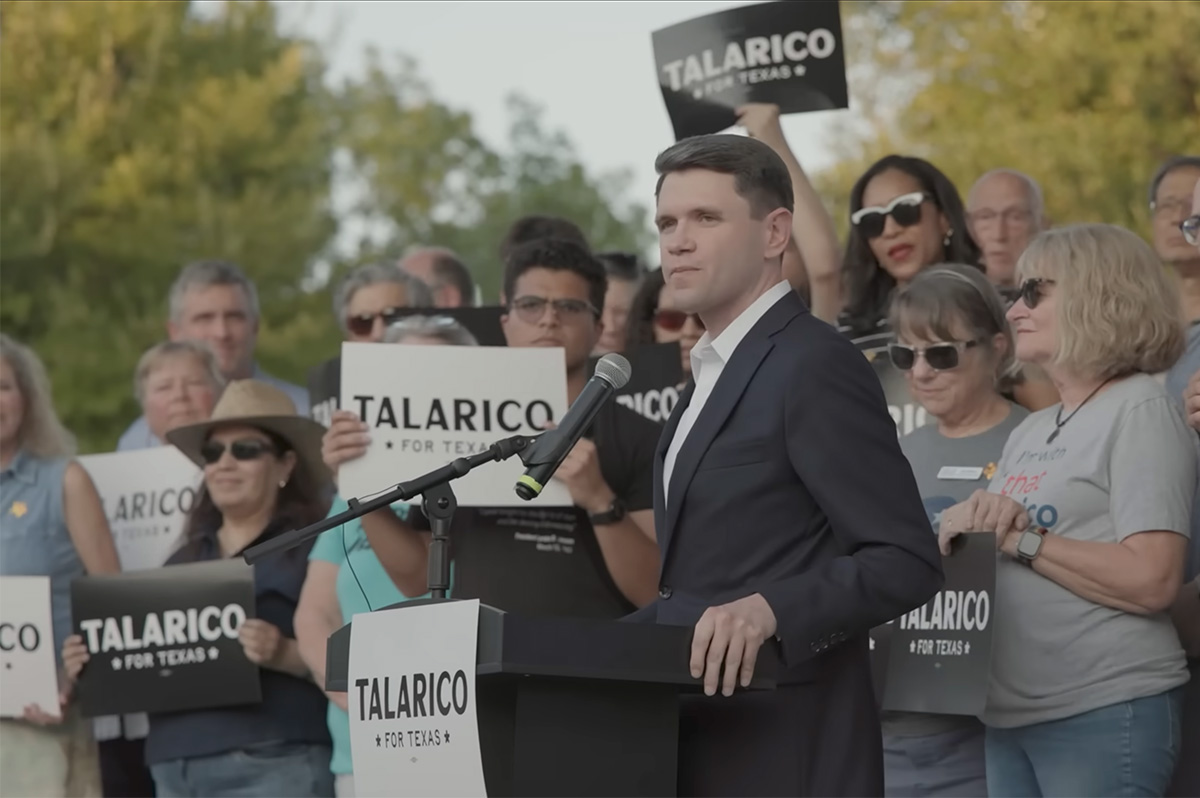
Texas state Rep. James Talarico won a hard-fought primary Tuesday to become the state’s Democratic nominee for U.S. Senate, defeating U.S. Rep. Jasmine Crockett in one of the year’s most closely watched and competitive Democratic contests.
Talarico, a Presbyterian seminarian and three-term lawmaker from Round Rock, was declared the winner by the Associated Press early Wednesday morning after a closely tracked vote count that drew national attention.
“Tonight, the people of our state gave this country a little bit of hope,” Talarico told the AP. “And a little bit of hope is a dangerous thing.”
With 52.8% of the vote to Crockett’s 45.9%, Talarico secured the nomination outright, avoiding a runoff and capping months of sharp contrasts between the two candidates over strategy, messaging, and how best to compete statewide in Texas. Democrats hope the competitive primary — and the relatively narrow margin — signals growing momentum in a state that has not elected a Democrat to the U.S. Senate since 1988.
Talarico has long expressed support for the LGBTQ community, a position he highlights prominently on his campaign website. Under the “Issues” section, he directly addresses assumptions that might arise from his faith and background as a seminarian in a deeply conservative state.
“My faith in Jesus leads me to reject Christian Nationalism and commit myself to the project of democracy,” his website reads. “Because that’s the promise of America: a democracy where every person and every family — regardless of religion, race, gender, sexual orientation, or any other difference between us — can truly be free and live up to their full potential.”
Crockett struck a conciliatory tone following her defeat, emphasizing party unity ahead of November.
“This morning I called James and congratulated him on becoming the Senate nominee,” Crockett told Politico. “Texas is primed to turn blue and we must remain united because this is bigger than any one person. This is about the future of all 30 million Texans and getting America back on track.”
Talarico also drew national attention earlier in the race when “Late Show” host Stephen Colbert said he was initially unable to air an interview with the state legislator due to potential FCC concerns involving CBS. The episode sparked a broader political debate.
Brendan Carr, chair of the Federal Communications Commission, appointed by President Donald Trump, told reporters the controversy was a “hoax,” though he also acknowledged Talarico’s ability to harness the moment to build support as an underdog candidate. The interview was later released online and garnered millions of views, boosting Talarico’s national profile.
In November, Talarico will face the winner of the Republican primary between incumbent Sen. John Cornyn and Texas Attorney General Ken Paxton, who have been locked in a bruising GOP contest. Rep. Wesley Hunt was also in the Republican primary field. The GOP race is expected to head to a May runoff.
In a joint statement, Senate Minority Leader Chuck Schumer and Democratic Senatorial Campaign Committee Chair Kirsten Gillibrand praised Talarico’s victory and framed him as a candidate capable of broad appeal.
“As an eighth-generation Texan, former middle school teacher, and Presbyterian seminarian, James will be a fighter for Texans from all walks of life and of all political stripes,” they said. “In November, Texans will elect a champion for working people: James Talarico.”

‘Jellicle Ball’ projection designer’s next project is in D.C.

Comings & Goings

West Hollywood creates registry for polyamorous relationships

LGBTQ community responds with support after shooting at gay-owned VIDA Fitness

LGBTQ+ Victory Institute to honor Dutch prime minister at D.C. conference

Queerness in Islam: a history the media often ignores

Sabrina Bruce becomes first trans person elected in Fairfax County

Anti-trans ballot measures pass in four states, setting up new legal battles

At least 29 known LGBTQ ANC candidates win election

Gay congressman attends D.C. LGBTQ election celebration
-

 Religion5 days ago
Queerness in Islam: a history the media often ignores
-
Virginia5 days ago
Sabrina Bruce becomes first trans person elected in Fairfax County
-
2026 Midterm Elections4 days ago
Anti-trans ballot measures pass in four states, setting up new legal battles
-
District of Columbia5 days ago
At least 29 known LGBTQ ANC candidates win election