
Theater
Actress takes on bisexual ‘Ma’ Rainey in new Round House production
Haskins relishes playing ‘impassioned Black woman who sticks to her guns’
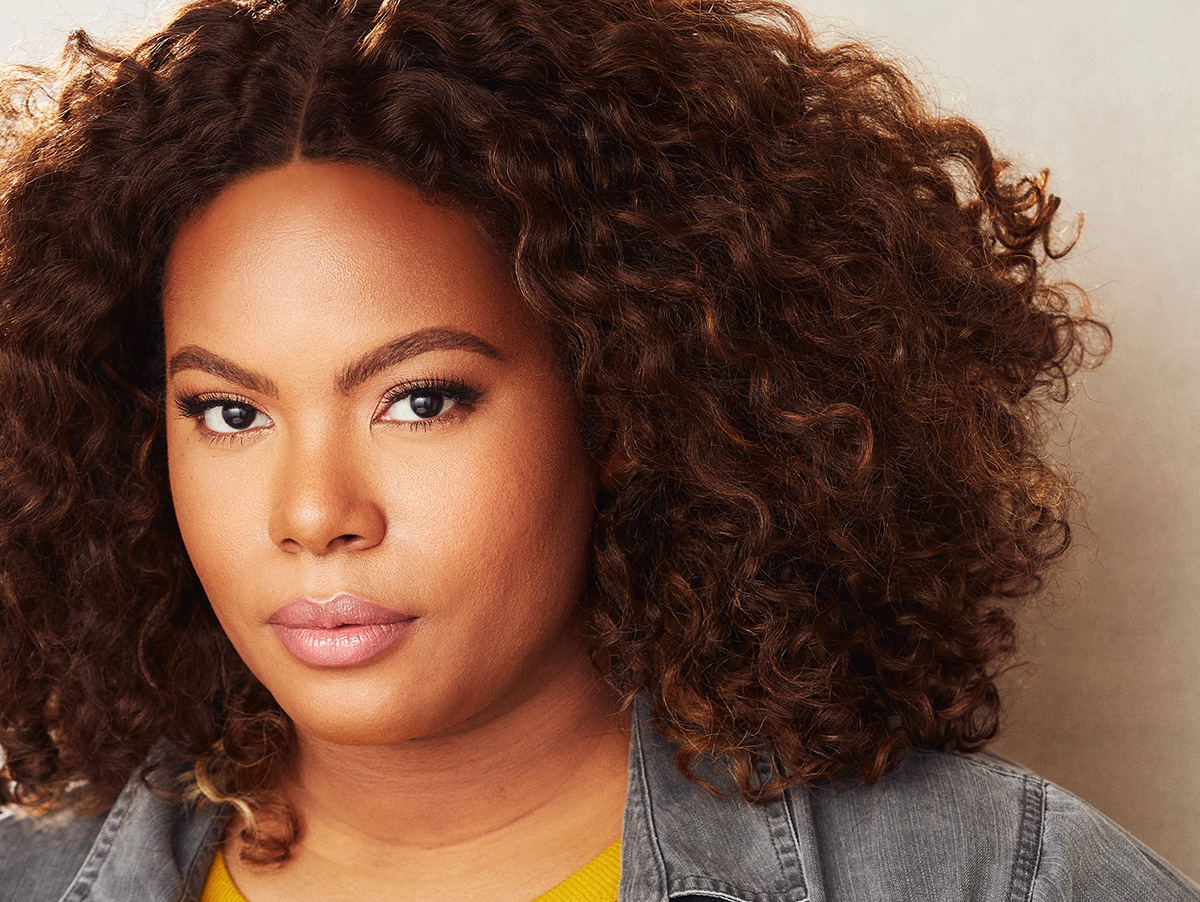
‘Ma Rainey’s Black Bottom’
Sept. 9-Oct. 18
Round House Theatre
4545 East-West Highway
Bethesda, MD 20814
$50 and up
Roundhousetheatre.org
Among the Black blues women of the 1920s and 1930s, being “in the life” wasn’t uncommon. Self-supporting and often on the road, they followed the Great Northern Migration to places like Chicago and Harlem, where they lived independent lives, made music, enjoyed same-sex relationships, and partied with like-minded ladies.
Gertrude “Ma” Rainey, best known as the “mother of the blues,” fit the bill. A big star, Ma toured the country and sold hit records nationwide. She lived an openly bisexual life.
In 1925, hosting an “indecent” all-female party at a Chicago apartment, landed Ma in jail, but blues singer Bessie Smith, Ma’s protégée and erstwhile girlfriend, promptly bailed her out. Three years later, Ma released a popular track whose lyrics included “Went out last night with a crowd of my friends / They must’ve been women, ’cause I don’t like no men.”
She was also a woman who knew her value. Ma’s voice was a powerful passport.
Ma Rainey is the ultimate force of strength and resistance in August Wilson’s 1982 play, “Ma Rainey’s Black Bottom,” the first of the late playwright’s brilliant Century Cyle, a collection of mostly Pittsburgh-set plays that chronicle the 20th century African-American experience.
Poised to kick off a month-long run at Round House (Sept. 9-Oct. 11), the production (co-produced with Olney Theatre Center) is directed by Lili-Anne Brown and features out actor and powerhouse vocalist Nicole Michelle Haskins making her Round House debut as Ma Rainey.
Set in a Chicago recording studio in 1927, the drama follows Ma, her Black band members and white producers as they try to record a new album of her sons. Tensions over artistic control, racial exploitation, and personal ambitions come to the fore. Amid the difficulties and a fair bit of humor, arises a serious clash involving hotheaded young trumpet player Levee (Yao Dogbe) who wants to alter musical arrangements on the titular song.
Playing blues icon Ma Rainey wasn’t on Haskins’s radar. Because the bulk of her work is in musical theater, Haskins never foresaw being tapped to do a Wilson play.
“It’s kind of like Shakespeare. Not restrictive but respected; not everyone gets a ticket to the party. So, I figured that I just wouldn’t pursue that,” she says matter-of-factly.
However, fate would dictate differently. Haskins and director Brown are longtime friends and collaborators. They recently worked together on “The Color Purple” at Chicago’s prestigious Goodman Theatre where Haskins played Sofia, another powerful Black woman who, not unlike Ma, is navigating life in a patriarchal white world.
When the opportunity came up to play Ma at Round House, Brown encouraged Haskins to audition. She did and got the part. “I’m so grateful to be working with a wonderful director like Lili-Anne, especially during my introduction to Wilson’s work. He is a theater god, and I’m swept every day.”
And is it special to be queer and playing queer? “For me, it’s special to play any role where there is an impassioned Black woman who sticks to her guns and fights for the things she deserves. Her sexuality is the icing on the cake.”
The production adheres to Wilson’s text and the text describes a woman who is in a relationship with another woman. Though her sexuality is provocative, it’s not the only thing about her that’s compelling. She’s also portrayed as an artist, businesswoman, and a loving aunt.
Haskins, a New York-based actor who made her name on the Chicago theater scene, grew up in Detroit. At 12, she became involved with the Mosaic Youth Theatre of Detroit; after high school she went on to earn a BFA at Detroit’s Wayne State University. Detroit is also where Haskins learned storytelling: “It’s very natural for a Detroit native to greet people on the street. There’s an expectation to be open to someone else’s story and to share your own. I’ve done this many times.”
Queer characters are famously underrepresented in Wilson’s work. “I see that, but do we really know for sure? After the first day’s read through of the play, some of the actors, for different reasons, wondered if in addition to Ma, perhaps one or two of the other characters might be queer too. Now wouldn’t that be interesting? That’s something I’d like to see.”




Theater
Dawn Huggins reflects on year-long reign as Miss Adams Morgan
38th annual pageant set for Halloween night
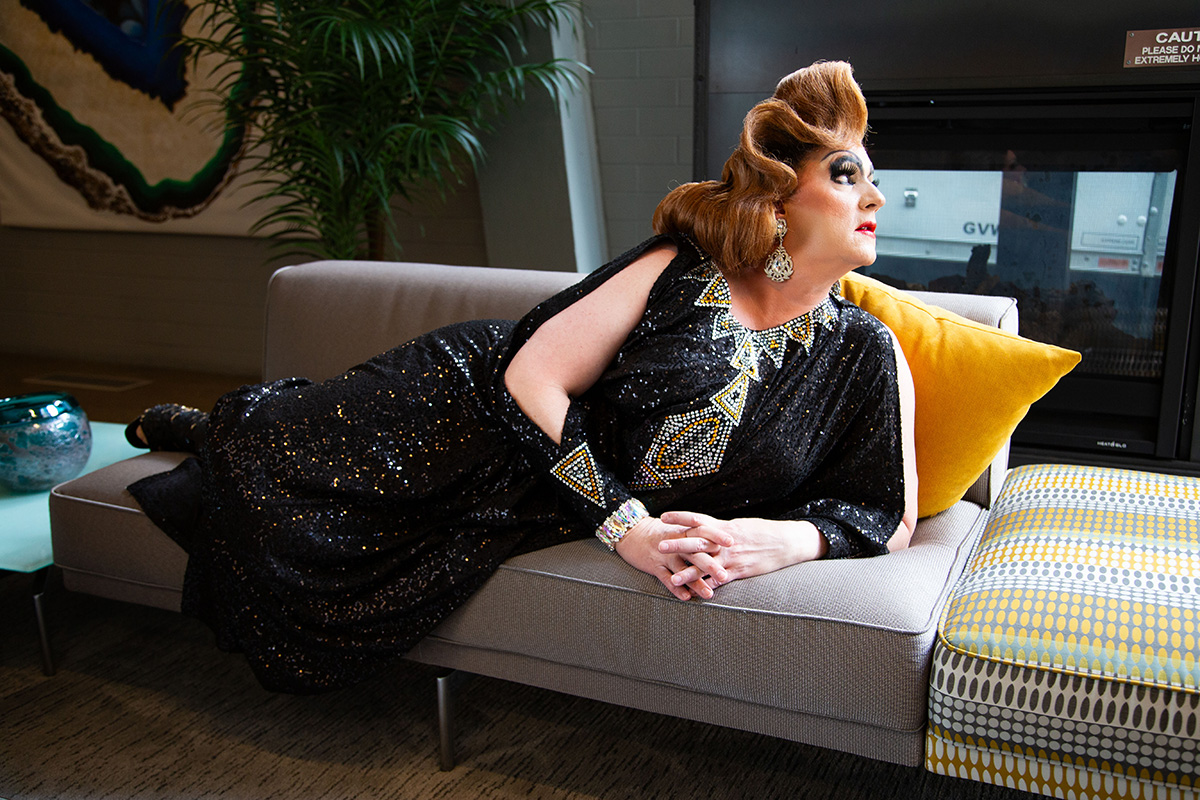
38th Annual Miss Adams Morgan Pageant
Saturday, Oct. 31
Washington Hilton
1919 Connecticut Ave., N.W.
thedupontsocialclub.com
On Halloween night at the Washington Hilton, the annual Miss Adams Morgan Pageant, D.C.’s largest and longest-running amateur drag competition, turns 38.
It also marks the end of HRH Dawn Huggins’s year-long reign as Miss Adams Morgan.
Joe Kuehne, the transformative performer who brings Dawn Huggins to life on stage, reviews the reign philosophically: “It’s funny, like most of life, the time flew by, and sometimes it didn’t. As a contestant, the preparation and planning can be a slog and then it’s all over before you know it.”
But, he adds, the time has been filled with creativity, community involvement, and innovation.
This year’s pageant is promised to run at a fast pace. The show kicks off with a mashup number starring Dawn Huggins along with several former queens. Dawn’s bit is a tribute to “The Shining.” Her carefully planned look is “haunted.”
Next, the seven contestants vying for the big title participate in the Parade of States (and U.S. territories). Their bios are read as they walk (doing whatever they wish with props of their choosing). The second half is performance (lip sync, comedic skits, etc.) and after several hours, a winner is selected by a panel of judges and the audience.
Prior to Dawn Huggins snatching the crown in October 2025, Kuehne wore numerous other pageant hats including “drag-wearing” attendee, contestant, and house videographer.
In 2006, Kuehne’s documentary short “Relative Freedom” (about his family’s reaction to his queerness) was screened at Reel Affirmations film festival. It caught the attention of that year’s reigning Miss Adams Morgan. She invited Kuehne to partner in adding video to the pageant. He accepted and had kept with it for two decades.
Inspired by the competitors and fun, he decided to give the pageant a shot. So, Dawn Huggins (“I’m a hugger, so the name fit.”) began competing, and won the title on her fifth try.
Putting on a dress and entertaining a ballroom full of people was never too much of a stretch for Kuehne. Prior to competing, he’d been a part of the audience in drag, and as a kid did community theater.
Over the years, Dawn has lip-synced (Brandi Carlile, Tory, Whitney, Mariah) and wooed the festive though not always easy-to-please throng with her clever comedy and camp. Last year for her winning number and skit, she did songs from “Wicked,” replacing the evil Wizard with Trump. “Not a huge leap,” she adds.
By day, Kuehne does marketing for tech companies: “In that role some of what I do is video production. The drag aspect doesn’t come up very often,” he deadpans. “But yes, the skillsets do overlap.”
Kuehne never thought of Dawn Huggins as a beautiful or polished queen; she was never meant to be that. He says, “I do my best to pull it together. But my goal is pure entertainment.”
Occasionally Dawn includes a message in what she does: “I try not to be too heavy handed about it. The second-year’s number was inspired by a person who, troubled by their sexuality, took their own life. Some of the audience members were moved, and that’s meaningful to me.”
Started in 1988 by a group of friends getting in drag and celebrating Halloween at Annie’s Paramount Steak House, the Miss Adams Morgan Pageant quickly ballooned into a storied tradition requiring a board and oversight.
Also in 1988, the Dupont Social Club was founded to not only encourage community but also help the pageant run things. Currently, Kuehne serves as the club’s V.P. of Social Events. Responsibilities include planning events, tracking attendance, and keeping things lively.
As both Queen and V.P., Kuehne is in a unique position to make things happen. During Dawn’s reign, the club created Sloppy Saturdays at Her Diner in Adams Morgan, a monthly happy hour fundraising event with performance tips and event donations going to support local LGBTQ+ nonprofits.
And now, as outgoing queen, HRH Dawn Huggins is charged with selecting the pageant’s charitable beneficiary.
She’s wisely chosen Whitman-Walker Legal Services. which provides free, comprehensive civil legal assistance to people living with HIV/AIDS, patients of Whitman-Walker Health, and members of the LGBTQ+ community across the greater Washington, D.C. region.
“With all that has and is going on, this feels like the right time to make that choice.”
Because the pageant has almost always taken place in October, it’s loosely tied to Halloween.
This year the show (themed “Something Wicked This Way Comes”) lands on Oct. 31, ticking all the boxes for pageant, drag show, and huge costume party.
On and offstage, you’re likely to see sequined gowns, ginormous hair, ermine robes alongside conceptual creations and comedic to dead serious style homages.
“What the contestants bring to the stage is pretty incredible, but sometimes that extraordinary creativity is surpassed by the audience members filling the ballroom, and we love that.”
Theater
‘Some Like It Hot’ a wild ride at renovated Bernard Family Theatre
Exhilarating show brimming with fun, feeling, and focus on gender exploration
“Some Like It Hot”
Through Nov. 8
Olney Theatre Center
2001 Olney-Sandy Spring Rd.
Olney, Md.
Olneytheatre.org
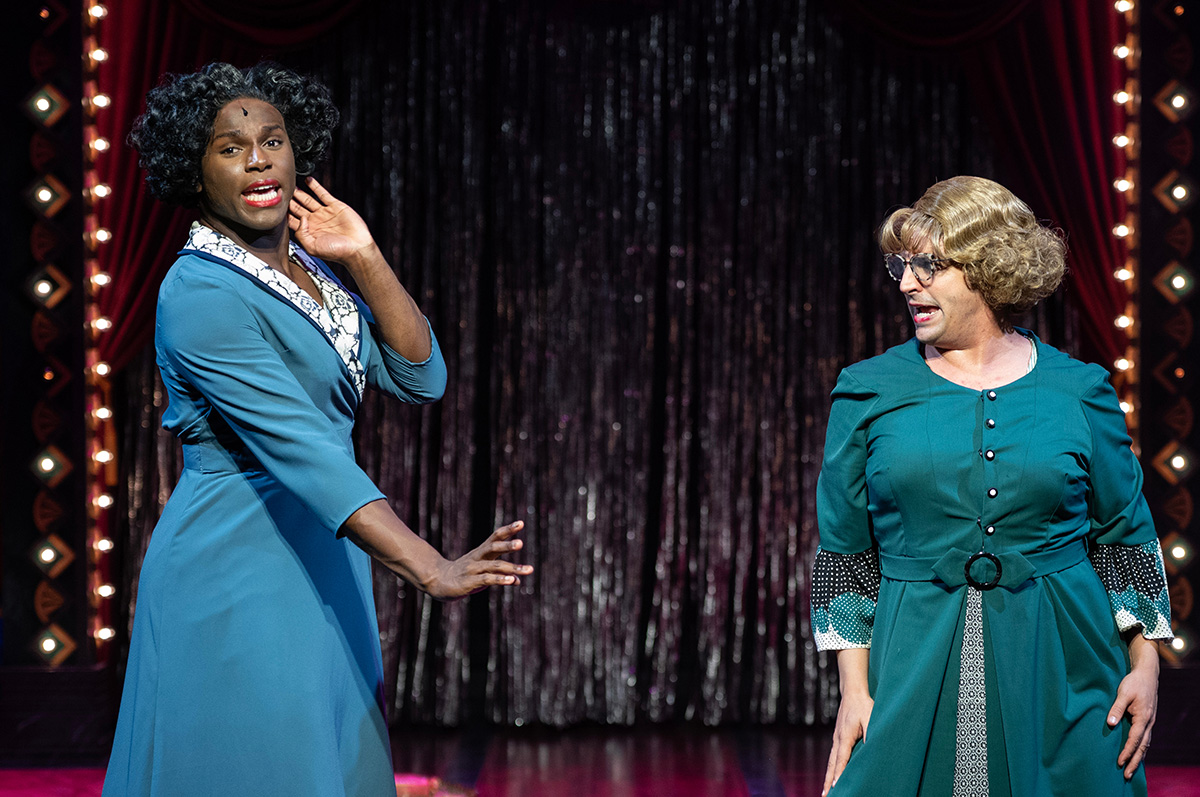
There’s reason to celebrate at Olney Theatre Center. Currently, they’re debuting their renovated Bernard Family Theatre while inaugurating the soaring new space with a regional premiere of “Some Like It Hot,” the musical adaptation of Billy Wilder’s classic 1959 comedy.
Toying with this cinematic gem took some cojones, but it works.
The film and the Tony Award-winning musical share similar plot lines: After witnessing a mob hit, Chicago musicians Joe and Jerry need to leave town. So, they don dresses, join Sweet Sue and Her Society Syncopators all-female band, and board a train headed for warmer climes (Southern California). As Josephine and Daphne, they experience new slants on romance, gift giving, and the male gaze. It’s funny and illuminating.
Helmed by out artistic director Jason Loewith, OTC’s exhilarating production is brimming with fun, feeling, and the musical’s focus on Black identity and gender exploration (recreated for Broadway by writers Matthew López /Amber Ruffin, and songwriting team Marc Schaiman/Scott Whittman).
OTC’s Loewith embraces it all while masterfully bringing together big dance numbers, romantic interludes, slapstick, and what’s more, he makes it look easy.
It’s 1933, deep in the Great Depression, and no-nonsense bandleader Sweet Sue (the excellent Ashleigh King) sets the speakeasy scene with “What Are You Thirsty For?” (not an unusual inquiry during the Prohibition era).
Away from Chicago at San Diego’s glamorous Hotel del Coronado, matters become further complicated for Joe (Jacob Tischler) as he pursues the band’s irresistibly unreliable Sugar Kane, sensitively played by the talented Montria Walker. (A couple of her songs, including “A Darker Shade of Blue,” describe a rural Georgia, Jim Crow backstory.)
Meanwhile, Daphne (nonbinary actor Tavis Kordell) is learning a new love language with impish root beer fortune heir Osgood Fielding III (terrific out actor Edward Juvier).
Drinking in a Mexican cantina not far from the hotel, Osgood tenderly serenades Daphne with “Fly, Mariposa, Fly,” a romantic number about metaphorically spreading wings, and transformation. The beloved’s powerful reply number “You Coulda Knocked Me Over with a Feather” is filled with emotional revelation.
In its examination of gender fluidity and self-discovery, the musical isn’t an indoctrination. Instead, audiences accept what’s happening on stage, and soon they’re seduced and painlessly invested in the characters’ wellbeing.
Frank Labovitz’s intelligent costume design is brimming with storytelling. Joe and Jerry’s quick change from guys to girls isn’t flashy — at first. It’s all drab colors, modest hem lengths…street clothes pulled from the Great Depression. Later it’s showbiz silver sequins.
An adept and marvelous actor, Tishler does double duty as the straight and funny man. Even when dolled up for gigs, his Josephine destroys the look with men’s black socks, the dowdy wig, and cockeyed glasses, hilariously setting up a running gag of how Joe, as Josephine, looks so much older than the other girls in the band.
For “Some Like It Hot,” Karla Puno Garcia’s wide-ranging choreography style ranges from those early 1930s flapper flicks (think the young manic Joan Crawford) to something more elegant, Joe and Sugar dancing à la Fred and Ginger in the show’s dreamy number “Let’s Dance the World Away.” Another highlight is the second act’s penultimate number “Tip Top Trouble,” a wild but meticulously staged, gloriously gender bending, sixteen-person, cops and robbers chase sequence.
Top notch music director Christopher Youstra reliably delivers Marc Shaiman’s swinging, 1920s and 30s-inspired score played by a mostly hidden 10-piece band and mimed onstage by Sue’s lively Syncopators.
And in meeting the specialness of the challenge, scenic designer Ryan Douglass transforms the newly renovated theater into a good club setting featuring a colorful inlaid thrust stage surrounded by cabaret tables where just several short yards ahead of Row C, a contented couple is served a bottle of Champagne while settling in before the show starts.
Today, the Bernard Family Theatre with its raftered ceiling and industrial vibe suggests past and promise for the future.
For now, experience the revamped wild ride in a wonderfully redone space.
Theater
‘Merrily’ is for Sondheim super fans, the uninitiated, and anyone in between
Experience it in an intimate setting with beautiful design, incredible cast
‘Merrily We Roll Along’
Through Nov. 1
Signature Theatre
4200 Campbell Ave., Arlington, Va.
Tickets start at $47
Sigtheatre.org
Unfaithful. Compromised. A sellout. Just a few descriptors that might fit Frank Shepard, the talented composer in the Stephen Sondheim musical “Merrily We Roll Along.”
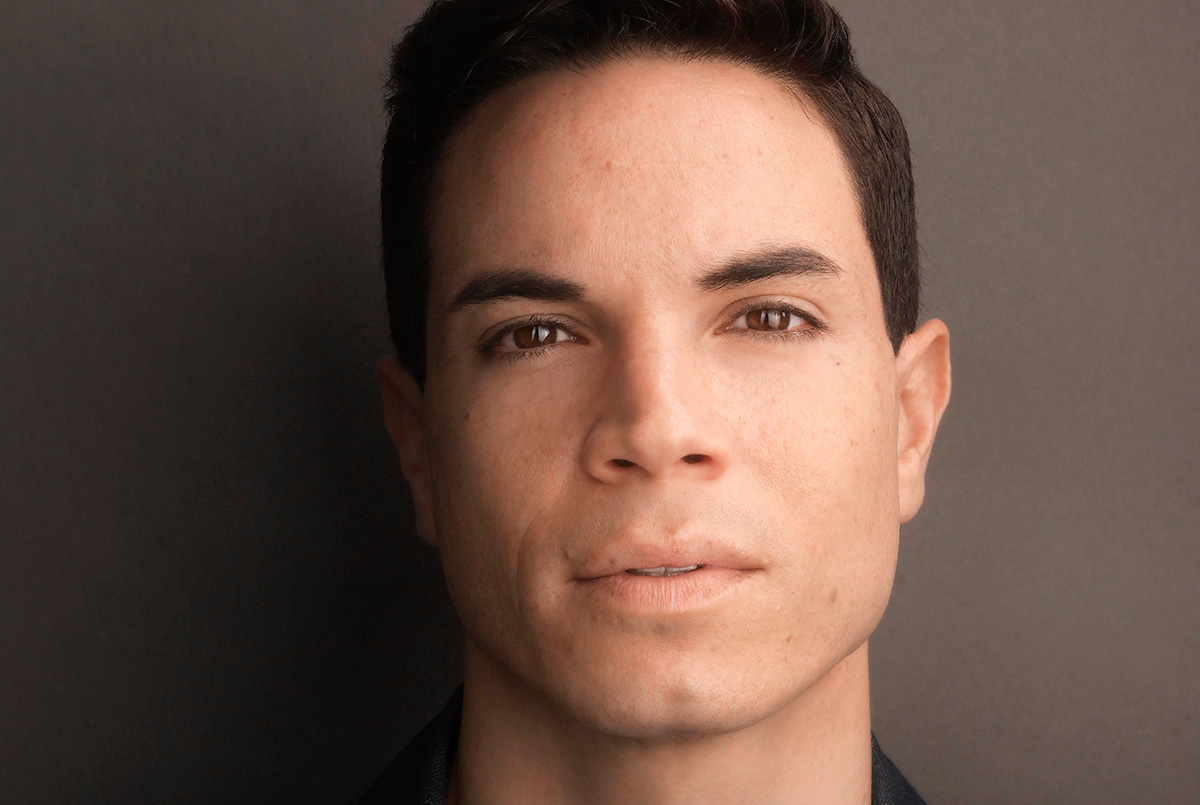
“Personally, I think he gets a bad rap,” says Jason Gotay, the gay actor who’s currently playing womanizing Frank at Signature Theatre in Arlington. “At his core he wants to be loved. He’s concerned with making those around him happy and he’s a people pleaser. That’s my window into Frank.”
Whatever your thoughts, by show’s end, we know Frank started out as a nice guy. “Merrily” famously moves in a reverse chronological order. We meet Frank and friends, lyricist Charley Kringas (Jake Loewenthal) and writer Mary Flynn (Melanie Field), disillusioned in a New York penthouse in 1976. Ensuing scenes filled with disappointments and broken relationships move toward more hopeful times, eventually leaving the trio on a rooftop in 1957, young and full of promise searching the night sky for a happy future.
“Moving backward makes it difficult to build on the prior scene,” explains Gotay. 37. “You live heightened moments followed by 30-second costume changes, and you’re meant to forget everything you just did. To be honest, it’s a bit of a mind fuck.”
A marvelous but humble tenor, he begrudgingly acknowledges his artistic versatility. At New York City Center he sang Che in “Evita” (contemporary almost operatic), and he was solemn Henrik in Lincoln Center’s “A Little Night Music,” (classical Sondheim). On Broadway, he played Homer, the loyal brother in “Floyd Collins” (folksy bluegrass), and he’s sung the sweeping songs of a few Disney princes.
“I’m asked to do a lot of things because vocally I sing in many styles; it’s something I can do and I love doing it.”
Growing up in residential Dyker Heights, Brooklyn, Gotay was immersed in school plays and community theater. For high school, he attended the Professional Performing Arts School in midtown Manhattan with a focus on musical theater.
He continued on the same track for a year at Emerson College in Boston followed by Marymount Manhattan before graduating in 201l. A year later, he made his Broadway debut as Randall in Lin-Manuel Miranda’s hip-hop inspired “Bring It On: The Musical.”
Along the way, Gotay became a huge Sondheim fan. As a musical theater kid, he was introduced to the composer’s enduring classics all written before Gotay was born: “Into the Woods,” “Sweeney Todd,” and the actor’s forever favorite “Sunday in the Park with George.”
To many theatergoers’ surprise, “Merrily” flopped badly when it premiered on Broadway in 1981. But over many years of tweaks, reimaginings and revivals, the show became a major Broadway hit in 2023, with Jonathan Groff winning a Tony Award for playing Frank.
While he was aware of “Merrily,” Gotay didn’t make a deep dive into its wild provenance until he was asked to audition for the Broadway revival. (Briefly it looked like Groff, long attached to the show, might come up against some film conflicts.) It was during this short time that Gotay fell in love with Frank.
The experience left him further determined to sink his teeth into the complex character along with Sondheim’s lush melodic score with songs like “Not a Day Goes By,” “Old Friends,” and “Our Time.” So, when Gotay learned that Signature was slated to do “Merrily” this season, he reached out to Matthew Gardiner, the company’s artistic director as well as the production’s director/choreographer, asking how the role of Frank might be his. Long story short, he sought it, got it, and is ecstatically happy that it has worked out.
Several years ago, when Audible (Audible.com) came calling with an invitation to record a cabaret entirely of his own creation, he was thrilled.
“It’s probably the most personal thing I’ve ever done. My own story is a love letter to the women – my mother, friends, mentors, Broadway icons – who helped to shape my life; it’s about self-acceptance and what it is to grow up queer.”
He titled the solo show “Where You’ll Find Me,” a nod to his first love Dorothy Gale from “The Wizard of Oz.”
Often described as “a television heartthrob” (something the once chubby 12-year-old sometimes finds hard to process), Gotay is not unfamiliar with screens large and small. He’s remembered for various screen roles including his turn as Rafa Caparros, a prep school classics teacher who becomes entangled with a male student in HBO Max’s reboot of “Gossip Girl.”
Gotay recommends Signature’s “Merrily” for Sondheim superfans, the uninitiated, and anyone in between. He says, “It’s a great opportunity to learn about this once niche now increasingly mainstream musical. And if you have seen it before, this is a chance to experience it in an intimate setting with beautiful design and an incredible cast that truly brings the show to life.”

New ‘Carrie’ attempts to reinvent a classic for new generation

Dawn Huggins reflects on year-long reign as Miss Adams Morgan

How Orville Peck healed his inner child through ‘Street Fighter (2026)’

DC Center celebrates a decade of its art gallery

Calendar: October 16-22

‘Governments that attack LGBTQ+ rights learn from each other’
Center Arts Gallery celebration, auction to take place on Oct. 17

Horror genre has evolved into space to explore queer identity

Comings & Goings

‘Hidden in Plain Sight:’ The story of Odessa Madre
-

 Turkey4 days ago
‘Governments that attack LGBTQ+ rights learn from each other’
-
District of Columbia4 days ago
Center Arts Gallery celebration, auction to take place on Oct. 17
-
Arts & Entertainment5 days ago
Horror genre has evolved into space to explore queer identity
-
Local4 days ago
Comings & Goings