Japan
Report: LGBTQ exclusion costs Japanese economy billions a year
Open for Business findings coincide with marriage equality fight
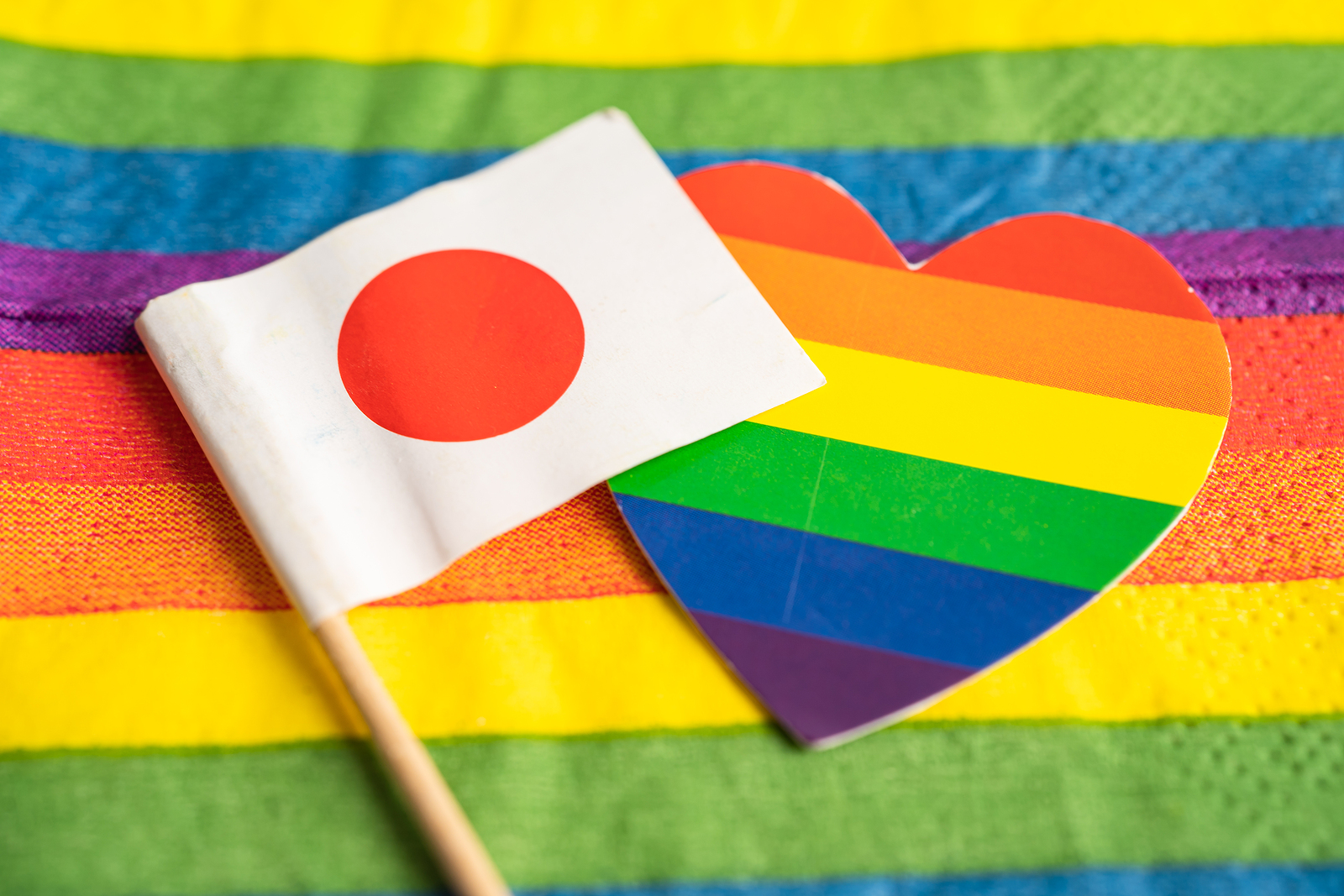
LGBTQ exclusion may be costing Japan as much as ¥16.42 trillion ($10.35 billion) annually, according to a new report by Open for Business, which argues that greater inclusion could help address the economic pressures facing a country with a shrinking population and workforce.
Japan’s population is projected to decline from 126.15 million in 2020 to about 87 million by 2070, according to the National Institute of Population and Social Security Research. As the country confronts a shrinking workforce; the economic stakes of retaining talent, improving productivity, and ensuring that LGBTQ people can participate fully in the economy are becoming increasingly significant.
Open for Business estimates that the costs extend beyond lost earnings.
The organization attributes between $25.1 billion to $75.1 billion annually to the excess economic burden associated with depression, suicide and self-harm, cardiovascular disease and HIV/AIDS, and another $12.2 billion to $26.2 billion to lost earnings linked to the LGBTQ wage gap.
A 2026 survey by Dentsu Japan, the Japanese arm of global advertising and public relations company Dentsu Group, found that 10.6 percent of respondents aged 20-59 identified as LGBTQ, up from 9.7 percent in 2023. The survey polled 46,658 people living in Japan.
The report argues that Japan already has the foundations for greater LGBTQ inclusion; pointing to public support, corporate leadership, and growing legal momentum. Progress on these fronts, it says, could reduce the economic costs of exclusion, strengthen workforce participation and help Japan remain competitive.
“For Japan, LGBTQ inclusion is not simply a question of fairness. It is part of the country’s economic resilience,” the report states.
Japan does not legally recognize same-sex marriages at the national level, but partnership systems have spread across local governments. As of 2024, municipalities operating such systems covered nearly 93 percent of Japan’s population. The certificates can help couples access certain services, but they do not carry the same legal status as marriage, including in areas such as inheritance and medical decision-making.
The absence of marriage recognition can leave same-sex couples facing uncertainty over hospital access, medical decisions, and survivor benefits. It can also complicate employers’ decisions about spousal health coverage, relocation assistance and family leave, particularly when policies depend on a marriage recognized under Japanese law.
Japan’s PRIDE Index, administered by the nonprofit Work with Pride since 2016, evaluates corporate initiatives related to LGBTQ employees across five categories, awarding Bronze, Silver or Gold ratings. In 2025, 931 companies headquartered in Japan were assessed, with 80 percent receiving the highest, Gold rating.
Despite progress in corporate inclusion, workplace practices remain uneven.
A 2026 workplace white paper by Nijiiro Diversity found that 55 percent of surveyed employees reported no concrete LGBTQ measures at their workplaces. A separate 2025 survey found that 30 percent of professionals had experienced workplace discrimination or bias based on sexual orientation, while 27 percent reported bias based on gender identity. Only about one-third said they felt comfortable disclosing their sexual orientation or gender identity at work.
The report also points to disparities in HIV and STI outcomes.
Men who have sex with men accounted for an estimated 82 percent of newly diagnosed HIV cases in Japan, according to the report. In a separate study at a Japanese gender-affirming clinic, researchers screened 275 transgender and gender-diverse patients and found that 6.2 percent tested positive for HIV or another sexually transmitted infection. All were asymptomatic when tested.
The report also estimates substantial losses from the LGBTQ wage gap.
It puts Japan’s total earned income at about $1.81 trillion, of which LGBTQ workers account for an estimated $175 billion, or 9.7 percent. Applying a wage gap of 7 to 15 percent, a range the report says is supported by OECD analysis, yields an estimated $12.3 billion to $26.3 billion in lost wages annually. Japanese research cited in the report also points to economic disparities among transgender workers, who are disproportionately represented in non-regular employment and lower-income groups.
“Public attitudes and many leading companies have moved considerably, but national frameworks and everyday workplace experience have not yet caught up. That creates both a challenge and an opportunity,” said Open for Business CEO Ken Janssens. “Japan’s population is projected to fall from roughly 125 million in 2020 to fewer than 87 million by 2070, while its working-age population is already contracting. The country ranks 14th globally for talent appeal but 55th for talent readiness, according to the report. In that context, Japan simply does not have talent to waste. Every worker who is less healthy, less productive, pushed into lower-paid work or unable to participate fully because of discrimination represents a cost that becomes harder to absorb as the labour force shrinks.”
Janssens further told the Washington Blade that the report’s ultimate message is that LGBTQ inclusion is a question of fairness, but in Japan, it is increasingly a question of economic resilience as well. The foundations for further progress are already there. The challenge now is to convert visible corporate leadership and social momentum into consistent practice and clearer protections.
Akira Nishiyama, a spokesperson for the Japan Alliance for LGBT Legislation, told the Blade that Japan’s business sector has pushed for stronger legal protections for sexual and gender minorities.
In 2017, the Japan Business Federation, known as Keidanren, announced a policy calling for nondiscrimination based on sexual orientation and gender identity. Its chairperson also stressed the importance of legislation explicitly prohibiting such discrimination in 2023.
Nishiyama added Japan’s laws addressing workplace power harassment cover harassment based on sexual orientation and gender identity, outing someone without their consent, and forcing or pressuring someone to disclose or conceal their identity. Employers and local governments are required to take measures to prevent such harassment.
“While such legal frameworks and social momentum continue to advance, a law prohibiting discrimination based on SOGI has still not been enacted,” said Nishiyama. “In other words, legal measures to address discriminatory treatment, such as discriminatory hiring refusals, unreasonable transfers, and coerced resignations, are still insufficient. When legislations are needed to bridge this gap, I believe that initiatives promoted by the business sectors as well as the issuance of clear policies aimed at prohibiting discrimination, will serve as one of the major driving forces in this effort.”
Makiko Terahara, co-representative and leader of the business collaboration team at Marriage for All Japan, told the Blade that the figures are estimates and that the report does not claim legal reform alone would eliminate the economic losses.
“But the connection is real. Without marriage, same-sex couples have no spousal status for inheritance, tax, social security or medical decision-making. Without anti-discrimination legislation, employees have no clear legal remedy. This insecurity drives the concealment, stress and wage gaps that the report quantifies. So yes, I believe stronger legal protections would have a measurable impact on health, retention and Japan’s ability to attract talent,” she said.
Terahara also noted to the Blade the report cites a study finding that living in a municipality with a partnership system was not associated with better mental health. She said symbolic recognition without legal rights is not enough.
“The report confirms that Japanese society and business are already ahead of national law,” said Terahara. “Public opinion and leading companies have moved, and the remaining gap is in legislation. The report shows that marriage equality is not only a human rights issue but also an economic one, and that the cost of inaction is being paid now.”
The Open for Business report can be read here.






Japan
Japanese Supreme Court to consider marriage equality
Japan only G7 country that does not legally recognize same-sex couples

The Japanese Supreme Court on Wednesday said it will consider six marriage equality lawsuits.
NHK, the country’s public broadcaster, noted all 15 of the court’s justices will consider the case.
Japan is the only G7 country that does not legally recognize same-sex couples, despite several court rulings in recent years that found the denial of marriage benefits to gays and lesbians unconstitutional.
Tokyo High Court Judge Ayumi Higashi last November upheld Japan’s legal definition of a family as a man and a woman and their children.
Prime Minister Sanae Takaichi, who became the country’s first female head of government last October, opposes marriage rights for same-sex couples. She has also reiterated the constitution’s assertion that the family is an institution based around “the equal rights of husband and wife.”
Same-sex couples can legally marry in Taiwan, Nepal, and Thailand.
NHK reported the Supreme Court is expected to issue its ruling in early 2027.
Japan
Tokyo court upholds Japan’s same-sex marriage ban
Country is only G7 nation without legal recognition of same-sex couples

The Tokyo High Court on Nov. 28 ruled the lack of marriage rights for same-sex couples in Japan is constitutional.
The Associated Press notes Judge Ayumi Higashi upheld the legal definition of a family in Japan as a man and a woman and their children. The court also dismissed the eight plaintiffs’ demand for 1 million yen ($6,406.85) in damages.
Hiromi Hatogai, one of the plaintiffs, told reporters after the court ruled that she is “so disappointed.”
“Rather than sorrow, I’m outraged and appalled by the decision,” said Hatogai, according to the AP. “Were the judges listening to us?”
Japan remains the only G7 country without legal recognition of same-sex couples, even though several courts in recent years have ruled in favor of it.
The Sapporo District Court in 2021 ruled the denial of marriage benefits to same-sex couples violates the constitution’s equality clause. The Nagoya District Court in 2023 issued a similar ruling. The Fukuoka District Court in a separate decision said Japan’s current legal framework is unconstitutional. The Tokyo High Court in 2024 came to the same conclusion.
The Washington Blade last month noted Prime Minister Sanae Takaichi, who is Japan’s first female head of government, opposes marriage equality and has reiterated the constitution’s assertion the family is an institution based around “the equal rights of husband and wife.”
Japan
Japan’s first female prime minister reluctant to advance LGBTQ rights
Sanae Takaichi became country’s head of government last month
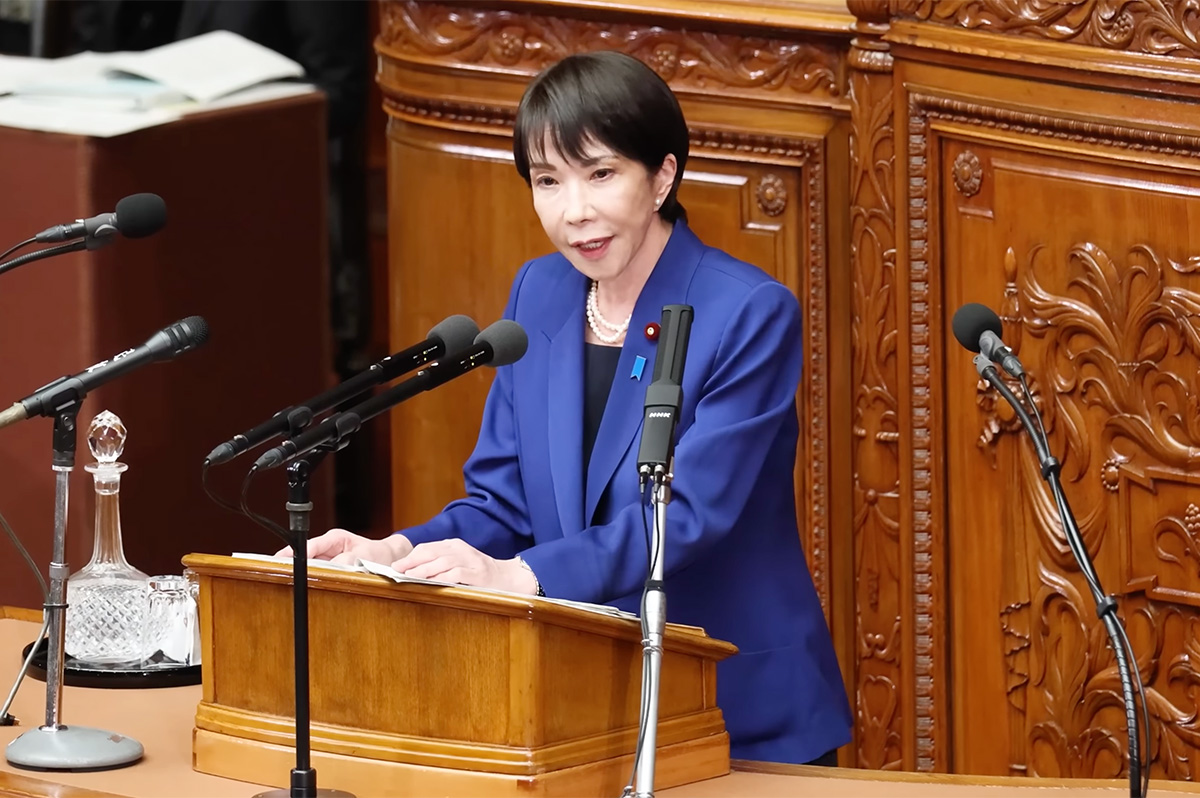
Sanae Takaichi last month became Japan’s first female prime minister after she secured the Liberal Democratic Party’s leadership and both chambers of the Diet confirmed her.
She now leads a minority government after forming a coalition with the right-leaning Japan Innovation Party, following Komeito’s decision to end its 26-year partnership with the LDP. Her rise marks a historic break in Japanese politics, but the question remains whether she will advance the rights of Japan’s LGBTQ community?
Despite the milestone her election represents, Takaichi’s record on gender issues offers little indication of progressive change.
She has long emphasized “equality of opportunity” over structural reforms and has opposed measures that include allowing married couples to use separate surnames, a policy many women say would ease workplace discrimination. During her leadership bid Takaichi pledged to elevate women’s representation in government to Nordic levels, yet she appointed only two women to her 19-member Cabinet. Takaichi has also resisted efforts to modernize the Imperial Household Law to permit female succession, reinforcing her reputation as a conservative on women’s rights.
Takaichi’s stance on LGBTQ rights has been similarly cautious.
In a 2023 Diet budget committee session, she said there should be “no prejudice against sexual orientation or gender identity,” yet described extending marriage rights to same-sex couples as an “extremely difficult issue.”
Her earlier record is consistent.
In 2021, she opposed an LGBTQ-inclusive anti-discrimination bill that members of her own party, arguing its wording was too vague.
Even after becoming LDP leader in October 2025, she reiterated her opposition to marriage equality and emphasized traditional family values. Takaichi highlighted that Article 24 defines marriage as being based on “the mutual consent of both sexes” and frames the institution around “the equal rights of husband and wife,” language she argues leaves no constitutional room for extending marriage rights to same-sex couples.
While her rhetoric avoids overt hostility, her record suggests limited appetite for the structural reforms sought by Japan’s LGBTQ community.
A series of landmark court rulings has built escalating pressure for national reform.
On March 17, 2021, the Sapporo District Court ruled that denying same-sex couples the legal benefits of marriage violated the constitution’s equality clause. In May 2023, the Nagoya District Court similarly declared the ban unconstitutional, with a subsequent decision from the Fukuoka District Court reaffirming Japan’s current legal framework clashes with constitutional equality principles.
The momentum peaked on Oct. 30, 2024, when the Tokyo High Court found the marriage ban incompatible with guarantees of equality and individual dignity.
Japan remains the only G7 country without legal recognition of same-sex couples.
Akira Nishiyama, a spokesperson for the Japan Alliance for LGBT Legislation, noted to the Washington Blade that in leadership surveys the group conducted within the LDP in 2021 and again in 2025, Takaichi offered only a cautious position on reforming Japan’s legal gender recognition law. When asked whether she supported easing the requirements under the Act on Special Cases in Handling Gender Status for Persons with Gender Identity Disorder, she responded that “multifaceted and careful discussion is necessary,” avoiding any commitment to substantive change.
Nishiyama added the legal landscape has already shifted.
In October 2023, the Supreme Court ruled that the law’s sterilization requirement for legal gender recognition is unconstitutional, and several family courts have since struck down the appearance requirement on similar grounds. She urged the Takaichi administration to act quickly by amending the statute to remove these provisions, along with other elements long criticized as human rights violations.
“[Prime Minister] Takaichi has stated that ‘careful discussion is necessary’ regarding amendments to ‘Act on Special Cases in Handling Gender Status for Persons with Gender Identity Disorder’ and the enactment of anti-discrimination laws based on Sexual Orientation and Gender Identity (SOGI),” noted Nishiyama. “However, as indicated in Candidate (at that time) Takaichi’s responses to our survey, if she considers issues related to SOGI to be human rights issues, then she has to work hard to advance legal frameworks to address these issues.”
“For example, regarding the government’s announcement that they will consider whether same-sex couples could be included or not in the 130 laws concerning common-law marriages couples, [Prime Minister] Takaichi responded to our survey that ‘the government should continue to advance its consideration,’” she added. “As per this response, the Takaichi Cabinet should continue deliberating on this matter and ensure that same-sex couples are included in each relevant law.”
Takeharu Kato, an advocate for marriage equality who spoke to the Blade in a personal capacity, urged observers not to view Takaichi’s appointment solely through a negative lens.
He acknowledged she holds deeply conservative views within the LDP and has openly opposed marriage equality, but noted several aspects of her background could leave room for movement.
“She is Japan’s first female prime minister in history. Furthermore, she does not come from a political family background but rather from an ordinary household,” said Kato. “She also has an unusual career path, having graduated from a local university and worked as a television news anchor before entering politics.”
“Additionally, while her husband is a member of the Diet, he became partially paralyzed due to a cerebral infarction, and she has been caring for him,” he further noted. “She possesses several minority attributes like these, and depending on our future efforts, there is a possibility she could change her stance on same-sex marriage. It could also be said that, as a woman navigating the conservative Liberal Democratic Party, she has deliberately emphasized conservative attitudes to appeal to her base of right-wing supporters.”
Kato stressed that “having reached the pinnacle as prime minister, it cannot be said she (Takaichi) has no potential to change.”
“We need not alter the strategy we have pursued thus far,” Kato told the Blade. “However, we believe some fine-tuning is necessary, such as refining our messaging to resonate with those holding more conservative values.”

Report: LGBTQ exclusion costs Japanese economy billions a year

Center for Black Equity honors leaders, activists at BE. Gala

In ‘The Lost Brontë,’ a complicated lie can lead to danger

CAMP Rehoboth Block Party returns Oct. 18

Essential queer horror classics for Halloween

Trump uses anti-trans slur against Democratic Senate candidate

U.S. int’l trade negotiator, consultant James Bedore dies at 82

Calif. GOP gubernatorial candidate ad ‘disgusting attempt to exploit lesbian intimacy’

Campaign urges Virginia High School League to reverse stance on trans athletes

Center Arts Gallery celebrates 10 years with reception, auction
-

 2026 Midterm Elections5 days ago
Trump uses anti-trans slur against Democratic Senate candidate
-
Obituary4 days ago
U.S. int’l trade negotiator, consultant James Bedore dies at 82
-
California4 days ago
Calif. GOP gubernatorial candidate ad ‘disgusting attempt to exploit lesbian intimacy’
-
Virginia4 days ago
Campaign urges Virginia High School League to reverse stance on trans athletes