Japan
Anti-LGBTQ party gains power in Japanese Diet
Sanseitō on July 20 won 14 House of Councillors seats
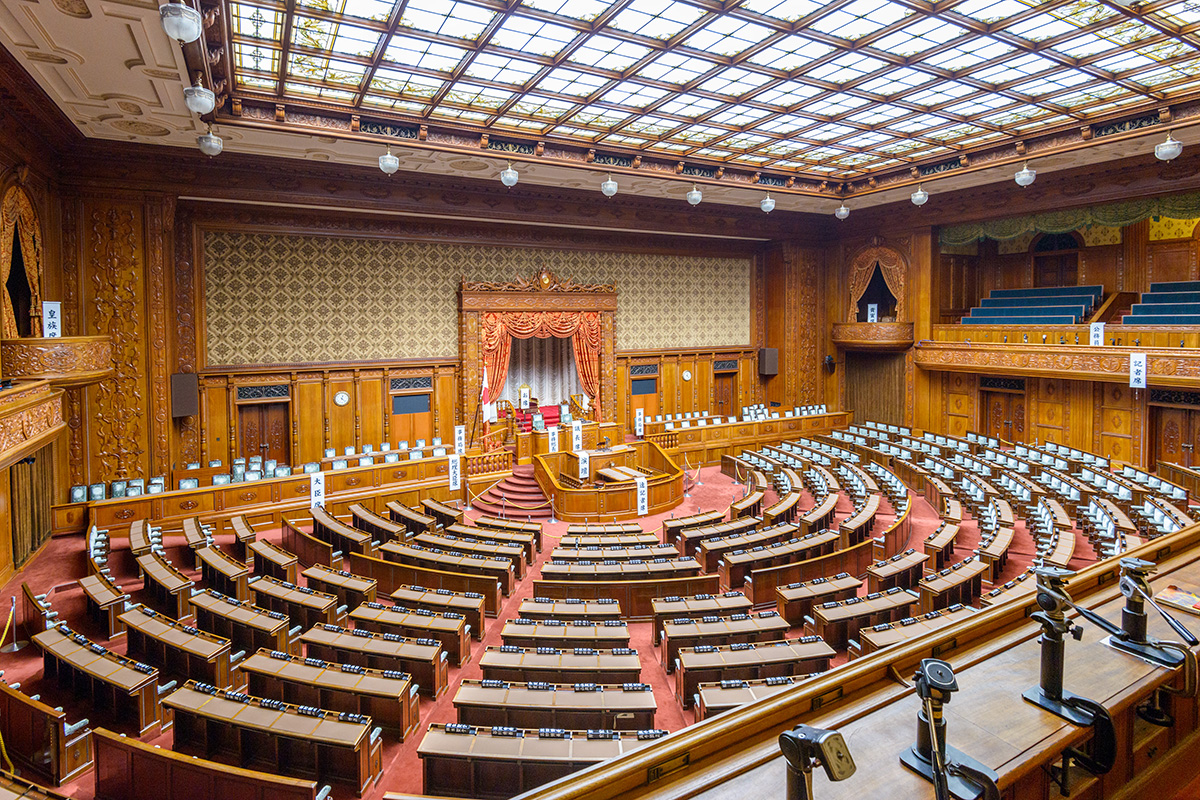
Japan’s Liberal Democratic Party-Komeito coalition on July 20 lost its majority in the upper house of the country’s Diet, securing only 47 of the 125 seats up for grabs in the 248-member chamber.
Sanseitō, a right-wing populist party, surged from one to 14 seats, gaining legislative proposal power. Led by Sohei Kamiya, its anti-LGBTQ stance that includes opposition to marriage equality and school discussions, raises concerns for the community’s rights.
On July 3, a day after Sanseitō’s campaign began, Kamiya, its leader and chief spokesperson, criticized Japan’s gender equality policies as “misguided.” In a speech, he supported a 100,000 yen ($673.80) monthly child allowance to boost birth rates, but opposed diversity initiatives and gender policies, claiming they weaken traditional Japanese culture.
In campaign materials and voter guides, Kamiya opposed marriage equality, the 2023 Act on Promotion of Public Understanding of Diversity of Sexual Orientation and Gender Identity, and LGBTQ education in schools. Sanseitō’s platform, detailed in its official 2025 election manifesto published on its website, rejects these policies, a position Kamiya reinforced in a July 3 speech covered by the Asahi Shimbun, one of the oldest Japanese daily newspapers, aligning with the party’s “Japanese First” agenda.
The Diet on June 16, 2023, passed the Act on the Promotion of Public Understanding of Diversity of Sexual Orientation and Gender Identity. The law mandates that the national government, local authorities, businesses, schools, and employers foster understanding of diverse sexual orientations and gender identities, to create a tolerant society and prevent unfair discrimination.
The Washington Blade in March reported the Nagoya High Court declared Japan’s lack of legal recognition for same-sex marriages unconstitutional. The ruling strengthened advocates’ push for marriage equality in Japan, the only G7 nation yet to grant such rights.
Five Japanese high courts — in Sapporo, Tokyo, Fukuoka, Nagoya, and Osaka — between March 2024 and March 2025 ruled the country’s ban on same-sex marriage is unconstitutional, citing violations of constitutional guarantees of equality and individual dignity under Articles 13, 14, and 24.
The Liberal Democratic Party-Komeito coalition’s loss of its House of Councillors majority election, the first since 1955, hinders Prime Minister Shigeru Ishiba’s ability to advance progressive legislation. The coalition’s minority status in both houses of the Diet requires consensus with opposition parties, such as the Constitutional Democratic Party or the Democratic Party for the People, a challenge given ideological divides and Sanseitō’s growing influence.
“We do not believe that the results of this election have a significant impact on the LGBTQ+ movement in Japan. However, we are concerned that the negative claims and misinformation about LGBTQ+ issues spread by right-wing political candidates and their supporters during the election campaign may have had a negative impact on society,” said Takeharu Kato, director of Marriage for All Japan. “We have not yet fully analyzed the reasons behind the gains made by right-wing parties such as Sanseitō in this election.”
“However, we need to be aware that it is becoming easier for populist parties to gain support due to the spread of social media,” added Kato. “Their arguments regarding same-sex marriage and transgender issues are completely unfounded, but such claims are being spread on social media without any fact-checking.”
Kato noted the proportion of MPs supporting marriage equality legalization dipped slightly from 46 percent to 45 percent. Kato emphasized that while the election outcome does not fundamentally alter the LGBTQ movement’s strategy, it requires tailored lobbying efforts to navigate the evolving political dynamics.
“At present, we are analyzing the reasons for the rise of right-wing political parties, and no specific action plan has been decided yet,” said Kato. “Support for populist parties and politicians is growing worldwide.
Their arguments often have commonalities, such as xenophobia and anti-gender equality. Therefore, I believe it is increasingly important to launch campaigns to counter these movements through international cooperation. Domestically, I also think it is important to collaborate with activists and movements for separate surnames for married couples.”
Kato told the Blade that with minority rights increasingly threatened, Japan’s courts, viewed as the last bastion for protecting human rights, must take bold action. On marriage equality legalization, he urged the judiciary to not only rule the current ban unconstitutional but also direct legislative changes and limit the Diet’s discretion
“Even after this election, the percentage of Diet members who support the legalization of same-sex marriage has remained almost unchanged from before the election. In other words, even after this election, roughly half of Diet members support the legalization of same-sex marriage,” said Kato. “Therefore, the results of this election should not be interpreted as reflecting a negative or cautious public opinion toward the legalization of same-sex marriage. We would like you to report this accurately.”
Akira Nishiyama, an activist with the Japan Alliance for LGBT Legislation, told the Blade that Sanseitō’s seat gains in the House of Councillors are likely to amplify discriminatory rhetoric during Diet sessions, potentially hindering progress on sexuality-related bills and policies.
“The specific details of the basic implementation plan and guidelines under the Sexual Orientation and Gender Identity (SOGI) Awareness-raising law will be formulated later, therefore we can’t take our eyes off from how the result of election will affect the process of formulation,” said Nishiyama. “In any case, we intend to confront fake news that is being spread while avoiding drawing too much attention to right-wing and extreme right-wing groups and refraining from contributing to their propaganda.”
Nishiyama said that while resisting right-wing and far-right attacks domestically is essential, the LGBTQ community must avoid letting these groups dominate attention. Instead, collaboration is needed to reinforce freedom, human rights, and democracy. Internationally, Nishiyama urged overseas media to expose the coordinated nature of anti-LGBTQ attacks, tracing their sources and funding, and to highlight any efforts by hegemonic powers to weaken democratic forces through such campaigns.
Mameta Endo, a transgender rights activist in Japan with Niji-zu, one of the most visible organizations that provides service for LGBTQ youth in Japan, told the Blade that while major LGBTQ organizations have not formally addressed Sanseito’s rise, activists have expressed alarm at protests. Endo highlighted Kamiya’s public statements, including “We don’t need LGBT” and “We don’t need gender-free thinking. Men should be manly, and women should be womanly,” which Endo said feels like a personal denial of his existence.
“While Sanseitō remains a minor political party and is unlikely to immediately influence national politics, its distinctive strategy involves spreading misinformation to stir public anxiety toward minorities such as foreigners, thereby inciting the general public,” said Endo. “Already, during this protest and recent elections, false information about foreigners has spread widely, forcing the media to devote resources to fact-checking.”
“Regarding LGBTQ issues, a baseless rumor circulated on social media in Saitama Prefecture, claiming that an anti-discrimination ordinance led to gender-neutral restrooms and changing rooms at a welfare facility, causing mass resignations of staff,” noted Endo. “This misinformation was spread by an advisor to Sanseitō.”
Endo said Sanseitō’s actions have fueled disruptions, including 300 complaints that prompted Saitama’s governor to hold two press conferences to counter false information. Endo said Sanseito supporters have targeted his organization with campaigns claiming it seeks to separate children from parents and endanger them.
A Sanseitō-affiliated Shibuya City assembly member has also opposed government-hosted LGBTQ youth spaces, citing lack of parental consent.
Endo noted Sanseitō’s spread of unfounded claims in education, including LGBTQ grooming conspiracies detailed in their recent TPATH blog article, risks stoking parental fear and disrupting schools.
“Sanseitō appears to be modeling its approach on that of Donald Trump, seeking out groups it can target in order to attract media attention,” said Endo. “While their current focus is primarily on foreigners, there is a growing fear that LGBTQ people may become their next target.”
“To counter the stream of misinformation they spread, it is essential to conduct rapid fact-checking, push public institutions to issue accurate information, and educate the media,” said Endo. “Sanseitō is a newly formed party with underdeveloped policies and frequently shifting positions, which has led to criticism even from some on the political right. It will be important to work with both the ruling and opposition parties, including the Liberal Democratic Party, to ensure that accurate information is being disseminated.”
Endo told the Blade that Sanseito’s rise reflects a temporary populist wave, popular among voters under 30, many of whom support marriage equality but may have voted for the party, swayed by TikTok content, unaware of its anti-LGBTQ stance. Citing the Democratic Party for the People’s social media-driven surge six months ago and Shinji Ishimaru’s fleeting popularity in the 2024 Tokyo governor election, Endo argued Sanseitō’s support, tied to its anti-foreigner rhetoric amid over-tourism concerns, does not signal a public rejection of LGBTQ policies.
Diego Garcia Rodriguez, a Leverhulme Research Fellow at the University of Nottingham and LGBTQ activist, told the Blade that the Liberal Democratic Party-Komeito coalition’s loss of its House of Councillors majority likely stems from voter frustration over stagnant wages, rising costs, and trade disputes, rather than a direct rejection of LGBTQ rights.
Garcia noted that while 72 percent of Japanese people support marriage equality and all 47 prefectures offer partnership certificates, only four of the Liberal Democratic Party-Komeito’s 79 upper-house candidates backed marriage rights for same-sex couples, reflecting the party’s lag on minority rights. Sanseitō’s pledge to repeal the 2023 LGBT Understanding Promotion Act and its opposition to “excessive” minority protections could elevate equality debates in future elections, though Garcia believes these were not the decisive factor this time.
“Sanseitō’s rise is worrying for many reasons but one of them has to do with long‑term equality work obviously,” said Garcia. “By contrast, progressive reforms are already under way … So I guess the battle is now between those who want to normalise diversity in classrooms and a fascist noisy group that is determined to roll back that progress.”
Garcia told the Blade that the election has energized queer communities and allies, with Marriage for All Japan and Asuniwa launching a smartphone tool, allowing voters to scan campaign posters to check candidates’ positions on marriage equality, empowering younger voters to hold politicians accountable. Social media sharing of candidate questionnaires has also surged. Garcia, however, noted growing fatigue among activists, campaigning for years, and concern over Sanseitō’s far-right presence in the Diet, shifting advocacy from broad outreach to targeted pressure on lawmakers.
Garcia told the Blade the Act on the Promotion of Public Understanding of Diversity of Sexual Orientation and Gender Identity is largely symbolic, as its original clause banning discrimination was softened to “there should be no unfair discrimination” and lacks penalties. Local governments and companies are still adopting training and policies, and more municipalities are enacting ordinances against outing someone’s sexual orientation or gender identity.
All 47 prefectures now offer partnership systems. Date, a city in Fukushima Prefecture, for example, providing housing benefits and family recognition.
Garcia said the election’s impact on these initiatives hinges on local leadership, as conservative councillors may resist, but many mayors view such measures as ways to attract young residents and investment, regardless of national politics.
“They should listen to the courts and the people,” he said. “As I have said before high courts have made it clear that denying same‑sex couples the right to marry is unconstitutional, and a large majority of the public supports marriage equality so in my opinion refusing to act not only violates basic rights, but also perpetuates the mental‑health crisis documented by ReBit if we look at the survey where over half of LGBTQ teens have contemplated suicide in Japan.”
“So, passing a clear anti‑discrimination law and amending the civil code would send a powerful signal that everyone deserves respect and dignity,” added Garcia. “I would also urge lawmakers to protect inclusive education because children should learn that diversity is something they should respect and promote, rather than turning this into a taboo thing.”




Japan
Report: LGBTQ exclusion costs Japanese economy billions a year
Open for Business findings coincide with marriage equality fight
LGBTQ exclusion may be costing Japan as much as ¥16.42 trillion ($10.35 billion) annually, according to a new report by Open for Business, which argues that greater inclusion could help address the economic pressures facing a country with a shrinking population and workforce.
Japan’s population is projected to decline from 126.15 million in 2020 to about 87 million by 2070, according to the National Institute of Population and Social Security Research. As the country confronts a shrinking workforce; the economic stakes of retaining talent, improving productivity, and ensuring that LGBTQ people can participate fully in the economy are becoming increasingly significant.
Open for Business estimates that the costs extend beyond lost earnings.
The organization attributes between $25.1 billion to $75.1 billion annually to the excess economic burden associated with depression, suicide and self-harm, cardiovascular disease and HIV/AIDS, and another $12.2 billion to $26.2 billion to lost earnings linked to the LGBTQ wage gap.
A 2026 survey by Dentsu Japan, the Japanese arm of global advertising and public relations company Dentsu Group, found that 10.6 percent of respondents aged 20-59 identified as LGBTQ, up from 9.7 percent in 2023. The survey polled 46,658 people living in Japan.
The report argues that Japan already has the foundations for greater LGBTQ inclusion; pointing to public support, corporate leadership, and growing legal momentum. Progress on these fronts, it says, could reduce the economic costs of exclusion, strengthen workforce participation and help Japan remain competitive.
“For Japan, LGBTQ inclusion is not simply a question of fairness. It is part of the country’s economic resilience,” the report states.
Japan does not legally recognize same-sex marriages at the national level, but partnership systems have spread across local governments. As of 2024, municipalities operating such systems covered nearly 93 percent of Japan’s population. The certificates can help couples access certain services, but they do not carry the same legal status as marriage, including in areas such as inheritance and medical decision-making.
The absence of marriage recognition can leave same-sex couples facing uncertainty over hospital access, medical decisions, and survivor benefits. It can also complicate employers’ decisions about spousal health coverage, relocation assistance and family leave, particularly when policies depend on a marriage recognized under Japanese law.
Japan’s PRIDE Index, administered by the nonprofit Work with Pride since 2016, evaluates corporate initiatives related to LGBTQ employees across five categories, awarding Bronze, Silver or Gold ratings. In 2025, 931 companies headquartered in Japan were assessed, with 80 percent receiving the highest, Gold rating.
Despite progress in corporate inclusion, workplace practices remain uneven.
A 2026 workplace white paper by Nijiiro Diversity found that 55 percent of surveyed employees reported no concrete LGBTQ measures at their workplaces. A separate 2025 survey found that 30 percent of professionals had experienced workplace discrimination or bias based on sexual orientation, while 27 percent reported bias based on gender identity. Only about one-third said they felt comfortable disclosing their sexual orientation or gender identity at work.
The report also points to disparities in HIV and STI outcomes.
Men who have sex with men accounted for an estimated 82 percent of newly diagnosed HIV cases in Japan, according to the report. In a separate study at a Japanese gender-affirming clinic, researchers screened 275 transgender and gender-diverse patients and found that 6.2 percent tested positive for HIV or another sexually transmitted infection. All were asymptomatic when tested.
The report also estimates substantial losses from the LGBTQ wage gap.
It puts Japan’s total earned income at about $1.81 trillion, of which LGBTQ workers account for an estimated $175 billion, or 9.7 percent. Applying a wage gap of 7 to 15 percent, a range the report says is supported by OECD analysis, yields an estimated $12.3 billion to $26.3 billion in lost wages annually. Japanese research cited in the report also points to economic disparities among transgender workers, who are disproportionately represented in non-regular employment and lower-income groups.
“Public attitudes and many leading companies have moved considerably, but national frameworks and everyday workplace experience have not yet caught up. That creates both a challenge and an opportunity,” said Open for Business CEO Ken Janssens. “Japan’s population is projected to fall from roughly 125 million in 2020 to fewer than 87 million by 2070, while its working-age population is already contracting. The country ranks 14th globally for talent appeal but 55th for talent readiness, according to the report. In that context, Japan simply does not have talent to waste. Every worker who is less healthy, less productive, pushed into lower-paid work or unable to participate fully because of discrimination represents a cost that becomes harder to absorb as the labour force shrinks.”
Janssens further told the Washington Blade that the report’s ultimate message is that LGBTQ inclusion is a question of fairness, but in Japan, it is increasingly a question of economic resilience as well. The foundations for further progress are already there. The challenge now is to convert visible corporate leadership and social momentum into consistent practice and clearer protections.
Akira Nishiyama, a spokesperson for the Japan Alliance for LGBT Legislation, told the Blade that Japan’s business sector has pushed for stronger legal protections for sexual and gender minorities.
In 2017, the Japan Business Federation, known as Keidanren, announced a policy calling for nondiscrimination based on sexual orientation and gender identity. Its chairperson also stressed the importance of legislation explicitly prohibiting such discrimination in 2023.
Nishiyama added Japan’s laws addressing workplace power harassment cover harassment based on sexual orientation and gender identity, outing someone without their consent, and forcing or pressuring someone to disclose or conceal their identity. Employers and local governments are required to take measures to prevent such harassment.
“While such legal frameworks and social momentum continue to advance, a law prohibiting discrimination based on SOGI has still not been enacted,” said Nishiyama. “In other words, legal measures to address discriminatory treatment, such as discriminatory hiring refusals, unreasonable transfers, and coerced resignations, are still insufficient. When legislations are needed to bridge this gap, I believe that initiatives promoted by the business sectors as well as the issuance of clear policies aimed at prohibiting discrimination, will serve as one of the major driving forces in this effort.”
Makiko Terahara, co-representative and leader of the business collaboration team at Marriage for All Japan, told the Blade that the figures are estimates and that the report does not claim legal reform alone would eliminate the economic losses.
“But the connection is real. Without marriage, same-sex couples have no spousal status for inheritance, tax, social security or medical decision-making. Without anti-discrimination legislation, employees have no clear legal remedy. This insecurity drives the concealment, stress and wage gaps that the report quantifies. So yes, I believe stronger legal protections would have a measurable impact on health, retention and Japan’s ability to attract talent,” she said.
Terahara also noted to the Blade the report cites a study finding that living in a municipality with a partnership system was not associated with better mental health. She said symbolic recognition without legal rights is not enough.
“The report confirms that Japanese society and business are already ahead of national law,” said Terahara. “Public opinion and leading companies have moved, and the remaining gap is in legislation. The report shows that marriage equality is not only a human rights issue but also an economic one, and that the cost of inaction is being paid now.”
The Open for Business report can be read here.
Japan
Japanese Supreme Court to consider marriage equality
Japan only G7 country that does not legally recognize same-sex couples
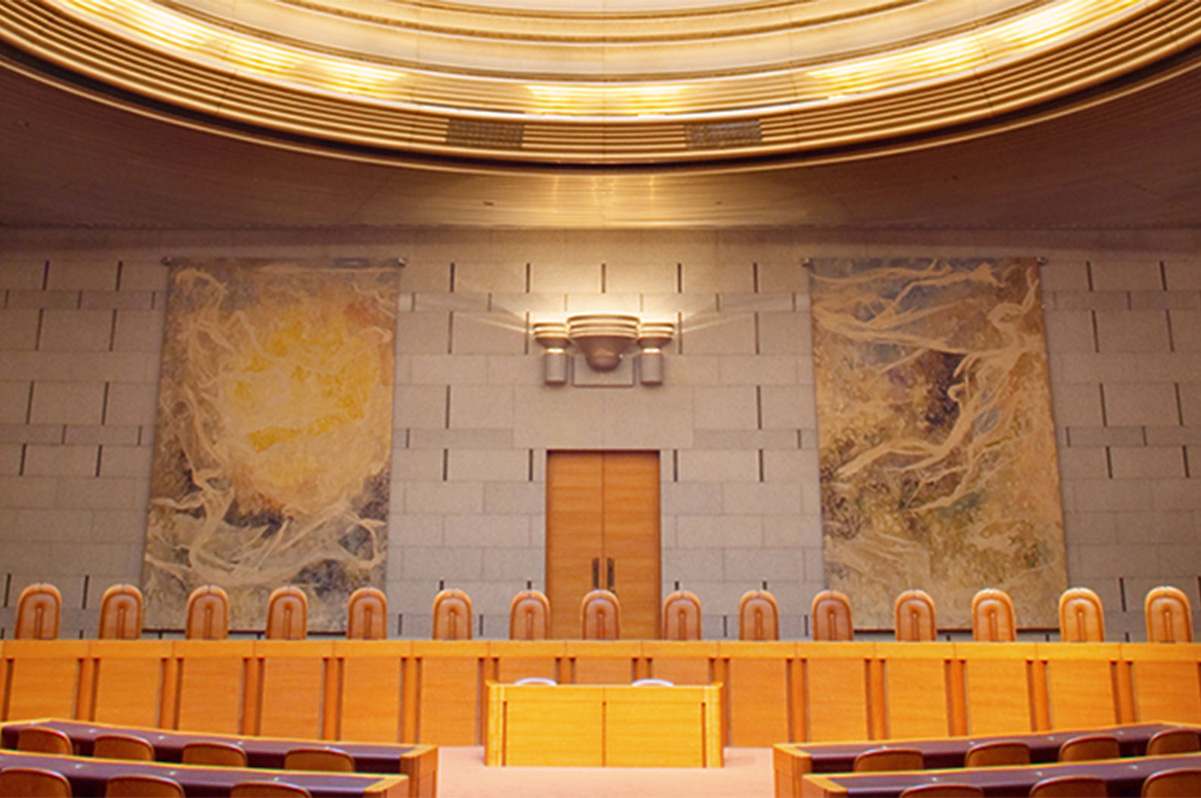
The Japanese Supreme Court on Wednesday said it will consider six marriage equality lawsuits.
NHK, the country’s public broadcaster, noted all 15 of the court’s justices will consider the case.
Japan is the only G7 country that does not legally recognize same-sex couples, despite several court rulings in recent years that found the denial of marriage benefits to gays and lesbians unconstitutional.
Tokyo High Court Judge Ayumi Higashi last November upheld Japan’s legal definition of a family as a man and a woman and their children.
Prime Minister Sanae Takaichi, who became the country’s first female head of government last October, opposes marriage rights for same-sex couples. She has also reiterated the constitution’s assertion that the family is an institution based around “the equal rights of husband and wife.”
Same-sex couples can legally marry in Taiwan, Nepal, and Thailand.
NHK reported the Supreme Court is expected to issue its ruling in early 2027.
Japan
Tokyo court upholds Japan’s same-sex marriage ban
Country is only G7 nation without legal recognition of same-sex couples

The Tokyo High Court on Nov. 28 ruled the lack of marriage rights for same-sex couples in Japan is constitutional.
The Associated Press notes Judge Ayumi Higashi upheld the legal definition of a family in Japan as a man and a woman and their children. The court also dismissed the eight plaintiffs’ demand for 1 million yen ($6,406.85) in damages.
Hiromi Hatogai, one of the plaintiffs, told reporters after the court ruled that she is “so disappointed.”
“Rather than sorrow, I’m outraged and appalled by the decision,” said Hatogai, according to the AP. “Were the judges listening to us?”
Japan remains the only G7 country without legal recognition of same-sex couples, even though several courts in recent years have ruled in favor of it.
The Sapporo District Court in 2021 ruled the denial of marriage benefits to same-sex couples violates the constitution’s equality clause. The Nagoya District Court in 2023 issued a similar ruling. The Fukuoka District Court in a separate decision said Japan’s current legal framework is unconstitutional. The Tokyo High Court in 2024 came to the same conclusion.
The Washington Blade last month noted Prime Minister Sanae Takaichi, who is Japan’s first female head of government, opposes marriage equality and has reiterated the constitution’s assertion the family is an institution based around “the equal rights of husband and wife.”

Epic ‘La bola negra’ delivers powerful romance for the ages

Out actor on his 25-year love affair with ‘Mamma Mia’

Comings & Goings

Stephen Miller, key architect of anti-LGBTQ policies, named White House chief of staff

Escritora trans venezolana reivindica una fe sin exclusiones ante la visita del papa a Sudamérica

Sarah McBride returns to Congress after historic first term

Chris Pappas elected to U.S. Senate

Marriage equality codified in Va. constitution

Supreme Court weighs religious exemptions to LGBTQ nondiscrimination protections in Colo. preschool case
Mark Warner re-elected to U.S. Senate
-

 2026 Midterm Elections5 days ago
Sarah McBride returns to Congress after historic first term
-
2026 Midterm Elections5 days ago
Chris Pappas elected to U.S. Senate
-
2026 Midterm Elections5 days ago
Marriage equality codified in Va. constitution
-
U.S. Supreme Court5 days ago
Supreme Court weighs religious exemptions to LGBTQ nondiscrimination protections in Colo. preschool case