Arts & Entertainment
Horror genre has evolved into space to explore queer identity
Forbidden love among topics explored

Spooky season is here, making it a fantastic time to talk about queerness and horror. More precisely, it’s a chance to explore how the horror genre emerged and transformed our perspective on queer identity.
Horror is far more political than most people realize.
Personally, if sci-fi was the genre that helped me understand what it feels like to be different, it was horror that truly allowed me to explore queer relationships and queer rage.
Let’s dive into how horror as a book genre has evolved — moving from portraying queer and transgender identities as monstrous threats to becoming a space where queer people can process our own fears, rage, sexuality, and trauma: from the deeply queer undercurrents of vampire fiction to the liberating “monstrosity” of trans rage.
The ‘monstrosity’ of transness
It’s 2026, so let’s begin with the elephant in the room — or rather, the biggest conservative scapegoat in our community (thanks for actual political monsters). But trigger warning: trauma crawls to the surface like a monster breaking through.
Imagine two scenes:
Fifteen-year-old me, a trans teenager who didn’t yet know they were trans, was reading Thomas Harris’s “The Silence of the Lambs” (1988) for the first time (yes, for me it was first the book, then the movie.) I “encountered” Buffalo Bill, a serial killer who used human skin to make a female costume because he wanted to be a woman. How did I feel? Cringed out, humiliated, and even more determined to hide. And I wasn’t yet permitted myself to think that I’m trans, but I felt terrible without knowing why. It was one more message from mass culture: if you think you belong to a gender different from the one assigned to you at birth, you are a “psycho.” The intersection of ableism and transphobia is striking in stories like this. People with mental illnesses, who in real life are much more often victims than aggressors, are portrayed as dangerous to society, while transness is presented as a mental illness.
Now imagine an adult me, a couple of years after coming out as trans, reading Andrew Joseph White’s young adult horror novel “Hell Follows with Us” (2022). It portrayed actual monsters and a trans boy, Benji, turned into a monster by his cultist family. I felt joy and sympathy for Benji, who stood up against the apocalyptic cult that destroyed humanity, despite his parents raising him to destroy what was left of the human race. His trans rage and rebellion felt justified, and the main character never felt like a pathetic freak.
This is the main difference between classical portrayals of trans people in horror and the changes made by trans authors and creators reclaiming the genre.
When Harris wrote “The Silence of the Lambs” and Jonathan Demme directed the movie (1991), the story made it clear that Buffalo Bill was not a “real” trans person and that real trans people were harmless. But this raises an important question: how can we decide who is a “real” trans person and who isn’t if someone’s gender identity differs from the one assigned to them at birth? The trope of an aggressive, perverse person who “wants to be a woman” has existed throughout modern fiction, with the “Psycho” (1960) movie being another famous example, that stigmatizes cross-dressing and gender non-conformity and, by association, trans women.
Aggressive trans characters and trans characters in serial-killer fiction have every right to exist. White’s young adult horror novel “You’re No Better” (2026), which is coming out this October, features a trans autistic boy trying to prove that he is nothing like his famous serial-killer father. There is also the transgender novel “Manhunt” (2022), featuring two trans women, Beth and Fran, who survive by hunting men transformed into monsters.
Honestly, I’m currently querying a vampire novel with a trans teenager who runs from his transphobic MAGA family and has literally become a monster, so it would be hypocritical of me to object to controversial or monstrous trans characters. They can be violent — but not because they are trans. They can be driven to become monsters by society, but not because of their supposed “perversion.”
Trans horror written by trans and trans-friendly authors can help process rage and alienation. Many trans horror authors reclaim the label of “monstrosity” without turning their characters into caricatures, perverted villains, or pathetic creatures, as often happened in more classical, cis-hetero normative horror.
Queer romance and forbidden love
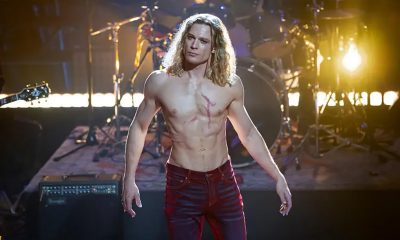
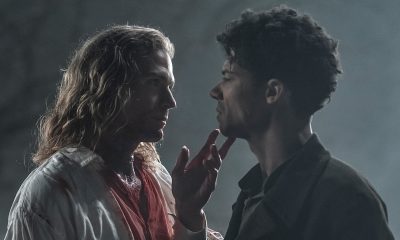
For me, “The Vampire Chronicles” by Anne Rice was my first introduction to non-judgmental, queer-centered fiction as a teenager. As Rice famously observed, all her vampires are bisexual, and it was remarkably brave to publish books in the 1970s and 1980s where queer families, desire, and drama were simply part of the plot without any silly sensationalism. The 1994 film adaptation of “Interview with the Vampire” was the movie through which many people I knew who weren’t into queer stories first saw these dynamics onscreen. And the new AMC’s “Interview with the Vampire” (2022-current) TV series is, in my opinion, one of the best representations of messy queer relationships between traumatized people, addressing family trauma and the intersection of race and queerness. I recommend it even more than “reality-based” shows such as “Heated Rivalry” or “Queer as Folk.”
Gothic literature has always had a queer undercurrent. From Lord Byron’s homoerotic image of the undead to the lesbian desire of “Carmilla” and the obsessive relationships surrounding “Dracula” (book published in 1897), vampires have long been associated with forbidden desire, sexuality, and relationships outside social norms. “Carmilla,” published in 1872 by Joseph Sheridan Le Fanu, still resonates with the lesbian community today. “Carmilla” is unapologetically queer, declaring romantic passion for the human woman Laura without hiding her desires. Of course, “Carmilla” is literally a monster — but how else could an author write a forbidden queer love story in 1872?
New retellings of “Dracula” and “Carmilla” have become even more increasingly queer. Kat Dunn’s “The Hungerstone” (2025) is a sapphic story about feminine agency and the relationship between Carmilla and Lenore, a bisexual British woman in Industrial-era Sheffield, framed around sapphic emancipation and forbidden love. “Dracula” has also inspired plenty of retellings, most notably S. T. Gibson’s “A Dowry of Blood” (2021) — an explicitly polyamorous, bisexual retelling told from the perspective of one of his brides. It explores abuse and the importance of breaking codependency in queer relationships — a topic underrepresented in more “serious” fiction.
Vampires have also become a cross-cultural way to speak about queerness. For example, Dawn Chen’s “A Vampire in Beijing” that will be published in 2027, offers a sapphic story about the modern Chinese queer community and its unique struggles.
Together against the monsters
Another major trope in queer horror is queer people, especially queer youth, fighting monsters together. Those monsters may be supernatural, as in “The Dark We Know” (2024) by Wen-Yi Lee or “This Raging Sea” (2025) by De Elizabeth, where groups of bisexual, queer kids fight side-by-side with an old evil. Ultimately, these external threats represent a conservative society, oppressive stereotypes, and real-world mental health struggles.
Although horror historically mostly exploited queerness for sensationalism — harming real-world queer people in the process — today it has transformed into one of the most effective spaces to explore queer identity and trauma in our own language.



Theater
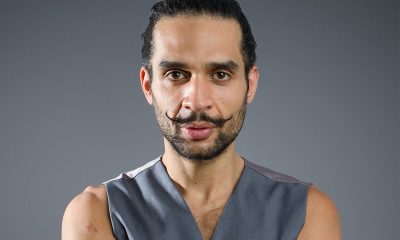
Out actor on his 25-year love affair with ‘Mamma Mia’
Victor Wallace plays Sam in National Theatre production

‘Mamma Mia!’
Through Nov. 15
National Theatre
1321 Pennsylvania Ave., N.W.
tickets start at $59
broadwayatthenational.com
For nearly 25 years, out actor Victor Wallace has been a big part of “Mamma Mia!”
A staple wherever hit shows are performed, the high energy juke box musical is based on songs recorded by Swedish mega-pop group ABBA. The romantic tale unfolds on an idyllic Greek Island where young bride-to-be Sophie is holding her wedding. Secretly, she’s invited a trio of men from her mother’s past, hoping that one of the three will prove to be her undetermined biological father.
Wallace came to the show as Sky, Sophie’s good-looking groom, in Las Vegas as part of the highly regarded Mandalay Bay production. Not many years later, Wallace embarked on playing an older “Mamma Mia!” character – the appealing yet regretful Sam Carmichael, a successful architect and divorced father of two (and possibly Sophie’s dad) — in numerous tours and stints on Broadway.
And now, he’s brought Sam to D.C.’s National Theatre (through Nov. 15), attracting many theatergoers eager for a repeat experience, and for some, their first time.
“I’m always surprised to learn that there are ‘Mamma Mia!” virgins out there,” says Wallace, 53. “Maybe that’s because of the show’s success, or because it’s been a part of my life for so long.”
While not touring, the handsome lyric baritone is based in his native Wisconsin. “It doesn’t make sense to keep an apartment in New York when you’re always on the road,” he says.
WASHINGTON BLADE: Frequently actors, especially those in long running shows, are asked “how do you keep it fresh?” Well, how do you?
VICTOR WALLACE: For me, I really do like ABBA’s music. I’m the type of person who can put a song on repeat for hours on end. That helps a lot. And it doesn’t hurt that “Mamma Mia!” is a fun show.
BLADE: During a break from “Mamma Mia!” you spent two weeks at Coachella Valley Repertory, playing Bruce, the closeted family man and predator in “Fun Home.” Not a warm and fuzzy guy.
WALLACE: That was different, a darker place for sure, but a great part for an actor. I don’t bring the heaviness home, I can leave that onstage, but I don’t know about doing that for months on end.
BLADE: How is it you made a quick transition from Sky to Sam in “Mamma Mia!”
WALLACE: It was all about timing. At 29, I was cast as Sky a little late, and at 34, I was a young Sam. I powdered my hair, and now I’m trying to cover the gray.
I’ve played Sam for almost 20 years. Naturally, my perspective has changed. In the beginning, I couldn’t imagine having a 20-year-old but now it’s easier.
BLADE: Were some other tours squeezed in over the years?
WALLACE: Yes, “Les Miz” and “Phantom.” I like the big ones. They’re great for my 401K.
BLADE: But it’s mostly been “Mamma Mia!” Were you always a fan?
WALLACE: Ever since I first heard ABBA on the car radio when I was a kid. For me, “Winner Takes It All” was an instant favorite. I’ve always gravitated toward the ballads.
As Sam, I sing “SOS,” “Loving Me Loving You,” and the lesser known “Our Last Summer.”
BLADE: Do you have any thoughts on the show’s staying power?
WALLACE: The movie franchise has helped. So has the gay following with “Dancing Queen” and ABBA nights at gay bars. The film “Muriel’s Wedding” [the titular lead played by Toni Collette was obsessed with ABBA] gave it a good push.
BLADE: What about “Mamma Mia!” is especially appealing to queer audiences?
WALLACE: In addition to the great music and dancing, I think it’s the themes of friendship and chosen family. While pretty universal, I feel these strike a real chord with queer theatergoers.
BLADE: Aside from your charm and talent, why do the producers keep asking you back?
WALLACE: When you’re dependable, solid, and consistent you build a reputation. But I will say this, I had to reach out to be a part of the 25th anniversary after the pandemic. And that was after I’d closed the Broadway show as Sam at the Broadhurst. I put my ego aside and sent in a reel. Sometimes you have to be the squeaky wheel.
BLADE: Eight shows a week, year after year, it must be a lot.
WALLACE: Sure, some days are harder than others. When your mindset is a little off, your body knows what to do. It’s about getting through those two hours and 40 minutes, and you’re good.
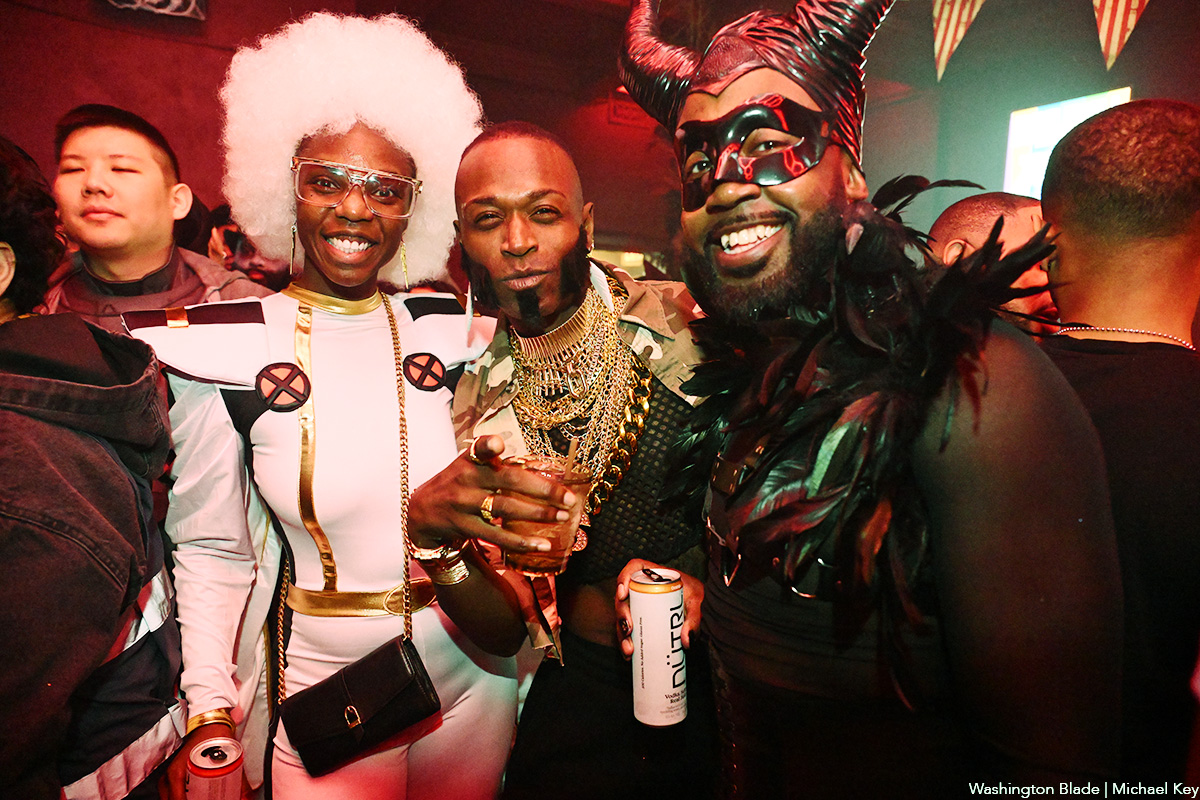
Crush Dance Bar (2007 14th Street, N.W.) was packed on Saturday night for a Halloween costume contest.
(Washington Blade photos by Michael Key)


a&e features
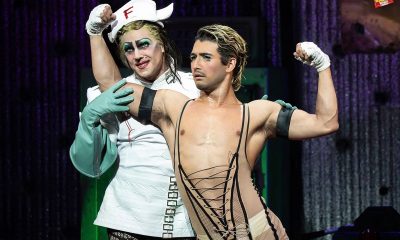
Meet the talented makeup artist behind Broadway’s ‘Rocky Horror’
Sterling Tull remains true to characters while imbuing them with her own eclectic style
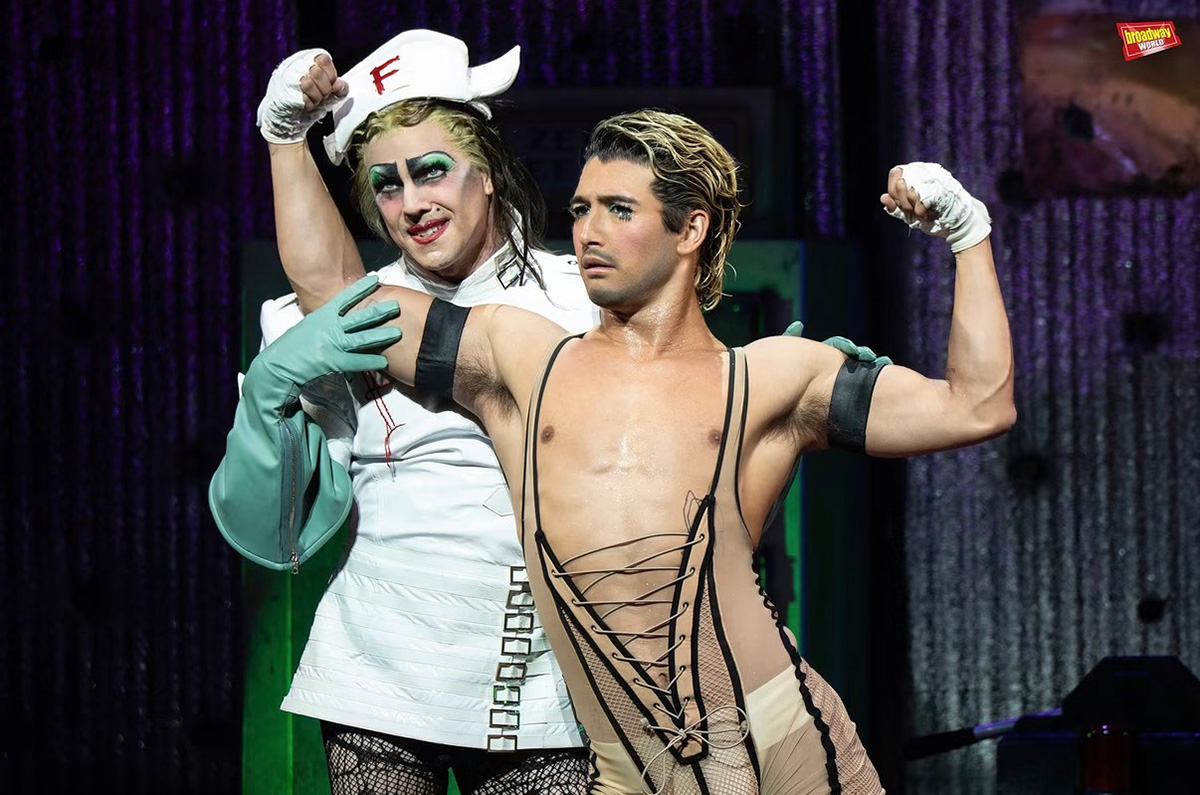
NEW YORK – Before Sterling Tull was creating the makeup for “The Rocky Horror Show” Broadway revival, its mad scientist, Dr. Frank-N-Furter, was watching over her bedroom from a poster on the wall. Purchased by her mother, the poster hung there from the time Tull was 13 until she was 18, offering a glimpse into a world where self-expression was something to celebrate.
Now, as makeup designer and makeup artist for the Broadway show, Tull, a queer transgender artist, brings that world to life eight shows a week.
“Sometimes it doesn’t feel real,” Tull tells the Blade. “I would’ve killed for this job, and I know many others would have too, so I feel very, very lucky and blessed.”
The opportunity arrived in a fittingly theatrical fashion: on Halloween night. Tony-nominated costume designer David Reynoso reached out to interview Tull for the production. Given the incredible opportunity, Tull couldn’t believe what she was reading. “I thought the email was fake at first, ” she explained. “It turns out it wasn’t!”
From there, things fell into place. The email led to an interview, and the interview led to a job, giving Tull the opportunity to translate a deeply personal attachment into an artistic vision. Long before joining the production, she had found something in “Rocky Horror” that extended beyond its eclectic style and audacious characters: a community in which she could recognize herself.
“Over the years, I grew into the culture of Rocky Horror and felt safe in the community,” Tull tells the Blade. “It let me understand that I wasn’t so different, and that, as a little Mormon kid, I could be myself.”
That commitment to being herself now informs the faces audiences encounter onstage. Her challenge was to preserve the characters’ immediate recognizability while allowing for her own artistic spin. Familiarity offers the starting point – Tull uses makeup to make it her own. “I wanted to honor the source material and what fans are expecting from a production of this size with huge audacious makeup looks that capture Club Kid New York culture, New Romantics, English trad goth, and 1970s Studio 54 sleaze,” she tells the Blade.
The designs took shape through collaboration with Reynoso, hair designer Albee Alvarado, director Sam Pinkleton, and associate makeup designer Vee Sadiku, whom Tull affectionately calls her “best friend” and “work wife.” Yet even with that support, sharing her vision came with its own uncertainty. Tull explains, “I would say the scariest part is just hoping that both your collaborators and fans like what you’re creating.”
Behind the performance, however, is time, precision, and a practice shaped by attention to detail. Tull works at the theater six days a week, applying makeup to actors in a way that would be difficult for any makeup artist. She tells the Blade, “The makeup is incredibly ephemeral and applied in a time span that would challenge any makeup artist.”
None of Tull’s work is about ego or adding another credit to her resume. It is about honoring a performance and creating a moment for people to come together, laugh, and enjoy themselves. She respects all those involved, especially the actors who bring the show to life. “It is so important to respect where the actors are every day while honoring the integrity of the work,” Tull says.
Ultimately, the show will end, and the makeup will come off. The next performance will bring another round at the makeup table. Yet that temporary nature gives Tull’s work an intimacy: The world that once helped a young “Rocky Horror” fan feel welcome is now something she helps bring to life for others, one face at a time.
“The Rocky Horror Show” continues through May 30 at Studio 54 theater in Manhattan. Follow Sterling on IG: @SterlingTullNYC.

Out actor on his 25-year love affair with ‘Mamma Mia’

Comings & Goings

Stephen Miller, key architect of anti-LGBTQ policies, named White House chief of staff

Escritora trans venezolana reivindica una fe sin exclusiones ante la visita del papa a Sudamérica

Baltimore lawmaker’s ex-treasurer charged with theft of $87K in campaign cash

Meet the talented makeup artist behind Broadway’s ‘Rocky Horror’

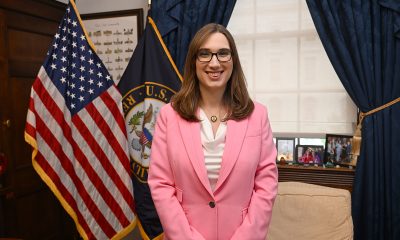
Sarah McBride returns to Congress after historic first term

Chris Pappas elected to U.S. Senate

Supreme Court weighs religious exemptions to LGBTQ nondiscrimination protections in Colo. preschool case

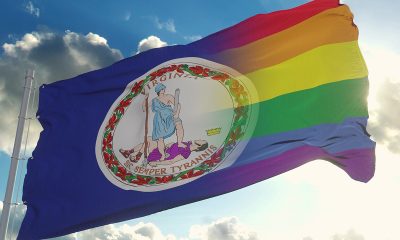
Marriage equality codified in Va. constitution
-

 a&e features5 days ago
Meet the talented makeup artist behind Broadway’s ‘Rocky Horror’
-
2026 Midterm Elections5 days ago
Sarah McBride returns to Congress after historic first term
-
2026 Midterm Elections5 days ago
Chris Pappas elected to U.S. Senate
-
2026 Midterm Elections4 days ago
Marriage equality codified in Va. constitution