District of Columbia
To school to homeschool to school again
‘Pandemic took more than 2 years of school. It took 2 years of my childhood’
It wasn’t until I no longer had those 30 minutes of lunch and recess, when all the boys and girls would come together to trade bracelets, make up games, gossip about who we liked, play tag and sports, that I realized how much of my childhood happened during the parts of school that had nothing to do with schoolwork.
I was in the third grade when the COVID-19 pandemic began. I remember my parents explaining that I couldn’t go back to school and wondering when I would see my friends again — or whether I wanted to go back at all. But after spending two years learning from home, cut off from the friends, teachers and routines I had known, I began to understand what I had lost.
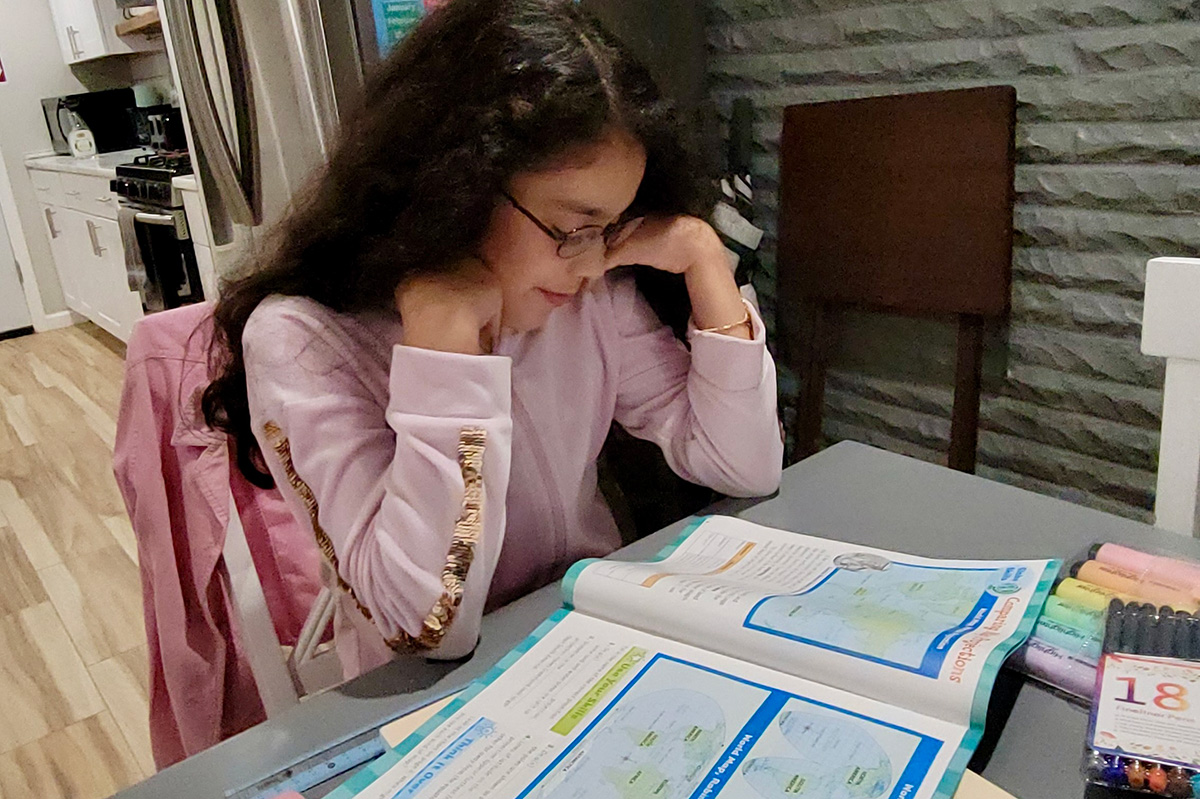
For many of my friends and classmates, going to school changed from a bus ride every morning to clicking a link and seeing their teachers and classmates through a screen. My experience was a little different. Instead of going to virtual school, I was homeschooled. My new routine was sitting at my kitchen table, with my mom teaching me how to write a paragraph or solve a math problem, surrounded by the same walls I saw every day.
My family was not alone. Many families across the country turned to homeschooling after schools shut down. Homeschooling increased sharply during the pandemic, especially among Black families, rising from 3.3 percent in the spring of 2020 to 16.1 percent that fall, according to the U.S. Census Bureau’s Household Pulse Survey.
It would be two years before I entered a classroom again.
At first, I loved homeschooling.
I didn’t have to wake up early or put on a uniform. I liked the comfort of my own room, surrounded by my stuffed animals and toys. I didn’t have to push my way through that horrible lunch line because my food was now waiting for me at the kitchen table.
It felt like a fever dream where school was canceled and all day was fun. That was my view as a 9-year-old.
But as days turned into weeks and weeks into months, that initial excitement wore off.
Every day became the same routine. There was no recess when I could play princess with all the other girls. There were no conversations in the lunch line and none of the small things that had broken up the school day before. I didn’t realize how much those moments mattered until I could no longer experience them.
With less to look forward to, I started spending more time on the internet.
I turned to platforms such as YouTube and TikTok to distract myself. Instead of seeing what the kids around me were doing every day, I could watch people online show off their clothes, makeup, dances, art and lives.
Over time, I started comparing myself with what I saw. I thought the way I dressed was childish and wanted to be like the superstars I saw online. I followed what was trendy and admired the girls and boys who looked so confident on screen.
Before the pandemic, my friends and I didn’t need the internet to tell us what was popular. But during those years at home, I became much more aware of what other people thought was cool and what someone my age was supposedly supposed to like. I felt as though I was growing up without getting to experience all the steps in between.
When I finally returned to school, I thought my classmates would be excited to see each other again after spending so much time apart.
Instead, I realized how much we all changed.
When I walked through those doors, I remembered vague memories of running down those halls and always seeing my peers with smiles on their faces. Now those same faces were tired, with eye bags. The lunchroom, which used to be full of life with happy kids eating to their hearts’ content, turned into a lunch where all the girls controlled what they ate and talked about the latest trend on TikTok.
Maybe some of that change would have happened anyway. Kids grow up. Interests change. Middle school has always been awkward.
But I didn’t get to watch my classmates gradually change or change alongside them. I left one social world and came back to another.
When I returned, I was expected to understand a social world that had changed while I was gone. I felt I missed so much that I would never get back, and without that day-to-day learning to help me adapt to these new norms, I struggled.
Those everyday interactions are an important part of how children learn to get along with others: A 2026 meta-analysis of 157 studies from 33 countries published in the academic journal Child Development found that children’s social and emotional skills declined during the pandemic, along with their overall well-being. The researchers noted that schools are not just places where children learn math and reading. They are also places where children learn how to make friends, work through disagreements, understand other people’s feelings and manage their own emotions.
Years later, many parents say some of those effects are still being felt. In a 2025 Gallup survey, 45 percent of parents with school-age children said the pandemic hurt their child’s social skills, and 22 percent said those problems were still ongoing. Forty-two percent said the pandemic negatively affected their child’s mental health. Parents were more likely to report problems with their children’s social skills and mental health than with their academics or physical health.
I saw some of those changes around me, too. Classmates who once seemed outgoing became quieter or more withdrawn. Starting conversations felt harder. Making new friends felt harder. Sometimes retreating into myself felt easier than trying to figure out where I belonged.
Now, the kids who were in elementary school when the pandemic began are moving through high school. We are older, but some of us are still figuring out what those missing years meant.
Before the pandemic, I thought lunch and recess were simply breaks from learning. Now I understand that we were learning during those 30 minutes, too. We were learning how to make friends, how to disagree and make up, how to be embarrassed and recover from it, what we liked and what we didn’t, and slowly who we wanted to become.
I can’t know exactly who I would be if I had spent those years inside a classroom instead of at home. Maybe middle school still would have been awkward. Maybe I still would have worried about fitting in.
But I know I missed something I didn’t understand was important until it was gone: the ordinary, sometimes boring, sometimes ridiculous parts of growing up alongside other kids.
You can make up schoolwork. You can return to the classroom. But there are some parts of childhood you don’t get to repeat.
Gloria Collazo Huamani is a sophomore at Benjamin Banneker Academic High School in D.C., one of Youthcast Media Group’s journalism class partners. Gloria worked with James Jarvis, a YMG mentor-editor and reporter for Inside Health Policy, on this story.




District of Columbia
D.C. Mayor’s Office of LGBTQ Affairs celebrates 20th anniversary
Bowser, Japer Bowles among those who attended celebration
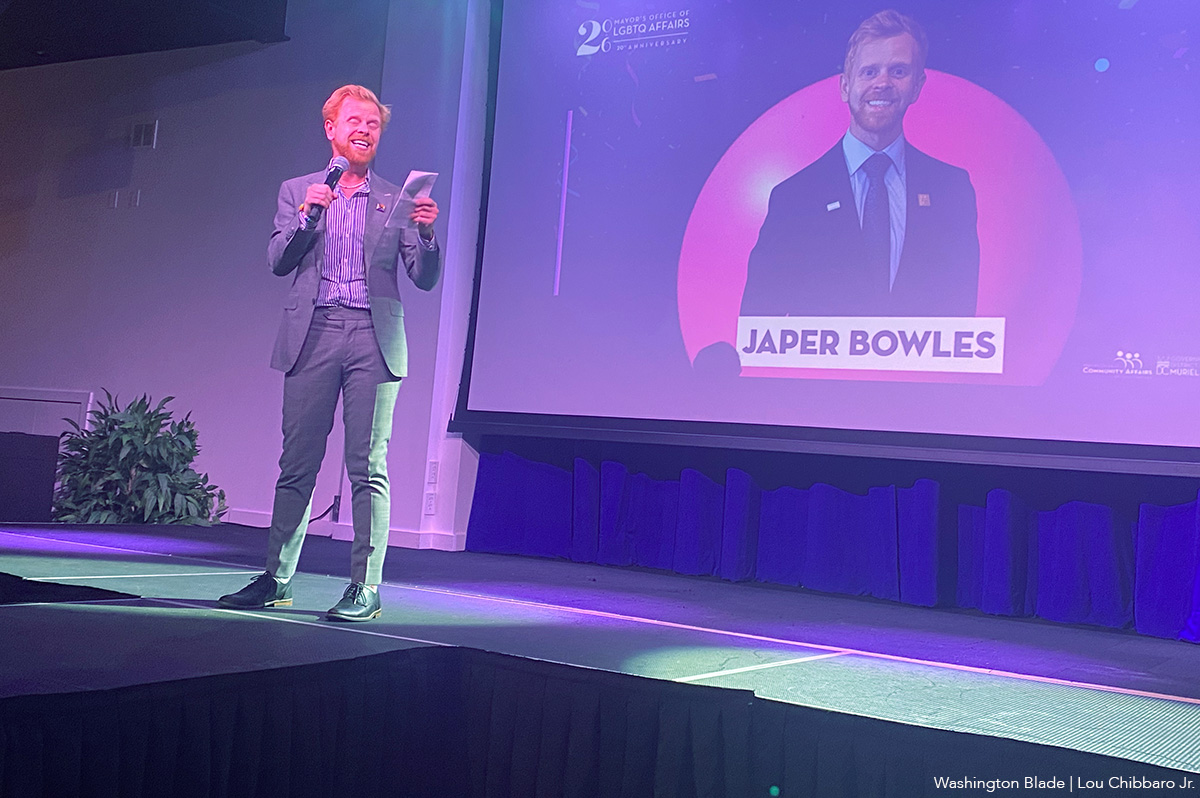
Close to 200 mostly local LGBTQ community members and activists turned out on Thursday, Oct. 15, for the 20th anniversary celebration for the D.C. Mayor’s Office of LGBTQ Affairs.
The event, which took place at the Penn Social event hall in downtown D.C., included remarks by D.C. Mayor Muriel Bowser and Office of LGBTQ Affairs Director Japer Bowles as well as LGBTQ community advocates Rayceen Pendarvis and Charity Blackwell.
The local dance group Urban Culture also performed on the stage where each of the speakers, including Bowers and Bowles, credited the community activists attending the event and others involved in the LGBTQ rights movement with helping the LGBTQ Affairs office succeed in its work.
Prior to and after the presentation by the speakers, local DJ, music producer, and community activist Tony Play presented house and dance music, including the music the Urban Culture dance group performed with.
The LGBTQ Affairs Office, officially named the Mayor’s Office of Lesbian, Gay, Bisexual, Transgender, and Questioning Affairs, has Cabinet-level status and currently has six staff members, including Bowles as director.
In his remarks, Bowles noted that the office serves as the largest LGBTQ funding organization in the D.C. region, administering over $1 million in annual grants for local LGBTQ organizations and services.

Both he and Bowser said among the office’s most important accomplishments in recent years was helping the city serve as host for World Pride 2025, which drew more than a million visitors to the city who participated in hundreds of LGBTQ-related events.
“This has been one of the greatest honors of my life to lead this office,” Bowles told the gathering. “We’re celebrating during LGBTQ History Month,” he said. “Our history is not just something we look back on. It is something we keep making,” he pointed out, adding, “D.C. isn’t just supportive. D.C. is the movement.”
Bowles said that with the strong support of Bowser, the LGBTQ Affairs Office over the past 20 years has trained thousands of D.C. government employees in LGBTQ cultural and sensitivity awareness, “invested in hate violence prevention,” supported programs to provide housing for homeless LGBTQ youth and adults, supported a project to document the Black LGBTQ community’s history, and “we directed millions of dollars to organizations serving our community every day.”
“And I’m so grateful to you, the advocates, the community organizations, the business leaders, and our staff,” he said. In introducing Bowser as the next speaker, Bowles credited her with putting in place policies and actions that have advanced the office’s support for the LGBTQ community.
In her remarks at the event Bowser praised Bowles for his work in advancing the LGBTQ Affairs Office’s mission. She thanked former D.C. Mayor Anthony Williams under whom she noted the Office of LGBTQ Affairs was created during his last year in office.
“So, this is a birthday party, but it is also a call to action,” the mayor said. “Because I will sow my last day on Jan. 2,” she added, referring to her last day as mayor after deciding not to run for re-election for a fourth term in office.
Bowser noted that around the time the LGBTQ Affairs office was started the issue of legalizing same-sex marriage came up before the D.C. Council when she was on the Council representing Ward 4. She mentioned that the proposal was introduced by gay Council member David Catania and she immediately expressed support for the proposed legislation, which the Council later passed.
“And then those arguments, the discussions happened,” she said, referring to the ongoing debate over same-sex marriage and the possibility of Congress stepping in to overturn a D.C. marriage bill.
“But I have to tell you, your government said this is what we’re going to do. And we’re going to make it happen so there is equality in the District of Columbia,” she said.
She noted that the success in the approval of the same-sex marriage bill in D.C. was symbolic of the mission and success of the Office of LGBTQ Affairs over the following 20 years.
“People worked, they fought, they argued, they compromised, and they made this change,” she said.
When asked how he thought the event went, Bowles told the Washington Blade he was excited over the turnout and those who attended.
“A room full of community members, leaders, history makers, new friends, colleagues,” he said. “It was great. That’s what a birthday party is all about — it’s about honoring the people of the past, celebrating the many years ahead.”
District of Columbia
Center Arts Gallery celebration, auction to take place on Oct. 17
D.C. LGBTQ+ Community Center to mark event’s 10th anniversary

The D.C. LGBTQ+ Community Center is hosting its 10th anniversary celebration of the opening of its Center Arts Gallery on Saturday, Oct. 17, at the Center’s offices at 1827 Wiltberger St., N.W., from 6 – 9 p.m.
“For 10 years, the D.C. LGBTQ+ Community Center’s Arts Gallery has been more than a place where art is displayed,” a statement released by the center says.
“It has been a space where LGBTQ+ artists are seen, celebrated, and connected to community, and where their work has given expression to the stories of joy, resistance, grief, beauty, survival, courage, and imagination,” the statement adds.
It says those attending the event would have an opportunity to bid on donated artwork in an auction and to meet and interact with “the artists whose creativity has helped bring Center Arts Gallery to life, enjoy wonderful food and music, and celebrate a decade of LGBTQ+ artistic expression.”
But the statement posted on the LGBTQ+ Community Center’s website says free general admission tickets have sold out, with $75 VIP tickets still available. It says the proceeds from ticket sales will be used to help support the LGBTQ+ Community Center’s operations.
Attendees and others were also invited to an event after party at the LGBTQ bar and cafe Spark Social from 9-11 p.m. at 2009 14th St., N.W.
District of Columbia
Physician: addiction doesn’t always look the way you think it does
Yngvild Olsen headed HHS’s Center for Substance Abuse Treatment during Biden-Harris administration
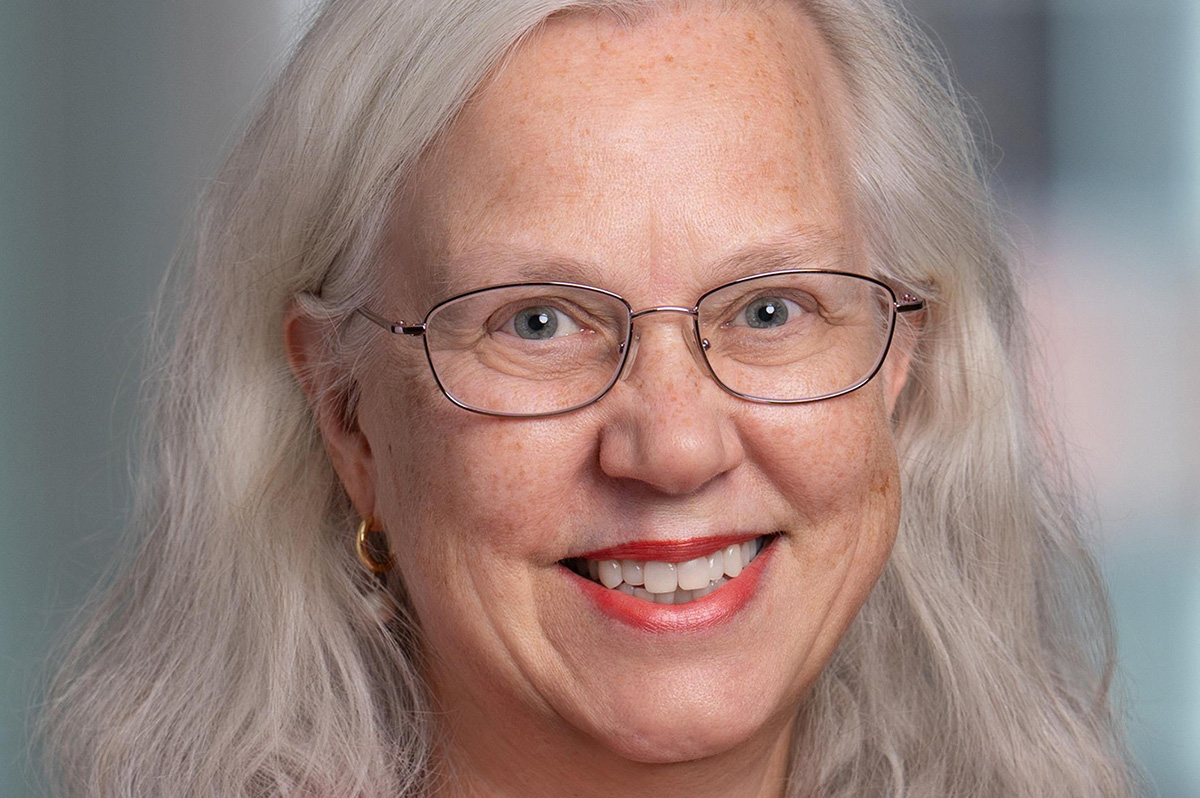
Many people think the telltale signs of drug addiction include sweating and vomiting. But a prominent addiction medicine physician says the best signals aren’t always so visible.
Dr. Yngvild Olsen says more accurate signs come from the brain, specifically the compulsion to keep using drugs, including opioids, despite damage to education, career and relationships.
While it may be harder to understand the true nature of drug addiction, it’s never been more important because of the increased fatality risk of even microscopic amounts of fentanyl, which can be found in many illegal drugs.
Olsen, who headed the Center for Substance Abuse Treatment at the Department of Health and Human Services in the Biden-Harris administration, has worked in addiction treatment for more than two decades. She is now a healthcare advisor with the law and professional consulting firm Manatt, Phelps & Phillips and a physician at the Institute for Behavior Resources/Reach Health Services in Baltimore.
Olsen met with Youthcast Media Group to discuss her career, the opioid epidemic and what to know about fentanyl. The physician, a graduate of Harvard Medical School and the John Hopkins Bloomberg School of Public Health, cited her field experiences as key in shaping her perspective on addiction treatment and recovery. This interview is edited for clarity and length.
What made you believe this work in addiction treatment is important?
I had a couple of experiences really early on in my career that very significantly shaped my interest in addiction and addiction medicine, and my belief that I had a role, and that I could really help people get better from that disease. So the first was during the summer between my first and second year in medical school. I spent the summer on the Eagle Butte and Pine Ridge reservations in South Dakota and really saw firsthand just the devastating impact that substance use — in that case, alcohol — had on not only individuals, but their families and whole communities, and just how profound that impact had been for people who had lost their lives, who had lost family members, who had physically, emotionally and spiritually negative impacts of just feeling very hopeless and and trying to find solace in their substance use, particularly their alcohol use, and doing that without really finding it. I think that was really the lesson that experience taught me.
What did you learn about treatment practices during your medical education? How was that helpful to your career?
When I was a resident in general primary care at Boston Medical Center, I was really fortunate to have a group of mentors who also were general internists, like I was training to be, who were very interested and focused on medical education and research in substance use. And so they modeled for me many of the interactions that we had with patients. I got to do a research study with one of them looking at smoking cessation among people with opiate use disorder, taking methadone. And really importantly, I got to spend a month with one of them at the Boston City Public Health Department’s Opioid Treatment Program, or what some people call a methadone clinic, because he was their medical director. I got to see people recover, and who had recovered, who had gotten their lives back together, gotten their families back together, had new families (or) businesses. It was unbelievably helpful to see that people could recover, that they did recover, and that I, as a physician, could be part of their treatment. I saw people get better, and recover, with medications like methadone and buprenorphine, and other services designed individually for them. That was really helpful and kind of a big eye-opening moment for me.
What factors contribute to addiction and why is it considered a complex disease?
People come into treatment for their addiction — or when they’re not in treatment, but are in an emergency department or on the street — with a lot of shame. They have a lot of shame about this disease that they have, that for so long, they were told, ‘Well, you know, you should just stop. Why can’t you just stop?’ Well, we know that addiction is a disease. It’s a complex disease that has lots of different factors related to it. So there’s a big genetic component that combines with environmental factors and other risk factors. For example, people have what’s called adverse childhood experiences. Some of these are if they grow up with lots of physical or sexual abuse or emotional abuse or have parents who are in jail. That’s really traumatic and so all those childhood experiences that increase stress are a big risk factor.
What is the easiest opioid to get addicted to?
It used to be heroin. That was a big problem, particularly in the Northeast and other parts of the country. That shifted to prescription opioids, beginning around the year 2000. So for about 10 years, it was really prescription opioids that were a big problem — people misusing them. And then it switched back to heroin. And then in about 2015, fentanyl came on the scene, and that really changed the game, given just how unbelievably potent fentanyl is, so it doesn’t take a lot to cause an overdose. Now there are all those other synthetic opioids, like the orphines and nitazenes and all those combinations of other substances, but fentanyl is really what’s still kind of driving a really big part of the overdose crisis.
Do LGBTQ individuals face heightened challenges when battling addictions? How do addiction specialists like you account for those challenges?
We certainly know that the prevalence of overdose and the challenges of substances is higher in the LGBTQ+ community. Where I see patients, we did a big LGBTQ+ training and had a grant to specifically provide services to that population. Where we were located, in Baltimore City, there is a big transgender community not that far from us. Particularly in the LGBTQ+ population, they have multiple stigmas. So it just compounds multiple stressors. And stress is a risk factor for substance use, and particularly a risk factor for recurrence of a substance use disorder. And so when you have all these negative factors building up in people, that can make it that much more challenging for people to find the services that they find meaningful and that are welcoming and supportive of them. So we tried very hard — and we still do — to make sure that we are a welcoming and safe space, because I think it is that safety that is really paramount.
What advice would you give someone worried about a friend or family member’s substance use?
There are two things. One is: I would talk to that person about your concerns and how that person’s personality changes or their behavior changes when they’re using or in withdrawal, and how that might be impacting their health and how they’re feeling. And then second: you can let them know that there are actual treatments that are really helpful, that can make them feel better and that can help them get back to who they were before they started using. It’s important not to be accusatory because … [people] have a lot of shame already, and so when somebody starts accusing them, that shame just gets worse. And a lot of times, people who have a substance use disorder or are using opioids won’t necessarily agree that they have a problem when you first start to talk to them. But talk to them again every time something happens and say, ‘I’m really worried about you because this now has happened and I see it as being tied to your substance use.’ And let them know that there are people who can help and that they could actually feel a lot better.
This work is part of a partnership between the Washington Blade Foundation and Youthcast Media Group, funded in part through a FY26 Community Development Grant from the Office of D.C. Mayor Muriel Bowser. Adrian Malone is a senior at Bard High School Early College DC, one of Youthcast Media Group’s journalism class partners. Shreya Jyotishi, YMG assistant manager of content and programming, is a former Washington Blade intern and 2026 graduate of American University.

Dawn Huggins reflects on year-long reign as Miss Adams Morgan

How Orville Peck healed his inner child through ‘Street Fighter (2026)’

DC Center celebrates a decade of its art gallery

Calendar: October 16-22

D.C. Mayor’s Office of LGBTQ Affairs celebrates 20th anniversary

Annie Andrews denounces trans athletes after Trump targets her

On Republican Long Island, gay Democrat Chris Gallant bets on public service over politics

Report: LGBTQ exclusion costs Japanese economy billions a year

‘Governments that attack LGBTQ+ rights learn from each other’
Center Arts Gallery celebration, auction to take place on Oct. 17
-

 2026 Midterm Elections5 days ago
Annie Andrews denounces trans athletes after Trump targets her
-
2026 Midterm Elections5 days ago
On Republican Long Island, gay Democrat Chris Gallant bets on public service over politics
-
Japan5 days ago
Report: LGBTQ exclusion costs Japanese economy billions a year
-
Turkey4 days ago
‘Governments that attack LGBTQ+ rights learn from each other’