Miscellaneous
Trans activists gather on National Mall for Transgender Day of Visibility
Around 200 members, supporters of the trans community, gathered on the Mall amid the increasingly hostile political environment.
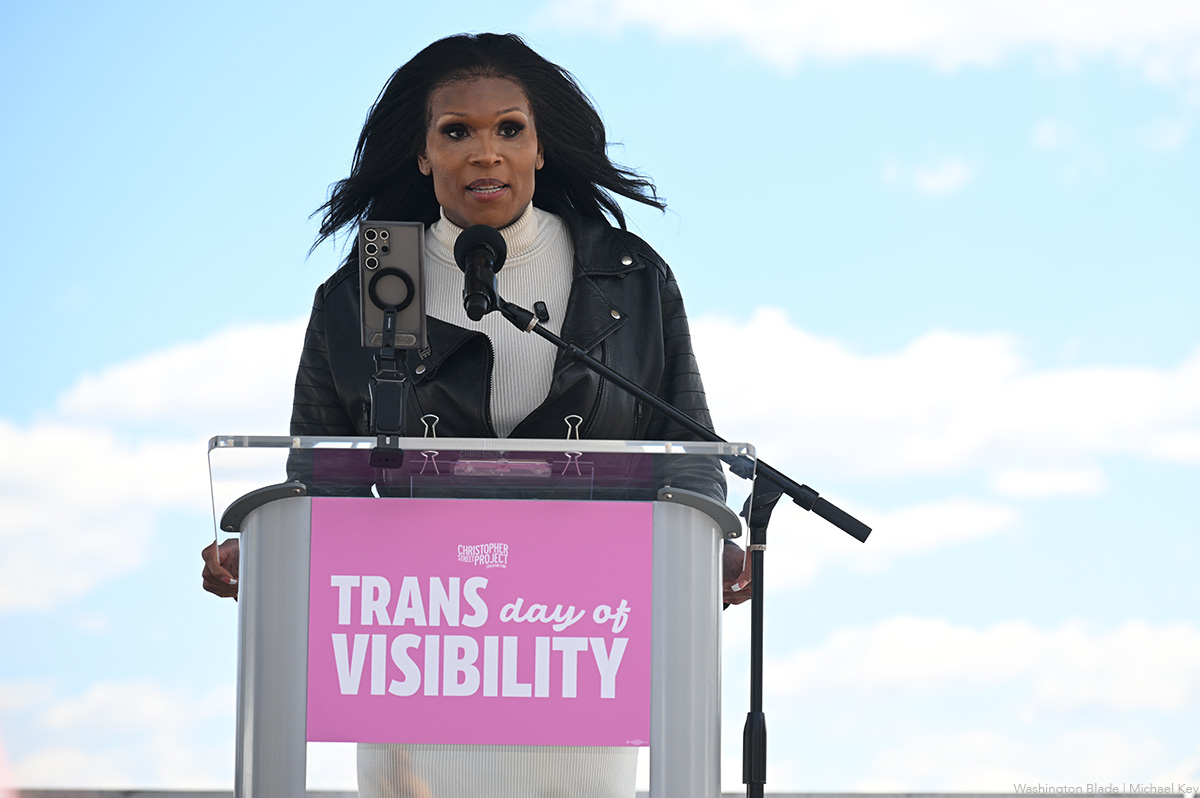
The National Mall was covered in kites on Saturday as transgender activists from around the country gathered to support the second annual Transgender Day of Visibility. The event, put on by the Christopher Street Project — whose mission to protect and support trans Americans on the ballot and in streets — brought together around 200 supporters and organizations to honor trans homicide victims and rally for the future of human rights.
Created 17 years ago by psychotherapist and transgender activist Rachel Crandall-Crocker, the day was born out of a need to celebrate one of the most marginalized groups in American politics, she told The 19th in 2021.
Since then, the nation has slowly caught up. This year marked the second time the observance has expanded into a multi-day movement, with events ranging from panels and congressional lobbying to organizing efforts, culminating in a rally on the “nation’s front door” — the National Mall.
A recent survey conducted by SRSS, a national research and marketing firm, and commissioned by the Human Rights Campaign Foundation, found that 41 percent of American adults say they personally know someone who is trans. That figure is up from previous estimates of around 30 percent. The study also shows that 27 percent say they have had a regular conversation with a transgender person in the last year. For HRC, this data is confirmation that visibility efforts are working.
“Transgender people are not strangers. They are our neighbors, coworkers, family members, and friends. And this new data shows that as people get to know them, they are more likely to stand by them as allies,” said Kelley Robinson, president of HRC said in a statement. “Defending trans rights is part of defending democracy itself. The more we show up for each other, the stronger our communities and our democracy become.”
Despite this progress and growing positive sentiment, more than 80 anti-trans bills are currently pending in state legislatures across the country, according to HRC, while similar issues are being debated at the national level. Many of the bills seek to restrict trans youth from participating in sports aligned with their gender identity and limit access to gender-affirming medical care.
Tyler Hack, founder and executive director of the Christopher Street Project, who is trans and nonbinary, spoke with the Washington Blade on March 28 about the growing importance of the day.
“We saw that there was a lack of political power for the trans community. We saw that there was a lack of political power for the trans community,” Hack said. “We decided to step up and implement the demand leadership and have galvanized people all across this country for Trans Day of visibility and our gatherings these last few days we’ve had people come from as far as Hawaii to come celebrate with us, advocate for our rights on the hill, and learn about what it means to fight for all of us.”
Fighting for “all of us,” Hack noted, means showing up where political power is concentrated — in the nation’s capital. The National Mall, a hub for both protest and tourism, draws a wide range of visitors, from political activists brandishing MAGA hats or “You did it, Joe” t-shirts to everyday sightseers.
“I literally just saw a guy in a Trump shirt [at the rally], but we’re not going anywhere,” they said. “Visablity is really important, alongside needing to be an active parts of society, being having public life, and we need to demonstrate that we’re not going anywhere. I mean, we had people from the hill, Congress members come who weren’t even planning to come and did … We are now learning about what it means to fight for and stand up for our rights.”
Hack then looked toward the Capitol after being asked why they believe there are so many negative — and false — statements coming from congressional legislators about transgender people. After a pause, they emphasized that the fight for trans rights is often deliberately mischaracterized by Republican opponents try to turn Americans against the community. That, they pointed out, is not what is happening outside the halls of the Hill.
“We are fighting for an America that works for all of us, and we know that,” Hack said. “We know that fighting for all of us is not unpopular. What’s unpopular is genital inspections in schools for girls as young as four years old — who some of our leaders want to transvestigate for not looking feminine enough. What’s unpopular are subpoenas of hospitals so the government can go through your records and decide what they like and don’t like. It is about power.”
That framing — that trans people simply want to live freely and equally under the law — has become central to the movement’s messaging, even as conservative media organizations and political leaders continue to shape public perception in opposing ways.
“We can’t cede any ground because we don’t need to. We are not fighting for a cause that’s inherently unpopular. People know that we shouldn’t throw anyone under the bus, and that’s what we’re here to say to our leaders: we’re paying attention.”
This year’s TDoV was noticeably larger in production than last year’s event, with a bigger stage, more high-profile speakers, increased security, and expanded programming across multiple days.
“We also planned three days of programming. We had dozen panels and workshops on Thursday, and we had over 75 Hill meetings on Friday,” they said. “Now we have this rally, and our capacity hasn’t grown that much — a lot of this was done by two people, but I think it just has come to fruition in a way. I’m happy with it, but I would love to see people with crazy budgets and includes expanded capacity, also we can continue to step out and do the work.”
One moment that stood out to Hack was seeing a parent advocate for her trans child — highlighting what they described as the deeply human nature of these stories.
“The first person to come up to me today was a mom of a trans kid and a non binary kid who said she came to our whole convening, going to the Hill to advocate yesterday — for the first time, because we inspired her to act, and that she was too scared to be a part of something,” they said. “She knew that her kids’ lives had been criminalized and that she needed to act and –that really hit me. I also know most of the people who educated our lawmakers, were people who have never been to the Hill before. These people who were also telling their stories, were also fighting for reproductive freedom for all. I mean, we had people from Hawaii, Washington State, California, people who some of them hadn’t been to D.C. Those are the people that we are here to mobilize because they haven’t been galvanized by any project before. I’m just grateful we gave them something that they’re willing to get behind.”
Speakers throughout the rally echoed similar themes of urgency, visibility, and collective action.
Rayceen Pendarvis, a local D.C. trans activist, spoke at the event, emphasizing the history behind the current fight — especially the exclusion of trans people from broader LGBTQ movements — and the need to push back against current political attacks on the most marginalized.
“Trans people in D.C. had to fight for their seat at the table. Trans people were either an afterthought — or left out completely. Now, trans people have become the scapegoat. Ignorance about trans people has been weaponized.”
The lifelong Washingtonian, who had a popular show that ran for 10 seasons with a range of programming covering local and national LGBTQ topics from 2012–2021, continued on the need to stay aware and vocal during the increasingly difficult Trump-Vance administration.
“We have to push back — be as relentless as they are. If your vote was not important, they wouldn’t spend so much time trying to stop you from using it. Voting is not enough — we all must get involved. Let us make our ancestors proud by unifying, organizing, and fighting back.”
She ended her speech with advice to not only strategically spend time advocating, but also build relationships within and around the transgender community.
“Support each other, encourage each other, and help each other. Spend time with your trans elders while you can and learn from them. Give them their flowers, but also give the old dolls some money to pay their bills,” she said to cheers from the crowd. “Allies need to put their money where their mouth is!”
“RuPaul’s Drag Race” contestant, singer-songwriter, and trans activist Peppermint spoke about the mixed feelings the day brings, allowing her to recognize both pride and frustration with the slow-moving progress for the transgender community.
“I love being trans, and it’s inspiring to see more people feel comfortable expressing who they are,” Peppermint said to the crowd. “But I’m disappointed that we have to march for our rights. I’m disappointed that we have to convince people who we are, while we’ve been here supporting them all along. I’m disappointed that not enough people show up when the trans community is under attack.”
Last year, a record number of anti-transgender policies passed through state and federal legislatures — many originating from Republican lawmakers who argue such measures are necessary for safety. Idaho voted to make it a criminal offense to use the bathroom aligned with one’s gender identity if it does not match sex assigned at birth, setting up a bounty-style enforcement system. Twenty-seven states have banned sports participation for transgender children, primarily targeting transgender girls, citing fairness and safety — claims that research has shown are not supported by evidence. Last month, Kansas’s state Senate voted to invalidate driver’s licenses and birth certificates of transgender residents who had updated their gender markers, while also defining sex strictly as assigned at birth.
Peppermint highlighted the specific cruelty of these policies and echoed the rally’s broader message.
“People are being asked to make an agreement to throw us under the bus. You’re watching our civil rights be stripped away like it’s entertainment. When you empower a government to take rights from some, you empower it to take rights from everyone,” the Broadway performer added. “That’s the reality we’re facing.”
She finished by affirming those present and pointing toward the future of the fight for equal treatment under the law.
“Trans people are women, men, nonbinary, immigrants, disabled — every kind of person. We are here, and we are inevitable. I’m disappointed — but I’m hopeful. I’m grateful — and you should be too,” Peppermint said. “I love you, I’m in awe of you, and I am grateful for you. I’m proud to stand with this diverse trans community. We have always shown up for others, year after year. And we’re still here.”
Rabbi Abby Stein framed the moment through a spiritual and historical lens, offering an alternative to narratives often pushed by conservative lawmakers and commentators.
“They’ve moved past trying to erase us—they’re using us. We have become the rock they’re using to hit the people they want to oppress,” Stein said. “We are visible, but we’ve been forced into a narrow place. That’s the reality of this moment.”
She continued, explaining that, despite what some have said, her trans identity reaffirms her religion and strengthens her Jewish faith.
“For generations, we’ve told stories about leaving narrow places. Those narrow places exist today — in closets, in systems, in the ways people try to restrict us. But we have always found a way out. That is our history and our power.”
“Coming out and being who you are isn’t just okay — it’s a spiritual obligation. It is powerful, and it is necessary. If you try to take away our visibility, our rights, and our joy, you will fail. We are going to win because we will keep fighting together.”
Other activists that spoke included military members who had been forced out of their jobs and benefits following the Trump-Vance administration’s return to banning transgender military members, including SPARTA Pride Executive Director and US Army Major Kara Corcoran and Air Force Master Sgt. Logan Ireland, both focusing their time on stage on sharing how they gave their country their lives, yet the president couldn’t accept their gender identity.
Others who spoke/performed included the queer cheerleading group Cheer DC, local trans DJ and organizer Samson, and Chastity Bowick, Executive Director of Marsha P. Johnson Institute also spoke.
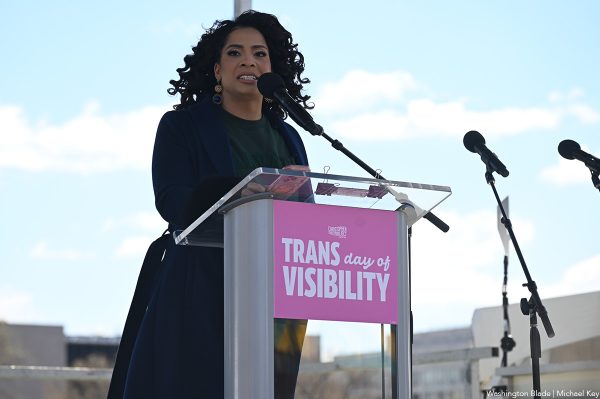
Hack closed with a message centered on their belief in collective action to create a better world for everyone and the resilience of the community.
“We’ve been fighting in the halls of power, and I’m proud of how far we’ve come. This week is about educating, advocating, and rallying. There isn’t one strategy to take back our country. It takes all of us … This is not just about trans people — this is about whether the government gets to decide who is acceptable. When one group is targeted, it never stops there. That’s what history shows us. That’s why this moment matters.”
“We’re being scapegoated and forced out of public life. There are efforts to legislate us out of existence. Our freedoms are intertwined — we can’t leave anyone out. They think we’re small, but they’re wrong.”
“The days of respectability politics are over,” Hack said, with rainbow kites lying overhead, signaling a welcome and powerful reflection of the day’s movement — one that echoed the sentiments of those gathered. “Our movement has never needed permission to exist — and we’re not asking for it now. There is something inevitable about a people who refuse to disappear. It is inevitable that we win.”
Miscellaneous
LA-based TransLatin@ Coalition leads in time of attacks
Members of Congress ‘calling us a radical organization’
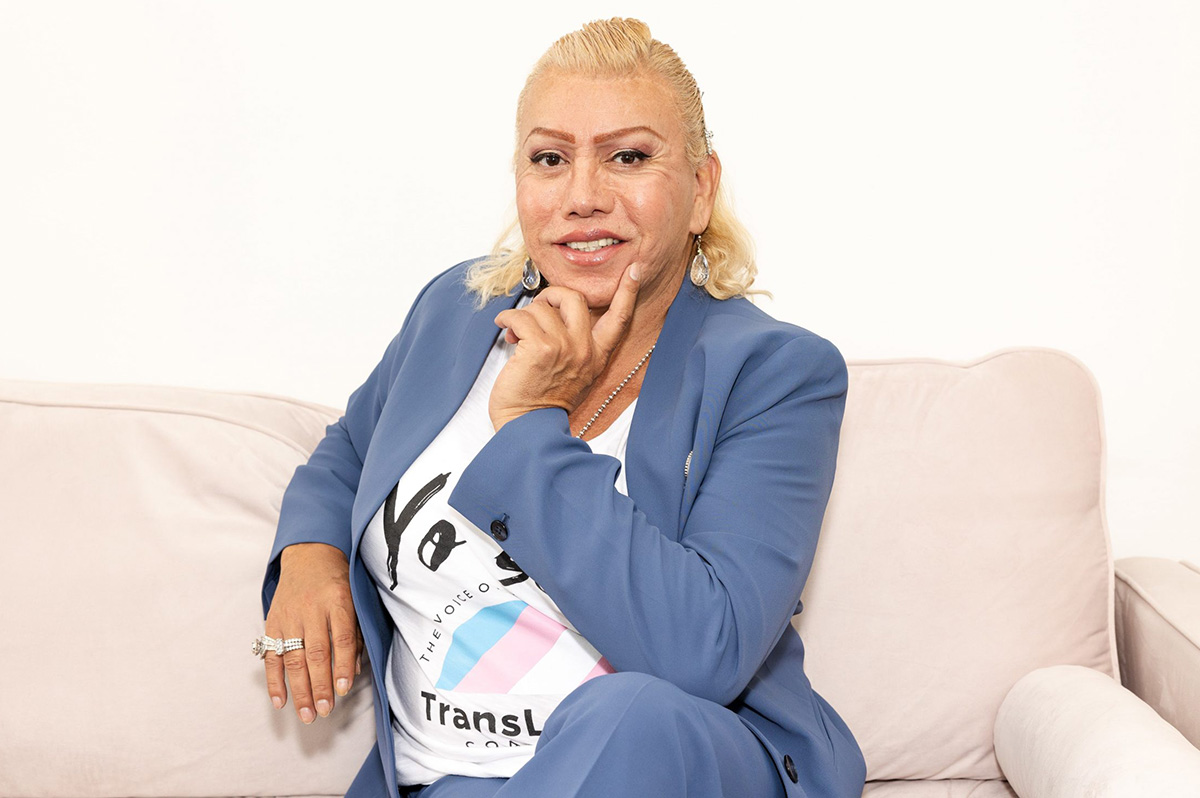
As ICE raids intensify across Southern California and anti-immigrant sentiment resurfaces in Orange County, transgender and immigrant communities are once again being targeted. These crackdowns go beyond enforcement — they’re designed to instill fear. At the same time, a coordinated right-wing smear campaign is attempting to discredit the very organizations working to keep these communities safe.
Last month, the TransLatin@ Coalition, a cornerstone in the fight for trans, queer, and immigrant rights in Los Angeles, was publicly named by members of Congress. But this was no recognition. It was a calculated attack.
“They’re calling us a radical organization,” said Bamby Salcedo, president and CEO of the TransLatin@ Coalition. “They’re spreading lies, saying we’re using government funding to abolish ICE and the police and to provide abortion access. We do believe in those things, but the funding we receive is used to serve our people.”
Now, that funding is being stripped away.
In the face of state violence, political backlash, and economic sabotage, TLC is responding the way it always has: by organizing, celebrating, and building a better world. Because when our communities are under attack, we show up — stronger, louder, and more united than ever.
Salcedo, herself a proud trans Latina immigrant, has spent decades fighting for those living at the margins. “I always say I am an intersection walking,” she said with a smile. “Our organization is made up of the people most impacted — and we are the ones leading the work.”
In Los Angeles County, roughly one-third of residents are immigrants, the majority of whom are Latino. Unsurprisingly, trans Latinas represent the largest segment within the local trans community.
Yet even within immigrant justice spaces, trans people are often sidelined.
“It’s a very hetero-centric space,” Salcedo said. “Most of the time, they don’t even consider the lives and experiences of trans and queer immigrants.”
The TransLatin@ Coalition is actively changing that. As a key member of a broad alliance of more than 100 immigrant-serving organizations across Los Angeles, including CHIRLA and the Filipino Workers Center, the TransLatin@ Coalition helped secure over $160 million in American Rescue Plan funds for immigrant housing, internet access, and legal services.
They also co-created the groundbreaking TGIE (Transgender, Gender-Nonconforming, Intersex Empowerment) initiative, which allocates $7 million in Los Angeles County’s annual budget to support trans-led service providers.
“We don’t just want symbolic policies,” said Salcedo. “We fight for resources. We analyze the budget. We make it real.”
Despite these victories, the TransLatin@ Coalition is now confronting devastating federal cuts.
“Our work has been defunded,” Salcedo said bluntly. “Multiple programs are gone. And we’re not alone — trans-led organizations across the country, especially in the South, are facing the same.”
She pointed to a broader backlash against anything associated with diversity, equity, and inclusion (DEI). “The private sector is pulling back. Philanthropy is scared. Even the same corporations that fund us during Pride are investing in our opposition the rest of the year. It’s hypocrisy.”
Rather than retreat, the TransLatin@ Coalition is calling for bold, collective action.
“Now’s the time for people to step up,” said Salcedo. “We have the strategy. We’re doing the work. But we need resources — and we need real solidarity, not just statements.”
To respond to the crisis and raise urgently needed funds, the TransLatin@ Coalition is organizing its Walk for Humanity on Saturday, Aug. 24. The event will begin at 9 a.m. in Silver Lake and march to Sunset and Western, featuring live performances, a resource fair, and a unified call for justice.
And yes — it will be joyful.
“This is a call for all people to stand in solidarity with one another,” said Salcedo. “We want to bring together 1,000 people, each raising $1,000. It’s going to be a beautiful day of community and resistance.”
In a surprise announcement, Salcedo also revealed she will debut her first single — a cumbia track inspired by the movement. “It’s about movement in both senses: our political movement, and moving our bodies,” she laughed. “We can’t let them take away our joy. Joy is how we survive.”
When asked what more local leaders can do, Salcedo didn’t hesitate. “Elected officials are public servants. That means serving all people,” she said. “We may be a small population, but we are deeply impacted — and we contribute so much to this city.”
She pointed to data from LA’s most recent homelessness count, which identified over 2,000 trans and gender-expansive people experiencing homelessness. That number exists thanks in large part to years of advocacy demanding the city count and name trans lives. “We have the data now. There’s no excuse not to invest in our people.”
She also uplifted allies like Los Angeles County Supervisor Lindsey Horvath and newly appointed City Council member Isabel Urado, the first openly LGBTQ person to hold her seat. “They’ve seen our work and are fighting to invest in it,” Salcedo said. “We’re hopeful we’ll see another $10 million in city funding. But we need the community behind us.”
At the end of our conversation, I asked Salcedo what she would say to undocumented, queer, and trans Angelenos who are feeling afraid right now.
Her answer was clear, powerful, and full of love:
“You are a divine creation. You deserve to exist in this world. Walk your path with dignity, love, and respect — for yourself and for others. You belong. You are part of me. You are part of us.”
If standing with trans immigrants, resisting federal rollbacks, and dancing in the streets sounds like your kind of solidarity, join the TransLatin@ Coalition on Aug. 24. Because when we show up together, we protect each other. And when we dance together — we win.
Watch the full interview with Salcedo:
Miscellaneous
LGBTQ cruise ship rescues 11 migrants between Cuba and Mexico
Rescue took place in Yucatán Channel on Wednesday

A cruise ship chartered by an LGBTQ travel company on Wednesday rescued 11 Cubans from a boat that was adrift between their country and Mexico.
Vacaya in a press release said the Royal Caribbean’s Brilliance of the Seas, which had left from New Orleans, discovered the migrants’ boat in the Yucatán Channel, a strait between Mexico and Cuba that connects the Gulf of Mexico (the Trump-Vance administration now refers to the body of water as the Gulf of America) and the Caribbean Sea.
A video that Vacaya provided shows the migrants’ boat before the rescue. Other videos show the rescue taking place.
MTV’s Downtown Julie Brown, who was performing on the ship, described the rescue in a video she posted to social media.
“We are in the middle of a live rescue operation right now,” she said. “The captain of the ship, while we were hauling so fast the other way, thought he saw a boat in distress. So, we looped around … and it was indeed a boat in distress.”
“Nothing speaks more to VACAYA’s values than providing comfort in a moment of need,” said Vacaya CEO Randle Roper in the press release. “I’m so happy we were able to bring these 11 refugees onboard safely and provide medical care, dry clothes, food, and, most importantly, water.”
“It’s sad that some people have to put themselves through such trauma in hopes of finding a better life, but that’s where we are today,” added Roper. “I’m so proud of our LGBT+ guests rallying to collect clothes for these fellow humans in need.”
The ship is scheduled to return to New Orleans on Saturday.
Miscellaneous
The dedicated life and tragic death of gay publisher Troy Masters
‘Always working to bring awareness to causes larger than himself’

Troy Masters was a cheerleader. When my name was called as the Los Angeles Press Club’s Print Journalist of the Year for 2020, Troy leapt out of his seat with a whoop and an almost jazz-hand enthusiasm, thrilled that the mainstream audience attending the Southern California Journalism Awards gala that October night in 2021 recognized the value of the LGBTQ community’s Los Angeles Blade.
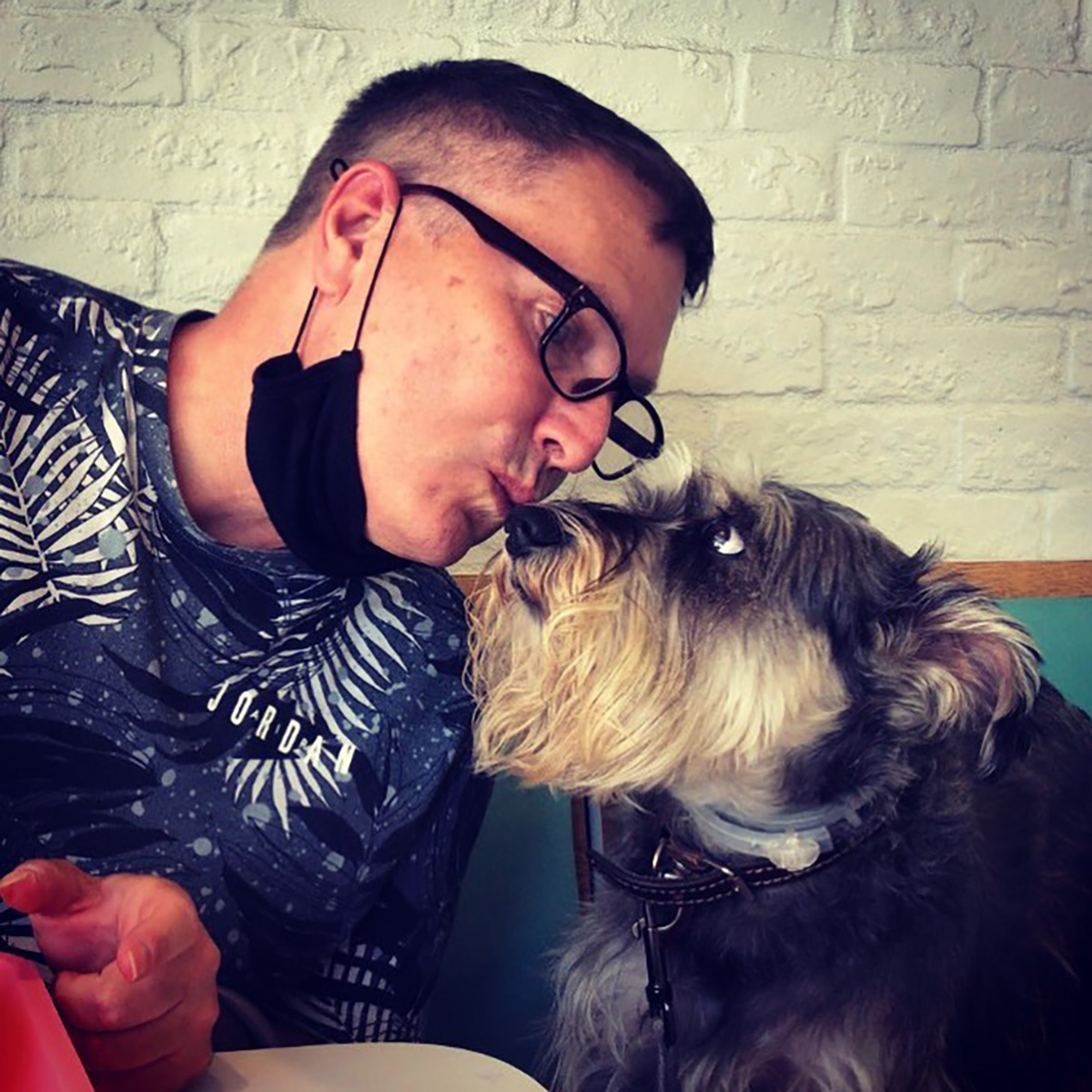
That joy has been extinguished. On Wednesday, Dec. 11, after frantic unanswered calls from his sister Tammy late Monday and Tuesday, Troy’s longtime friend and former partner Arturo Jiminez did a wellness check at Troy’s L.A. apartment and found him dead, with his beloved dog Cody quietly alive by his side. The L.A. Coroner determined Troy Masters died by suicide. No note was recovered. He was 63.
Considered smart, charming, committed to LGBTQ people and the LGBTQ press, Troy’s inexplicable suicide shook everyone, even those with whom he sometimes clashed.
Troy’s sister and mother – to whom he was absolutely devoted – are devastated. “We are still trying to navigate our lives without our precious brother/son. I want the world to know that Troy was loved and we always tried to let him know that,” says younger sister Tammy Masters.
Tammy was 16 when she discovered Troy was gay and outed him to their mother. A “busy-body sister,” Tammy picked up the phone at their Tennessee home and heard Troy talking with his college boyfriend. She confronted him and he begged her not to tell.
“Of course, I ran and told Mom,” Tammy says, chuckling during the phone call. “But she – like all mothers – knew it. She knew it from an early age but loved him unconditionally; 1979 was a time [in the Deep South] when this just was not spoken of. But that didn’t stop Mom from being in his corner.”
Mom even marched with Troy in his first Gay Pride Parade in New York City. “Mom said to him, ‘Oh, my! All these handsome men and not one of them has given me a second look! They are too busy checking each other out!” Tammy says, bursting into laughter. “Troy and my mother had that kind of understanding that she would always be there and always have his back!
“As for me,” she continues, “I have lost the brother that I used to fight for in any given situation. And I will continue to honor his cause and lifetime commitment to the rights and freedom for the LGBTQ community!”
Tammy adds: “The outpouring of love has been comforting at this difficult time and we thank all of you!”
No one yet knows why Troy took his life. We may never know. But Troy and I often shared our deeply disturbing bouts with drowning depression. Waves would inexplicitly come upon us, triggered by sadness or an image or a thought we’d let get mangled in our unresolved, inescapable past trauma.
We survived because we shared our pain without judgment or shame. We may have argued – but in this, we trusted each other. We set everything else aside and respectfully, actively listened to the words and the pain within the words.
Listening, Indian philosopher Krishnamurti once said, is an act of love. And we practiced listening. We sought stories that led to laughter. That was the rope ladder out of the dark rabbit hole with its bottomless pit of bullying and endless suffering. Rung by rung, we’d talk and laugh and gripe about our beloved dogs.
I shared my 12 Step mantra when I got clean and sober: I will not drink, use or kill myself one minute at a time. A suicide survivor, I sought help and I urged him to seek help, too, since I was only a loving friend – and sometimes that’s not enough.
(If you need help, please reach out to talk with someone: call or text 988 Suicide and Crisis Lifeline. They also have services in Spanish and for the deaf.)
In 2015, Troy wrote a personal essay for Gay City News about his idyllic childhood in the 1960s with his sister in Nashville, where his stepfather was a prominent musician. The people he met “taught me a lot about having a mission in life.”
During summers, they went to Dothan, Ala., to hang out with his stepfather’s mother, Granny Alabama. But Troy learned about “adult conversation — often filled with derogatory expletives about Blacks and Jews” and felt “my safety there was fragile.”
It was a harsh revelation. “‘Troy is a queer,’ I overheard my stepfather say with energetic disgust to another family member,” Troy wrote. “Even at 13, I understood that my feelings for other boys were supposed to be secret. Now I knew terror. What my stepfather said humiliated me, sending an icy panic through my body that changed my demeanor and ruined my confidence. For the first time in my life, I felt depression and I became painfully shy. Alabama became a place, not of love, not of shelter, not of the magic of family, but of fear.”
At the public pool, “kids would scream, ‘faggot,’ ‘queer,’ ‘chicken,’ ‘homo,’ as they tried to dunk my head under the water. At one point, a big crowd joined in –– including kids I had known all my life –– and I was terrified they were trying to drown me.
“My depression became dangerous and I remember thinking of ways to hurt myself,” Troy wrote.
But Troy Masters — who left home at 17 and graduated from the University of Tennessee at Knoxville — focused on creating a life that prioritized being of service to his own intersectional LGBTQ people. He also practiced compassion and last August, Troy reached out to his dying stepfather. A 45-minute Facetime farewell turned into a lovefest of forgiveness and reconciliation.
Troy discovered his advocacy chops as an ad representative at the daring gay and lesbian activist publication Outweek from 1989 to 1991.
“We had no idea that hiring him would change someone’s life, its trajectory and create a lifelong commitment” to the LGBTQ press, says Outweek’s co-founder and former editor-in-chief Gabriel Rotello, now a TV producer. “He was great – always a pleasure to work with. He had very little drama – and there was a lot of drama at Outweek. It was a tumultuous time and I tended to hire people because of their activism,” including Michelangelo Signorile, Masha Gessen, and Sarah Pettit.
Rotello speculates that because Troy “knew what he was doing” in a difficult profession, he was determined to launch his own publication when Outweek folded. “I’ve always been very happy it happened that way for Troy,” Rotello says. “It was a cool thing.”
Troy and friends launched NYQ, renamed QW, funded by record producer and ACT UP supporter Bill Chafin. QW (QueerWeek) was the first glossy gay and lesbian magazine published in New York City featuring news, culture, and events. It lasted for 18 months until Chafin died of AIDS in 1992 at age 35.
The horrific Second Wave of AIDS was peaking in 1992 but New Yorkers had no gay news source to provide reliable information at the epicenter of the epidemic.
“When my business partner died of AIDS and I had to close shop, I was left hopeless and severely depressed while the epidemic raged around me. I was barely functioning,” Troy told VoyageLA in 2018. “But one day, a friend in Moscow, Masha Gessen, urged me to get off my back and get busy; New York’s LGBT community was suffering an urgent health care crisis, fighting for basic legal rights and against an increase in violence. That, she said, was not nothing and I needed to get back in the game.”
It took Troy about two years to launch the bi-weekly newspaper LGNY (Lesbian and Gay New York) out of his East Village apartment. The newspaper ran from 1994 to 2002 when it was re-launched as Gay City News with Paul Schindler as co-founder and Troy’s editor-in-chief for 20 years.

“We were always in total agreement that the work we were doing was important and that any story we delved into had to be done right,” Schindler wrote in Gay City News.
Though the two “sometimes famously crossed swords,” Troy’s sudden death has special meaning for Schindler. “I will always remember Troy’s sweetness and gentleness. Five days before his death, he texted me birthday wishes with the tag, ‘I hope you get a meaningful spanking today.’ That devilishness stays with me.”
Troy had “very high EI (Emotional Intelligence), Schindler says in a phone call. “He had so much insight into me. It was something he had about a lot of people – what kind of person they were; what they were really saying.”
Troy was also very mischievous. Schindler recounts a time when the two met a very important person in the newspaper business and Troy said something provocative. “I held my breath,” Schindler says. “But it worked. It was an icebreaker. He had the ability to connect quickly.”
The journalistic standard at LGNY and Gay City News was not a question of “objectivity” but fairness. “We’re pro-gay,” Schindler says, quoting Andy Humm. “Our reporting is clear advocacy yet I think we were viewed in New York as an honest broker.”
Schindler thinks Troy’s move to Los Angeles to jump-start his entrepreneurial spirit and reconnect with Arturo, who was already in L.A., was risky. “He was over 50,” Schindler says. “I was surprised and disappointed to lose a colleague – but he was always surprising.”
“In many ways, crossing the continent and starting a print newspaper venture in this digitally obsessed era was a high-wire, counter-intuitive decision,” Troy told VoyageLA. “But I have been relentlessly determined and absolutely confident that my decades of experience make me uniquely positioned to do this.”
Troy launched The Pride L.A. as part of the Mirror Media Group, which publishes the Santa Monica Mirror and other Westside community papers. But on June 12, 2016, the day of the Pulse Nightclub shooting in Orlando, Fla., Troy said he found MAGA paraphernalia in a partner’s office. He immediately plotted his exit. On March 10, 2017, Troy and the “internationally respected” Washington Blade announced the launch of the Los Angeles Blade.

In a March 23, 2017 commentary promising a commitment to journalistic excellence, Troy wrote: “We are living in a paradigm shifting moment in real time. You can feel it. Sometimes it’s overwhelming. Sometimes it’s toxic. Sometimes it’s perplexing, even terrifying. On the other hand, sometimes it’s just downright exhilarating. This moment is a profound opportunity to reexamine our roots and jumpstart our passion for full equality.”
Troy tried hard to keep that commitment, including writing a personal essay to illustrate that LGBTQ people are part of the #MeToo movement. In “Ending a Long Silence,” Troy wrote about being raped at 14 or 15 by an Amtrak employee on “The Floridian” traveling from Dothan, Ala., to Nashville.
“What I thought was innocent and flirtatious affection quickly turned sexual and into a full-fledged rape,” Troy wrote. “I panicked as he undressed me, unable to yell out and frozen by fear. I was falling into a deepening shame that was almost like a dissociation, something I found myself doing in moments of childhood stress from that moment on. Occasionally, even now.”
From the personal to the political, Troy Masters tried to inform and inspire LGBTQ people.
Richard Zaldivar, founder and executive director of The Wall Las Memorias Project, enjoyed seeing Troy at President Biden’s Pride party at the White House.
“Just recently he invited us to participate with the LA Blade and other partners to support the LGBTQ forum on Asylum Seekers and Immigrants. He cared about underserved community. He explored LGBTQ who were ignored and forgotten. He wanted to end HIV; help support people living with HIV but most of all, he fought for justice,” Zaldivar says. “I am saddened by his loss. His voice will never be forgotten. We will remember him as an unsung hero. May he rest in peace in the hands of God.”
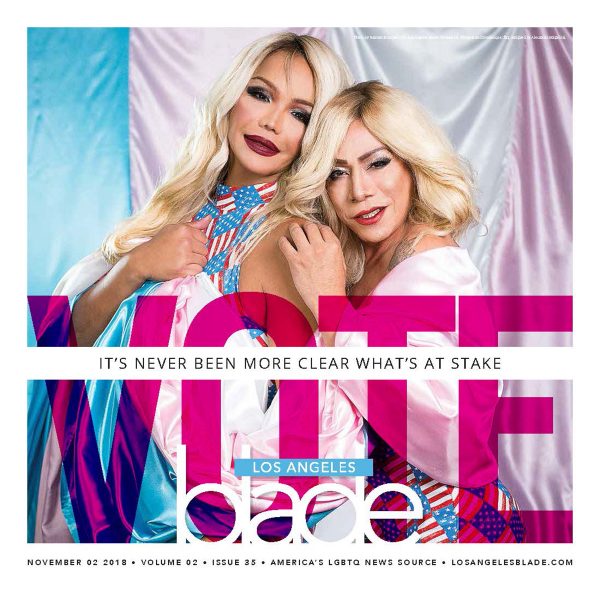
Troy often featured Bamby Salcedo, founder, president/CEO of TransLatina Coalition, and scores of other trans folks. In 2018, Bamby and Maria Roman graced the cover of the Transgender Rock the Vote edition.
“It pains me to know that my dear, beautiful and amazing friend Troy is no longer with us … He always gave me and many people light,” Salcedo says. “I know that we are living in dark times right now and we need to understand that our ancestors and transcestors are the one who are going to walk us through these dark times… See you on the other side, my dear and beautiful sibling in the struggle, Troy Masters.”
“Troy was immensely committed to covering stories from the LGBTQ community. Following his move to Los Angeles from New York, he became dedicated to featuring news from the City of West Hollywood in the Los Angeles Blade and we worked with him for many years,” says Joshua Schare, director of Communications for the City of West Hollywood, who knew Troy for 30 years, starting in 1994 as a college intern at OUT Magazine.
“Like so many of us at the City of West Hollywood and in the region’s LGBTQ community, I will miss him and his day-to-day impact on our community.”

(Photo by Richard Settle for the City of West Hollywood)
“Troy Masters was a visionary, mentor, and advocate; however, the title I most associated with him was friend,” says West Hollywood Mayor John Erickson. “Troy was always a sense of light and working to bring awareness to issues and causes larger than himself. He was an advocate for so many and for me personally, not having him in the world makes it a little less bright. Rest in Power, Troy. We will continue to cause good trouble on your behalf.”
Erickson adjourned the WeHo City Council meeting on Monday in his memory.
Masters launched the Los Angeles Blade with his partners from the Washington Blade, Lynne Brown, Kevin Naff, and Brian Pitts, in 2017.
“Troy’s reputation in New York was well known and respected and we were so excited to start this new venture with him,” says Naff. “His passion and dedication to queer LA will be missed by so many. We will carry on the important work of the Los Angeles Blade — it’s part of his legacy and what he would want.”
AIDS Healthcare Foundation President Michael Weinstein, who collaborated with Troy on many projects, says he was “a champion of many things that are near and dear to our heart,” including “being in the forefront of alerting the community to the dangers of Mpox.”
“All of who he was creates a void that we all must try to fill,” Weinstein says. “His death by suicide reminds us that despite the many gains we have made, we’re not all right a lot of the time. The wounds that LGBT people have experienced throughout our lives are yet to be healed even as we face the political storm clouds ahead that will place even greater burdens on our psyches.”
May the memory and legacy of Troy Masters be a blessing.
Veteran LGBTQ journalist Karen Ocamb served as the news editor and reporter for the Los Angeles Blade.

Trans activists gather on National Mall for Transgender Day of Visibility

The cost of speaking one’s mind

Senegalese president signs bill that further criminalizes homosexuality

Md. lawmakers reaffirm legislative priorities

Supreme Court rules against Colo. law banning conversion therapy for minors

Celebrate cherry blossoms the drag way

Lorato ke Lorato: marriage equality, democracy, and the unfinished work of justice in Botswana

Japanese Supreme Court to consider marriage equality

The outrage economy is not the LGBTQ community

Anti-trans visa ruling echoes Nazi regime destroying trans documents
-

 Out & About4 days ago
Celebrate cherry blossoms the drag way
-
Botswana4 days ago
Lorato ke Lorato: marriage equality, democracy, and the unfinished work of justice in Botswana
-
Japan4 days ago
Japanese Supreme Court to consider marriage equality
-
Opinions4 days ago
The outrage economy is not the LGBTQ community