National
Bachmann’s record is no laughing matter
Tea Party fave opposes LGBT rights; husband backs ‘ex-gay’ therapy
The anti-gay rhetoric and voting record of Rep. Michele Bachmann (R-Minn.) came under scrutiny this week in the wake of her announcement that she would run for the White House in 2012.
In a speech last week in her hometown of Waterloo, Iowa, the Tea Party favorite pledged to continue advancing conservative causes as she formally declared her candidacy.
“I want to bring a voice, your voice, to the White House, just as I have brought your voice to the halls of Congress to secure the promise of the future for our generation and generations to come,” Bachmann said.
But based on her voting record in Congress since she started representing Minnesota in the U.S. House in 2007, a Bachmann presidency would likely be bad news for LGBT Americans.
In addition to voting against “Don’t Ask, Don’t Tell” repeal and opposing the Employment Non-Discrimination Act, she also opposed hate crimes legislation.
Additionally, Bachmann has called for passage of a federal constitutional amendment that would ban same-sex marriage throughout the country, even though she was elected to Congress too late to vote on such a measure when it came before lawmakers.
As a state senator in Minnesota, Bachmann sponsored legislation to make a ban on same-sex marriage part of the state constitution. The amendment that Minnesota voters will vote on in 2012 is similar to the measure she proposed at that time.
Michael Cole-Schwartz, spokesperson for the Human Rights Campaign, predicted that a Bachmann presidency would mark a major setback for LGBT rights.
“A President Bachmann would mean a wholesale reversal from the gains we’ve seen over the past few years,” Cole-Schwartz said. “Not only would we see policy positions that hurt our families, the level of anti-LGBT rhetoric would no doubt rise as would the use of our community as a political wedge issue.”
The Bachmann campaign didn’t respond to the Washington Blade’s request for comment.
Bachmann could become a major player in the 2012 presidential campaign if she performs well in the early primary states and some experts have speculated that she would make a strong vice presidential pick. A favorite among the Tea Party wing of the GOP, Bachmann is already polling well in her home state of Iowa, where social conservatives tend to fare well in the GOP caucus.
According to a poll published June 26, Bachmann is nearly tied in Iowa with frontrunner, former Massachusetts Gov. Mitt Romney. The Des Moines Register Iowa Poll found that Romney was favored by 23 percent of likely Republican caucus-goers while Bachmann was supported by 22 percent.
Additionally, a poll published Wednesday by Public Policy Polling found Bachmann would place a strong second in the New Hampshire primary, even though the GOP in the state has more libertarian leanings. Romney leads in the state with the support of 25 percent of respondents, but Bachmann comes in second at 18 percent. She jumped 14 points in the last three months.
Bachmann has said recently that marriage should be left to the states to decide. However, she has always reiterated her support for the Federal Marriage Amendment — a contradiction because ratification of that measure would define marriage at the federal level.
During her appearance June 13 in the Republican presidential debate, Bachmann called for enactment of a Federal Marriage Amendment as she said she wouldn’t interfere with New Hampshire’s law allowing same-sex marriage.
“I do support a constitutional amendment on marriage between a man and a woman, but I would not be going into the states to overturn their state law,” Bachmann said.
Also during the debate, Bachmann said she would have kept “Don’t Ask, Don’t Tell” in place.
“I would want to confer with our commanders-in-chief and also with the Joint Chiefs of Staff because I want to know how it was being implemented and if it had the detrimental effects that have been suggested will come,” Bachmann said.
Chairman of the Joint Chiefs of Staff Adm. Mike Mullen came out in favor of “Don’t Ask, Don’t Tell” repeal in February. Some of the military service chiefs — most notably Marine Corps Commandant Gen. James Amos — opposed repeal of the military’s gay ban before Congress acted to lift the law, but each has said they can implement open service.
R. Clarke Cooper, executive director of Log Cabin Republicans, acknowledged his organization and Bachmann don’t “see eye-to-eye” on LGBT issues, but said her more nuanced rhetoric on marriage was noteworthy.
“We’ve been arguing all along that DOMA is incursion on states rights,” Cooper said. “It’s interesting to see her kind of move in that direction because that’s a nuance. It doesn’t mean that she’s all of a sudden a champion of fundamental rights by any means, but it’s interesting that she’s being forced to shift.”
In addition to her anti-gay stances on marriage and the military, Bachmann has also engaged in anti-gay political rhetoric throughout her career.
The slightly more nuanced — if contradictory — position that Bachmman has adopted on marriage is different from what she previously stated. According to the Washington Post, Bachmann has called marriage “probably the biggest issue that will impact our state and our nation in the last, at least, 30 years.”
Additionally, in the fight to push for a same-sex marriage ban in Minnesota in 2004, Bachmann said a member of her family is gay and called it “a very sad life. It’s part of Satan.” According to the Post, her stepsister, Helen LaFave, is gay and in 2006 publicly opposed the ban.
Scott Dibble, a gay Democratic state senator in Minnesota, said in a Post interview that Bachmann argued that advancing gay rights could result in children being “lured into trying homosexuality out” and that “the reason for high divorce rates in Scandinavian countries was that they offered equality” to LGBT people.
But Bachmann could be overshadowed in her anti-gay views by her husband, Marcus Bachmann, a therapist who runs a faith-based counseling center. His practice reportedly offers discredited conversion therapy for LGBT people, although he’s said that he doesn’t try to convert gay people who say “they want to stay homosexual.”
In an interview last year with a Christian radio show, Marcus Bachmann compared gays to “barbarians” and said they “need to be educated, need to be disciplined.”
“Just because someone feels it or thinks it doesn’t mean that we are supposed to go down that road,” he said. “That’s what is called the sinful nature. We have a responsibility as parents and as authority figures not to encourage such thoughts and feelings from moving into the action steps.”
Marcus Bachmann is close to his wife’s political campaign. According to the Washington Post, Bachmann recently called himself his wife’s “strategist” and has acted as her media planner, travel assistant and personal shopper.
Despite Bachmann’s anti-gay record, Log Cabin’s Cooper said the country has grown more supportive of LGBT rights since the last presidential election and the GOP has noticed.
“Looking at where are we are in 2011 heading off the 2012 cycle, it’s a much different world than it was in the ’08 cycle, and a far different world than it was in ’04 and 2000,” Cooper said. “We’re in a much different state as a country than we have ever been, and it is going to force campaigns to evaluate these issues.”



2026 Midterm Elections
Chris Pappas wins NH Democratic Senate primary
Gay congressman running to succeed retiring U.S. Sen. Jeanne Shaheen

New Hampshire Congressman Chris Pappas on Tuesday won the Democratic primary in the race to succeed retiring U.S. Sen. Jeanne Shaheen (D-N.H.) in the U.S. Senate.
Pappas defeated Karishma Manzur, who was his primary challenger, by a 61.8-36.1 percent margin.
The gay congressman will face off against former U.S. Sen. John E. Sununu, who defeated former U.S. Sen. Scott Brown in the Republican primary.
“Tonight’s victory sends a clear message that voters are looking for leaders who will fight for their rights, their freedoms, and to be treated with dignity and respect,” said Human Rights Campaign President Kelley Robinson in a statement.
She campaigned for Pappas in Manchester, New Hampshire’s largest city, on Aug. 30.
“Chris Pappas has delivered results, stood up for equality, and showed up for the people he serves,” said Robinson in her statement. “HRC was proud to mobilize Equality Voters across New Hampshire to help power this win. We don’t have a second to waste between now and November. We look forward to continuing our work with Rep. Pappas as he drives toward victory in November so he can help return a pro-equality majority to the United States Senate.”
A poll the University of New Hampshire Survey Center released on Aug. 26 showed Sununu ahead of Pappas by a 45-43 percent margin if they were to face off in the general election. The margin of error is +/-2.1 percent.
Pappas would become the first openly gay man elected to the U.S. Senate if he were to win in November.
Georgia
Everton Blair makes history as first openly gay congressman from Ga.
Former Gwinnett County Board of Education member to serve remainder of David Scott’s term
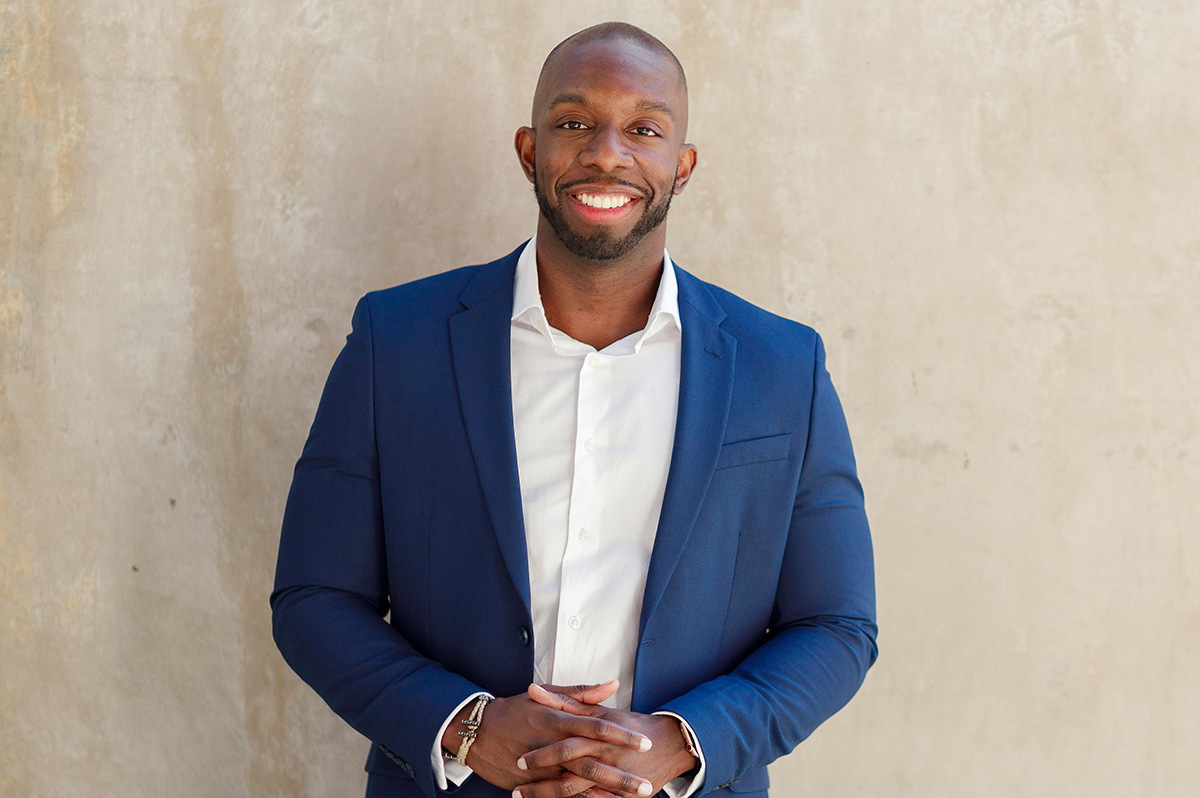
Georgia made history last week when Everton Blair, Jr., was sworn into the U.S. House of Representatives, becoming the state’s first openly LGBTQ member of Congress and the latest LGBTQ addition to the chamber.
Blair, who represents Georgia’s 13th Congressional District, was sworn in on Sept. 1 after winning a special election to fill the vacancy left by the late-Congressman David Scott. Blair defeated Marcye Scott, the late congressman’s daughter, in the Aug. 25 runoff, winning 53.2 percent of the vote to Scott’s 46.8 percent.
He will serve the remainder of Scott’s term through Jan. 3, 2027. Blair is not running in the November general election for a full term.
Blair brings a progressive platform to Congress.
The 34 year-old supports Medicare for All, a Green New Deal, raising the minimum wage, and universal gun background checks. His campaign platform also included positions on LGBTQ rights, reproductive freedom, workers’ rights, climate, and gun violence.
Since joining the House, Blair has joined the Congressional Black Caucus and Congressional Progressive Caucus. He is also a co-chair of the Congressional Equality Caucus.
Before joining the House, Blair served on the Gwinnett County Board of Education, where he became the first Black member and youngest-ever member elected to the board, as well as its first openly gay member. He was later unanimously selected as chair.
Blair also served as a fellow in President Barack Obama’s White House Initiative on Educational Excellence that focused on improving academic outcomes and expanding opportunities for minority students.
The son of Jamaican immigrants, Blair was born and raised in Georgia’s 13th Congressional District. He earned a bachelor’s degree in applied mathematics from Harvard University, a master’s degree in policy, organization, and leadership from Stanford University, and a Doctor of Education Leadership degree from Harvard.
Blair’s campaign received endorsements from a number of organizations, including the LGBTQ+ Victory Fund and progressive Democratic groups such as Future Democrats.
The Equality PAC, a political action committee dedicated to electing openly LGBTQ candidates to office, celebrated Blair’s victory and provided a statement to the Washington Blade about the historic nature of his election.
“This is a historic election for Georgia, the South, and our entire country,” Equality PAC said in an email. “Everton Blair brings a strong record of public service and a deep commitment to making government work for working families.”
The group said Blair would “fight to lower costs, expand access to quality health care, create economic opportunity, and ensure every community has a voice in Washington.”
“At the same time, Everton understands the importance of standing up for equality and defending the rights and freedoms of LGBTQ Americans and every community facing discrimination,” Equality PAC said. “His historic election as Georgia’s first openly LGBTQ Member of Congress and the first openly LGBTQ man elected from the South is a powerful reminder of how far our country has come — and how much work remains.”
Equality PAC said it was “proud to welcome Everton to the House” and looked forward to working with him.
U.S. Military/Pentagon
Pentagon expands testosterone screening as trans troops face hormone therapy restrictions
Defense Department says updated guidelines to be issued shortly

The Pentagon has announced that new clinical guidance will be released establishing mandatory testosterone deficiency screening for active-duty and reserve cisgender male service members ages 30 and older, advancing a policy that expands hormone-related care for cisgender troops.
The Defense Department said the existing clinical guidelines, which are not currently available on the Defense Health Agency’s website, are being updated and that the final guidance will be issued shortly.
The announcement comes amid a wave of anti-transgender policies from both the DoD and the Trump-Vance administration, which continue to prohibit trans men from receiving the same treatment.
Under the forthcoming guidance, men ages 30 and older will be forced to undergo testosterone blood tests as part of their medical care. Younger male service members will be tested if they request screening or if clinicians identify warning signs of low testosterone.
The new guidelines formalize a screening program Defense Secretary Pete Hegseth announced in July, when he said the Pentagon would begin testing service members to ensure that “you have the right testosterone levels to operate at your absolute best.”
“Taking care of your long-term health means ensuring you remain strong, resilient, and capable — not just for your next deployment, but for the rest of your life, so you can thrive long after you take off the uniform,” Hegseth said at the time.
The Defense Health Agency’s clinical guidance says the program is intended to address “hormonal and energy-availability issues.” Hegseth said in July that testosterone replacement therapy would remain voluntary for service members if treatment is recommended.
The Food and Drug Administration is also scheduled to hold a meeting later this month with experts to discuss the medical use of testosterone.
The Pentagon’s push to routinely test testosterone levels runs counter to current medical guidance, which generally recommends considering testosterone therapy only for men who have symptoms consistent with low testosterone and have documented low hormone levels on two separate blood tests.
Testosterone is a sex hormone naturally produced by people of all sexes. It plays a role in regulating muscle mass, bone density, and sex drive. Testosterone levels in men naturally decline with age and have been associated with symptoms including erectile dysfunction, low libido, mood changes and weight gain, although experts continue to debate when testosterone therapy is medically appropriate.
The policy has drawn scrutiny from LGBTQ advocates because the Pentagon and Hegseth have simultaneously cited hormone therapy as part of the rationale for removing trans service members from the military.
Under President Donald Trump’s 2025 executive order, “Prioritizing Military Excellence and Readiness,” the military has moved to bar trans people diagnosed with gender dysphoria from serving and has begun formal administrative separation proceedings against trans personnel.
The Pentagon continues to pursue implementation of the trans military ban as litigation over the policy proceeds. As a result, some trans service members have had their gender-affirming hormone therapy halted even as the Pentagon expands testosterone screening and potential treatment for cisgender service members.
SPARTA Pride, a nonpartisan nonprofit organization made up of trans service members, veterans and their allies, criticized the disparity to the Washington Blade when Hegseth first announced the screening program.
“If hormone therapy helps warfighters perform at their best, then it cannot simultaneously be used as evidence that transgender service members are unfit to serve,” said Kara Corcoran, executive director of SPARTA Pride. “The same class of evidence-based medical treatment cannot be characterized as readiness-enhancing for one group and readiness-destroying for another.”
On June 1, the U.S. Court of Appeals for the D.C. Circuit ruled that trans service members already serving in the military could continue to do so while allowing the armed services to continue refusing to enlist new trans recruits.
The Blade reached out to the Pentagon when the testosterone screening program was first announced in July, asking why cisgender service members could receive testosterone therapy while transgender service members could not. The Pentagon did not respond.

Report: 90 percent of LGBTQ groups around the world have lost funding since 2025

PHOTOS: SUNFESTIVAL

Gloria Steinem’s life of substance and consequence

Nominate your favorites for the Blade’s 25th annual Best Of LGBTQ DC Awards

Grindr settles UK lawsuit over claims it shared users’ personal information

‘Here the Whole Time’ delivers queer coming-of-age comedy

Blade Foundation to host fundraiser in Rehoboth on Sept. 12

Actress takes on bisexual ‘Ma’ Rainey in new Round House production

New book examines fashionista Audrey Smaltz’s fabulous life

Everton Blair makes history as first openly gay congressman from Ga.
-

 Movies4 days ago
‘Here the Whole Time’ delivers queer coming-of-age comedy
-
Out & About3 days ago
Blade Foundation to host fundraiser in Rehoboth on Sept. 12
-
Theater3 days ago
Actress takes on bisexual ‘Ma’ Rainey in new Round House production
-
Books3 days ago
New book examines fashionista Audrey Smaltz’s fabulous life