Arts & Entertainment
Gays behind the scenes
Personnel trumps thematic content in fall theatrical season
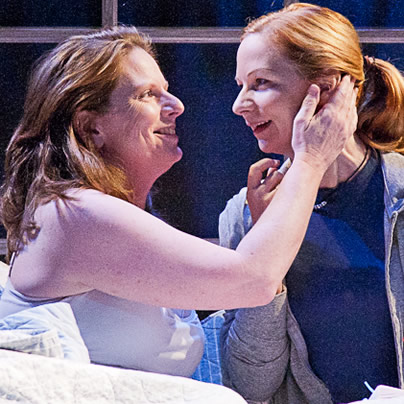
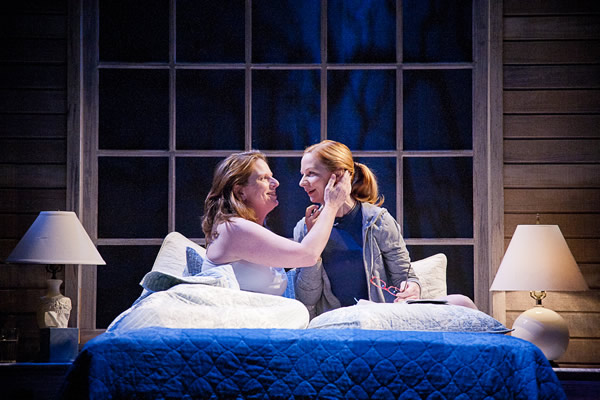
MaryBeth Wise (left) and Susan Lynskey in Theatre J’s ‘Body Awareness.’ (Photo by C. Stanley Photography; courtesy Theatre J)
The new theater season is upon us. And while there’s not a whole lot of LGBT content among the offerings, there is — as always — a wealth of gay talent making it happen.
After a hiatus from the D.C. theater scene, MaryBeth Wise has returned to the stage. Wise, a talented and well-liked local actor who is gay, is currently playing half of a same-sex couple in Theatre J’s production of Annie Baker’s comic drama “Body Awareness” (through Sept. 23). Set in Vermont, the comic drama explores the reaction of Joyce (Wise) and her more uptight partner Phyllis to a visiting photographer and his “male gaze.”
During Wise’s several years off the boards, she concentrated on her other job (network consultant at Library of Congress, National Library Service for the Blind and Physically Handicapped). She also picked up a degree in library science. “But I missed acting,” says Wise. “In ‘Body Awareness’ my character is going through a journey of self-discovery. Learning about what she wants. It’s a wonderful part. Hopefully it will lead to more opportunities.” (washingtondcjcc.org)
Also this fall, Wise’s real life partner Sarah Marshall is playing several parts in the Shakespeare Theatre Company’s season-opener, Gogol’s satire of provincial Russian bureaucracy “The Government Inspector” (Sept. 13-Oct. 28). (shakespearetheatre.org)
At Tony Award-winning Signature Theatre in Shirlington, the season has already begun with a production of “The Best Little Whorehouse in Texas” (through Oct. 7). Staged by the company’s gay artistic direction Eric Schaeffer, the rollicking musical stars Sherri L. Edelen (as brothel madam Miss Mona). The big cast features reliably excellent Signature vets Matt Conner and Stephen Gregory Smith (both gay).
Also at Signature, the company’s talented and versatile associate artistic director Matthew Gardiner directs gay playwright Christopher Shinn’s “Dying City” (Oct. 2-Nov. 25). It’s the story of young man grappling with his identical twin’s suspicious death in Iraq. Incidentally, Gardiner, who is gay, is also a twin.
Following “Dying City,” Gardiner directs Signature’s production of the Tony Award-winning musical “Dreamgirls” (opens Nov. 13). (signature-theatre.org)
At Synetic Theater, up-and-coming actor Alex Mills plays the challenging title role in the company’s season opener, “Jeckyll and Hyde” (Sept. 20-Oct. 21). Synetic is a movement-based company renowned for innovative and athletic choreography and hard-bodied casts. (synetictheater.org).
“One Night With Janis Joplin” opens at Arena Stage Sept. 28 with Mary Bridget Davies in the title role. Staged like a Joplin concert, the piece was written and will be directed by Randy Johnson, who’s gay. Kathleen Turner continues her run there as Molly Ivins in “Red Hot Patriot” through Oct. 28. (arenastage.org)
Alexandria’s MetroStage opens its season with “Jacques Brel is Alive and Well and Living in Paris” (through Oct. 21), a musical revue celebrating the work of the late Belgian singer/songwriter. Respectively directed and choreographed by the talented team of Serge Seiden and Matthew Gardiner (both gay), the production features a top-notch cast including the talented Natascia Diaz (who appeared in the 2006 Off-Broadway production), Bayla Whitten, Sam Ludwig and local favorite Bobby Smith (who is gay) singing a score comprised of plaintive ballads, rousing anthems, tango and rock. (metrostage.org)
After “Jacques Brel,” Bobby Smith directs the Olney Theatre Center’s production of Rodgers and Hammerstein’s beloved musical “Cinderella” (Nov. 14-Dec. 30). (olneytheatre.org)
In October, the Studio Theatre presents the world premiere of “Dirt” (opens Oct. 17). Penned by Byron Lavery (the author of “Frozen”), the play is described by Studio as an “exploration of the mess people make of themselves and their relationships.” Part of the company’s Lab Series, the production is staged by Studio’s artistic director David Muse and reunites talented actors Holly Twyford and Matthew Montelongo (both gay). The talented duo has been successfully paired before in Vassily Sigarev’s “Black Milk” at Studio and Douglas Carter Beane’s comedy “The Little Dog Laughed” at Signature Theatre. (studiotheatre.org)
Fledgling company force/collision is premiering Erik Ehn’s “Shape” (Sept. 20-Oct. 6). Part of a series of 17 plays exploring themes of genocide and reconciliation, “Shape” centers on the lives of the two African-American vaudevillians Billy and Cordelia McClain as they negotiate their identity as artists while struggling with conditions of social and political marginalization. The production has been cast cross gendered, says director John Moletress (who is gay), as both a performance device for our ensemble and also a homage to black vaudevillians of the early 20th century who played cross gendered roles. (force/collision.org)
Forum Theatre kicks off the season with the world premiere comedy “Holly Down in Heaven” (Sept. 27-Oct. 20), written by young playwright Kara Lee Corthron. Forum’s website described the title character as “a brilliant 15-year-old born-again Christian, [who after becoming pregnant] banishes herself to the basement and confides only in her dolls, particularly a life-size psychiatrist doll that closely resembles Carol Channing.”
Parker Drown plays Yager, the neighbor suspected of getting Holly pregnant. Drown (who is gay) won a Helen Hayes Award for his performance as Angel, the feisty drag queen battling gentrification and AIDS in Keegan Theatre’s production of the rock opera “Rent.” Forum Theatre is in residence at Round House Silver Spring. (forumtheatre.org)
A couple other theaters that always have interesting productions and are worth checking out include 1st Stage Theatre (1524 Spring Hill Road) in McLean, Va. (1ststagespringhill.org), Woolly Mammoth Theatre Company (641 D Street N.W.) in D.C. (woollymammoth.net) and Olney Theatre Centre in Olney, Md. (2001 Olney-Sandy Springs Road; olneytheatre.org).





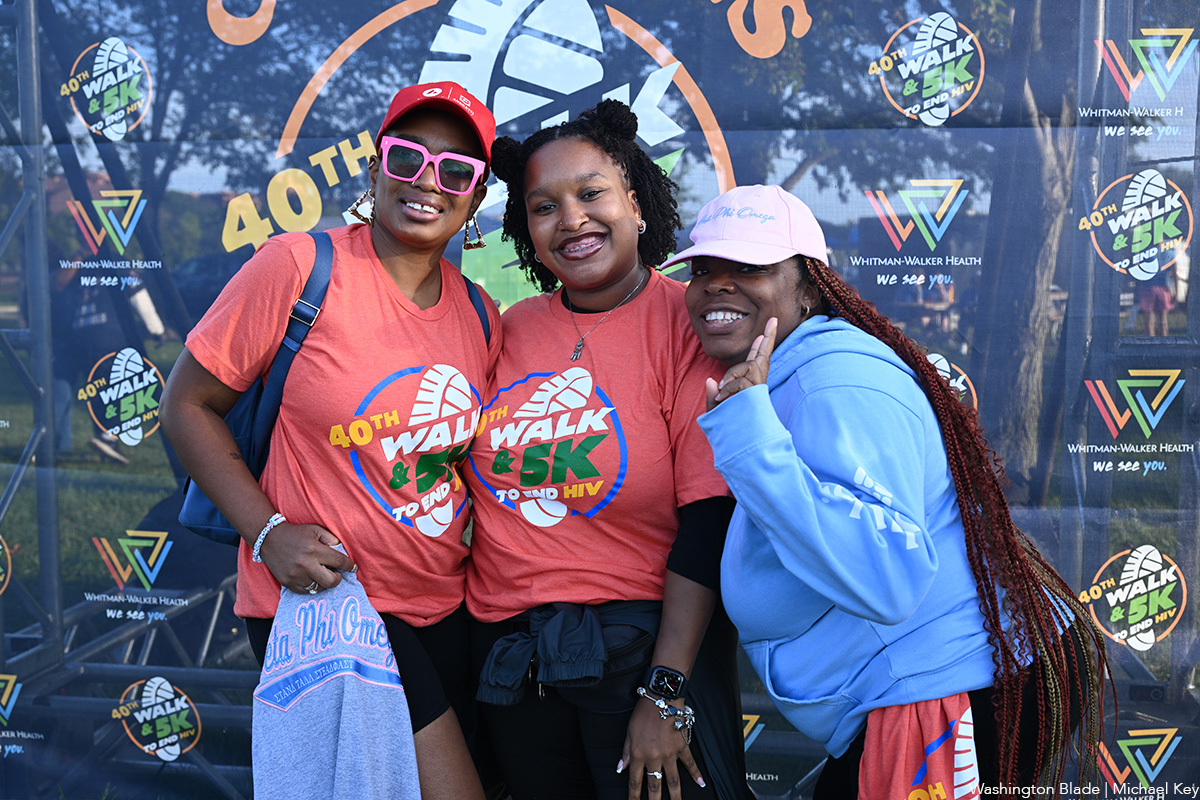
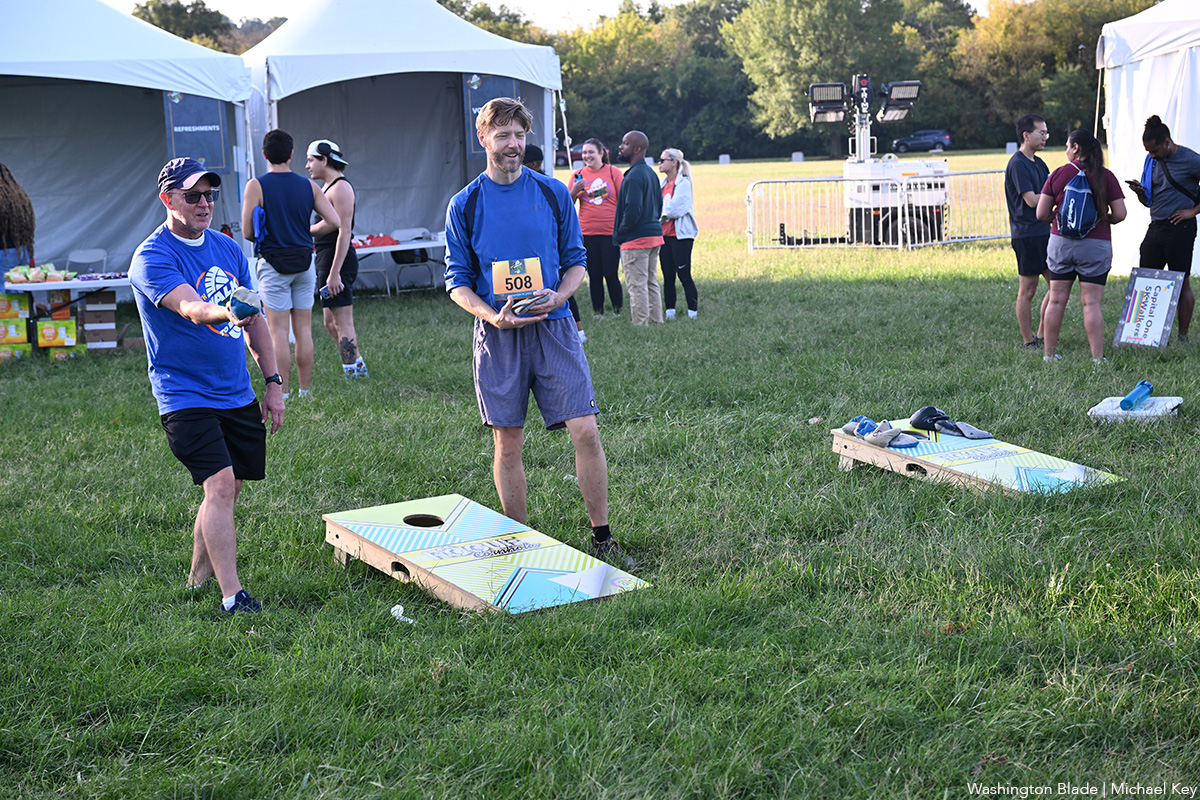
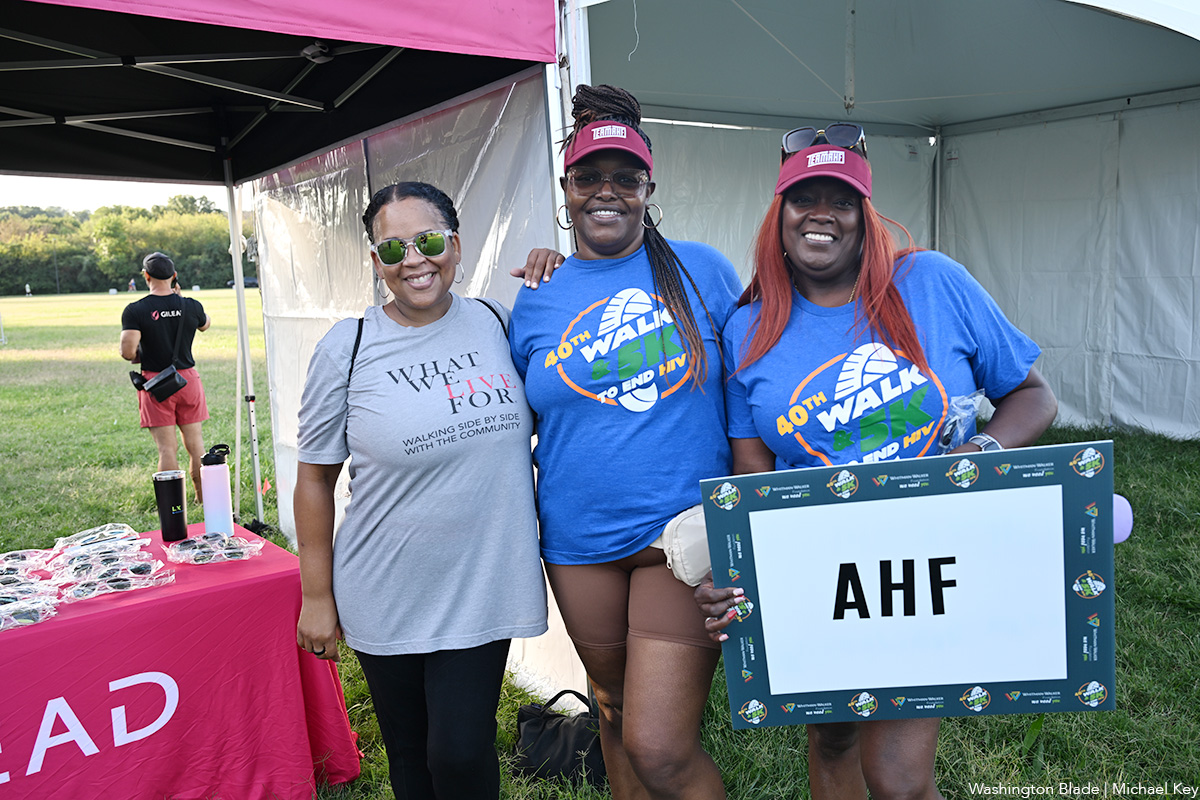
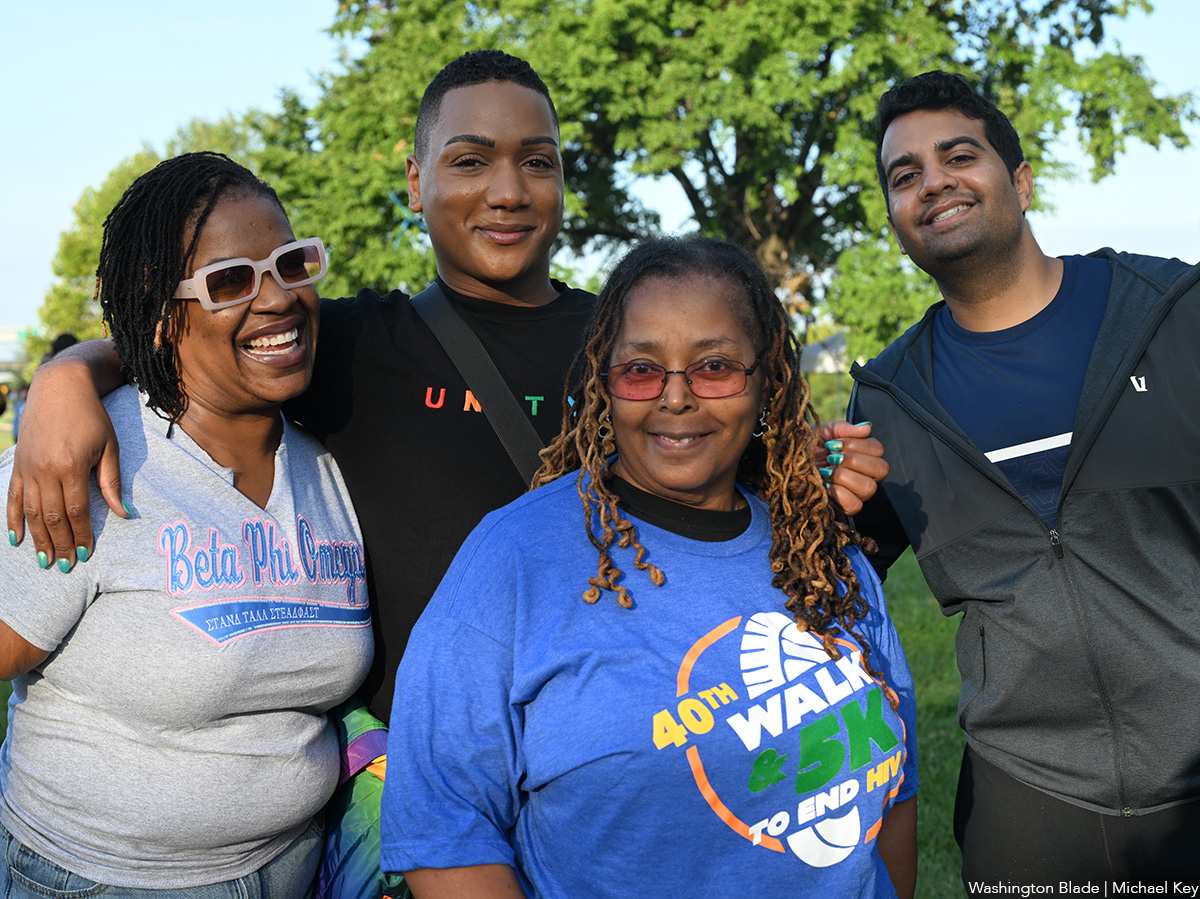
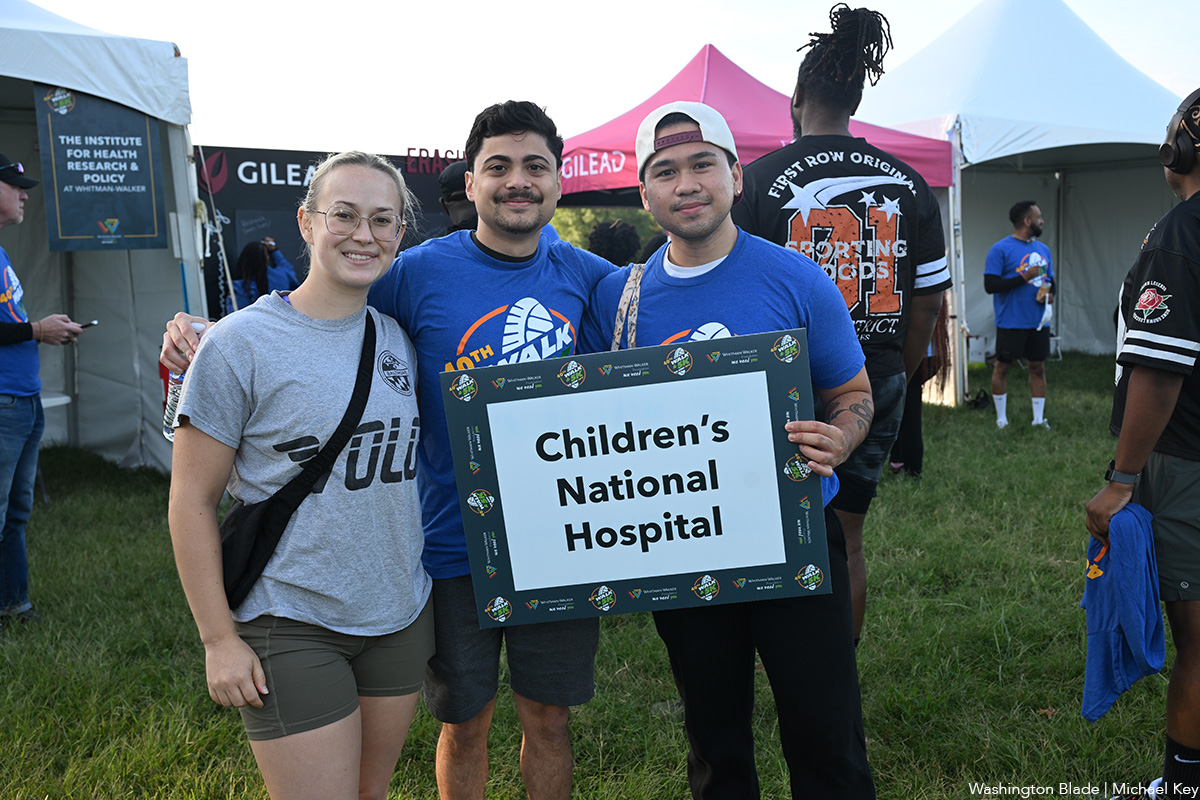
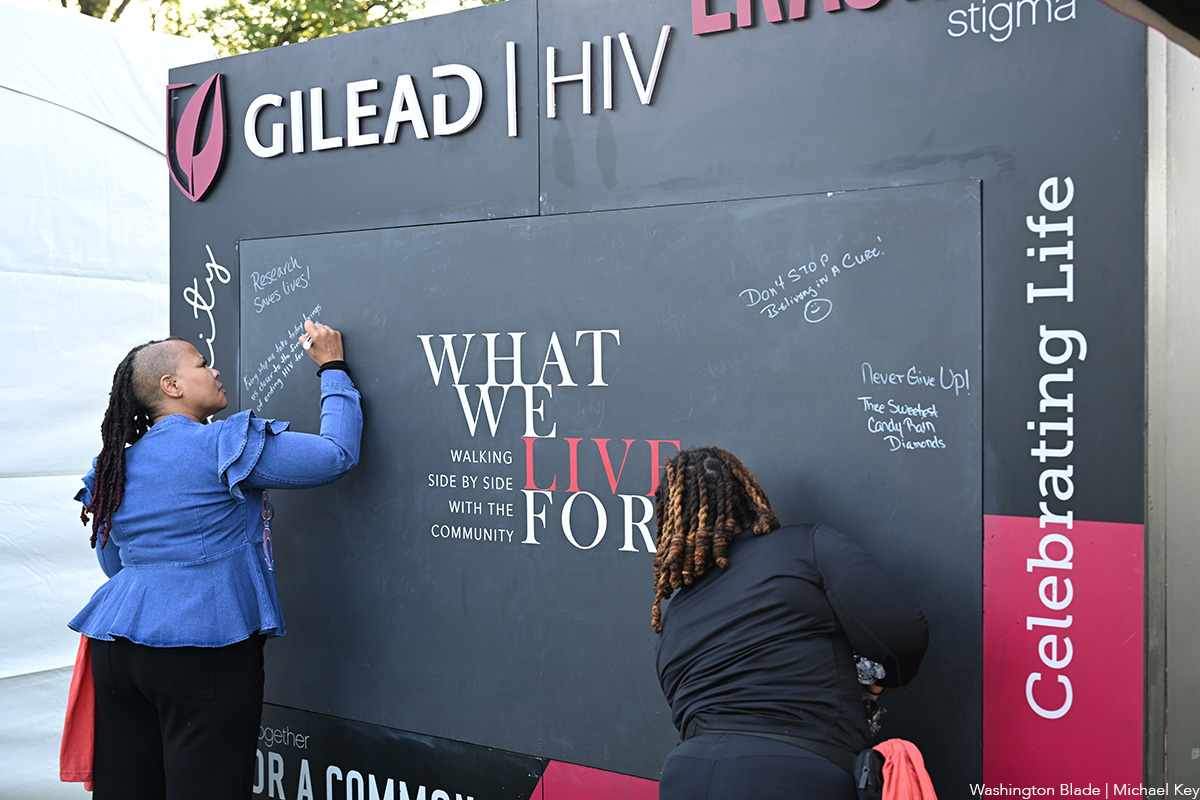
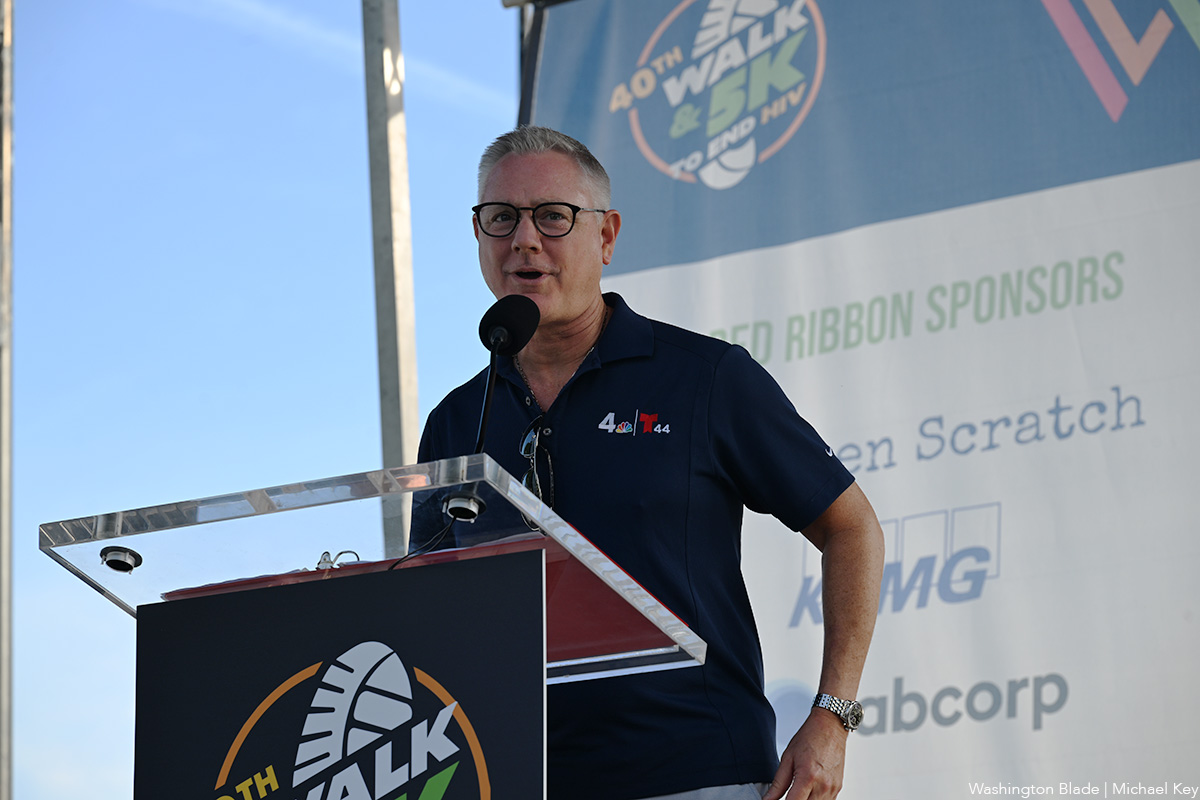
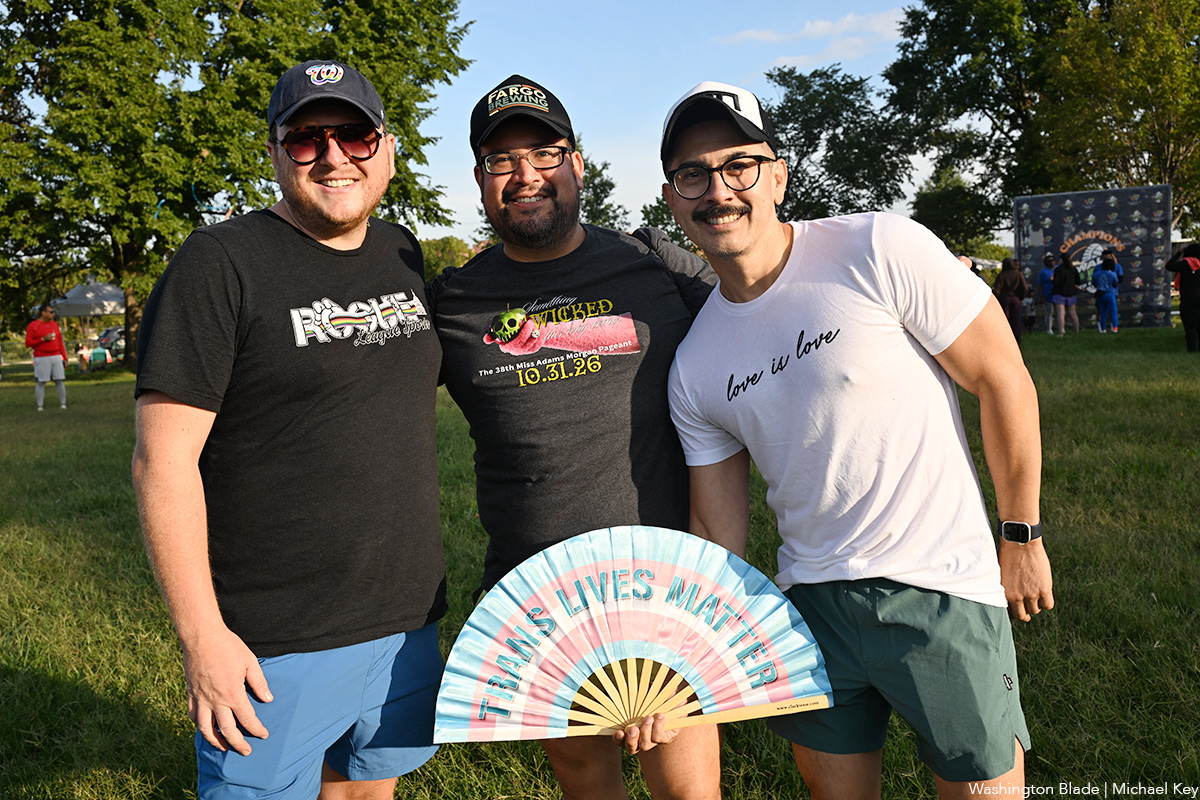
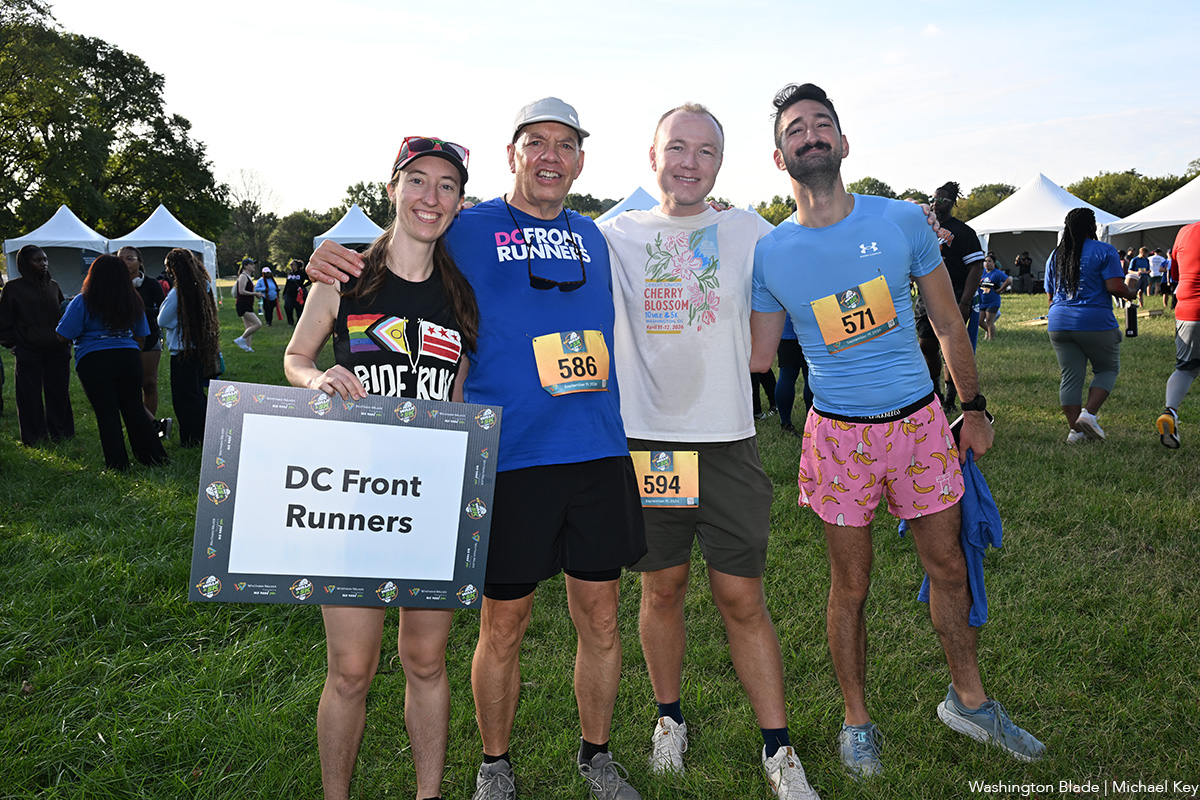
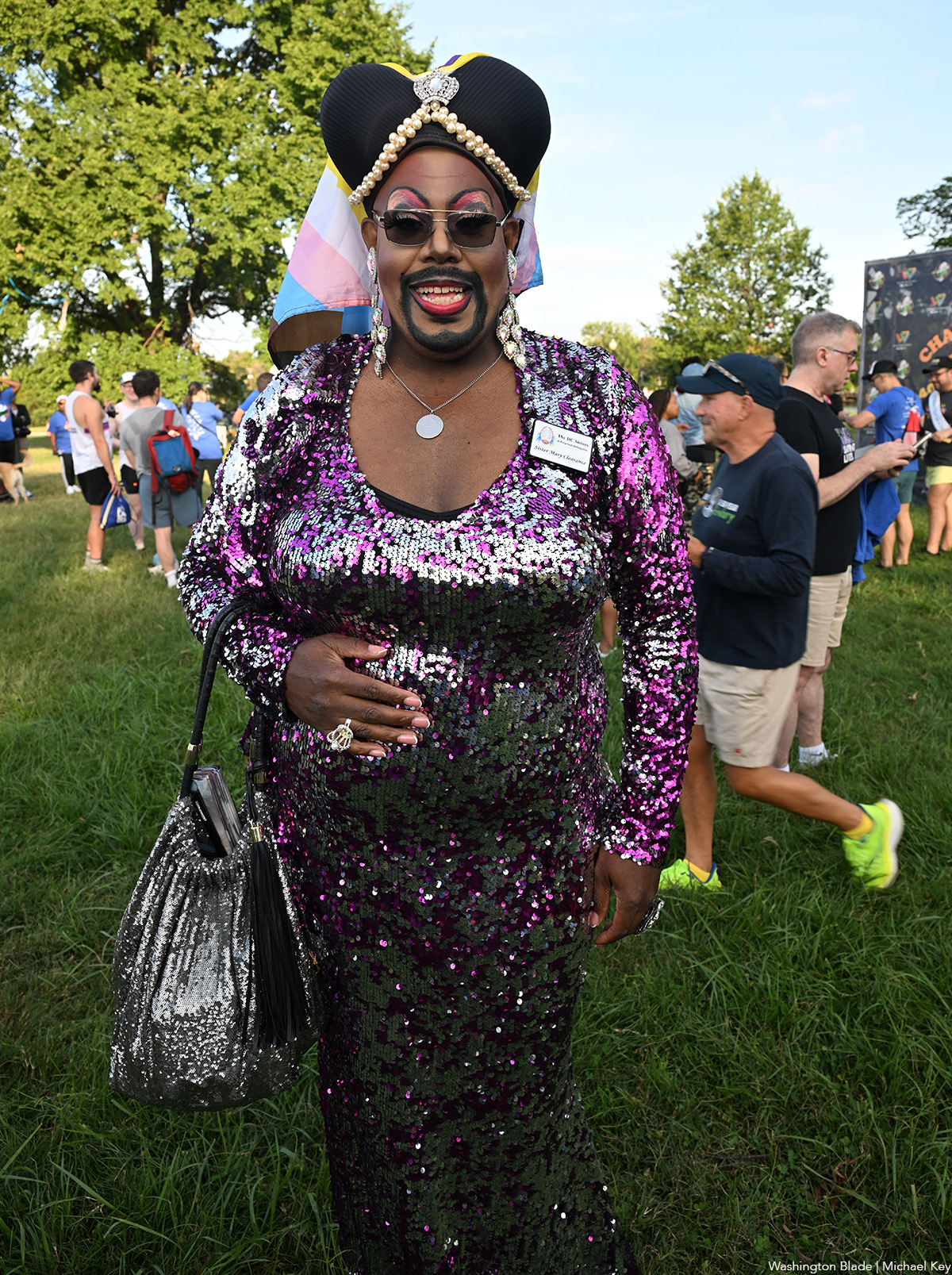
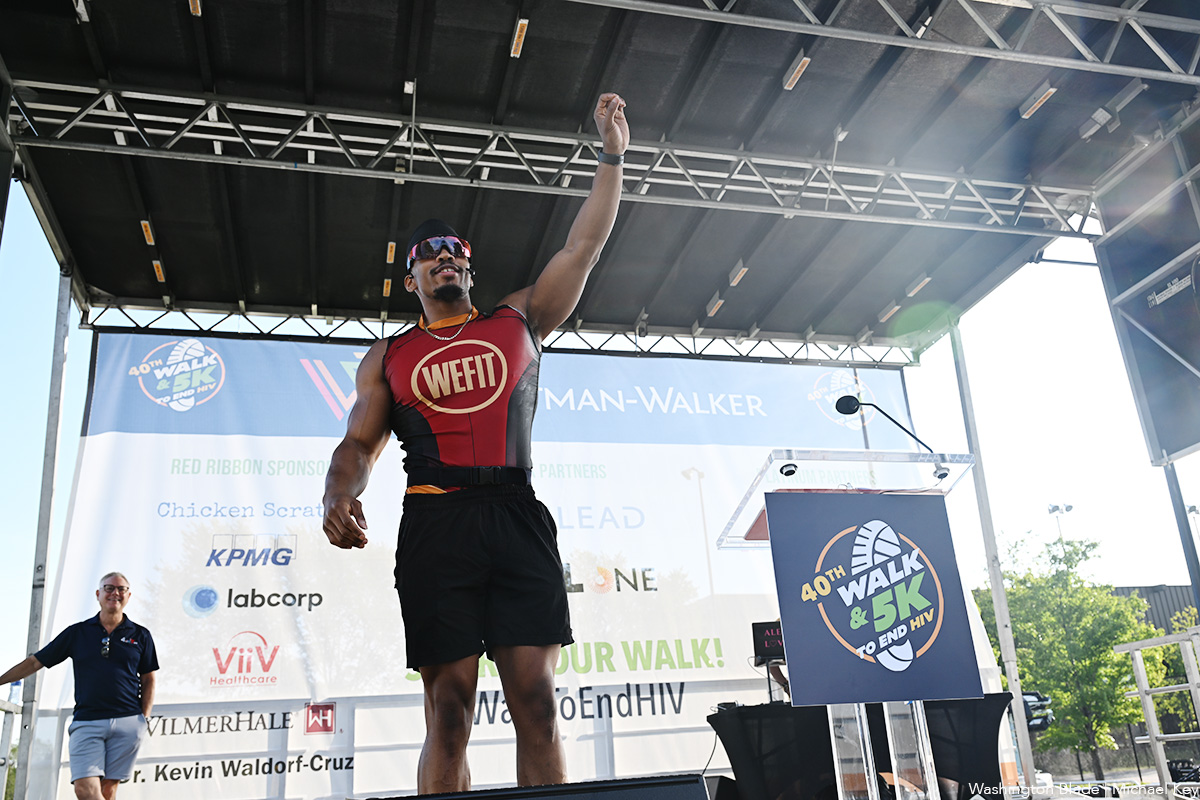
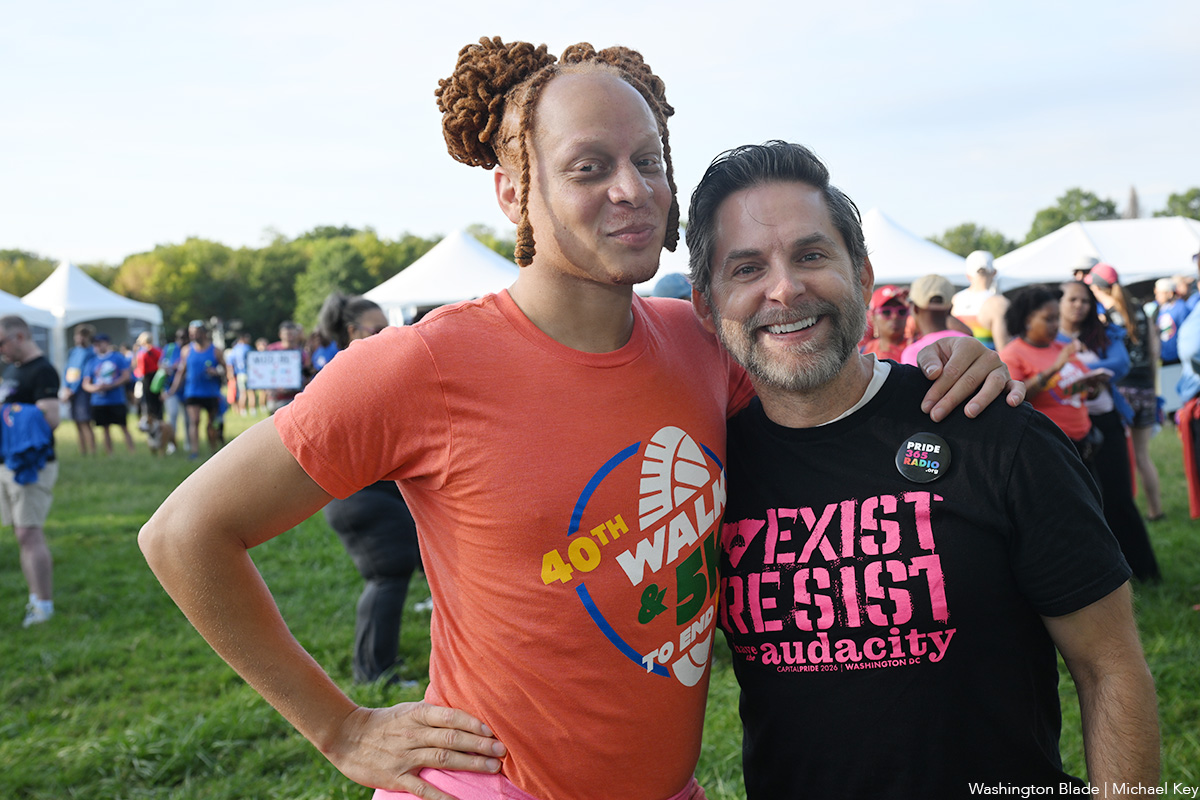
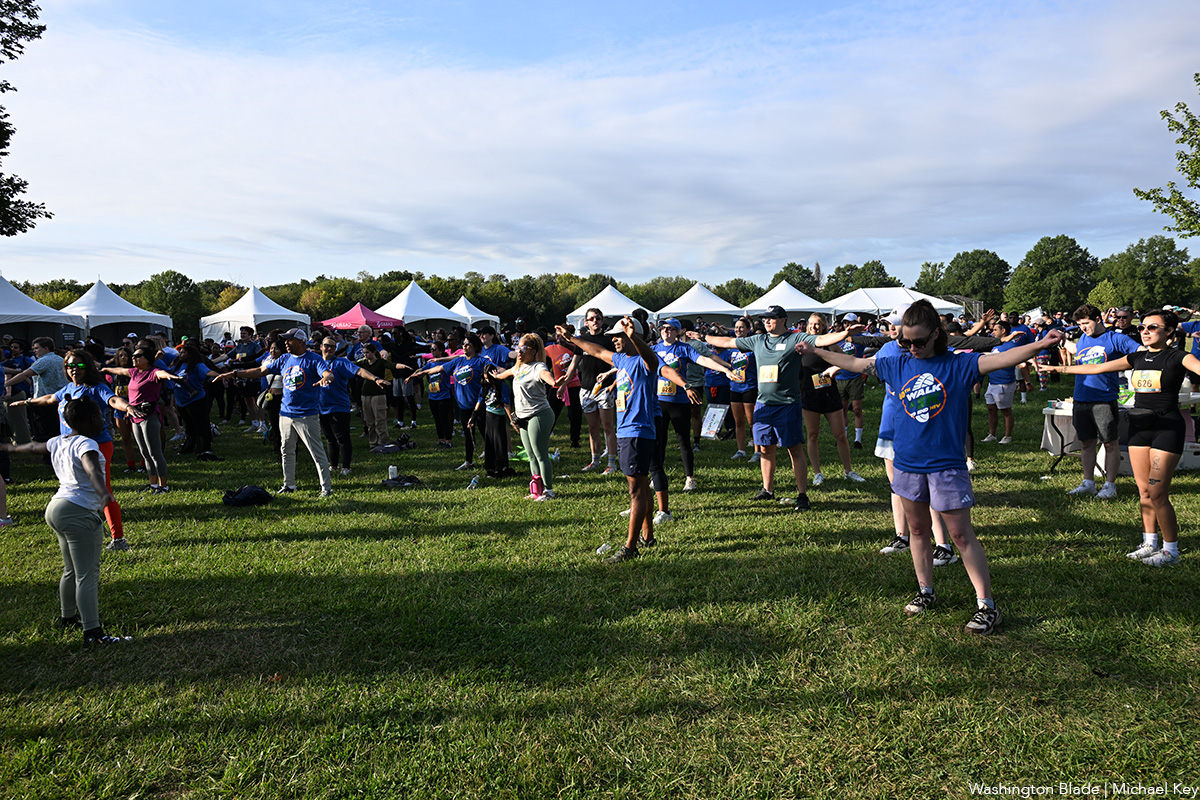
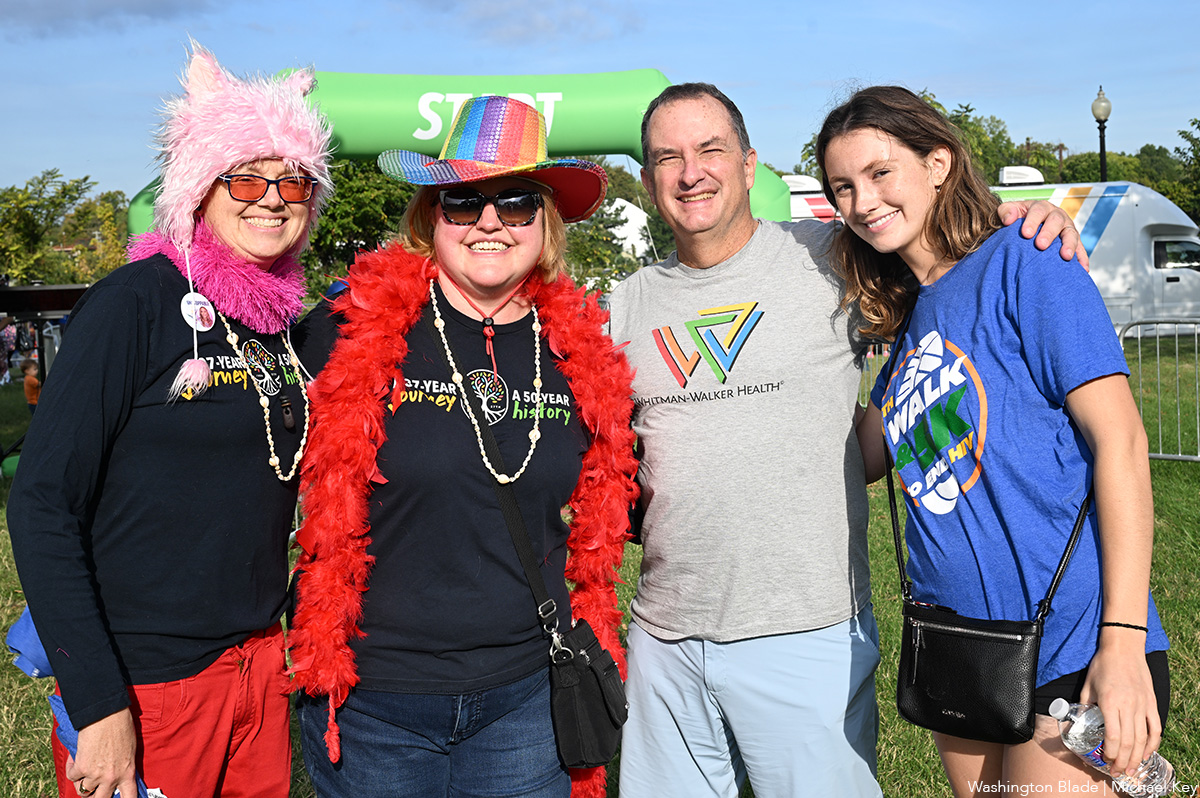
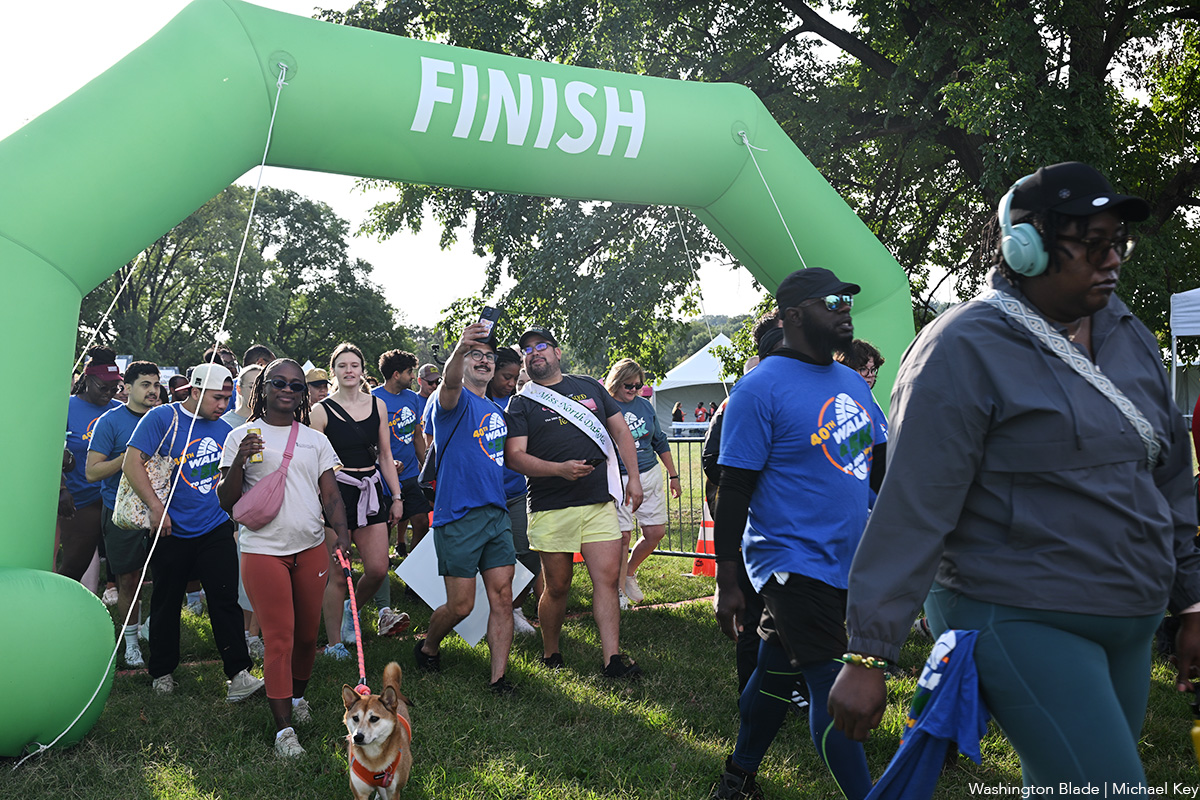
Whitman-Walker Health held the 40th annual Walk and 5K to End HIV at Anacostia Park on Saturday, Sept. 19.
(Washington Blade photos by Michael Key)




Photos
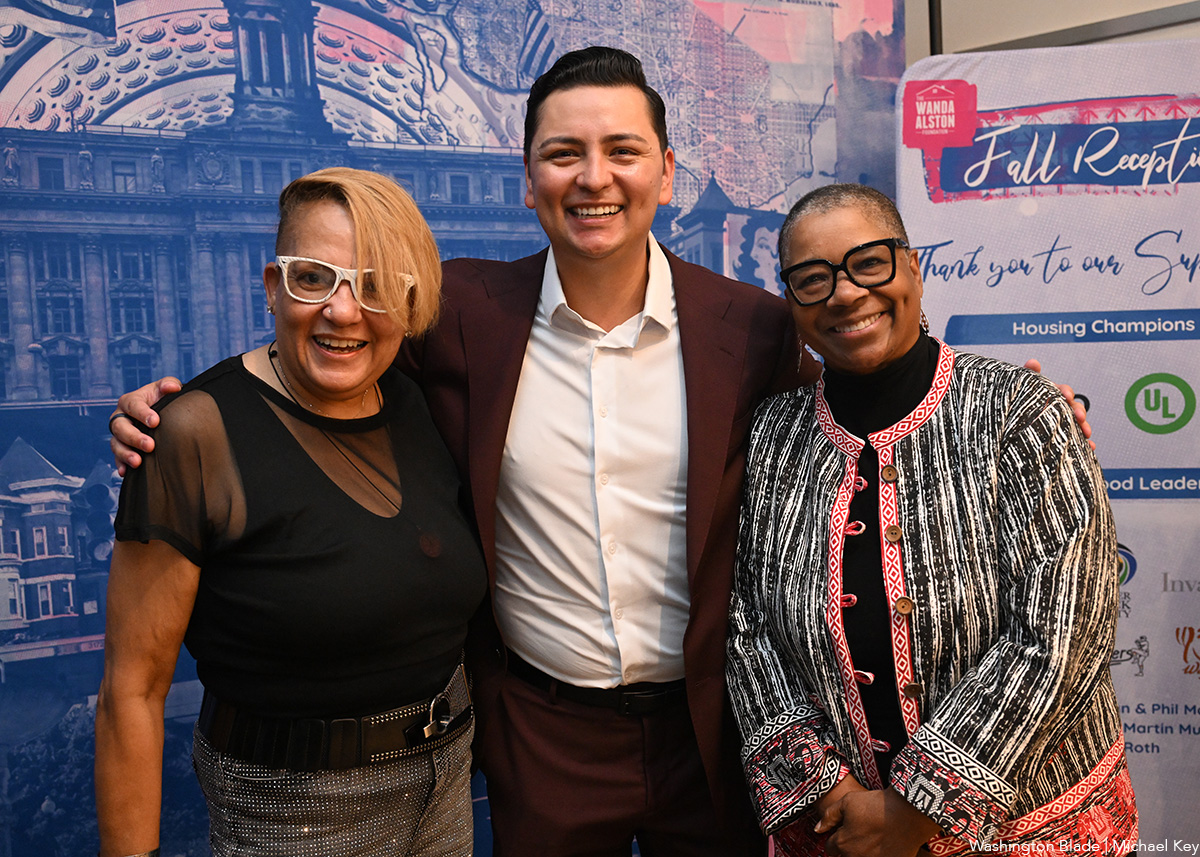
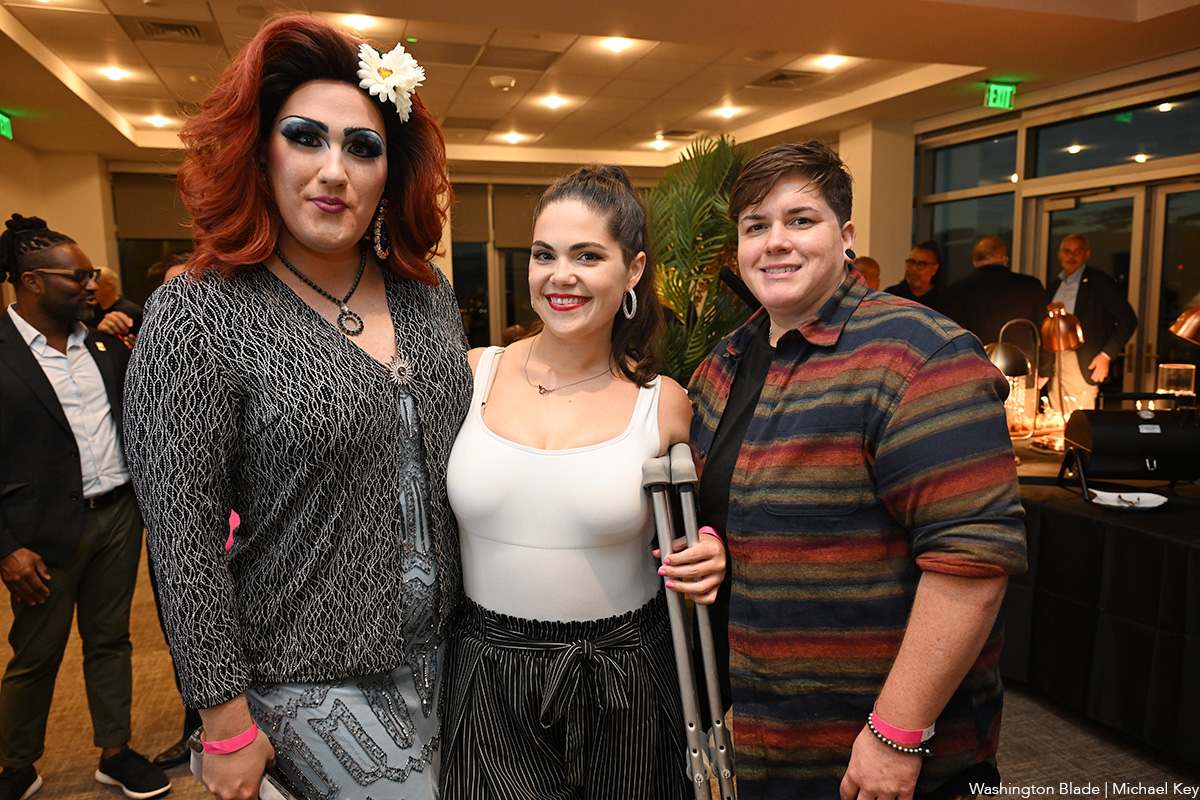
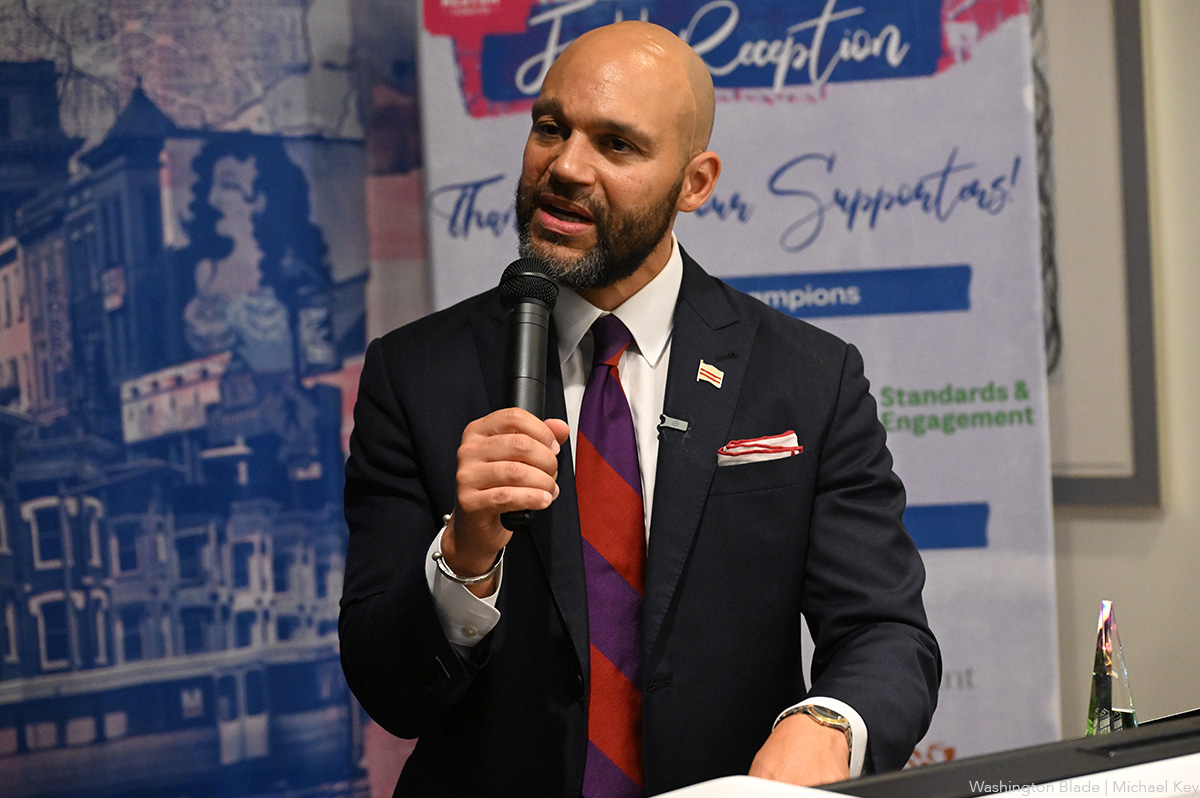
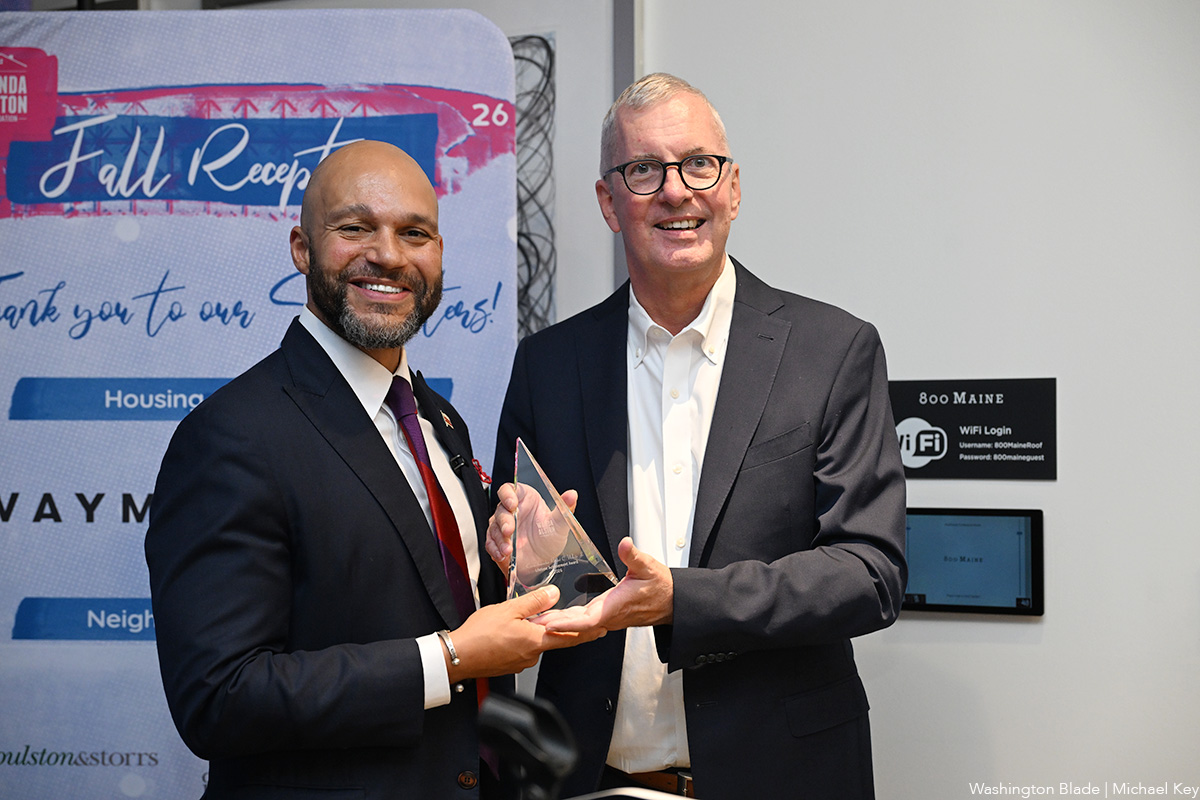
PHOTOS: Wanda Alston Foundation Fall Reception
LGBTQ youth services organization honors Robert White, Japer Bowles, Washington Capitals
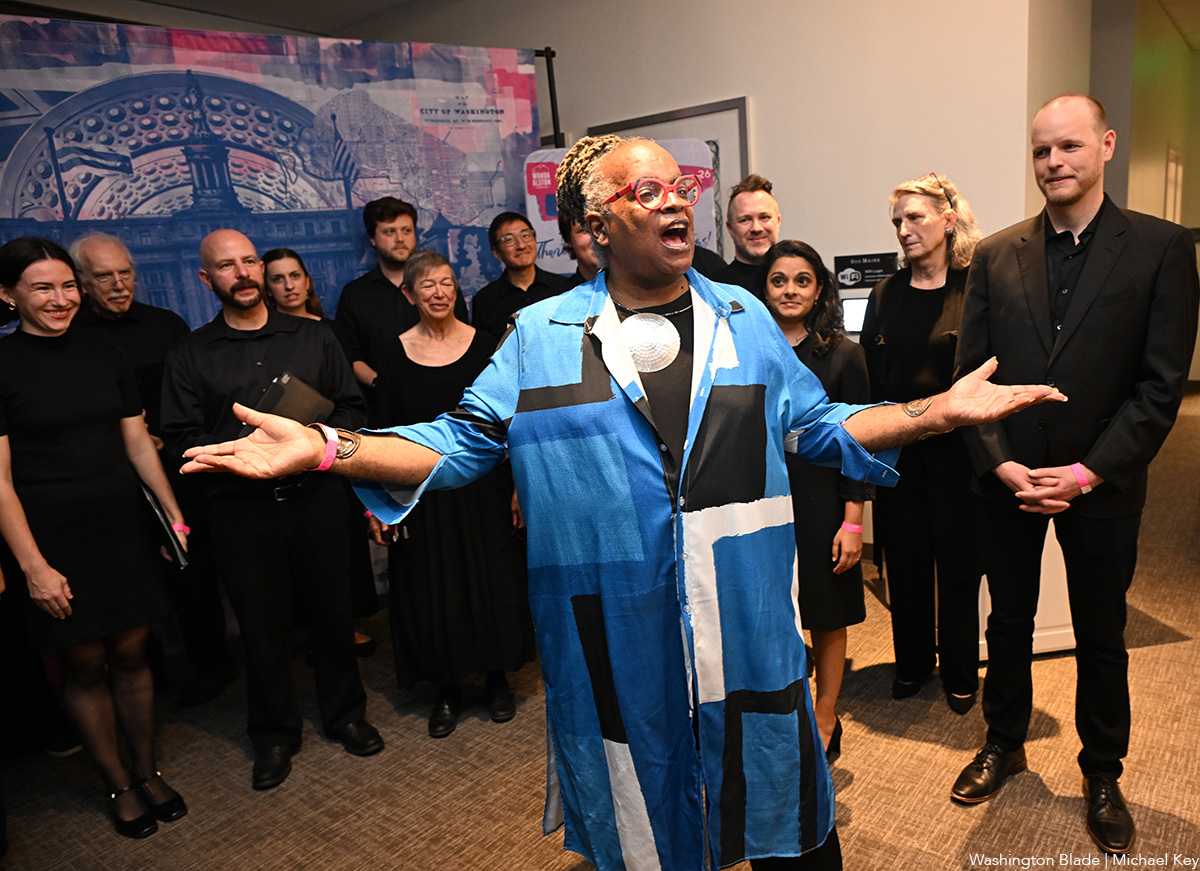
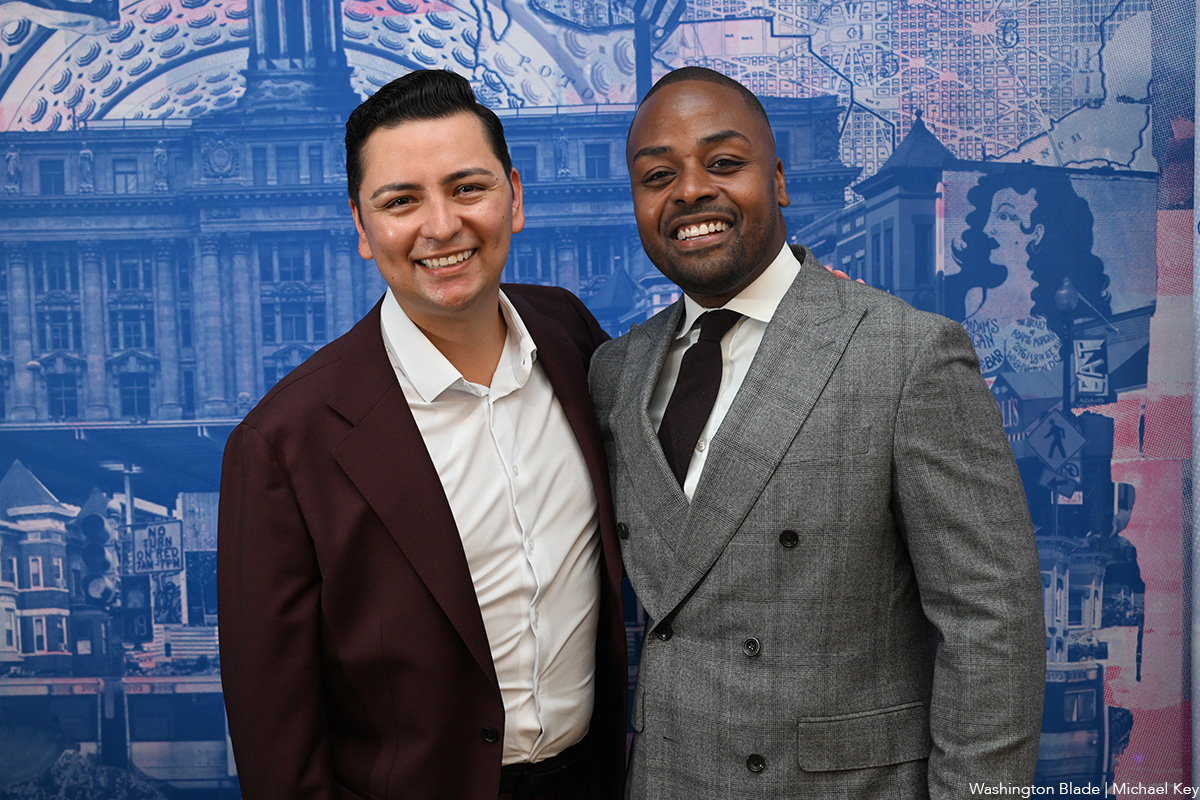
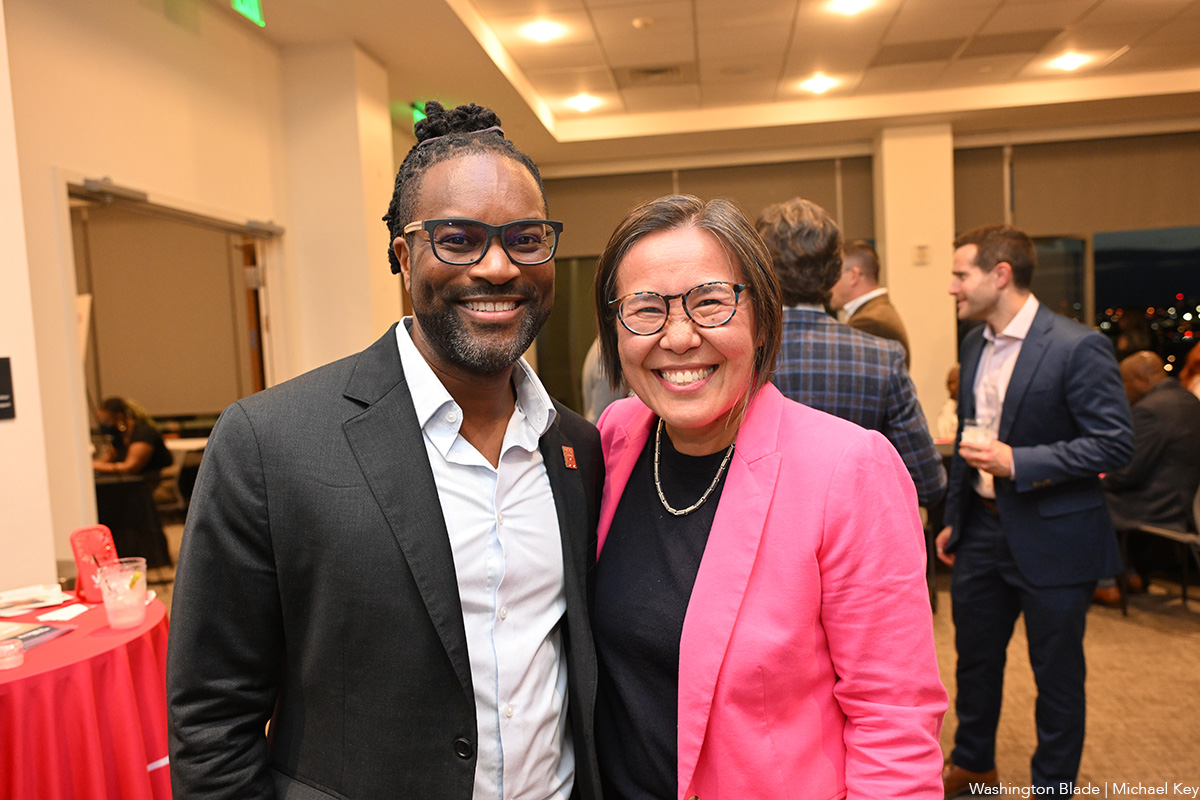
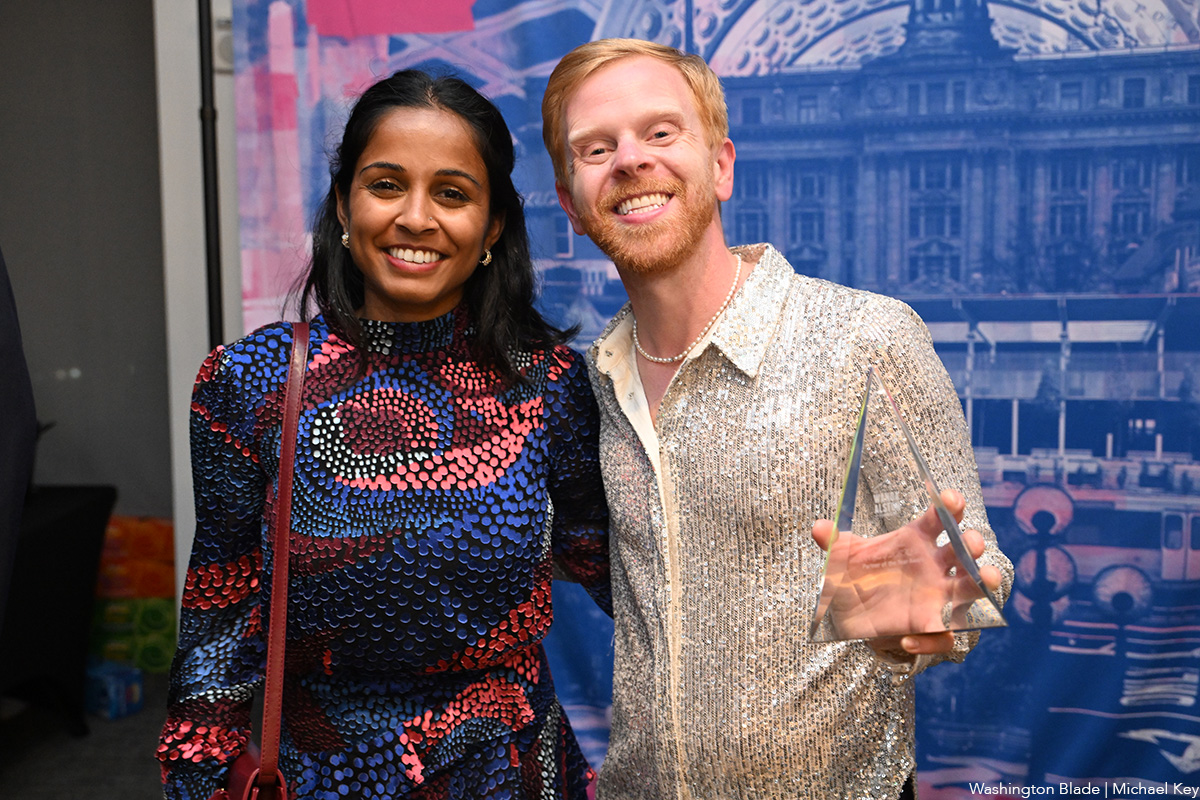
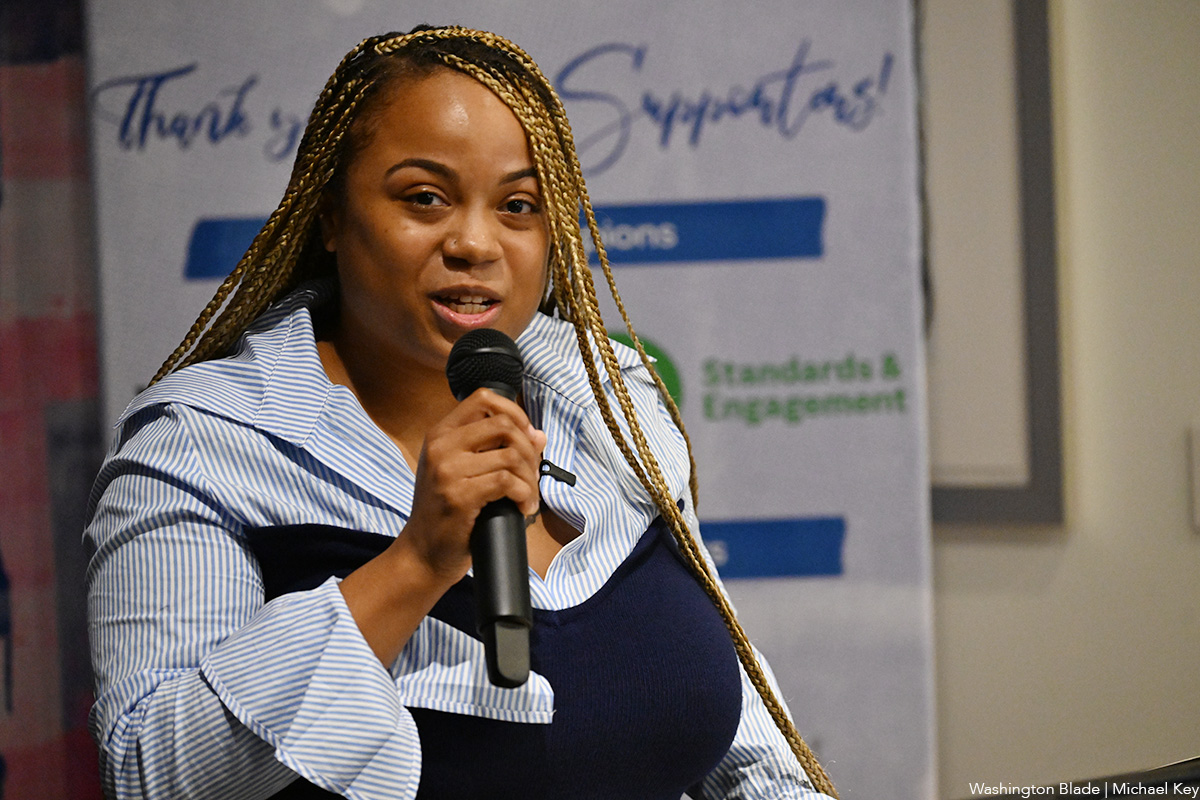
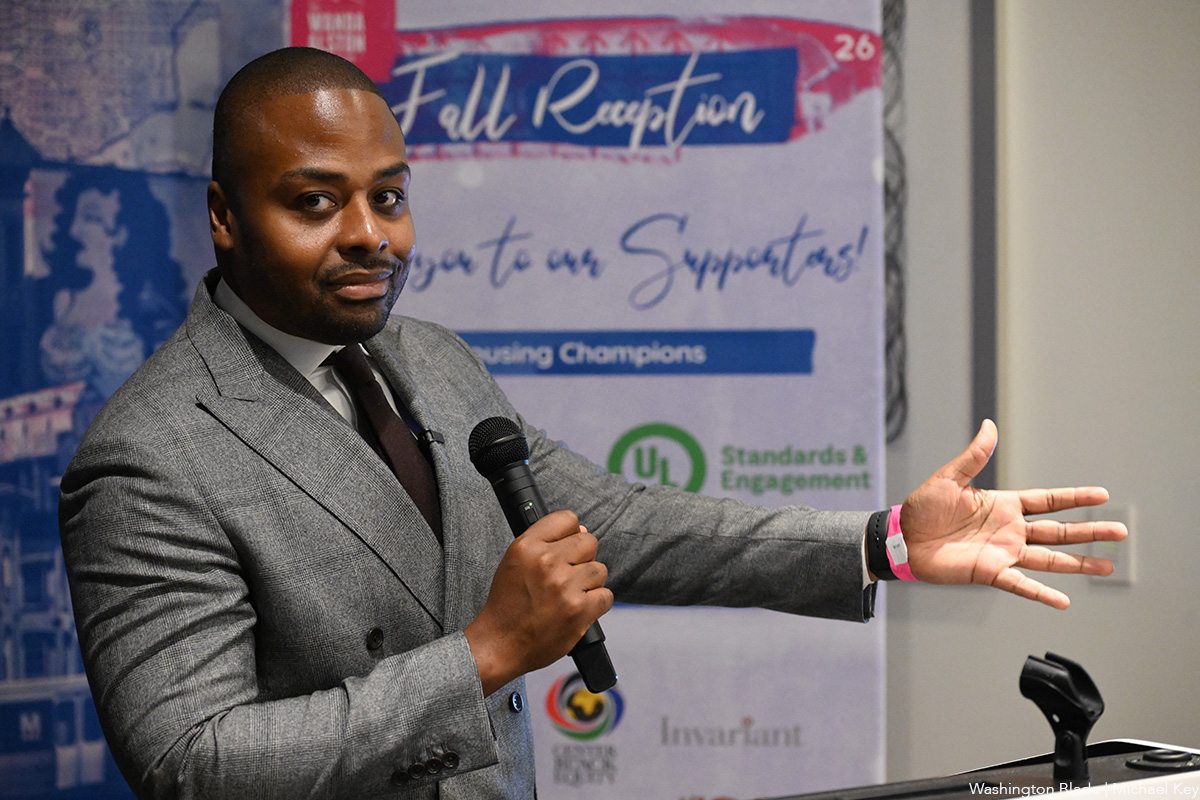
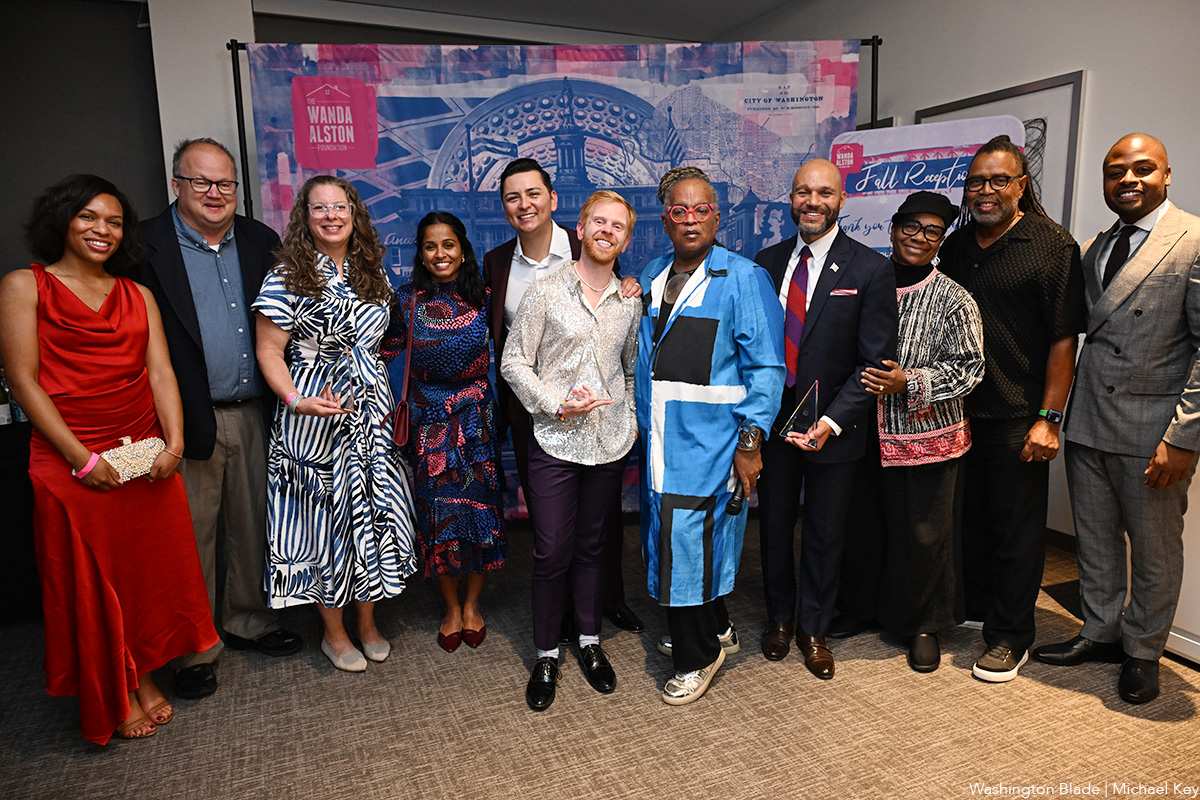
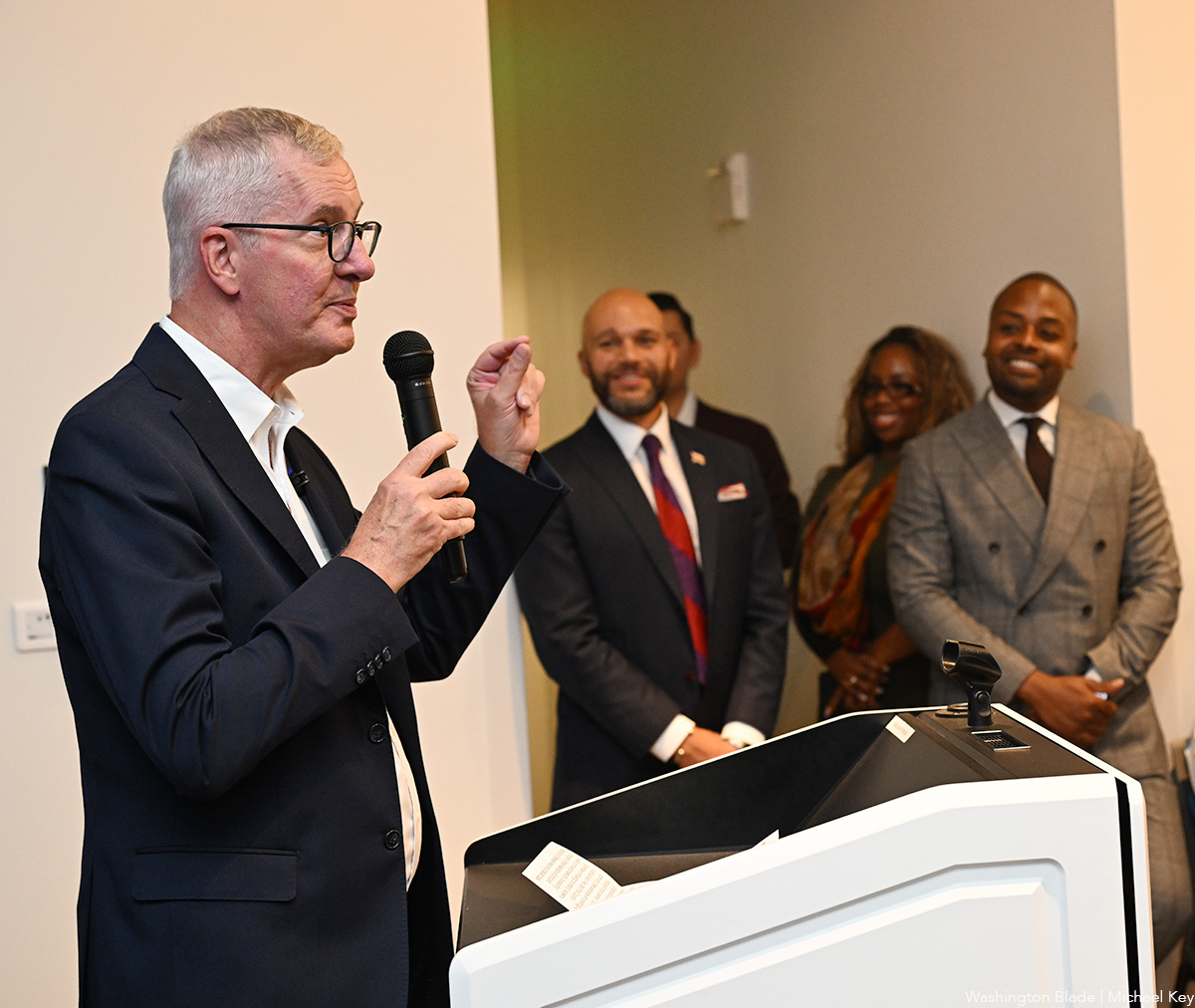
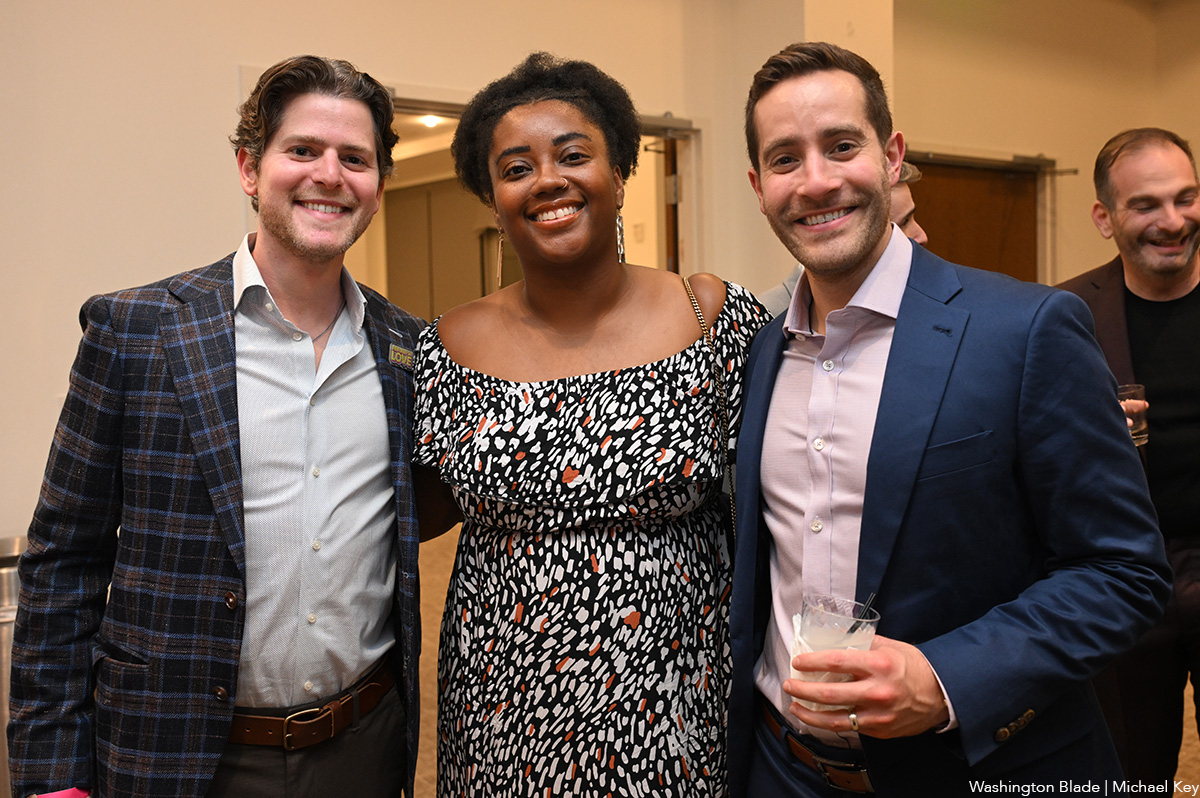
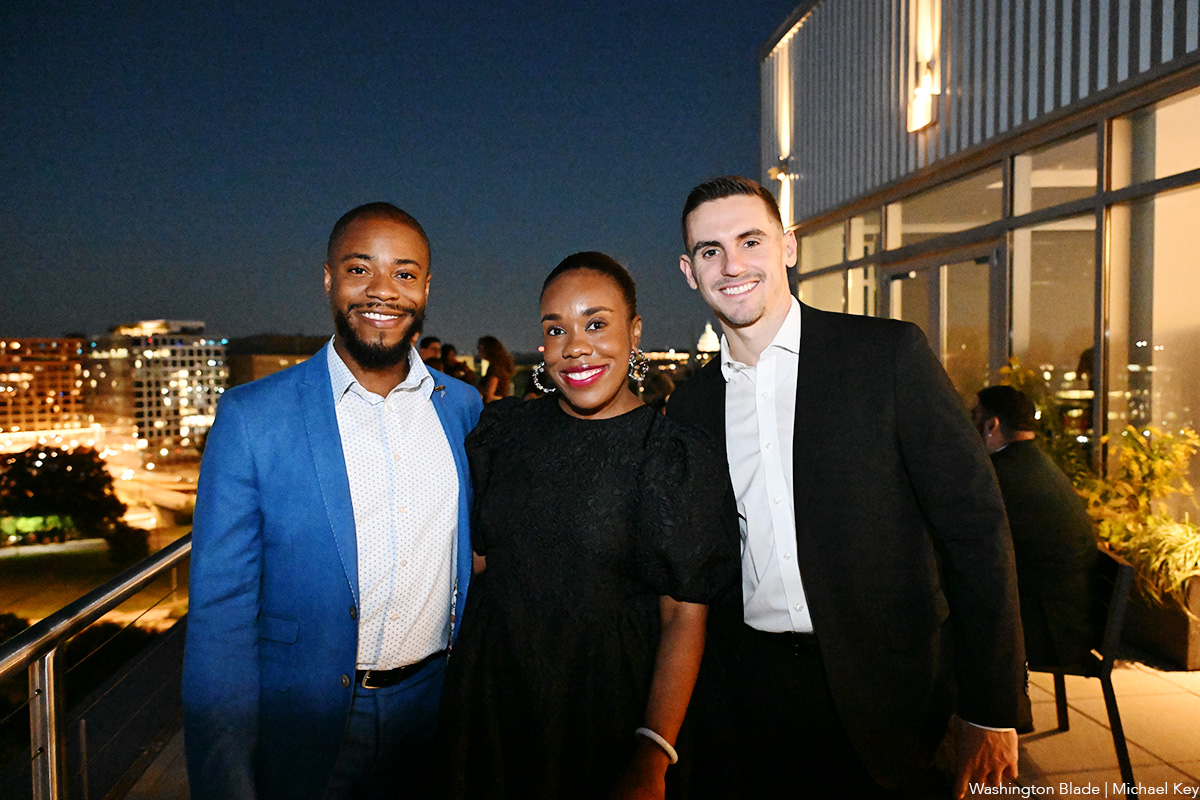
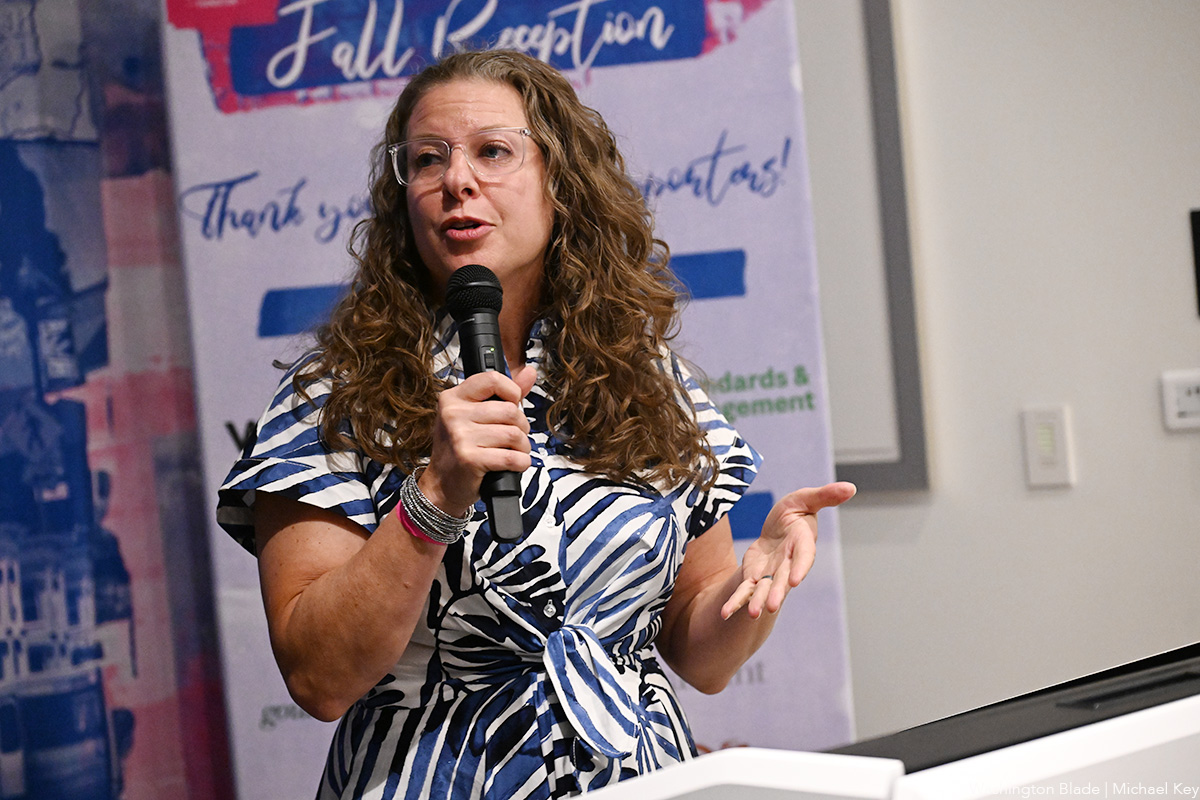
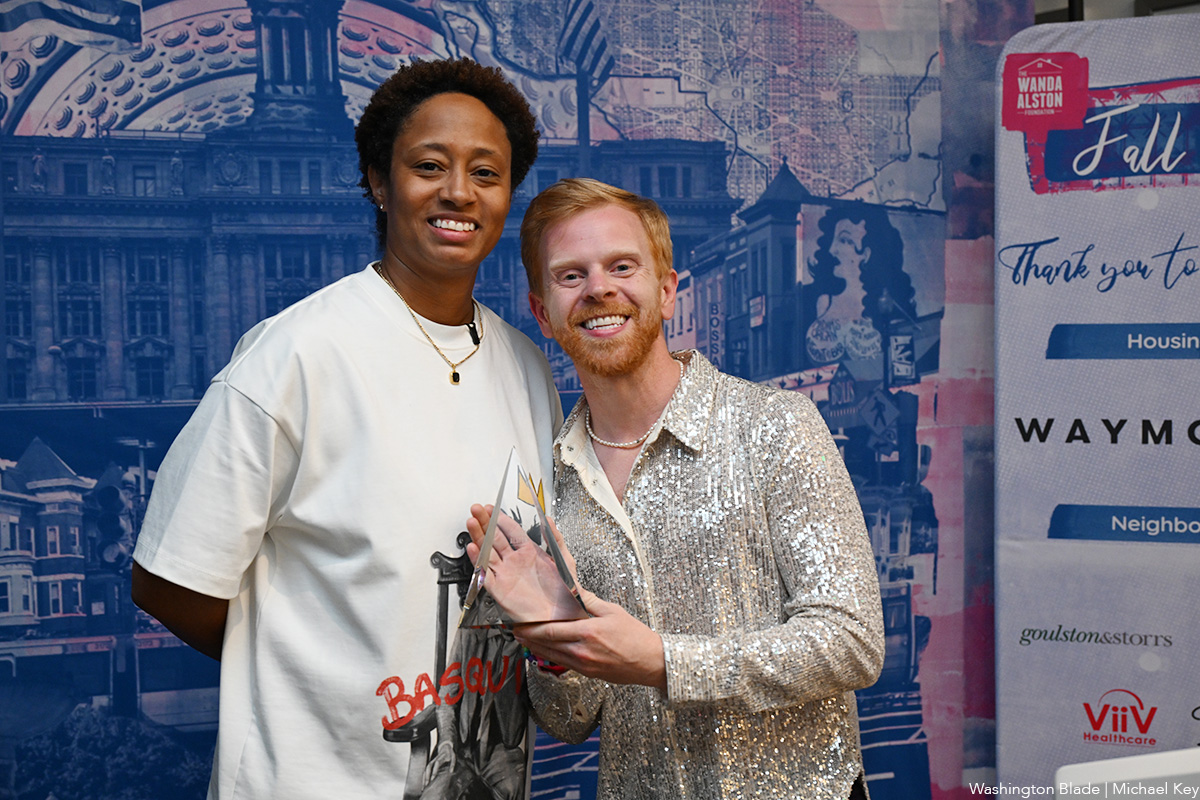
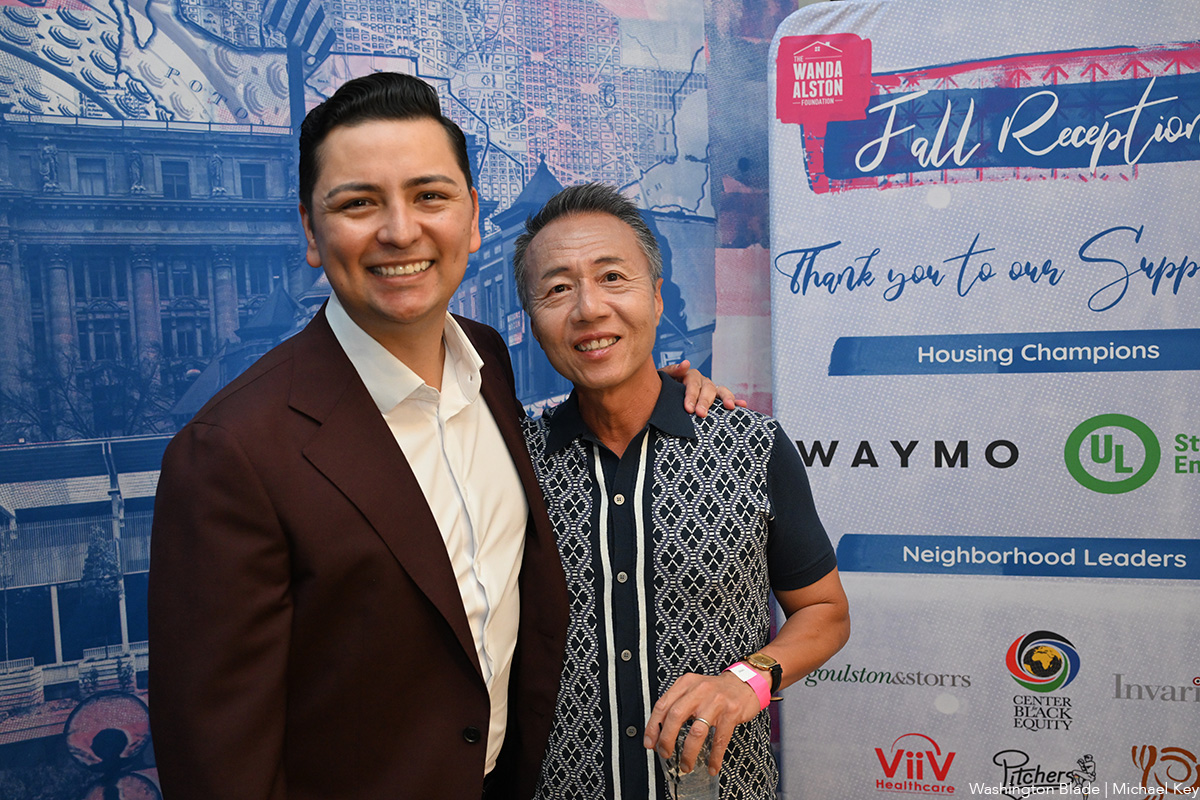
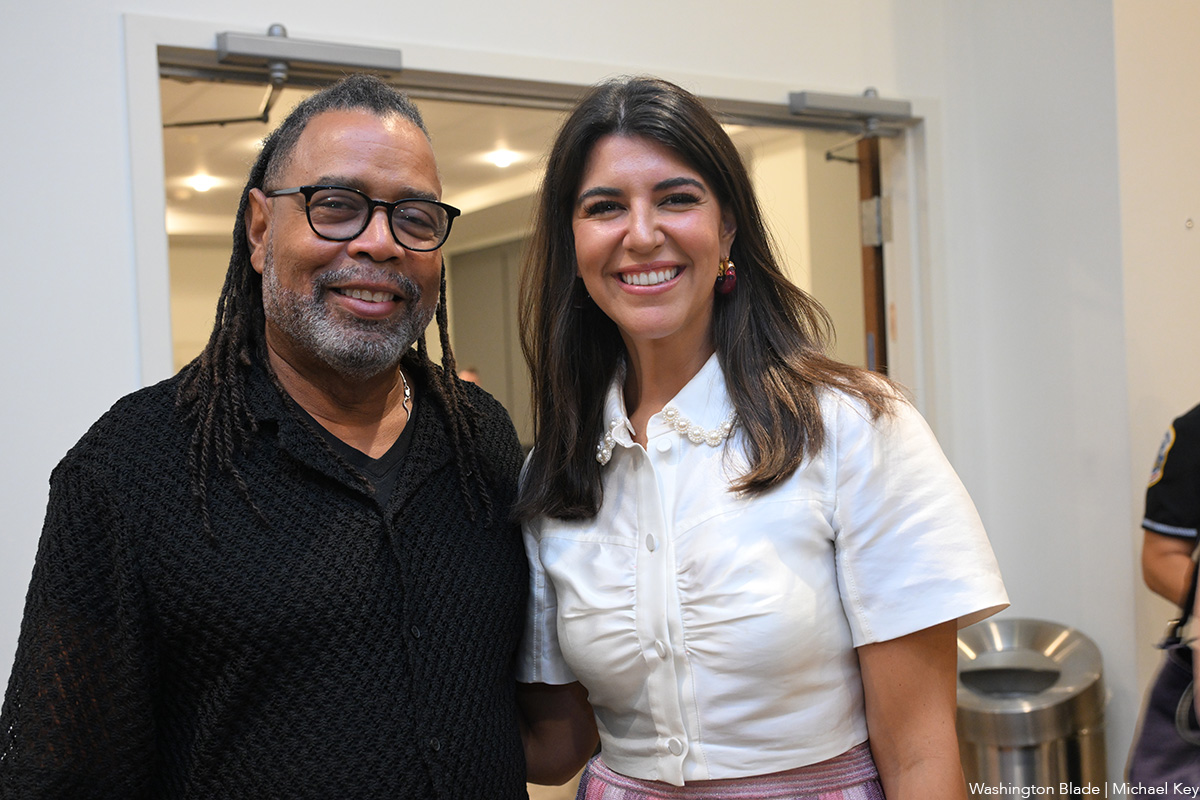
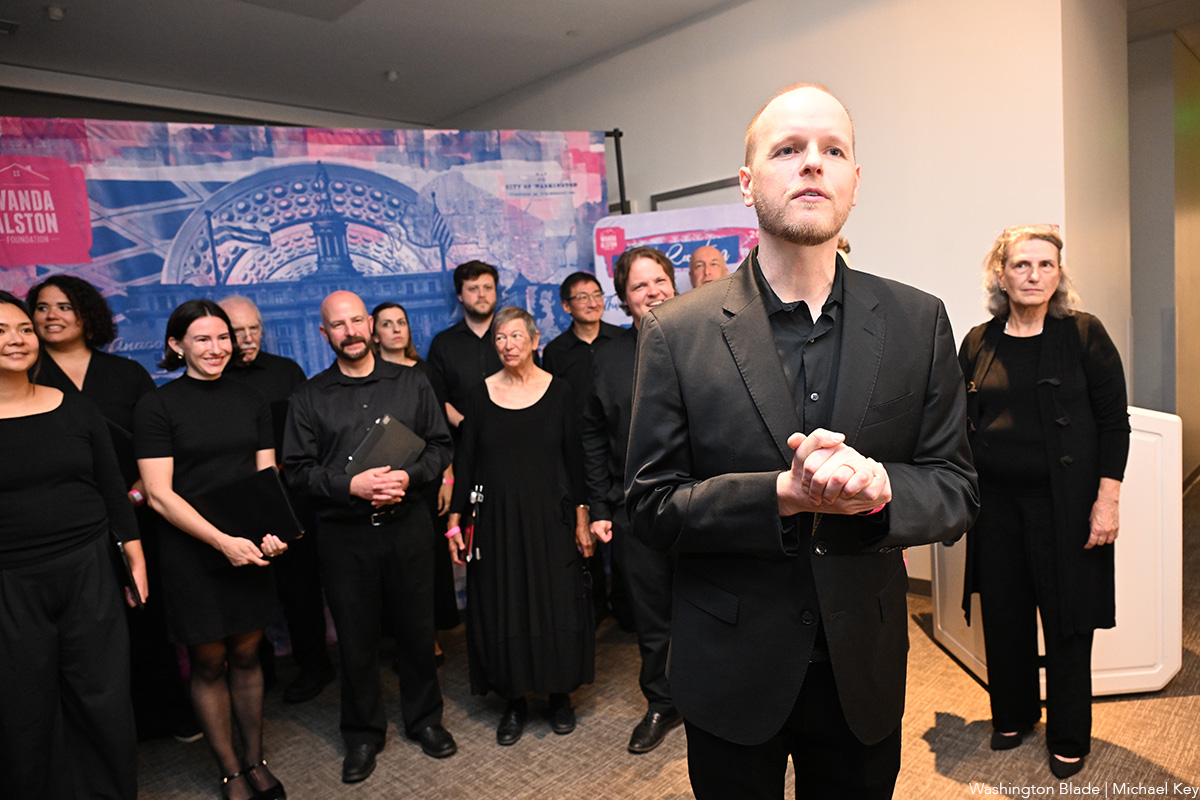
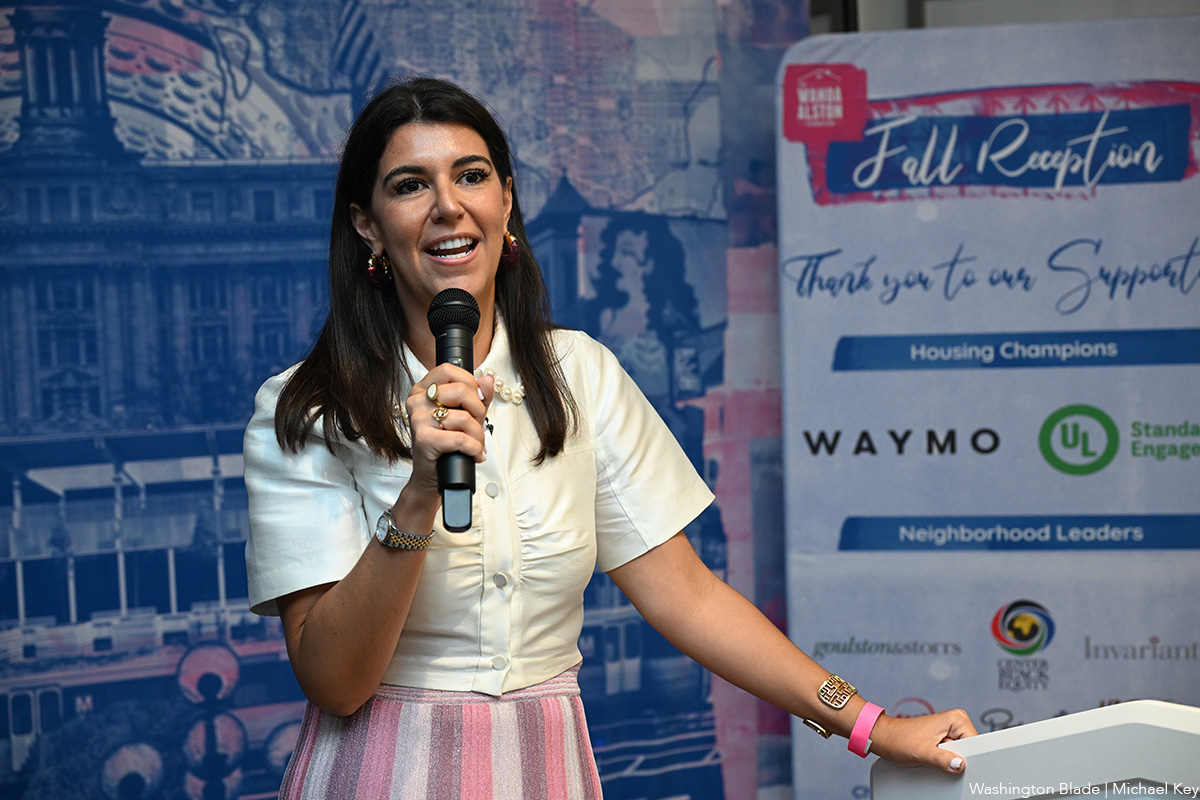
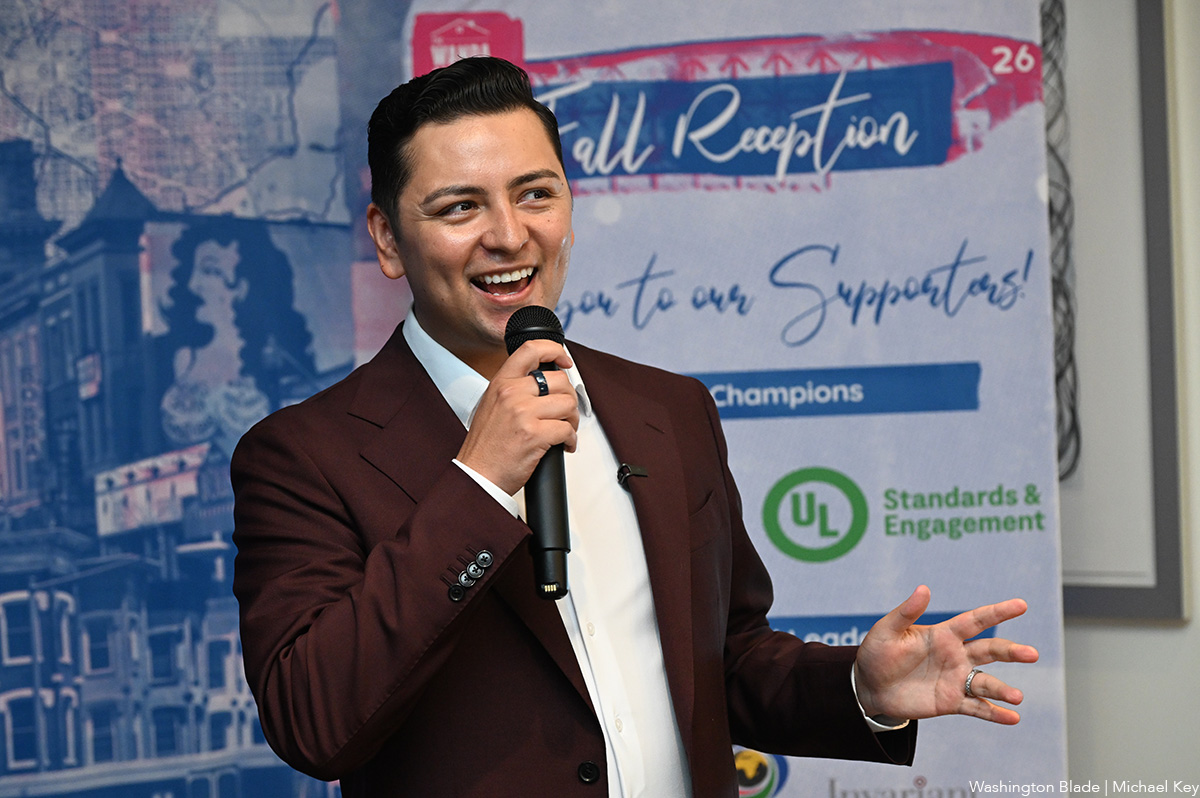
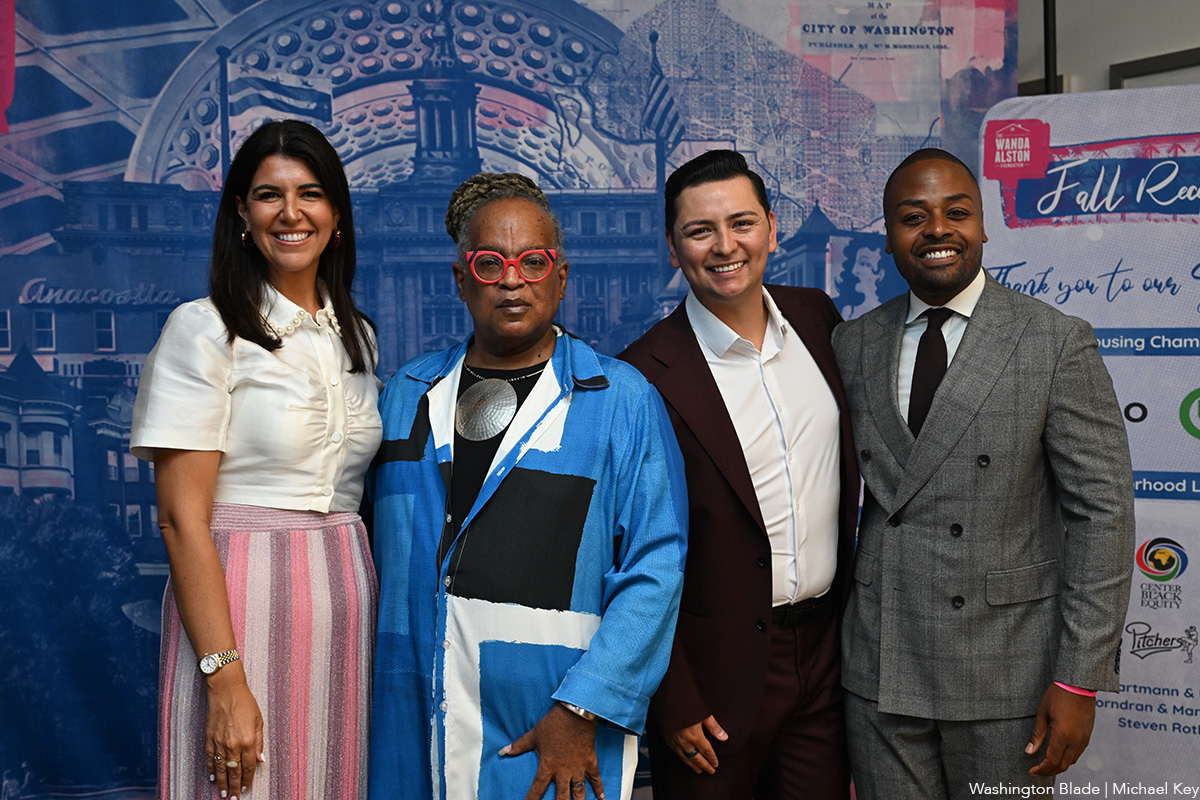
The Wanda Alston Foundation held its Fall Reception at the Penthouse Rooftop at The Wharf on Friday, Sept. 18. Honorees included D.C. Councilmember Robert White, Director of the Mayor’s Office of LGBTQ+ Affairs Japer Bowles, and the Washington Capitals. Rayceen Pendarvis served as the emcee and entertainment was provided by the Thomas Circle Singers.
(Washington Blade photos by Michael Key)
Books
Curl up with a good book this fall
New releases include mysteries, biographies, religion, and more
The fall books season offers lots of options so curl up and get ready to read.
FICTION
For the mystery fan who likes a sprinkle of thriller, look for “The Longest Death” by Kevin Jagernauth (Soho Crime, December). Richard Cobson hates his small town, he’s bored and desperate to get away. Stealing from his employer is the only thing that makes life bearable. That all changes when Marlon Montgomery comes to town and the two fall in love because if one guy can steal so easily, what can two do?
If you like graphic novels, try the “Tripping Over You” trilogy by Suzana Harcum and Owena White. Milo and Liam are finally able to be open about their relationship, no more hiding their love. They’re living together now, but can it last? “Tripping Over You Book 3” (First Second Books) is in stores in early November.
Also try “Diana: The Punk Singer Who Ripped Through Time” by Nate Powell (Abrams ComicArts, October). It’s about a young woman who’s trying desperately to escape her past, until a mysterious murder sidetracks her plans.
So you say you’re a romantic at heart? Then look for “Unspeakable Things: A Novel” by Elizabeth Hand (Little, Brown & Company, October). It’s a story set in the 1920s, when two young women arrive in the English Countryside to a dark and ancient manor. But, of course, nothing in a Gothic novel is easy, right? And you’ll love this tale.
NONFICTION
So this upcoming year is going to be one of exploration, right? Then look for “Free Love: Adventures in Marriage and Polyamory” by Michelle Tea (HarperOne, November). It’s a well-researched, personal, and interesting look at the lives of polyamorous couples and what it’s like to live what used to be called an “alternative” lifestyle.
If “fall” says “biography” to you, then look for “Showbiz! My Life as a Middle-Aged Man” by Murray Hill (Gallery Books, October). For decades, Hill has been making audiences laugh with his signature humor, but getting laughs hides his past all too well. He grew up in an abusive family and learning to hone his talents took some ingenuity. If you’re not a Hill fan yet, you will be, once you read this book.
For the reader who’s searching for a spiritual place, “Reading the Bible Through Queer Eyes: Good News for LGBTQ+ People from Genesis to Revelation” by podcasters Brian G. Murphy and Shannon T.L. Kearns (HarperOne, December) might help. Here, the authors look deeply at Scripture to find the queerness that’s there, proving to readers that the Word is not always what it seems.
Young readers may want to check out “Bitter Pill: Randy Shilts and the Dawn of the HIV/AIDS Epidemic” by Clement Xavier, illustrated by Heloise Cochois, foreword by Michael Lee (Abrams ComicArts, November). It’s a highly researched true story of activist Shilts, but also of Harvey Milk, and the earliest days of the AIDS crisis, when gay men needed a loud voice to advocate for them.
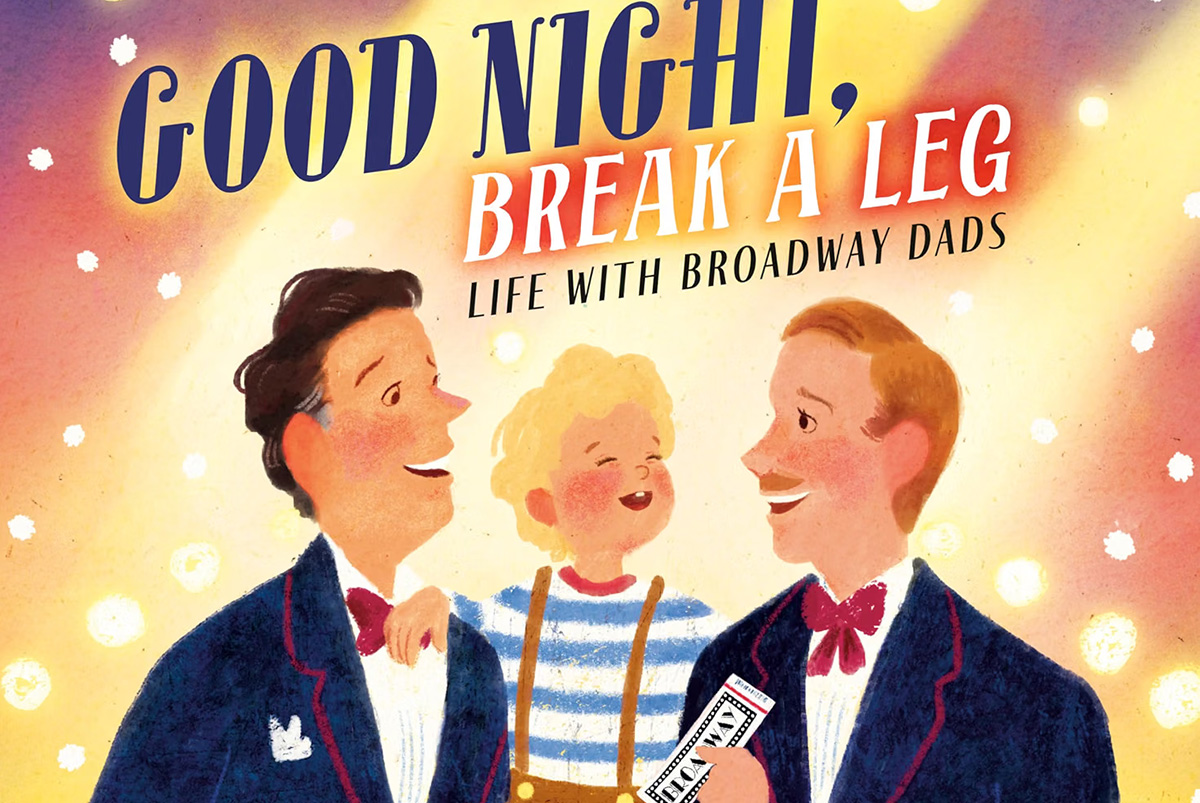
And finally, if you want a fun book for your kids or a child you love, look for “Good Night, Break a Leg: Life with Broadway Dads” by Bret Shuford, illustrated by Elena Hager (Penguin Workshop). What do parents do when they go to work? A little boy learns that his dads have very special jobs by day – and by night! It’s a cute book for kids, but a special tale for lovers of Broadway.
Be aware that publication dates change, titles change, books can be canceled, and your librarian or favorite bookseller can help you find what you need. Season’s readings!

PHOTOS: Walk and 5K to End HIV

PHOTOS: Wanda Alston Foundation Fall Reception

Moving presents a chance to ‘clean house’

EV ecstacy: BMW iX3, Rivian R2

Curl up with a good book this fall

Trump’s Cabinet: Dumb, dumber, dumbest, and evil

More than 150 people detained outside Istanbul courthouse

Virginia Anti-Violence Project struggles to fill federal funding gaps

Gay man sues Delaware AG for not prosecuting partner in domestic violence case

D.C.’s fall theater season is already well underway
-

 Opinions4 days ago
Trump’s Cabinet: Dumb, dumber, dumbest, and evil
-
Turkey5 days ago
More than 150 people detained outside Istanbul courthouse
-
Virginia5 days ago
Virginia Anti-Violence Project struggles to fill federal funding gaps
-
Delaware5 days ago
Gay man sues Delaware AG for not prosecuting partner in domestic violence case