World
Out in the World: LGBTQ news from Europe and Asia
Thai lawmakers approve marriage equality bill
PORTUGAL
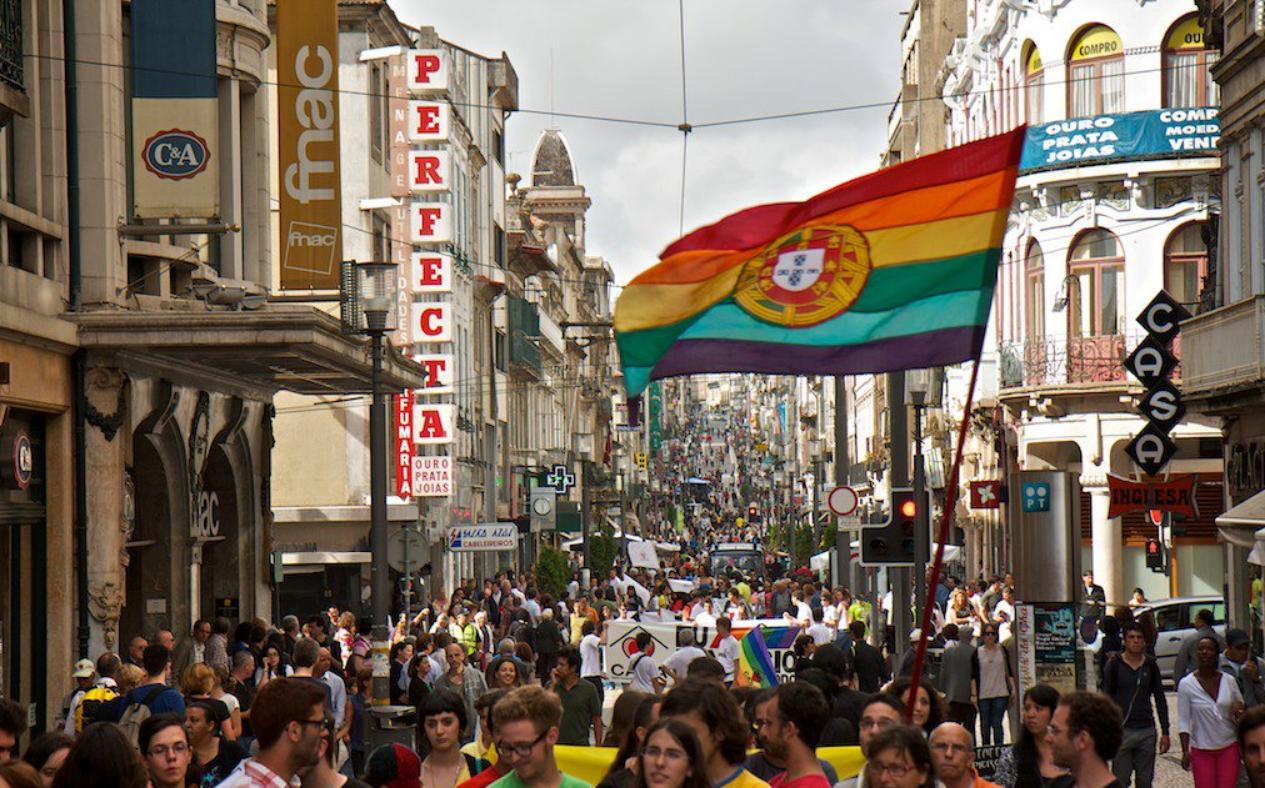
The Portuguese Parliament passed the final draft of a bill this past week, which was first introduced last May by the Bloco de Esquerda, the populist democratic socialist political party, that outlaws “any practice aimed at the forced conversion of sexual orientation, identity or gender expression.”
Joined in a coalition with the Livre and PAN parties, the new law incorporates into the country’s penal code that “whoever subjects another person to this type of treatment, including the performance or promotion of medical-surgical procedures, practices with pharmacological, psychotherapeutic or other psychological or behavioral resources, will be punished with a prison sentence of up to three years or a fine.”
During the parliamentary debate in the Constitutional Affairs, Rights, Freedoms and Guarantees, the College of Physicians Committee issued a statement in which it criticized this type of therapy for “not having proven its effectiveness nor respecting the ethical and deontological standards of medical practice.” The organization highlighted that “diversity in sexual orientation and gender identity represents normal expressions, which cannot be considered diseases.”
The law now heads to President Marcelo Rebelo de Sousa for his signature.
Passage of the law by Parliament brings Portugal into alignment with other European Union nations. Malta was the first European country to ban the practice followed by Germany, Greece, Albania, France and Belgium.
SPAIN

The Assembly of Madrid, the unicameral autonomous legislature which governs the region around Spain’s capital city, voted this past week to rollback protections for transgender people. The measure was passed by the conservative People’s Party.
The measure also contained a proviso that guidelines preventing harassment of LGBTQ students in schools is eliminated, all content aimed at showing the LGBTQ community and the training of teachers in this matter are removed from the study plans.
The bill amended a regional trans rights law and an LGBTQ rights law, both of which were passed in 2016. The decision makes Madrid the first Spanish region to roll back such legislation. The anti-trans bill stripped the previous law of its fundamental pillar: The concept of “gender self-determination” or “freely expressed gender identification.”
The PP’s new law replaced the terms “trans people” and “gender identity” with “transsexuals” and “transsexuality,” terms which activists say are demeaning.
The Standard, a British news outlet, reported the move by the PP party sparked outcry from the opposition in Madrid and LGBTQ activists.
Carla Antonelli, an assembly member for the left-wing Mas Madrid party who is trans, wore red gloves symbolizing bloodied hands during the raucous debate preceding the vote. She called the bill an “abomination” and compared it to the actions of Nazi SS doctor Josef Mengele, who “also spoke of science to exterminate Jews and LGTBQ people.”
“When you press that button to vote for this infamy … you will all have blood on your hands,” Antonelli said adding: “This is terrorism towards trans people. You won’t be able to wash your dirty conscience because we will remind you of it every day.”
The Standard also noted that in December 2022, Spain passed a nationwide bill allowing trans people aged 14 and over to change their legal gender without the need for psychological or other medical evaluation, though those aged 14-16 would still need parental or guardians’ agreement.
Fourteen other Spanish regions out of the country’s 17 have laws for the protection of trans rights, LGBTQ rights, or both, on the books.
GREECE

The spokesperson for Greece’s center-right government announced Dec. 21 that legislation legalizing same-sex marriage will be brought to the Hellenic Parliament before its current term expires in 2027.
Pavlos Marinakis noted this action would take place despite facing staunch opposition from the country’s influential Orthodox Church, which the church’s governing Holy Synod had submitted late on Dec. 20, expressing strong opposition to legalizing same-sex marriage.
The Greek City Times reported that the church’s stance drew significant attention from the Greek news media, sparking a lively debate within the country. Opinion polls indicate that Greeks are evenly divided on the issue of same-sex marriage but generally oppose granting full parental rights to gay couples.
“The position of the Church of Greece remains that children have an innate need and therefore a right to grow up with a male father and a female mother. No amount of social modernization and no amount of political correctness can bypass (this),” the church document said.
“Children are not companion pets for those who wish to feel like a guardian, and are not ‘accessories’ to formalize or make same-sex cohabitation socially acceptable,” it added.
The Associated Press noted that Greece’s left-wing opposition leader, Stefanos Kasselakis, married his male partner in New York in October, several weeks after winning a party leadership election.
Greece legalized same-sex civil partnerships in 2015.
HUNGARY

In a press conference on Dec. 21, Hungarian Prime Minister Viktor Orbán accused the European Commission of blackmailing his country over its anti-LGBTQ laws and other rule-of-law concerns.
“In our view, Hungary fulfils all the qualities of the rule of law, and when the European Commission has specific needs, we implement everything from them, and we are also cooperative,” Orbán told reporters. “You cannot blame me for doing everything I can to promote Hungary’s interests in such a blackmailed situation.”
Orbán has been embroiled in a long-standing dispute with the governing body of the EU, the European Commission, which has frozen billions of funds intended for Hungary over concerns about human rights and the rule of law in the country.
The government of the conservative ruling party of the prime minister has been feuding with the EU since passage of Hungary’s anti-LGBTQ education law in June 2021.
Orbán, who has publicly proclaimed that he is a “defender of traditional family Catholic values,” has been criticised by international human rights groups as discriminating against LGBTQ+ people with this law which European Commission President Ursula von der Leyen called a “disgrace.”
The European Commission, the ruling body of the EU, referred Hungary to the EU Court of Justice over the anti-LGBT law in mid-2022. The commission has said it considers that the law violates the EU’s internal market rules, the fundamental rights of individuals and EU values.
UNITED KINGDOM

A Manchester Crown jury found a pair of teenagers guilty in the murder of Brianna Ghey, a 16 year old trans girl and TikTok creator who was brutally stabbed to death in a park in Culcheth, Warrington, in February 2023.
The jury unanimously ruled the teens, known only as Girl X and Boy Y, guilty after deliberating for over four hours. The judge said she would have to impose a life sentence, with the official sentencing to take place next year.
Ghey, who lived in Birchwood, Cheshire, and was a junior at Birchwood Community High School had been bullied for her trans identity according to comments left on social media posts by friends and fellow students.
Her friends alleged she had been bullied and gang beaten at Birchwood Community High School for several years over the “simple reason of being trans.”
The gruesome details came out during the trial in Manchester, where the jury heard testimony that the pair, a male and a female, both 16 had a “thirst for killing” and were fascinated by torture.
PinkNewsUK reported a “murder plan” was later discovered in the female’s bedroom, and investigators discovered that they had put together a “kill list” made up of five children before they settled on making Ghey their first target. The jury also heard that male had referred to Ghey as “it” rather than “she,” which he said was a “joke” between himself and his female accomplice.
The Judge, Amanda Louise Yip, noted that she would have to impose a life sentence for both defendants. She explained that she will now have to decide what the “minimum amount of time you will be required to serve before you might be considered for release” should be.
Yip, after the jury’s verdict was delivered, announced there was a public interest in lifting restrictions on reporting the teenagers’ names, which because of their ages had not been disclosed. However she said the welfare of the defendants could be put at risk if supports were not put in place, BBC News reported.
The judge acknowledged that naming Ghey’s murderers would “cause distress to their families,” and she noted that they had already faced threats and harassment due to their children’s actions.
“I believe the appropriate balance can be achieved by directing that the order may be lifted but placing a [delay] upon it until the date of sentencing,” she said.
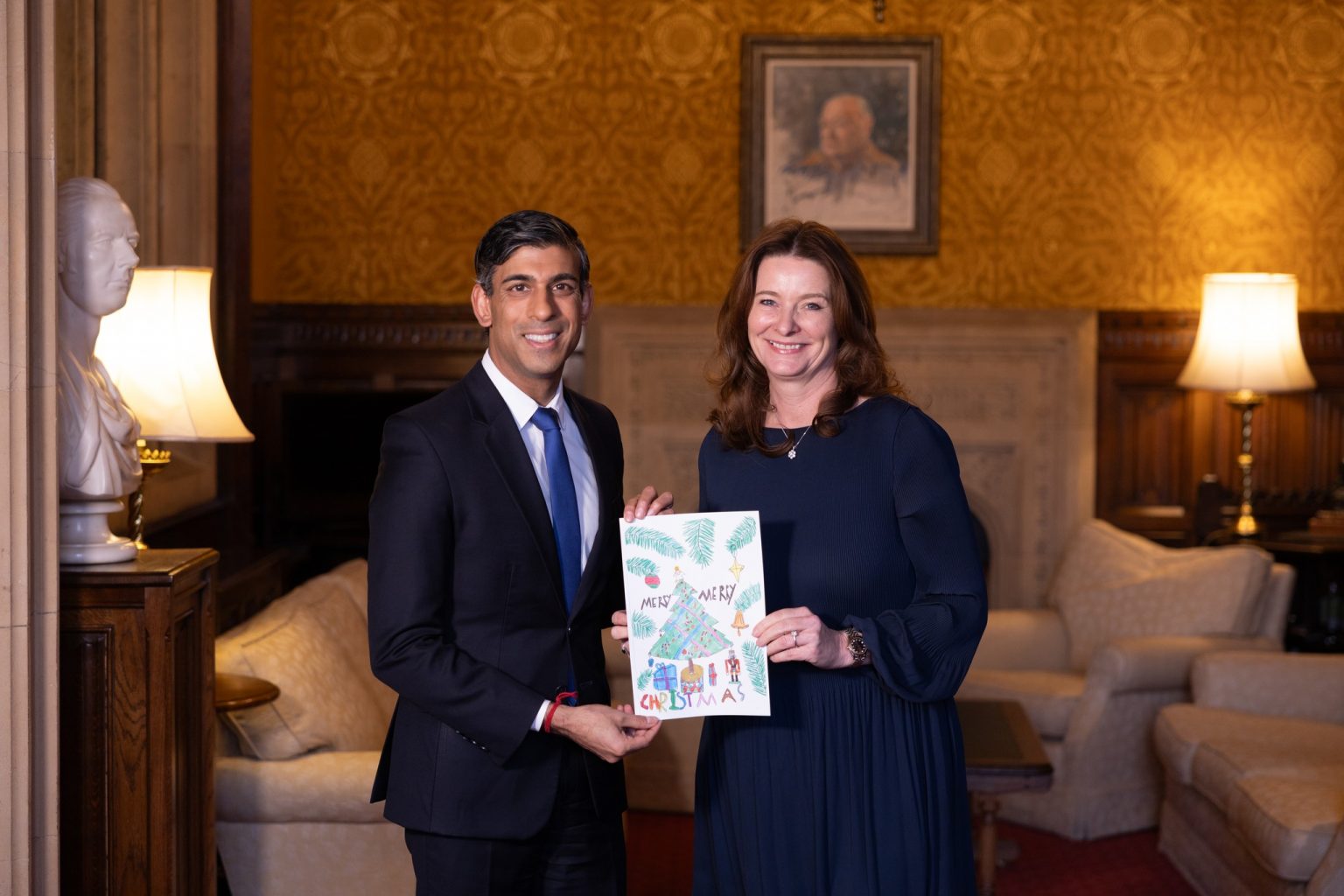
The Tory government’s Department for Education released a set of much-feared school policies and guidance concerning transgender students on Dec. 18. LGBTQ advocacy groups responded, describing the government’s draft guidance for trans schoolchildren proposals as “chilling” and “actively dangerous.”
PinkNewsUK reported the long-delayed guidance on how to support trans and non-binary pupils at school lays out steps to approach a range of issues, from social transition, to changing names and pronouns, to access to single-sex spaces.
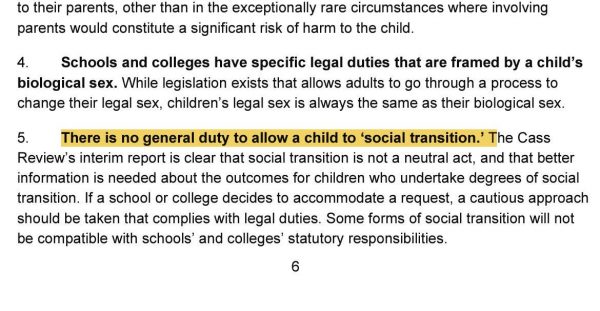
The non-statutory guidance explicitly states that primary school-aged children “should not have different pronouns to their sex-based pronouns used about them,” and that if a child wishes to socially transition, parents should be engaged.
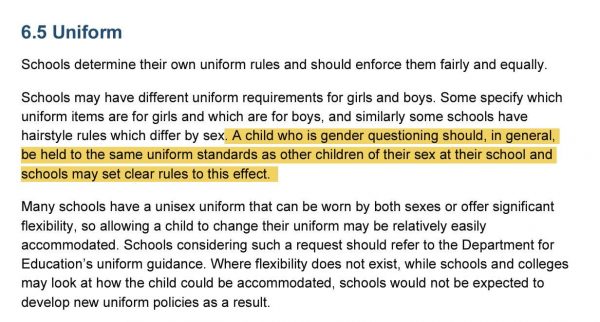
The plan further outlined policies that would forcibly out trans youth to their parents, ban pronouns for all primary school trans youth, prevent trans youth from using restrooms that align with their gender identity and could even lead to forced haircuts and clothing choices.
Journalist Erin Reed noted the policies even allow schools to enforce uniform policies based on a student’s assigned sex at birth, explicitly stating that trans students should follow the “hairstyle rules” of their assigned sex at birth. This would lead to trans girls being forced, for instance, to cut their hair short. You can see the policies here:
Social transition bans are, of course, seen and being promoted in other countries as well. New Zealand’s “Resist Gender Education” calls for the government to ban all social transition in schools, “even with parental consent.” In a statement to PinkNewsUK, Mermaids, a group that advocates for trans youth, added that the government’s guidance is “out-of-touch” and “absurd”.
“It is difficult to understand how aspects of this draft guidance, including automatically excluding trans pupils from facilities, sport bans or allowing students to be misgendered are compatible with existing equalities law,” the charity said.
“The overwhelming majority of teachers and parents believe trans pupils should be safe at school and will disregard these discriminatory guidelines, which will be non-compulsory.”
NEW ZEALAND
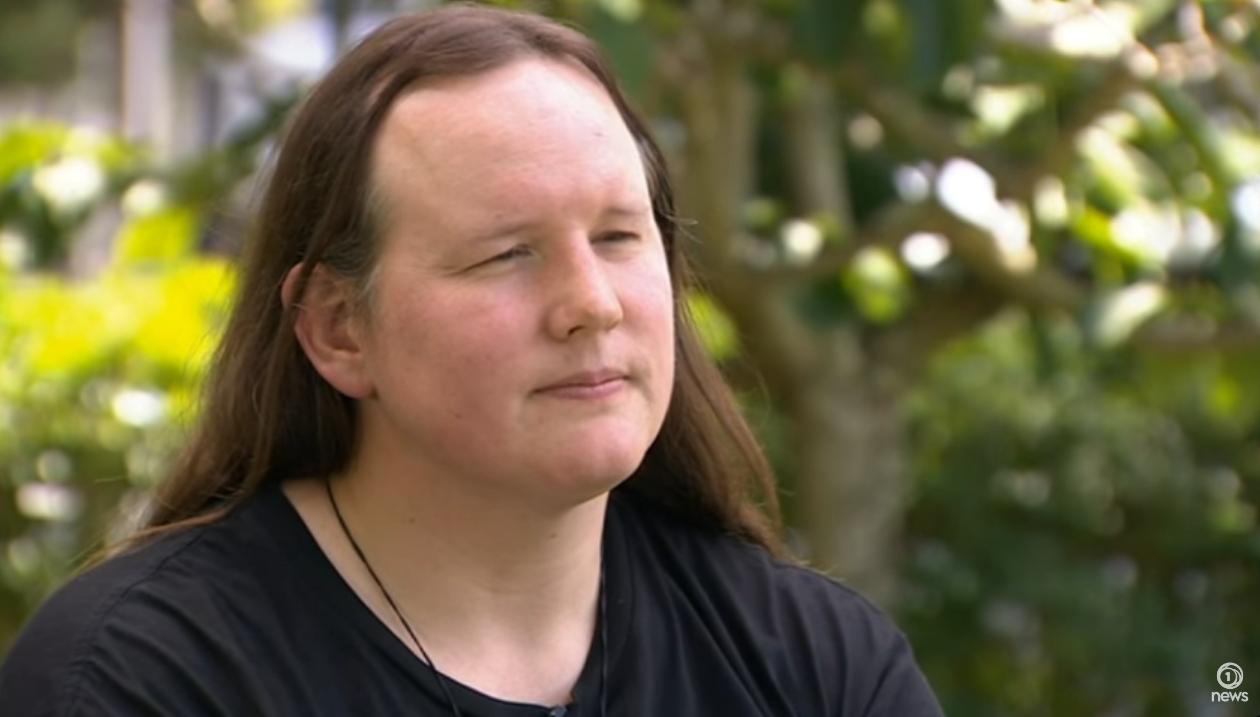
A new government policy will yank millions of dollars of public funding from New Zealand sports organizations as the government of newly elected Prime Minister Christopher Luxon sets out its agenda to “ensure publicly funded sporting bodies support fair competition that is not compromised by rules relating to gender.”
Andy Foster, a spokesperson for the populist and nationalist political New Zealand First party says it is “about fairness and safety in sport for women,” the NZ Herald reported.
Trans athlete and two-time national champion mountain biker Kate Weatherly told the Herald she fears it will lead to athletes being forced into men’s competitions or sidelined completely. Given the minimal number of trans women competing in amateur sports, Weatherly fears it could lead to their exclusion from the grassroots arena, she added.
Sport and Recreation Minister Chris Bishop was uncomfortable discussing the coalition agreement. “New Zealand First are very keen to make sure we have an inclusive environment and atmosphere for everybody — and that rules relating to gender don’t get in the way of that,” Bishop told the Herald.
“It is a tricky one, a thorny issue. There’s strong views on both sides of the debate. I’ll work through that with the relevant sporting bodies. Ultimately it’s got to go over to sporting bodies to make sure that we have fair competition.”
THAILAND
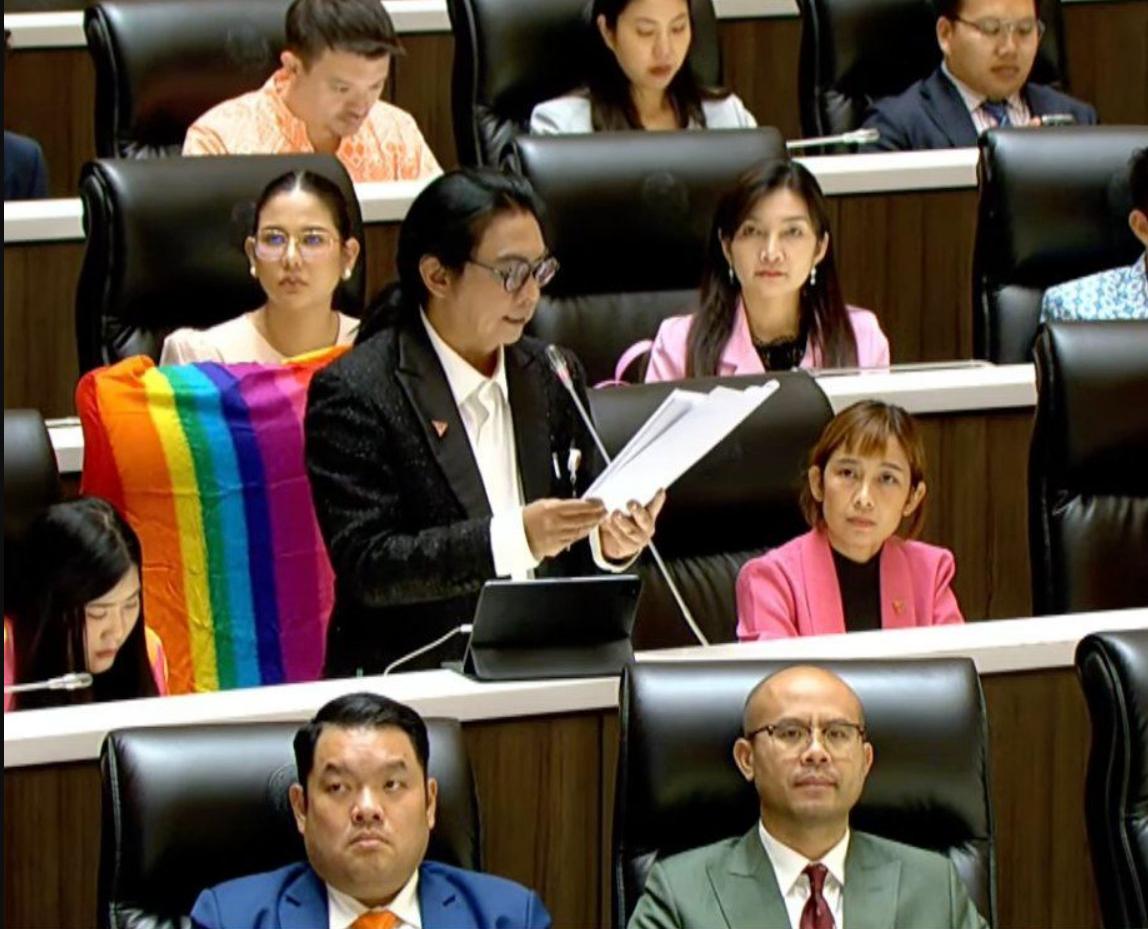
On Dec. 21, the Thai House of Representatives passed four draft bills regarding legalizing same-sex marriages in this Southeast Asia nation which has one of the more open cultures in that part of the world in acceptance of LGBTQ people.
Amnesty International Thailand Researcher Chanatip Tatiyakaroonwong noted in a statement:
“By potentially becoming the third place in Asia to legalize same-sex marriage, Thailand has the opportunity to set a bold example for LGBTI people’s rights in this region. These bills and the debates in Parliament over them represent a moment of hope for LGBTI people’s rights in Asia, even though there is still much to be done for their full protection.
The final version of this draft legislation must not water down calls for the full spectrum of the right to family life, including access to adoption and inheritance for LGBTI couples, as well as the legal recognition of same-sex couples as ‘spouses’ on an equal footing with different-sex couples.
As LGBTI activists have systematically demonstrated, efforts to broaden rights for LGBTI people don’t go nearly far enough to ensure equal rights guaranteed under international law. These bills set Thailand on a new path that could right those wrongs.
If legislation passes on first reading, Thailand’s Parliament should build on the momentum and prioritize the immediate adoption of this law, taking note of the celebratory reaction as a sign that the country is hungry for equality. Lawmakers in Parliament should continue to demonstrate to Thailand’s LGBTI community that they are listening and valuing their voices, wishes and perspectives.
Guaranteeing full marriage equality in law not only sends a message to the rest of the region but to the rest of the world, at a time when countries all over the globe are changing outdated laws and building more inclusive societies.”
Reuters reported that Deputy Prime Minister Somsak Thepsuthin told Parliament, referring to the government’s draft bill.
“In principle, this draft law is for the amendment of some provisions in the civic codes to open the way for lovers, regardless of their gender, to engage and get married. This will provide rights, responsibilities and family status as equal to the marriage between a man and a woman presently in all aspects,” he said.
Somsak said a government survey conducted between Oct. 31-Nov. 14 showed 96.6 percent public support for the draft bill.
Additional reporting from Esquerda News Lisbon, The Standard UK, Greek City Times, The Associated Press, Agence France-Presse, 24.HU News, PinkNewsUK, The BBC, Erin Reed, The New Zealand Herald and Reuters.




India’s Income Tax Department has opposed a same-sex couple’s petition that challenges Section 56(2)(x) of the Income Tax Act.
The provision exempts gifts between spouses from tax. The couple seeks the same benefit for their relationship.
At the center of the challenge is the explanation to the fifth provision of Section 56(2)(x). According to the petition, the provision excludes same-sex partners from the definition of “spouse.” The petition describes that exclusion as unconstitutional.
The provision defines “relative” to include an individual’s spouse, siblings, the spouse’s siblings, parents’ siblings, and other blood relatives.
Paiyo Ashiho and another petitioner, Vivek Divan, asked the Bombay High Court to recognize same-sex couples presumed to be in a marriage as “spouses” under the fifth provision to Section 56(2)(x).
A similar challenge is pending before the Karnataka High Court.
Bengaluru-based engineers Anurag Kalia and Akhilesh Godi have sought similar relief. Kalia said he wanted to give Godi a gold bracelet worth more than ₹115,500 ($1213.44.). The case remains pending.
The Prime Minister Narendra Modi-led government rejected the petition in an affidavit filed last year. It argued the plea was not legally tenable because it challenged no action or order of the Income Tax Department. Calling the petition an “abuse of process of law,” the government said the relief sought fell outside the scope of the Income Tax Act, 1961.
The government also argued the petitioners sought the benefits available to a “spouse” without legal recognition of their relationship. According to the affidavit, they had not placed on record any law recognizing their relationship as a marriage. It urged the court to dismiss the petition with costs.
The case returned to the spotlight on July 6, when the Bombay High Court heard the petition.
Justices B.P. Colabawalla and Firdosh P. Pooniwalla adjourned the matter after Solicitor General Tushar Mehta said he would appear on behalf of Modi’s government.
The petition comes nearly two years after the Indian Supreme Court’s marriage equality ruling.
In 2023, a five-judge Constitution Bench, in a 3-2 verdict, declined to recognize the constitutional validity of same-sex marriage in India. The country’s top court said MPs must decide whether to extend marriage rights to same-sex couples.
During the 2023 marriage equality hearings, lawyer Abhishek Manu Singhvi told the Supreme Court that marriage is a source of social validation, dignity, self-respect, fulfillment, and security. He argued that it also carries legal and civil benefits, including those related to taxation, inheritance, and adoption. Lawyer Anand Grover, who also appeared for the petitioners, told the court that marriage remains fundamental to the functioning of society and is necessary to access several state benefits, including joint tax benefits and surrogacy rights.
Chief Justice Dhananjaya Y. Chandrachud, in his minority opinion, said the Income Tax Act provides numerous tax benefits for payments made on behalf of a spouse, including deductions for life and health insurance premiums. He also noted that marriage confers several financial benefits on a spouse, including eligibility for gratuity, funeral expenses, medical benefits, and provident fund claims as the dependent of a deceased spouse.
In the marriage equality ruling, the Supreme Court recognized queer people cannot be discriminated against. The court said denying queer couples the material benefits and services available to heterosexual couples violates their fundamental rights.
While issuing directions to the federal, state, and territory governments; Chandrachud said the government should ensure there was no discrimination in access to goods and services. He also directed governments to sensitize the public about queer rights, establish a hotline for the queer community, create safe houses for queer couples, and ensure intersex children were not forced to undergo medical operations.
The petition is awaiting its next hearing before the Bombay High Court.
India’s tax system relies on both direct and indirect taxes, although its direct tax base remains relatively narrow. Individuals pay income tax at progressive rates of up to 30 percent, while consumers pay taxes on most goods and services through the Goods and Services Tax. The Income Tax Act also provides exemptions, deductions, and other tax benefits for eligible taxpayers, including those linked to family relationships and legal marital status.
India’s LGBTQ community is estimated to comprise between 135 million and 140 million people, or nearly 10 percent of the country’s population. Collectively, it is estimated to have a purchasing power exceeding $168 billion. The World Bank estimated that exclusion based on sexual orientation and gender identity cost India between $1.9 billion and $30.8 billion in lost economic output annually, or up to 1.7 percent of its gross domestic product.
India imposed a separate Gift Tax Act in 1958 to tax certain transfers of property made without consideration. Parliament repealed the law in 1998 to simplify the tax system and encourage genuine gifting. However, concerns over tax avoidance later prompted the government to bring gifts back within the Income Tax Act. Today, specified gifts exceeding prescribed limits may be taxed under Section 56(2)(x), subject to exemptions that include gifts received from relatives.
Under the Income Tax Act, gifts received from non-relatives exceeding ₹50,000 ($525.30) in a financial year are generally treated as taxable income, unless they qualify for a statutory exemption. Gifts received from specified relatives, including a spouse, are exempt from tax regardless of their value.
Tarun Khaitan — a research director and professor of public law at the London School of Economics Law School, honorary professorial fellow at Melbourne Law School, and associate fellow of the Bonavero Institute of Human Rights at the University of Oxford — told the Washington Blade the guarantee of equality and non-discrimination under India’s constitution was deliberately framed in broad terms because its framers envisaged that the understanding of those principles would evolve over time. They did not intend to freeze their meaning in 1950, he said. Instead, older and newer statutes alike must be interpreted in light of the constitution’s contemporary understanding.
“Constitutional values must inform the interpretation of all laws in India. It is well established in Indian jurisprudence that if a term can carry two meanings, the court will give it the meaning that complies with constitutional demands,” Khaitan said. “The term ‘spouse’ is not defined in the Income Tax Act, and unlike ‘husband’ or ‘wife’ is not a legal term of art in Indian family law. Its use by the Income Tax Act therefore is apt for judicial interpretation, which must be guided by the constitutional guarantees of equality and liberty.”
Asked how courts should balance respect for legislative choices with their constitutional responsibility to safeguard equality and dignity, Khaitan said he was not convinced that the legislature had made a clear choice in this case. He noted that the Income Tax Act uses the term “spouse” without defining it, adding that no other Indian law, to his knowledge, defines the term either. Its meaning has evolved over time, he said, pointing to the Oxford English Dictionary, which now defines a spouse as “a husband or wife, or a person joined to another in a comparable legally recognized union.”
Khaitan said the decision to restrict the meaning of “spouse” to different-sex married couples appeared to be the government’s interpretation rather than one expressly adopted by MPs. Even so, he said, courts have a duty to safeguard constitutional rights, although those rights are not absolute. The state, he said, must justify any restriction by demonstrating that it serves a sufficiently important public interest and that the limitation is proportionate to that objective.
“The extension of marriage would be a symbolic expression of equal acceptance of same-sex relations by law as well as a the extension of the bundle of material incidents that typically attach to it. Whether or not such extension happens, concerns such as inheritance, hospital visitation rights, decisions regarding end of life care, pensions etc affect the lives of same-sex couples as well as unmarried different-sex couples in a real, material sense,” Khaitan said. “There is no conceptual reason why the expressive salience of ‘marriage’ and the material incidents of a domestic partnership cannot be unbundled.”
Khaitan has had his scholarship cited by the Supreme Court in several constitutional cases, including Navtej Singh Johar v. Union of India, which decriminalized consensual same-sex relations, and Lt. Col. Nitisha v. Union of India, a landmark judgment on indirect discrimination.
Netherlands
Tens of thousands take part in World Pride March
Event capped off two weeks of celebrations in Amsterdam.

AMSTERDAM — Tens of thousands of people on Saturday participated in the World Pride March in Amsterdam.
Outright International Executive Director Maria Sjödin and Paolo Rondelli, who in 2022 became the world’s first openly gay head of state when he became Captain Regent of San Marino, are among those who participated alongside Massachusetts state Rep. Jack Lewis and Olena Shevchenko, chair of Insight, an LGBTQ advocacy group in Ukraine, and others.
Members of D66, the centrist Dutch political party that Prime Minister Rob Jetten heads, also marched.
Jetten in February became the Netherlands’ first openly gay prime minister. He participated in the opening of the World Pride Human Rights Conference on Aug. 5 and spoke on a panel with Rondelli, former Irish Prime Minister Leo Varadkar, and other gay and lesbian current and former heads of government.
(Washington Blade video by Michael K. Lavers)
(Washington Blade video by Michael K. Lavers)
The march took place a week after hundreds of thousands of people lined Amsterdam’s canals for the city’s annual Amsterdam Pride Canal Parade.
A terrorist attack at Berlin’s Christopher Street Day on July 25 left one person dead and more than two dozen others injured.
The incident overshadowed World Pride, which began hours earlier and ended on Saturday.
Dutch authorities increased security measures in the aftermath of the July 25 attack. No incidents were reported during World Pride.
Netherlands
Dutch PM: More needs to be done to defend trans rights
Rob Jetten on Friday was on World Pride Human Rights Conference panel

Editor’s note: International News Editor Michael K. Lavers and Photo Editor Michael Key will be on assignment in Amsterdam until Aug. 10.
AMSTERDAM — Dutch Prime Minister Rob Jetten on Friday said more needs to be done to defend transgender people and their rights.
“Everywhere in the Western world, it’s definitely the group that’s the most vulnerable in the moment and it’s rather well-picked also by our advisories,” he said during a panel at the World Pride Human Rights Conference in Amsterdam that Ying Xin and Diego García Blum of Global LGBTQI+ Human Rights Program at the Harvard Kennedy School’s Carr-Ryan Center for Human Rights Policy moderated. “They’ve chosen the smallest group within our broader community (trans people) to attack them, to ensure that we can strip their rights and if they’ve done with that, they’ll go after the next group within our community, so we shouldn’t be naïve about what’s behind it.”
“It’s very well-funded. It’s very well-organized and we have to organize as well to fight back and to win this fight,” added Jetten. “We also need to be more open in conversations that we are having within the community and also dive into it much deeper and maybe even have more difficult and annoying conversations.”
Jetten in February became the Netherlands’ first openly gay prime minister.
He appeared on the panel alongside former Irish Prime Minister Leo Varadkar, who in 2017 became his country’s first openly gay head of government, and former San Marino Captain Regent Paolo Rondelli, who was his country’s ambassador to the U.S. from 2007-2016.
Several other current former heads of government who are gay or lesbian also participated in the panel. They include former Icelandic Prime Minister Jóhanna Sigurðardóttir, former Luxembourgish Prime Minister Xavier Bettel, and Andorran Prime Minister Xavier Espot Zamora. California Congressman Mark Takano, who chairs the Congressional Equality Caucus, and LGBTQ+ Victory Fund CEO Evan Low were among those who attended.
Jetten in his remarks said he was “very surprised” to learn that “not only in the U.S. but also in some European countries that we’ve let them decide what the gay group looked like.” The Dutch prime minister further pointed out that conservatives began “to attack the debate on toilets or starting this debate about trans people in Olympic games.”
“That is, of course, a ridiculous debate to start, but we’ve got distracted because we were so busy having this debate on Olympians, and then we actually forgot the real fight was about access to healthcare, just being yourself, being able to enlist in the army, or being able to be a young trans boy or girl in school,” said Jetten. “We got distracted by some fresh meat that was thrown into the area by some very conservative people.”
“We have to open our eyes and have very in-depth conservations within our community, and come up with a much better strategy to win this fight and to protect all our trans brothers and sisters, dolls, whatever,” he added. “Because if we don’t win this fight for trans people, we’re going to lose the bigger fight for all LGBTQ people in the world.”
Varadkar noted Ireland in 2015 passed a law that allows people to legally change their gender without surgery or other medical interventions.
He conceded there was “a liberal wind blowing across the world at the time, and it was largely uncontested.”
“It would be harder now, quite frankly, to do that legislation,” said Varadkar.

Scottish lawmakers in 2022 passed the Gender Recognition Reform Bill, which lowered the age for anyone to legally change their gender without medical intervention from 18 to 16. Then-British Prime Minister Rishi Sunak’s government later blocked the measure from taking effect.
The U.K. Supreme Court in 2025 ruled the legal definition of a woman under the country’s Equality Act is limited to “biological women.” Author J.K. Rowling is among those who praised the decision that stemmed from a case that challenged the Scottish government’s decision to include trans women in its definition of women when it sought to increase the number of women on government boards.
The Trump-Vance administration on Jan. 20, 2025, the first day it was in office, issued a sweeping executive order that, among other things, declared the federal government would only recognize two genders: male and female. The White House earlier this year in its counterterrorism strategy said it “will also prioritize the rapid identification and neutralization of violent secular political groups whose ideology is anti-American, radically pro-transgender, and anarchist.”
“We have to stay united,” said Rondelli. “The strategy was, since the beginning, was a Nazi strategy to create groups, target groups, and to create maximum distractions to avoid discussion about some sort of policies.”
“Trans people are the target at the moment,” he added. “But after them it will probably be some others, so we have to stay united.”

Boris Dittrich, the Dutch Senate’s First Vice President and a member of Jetten’s D66 party who was previously global advocacy director for Human Rights Watch’s LGBTQ Rights Program, at the end of the panel asked about protecting intersex babies from what advocates maintain are unnecessary surgeries.

Will Michigan save the GOP?

Treat our political opponents as neighbors not enemies

Flanagan beats Craig in Minn. Senate primary after winning key LGBTQ endorsements

Gay ANC commissioner sues D.C. over police ‘failure’ to pay reward money

New LGBTQ visitor center slated for Wilmington, Del.

PHOTOS: World Pride March

Tens of thousands take part in World Pride March

Don’t miss summer productions at Clear Space in Rehoboth Beach

Todd Blanche’s record on LGBTQ issues comes under scrutiny as he takes over DOJ

HISTORIC: Susan Stewart elected Rehoboth’s first out mayor
-

 Photos4 days ago
PHOTOS: World Pride March
-
Netherlands4 days ago
Tens of thousands take part in World Pride March
-
Theater3 days ago
Don’t miss summer productions at Clear Space in Rehoboth Beach
-
Federal Government2 days ago
Todd Blanche’s record on LGBTQ issues comes under scrutiny as he takes over DOJ