Movies
Queer movies and shows to watch this summer
‘Brokeback’ returns, a Sally Ride doc, and much more
Summer is upon us, and so is Pride month, which means a whole crop of queer-flavored movies and shows are ready to blossom onto our nearest screen over the next few weeks; and as always, the Blade is here with a handy guide to help you fill out your watchlist.
I Don’t Understand You
First up is this pitch-black horror comedy starring Nick Kroll and Andrew Rannells as a gay American couple (and soon-to-be-adoptive-daddies) celebrating their 10th anniversary with a trip to Italy. Unfortunately, neither of them speaks Italian, and the resulting language barrier creates a series of mishaps and misunderstandings that turns their dream vacation into a farcical traveler’s nightmare. Co-created by real-life gay couple Brian Crano and David Joseph Craig (who also directed), it’s got an authentic queer voice behind it, and a pair of talented and funny lead actors to make it work; it’s also got a nice collection of good reviews behind it from its debut at 2024’s SXSW and other festivals, which makes it a strong opener for your summertime slate. 6/6, in theaters
Loulou
Directed by Noëlle P. Soulier, this thoughtful trans coming-of-age/coming-out story centers on a closeted 17-year-old teen (Kevin Curtis) struggling with her identity while trying to cope with harassment at school and the pressure of living with her strict Catholic parents (Desean Terry and Reiko Aylesworth). Pushed to the church, she finds unexpected solace, encouraging her to start a journey toward self-acceptance – something that includes a new relationship with her own ex-bully (Spencer Belko), who has been struggling with some identity issues of his own. Also starring Patrika Darbo as a sympathetic nun, this gentle story about trans experience seems like a welcome beacon of support at a time when we really need one. 6/6, VOD
Sally
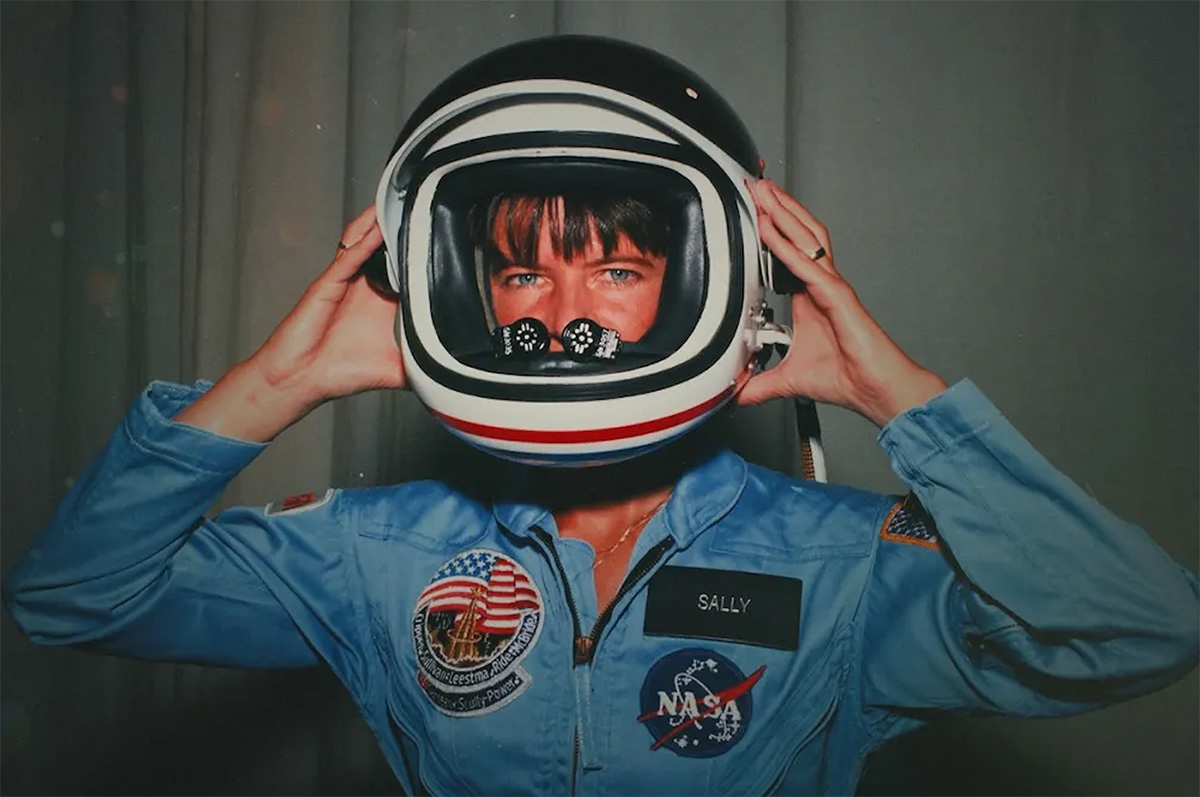
Directed and produced by Cristina Costantini, this documentary from National Geographic explores the life and career of Sally Ride, who became the first American woman to blast off into space. It’s not just the story of her historic achievement, however, but the story of her 27-year romance and relationship with life partner, Tam O’Shaughnessy, who reveals the full personal journey of America’s LGBTQ astronaut for the very first time. 6/16, NatGeo; 6/17, Hulu, Disney+
Brokeback Mountain
No, that’s not a misprint and you’re not having a flashback to 2005, because the game-changing Ang Lee-directed drama about two cowboys in love is returning to theaters for a series of special screenings to celebrate its 20th anniversary. If you’re anything like us, you probably “wish you could quit” this powerful, heartbreaking, and tragically beautiful masterpiece – but we all know we never will. Why not celebrate that special bond by seeing it again on the big screen? Beginning 6/20, in theaters
The Gilded Age (Season 3)
Back for another round of sumptuously costumed, lavishly decorated intrigue among the ostentatiously wealthy high society class of late 19th-century New York (and those entangled in their world), the newest installment of this intrinsically queer period soap opera finds a definite shift in dynamics taking place after last season left the major players of the “old guard” weakened and the social-climbing “new money” crowd poised to take their place at the top of the pecking order. Promising the return of its sprawling cast – which includes queer fan favorites like Christine Baranski, Cynthia Nixon, Carrie Coon, Nathan Lane, and more, not to mention an ever-expanding host of Broadway greats to fill out the supporting cast and guest star roster – as well as the savvy perspective of show creator Julian Fellowes (“Downton Abbey,” which also returns later this year for a swan song on the big screen) to ensure its status as both artful social observation and “guilty pleasure” escapism, it’s probably already on your list if you’re a fan. If you’re not, there’s still time to catch up with the first two seasons before this one drops. 6/22, HBO Max
King of Drag
Move over, RuPaul, because the first major Drag King competition series is making its debut on queer streaming service Revry, where it plans on “serving you bold, brilliant, and unapologetic talent like never before” and celebrating “masculinity in all its forms.” Hosted by legendary trans New York drag king Murray Hill, it will feature regular judges Gottmik, Sasha Velour, Tenderoni, Wang Newton, and Revry co-founder Damian Pelliccione, as well as a list of guest judges that includes Jackie Beat, Cole Escola, Landon Cider, Lisa Rinna, and more. 6/22, Revry
Ironheart
Queer Marvel fans will certainly be on board for this new miniseries from the MCU, which is set after the events of the film “Black Panther: Wakanda Forever” and follows young genius inventor Riri Williams (Dominique Thorne) as she embraces her evolution into the titular superhero in her hometown of Chicago. Reportedly establishing the lead character as bisexual, the series (created by Chinaka Hodge) also continues the Marvel franchise’s efforts toward diversity and inclusion with the introduction of a transgender character and the casting of transmasculine actor Zoe Terakes and “Drag Race” star Shea Couleé in supporting roles. “Hamilton” and “In the Heights” star Anthony Ramos co-stars as Parker Robbins (aka “The Hood”). 6/24, Disney+
The Ultimatum: Queer Love (Season 2)
For fans of reality TV competition, this popular show – a spin-off from “The Ultimatum: Marry or Move On” – returns with a set of six new couples (made up of women and non-binary people), who must put their love to the test by moving in with other partners to determine if they’re ready for marriage — or simply ready for someone else. 6/25, Netflix
Hot Milk
Adapted from the 2016 novel by Deborah Levy, this coming-of-age drama from filmmaker Rebecca Lenkiewicz follows Sofia (Emma Mackey) as she accompanies her domineering, wheelchair-bound mother (Fiona Shaw) to a questionable clinic in Spain in search of treatment, and is tempted by a tantalizing new life in the form of a local seamstress (Vicky Krieps). With a literary pedigree to balance its air of soft-core steaminess, this one appeals to us on the basis of its captivating cast alone. 6/27, limited theaters
M3GAN 2.0
The hot movie ticket this summer is likely to be for this sequel to 2022’s campy comedic cult horror hit, in which a murderous rogue AI-powered doll goes on a rampage after becoming self-aware before being destroyed – or at least, apparently. Three years later, M3GAN’s creator (Allison Williams) is now an advocate for oversight on Artificial Intelligence, but when a new and deadly android (Ivanna Sakhno) is created as a military weapon from her stolen plans, she must risk resurrecting her original invention in order to stop an even greater threat to humanity. Violet McGraw returns as Williams’ now-teenaged niece, as do Amie Donald and Jenna Davis as the title character’s body and voice, respectively. 6/27, in theaters
Ponyboi
Highly anticipated is this neo-noir thriller from director Esteban Arango, written by and starring intersex actor, filmmaker, and activist River Gallo, which is finally getting a theatrical release nearly a year and a half after its acclaimed debut at the 2024 Sundance Festival. Adapted and expanded from a 2019 short film by Gallo, it follows a young intersex sex worker (Gallo), whose messy personal life – his best friend (Victoria Pedretti) is pregnant, and the father is his own pimp/boyfriend (Dylan O’Brien) – gets even messier when a drug deal gone bad puts him on the run from the mob. Gallo’s performance has earned copious praise, and the fact that it’s a whole movie centered on an intersex person – surely a rarity, if not a first, in commercial American filmmaking – makes it even more of a must-see. 6/27, in theaters
Sorry, Baby
Another Sundance favorite makes its way to theaters in the form of this dark comedy-drama from first-time writer/director/star Eva Victor, who plays Agnes, a woman still recovering from a sexual assault by a trusted figure in her past, who has tried to move on but realizes how “stuck” she still is after a close friend makes a milestone announcement. Despite the heavy subject matter, it’s earned its acclaim – and the resultant buzz that enticed top flight distributor A24 to snap up the rights – by approaching it with a hefty dose of absurdist humor, as it peels back the onion of the “bad thing” that happened to finally set Agnes on a course toward healing through a series of five “chapters” in her life. It’s been described as a “trauma-dy” – and frankly, we think that’s enough to make it irresistible. 6/27, in theaters
Freakier Friday
You might be tempted to say this is the sequel that nobody asked for – but you know you’re going to be there for it. The perennial parent/child identity swap franchise (spawned by a sharp-witted novel from Broadway royalty Mary Rodgers) reinvents itself yet again with the return of Jamie Lee Curtis and Lindsay Lohan as a mother and daughter who, decades after having swapped bodies due to a mystical incident involving a fortune cookie, find themselves once again switching places on the eve of a milestone wedding. We have no idea if there’s any queer-relevant story elements here; we just know most of us will be fully on board, if only for the nostalgia and the undying appeal of its queer-fan favorite stars. 8/8, in theaters
Lurker
Touted as “a screw-turning psychological thriller made for the moment” and directed by Alex Russell (writer/producer of the acclaimed shows “The Bear” and “Beef”), this dark pop cultural commentary focuses on a young LA loner (Théodore Pellerin) who has a chance encounter with a rising pop star (Archie Madekwe) and uses it to infiltrate his “entourage” – only to find himself caught up in an ever-escalating competition for attention, access, and proximity to “fame” that soon becomes “a matter of life and death.” A buzzy, paranoid, and grimly exhilarating exploration of the music industry, fandom, and “our universal search for validation,” this creepy but enticing suspenser scores extra points from us for leaning into a homoerotic subtext and serving up the sweaty wrestling scenes to prove it. 8/22, in theaters
Honey Don’t!
The second of a planned “Lesbian B-Movie Trilogy” from filmmaker Ethan Coen and his wife Tricia Cooke (which began with last year’s “Drive Away Dolls”), this neo-noir-ish dark comedy stars Margaret Qualley (“The Substance”) as a lesbian private eye who is led by a case into a series of strange deaths centered around a mysterious church. It’s the kind of movie for which the less you know about it, the better it probably plays, so we won’t say much more – except that its cast includes heavyweights Aubrey Plaza, Billy Eichner, and Chris Evans. We say, “honey, DO.” 8/22, in theaters
Twinless
Coming on the cusp of fall, filmmaker James Sweeney’s eagerly awaited black comedy (do we detect a common thread in this summer’s selection, or is it just us?) is yet another Sundance darling, bolstered even further by the controversial gay sex scenes that were leaked online by fans of teen-heartthrob-turned-A-lister Dylan O’Brien (playing gay again for his second appearance on our list), who co-stars with Sweeney himself in this oddball story about two young queer men who meet in a support group for bereaved twins and form a sexually intense friendship with each other. Praised by critics for its “seamless” integration of queer themes into a compelling (if unusual) narrative, there’s been a lot of delay and reshuffled plans around its official release date – but now it’s officially set to be our final treat for a summer full of queer entertainment. 9/5, in theaters



Movies
‘Teenage Sex and Death’ has never been more entertaining
Come for the jump scares, but stay for the tour-de-force filmmaking
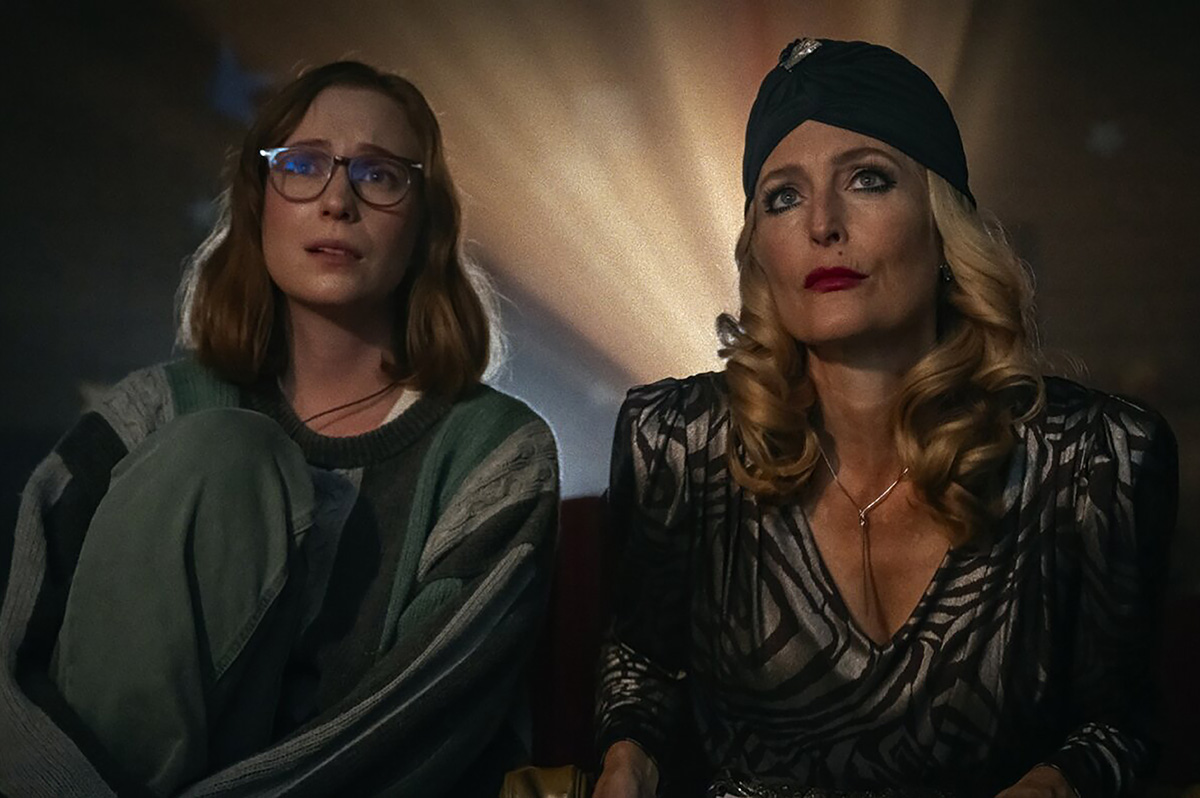
If any movie title can be said to describe exactly what it is going to show us, “Teenage Sex and Death at Camp Miasma” would have to be it – and yet, it doesn’t communicate anything to prepare us for what we are going to see.
For that, you’d have to already be a fan of the creator behind it – transfeminine, non-binary filmmaker Jane Schoenbrun – and the surreal, dysphoric, and meta-formal nature of their previous work.
A horror fan since childhood, Schoenbrun spent their teen years frequenting online message boards for popular horror shows, writing fan fiction, and going to see punk bands in basements; a bachelor’s degree in film from Boston University paved their way into the world of “indie” cinema, and their first directorial effort was an online documentary about the phenomenon of “Slender Man” (look it up), which explored the way media and reality can blend together in the cultural imagination.
That blending has continued to permeate their films: their first feature, “We’re All Going to the World’s Fair,” about a lonely teen who is drawn into a creepy online challenge, tells its story entirely through video clips she and the other participants share online; their second, “I Saw the TV Glow,” is an eerie and devastating tale of two teen friends who form a bond over their shared obsession with a paranormal television show and drift apart when it is cancelled, only to be drawn together again when buried memories of it begin to infiltrate their “real” lives. Both are driven by themes of gender identity, social isolation, queer awakening, and transformation – the stuff that resonates deeply with queer and trans audiences – and Schoenbrun didn’t bury the subtext in the story; instead, the subtext was the story.
With “Camp Miasma,” their third and (thanks to its win of the “Queer Palm” at Cannes) highest profile feature film to date, they carry their creative obsessions forward into a surreal narrative that exists around the border between reality and media-manufactured fantasy, and brings them into the the world of queer adulthood. Even more boldly, perhaps, it’s a comedy (albeit a dark and grisly one), a satire of the movie industry itself – which gives the director plenty of cheekily self-referential opportunities to make this their most “meta” film yet. After all, it’s about a young non-binary director working on a horror film, and you can’t get much more “meta” than that.
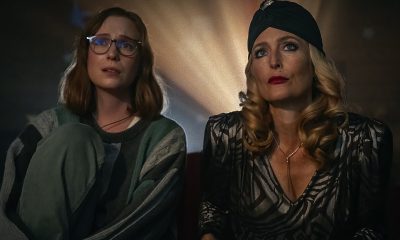
The onscreen director who serves as Schoenbrun’s semi-autobiographical avatar is Kris Williams (Hannah Einbinder), who has been tasked by a studio with remaking its classic slasher movie from the 1980s (“Camp Miasma”), in hope of generating an updated reboot of the once-lucrative franchise it spawned. Kris, who loves the original film, hopes to coax the actress who starred as its “final girl” – Billy Presley (Gillian Anderson) – into returning to the screen for the new one, though she has been retired from acting and living as a recluse ever since. Managing to get a meeting with her at her secluded home in the Pacific Northwest, Kris arrives in a snowstorm to discover that Billy now lives in the same abandoned campground where “Camp Miasma” was filmed four decades ago. She also has seemingly developed the unsettling eccentricities of an aging once-famous scream queen who has faded into obscurity and spent decades dwelling in memories of the past.
Despite some initial misgivings (on both sides), the two hit it off, and Billy agrees to help Kris develop her ideas for the reboot. As they work, their shared obsessions around the original film and its horrifying mythos draws them closer together into a more intimate kind of relationship – even as Billy’s unconvincingly “tongue-in-cheek” insistence that the franchise’s iconic killer is a real entity, waiting to be reawakened for the next massacre, begins to creep into Kris’s own psyche.
Ingeniously mixing fan nostalgia for vintage “Friday the 13th”-style slasher films with the Lynchian surrealism of modern horror cinema and the campy-but-transgressive absurdity of a movie that wants us to be “in” on the joke, “Camp Miasma” takes Schoenbrun’s broodingly ironic Gen-Z sensibilities and spins them into something that works on multiple levels. As a horror film, it relies on the familiarity of its tropes and gleefully manipulates our reactions, yet undercuts its own formula to turn it into a blend of parody and homage that somehow elevates the genre by way of its own deconstruction. As a piece of postmodern cinema, it precludes attempts at analysis by transparently analyzing itself as it goes as part of its own self-aware scenario, turning intellectual interpretation into just another trope of its own. As a queer allegory, it nullifies the standard critical interpretations by wearing them jokingly on its sleeve. As a love-letter to cinema, it brims with callbacks to iconic masterworks like “Sunset Boulevard” and “Psycho.” It uses the irresistible darkness of its milieu as a vehicle through which to express a liberating, sex-positive celebration of queer joy, unencumbered at last by a confrontation with the fear, shame, and insecurity forged by social constructs that are so often used to suppress it. It even works as a romance, turning the age gap between its two leads into a bridge that overpasses any notions of conformity and eliminates false sentiment by framing it as a sexy kind of cross-generational mentoring.
At the center of it all is the powerhouse pairing of Einbinder and Anderson, whose dynamic together works so well we never bat an eye over that age gap; they sink their teeth into the material and deliver it with a fearlessness that feels a bit like pure glee, and they give what might just be the two best screen performances of the year.
There are also some winking cameos, like “Kids in the Hall” alumnus Kevin MacDonald as a local hotel clerk who was once enlisted as a supporting player in the “Camp Miasma” franchise, and veteran character actor Dylan Baker as the facile-minded studio exec who simply wants Kris to create something commercial enough to turn the franchise into a cash cow again. Jack Haven (the trans co-star of “I Saw the TV Glow” opposite Justice Smith) commands our attention as Camp Miasma’s weirdly air-duct-masked slasher – named “Little Death,” a phrase which, translated into the French “La petite morte,” is a euphemism for orgasm, just in case it wasn’t already clear that the movie operates as a psychosexual drama, on top of everything else.
Ultimately, though, it’s Shoenbrun who is the real star; much in the way that Alfred Hitchcock turned his own unique milieu into a kind of star power that eclipsed even the draw of the big name actors who populated his films. They come into their own with “Teenage Sex and Death at Camp Miasma, creating one of the best films of the year so far and cementing their reputation as one of the most excitingly visionary filmmakers of the post-Millennial era.
In other words, come for the blood, gore, and jump scares, but stay for the sublimely entertaining — and entertainingly original — tour-de-force filmmaking that raises this one to the level of pop culture masterpiece.
Movies
Queer team brings girl power to fully baked ‘The Wrong Girls’
Perfect film for anyone who loves stoner comedies
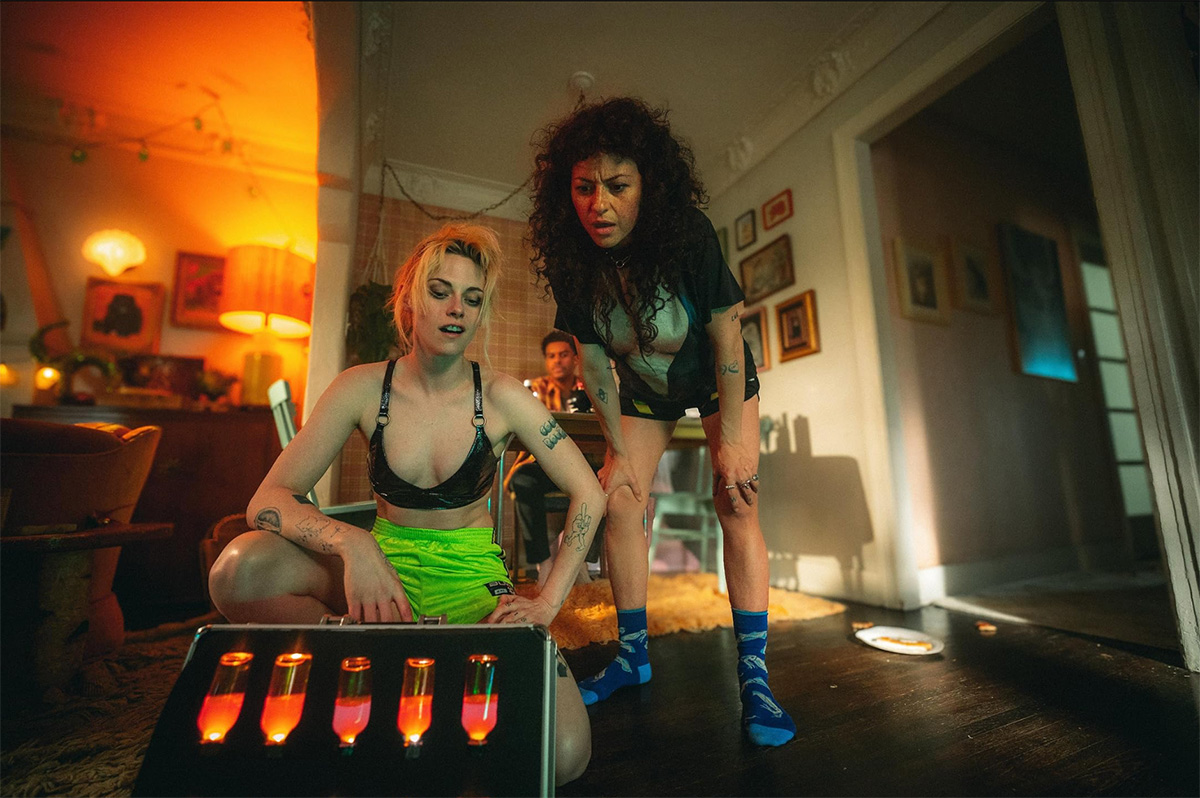
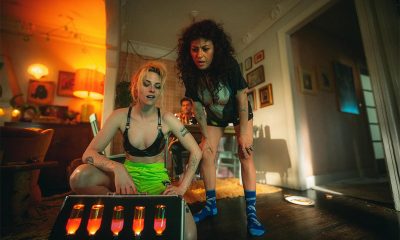
Generally speaking, the “Stoner Comedy” genre is aimed at an audience of “stoners,” and if you’re not one, you probably don’t get the appeal.
If you are, though, you’re likely to enjoy “The Wrong Girls,” the new indie from screenwriter Dylan Meyer in her directorial debut, which began a theatrical release on Aug. 14. The plot is ridiculous, the humor is lowbrow, and you won’t find any substance in it except for the ones that get consumed onscreen – but that’s exactly the reason why it’s pretty much perfect for anybody who loves stoner comedies, and the fact that everyone involved commits to it whole-heartedly might just makes it all the more so.
Starring Kristen Stewart (Meyer’s real-life spouse) opposite Alia Shawkat as a pair of broke, directionless best friends who share an L.A. apartment and spend an impressive amount of effort finding new and elaborate ways of consuming cannabis, it opens with them facing a financial crisis; Frankie (Stewart) is thousands of dollars in debt for a scholarship to Stanford – even though she failed out before graduating – and Molly (Shawkat), who dreams of being a professional chef, channels her creative cooking skills into creating off-the-wall recipes for cannabis-infused snacks. To make matters worse, rent is due, and – as usual – they are short.
Their situation gets a sudden surprise windfall when Frankie (through a freak case of mistaken identity) ends up in possession of a briefcase full of a mysterious liquid they assume is some kind of drug. Thinking they can sell it for rent money, they decide to try it for themselves, first, resulting in a pink-and-bubbly hallucinogenic experience in which they can hear each other’s thoughts (and their cats’ thoughts, too) – an effect that lingers even after the “trip” subsides.
Their plan to sell the substance hits a snag, however, when a cadre of gun-toting Euro-thugs in dark suits show up on the scene trying to get their hands on it. Forced to go on the run, they eventually learn that the substance they took is a top-secret experimental drug, developed by a scientist (Kate McKinnon) researching human consciousness – and that the Europeans work for a dangerous rival who wants the formula for his own nefarious purposes. Can two 20-something stoners successfully elude and overcome a team of international mercenaries on a mission? Probably not, but the superpowers they seem to be developing might improve their chances – if they can figure out how to use them, that is.
Cut from the same cloth as every weed-centric movie farce you’ve ever seen, “The Wrong Girls” leans into most of the genre’s usual formula points, first and foremost of which is that it doubles as a buddy comedy. From Cheech and Chong, through Jay and Silent Bob, to Harold and Kumar, these films have always relied on the goofy chemistry between two friends, and Mayer (who wrote as well as directed) makes a special point of following that blueprint – because it’s also where her film sets itself apart from most of the other examples within a traditionally male-dominated genre by making the buddies female instead.
It’s a simple switch, and it really doesn’t have any significant impact on the general “vibe” of the story; the dynamic is more or less the same familiar back-and-forth banter between two people who have spent years getting high together, and their antics are just as stupid. Even so, in another way, flipping the usual gender of its protagonists makes an essential difference, simply because we’re so accustomed to seeing it the other way around – but women also like to get high, so why shouldn’t we see them doing it in the movies? After all, the now-legendary Comedy Central series “Broad City” (to which “The Wrong Girls” also owes a debt of inspiration) brought a pair of stoner chicks to TV over a decade ago with the epic pairing of Ilana Glazer and Abbi Jacobson, so it’s high time (if you’ll pardon the pun) we see the same on our big screens, too.
There are other twists that spruce up the formula too – a boyfriend (Zack Fox) who sparks girl buddy jealousy by asking Molly to move in with him; the crashing of a party thrown by a corporate douchebag (Tony Hale) who provides a great target for the anti-establishment satire that’s almost obligatory for the genre; and a plot thread about giant squid biochemistry that adds an air of comedic mysticism while tapping into the “cephalopod awareness” trend that has wriggled its way into our cultural discourse around ethical seafood consumption. All of it is written and executed with a cleverness that makes it easy to laugh at all the “dumb” comedy without it feeling too much like a guilty pleasure.
Steward and Shawkat, needless to say, carry the film; they find just the right blend of authentic friendship and “train wreck” energy to make their relationship both wacky and relatable. LaKeith Stanfield brings an admirable seriousness to his role as the guy who delivers the briefcase to the wrong person before becoming a comic foil and ending up a reluctant ally; stoner movie veterans Seth Rogan and Kumail Nanjiani amusingly lend their voices to the girls’ two cats; but it’s McKinnon who raises the bar, entering the story late in the game to become the hands-down MVP in a comedy that is only improved by her proven gift for stealing every scene she’s in. It’s also worth noting that Geena Davis turns up for a memorable appearance that feels like a nod to that grandmother of all girl-buddy films, “Thelma and Louise.”
What gives “The Wrong Girls” an extra appeal for queer stoners (and we know there are a lot of you) is that it features two queer stars in a queer-written-and-directed comedy that also features several other prominent queer (or queer adjacent) cast members, despite not having any specifically queer story elements. Maybe it’s the camp sensibility, or the obvious lampooning of overtly toxic heterosexual “types,” or just a general feeling of irreverence and a sharply counter-cultural edge – but somehow, the whole thing comes across as an expression of queer perspective that manages to run circles around the banality that might otherwise easily have turned the movie into an unfunny slog through a territory we’ve all seen plenty of times before.
All that said, it’s important to return to the original point that stoner movies are not necessarily meant for everyone – and fresh as it might feel, “The Wrong Girls” is definitely a stoner movie. There’s a lot of humor (and we mean A LOT) that will fall flat for those who don’t “get it,” and a considerable amount of absurdity and excess which will probably only frustrate viewers without a natural taste for it. Like even the best of the genre, it’s not intended to be deep, or even coherent – it’s all just for the sake of mindless, feel-good fun for those with a taste for it. So be warned by that caveat if you think it applies to you – otherwise, we suggest you grab a pack of edibles and jump on board for the ride.
Movies
‘Maddie’s Secret’ defies campy expectations
An over-the-top, old-school melodrama combined with modern satire
Sometimes, when you think you know what to expect from a movie, it doesn’t match those expectations. What do you do then?
I’m not talking about the unmet expectations of fans, like those who complain that Kubrick’s “The Shining” made sweeping changes from Stephen King’s novel, or start a social media campaign trashing the latest “Star Wars” or “Marvel” film because of a plot twist they don’t like. Those are complaints about content, about a story not going the way it is “supposed” to go.
I’m referring to the expectations we have when we walk into a movie thinking that it’s going to have a particular tone, a specific style, a familiar formula – essentially that it is going to easily fit into a comfortable box, and stay there. What happens when it doesn’t?
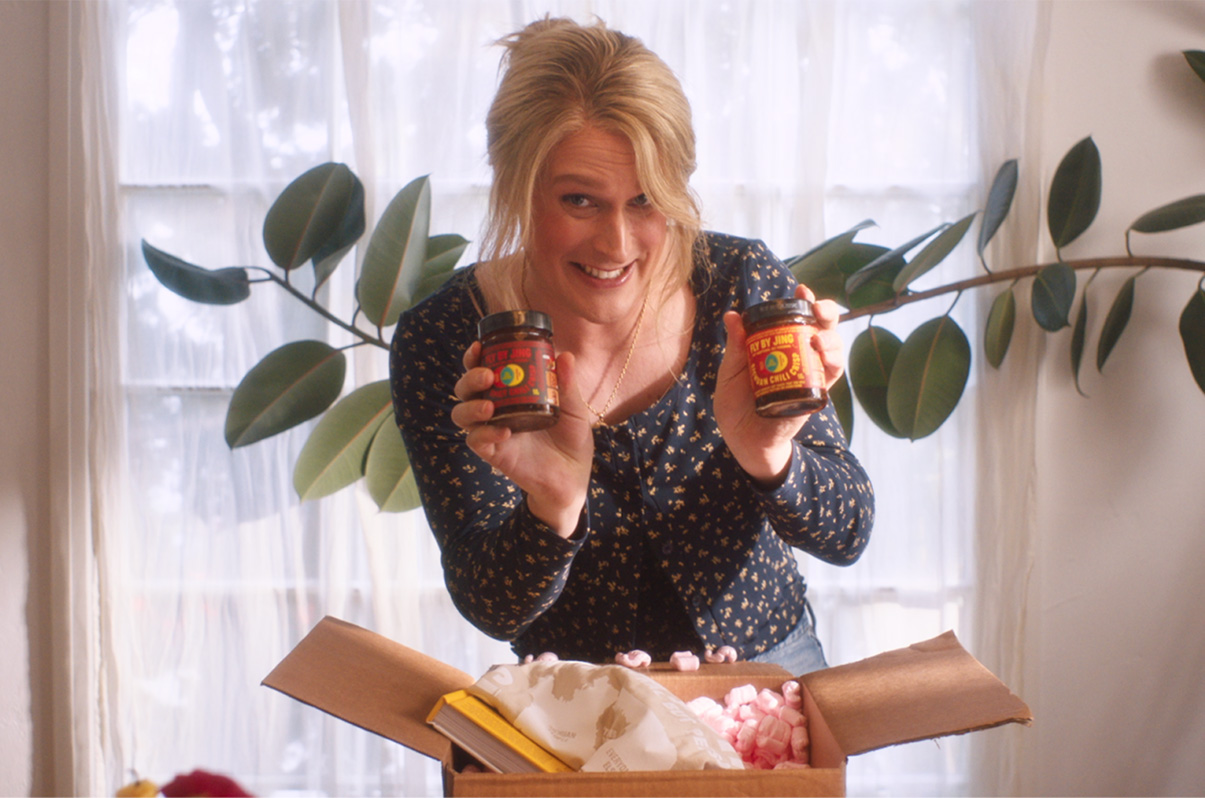
That’s the question I found myself asking as I watched “Maddie’s Secret,” the directorial debut from gay actor/comedian John Early, which is now screening in a limited theatrical release. It’s the story of a humble housewife whose doting husband persuades her to turn her love of cooking into a career as a virally popular “food influencer,” only to find that her sudden success triggers traumatic feelings from her childhood; clearly a contemporized hybrid of the melodramatic “woman’s pictures” of Old Hollywood and the “Afterschool Special” style cautionary dramas of ‘70s/’80s TV, it has all the earmarks of being an exercise in “camp” – especially since Early himself stars as Maddie.
To put it plainly, it’s an over-the-top old-school melodrama combined with modern-day satire of online social media fame, with a gay man in a dress playing the lead. What could be campier than that?
And it is campy, make no mistake. Yet at the same time, somehow, it isn’t. From its opening scene (which shows us Maddie as she jogs to her dishwashing job at the headquarters of an LA test kitchen/content studio named “Gourmaybe”), we expect things to get wacky. The ingredients are definitely present for it, like her aggressively butch co-worker/BFF Deena (Kate Berlant), who is clearly nursing a serious “girl crush”; bitchy TikTok star Emily (Claudia O’Doherty), who demeans her and ridicules her ambitions of being a chef; and boss Zach (Connor O’Malley), a womanizing corporate “bro” who enthusiastically embraces all the toxic traits we associate with that description.
As the story opens up beyond her workplace, there are more elements that feel ripe for the kind of histrionic humor we might expect from a film by John Waters, or the stylish old-school parody of Charles Busch, or even the radicalized sexual transgression of Bruce La Bruce: Maddie’s adorably bearish husband Jake (Eric Rahill) could be made into a goofy caricature with a food fetish, and her estranged, abusive mother Beverlee (Kristen Johnston in a deliciously grotesque performance) is easily monstrous enough to be at the campy center of any “hag horror” from the ‘60s.
And when we finally discover her “secret” (spoiler alert: it’s an eating disorder that returns when the pressures of being a popular social media chef bring up old feelings about her relationship with food), it’s easy to imagine a different filmmaker taking the whole thing in a thoroughly savage direction; the potential for tasteless, excessive, and deliberately juvenile comedy might be limitless, in the hands of a director unafraid of being branded “offensive.”
It’s hard not to see all these possibilities on hand as we watch Early’s film – which he also wrote – and (for myself, anyway) hard not to hope they all play out to maximum outrageous effect.
They don’t. Instead, “Maggie’s Secret” does something so unexpected that it feels, at first, like a mistake: it decides to play things straight.
It’s still a comedy, make no mistake, but it’s not the kind of comedy we think it’s going to be. It doesn’t go for over-the-top anarchy; it doesn’t go for the bitch-slapping catfight between rival divas, or for the running parade of filthy double-entendres, or for the absurd “gross-out” humor that might have emerged from its scenes of binge-and-purge overeating. Well, okay, maybe it does go for that last one, a little bit.
What all this comes down to, perhaps, is that the film gets its laughs – and there are quite a lot of them – without making fun of itself or, more importantly, its characters. The comedy here is built into the story; it comes from its send-up of social media influencers, corporate content creation, media tie-ins, and all the other interlocked microcosms of our “new, now, next” digital culture; it comes from the foibles and fumbles of its characters as they pursue their objectives in the story, from the qualities and quirks of their personalities, from their simply being funny because they feel like being funny; and yes, it sometimes comes from the obvious cliches of form that we recognize, the plot formulas and sudden revelations and shocking twists that have emerged time and time again in these kinds of domestic melodramas, but it does so good-naturedly, in a way that feels like laughing “with” the movie than laughing “at” it.
It also never diminishes or ridicules the seriousness of Maddie’s eating disorder, nor the experiences that come for her when she (spoiler alert, again) ends up going into an inpatient facility to be treated for it; though these later scenes come populated with their own set of stereotypical characters, ready to be exploited, the movie may poke gentle fun, but it humanizes them, too, helping build the film toward an emotional climax that leaves us with the kind of satisfying uncertainty we don’t quite expect from a movie like this one.
Most significantly, perhaps, it never gets its laughs out of the fact that Maddie is being played by a man – and it’s this that makes Early’s film feel more profound than we expect it to be. It’s not a “drag” movie, or a cross-dressing comedy, or anything to do with Maddie’s gender at all. She is a woman, presented without exaggeration or irony, and she just happens to be portrayed by a male actor instead of a female one. There’s no joke involved, just an excellent performance.
This is an apt approach, considering that Early cites Waters’ 1974 “Female Trouble” as his inspiration for “Maddie’s Secret.” Though he sets aside the extremes of that classic in favor of nuance and kindness, he takes his cue from its star – the incomparable Divine, who never called himself a drag queen but considered himself an actor playing a part. Early does the same, and it makes his film into a kind of full-circle moment in queer “underground” cinema (if a premiere at the 2025 Toronto International Film Festival, where “Maddie’s Secret” screened to enthusiastic response, can be called “underground”) which pays homage to the legacy of a past icon while picking up the mantle and carrying it in a new – and unexpected – direction.
That’s the thing about expectations: sometimes they are left unfulfilled – and in answer to my own question, as I watched this uniquely winning queer indie gem, what happens just might be something wonderful.
Gloria Steinem dies at 92

The mastery of love

Trans people need a politics of ordinary life

Enlarging the Supreme Court keeps making more sense

Markey’s primary win deemed success for LGBTQ activists

Immersive ‘Nation-State’ imagines a society free of authoritarianism

Poland begins to legally recognize same-sex marriages from other countries

HRC president campaigns for Chris Pappas in NH

We’re getting married but our parents object

Michael Smith could make history as Delaware’s first LGBTQ treasurer
-

 Theater4 days ago
Immersive ‘Nation-State’ imagines a society free of authoritarianism
-
Poland3 days ago
Poland begins to legally recognize same-sex marriages from other countries
-
Congress3 days ago
HRC president campaigns for Chris Pappas in NH
-
Advice3 days ago
We’re getting married but our parents object