National
Immigration bill includes pro-gay language
LGBT immigration group seeks expansion of prosecutorial authority outlined in memo
New efforts emerged this week to address the inequity in U.S. immigration law preventing bi-national same-sex couples from staying together in the United States, although hurdles remain for each of the initiatives.
An LGBT immigration group called on the Obama administration to broaden a recent memo indicating when immigration officials can exercise discretion in deportation cases to include protections for gay bi-national couples. Meanwhile, comprehensive immigration reform legislation has been introduced in the Senate that includes a provision enabling gay Americans to sponsor their foreign same-sex partners for residency in the United States.
Under current immigration code, straight Americans can sponsor their spouses for residency in the United States through the green card application process if their spouses are foreign nationals. The same rights aren’t available to gay Americans. Consequently, foreign nationals who are in committed relationships with gay Americans may have to leave the country upon expiration of their temporary visas or face deportation.
On Monday, Immigration Equality called on U.S. Immigration & Customs Enforcement to clarify that the definition of ‘family’ and ‘spouse’ used in a June 17 memo to immigration officials include specifically bi-national same-sex couples.
The memo outlines cases in which immigration officials can exercise prosecutorial authority to include considerations such as an agency’s civil immigration enforcement priorities and whether a potential deportee is pursuing higher education or has served in the U.S. military.
However, the guidance makes no explicit mention of gay couples. It states that those with “family relationships” in the United States, or individuals with a “U.S. citizen or permanent resident spouse” may be considered for discretion, but doesn’t spell out whether those terms are inclusive of same-sex couples.
Rachel Tiven, Immigration Equality’s executive director, said an explicit mention of same-sex bi-national couples is necessary to ensure they can receive protections under the prosecutorial authority available to immigration officials.
“Given the absence of any LGBT family recognition at the federal level, the decision not to explicitly include our spouses and partners in the ICE memo is striking,” Tiven said. “If the administration does support efforts to keep LGBT families together, it should tell its field offices as much. If it does not, it must explain why. In the interim, families are being torn apart and American citizens are being separated from their spouses. There is simply no government interest served in such draconian enforcement of our immigration laws.”
The request to expand the memo comes on the heels of letters that U.S. senators and members of Congress sent to the Obama administration asking for a moratorium on the deportations of foreign nationals who are legally recognized same-sex marriage with U.S. citizens and would be eligible for marriage-based green cards if not for the Defense of Marriage Act.
Even though President Obama announced in February that DOMA is unconstitutional, the administration has said in the response to these requests it would continue to enforce DOMA.
Gillian Christensen, an Immigration & Customs Enforcement spokesperson, similarly said her agency would continue to enforce DOMA in response to the most recent request from Immigration Equality.
“Pursuant to the attorney general’s guidance, the Defense of Marriage Act remains in effect and the executive branch, including [the Department of Homeland & Security], will continue to enforce it unless and until Congress repeals it or there a final judicial determination that it is unconstitutional,” Christensen said.
Christopher Nugent, who’s gay and co-chair of the American Bar Association’s rights of immigrants committee, was skeptical that Immigration & Customs Enforcement would make the change in accordance with Immigration Equality’s request.
“I am optimistic by nature but doubtful of such change with … with all the political battles going on here and with the economic woes,” Nugent said.
A new path has also been opened to address the hardships faced by bi-national same-sex couples through legislative means. On Wednesday, Sen. Bob Menendez (D-N.J.) introduced comprehensive immigration reform legislation that includes a family reunification provision for gay couples.
Menendez’ legislation, which seeks to enhance border security and offers a path to citizenship for the estimated 11 million undocumented immigrants in the United States, contains language similar to standalone legislation known as the Uniting American Families Act, which would enable gay Americans to sponsor their same-sex partners for residency in the United States.
Late last year, Menendez introduced similar comprehensive legislation that also included a UAFA-like provision. The legislation also contains language similar to the DREAM Act, which would offer young, undocumented immigrants a path to citizenship if they obtain a college education or enlist in the U.S. military.
In a statement, Menendez said the legislation is a signal that lawmakers are “serious about fixing our broken immigration system.”
“We stand for a complete solution — a real solution — to end undocumented immigration and restore the rule of law,” Menendez said. “This is common-sense legislation that addresses the realities of the situation, stops the flow across our borders, and contributes to our economic recovery.”
Tiven said Immigration Equality stands behind Menendez and is “ready, willing and able to rally the LGBT community, and our families and allies” in the effort to pass his comprehensive immigration reform legislation this year.
“Today’s bill is supported by the top Democratic lawmakers in the Senate, including the chairmen of the Senate Judiciary Committee and the Immigration, Refugees and Border Security Subcommittee,” Tiven said. “We stand with them, and our allies in the LGBT and immigrant communities, in supporting reform that honors all families and offers an inclusive vision of America.”
Original co-sponsors for the legislation include Senate Majority Leader Harry Reid (D-Nev), Assistant Majority Leader Richard Durbin (D-Ill.), Sen. John Kerry (D-Mass.), Senate Judiciary Committee Chair Patrick Leahy (D-Vt.) and Sen. Chuck Schumer (D-N.Y.). The legislation has no Republican co-sponsors.
The chances of passing comprehensive immigration reform legislation would be challenging with Republicans in control of the House in the 112th Congress. However, the legislation may see movement — or at least a committee hearing — in the Democratic Senate.
During a news conference on Wednesday, Leahy, whose committee has jurisdiction over the bill, pledged to hold hearings on the legislation, but said the focus now is to introduce legislation to encourage discussion among other senators.
“We’ll see it when we get up enough support, it looks like the best time, we’ll start having these hearings and we will report,” Leahy said.
The White House expressed support for comprehensive immigration reform, but hasn’t articulated support for a UAFA-like provision as a component of the bill.
Shin Inouye, a White House spokesperson, said via e-mail President Obama backs the passage of comprehensive immigration reform in response to an inquiry on the bill, but made no mention of the provision for same-sex couples in his statement.
“The president has spoken clearly about the need to fix the broken immigration system so that it meets America’s economic and security needs for the 21st century,” Inouye said. “We welcome Sen. Menendez’s leadership on this economic imperative, as well as any constructive effort to reach the bipartisan consensus necessary to pass a legislative solution in Congress at the earliest possible opportunity.”
Inouye didn’t respond to a subsequent request to comment on whether the president supports the UAFA-like provision in the legislation. The White House has spoken out against the separation of bi-national same-sex couples, but hasn’t explicitly endorsed any legislation to achieve that end.




Commentary
When a church fears the rainbow
Puerto Rico pastor objected to Pride symbols outside congregation
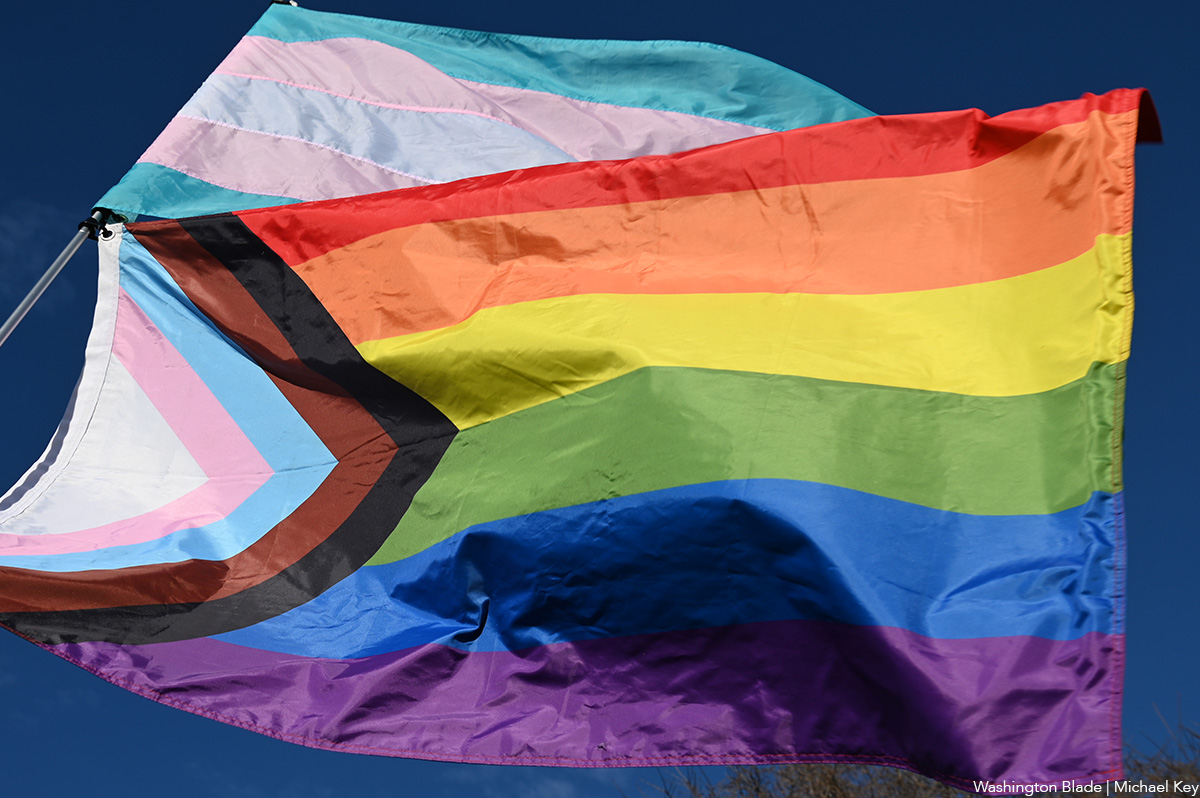
There are moments when an incident stops being merely a local story and begins to reveal something much deeper. What happened on June 28 outside One Church, in Comerío, Puerto Rico, belongs in that category.
I do not know who painted the rainbow colors on the asphalt and on a roadside guardrail. I do not know what motivated them, and it is not my place to justify their actions. If someone believes a law was broken, there are authorities and legal mechanisms to address that. That is not the point of this reflection.
The point is the words that followed.
Hours after those colors appeared, Pastor Jorge J. Santiago Reyes went live on social media. He said he felt threatened. He described what happened as a physical attack against his church. He appeared angry and disappointed. He called those who painted the rainbow “cowards” and “charlatans.” He expressed frustration with the support that, according to him, the municipal government of Comerío has shown toward the LGBTQ community, and with those who support posts related to that community. He repeated several times that the people responsible had “crossed the line.” He ended his message by saying, “These charlatans have to be stopped.”
As I listened to his words, I stopped thinking about the paint.
I began thinking about fear.
There is one phrase the pastor repeated again and again: “They crossed the line.” Yet he never explained what that line was. If he was referring to a possible violation of the law, that is for the authorities to determine. If he meant respect for property, there are also procedures to deal with that. But when that line remains undefined and the message begins to associate a rainbow with a threat, the question changes. It is no longer only about a guardrail or a road. It becomes a question about what boundary, in the pastor’s view, was actually crossed.
Paint can be erased.
A brush can cover the asphalt and return a guardrail to its original color.
What does not disappear so easily is the meaning of those colors.
And perhaps that is where the real conflict begins.
It is significant that this happened precisely on June 28, the day when the LGBTQ community remembers a history marked by exclusion, violence, and the struggle for dignity. What represents memory, hope, and the possibility of living without hiding for millions of people was presented by others as a threat.
I do not know why someone painted that rainbow. I do not need to know in order to ask whether those were the words society should expect from a pastor.
A religious leader may feel hurt, frustrated, or angry. What he cannot forget is the responsibility that comes with every public expression. His words do not end when a livestream ends. They move beyond the space of his church, reach people who may never share his faith, and help shape the way others see those who think differently. When a pastor calls other people “charlatans” and “cowards,” says they “have to be stopped,” and turns a rainbow into evidence of an attack, he is no longer speaking only from frustration. He begins to build a discourse that can feed rejection toward a community far larger than the people responsible for that act.
There was another moment in the livestream that caught my attention. The pastor reminded viewers how much he has served Comerío, how much he has accompanied his community, and how much he has worked for it. I have no reason to question that service. I am sure many people can testify to the good he has done.
That is precisely why it was difficult to hear.
Pastoral vocation is not about reminding a town of everything one has done for it when conflict appears. Service does not lose its value when it goes unrecognized; it loses something when it becomes an argument to claim a moral position from which to speak down to others. A person who serves does so because that is the nature of the calling, not because that service grants authority to discredit those who think differently.
As a pastor, that part of the message left me deeply uneasy. Not because I expect ministers of God to be perfect. We are not. But because our words carry weight, we are called to speak with greater responsibility. Some expressions build bridges. Others raise walls. Some words invite encounter. Others end up justifying rejection.
The paint will disappear. A brush will be enough to cover the asphalt and return the guardrail to its original color.
The words will not disappear as easily.
They will remain recorded in a video, shared again and again on social media, and remembered by those who heard them. They will remain long after the last trace of paint has been erased.
When this episode is remembered, it probably will not be because of the rainbow that appeared outside One Church, in Comerío, Puerto Rico.
It will be because of the words a pastor chose to use when speaking about it.
And that difference changes everything.
National
ACLU says trans athletes ruling is narrower than many believe
‘Narrow decision focused on the unique context of sports’
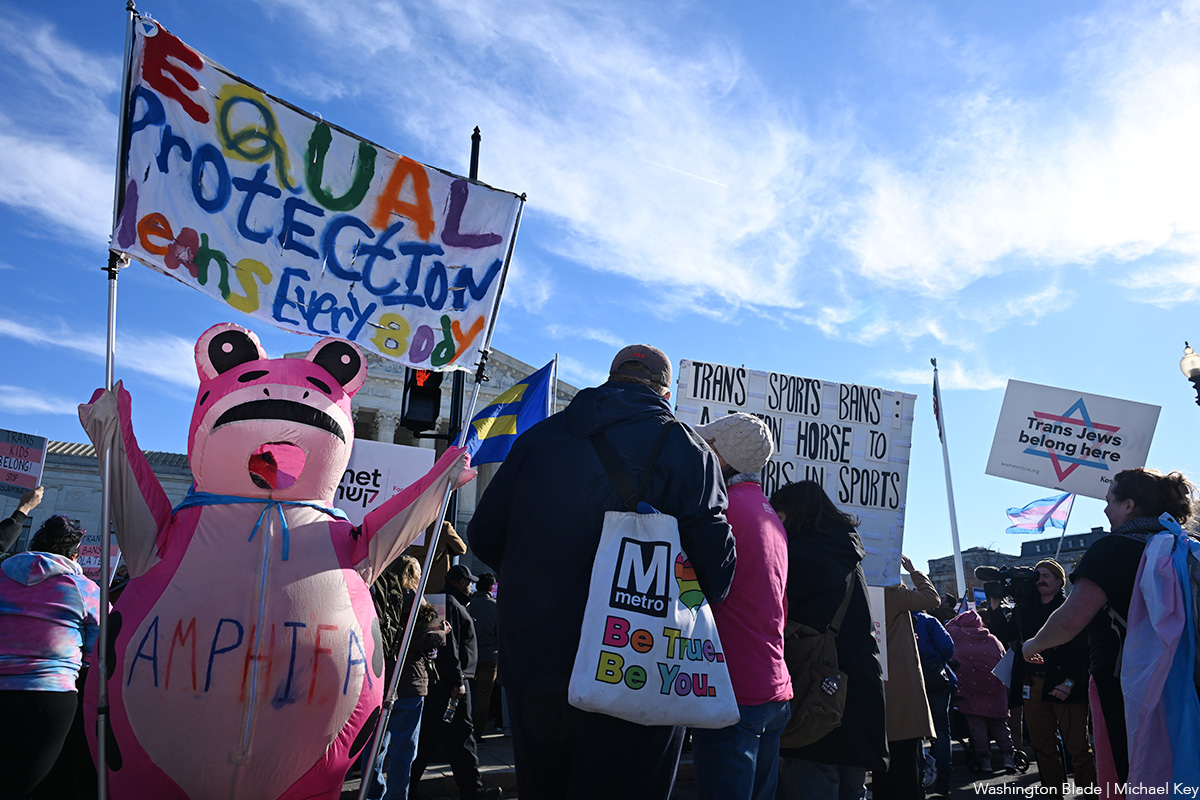
The Supreme Court’s decision Tuesday to uphold state laws barring transgender girls from competing on girls’ school sports teams represents a setback for transgender rights, but attorneys who argued the case say the ruling is considerably narrower than many initial reactions suggested.
Shortly after the decision was released, attorneys with the American Civil Liberties Union — which represented the plaintiffs in the case — held a press call to explain what they described as the limited scope of the Court’s opinion. While the ruling allows states to exclude transgender girls from girls’ school sports teams, they said it stops well short of creating a nationwide ban or dismantling broader legal protections for transgender people.
Joshua Block, senior counsel with the ACLU’s LGBTQ & HIV Project, said the majority intentionally confined its analysis to school athletics.
“[The majority] issued a narrow decision focused specifically on the unique context of sports. It didn’t issue a broader decision saying that Title IX in general didn’t protect transgender students. It didn’t say that other states couldn’t make a different policy choice and allow transgender girls to participate with cisgender girls, and it didn’t issue a sweeping ruling saying that under the Constitution it’s perfectly fine to discriminate based on transgender status.”
Block said one of the opinion’s most significant takeaways is that it leaves decisions about transgender participation in school sports largely in the hands of states.
“It leaves the rest of the legal rights of transgender people where the court found them.”
He stressed that the ruling authorizes states to adopt restrictions but does not require them to do so.
“It’s very important to emphasize that this isn’t a national mandate to ban trans athletes everywhere. It’s a fight that’s going to continue state by state, school by school … it really says that a state may discriminate, not that they must discriminate. States, schools, and athletic associations should be taking every step to ensure that athletic opportunities exist for transgender girls.”
Beyond athletics, Block said the opinion’s most important legal consequence may lie in its treatment of the Equal Protection Clause.
“What the court said is that even applying that heightened standard, we’re going to establish what’s effectively a new rule of the Equal Protection Clause, saying that you can’t bring this sort of as-applied challenge to a law that is valid for most people.”
Even so, he argued that the Court repeatedly framed transgender participation in sports as a policy issue for state governments rather than a constitutional mandate.
“Over and over and over again it talks about how states may exclude transgender girls, not that they must, and over and over and over again it says that this is a policy question that should be decided by the people in their different communities and their representatives.”
Block also rejected the idea that the ruling endorses the Trump administration’s broader efforts to restrict transgender rights.
“I have no doubt that the Trump administration will try to declare victory and say that this decision supports the lawless policies they’re pursuing, but I think anyone reading the decision can see otherwise.”
The White House nonetheless celebrated the decision, calling it a victory that would “protect women and girls.”
“The Court’s decision is a landmark victory for common sense, biological reality, and for the millions of women and girls who deserve a level playing field. By upholding laws protecting female athletic competition, the Court confirmed that states may preserve the fairness, safety, and equal opportunities that Title IX was enacted to guarantee.”
Medical researchers and LGBTQ advocates dispute the administration’s characterization of the evidence. A 2021 study published in the Journal of Sports Medicine found no scientific evidence for supporting these laws that categorically ban transgender women from participating in women’s sports.
Critics have also argued that enforcement of such laws could create new risks for athletes. Researchers have warned that sex-verification requirements may expose students to invasive examinations and discrimination.
A 2016 USA Today investigation found that at least 368 young gymnasts reported experiencing sexual abuse over a 20-year period. More than 100 coaches and gymnastics officials were accused of abuse, yet USA Gymnastics failed to track predatory coaches, allowing many to continue working with children. LGBTQ advocates argue that requiring athletes to undergo genital inspections or other forms of sex verification could place young athletes at even greater risk.
Advocacy organizations said the decision, while limited legally, will have significant real-world consequences for transgender youth.
Chris Mosier, a transgender athlete and board member of Point of Pride, said the ruling extends beyond sports.
“The Supreme Court’s decision today isn’t driven by fairness or dignity in sports. It’s an attack on our community’s right to live freely and authentically in every part of our lives. Young people, regardless of whether they’re cis or trans, deserve the joy of sports: to build friendships, to move their bodies and have fun on the field. To every trans athlete out there: you have a community standing behind you. No politician or law can take away your joy or power. We will get through this as our community has always done: together.”
Brian K. Bond, CEO of PFLAG National, emphasized that states remain free to adopt inclusive policies despite the Court’s decision.
“The Court rules best when it listens to the needs of marginalized people: trans people belong, on and off the field. While we celebrate the Court’s decision to uphold the Fourteenth Amendment and affirm that every person born in the United States is a citizen, the Court today added an asterisk to allow discrimination against transgender student athletes. Our country has been here before, and frankly, you would think this Court would have learned.”
“For PFLAG families, today’s decision in BPJ means that transgender athletes can continue to be affirmed for who they are in places where the law allows – and invigorates our LGBTQ+ and allied community to expand those protections. The parents, families, allies and LGBTQ+ people of PFLAG will continue to advocate for our trans loved ones to have the freedom to be themselves, everywhere. Trans people belong, and deserve to have access to the benefits of sport like everyone else.”
Allen Morris, policy director at the National LGBTQ Task Force, called the decision “devastating” but noted that it does not establish a nationwide sports ban.
“Today’s decision is devastating and the impact to clear. While this is not a nationwide ban on transgender participation in sports, the Court has given states a legal pathway to attempt to discriminate against trans individuals from full participation in school sports and all aspects of life.”
“This ruling is not just about sports: it’s about valuing and protecting the safety, security and constitutional rights of transgender people. By allowing states to draw a categorical line based on “biological sex,” the majority has chosen deference to exclusion and political beliefs over transgender students’ lived realities. There is already a dangerous rise in state-based violence growing across the country, and we’re overcoming this issue at each turn.”
Melanie Willingham-Jaggers, CEO of GLSEN, said the decision sends a broader message about transgender students’ place in schools.
“We are deeply disappointed by the outcome of this decision. This ruling represents another significant setback for transgender youth across the country, limiting their ability to fully engage in school life. Exclusion from these spaces shapes not only athletic access, but the broader message about who should be valued and included in our schools and societal ecosystem.”
“School sports are much more than competition. They are about belonging, forming a community, and the opportunity to grow and thrive alongside peers. Preventing youth from taking part in everyday activities undermines these fundamental values. We continue to see efforts to regulate discrimination under the guise of fairness, despite the lack of evidence that inclusive policies harm women’s sports. Access to these experiences is critical to students’ well-being and development.”
Massachusetts
EXCLUSIVE: Pressley rips State Department over LGBTQ rights rollbacks abroad
Massachusetts Democrat sent letter to Marco Rubio on Tuesday
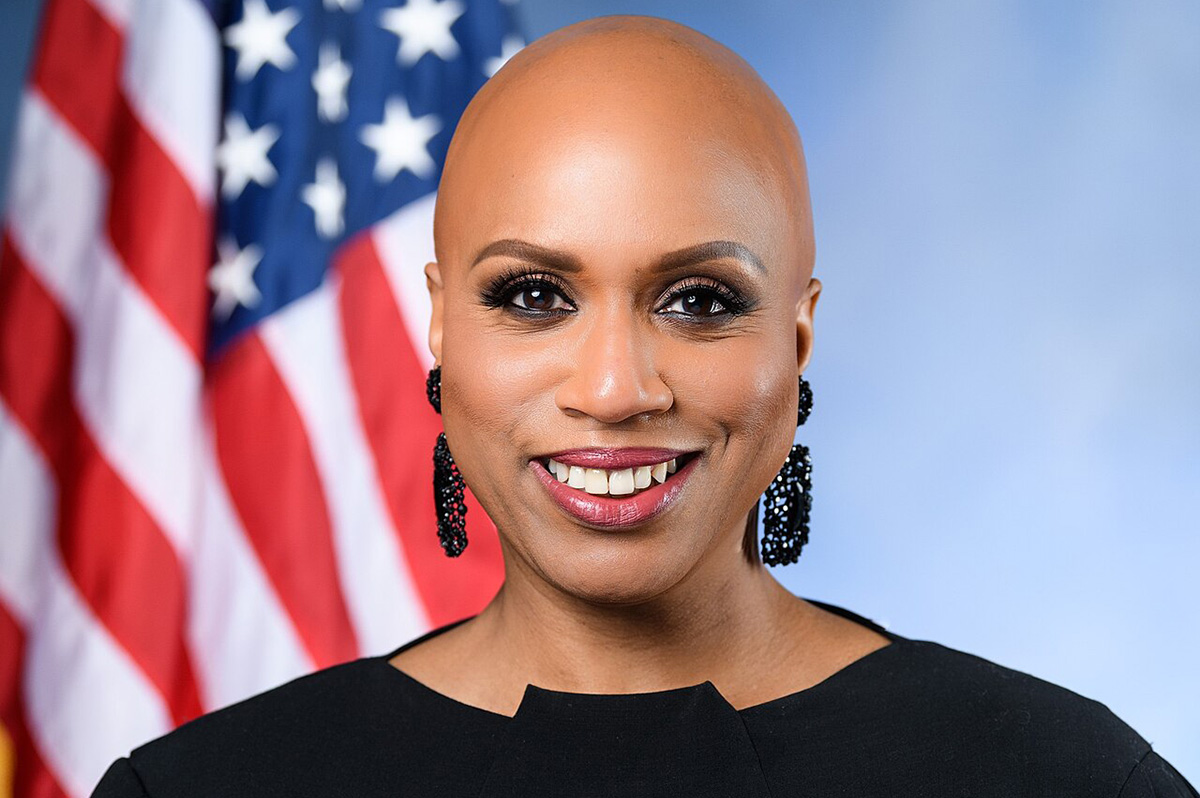
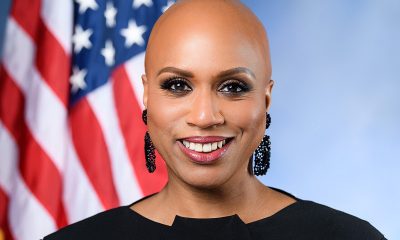
Massachusetts Congresswoman Ayanna Pressley sent a letter to Secretary of State Marco Rubio urging the Trump-Vance administration to take urgent action to defend LGBTQ people across the globe, including in countries that are violating international human rights protections for LGBTQ individuals, putting at risk the safety of civilians and U.S. citizens working, living, and traveling abroad.
The letter, which the Washington Blade got an exclusive preview of prior to its sending, criticizes the Trump-Vance administration’s foreign policy direction at the State Department, arguing that it has moved to roll back LGBTQ protections that have long been part of the U.S.’s global human rights posture.
“Criminalizing LGBTQI+ individuals undermines democracy globally, as well as U.S. national security. Thus, we urge the State Department to take adequate measures to speak out against this criminalization and protect U.S. citizens abroad, including your staff, who may be detained or harmed under such laws, policies, and practices,” Pressley, a Democrat who represents roughly three-fourths of Boston and much of the city’s suburbs, said. “U.S. civilians, diplomatic personnel, military members, and nonprofit workers on the ground providing health care and disaster support will be affected and have their safety threatened if the U.S. does not take action. Even U.S. citizens perceived as being part of the LGBTQI+ community and traveling or living in those countries may be used as bargaining chips. This is a serious U.S. national security concern.”
In the letter, Pressley underscores what she describes as a global escalation in criminalization and violence against LGBTQ people, noting that one-third of countries still criminalize consensual same-sex sexual relationships and that 12 countries impose the death penalty. She argues that these conditions make LGBTQ travelers, diplomats, and aid workers particularly vulnerable, and calls on the State Department to reassert U.S. leadership in defending human rights abroad.
“Every person deserves to live authentically, yet several countries are violating international human rights laws that protect LGBTQI+ individuals,” she said. “One-third of countries around the world criminalize same-sex consensual acts between adults, and 12 countries allow LGBTQI+ people to be executed for being themselves.”
She also invokes the role the U.S. has played in promoting democratic values internationally, arguing that LGBTQ rights should remain central to that mission.
“Historically, the United States has played a critical diplomatic role in promoting democracy and freedom for all individuals, including LGBTQI+ persons. The U.S. should be a world leader promoting human rights domestically and globally.”
In a separate statement included in the letter, Pressley emphasized both the moral and national security implications of the issue, warning that anti-LGBTQ laws abroad are endangering lives and require a coordinated U.S. response.
“Every person deserves to show up as their true, authentic selves here in the United States and in countries across the globe — and that includes our LGBTQI+ community members,” she said.
“However, we are witnessing a deeply concerning rise in human rights violations and criminalization of LGBTQI+ individuals in other countries, endangering the lives of civilians and U.S. citizens. It is incumbent upon the United States to protect our LGBTQI+ siblings at home and abroad not only for our national security but for the safety and freedom of LGBTQI+ people everywhere.”
The letter goes on to press the State Department for concrete action, including a public reaffirmation of U.S. commitments to LGBTQ human rights, the restoration of LGBTQ analysis in annual country reports, and clearer guidance for Americans traveling abroad. It also seeks clarity on whether the department is tracking cases of U.S. citizens detained or harmed under anti-LGBTQ laws and what proactive steps are being taken to warn and protect LGBTQ travelers.
While she is not a member of the Foreign Affairs Committee, Pressley remains highly active in international affairs and global policy.
While the letter focuses on current policy, it also lands in the broader context of Secretary of State Marco Rubio’s long anti-LGBTQ record. Rubio, a former senator from Florida, has consistently opposed same-sex marriage, calling the federal Respect for Marriage Act, which he voted against, a “stupid waste of time.” He has also expressed support for efforts to overturn Obergefell v. Hodges, the U.S. Supreme Court decision that legalized same-sex marriage nationwide.
During his time in the U.S. Senate and as a Florida political leader, Rubio has a long anti-LGBTQ track record. He defended state policies that LGBTQ advocates say target queer and transgender people, including Florida’s Parental Rights in Education law — commonly known by critics as “Don’t Say Gay” or “Don’t Say Trans” — which restricts classroom discussion of sexual orientation and gender identity.
He has also drawn criticism for his voting record, including a 0/100 score from the Human Rights Campaign’s Congressional Scorecard, reflecting opposition to expanding federal civil rights protections for LGBTQ people and for opposing adoption rights for same-sex couples.
Now serving as secretary of state, Rubio has overseen changes at the State Department that LGBTQ advocates say have reduced visibility and protections for transgender people, including the removal of trans-specific references from parts of the department’s public-facing materials and travel guidance. He has also been linked to broader restructuring efforts involving U.S. foreign assistance programs, including the U.S. Agency for International Development, which has historically supported global HIV prevention and LGBTQ rights initiatives in regions such as sub-Saharan Africa, Central Asia, and Latin America.
Those cuts and shifts, critics argue, have weakened programs like PEPFAR — credited with saving millions of lives worldwide — and reduced U.S. support for LGBTQ communities facing persecution abroad. The program is credited with saving at least 25 million lives.
Pressley’s own record stands in contrast, with a 100/100 on HRC’s Congressional Scorecard and a long history of legislative and advocacy work centered on LGBTQ equality. In recent years, she has secured federal funding for The Pryde, an affordable housing development for LGBTQ seniors in Boston, and has repeatedly pushed for expanded civil rights protections, including support for the Equality Act and the Equal Rights Amendment.
She has also advanced policy efforts aimed at LGBTQ survivors of violence, trans, and nonbinary individuals navigating credit and legal systems, and broader protections under housing and civil rights law — framing her work as part of a sustained effort to ensure LGBTQ people are included in federal policy at every level.


Turkish authorities refuse to allow gay cruise to dock in country

PHOTOS: Crush Dance Bar

In Trump’s divided America, Michael Weinstein’s AHF responds

When a church fears the rainbow

Under-the-radar Delaware beach towns smart buyers are targeting

Queen Camilla meets with JK Rowling

SMYAL receives $25,000 award for ‘courageous acts’

‘Transcendent’ a tough but important read
Under-the-radar Delaware beach towns smart buyers are targeting