A CLEANING SERVICE

HIGH QUALITY CLEANING SERVICE AT AN AFFORDABLE PRICE
Commercial, janitorial & residential cleaning services.
Winner of the 2011, 2012 & 2014 Angie’s List Super Service Award.
703.892.8648 — [email protected]
Locally owned. Est. 1985.
Serving DC, MD & VA.
Licensed, bonded & insured.

Belarus
Belarusian president signs bill to allow LGBTQ rights crackdown
Alexander Lukashenko known as ‘Europe’s last dictator’

Belarusian President Alexander Lukashenko on Wednesday signed a bill that will allow his government to crack down on LGBTQ advocacy.
The measure that Lukashenko, who is known as “Europe’s last dictator” and is a close ally of Russian President Vladimir Putin, signed would punish anyone found guilty of “propaganda of homosexual relations, gender change, refusal to have children, and pedophilia” with fines, community labor, and 15 days in jail.
The House of Representatives, the lower house of the Belarusian National Assembly, last month approved the bill. The Council of the Republic, which is the parliament’s upper chamber, passed it on April 2.
Belarus borders Poland, Ukraine, Russia, Latvia, and Lithuania.
Kazakhstan is among the countries that have enacted Russian-style anti-LGBTQ propaganda laws in recent years.
The European Commission in 2022 sued Hungary, which is a member of the EU, over its anti-LGBTQ propaganda law. Hungarian voters on April 12 ousted Viktor Orbán, a Putin ally who had been their country’s prime minister since 2010.
Television
‘The Pitt’ stars discuss what season two gets right about queer representation
Noah Wyle and Taylor Dearden spoke with Blade in LA
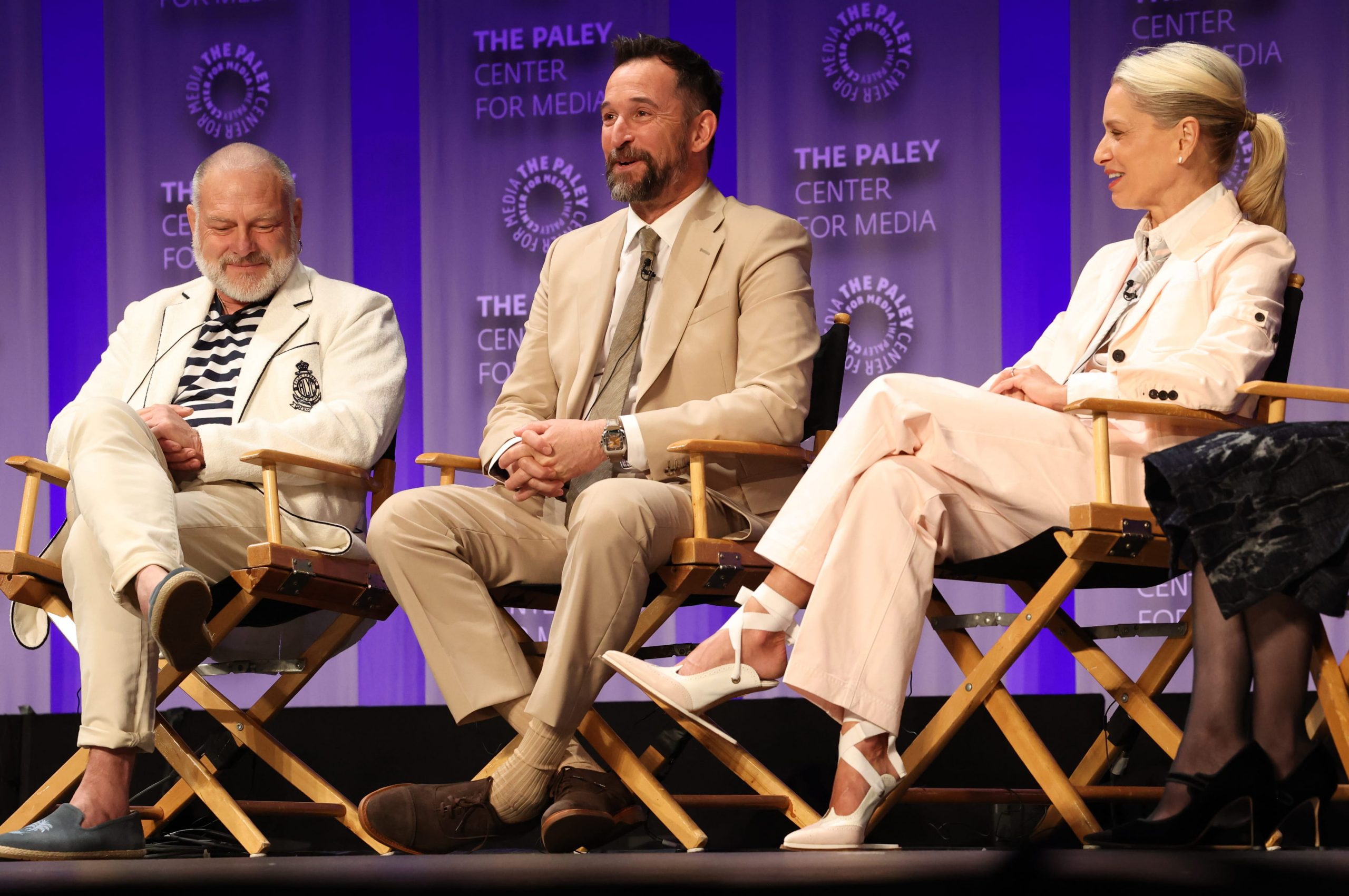
As season two of “The Pitt” comes to a close this Thursday, stars Noah Wyle and Taylor Dearden are looking back on what this season got right about queer representation.
“There is some intentionality behind it, but it’s not necessarily for the representation to be anything other than human or ubiquitous to anyone that would come into an emergency room,” Noah Wyle, who plays Dr. Robby, told the Los Angeles Blade at PaleyFest event in Los Angeles on April 12. “I know that we’ve done some storylines with some gay couples, and we did a storyline in season 1 where a woman comes in who’s cut her arm, who’s trans. But in both of those storylines, that wasn’t the point.”
Wyle continues, “In doing it that way, and not making a point of orientation being part of the problem that brings you to the emergency room, we have been told in feedback that that has been extremely revolutionary, almost, and extremely appreciated. But that’s true whether we do storylines with any kind of minority or a person with a disability. We try to have a cosmology of cast and representation on the show that’s indicative of what you find in Pittsburgh.”
Dearden, who plays Dr. Mel King, echoed Wyle’s sentiment: “I think constantly battling tropes is always important. It’s not a show about romance; it’s a show about real life and a shift in the ER. The more we represent everyday people going through everyday life, they just happen to be queer, they just happen to be trans, and making it not the plot, is putting everyone on equal playing [field]. You don’t have to have a big coming out scene.”
Queer representation on “The Pitt” is also notable through the actual actors themselves, including openly queer actor Supriya Ganesh, who plays Dr. Samira Mohan (who didn’t attend PaleyFest after the news that she is not returning for season three), and Amielynn Abellera, who plays Perlah Alawi.
“Doctors don’t put value judgments on who they treat,” Wyle concludes. “That’s not a luxury extended to them, and so that’s not part of our storytelling.”
The season two finale will air Thursday, April 16, on HBO Max, while season three has already been confirmed and is currently being written.
Advice
My family voted for Trump and I cut off contact
Now my father is ill and I don’t know what to do

Dear Michael,
I stopped talking to my family last year because they all voted for Trump. It’s not like they didn’t know whom they were voting for — they’d already had four years of seeing him in action.
I decided that I couldn’t remain in contact with people whom I felt wanted to take away my rights as a gay man. That is what they essentially did by voting for Trump.
They had come to my wedding in 2012, they had welcomed my husband and me into their homes for the holidays for our entire relationship, so I couldn’t believe how little they actually cared about me and my community. I was profoundly hurt.
They’ve reached out but I have been too angry at their hypocrisy to engage in more than a perfunctory way. I miss them, sure, but as I’ve watched our community be attacked, I just get so angry that I don’t want to talk. I certainly don’t want to hear them justify bigotry and hatred.
Now one of my siblings has reached out to let me know that my father’s health is rapidly declining. I’m wondering if I should rethink my decision and reach out to him, maybe even visit, before he dies.
But then I think of ICE’s attack on our country and the removal of the Pride flag from Stonewall and I don’t want to talk to people who support what is happening to vulnerable, marginalized people and the LGBTQ community.
My father was a good father to me. Even when I first came out to him, he was loving and supportive. I can’t square his behavior personally toward me with his support of this regime. The hypocrisy makes me so angry. How could he purport to love me and then vote against my freedoms?
I would love some suggestions about how to square my two opposing viewpoints.
Michael replies:
Many years ago, a great mentor taught me that the one thing you can count on in a relationship is learning to tolerate disappointment: Both being a disappointment, and being disappointed in the other person. This is true for love relationships and it’s also true for other significant relationships. All of us are different in some major ways and so we are bound at times to disappoint our loved ones in major ways, and to be disappointed by them in major ways.
That is why I’m not a fan of purity tests. To expect that someone must think like you (much less vote like you) in order for you to have a relationship with them is unrealistic, impractical, and sometimes damaging.
Of course, a person may hold some beliefs that give you reason not to want to have any connection to them. But is that the case here?
From your description, your family has always been loving and supportive of you as a gay man. That is no small thing. They seem to care about you enough to have continued to reach out, even though you have stopped talking to them.
Perhaps they had some other reasons for voting as they did, other than to roll back LGBTQ rights and to attack immigrants.
Instead of wondering how they could be so hypocritical, how about talking with them and striving to understand their choices? I don’t know what they will say, and you may hear different answers from your various family members. But at least you will get some clarity, rather than presuming that they made their voting choices from a place of malice. Then you will be in a better position to decide if you want a relationship going forward.
Another point to consider: Very few things are set in stone. Even if your family made their voting choices based on holding positions that you neither like nor respect, they may be open to shifting their views over time. One way to perhaps influence their thinking is by engaging with them, sharing your thoughts, and asking them to consider the possible consequences of their actions. If you choose to re-engage with them, two points to consider:
First, don’t expect that you will change their minds. You can advocate for what you want, but you have to let go of the results.
Second, they are more likely to consider your points if you do not approach them from a judgmental, self-righteous stance.
Many years ago, when I was newly a vegetarian, I was eager to challenge and “educate” friends who weren’t following my dietary ideas. Guess what? It didn’t work. Then I got some great advice: A great way to influence others to consider eating fewer animals was to serve them delicious vegetarian food.
The same point is true here. We can’t beat people over the head to agree with us. But if we approach them with some kindness, rather than with the certainty that we hold the moral high ground, we may help them see a bigger picture.
And sometimes, we too may see a bigger picture.
Michael Radkowsky, Psy.D. is a licensed psychologist who works with couples and individuals in D.C., Maryland, Virginia, and New York. He can be found online at michaelradkowsky.com. All identifying information has been changed for reasons of confidentiality. Have a question? Send it to [email protected].

Belarusian president signs bill to allow LGBTQ rights crackdown

‘The Pitt’ stars discuss what season two gets right about queer representation

My family voted for Trump and I cut off contact

Queery: Meet artist, performer John Levengood

Project GLOW celebrates LGBTQ acts

Trump budget targets ‘gender extremism’

Comings & Goings

Minimal version of ‘Streetcar Named Desire’ heading to Dupont Underground

Viktor Orbán ousted in Hungarian elections