Local
D.C. woman gets 6 ½ years for shooting gay man at IHOP
Prosecutors say case lacked evidence to classify as hate crime
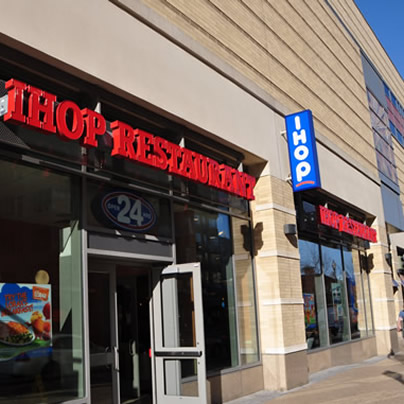
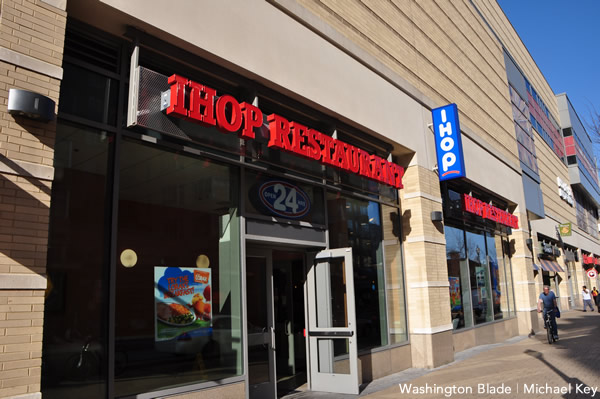
An altercation led to a shooting at the IHOP restaurant in Columbia Heights on March 11, 2012. (Washington Blade file photo by Michael Key)
A D.C. Superior Court judge on Thursday sentenced a 29-year-old woman to six-and-a-half years in prison for the March 2012 non-fatal shooting of a gay man inside an International House of Pancakes restaurant in the city’s Columbia Heights neighborhood.
The sentencing by Judge Michael Ryan came three months after a jury found Lashawn Yvonne Carson, a D.C. resident, guilty of aggravated assault while armed and six additional firearms-related charges.
During the four-day trial prosecutors played for the jury a video obtained from the restaurant’s security cameras that they said showed Carson, then 28, pull out a handgun and shoot Dante Thomas in the chest.
Thomas has since recovered from a gunshot wound to his liver that the lead prosecutor said could have been fatal if he had not received immediate medical treatment at a nearby hospital.
Police and prosecutors said an altercation leading to the shooting began when two groups of friends were eating at separate tables near one another at the IHOP restaurant about 5:30 a.m. on March 11, 2012.
According to a police affidavit and testimony by witnesses, one of Carson’s friends while sitting at her table used the word “faggot” to describe one or more of the men sitting at Thomas’s table. A short time later a physical altercation erupted between the two groups when Thomas attempted to walk to the cash register to pay his bill.
“Carson and a male friend inadvertently stood directly in his way,” a statement by the U.S. Attorney’s office says. “The victim attempted to squeeze by and accidently bumped into Carson. Words were exchanged and the defendant’s male friend used a homophobic slur,” the statement says.
Government witnesses at the trial said a fight then broke out between the opposing groups of friends and an off-duty D.C. police detective who was seated nearby stepped in to break it up.
“At that point, according to the government’s evidence, Carson walked over, adjusted her hair, pulled out a firearm and shot the victim once in the chest,” the U.S. Attorney’s statement says.
A police charging document says Carson and her male friend fled the restaurant.
Prior to her arrest about two weeks later, hundreds of LGBT activists and their supporters assembled outside the IHOP restaurant to begin a march through the streets from Columbia Heights to Dupont Circle to protest the IHOP shooting and other incidents of violence targeting LGBT people in the city.
Although police initially listed the shooting incident as an anti-gay hate crime, the U.S. Attorney’s office dropped that designation. Sources familiar with the case said the U.S. Attorney’s office believed there was insufficient evidence to obtain a conviction for a hate- or bias-related shooting.
During closing arguments, Carson’s lawyer argued that Carson testified at the trial that she is bisexual and expressed disapproval at the table where she and her friends were sitting when one of the friends used the anti-gay slur to describe the men sitting at the victim’s table.
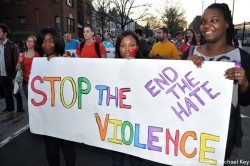
Hundreds joined a hastily assembled March, 2012 demonstration organized after several instances of anti-gay violence in the Columbia Heights neighborhood. (Washington Blade file photo by Michael Key)
Carson denied she shot Thomas and testified she was drunk when police questioned her about the incident. She said detectives questioning her talked her into falsely admitting she shot Thomas. A video of her admission was played for the jury in which she told detectives she shot Thomas because he hit her and she became angry.
According to court records, Ryan sentenced Carson to additional time for several of the other charges on which she was convicted, including possession of a firearm during a crime of violence and carrying a pistol without a license. But he ordered that most of the additional time be served concurrently, resulting in a sentence to a total of 6-and-a-half years in prison.
The judge ordered that she be placed on three years of supervised release upon completion of her prison term.




Rehoboth Beach
HISTORIC: Susan Stewart elected Rehoboth’s first out mayor
Thanks LGBTQ supporters and vows to protect city’s small town charm
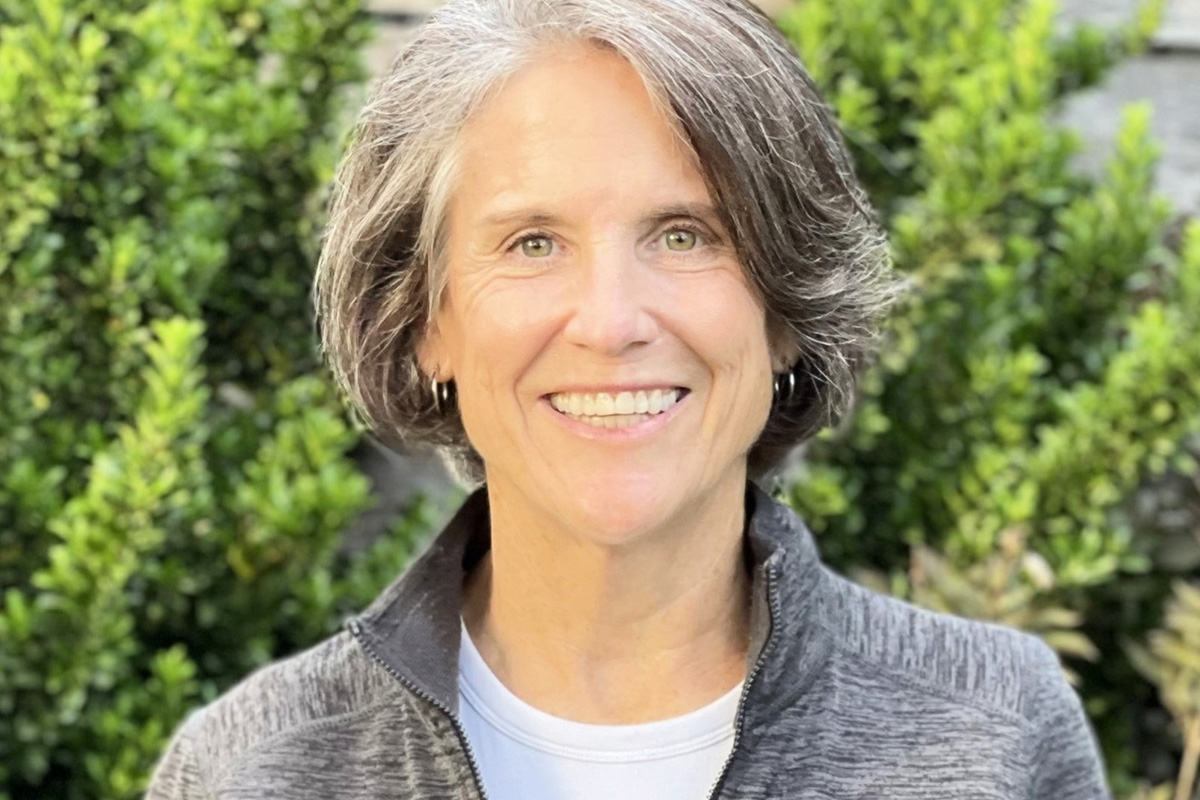
Residents of Rehoboth Beach elected City Commissioner Susan Stewart with 61% of the vote on Aug. 8, making her the city’s first openly gay mayor.
Stewart beat fellow commissioners Craig Their and Suzanne Goode in the race, as well as newcomer Jake Raak.
The final mayoral vote results were:
- Susan Stewart: 632
- Craig Their: 203
- Suzanne Goode: 177
- William “Jake” Raak: 23
“I’m very grateful because the LGBTQ+ community not only voted for me, but also supported me,” said Stewart.
Stewart said that she is particularly grateful for the support she received on social media from members of the LGBTQ+ community.
“I’ve had incredible support,” said Stewart.
Stewart said that her campaign showed her just how much residents of Rehoboth are engaged and care about the city.
“They really want to see what’s best for the community,” said Stewart.
Stewart spoke about the master planning initiative she has been working on as a commissioner, which she plans to continue as mayor.
“We’ve undertaken rewriting the commercial zoning code, and that’s foundational to the next step of the initiative,” said Stewart.
She said that she was proud of the results of charette week that was held last month where residents and business owners had the opportunity to speak with hired urban planners to give feedback for a zoning code update.
Stewart said that Rehoboth is at a tipping point as the city must find a way to balance the growth of the commercial district while improving the quality of life for residents.
“I don’t believe there needs to be tension between the business community and the residential experience,” said Stewart.
“I’m excited about a new master plan because we have a couple hotels coming, and we also have Clear Space Theatre looking for a new home, and we’re working with them,” said Stewart. “We want businesses to stay here.”
Stewart also said that she aims to embrace the concept of a ‘15-minute city,’ making the city much more accessible in terms of transportation in the downtown area for residents.
“The goal is to protect the small town charm and natural beauty of Rehoboth,” said Stewart. “I want to keep the momentum going.”
The Blade asked Stewart about any concerns she might have working with Commissioner Goode, whom she has criticized for sending inappropriate and offensive emails to city staff. Goode finished a distant third in the mayoral race and her husband fell short in his bid for a Commissioner’s seat. In that race, Jeffrey Goode received 239 votes; Patrick Gossett, who’s gay, received 813 votes and Mark Saunders 852. Saunders and Gossett will be sworn in next month.
“I’m really eager to move past this issue with Commissioner Goode,” said Stewart.
She said that she’s heard ‘loud and clear’ from the city that they want to move past this situation as best as they can while Goode remains in her seat as commissioner.
“There are no mechanisms for us to remove a sitting commissioner. Our laws don’t allow it,” said Stewart.
Stewart clarified that she has always focused on Goode’s behavior toward city staff.
“One thing I feel really passionate about is that the city employees have to know that they are heard. They are real people with real jobs, real professional reputations, and they’ve been harmed,” said Stewart.
The Blade also asked if Stewart had made a final decision on whom she plans to nominate to fill her Commissioner seat.
“I’m considering who to appoint and I have not made any final decisions,” said Stewart.
She noted that, as mayor, she only has the power to nominate a candidate and that the board of commissioners will have the final vote on whom to appoint to the board.
Stewart shared that she has received interest from a number of people and finds that to be a good sign.
“I think that’s a great sign because people want to serve. I’m eager to have someone in that seat who’s smart and has the best interests of the city,” said Stewart.
Stewart will be sworn in during the Board of Commissioners meeting on Sept. 18.
District of Columbia
D.C.’s Mary’s House For Older Adults names new executive director
Charlene Leach to succeed Imani Woody as leader of LGBTQ-supportive seniors home
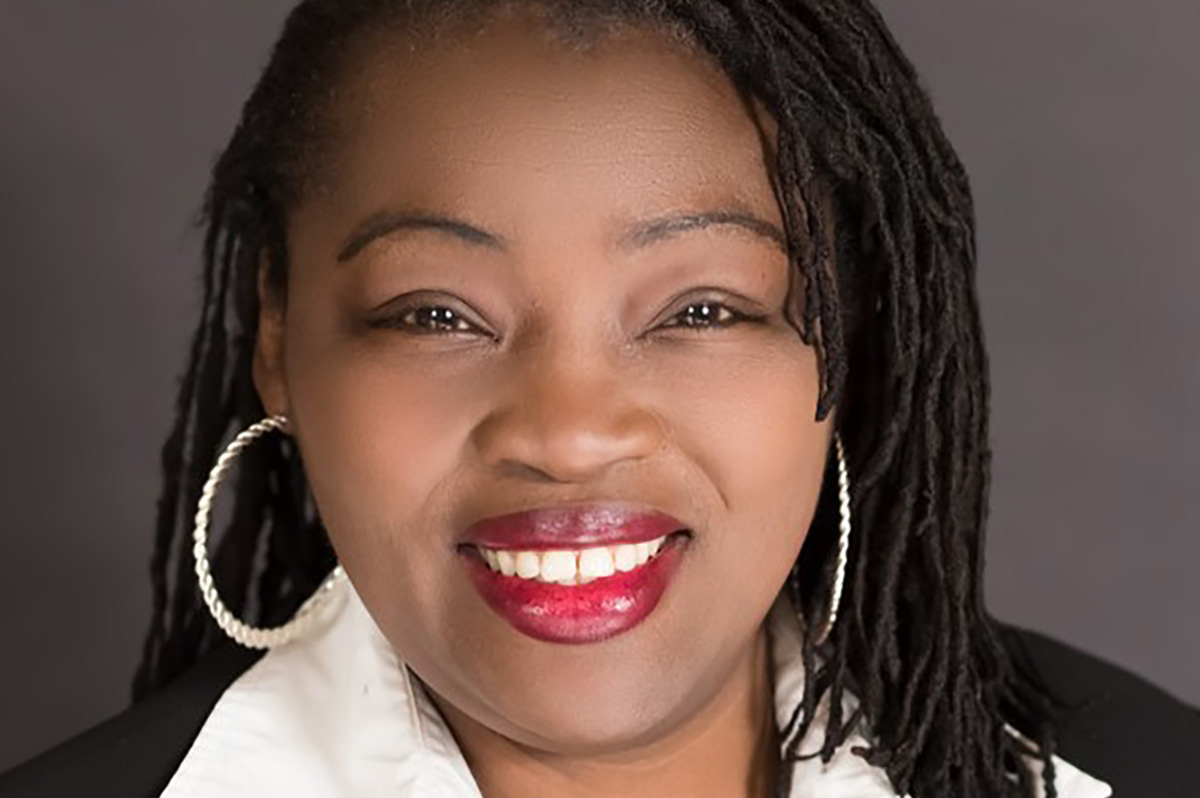
The board of directors of Mary’s House for Older Adults, the D.C.-based home dedicated to providing affordable housing for LGBTQ seniors, has announced it has named longtime nonprofit organization leader A. Charlene Leach as its new executive director.
Leach, who is now serving in the executive director’s position, is succeeding Dr. Imani Woody, the Mary’s House founding president and CEO, who announced her retirement from her official leadership role at Mary’s House on July 7.
Woody, who holds a PhD in Human Services, is credited with playing the lead role over many years in arranging both city and private funding needed to construct and operate the Mary’s House three-story building located at 401 Anacostia Road, S.E., in the city’s Fort DuPont neighborhood.
“With over three decades of nonprofit experience and 15 years serving as an executive director, Charlene brings a wealth of knowledge in organizational leadership, program development, and community engagement,” the Mary’s House board says in a statement.
“Her proven track record of building impactful programs and leading mission-driven organizations makes her uniquely suited to guide Mary’s House into its next phase of growth,” the statement continues. “Charlene is deeply aligned with the mission of Mary’s House and is committed to advancing its work to provide safe, inclusive housing and supportive services for LGBTQ+ older adults,” it says. “Under her leadership, the organization will continue to expand its impact while remaining grounded in the values that define our community.”
Leach’s LinkedIn page shows she has most recently served since 2022 as executive director of the African American AIDS Task Force in Minneapolis. Prior to that, it shows she served as executive director of the Fredericksburg Area Health and Support Services organization in Fredericksburg, Va., and before that as director of development for the D.C.-Baltimore area Women’s Collective.
Her LinkedIn page says she has been involved with Mary’s House as a volunteer and grant writer since 2016.
The newly built and enlarged Mary’s House, which opened in March 2025, with a grand opening ceremony held in May 2025 attended by D.C. Mayor Muriel Bowser, includes 15 single-occupancy residential apartments and more than 5,000 square feet of shared communal living space.
An earlier statement released by the Mary’s House board announcing Woody’s retirement said Woody would continue to be involved with the organization as a member of the board. The earlier statement and board’s more recent statement on July 29 announcing Leach’s appointment as executive director did not say whether the board plans to name someone else as president and CEO, the title that Woody held before her retirement. But the latest statement says Leach will be running Mary’s House’s day-to-day operations as Woody did.
Virginia
Doug Ollivant to face Eugene Vindman in Va. 7th Congressional District
Republican defeated challengers in Tuesday’s primary

Republican Doug Ollivant will face off against incumbent U.S. Rep. Eugene Vindman (D-Va.) in Virginia’s 7th Congressional District.
Ollivant defeated his Republican opponents in Tuesday’s primary. Vindman ran unopposed.
Vindman in 2024 ran to succeed then-Congresswoman Abigail Spanberger in the U.S. House of Representatives after she ran for governor. Spanberger succeeded Republican Gov. Glenn Youngkin in 2025.
U.S. Sen. Mark Warner (D-Va.) on Tuesday easily won his primary. All other Democratic incumbent members of Congress from Northern Virginia also won their respective primaries.

2 former NBA players launch cheap anti-trans stunt to exploit WNBA rules

Same-sex couples challenges India income tax law

HISTORIC: Susan Stewart elected Rehoboth’s first out mayor

Todd Blanche’s record on LGBTQ issues comes under scrutiny as he takes over DOJ

Don’t miss summer productions at Clear Space in Rehoboth Beach

Perez Hilton’s live breakdown reveals social media mental health crisis

HRC files class action over federal ban on gender-affirming care coverage

Dutch PM: More needs to be done to defend trans rights

HRC condemns DoE removal of LGBTQ bullying data from federal survey

New book chronicles gay man’s life in hippie commune
-

 Celebrity News5 days ago
Perez Hilton’s live breakdown reveals social media mental health crisis
-
The White House5 days ago
HRC files class action over federal ban on gender-affirming care coverage
-
Netherlands5 days ago
Dutch PM: More needs to be done to defend trans rights
-
National5 days ago
HRC condemns DoE removal of LGBTQ bullying data from federal survey