Real Estate
Strong D.C. housing market has wide-ranging factors
City officials want to continue attracting newcomers while not pricing long-term Washingtonians out
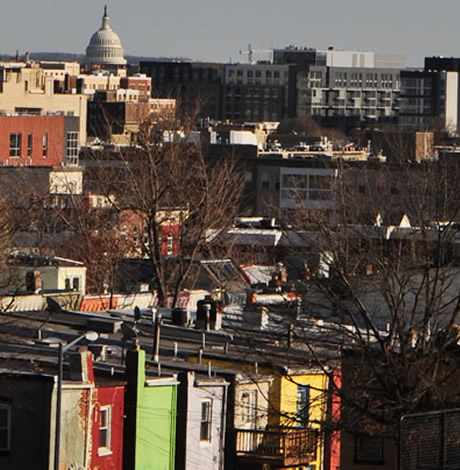
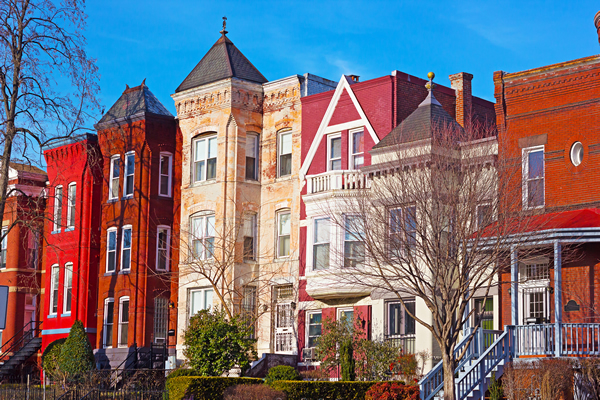
Local Realtors say buyers are pricing their properties more strategically than they were a decade ago based on current buying trends.
Ed Wood is a D.C.-based realtor with City Houses LLC for 20 years and former president of the District of Columbia Association of Relators. He sells in all eight wards and averages 15-20 sales per year.
He spoke with the Washington Blade this week on local housing trends, renting vs. buying and why the rental market is soft now, but likely to explode in the coming years. His comments have been slightly edited for length.
WASHINGTON BLADE: It seems most agree in Washington we’re back to pre-recession prices and multiple offers on real estate. Is that your assessment?
ED WOOD: Yes. D.C. was in a much better position during and after the recession. We saw a flattening but then it picked up fairly quickly and the market has been really strong ever since about 2011, 2012. We regularly see multiple offers still on properties.
BLADE: Is the asking price sort of an opening bid in those situations?
WOOD: It depends where it’s priced. It’s they’ve priced a little below asking, they’ll often get multiple offers and it will bump up. If they’re priced at asking or above, we do see things sit on the market because of that. Buyers are more savvy and more cautious than they were pre-2008.
BLADE: Were there many cases in D.C. where a homeowner may have been underwater on their mortgage during the recession but got out of it once the economy rebounded?
WOOD: There wasn’t a lot of that in D.C. It was more in the suburbs and more likely the further you got out from the city but those prices we saw coming back by last year. Occasionally in some of the more developing neighborhoods we saw some slow downs and some price softening but those prices have completely come back. Many values have increased above what people paid.
BLADE: How is the market for rentals vs. sales in Washington?
WOOD: The rental market has been fairly soft for awhile while the buying market has been strong. A lot of the buildings that are going up in the city have been rental buildings as opposed to condos and that’s because the long-term demographic outlook for the city — we’re still gaining about a thousand residents a month — is expected to be over a million by 2030 so there are a lot of companies from around the country who see this as a really good rental market and they’re interested in the long term. We’re not seeing the number of condos we saw pre-2008, so that’s why we see the competition. There’s still not enough inventory.
BLADE: Why is the rental market soft if the projections are so strong?
WOOD: They’re building for that projected million residents. (Editor’s note: D.C.’s current population is about 672,000.) You can’t suddenly build all the units you’ll need, so they’re building them now for five-10 years down the road. These are big companies who work in the long-term market so they can afford to do this. Sometimes they’ll even go to developers building a condo building and say, “Hey, we need a rental building at this location. Would you consider reconfiguring the design a bit to turn it into a rental building and selling the whole thing to us?” That’s attractive to developers because it’s a lot easier to sell an entire building than individual units to individual buyers.
BLADE: Those population projections must be pretty solid then. Could something catastrophic throw a wrench in those plans?
WOOD: Certainly. After 9-11 around the country, it just killed the market immediately and people stopped moving to D.C. immediately. But then things turned around. A lot of things could happen to change things, but hopefully nothing of that scale. All the demographics I have looked at are pointing toward that large population growth at least through 2030. Others that go beyond that are less reliable in my opinion.
BLADE: Based on what we’re seeing now and with those kinds of projections, will gentrification spread across the river? What’s it like in those wards now?
WOOD: There’s a lot of interest in Anacostia and there’s a lot of change going on there. Bigger companies are looking at that area. … One of the issues there has been a lack of services and also people who’ve been priced out of other areas are looking over there. There’s been a lot of revitalization there but there’s also been a very active group of long-term residents who want to see improvements but don’t want to be pushed out. I know the mayor and city council members are focusing more on that part of the city. There’s even talk of moving the Reeves building at 14th and U., of selling that building and moving it over there.
BLADE: With all the gentrification that has spread down 14th Street to Florida Avenue and starting into the Northeast quadrant — look how different Bloomingdale, for instance, looks from what it was like 10 years ago — is it safe to assume that trend will continue or is that an oversimplification?
WOOD: I think that’s true. City government for a long time was desperate to get people to move back into the city. It was a dying place as people were overall fleeing out to the suburbs but that’s turned around and most cities are growing whereas the suburbs are starting to die out. People want to be closer and they want to spend more time doing the things they like as opposed to sitting in their car going to and from a bigger house. The city government is taking a renewed look at how that happens, how that takes place and what it means for the long-term city residents.
BLADE: They want to put some mechanisms in place to absorb some of that shock so to speak?
WOOD: Yes. There’s a lot of interest in trying to move in that direction so we don’t have a city where only the wealthy can afford to live. Whereas before they were trying to stop people from fleeing the city, we don’t even have to think about that now.
BLADE: Do people comment to you about Ed Wood the schlock film director often?
WOOD: Yes. It was actually helpful after the movie came out because growing up, my full name was Edward Wood. I would say Edward and they would think I said Ed Wood. That happened constantly. But nobody says that anymore. It’s kind of a name that sticks with people so they feel like they’ve seen it more than maybe they have.
BLADE: Have you seen “Glen or Glenda?” or “Plan 9”?
WOOD: Yeah. I’m a fan of his terrible movies.
BLADE: Do LGBT issues factor into D.C. real estate to any significant degree?
WOOD: I haven’t seen it be much of a factor at all. DC. has been such a gay-friendly city for so long, I don’t think it’s much of a consideration. When they’re selling a house, they just want the best price.
BLADE: Is there any sense of a gayborhood anywhere in 2017? Do people buy with that in mind?
WOOD: I don’t see that anymore. When I was first in the business 20 years ago, there was a desire, usually by gay men, to want to be near Dupont. I live near there. My husband and I have had a house here for 20 years so we’ve really seen the change on 14th Street. When we moved here, our friends thought we were crazy. Now they say, “How did you know?” We didn’t know. We just bought where we could afford and at the time we wanted to be near Dupont. Now when I have gay clients, they want to look all over the city and I see them asking things I never saw gay clients asking before like what are the schools like. They’re more interested now in the things you would have thought the straight couples would be looking at.
BLADE: Did marriage, either in D.C. or with the Supreme Court ruling, affect real estate in any perceptible way?
WOOD: I didn’t see much. There used to be a lot more estate planning, wills, setting things up in case something happened to one of you. My husband and I have been together 25 years and we did all that. … But now there’s a whole structure in place to keep you more protected than there was before.
BLADE: About how many of your clients on average are LGBT?
WOOD: I would say about a third.
BLADE: Are there any lesbian streets or enclaves around the city or is that not really a thing?
WOOD: It’s really not. Even with gay men, that Dupont thing is out the window. People are looking at schools, they want to be near work, they may want to be near a particular restaurant or they’re looking for the feel of a neighborhood. It’s usually things like that and it happens to be very individual to the couple.
Ed Wood can be reached at [email protected] or cityhousesdc.com.





Are you prepared to meet the changing expectations of tenants? Tenant priorities are continuously shifting. As professional property managers, my team has witnessed firsthand the evolving demands of tenants over the last few years.
Frankly, today’s D.C. residents have high standards. Many have shifted to remote work, and they are placing a growing emphasis on sustainability. And these expectations are poised to evolve even further, with factors like affordability, technology integration, and community-driven amenities taking center stage.
Understanding these changes and adapting your rental to meet the growing demands of tenants and their evolving preferences will not only help you attract high-quality residents but also settle into long-term success in a competitive market. Let’s look at key tenant trends for 2026 in Washington, D.C. by providing practical strategies that help owners and investors navigate this shifting landscape, ensuring your property remains desirable and profitable in an increasingly growing rental market.
According to Buildium’s 2025 Industry Report, tenant retention is rising, and that’s due to a number of factors. It’s expensive to move, so if residents are enjoying a peaceful and pleasant rental experience and they appreciate where they live, it’s unlikely they will spend more money to live somewhere else.
The “2026 State of the Property Management Industry Report” also noted the rise of “Resident Benefit Packages,” which has contributed to retaining good residents. When landlords and property managers offer benefits such as protection against late payment fees, online conveniences, credit monitoring, air filter drop shipments, preventative maintenance services, and even concierge amenities, they increase tenant satisfaction and retention.
By investing in resident benefits, you can increase the likelihood of keeping your tenants satisfied. They’re more likely to renew their lease agreements and contribute to the care and upkeep of their home.
Provide smart home tech
According to data gathered by Nasdaq, Washington, D.C., is one of the top 10 U.S. cities where remote work is most popular, with more than one-third of the population working from home at least part of the time. Even with the federal government calling many people back into the office over the last year, remote work continues to be normalized. Tenants are working and studying from home, and they need their home to support that lifestyle shift.
They’re looking for technology, and that factor provides you the opportunity for you to attract remote workers as residents. While smart home technology was once a fairly niche amenity, it’s now becoming the standard. It’s an expectation of most tenants in Washington, D.C., that at the very least they’ll be able to:
- Connect to fast Wi-Fi at their home
- Enjoy online rental payment platforms that are secure and convenient.
- Make routine maintenance requests through resident portals
It was also recommended considering installing keyless entry systems, offering upgraded security such as video doorbells, investing in smart thermostats, and making it as easy as possible for tenants to integrate their own digital platforms and apps into their home life, whether that’s Alexa or Siri or their own personal AI-driven digital assistant.
Community-Driven Amenities in Washington, D.C., Rentals
Are you renting out units in a multi-family building or an apartment? Washington, D.C., tenants are focused on community and social connection, and so the demand for community-driven amenities is on the rise.
In 2026, renters are looking beyond traditional features like gyms or pools, seeking spaces that allow for interaction, well-being, and a sense of belonging. Co-working spaces, communal kitchens, and rooftop gardens are now more popular in buildings that are working to attract tenants who prioritize shared experiences. A recent report from Ronco Construction reports that these are the emerging trends in multi-family housing amenities:
- Rooftop decks
- Outdoor lounges
- Community gardens
- Fitness studios
- Dog parks and pet spas
- Co-working space
Know your tenant pool
If you rent out single-family homes, you’re dealing with tenants who prefer privacy and space. In those multi-family buildings and condo communities, however, tenants are likely looking for opportunities to connect with their neighbors and make friends. We have seen tenants drawn to properties that offer event programming, such as fitness classes, happy hours, or cultural gatherings, helping create a sense of community in a neighborhood atmosphere.
As an owner, investing in these types of amenities can increase tenant satisfaction, encourage long-term leases, and set your property apart in a competitive market where residents crave more than just a place to live, but also a place to connect.
‘Green Renting’ in D.C.
Tenants want to save money on energy and utilities. Most of them would also rather do whatever they can to be more conscious of their effect on the planet. The city of Washington, D.C., actively encourages this. According to Building Innovation Hub, Washington, D.C., wants to cut greenhouse gas emissions in half by 2032. More efficient building standards and energy incentives are making that possible.
Rental property owners can meet tenant expectations around sustainable living and environmental-friendly features by providing LED lighting, energy-efficient appliances, low-flow plumbing fixtures, and modern programs for managing waste and recycling.
Every tenant in Washington, D.C., is different of course, but there are common expectations that come with residents when they’re looking for a new home. Those highlighted here are even more important to tenants in 2026.
Find out how to make your Washington, D.C., rental property more competitive on the market. Engage a professional property manager for the advice you need.
Scott Bloom is owner and senior property manager of Columbia Property Management.
Real Estate
Surviving spring cleaning
Create a space that feels comfortable, welcoming, and easy to maintain

Whether or not you are getting ready to sell your home, spring is finally upon us — you know, the time of year when you can open the windows to a warm breeze and commit to decluttering and thoroughly cleaning your home.
While decluttering, you will be faced with the challenge of what to keep and what to discard. Mysterious items may appear: the missing charger, the set of keys that open nothing, or, with any luck, that one important document you know you put “in a safe place.” The journey often turns into an archaeological dig through the layers of your daily life. Along the way, you will likely encounter objects that have been misplaced or are no longer needed, and you’ll wonder why you kept them in the first place.
The kitchen junk drawer, for example, is a universal catch-all that defies categorization. You might open it looking for a rubber band and instead discover a lone screw of unknown origin, a tube of hardened Super Glue, and at least four pens that no longer work.
Closets offer another layer of surprises, where you can find things that don’t seem to belong at all: cash in a coat pocket, a single glove, a book you meant to read, or a box filled with cables for devices you no longer own.
It’s guaranteed that if you only have one of a pair of something, its mate will appear shortly after you have thrown away the one you had. And, if you were intentionally searching for an item, it will turn up in the last place you look, simply because once you found it, you stopped looking.
Linen closets and bathroom cabinets can also harbor oddities. Now is the time to discard half-used or duplicate products you don’t remember buying, travel-sized toiletries from trips long past, or expired medications.
Under furniture is where things get truly mysterious. Reaching beneath a couch or bed in search of a dropped item often yields a collection of the unexpected: assorted coins, dust-covered pet toys, a missing sock, and perhaps something that makes you pause, like a long-lost piece of jewelry or an object you were convinced had disappeared forever.
Organizing garages and basements takes the experience to another level, where consolidating tools or seasonal decorations stored there can quickly turn into an encounter with objects that defy explanation. Why is there a box of tiles from a renovation that happened a decade ago? Do you really need the instruction manuals for appliances you no longer own? What could possibly be in the box that hasn’t been opened since you moved in?
Even searches within a home office – looking through files, drawers of old electronics, or stacks of paperwork—can yield similarly strange results. I recently found several flash drives with client files from 2014, a cache of notebooks containing names and phone numbers of prospects who left the area 15 years ago, and Turbo Tax installation CDs from as far back as 1997.
If decluttering hasn’t defeated you, then thoroughly cleaning your house may not be as overwhelming as you might think. Breaking it into manageable steps makes the process far simpler and even satisfying. A consistent method is the key to success.
Before you reach for cleaning supplies, take one last walk through each room and gather items that belong elsewhere for return to their proper place. Put away clothing and take out trash. This step instantly makes your home look better and clears the way for more effective cleaning. Working from top to bottom, dust ceiling fans, light fixtures, shelves, and blinds first so that any debris falls to the floor for addressing later. Use a microfiber cloth or handheld Swiffer to trap dust rather than spreading it around. Don’t forget overlooked areas like the tops of door frames, windowsills, and baseboards.
Move on to surfaces. Wipe down countertops and furniture with appropriate cleaners. Squeegee windows to let the sun shine in. Pay special attention to kitchen appliances. Stovetops, microwaves, and refrigerator handles tend to collect grime quickly, as do the tops of upper cabinets. In bathrooms, disinfect sinks, toilets, tubs, and showers.
Lastly, vacuum carpets, rugs, draperies, and upholstered surfaces thoroughly, including along edges and under furniture where dust accumulates. For hard floors, sweep first, then mop using a cleaner suitable for the surface type. This final step pulls the whole cleaning effort together and leaves your home feeling and smelling fresh.
Ultimately, cleaning your house doesn’t have to be a daunting chore. With a clear plan and a little consistency, you can create a space that feels comfortable, welcoming, and easy to maintain – at least until this time next year.
Valerie M. Blake is a licensed Associate Broker in D.C., Maryland, and Virginia with RLAH @properties. Call or text her at 202-246-8602, email her at [email protected] or follow her on Facebook at TheRealst8ofAffairs.

In September 2024, I wrote about the District’s Lead-Free D.C. initiative, an ambitious effort to remove lead pipes and make drinking water safer for every resident in our city. Since that original article, a number of important developments have taken shape that affect everyone living in the District. Key drivers in the legal landscape surrounding this issue such as disclosure, testing, and infrastructure planning have been sharpened. The city’s sweeping pipe replacement efforts are continuing to evolve against the backdrop of broader federal drinking-water rules and funding changes.
What was once largely public health conversation for the future is now a practical reality for many property owners and renters. The water service line replacement project has moved from planning and is presently underway throughout the city.
Elevated levels of lead in drinking water is a perplexing challenge in many U.S cities. Researchers documented elevated lead levels in D.C.’s water system more than two decades ago, spotlighting how old infrastructure can pose a hidden health risk even in one of America’s wealthiest cities. Local leaders responded with pipe replacement plans that have continued in the years since.
The Lead-Free D.C. initiative remains the central effort to reduce that risk by replacing water supply lines. These are the pipes that carry water to your home or rental property from the street. D.C. Water estimates that tens of thousands of lead or galvanized service lines still exist in the city and must be systematically replaced to eliminate this exposure.
What Has Changed Since September 2024
Over the past 18 months, several shifts have rippled through policy, practice, and the daily experience of both landlords and tenants:
- Local Disclosure and Tenant Rights: The city has strengthened disclosure requirements. Today, property owners are expected to provide clear written disclosures about known lead service lines, any testing that has been done, and records of past replacements. Tenants also have the right to request lead testing of their tap water, and landlords are responsible for ordering and passing along the test kit, and are required by law to share results with tenants when requested.This reflects an ongoing push toward transparency and an informed occupancy.
- Pipeline Replacement Planning: D.C. Water and the District Government are continuing to roll out their block-by-block lead service line replacement work, with construction schedules publicly available through a Lead-Free D.C. construction dashboard. The goal is to remove by 2030 all lead service lines on both the public and private side, though timelines and funding mechanisms are still being refined as the work continues. D.C.’s Lead-Free DC initiative stipulates that DC Water is responsible to replace the public portion of a lead service line at no cost to the property owners. This is the section running from the water main under the street to the property owner’s lot line. When DC Water is already replacing the public side as part of a scheduled infrastructure project, it will also offer to replace the private-side service line (into the building) at no cost to the owner, as long as the owner grants access and signs a right-of-entry agreement. In these cases, DC Water pays the contractor directly, and the entire lead service line is removed in one coordinated effort.
When no public-side project is scheduled, owners may still qualify for full private-side replacement coverage through the District’s Lead Pipe Replacement Assistance Program (LPRAP). If approved, the program covers the cost of replacing the private-side lead pipe, with funds paid directly to the contractor. Property owners are typically responsible for selecting the contractor, coordinating the work, and covering any costs outside the approved scope of work. Funding is subject to availability, and eligible applicants may be placed on a waiting list depending on annual program budgets.
- Implementation Best Practices: To avoid challenges and misunderstandings regarding the responsibilities during such a significant undertaking, fully investigating the program and how it works is a good first start as is regular and clear communications.
It’s helpful for both property owners and residents to have a clear understanding of what D.C. Water and construction crews will be doing during a lead service line replacement and what follow-up work may remain once the project is complete. Like any major infrastructure upgrade, the process can involve temporary water shutoffs, excavation around the building, and some restoration afterward, such as repairing landscaping or sections of sidewalk. While these short-term disruptions can be inconvenient, they’re a normal and necessary part of modernizing the city’s water system and ensuring safer drinking water for the long term.
- Federal Drinking Water Rules: On the national stage, the U.S. Environmental Protection Agency (EPA) finalized in October 2024 the Lead and Copper Rule Improvements (LCRI). The LCRI requires public water systems across the country to inventory and plan to replace lead service lines, and to remove all lead pipes within about a decade. It also strengthens testing, monitoring, and public notification requirements and lowers the action level for lead exposure, building on earlier revisions to the Lead and Copper Rule.
While these federal changes do not rewrite Washington, D.C.’s specific legal requirements for landlords and tenants, they do help shape funding opportunities, compliance expectations, and the broader national push to eliminate lead plumbing, which can affect utilities, state programs, and local infrastructure planning.
Federal drinking water regulations are subject to administrative review, litigation, and potential revisions as presidential administrations change. While the EPA’s 2024 Lead and Copper Rule Improvements remain in effect as of this writing, aspects of implementation, enforcement timelines, or funding mechanisms may evolve through future rulemaking, court decisions, or congressional action. These federal rules do not override Washington, D.C.’s independent authority to adopt and enforce its own public health, housing, and water safety requirements, which continue to govern landlord and tenant obligations within the District regardless of federal regulatory shifts.
What Landlords Should Know
For landlords in D.C., these evolving expectations matter in 3 key ways:
- Disclosure Is Now a Must: You are expected to provide prospective tenants with upfront information about lead service lines, known test results, and replacement history before lease signing. Existing tenants must also be informed if you learn anything new about the plumbing system.
- Testing Should Be Welcomed, Not Avoided: When tenants request a lead water test, you’re now required to provide D.C. Water’s approved kit and cooperate with the process. The test results give both sides clear information about water quality and whether additional remediation is advisable.
- Capital Investment May Be Unavoidable: Even if much of the public-side work is funded by D.C. Water, private-side service line replacement costs and restoration work may still fall to the property owner if the home still has lead service lines. Planning for both the expense and the logistics is key to be able to take advantage of this program being offered to D.C. homeowners.
What This Means for Tenants
For renters, the changes bring clearer rights and fewer unknowns. Tenants no longer have to guess whether lead pipes serve their home; they can request testing, receive timely results, and rely on official disclosures when deciding where to live and how to protect their health.
Transparent communication with the landlord, responsiveness to testing requests, and participation in replacement programs turn regulatory requirements into real-world safeguards. In that way, landlord action directly shapes tenant trust, housing stability, and long-term public health outcomes.
At a moment when the District is investing heavily in its infrastructure, landlords who plan ahead and participate help to ensure that these public resources translate into safer housing, stronger neighborhoods, and a city better equipped for the future.
Why This Still Matters
Lead-free water shouldn’t be a luxury. Continued investment by federal and local governments in Washington, D.C.’s water infrastructure reflects a shared commitment to the city’s long-term health and livability. Modernizing service lines helps ensure that people can raise families here, age in place, and remain part of their communities without the added health concerns associated with lead exposure.
Landlords who take the time now to understand, disclose, and plan for lead service line replacement not only comply with evolving expectations, but they also strengthen the long-term value and marketability of their properties.
Scott Bloom is owner and senior property manager of Columbia Property Management.

Bill seeks to block global gag rule expansion

Both sides propose revised orders in Capital Pride stalking case

European Parliament backs EU-wide conversion therapy ban

The felon’s gang can’t get their story straight

Advocacy groups issue US travel advisory ahead of World Cup

World premiere of ‘Everything, Devoured’ oozes queer energy

House Republicans push nationwide ‘Don’t Say Gay’ bill

From red carpet to chaos: A first-person narrative of the WHCD shooting

LGBTQ people are leaving Orthodox Judaism behind

Madonna makes rare club appearance in West Hollywood
-

 Theater5 days ago
World premiere of ‘Everything, Devoured’ oozes queer energy
-
The White House4 days ago
From red carpet to chaos: A first-person narrative of the WHCD shooting
-
Federal Government3 days ago
House Republicans push nationwide ‘Don’t Say Gay’ bill
-
News3 days ago
LGBTQ people are leaving Orthodox Judaism behind