Arts & Entertainment
Should gays boot the ‘Roseanne’ reboot?
Transient urban gays should give back to home communities
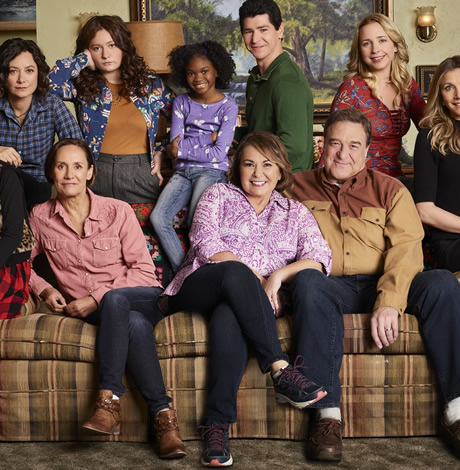
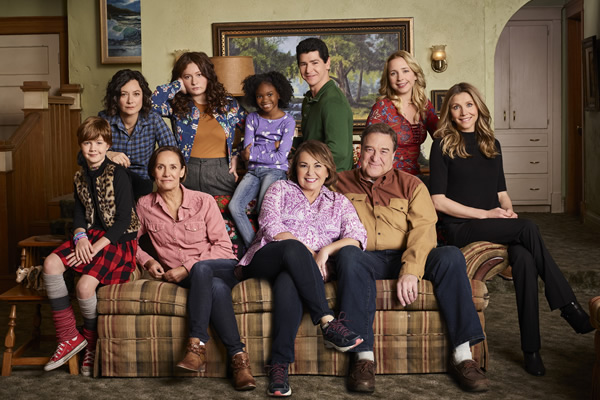
The original cast of ‘Roseanne’ includes lesbian actress Sara Gilbert (first from left in back row). She both reprises her role as Darlene and is executive producing the eight-episode arc. (Photo courtesy ABC)
The twang of a harmonica, the blare of a saxophone, that grating laugh.
Last week, ABC continued the pop culture wave of ‘90s nostalgia by airing the premiere of its much buzzed-about “Roseanne” revival. The original was never afraid to take an unflinching and unapologetic look at working-class life in America or serve as a showcase for its brash and controversial star, Roseanne Barr. True to form, “Roseanne’s” reboot debut proved the show would be just as bracing and willing to tackle controversial issues head-on through its distinct blend of biting humor and tough love.
It’s off to a gangbusters start with its first new episode in 20 years on March 27 drawing 25 million viewers and a massive 73 rating among adults 18-49. With 6.6 million viewers watching it later, it set a time-shifting record, the Hollywood Reporter notes. Another 4.3 million watched an encore broadcast Sunday night. Hulu and ABC streaming will only add to those numbers. It has the best numbers of a any “new” show since the 2014 premiere of “how to Get Away with Murder.” It’s already been renewed for a second season.
Reassuringly, the revival begins with Roseanne and husband Dan waking up in their old bed. Roseanne says she thought he’d died (cue Dan’s deadpan reply, “Why does everyone always think I’m dead?”), expediently erasing the divisive last season, which revealed the show was a story written by Roseanne, Dan had died and the family never won the lottery (don’t ask).
The rest of the Connor family is reintroduced, including Aunt Jackie, whose conflict with big sister Roseanne anchors the premiere. The two have barely spoken since the 2016 election. Roseanne is pro-Trump (mirroring the actor’s real-life support of the president), and Jackie, sporting a Nasty Woman shirt that would have looked appropriate on her 20 years ago, is ardently not.
Much has been made of Roseanne incorporating its star’s pro-Trump views and I was admittedly hesitant about watching the show and possibly liking it. Would my viewership (and potential enjoyment) tacitly endorse Roseanne’s views and those of her pro-Trump fans? Roseanne has rightfully been praised as a realistic depiction of working-class life in America, and although I may disagree with its star and vast numbers of the show’s viewers, there is no escaping the fact that Trump struck a chord with them for a reason that should not be ignored.
Roseanne saying she voted for Trump because “he talked about jobs” may have been played for a laugh, but she was speaking for a lot of people like the Connors. Although a sitcom isn’t going to resolve the political rift in the country, it can promote real discourse. The tension between Roseanne and Jackie was effective because not only was it true to the characters, it was also real. You could see families like this having these kinds of conversations and therein lies the strength of this show for much of its audience: relatability.
“Roseanne” also focused on middle daughter Darlene’s 9-year-old son, Mark, a happy boy who enjoys doing things like wearing skirts and painting his nails. Darlene supports his self-expression and doesn’t want the family to make him feel self-conscious because of it. Although they don’t understand why a boy would “dress like a girl,” the family embraces Mark. When Dan affirms that Mark shouldn’t go school like that, it isn’t because he’s ashamed, but because he fears Mark will be bullied.
I didn’t expect the show to deal with gender identity and expression so matter-of-factly. That Mark was portrayed as a fully formed person rather than a stereotype, and that the family rallied around him, was an explicit argument that we can all get behind: we should be proud of who we are and able to express that fully without fear of judgment or reprisal.
Mark puts an exclamation point on this idea (and shows that he truly is a Connor) by asserting that he’s going to keep dressing like he wants because he’s not ashamed of who he is. When Dan says, “That’s one tough kid,” how could you not stand up and cheer? I doubt the average Trump supporter is ready to acknowledge (let alone accept) gender non-conformance, but I’m grateful that a show aimed at them is saying it should be celebrated instead of feared.
I understand the concerns over normalizing Trump and certain segments of his base, because a show like “Roseanne” could potentially justify their views. Indeed, this has been a sticking point for many potential fans, especially gays. I’ve heard valid arguments that say the dichotomy of the show’s central character supporting Trump (who curries favor with hate groups) while sticking up for her gender non-conforming grandson is offensive at best, dangerous at worst, because this kind of line straddling could allow and encourage such attitudes to persist.
Nuances like these should not be compartmentalized and “Roseanne” would do well to address this potentially negative duality in future episodes. Although there are no easy answers to these questions, the “resist,” anti-Trump, left-leaning crowd ignores the Roseannes of the world at its own peril. If this show can bridge some divides, provide a glimpse into what “middle America” thinks while also demonstrating that the rest of us aren’t the demons we’re made out to be by many on team Trump, then maybe there’s room for an actual conversation. The jury won’t be in anytime soon, but maybe a show like “Roseanne” can counter or even diffuse the hornet nests of social media and angry op-eds cannot which, let’s face it, mostly just preach to their respective choirs.
At its core, “Roseanne” is a show about family, and while there’s certainly room for improvement (more Jackie!), this is a family worth spending some more time with.






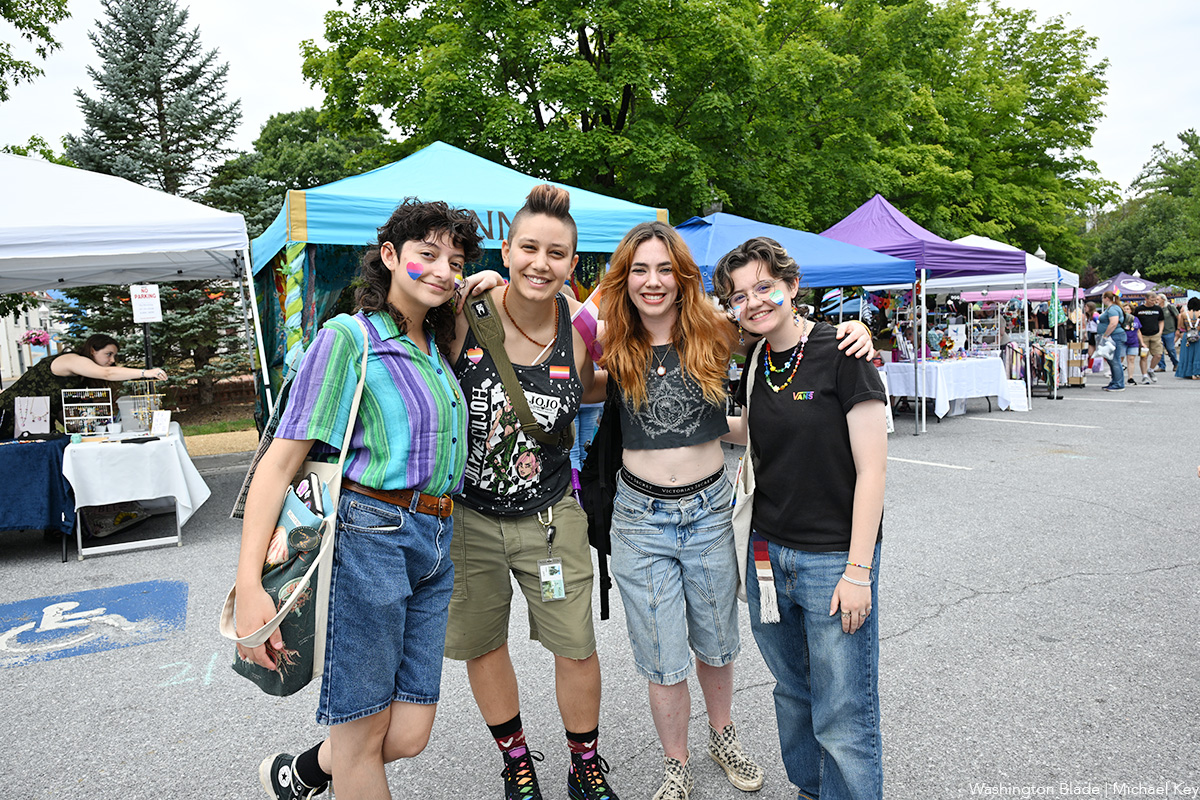
The third annual Front Royal Pride was held at the Main Street Gazebo in Front Royal, Va. on Saturday, July 25.
(Washington Blade photos by Michael Key)




a&e features
Summer in the City: Free exhibits, movies, more fill D.C.’s calendar
America 250 celebrations continue
From late-night museum visits and outdoor jazz concerts to free movie screenings and America250 exhibitions, Washington’s summer calendar is packed with events that don’t charge admission. Here’s a look at some of the free activities happening across the District through September and beyond.
Museum exhibitions
The Renwick Gallery is presenting State Fairs: Growing American Craft, an exhibition that looks at unique and unconventional crafts from the 19th century to the present. It will run until Sept. 7, and admission is free.
The Arts and Industries Building, located next to the Smithsonian Castle, is presenting the exhibition Voices and Votes: Exploring Democracy Across America. The exhibition features the development of American independence and what that has meant over time, beginning with the Revolutionary War. Admission to the museum is free, and the exhibition runs until Sept. 7.
The National Gallery of Art presents Dear America, an exhibit featuring more than 100 pieces of work, including letters, photographs, and drawings that depict American landscapes and depictions of freedom. The exhibition will run until Sept. 20.
The National Museum of Women in the Arts is exhibiting Burnished: Pueblo Pottery until Sept. 27. The exhibit features pottery from the Southwest, and while most of the pottery belongs to women artists, a few also reflect those who have advocated for women.
Extending past this summer, the exhibition ¡Puro Ritmo! The Musical Journey of Salsa will be at the National Museum of the American Latino until July 2028. The exhibition shows how Afro-Cuban music has become a staple in the U.S. Admission is free.
The Martin Luther King Jr. Memorial Library will feature the exhibition District Vibes / American Pride: How DC Changed American Culture, which will highlight all of the ways D.C. has impacted American life. The exhibit will run until Sept. 27.
At the Folger Shakespeare Library, the exhibit Imagining Shakespeare: Mythmaking and Storytelling in the Regency Era will be on view through Aug. 2. All the portraits on display come from the Boydell Shakespeare Gallery in London.
The United States Botanic Garden will be open until 8 p.m. on Aug. 20 and Sept. 17, as part of America’s State Flowers: An America250 Celebration. The evenings will include live music, mocktails, ice cream, and snacks.
The National Gallery of Art Sculpture Garden will have extended hours, staying open until 8 p.m. Wednesday to Saturday until Sept. 3.
Live performances
On Aug. 7, the postgame Nationals concert series will continue with Jordan Davis performing. To see the concert, guests just need to buy tickets to the Nationals game.
Jazz in the Garden will run each Friday until Aug. 14. The event has free admission, but those interested have to enter a lottery due to the high demand for the event.
From May to October, Capital Harvest Market occurs every Wednesday from 10 a.m.-2 p.m. at the Ronald Reagan Building and International Trade Center. The market features fresh foods, crafts, and recipes for unique dishes. A full list of vendors is available on Capital Harvest’s website.
Live! Concert Series on the Plaza will feature live performances at Woodrow Wilson Plaza until Sept. 25. The performances run Monday to Friday from 12-1 p.m. Admission is free to the performances.
DowntownDC Live! at Anthem Row is running until July 30, with free performances every Thursday from 5:30 p.m. to 9:00 p.m. The final performance will feature HUE and a vintage flea market hosted by Get Flee Marketplace.
Located in Adams Morgan, AdMo Vibe will present live performances every Thursday at 6 p.m. in Kalorama Park. Guests are encouraged to check out Adams Morgan before and after shows, and it is an event for all ages.
Other events
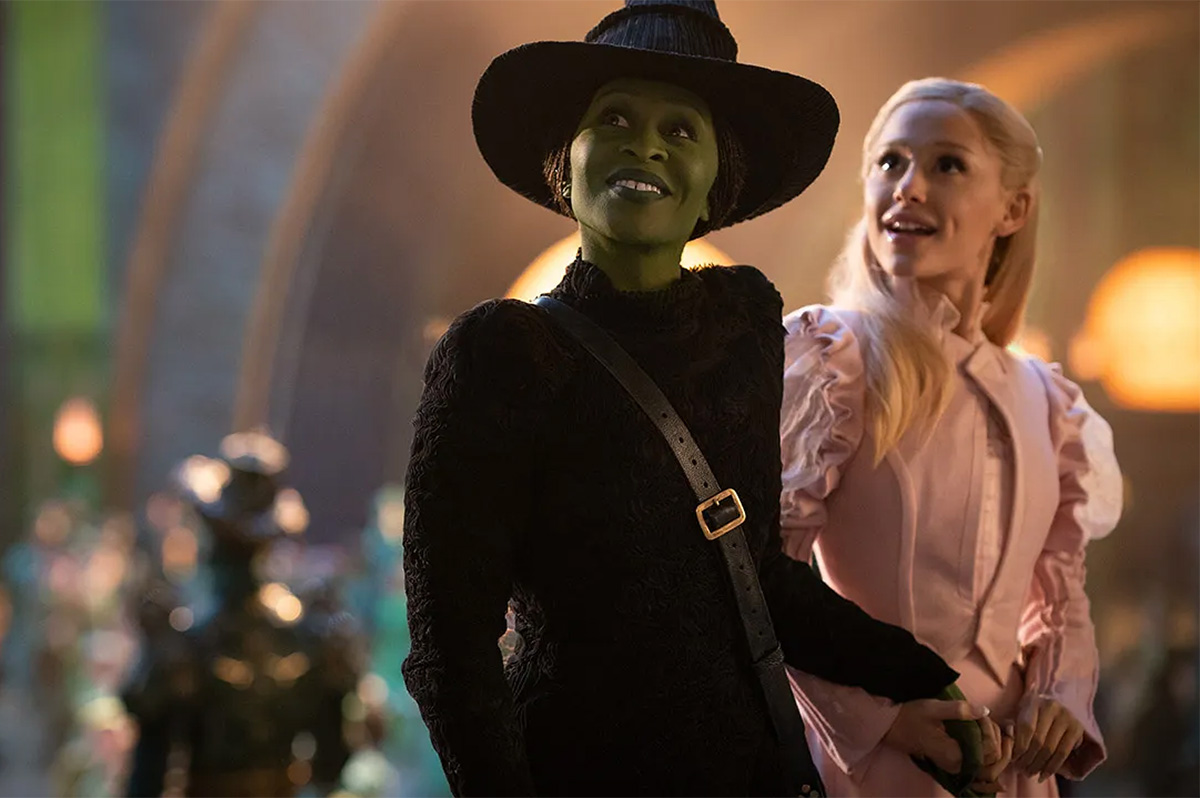
Union Market is hosting drive-in movies on Aug. 8, featuring “Monsters, Inc.”, and Sept. 12, featuring “Wicked.” On Aug. 8, the parking lot will open at 7:30 p.m., with the movie starting at 8:25 p.m. On Sept. 12, the parking lot will open at 6:35 p.m., and the movie will start at 7:30 p.m.
Sunset Cinema at the Wharf will also be available one day a month. On Aug. 12, “10 Things I Hate About You” will premiere, and on Aug. 26, “Project Hail Mary.” No tickets are necessary.
The Library of Congress will also show movies. On Aug. 6, guests are invited to watch “Apollo 13.” The movie will be shown at 8 p.m., with additional live performances beginning at 7 p.m.
For fans of Asian media, the Okaton convention will be at Walter E. Washington Convention Center from July 31-Aug. 2. Festivities will include cosplay contests, skits, live music, and panel discussions.
Washington Spirit’s season also begins in August. The Spirit is Washington’s National Women’s League, with matchups occurring between the San Diego Wave, the North Carolina Courage, the Orlando Pride, and the Bay FC.
Theater
D.C. summer theater offers something for every taste
From family fare to ‘Brontë Sister House Party’

Staycation doesn’t preclude time travel.
For instance, Happenstance Theater’s production of “Adrift: A Medieval Wayward Folly” now playing at Round House Theatre in Bethesda invites audiences to go somewhere familiar but far from home.
A timely piece of theater, “Adrift” takes place shortly after an apocalypse, prompting a group of seafaring fools to ask “What do we do now?”
What ensues is a gorgeously lit glimpse into the dark ages bursting with slapstick comedy and high art. Characters and mise-en-scène are inspired by the late Middle Ages/early Renaissance paintings of Hieronymus Bosch, and archetypes from the Tarot. Bosch’s surreal heaven and hellscapes are brought to life with music, devised and existing text, puppetry, and movement.
Sabrina Mandell, Happenstance’s charming co-artistic director and bona fide “visionary tornado” describes Happenstance, now marking its twentieth anniversary season, as small and agile, more interested in sustainability than growth. “It’s served us well. Our goal has never been to own a building,” she adds.
Over the years, the company has fostered an ensemble (Mandell, co-artistic director Mark Jaster, Gwen Grastorf, Sarah Olmsted Thomas, and Alex Vernon), an immensely creative team. In addition to performing, each member contributes in various ways: puppet making, social media, props, etc.
They play off each other endlessly. (“Sort of like the Carol Burnett Show only different?” I ask. “Exactly.” she agrees. They’ve been through a lot and have formed common vocabulary. Nostalgia buffs, they enjoy old films, art movements, and historical eras. The vibe is eccentric and there’s a bit of queer sensibility.
The two-time Helen Hayes Award winner for costume design, does it all — props and costumes and marketing. In “Adrift,” she plays both the oracle and a crone.
Mandell was born on the coast of Nova Scotia, Canada, the daughter of artists, and later lived in Montreal. As a young woman, she worked on schooners. For Mandell, it’s been a magical life filled with visuals marvels, she says.
When Happenstance begins rehearsal, there’s no fixed script: “We choose a territory and everyone does a deep dive. I’m interested in alchemy, the Tarot, mortality, and the Shaministic roots of theater. All of which are well represented in this production.”
The experience is also immersive. Audiences are encouraged to pose questions to the oracle. Much is whimsical, and in true Medieval fashion the 85-minute show is not without a hellmouth (the jaws of hell) and plenty of demons. Happenstancetheater.org
For staycationing kids, there’s “Pete the Cat: A Live Rock Musical” (through Aug. 2) at Imagination Stage in Bethesda. Follow Pete (played by Michael Perrie Jr.) and the Biddle family as they rock out in a fast-paced, globe-trotting musical based on the massively popular children’s book series. Imaginationstage.org.
There’s more family theater at Glen Echo Park in Maryland. Adventure Theatre MTC puts a spin on beloved fairytale with “Sleeping Beauty: The Time Traveler” (through Aug. 9). A humdrum summer changes when a young Rolly (Carl L. Williams) is whisked back in time to the Age of Charlemagne where he meets Aurora (Chelsea Majors), a bold 12-year-old princess with dreams of knighthood and adventure beyond her castle walls. (Chelsea Majors). Adventuretheatre-mtc.org.
Also at Glen Echo Park, The Puppet Co. presents “The Three Billy Goats Gruff” (through Aug. 23), ideal for kids 4+ and puppet aficionados of all ages. Thepuppetco.org
Broadway at the National on Pennsylvania Avenue presents “The Notebook” (through Aug. 30). Based on Nicholas Sparks’s best-selling novel that inspired the successful film, this romantic musical tells the story of unlikely couple Allie and Noah, who against all odds (hardship, separation, and Alzheimer’s disease) share a lifetime of love. Broadwayatthenational.com
In Vienna, Va., Wolf Trap takes you to Rome circa 1800 with Puccini’s “Tosca” (Aug. 4) presented by Wolf Trap Opera, in collaboration with the Washington National Opera Orchestra.
Following Puccini it’s a magical summer night with Diana Ross (Aug. 19). Expect to hear the superstar and two-time Grammy Lifetime Achievement Award winner perform many of her iconic hits including “I’m Coming Out,” “Ain’t No Mountain High Enough,” “Stop in the Name of Love” and more. Wolftrap.org
Nu Sass, a company that promotes marginalized genders in all aspects of theater, presents Courtney Bailey’s “Brontë Sister House Party” (Aug. 14-Sept. 12) at Van Ness on Main Street (4340 Connecticut Ave., NW). In life, the Brontë Sisters, Emily, Charlotte, and Anne, wrote their 19th century English lit classics in the virtual isolation of their father’s remote York parsonage. Now, stuck in purgatory, they’re suffering through party after party in an endless time loop. For them, hosting is truly hell, until they finally find a way to make it tolerable. Nusass.com
At Olney Theatre Center it’s “A Gentleman’s Guide to Love and Murder” (through Aug. 23), a Tony Award–winning musical farce about murder, manners, and money starring out actor Tom Story as all seven members of the rich, ill-fated D’Ysquith family. This fast-paced comedy promises to be a good time.
The Olney Outdoors summer series (Aug. 9-Sept. 12) also at the Olney Theatre Center features tribute bands, cabaret-style performances, comedy, drag, and family sing-alongs on the open-air Root Family Stage. Among the transportive tribute bands are “Space Oddity – The Ultimate David Brighton Bowie Experience” (Aug. 28) and for Labor Day weekend, it’s “Almost Queen” (Sept. 5) with Joseph Russo playing the band’s front man and queer icon Freddie Mercury. Olneytheatre.org
Signature Theatre in Arlington presents “Respect: Aretha Franklin” (Aug. 11-30), a musical tribute celebrating the Queen of Soul starring powerhouse performer Nova Y. Payton. Not to be missed. Sigtheatre.org

We must not scapegoat refugees after Berlin Pride terrorist attack

White House threatens Anne Arundel schools over gender identity policy

PHOTOS: Front Royal Pride

Dutch queen opens World Pride in Amsterdam

Gary Sutton, known for ‘warmth and laughter,’ dies at 62

2026 International AIDS Conference to take place in Rio

Pentagon says hormones make trans troops unfit but gives them to men

At Alliance Defending Freedom’s summit, church and state are one

Winsome Earle-Sears launches campaign against Va. marriage equality amendment

Calendar: July 24-30
-

 Brazil5 days ago
2026 International AIDS Conference to take place in Rio
-
Opinions4 days ago
Pentagon says hormones make trans troops unfit but gives them to men
-
National4 days ago
At Alliance Defending Freedom’s summit, church and state are one
-
Virginia4 days ago
Winsome Earle-Sears launches campaign against Va. marriage equality amendment