Bars & Parties
The antics of outrage
Judy Gold is in unfamiliar surroundings.
“Where the fuck is the remote?” she says with her trademark semi-mock outrage. “Why can’t I find the fucking remote?”
The 47-year-old stand-up comedian is in a Washington hotel room and just back from a Whole Foods run before heading off to a tech rehearsal at Theater J for her new one-woman show, “Judy Gold is Mommy Queerest!” And she can’t find a thing.
After answering a few questions about the show, her answers liberally sprinkled with f-bombs, the frustration returns.
“I have no utensils,” she says mid-sentence. “There are no fucking utensils in this room. Oh here they are.” But the joy of finding them disappears in less than a second. “There’s like a fork and a spoon and that’s it,” she growls.
The negativity might be unbearable were it not tempered by Gold’s wit. Somehow one senses, even in her pissiest moments, she’s not really that annoyed. Some of it’s her shtick and, in a way, her charm. Feigned indignant behavior, after all, is a hallmark of many a standup.
Gold calls “Queerest,” “pretty much the story of my life, of how I became a comic and my addiction to family sitcoms.” It’s been in previews this week but officially debuts Saturday with Sunday’s 7:30 p.m. performance featuring an opening night reception. The Theater J production, its second, runs through Jan. 3 at the D.C. JCC.
“The Brady Bunch,” Gold says, is her “favorite of all time,” but also mentions “The Partridge Family,” “All in the Family,” “Maude” and “Room 222.” She briefly considers naming “Mary Tyler Moore” her “all-time favorite,” but quickly realizes it’s too tough a call to make.
“I can’t even say,” she says. “Basically any family that wasn’t mine was my favorite. … They’re like members of your family. So there I am laying on the carpeting in a dream world watching and this show kind of tells the story of that.”
But “Mommy” has other dreams, too. Gold says though she loves live theater, she remains dumbfounded that she hasn’t landed her own sitcom.
“Here I am 47 years old and I don’t have my own show. Why the fuck don’t I have my own show? I have no fucking idea.”
With two Emmys she won for writing and producing “The Rosie O’Donnell Show,” on the bookshelf of the New York apartment she shares with her two sons (8 and 13), Gold has no trouble setting pitch meetings with network execs. And they always go well, she says.
“Once I’m in the meeting and they’re cracking up and you believe they’re thinking how could they not, but then they don’t. I have them cracking up for a half hour, but of course it’s always the same shit. America’s not ready for a gay family.”
Gold insists the show would be autobiographical. Citing her two kids, her ex who lives in the same building, her annoying mother and her therapist girlfriend, her life, she says, is perfect sitcom fodder. She also thinks it could break down barriers for gays in a Norman Lear kind of way.
If America could watch a family in which they could see themselves except for the fact that it was gay, Gold says, the marriage issue would be solved in a few years by a cultural attitude shift. Gold remembers how much she was shaped by the sitcom families she watched as a kid and dreams of having that kind of influence.
So does stand up and theater satisfy some of that itch? She says yes, calling live theater “the greatest thing in the world.” But the simple fact is it never reaches as many people as TV can.
But for now, Gold is making do with what she has and it’s going well. “Mommy,” which debuted in Montreal in July, has garnered mixed reviews but nearly all critics have confessed it’s undeniably funny. Substantial tweaking and re-writing has preceded its D.C. premiere to the point that Gold now calls it a “completely different show,” even in the last month. One big change was the addition of Kate Moira Ryan, who co-wrote Gold’s last show, “25 Questions for a Jewish Mother,” which had a 2008 D.C. run. When Gold started writing “Mommy,” Ryan was busy with other projects but as the project gestated, Ryan became an essential collaborator again.
Gold takes Fridays off for Shabbat. She says being Jewish is part of who is she though she doesn’t “believe every detail of it.”
“I try to take all the good things from it,” she says.
Equally factoring into her persona, of course, is her out-and-proud lesbianism. She’s been out professionally for well over a decade and says she can’t believe America is still having a debate about same-sex marriage.
“I can’t imagine telling anyone they cannot love another person and their relationship is not equal,” she says.
‘Judy Gold is Mommy Queerest!’
Saturday at 8, Sunday at 3 and 7:30 p.m. and additional performances through Jan. 3
$30 to $55 (half-price tickets available for 35 and younger)
D.C. JCC’s Goldman Theater
1529 16th Street, N.W.
800-494-TIXS
theaterj.org




Bars & Parties
Lesbian Bar Project co-founder: purity politics could destroy our remaining spaces
Last Ditch’s decision to lift its mask requirement for one night a week has sparked intra-queer controversy
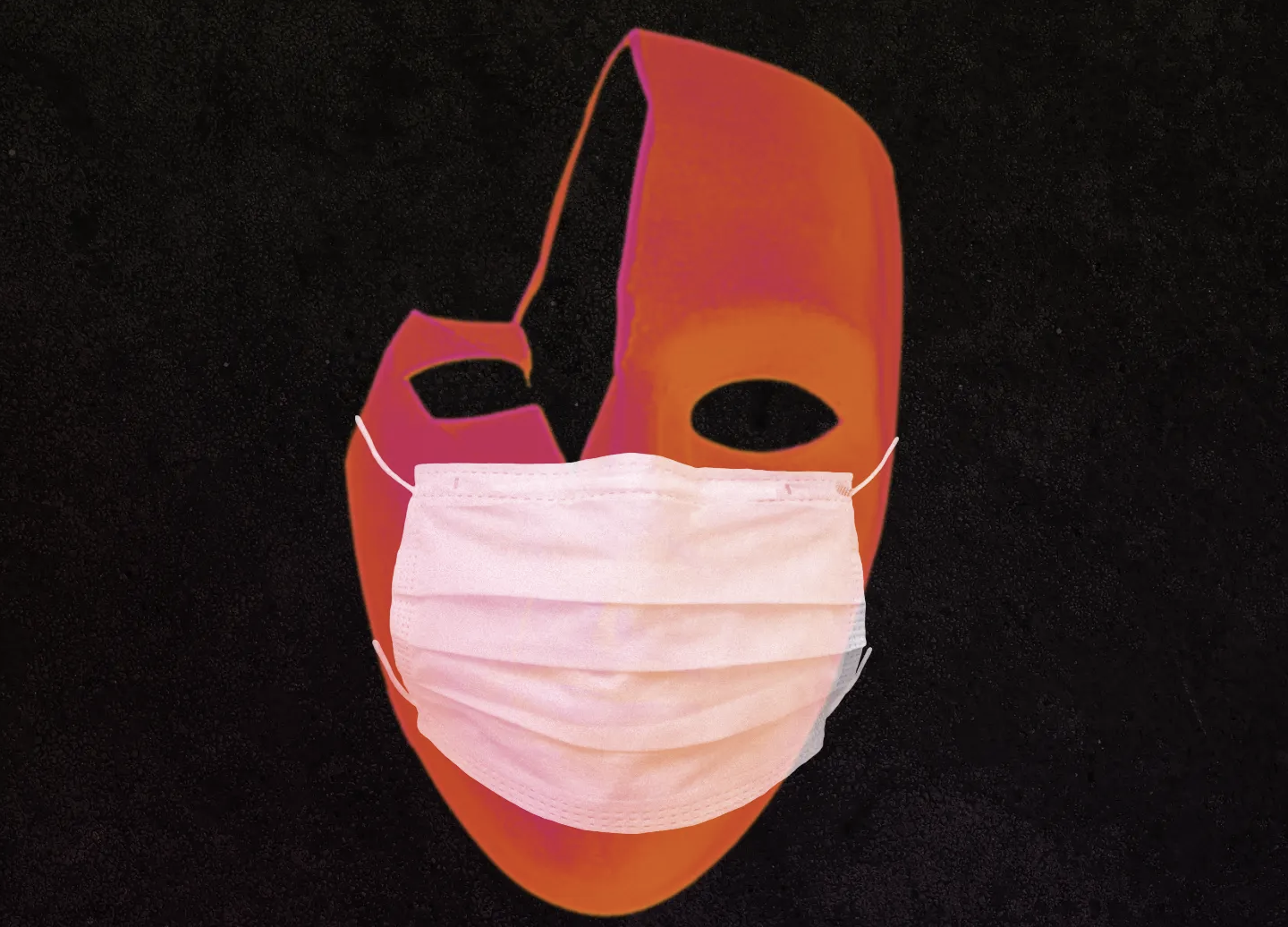
Uncloseted Media published this story on Sept. 29
By ERICA ROSE and THE LESBIAN BAR PROJECT | As a professional lesbian and Massachusetts native, I’ve recently been asked by a lot of folks what I think about the saga unfolding at Last Ditch. The now-viral story, first reported by the Boston Globe, centers on a Western Massachusetts lesbian bar that lifted its mask requirement for one night a week to help drum up business.
The decision ignited an intra-queer controversy that has been feasted on by media outlets across the political spectrum — from the New York Post to LGBTQ Nation — and is even reportedly being eyed for a Hollywood adaptation. Apparently nothing is more entertaining than a bunch of lesbians and queers fighting with each other over KN-95s.
What has been lost in all of the chatter and media coverage is the very real possibility that Last Ditch, which just opened in April 2025, will have to close its doors. The venue’s one remaining founder, Jackie Matellian, revealed in a community Zoom meeting that she’s working four jobs, is now solely responsible for the bar’s $50,000 business loan and is struggling to keep up with the bills. So as we laugh about the controversy’s similarity to a “Portlandia” skit and how one of the bar’s founders left to enroll in clown school, we forget that yet another lesbian bar is facing an existential crisis — and this time the call is coming from inside the house.
In 2020, my friend Elina Street and I created The Lesbian Bar Project, an Emmy-, Webby- and GLAAD Media Award-winning docuseries and initiative that tells the stories of lesbian queer bars around the world. We were moved to act because at the time there were only an estimated 16 lesbian bars in the United States, and the pandemic threatened to bring that number down even further.
There are now more sapphic bars than there were just before the pandemic — about 36 of them in total — but this is down from approximately 200 in 1980. Maybe that doesn’t mean much to you, but for the millions of sapphics living in the U.S., this number is calamitous.
As the world laughs at lesbians and sapphics, I want to take a second and tell you what I feel when I walk into one of these bars, which are all unique and irreplaceable in their own way: I feel seen.
Sometimes I think Cubbyhole in New York City’s West Village neighborhood knew I was gay before I did. When I walked in there for the first time, before I was even out, I was transfixed by the colorful array of tchotchkes hanging from the ceiling and how the women standing next to me were completely unafraid to express their desire for one another. I knew the minute I was ready to come out, I had a home. I also felt the joy of a new couple falling in love at Seattle’s Wildrose, the quiet confidence of a short king lining up her shot at the pool table at Ginger’s in Brooklyn and the kick of cayenne pepper in Julie Mabry’s crawfish at Houston’s Pearl Bar.
Lesbian bars don’t just serve lesbians; they serve queer folks across the spectrum, including bisexual, pansexual and trans people. As Elina and I traveled across the U.S. and Europe and to parts of Latin America to document the bar owners, staff and patrons that make up the ecosystems of these spaces, we also became uniquely acquainted with the factors that threaten their existence: gentrification, wage gaps, sexism, environmental disasters, gun violence, rising insurance premiums and political administrations working to annihilate queer people and their families.
Lesbian bar owners, like all leaders and entrepreneurs, are imperfect. There have been significant issues over the years at lesbian bars: employee harassment, racism, lack of accessibility, sexual assault and transphobia. All bar owners should be held accountable and should listen to their communities to evolve into safer and more equitable spaces. I also acknowledge my privilege: I am able-bodied, white, cis and from a family system that loves me for who I am. Not everyone has that.
Queer people, especially trans and bisexual people, are suffering from disproportionately high levels of depression, and our mental health system isn’t equipped to support them. Immunocompromised people and long COVID are real, and many of my friends are suffering to this day. The people with the least safety net are often the ones for whom a bar closing costs the most. And yet, as we’re seeing with Last Ditch, the queer community often lashes out at each other. It’s also the mainstream media taking the internal conflict and making a mockery out of it, distracting from the real possibility that this bar could close due to financial pressures. A bar that many people loved and needed is facing extinction. Perhaps it’s safer to dissent with one another than with the larger forces trying to eradicate us, but in doing so, we risk destroying the few spaces we have left.
Due to the constraints of purity politics — some in good faith, some not so much — lesbian bar owners, almost all of whom are queer women themselves, are forced to be everything for everyone, similarly to how women are forced to be everything for everyone. By asking these bars to uphold impossible standards — standards very few other third spaces are asked to consider — we all end up losing.
I want to move as a community toward dialogue, compassionate dissent and collaboration to make our spaces better with the goal of keeping them OPEN and thriving, rather than destroying them from the inside with expectations that are arguably unattainable.
While I have your attention — for this fleeting second of the news cycle — may I urge us to spearhead a way to keep these small businesses afloat without attacking our own community along the way? Bar owners are left with an impasse: They want to be community-centered, but they also have to make money to keep their doors open. Sometimes they might make business decisions that don’t work for everyone — and that’s partly because different patrons have different priorities and want different things — but these owners deserve the opportunity for productive dialogue. We have to work with them and with each other to keep our spaces open, to keep them growing.
Lesbian bars raised me into the queer woman I am today. One thing I think about as I reflect on the six years of work we’ve done to document these spaces is that shared, unspoken language I have with a stranger the moment we both walk into one of these bars: the nod, the ease, the not having to explain ourselves. I don’t want to lose that, and neither should you.
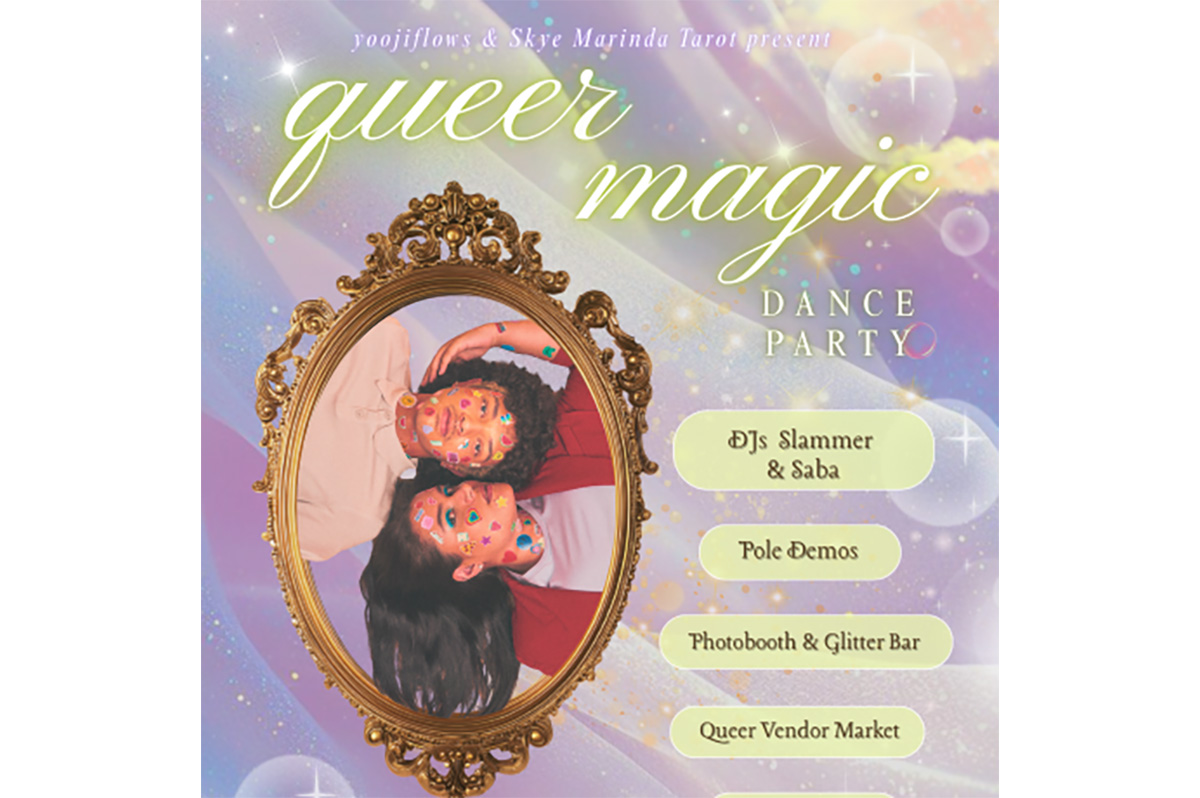
Celebrate the start of Pride month at the Queer Magic Dance Party at the Black Cat on Saturday, June 6. Doors open at 9 p.m.
There will be pole performances and demonstrations, a free photo booth with glitter bar, a queer vendor market, tarot readings by Skye Marinda Tarot, a drag performance by Sapphica, and dancing to a blend of smooth R&B, Afrobeats, hip-hop and pop by Slammer & Saba. Tickets are $20 at the door or $15 (plus fees) in advance, purchased here.
Bars & Parties
Here’s where to watch ‘RuPaul’s Drag Race’ with fellow fans
Entertainers TrevHER and Grey host event with live performance
Spark Social Events will host “Ru Paul’s Drag Race S18 Watch Party Hosted by Local Drag Queens” on Friday, Jan. 23 at 8 p.m.
Drag entertainers TrevHER and Grey will provide commentary and make live predictions on who’s staying and who’s going home. Stick around after the show for a live drag performance. The watch party will take place on a heated outdoor patio and cozy indoor space.
This event is free and more details are available on Eventbrite.

Annie Andrews denounces trans athletes after Trump targets her

On Republican Long Island, gay Democrat Chris Gallant bets on public service over politics

Report: LGBTQ exclusion costs Japanese economy billions a year

Center for Black Equity honors leaders, activists at BE. Gala

In ‘The Lost Brontë,’ a complicated lie can lead to danger

U.S. int’l trade negotiator, consultant James Bedore dies at 82

Campaign urges Virginia High School League to reverse stance on trans athletes

Calif. GOP gubernatorial candidate ad ‘disgusting attempt to exploit lesbian intimacy’

Center Arts Gallery celebrates 10 years with reception, auction

Trump, Netanyahu, and Putin are all war criminals
-

 Obituary4 days ago
U.S. int’l trade negotiator, consultant James Bedore dies at 82
-
Virginia4 days ago
Campaign urges Virginia High School League to reverse stance on trans athletes
-
California5 days ago
Calif. GOP gubernatorial candidate ad ‘disgusting attempt to exploit lesbian intimacy’
-
Commentary4 days ago
Center Arts Gallery celebrates 10 years with reception, auction