Local
‘I’m not going to cry about this’
Friends rally for Va. couple saving for prosthesis after cancer claims woman’s leg
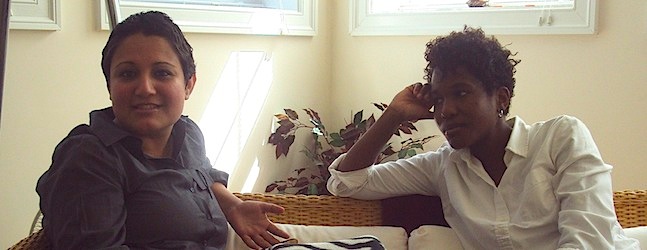

Zunaira Khalid (left) and her partner Ebony Bates in their basement apartment in Khalid's parents' house in Chantilly, Va. The couple says they're lucky most of the medical expenses from the June cancer surgery that claimed Khalid's leg were covered by insurance but only a small percentage will be covered for the prosthetic leg Khalid needs. (Washington Blade photo by Joey DiGuglielmo)
Zunaira Khalid benefit
Thursday at Policy
6:30 to 10 p.m.
Go here to make a donation.
Things were going pretty well for Zunaira Khalid and Ebony Bates in December. They’d had rough spots large and small throughout their nine-year relationship such as years of separation while Bates went to college in her native Pennsylvania, some occasional minor clashes that are inevitable in cross-cultural romances and all the usual pings and pangs that come and go as young people figure out what they want and don’t want from life.
But by the end of last year Khalid, a 35-year-old aspiring doctor and native Pakistani Muslim who’s been in the U.S. since age 12, and Bates, a 29-year-old Washington, Pa., native, realized their lives were beginning to jell. In October Bates landed what she calls her “dream job” with a government agency. She declines to say which because she says it’s not terribly gay friendly.
And after years of dabbling in various fields, Khalid, who’d drifted after finishing medical school questioning if she really wanted to be a doctor, decided medicine was her calling and she was in the uphill battle of getting back into the rigors of a residency program. Since 2005, the couple has lived in the basement of Khalid’s parents’ sprawling Chantilly, Va., home.
The two had been without health insurance for years. Bates was in school most of the ’00s doing undergrad and graduate work and Khalid had been unemployed for years studying to pass an exam to get back into medicine. The two had met in 2001 working together at Dulles Airport.
By December, Bates had coverage through her job. It took some arm twisting, but she convinced Khalid they needed to buy her some too, just in case. They found a decent plan for a little more than $100 per month through Aetna Health Insurance, an extraordinarily fortuitous decision on Bates’ part that saved the couple from financial ruin when Khalid got sick in February with an aggressive form of cancer that resulted in her leg having to be amputated in June.
“We were to the point where we’d been committed for several years,” Khalid says. “It’s almost impossible to have any sort of relationship recognition in Virginia, so that was never really discussed, but after D.C. passed marriage in December and then Ebony got a job she was like, ‘Look, we have a little money now, let’s get you a health plan. I didn’t think it was big deal. I don’t really get the flu or anything acute very often. I was like, ‘I’m fine, I don’t need it,’ but she was really adamant.”
To Khalid, she and Bates both burdened with considerable student loan debt, it seemed like one more expense. But she acquiesced and had an exam in December and got a clean bill of health.
The first signs of the cancer came innocuously in February. Khalid noticed her jeans felt tight around her left leg and took a bit of effort to get on. When it persisted, she had it looked at and was diagnosed with a pulled muscle. Just give it time to heal on its own, doctors told her. When it didn’t, she returned and an ultrasound found a cyst growing behind her knee. A biopsy revealed the mass was an aggressive sarcoma that was spreading fast. The situation quickly grew dire. It had grown from the size of a golf ball when an initial ultrasound was done to the size of a baseball a month later when an MRI was performed on Feb. 27.
Doctors told Khalid and Bates they were going to do everything they could to save her life and save her leg. It quickly became clear how potentially serious the diagnosis was.
“I remember when they said they were going to try to save her life first but we can’t guarantee that, that was really jarring for me,” Bates says. “Here they were talking about the possibility of death and if we were lucky she would make it through. It was just a lot of bad news at once.”
Bates, under pressure at her new job and in a probationary period where she knew she had to perform at her best, decided she needed to come out to her boss and explain the situation in case the stress started showing up in her performance. She was only able to miss a few days of work throughout Khalid’s illness, a point that irks the couple who marvel at the provisions that would be available if they were a married, opposite-sex couple.
But the couple opted to focus on the positive — most glaringly that Bates had the foresight to insist on an insurance plan for Khalid.
The first treatment step was two debilitating rounds of chemo, which destroyed Khalid’s immune system and put her in the hospital at Washington Hospital Center in D.C.’s Pleasant Plains neighborhood for weeks at a time. The chemo took such a toll — Khalid’s doctor told her he’d never seen anybody react so aversely to it — that a third round would have been too much for her body to handle. It was also unsuccessful at shrinking the mass to a degree doctors felt was acceptable.
There were essentially three problems with the growth — it had grown around a nerve meaning removing the mass would likely have resulted in Khalid having no control of her leg. Secondly it was so close to the bone, operating would be difficult and would have required, thirdly, a new route for blood supply to the leg, another iffy proposition considering the mass’s location. Amputation became the only safe option.
“I just realized very quickly that was the best decision I could make,” Khalid says. “I’d kind of prepared myself for it emotionally when they first told me it was a possibility. That first weekend, Eb had to be in Pennsylvania for work and I decided to go with her. It was the best thing. She was busy with work stuff but I just shopped, hung out at the hotel and really had time to make my peace with it.”
Bates soldiered on at work and says a strong relationship with Khalid’s parents — she says they treat her as if she, too, were their daughter — helped tremendously.
“Anytime I thought about how hard it was to juggle this with work, I just realized how much easier I had it compared to what she was going through,” Bates says.
Khalid is doing well now. She gets around on a pair of crutches cushioned with zebra-patterned covers. She was up and walking with a walker the day after her surgery. And she can still drive since she only needs to use her right leg.
The pain, though, has been excruciating at times. Muscle in her leg was essentially “wrapped” around hollow bone resulting in cookie-cutter like pressure from the bone’s edges. Khalid also experiences “phantom” pain where it feels as if her leg is still there, causing both pain and itching sensations.
“Basically the nerves have been cut but up here,” she says, pointing to her head, “it thinks everything is normal. So the nerves are freaking out and they don’t know what happened.”
She’s also stumbled several times as she attempts to get around.
The couple’s biggest challenge now is affording a massively expensive prosthetic leg for Khalid. The Aetna plan they chose has been great at kicking in thousands of dollars toward her chemo and surgery expenses but comes up far short on the cost of the prosthesis. The couple says it will cover only about $2,000 of the estimated $40,000 to $45,000 cost.
Friends are rallying. D.C. lesbian event promoter Ebone Bell has set up a website seeking contributions. Another lesbian friend, Darcy O’Callaghan, is planning an event Thursday at Policy for the couple. Donations are being accepted here.
Khalid says she’s keeping the stiff upper lip she’s maintained all along.
“I just decided up front I’m not going to cry about this,” she says. “I refuse to cry and give into this. If I have cried, it hasn’t been because of this stupid cancer, but because I’ve been touched by the things people have done for me.”
Maryland
Md. Commission on LGBTQIA+ Affairs released updated student recommendations
LGBTQ students report higher rates of bullying, suicide
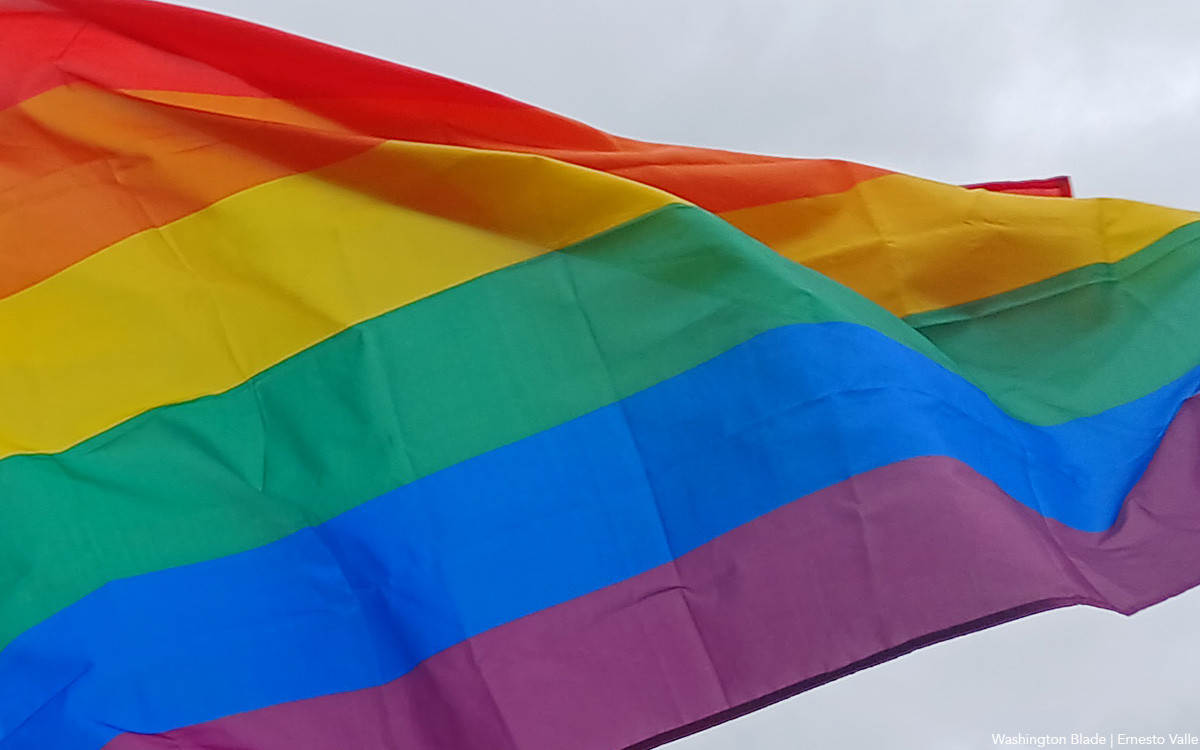
The Maryland Commission on LGBTQIA+ Affairs has released updated recommendations on how the state’s schools can support LGBTQ students.
The updated 16-page document outlines eight “actionable recommendations” for Maryland schools, supplemented with data and links to additional resources. The recommendations are:
- Developing and passing a uniform statewide and comprehensive policy aimed at protecting “transgender, nonbinary, and gender expansive students” against discrimination. The recommendation lists minimum requirements for the policy to address: name, pronoun usage, and restroom access.
- Requiring all educators to receive training about the specific needs of LGBTQ students, by trained facilitators. The training’s “core competencies” include instruction on terminology, data, and support for students.
- Implementing LGBTQ-inclusive curricula and preventing book bans. The report highlights a “comprehensive sexual education curriculum” as specifically important in the overall education curriculum. It also states the curriculum will “provide all students with life-saving information about how to protect themselves and others in sexual and romantic situations.”
- Establishing Gender Sexuality Alliances “at all schools and in all grade levels.” This recommendation includes measures on how to adequately establish effective GSAs, such as campaign advertising, and official state resources that outline how to establish and maintain a GSA.
- Providing resources to students’ family members and supporters. This recommendation proposes partnering with local education agencies to provide “culturally responsive, LGBTQIA+ affirming family engagement initiatives.”
- Collecting statewide data on LGBTQ youth. The data on Maryland’s LGBTQ youth population is sparse and non-exhaustive, and this recommendation seeks to collect information to inform policy and programming across the state for LGBTQ youth.
- Hiring a full-time team at the Maryland Department of Education that focuses on LGBTQ student achievement. These employees would have specific duties that include “advising on local and state, and federal policy” as well as developing the LGBTQ curriculum, and organizing the data and family resources.
- Promoting and ensuring awareness of the 2024 guidelines to support LGBTQ students.
The commission has 21 members, with elections every year, and open volunteer positions. It was created in 2021 and amended in 2023 to add more members.
The Governor’s Office of Communication says the commission’s goal is “to serve LGBTQIA+ Marylanders by galvanizing community voices, researching and addressing challenges, and advocating for policies to advance equity and inclusion.”
The commission is tasked with coming up with yearly recommendations. This year’s aim “to ensure that every child can learn in a safe, inclusive, and supportive environment.”
The Human Rights Campaign’s most recent report on LGBTQ youth revealed that 46.1 percent of LGBTQ youth felt unsafe in some school settings. Those numbers are higher for transgender students, with 54.9 percent of them saying they feel unsafe in school.
Maryland’s High School Youth Risk Behavior Survey reveals a disparity in mental health issues and concerns among students who identify as LGBTQ, compared to those who are heterosexual. LGBTQ students report higher rates of bullying, feelings of hopelessness, and suicidal thoughts. Nearly 36 percent of LGBTQ students report they have a suicide plan, and 26.7 percent of respondents say they have attempted to die by suicide.
The commission’s recommendations seek to combat the mental health crisis among the state’s LGBTQ students. They are also a call for local and state governments to work towards implementing them.
Virginia
Va. lawmakers consider partial restoration of Ryan White funds
State Department of Health in 2025 cut $20 million from Part B program
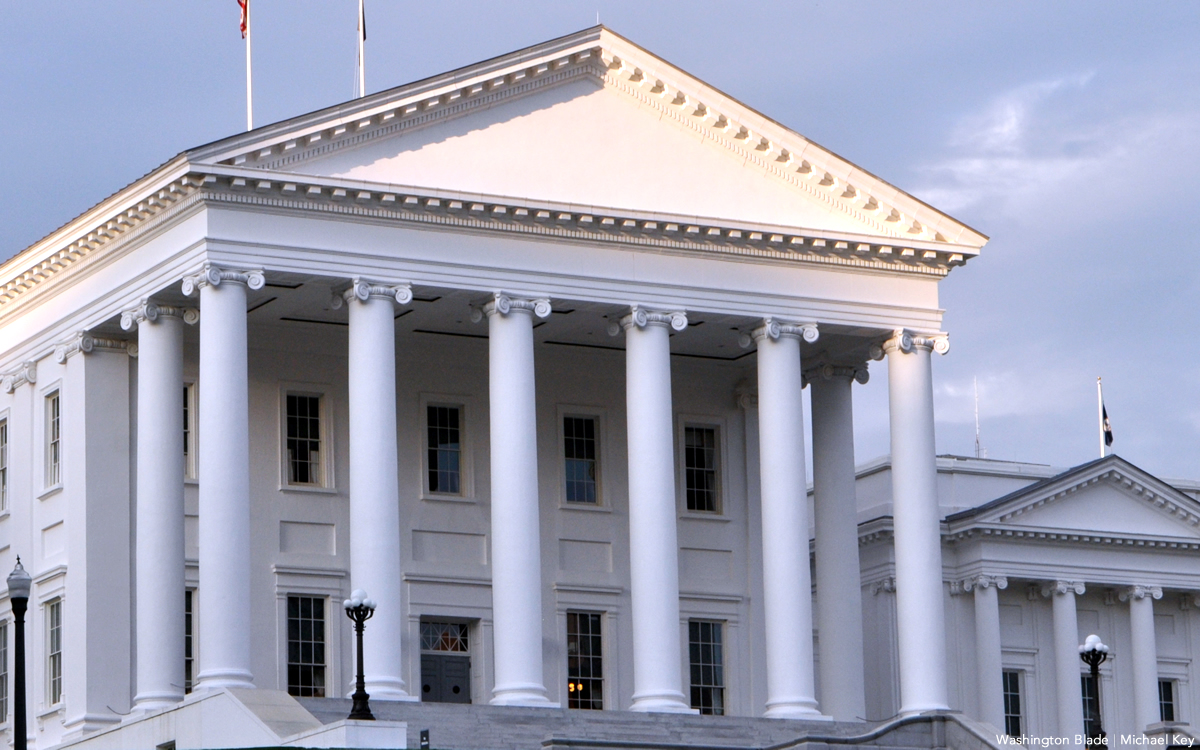
The Virginia General Assembly is considering the partial restoration of HIV funding that the state’s Department of Health cut last year.
The Department of Health in 2025 cut $20 million — or 67 percent of total funding — from the Ryan White Part B program.
The funding cuts started with the Trump-Vance administration passing budget cuts to federal HIV screening and protection programs. Rebate issues between the Virginia Department of Health and the company that provides HIV medications began.
Advocates say the funding cuts have disproportionately impacted lower-income people.
The Ryan White HIV/AIDS Program, a federal program started in 1990, provides medical services, public education, and essential services. Part B offers 21 services, seven of which remained funded after the budget cuts.
Equality Virginia notes “in 2025, a 67 percent reduction severely destabilized HIV services across the commonwealth.”
Virginia lawmakers have approved two bills — House Bill 30 and Senate Bill 30 — that would partially restore the funding. The Ryan White cuts remain a concern among community members.
Both chambers of the General Assembly must review their proposed changes before lawmakers can adopt the bills.
“While these amendments aren’t a full restoration of what community-based organizations lost, this marks a critical step toward stabilizing care for thousands of Virginians living with HIV,” said Equality Virginia Executive Director Narissa Rahaman. “Equality Virginia plans to continue their contact with lawmakers and delegates through the conference and up until the passing of the budget.”
“We appreciate lawmakers from both sides of the aisle who recognized the urgency of this moment and will work to ensure funding remains in the final version signed by the governor,” added Rahaman.
District of Columbia
D.C. Black Pride theme, performers announced at ‘Speakeasy’
Durand Bernarr to headline 2026 programming
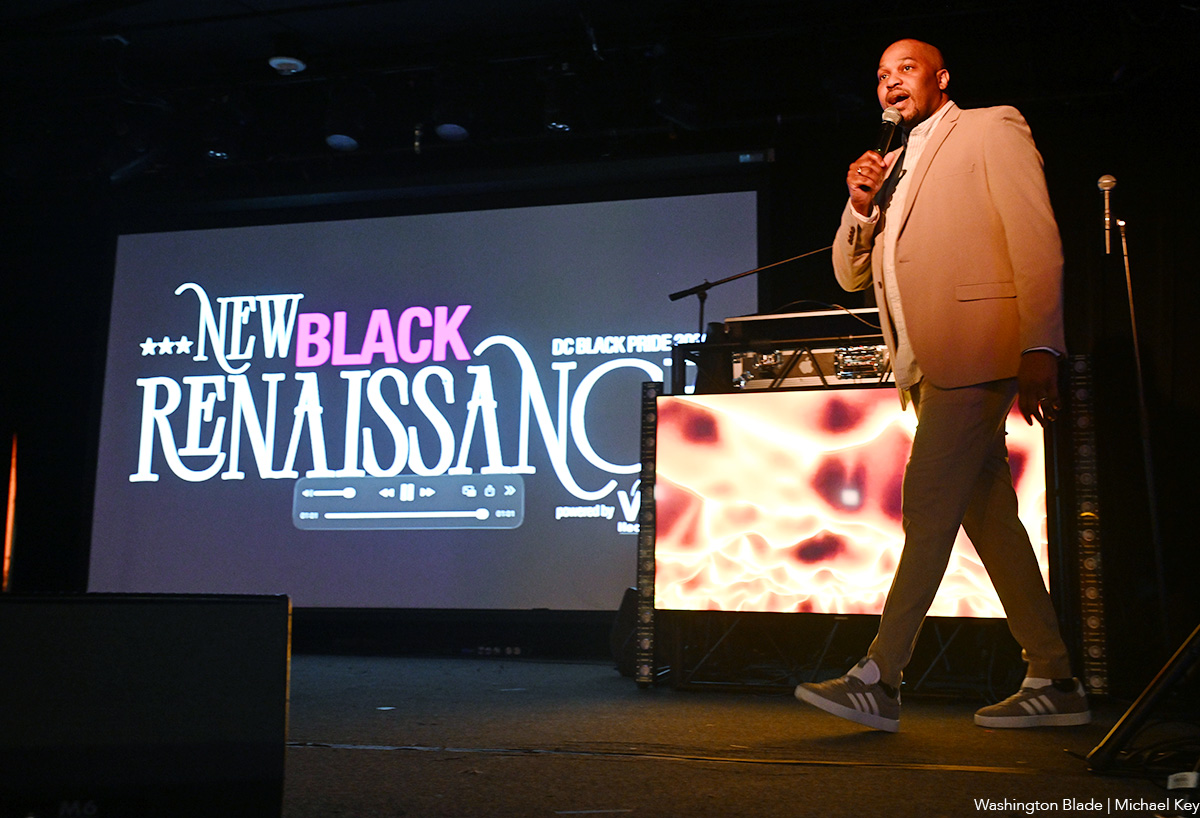
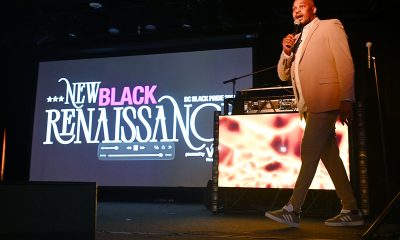
The Center for Black Equity held its 2026 DC Black Pride Theme Reveal event at Union Stage on Monday. The evening, a “Speakeasy Happy Hour,” was hosted by Anthony Oakes and featured performances by Lolita Leopard and Keith Angelo. The Center for Black Equity organizes DC Black Pride.
Kenya Hutton, Center for Black Equity president and CEO, spoke following the performances by Leopard and Angelo. Hutton announced this year’s theme for DC Black Pride: “New Black Renaissance.”
Performers for 2026 DC Black Pride were announced to be Bang Garcon, Be Steadwell, Jay Columbus, Bennu Byrd, Rue Pratt and Akeem Woods.
Singer-songwriter Durand Bernarr was announced as the headliner for the 2026 festivities. Bernerr gave brief remarks through a video played on the screen at the stage.
DC Black Pride is scheduled for May 22-25. For more information on DC Black Pride, visit dcblackpride.org.

Liza Minnelli makes surprise appearance at GLAAD Media Awards

Fla. Senate passes ‘Anti-Diversity’ bill that could repeal local LGBTQ protections

Capital Pride must be transparent about sexual misconduct investigation

Ugandan activist named Charles F. Kettering Foundation fellow

13 HIV/AIDS activists arrested on Capitol Hill

Arlington LGBTQ bar Freddie’s celebrates 25th anniversary

Supreme Court deals blow to trans student privacy protections

D.C. Black Pride theme, performers announced at ‘Speakeasy’

Why innovation matters for Black health

Peter Thiel’s expanding power — and his overlap with Jeffrey Epstein
-

 Virginia4 days ago
Arlington LGBTQ bar Freddie’s celebrates 25th anniversary
-
National3 days ago
Supreme Court deals blow to trans student privacy protections
-
District of Columbia3 days ago
D.C. Black Pride theme, performers announced at ‘Speakeasy’
-
Opinions3 days ago
Why innovation matters for Black health