Sports
Tennis anyone?
Local gay Capital group to play in tournament this weekend


A recent Capital Tennis Association meet. (Photo courtesy of Kevin Majoros)
This weekend, the Capital Tennis Association (CTA) will welcome 180 players from around the country for the Capital Classic XIX tennis tournament. The event will be contested at the Hains Point Tennis Center in East Potomac Park on both clay and hard courts.
The tournament is sanctioned by the Gay and Lesbian Tennis Alliance, an international organization that manages and sanctions the gay tennis circuit around the world. About 10,000 players will take part in Alliance tournaments this year.
The Capital Classic will consist of the five Alliance divisions which rotate in this event each year between the clay and hard courts, giving the players a chance to compete on different surfaces and thus drawing a different mix of players each year since some of the athletes favor a particular surface.
The five divisions, which will be contested in both singles and doubles, have been developed by the Alliance to enable some uniformity in pairing players with similar abilities. A player rates himself based on the guidelines and is then placed in a division.
Funding of the tournament comes from fees and money donated by local businesses with Brandon Green & Associates being the signature sponsor. Surplus funds are then donated to local charities. This year’s benefactors are the Mautner Project, Food & Friends and the Team D.C. Scholarship Fund.
The Capital Tennis Association was formed in 1994 and is one of the largest and most active LGBT sports groups in the area. The current membership base is around 300 players with annual dues being $50.
The CTA offers many avenues for tennis players to advance their skills and meet other players. Their two-hour drill session series has resulted in an incredible demand and Walker Chaffin, CTA coordinator, says the drill series has become so popular, they are hoping to initiate more in the future. Proceeds from the sessions are donated to SMYAL.
The group also hosts leagues at the Rock Creek Park Tennis Center, Fairfax Racquet Club, George Washington Tennis Center and the Hains Point Tennis Center. There are currently a total of 20 leagues broken apart by three seasons — fall (Oct. to Dec.), winter (Jan. to April) and summer (May to Sept.). The leagues are offered on both weeknight and weekends and are available in both singles and doubles play.
If you don’t have a partner to play doubles with, they will assign one to you. The leagues draw about 200 players and they do have a sub list for players who join late or cannot commit to the whole season.
Eddie Engles, CTA president, was excited to tell me about the new beginner’s indoor league, which starts next month. Beginner players will have the opportunity to play singles and a rotating doubles format. The doubles teams will rotate players so the newbies can experience playing with different partners and forge new friendships. For those who are worried they don’t have the proper gear to play, the CTA listserv can offer a chance to pick up used equipment.
Twice a year, the CTA holds a club championships tournament, which serves up a fun tennis weekend for league players. For many, it’s an opportunity to experience a tournament format for the first time.
And finally, for all you armchair experts, the CTA offers up Fantasy Tennis. At the beginning of the year, you select a team of five players who are on the Alliance and/or Association of Tennis Professionals tours. Each time a member of your team wins a match at each of the four Grand Slams and the Sony Ericsson tournament, you score points that could lead you to be the Fantasy Tennis champion. There’s a cash prize for the winner and the remaining proceeds are donated to charity.
Get yourself out to East Potomac Park this weekend and check out our tennis athletes in action. They can also be found at capital-tennis.org.




Sports
New IOC policy bans trans women from Olympics
New regulation to be in effect at 2028 summer games in Los Angeles
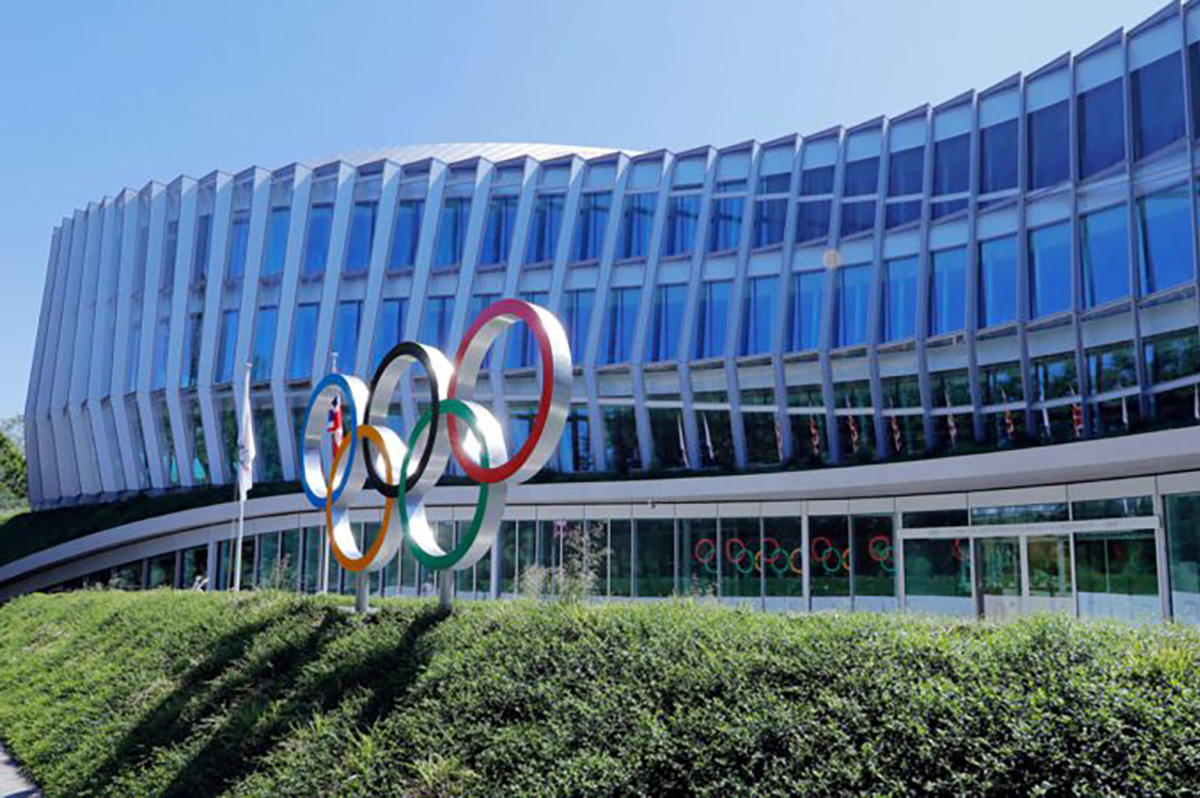
The International Olympic Committee on Thursday announced it will not allow transgender women from competing in female events at the Olympics.
“For all disciplines on the Sports Program of an IOC event, including individual and team sports, eligibility for any Female Category is limited to biological females,” reads the new policy.
The policy states “eligibility for the Female Category is to be determined in the first instance by SRY Gene screening to detect the absence or presence of the SRY Gene.”
“On the basis of the scientific evidence, the IOC considers that the SRY (sex-determining Region Y) Gene is fixed throughout life and represents highly accurate evidence that an athlete has experienced or will experience male sex development,” it reads. “Furthermore, the IOC considers that SRY Gene screening via saliva, cheek swab or blood sample is unintrusive compared to other possible methods. Athletes who screen negative for the SRY gene permanently satisfy this policy’s eligibility criteria for competition in the Female Category.”
The policy states the test “will be a once-in-a-lifetime test” unless “there is reason to believe a negative reading is in error.”
The new regulation will be in place for the 2028 Summer Olympics in Los Angeles.
“I understand that this a very sensitive topic,” said IOC President Kirsty Coventry on Thursday in a video. “As a former athlete, I passionately believe in the rights of all Olympians to take part in fair competition.”
“The policy that we have announced is based on science and it has been led by medical experts with the best interests of athletes at its heart. The scientific evidence is very clear: male chromosomes give performance advances in sport that rely on strength, power, or endurance,” she added. “At the Olympic Games, even the smallest margins can be the difference between victory and defeat. So, it is absolutely clear that it would not be fair for biological males to compete in the female category. In addition, in some sports it would simply not be safe.”
(Video courtesy of the IOC)
Laurel Hubbard, a weightlifter from New Zealand, in 2021 became the first trans woman to compete at the Olympics.
Imane Khelif, an Algerian boxer, won a gold medal at the 2024 Summer Olympics in Paris. Khelif later sued JK Rowling and Elon Musk for cyberstalking after they questioned her gender identity.
Ellis Lundholm, a mogul skier from Sweden, this year became the first openly trans athlete to compete in any Winter Olympics when he participated in Milan Cortina Winter Olympics in Italy.
President Donald Trump in February 2025 issued an executive order that bans trans women and girls from female sports teams in the U.S.
The U.S. Olympic and Paralympic Committee last July banned trans women from competing in female sporting events. Republican lawmakers have demanded the IOC ban trans athletes from women’s athletic competitions.
“I’m grateful the Olympics finally embraced the common sense policy that women’s sports are for women, not for men,” said U.S. Sen. Tom Cotton (R-Ark.) on X.
An IOC spokesperson on Thursday referred the Washington Blade to the press release that announced the new policy.
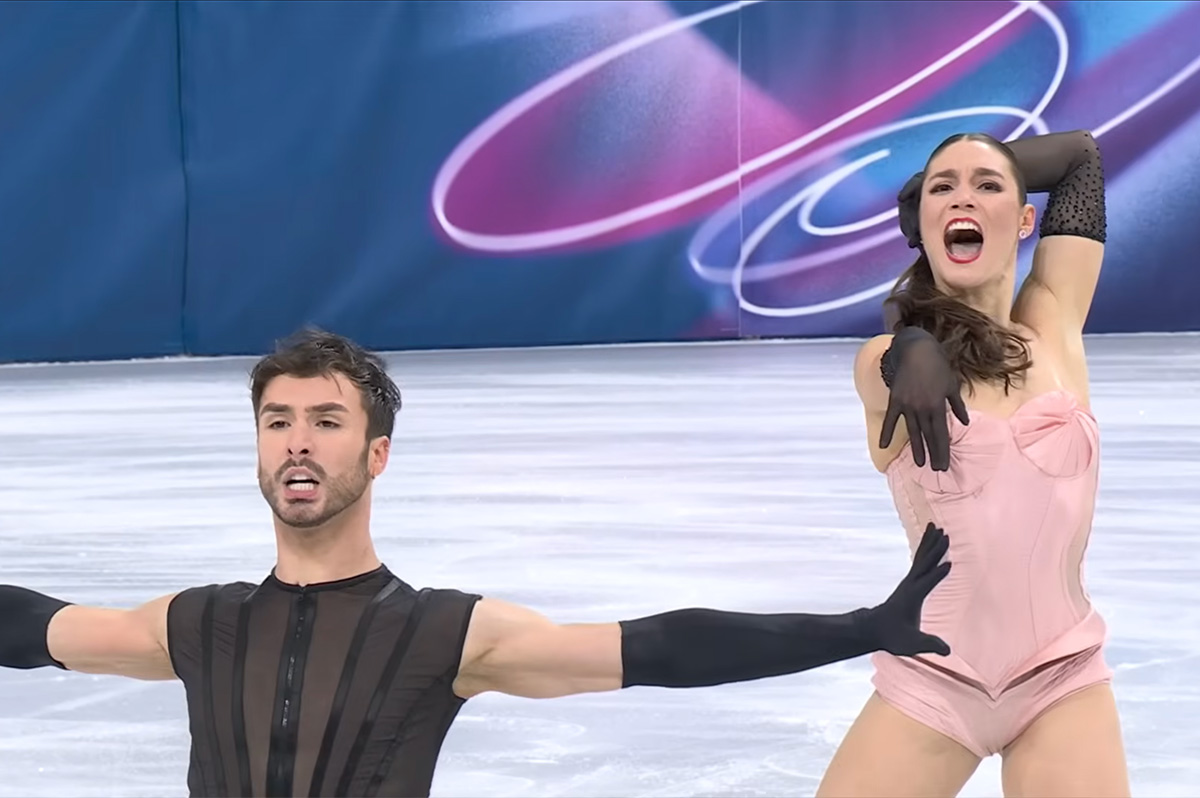
More than a dozen LGBTQ athletes won medals at the Milan Cortina Winter Olympics that ended on Sunday.
Cayla Barnes, Hilary Knight, and Alex Carpenter are LGBTQ members of the U.S. women’s hockey team that won a gold medal after they defeated Canada in overtime. Knight the day before the Feb. 19 match proposed to her girlfriend, Brittany Bowe, an Olympic speed skater.
French ice dancer Guillaume Cizeron, who is gay, and his partner Laurence Fournier Beaudry won gold. American alpine skier Breezy Johnson, who is bisexual, won gold in the women’s downhill. Amber Glenn, who identifies as bisexual and pansexual, was part of the American figure skating team that won gold in the team event.
Swiss freestyle skier Mathilde Gremaud, who is in a relationship with Vali Höll, an Austrian mountain biker, won gold in women’s freeski slopestyle.
Bruce Mouat, who is the captain of the British curling team that won a silver medal, is gay. Six members of the Canadian women’s hockey team — Emily Clark, Erin Ambrose, Emerance Maschmeyer, Brianne Jenner, Laura Stacey, and Marie-Philip Poulin — that won silver are LGBTQ.
Swedish freestyle skier Sandra Naeslund, who is a lesbian, won a bronze medal in ski cross.
Belgian speed skater Tineke den Dulk, who is bisexual, was part of her country’s mixed 2000-meter relay that won bronze. Canadian ice dancer Paul Poirier, who is gay, and his partner, Piper Gilles, won bronze.
Laura Zimmermann, who is queer, is a member of the Swiss women’s hockey team that won bronze when they defeated Sweden.
Outsports.com notes all of the LGBTQ Olympians who competed at the games and who medaled.
Sports
US wins Olympic gold medal in women’s hockey
Team captain Hilary Knight proposed to girlfriend on Wednesday
The U.S. women’s hockey team on Thursday won a gold medal at the Milan Cortina Winter Olympics.
Team USA defeated Canada 2-1 in overtime. The game took place a day after Team USA captain Hilary Knight proposed to her girlfriend, Brittany Bowe, an Olympic speed skater.
Cayla Barnes and Alex Carpenter — Knight’s teammates — are also LGBTQ. They are among the more than 40 openly LGBTQ athletes who are competing in the games.
The Olympics will end on Sunday.

VIDEO: Gay journalist detained for booing Trumps at ‘Chicago’ opening night

Idaho Gov. signs harshest anti-trans bathroom bill in the country

Award-winning D.C. chef reaching new culinary heights

Trans-driven ‘Serpent’s Skin’ delivers campy sapphic horror

Now more than ever: the importance of LGBTQ activism

‘Out for McDuffie’ event held at D.C. gay bar

‘Jonah’ an undeniably compelling but unusual memory play

The Oscar-losing performance that’s too good to miss

Thousands attend ‘No Kings’ protests in D.C.