Arts & Entertainment
Our lives, our books
Lesbian veteran shares ordeal; researchers interview hundreds for landmark trans study
‘Out of Step’
By J. Lee Watton
A&M Books
Released Sept. 20
$17 retail; $9.99 e-book edition
At Kindle, Barnes & Noble, Nook and via aandmbooks.com‘The Lives of Transgender People’
By Genny Beemyn and Sue Rankin
Columbia University Press
Released Nov. 20
Print only
Available through Amazon or through cup.columbia.edu
There are so many LGBT-themed books released all the time, it’s impossible to read them all. Here are two from last fall that deserve attention.
“Out of Step” by J. Lee Watton is a memoir that tells of the author’s years in the mid-1960s as a member of the Navy WAVES (Women Accepted for Volunteer Emergency Service), a division of the Navy that started in World War II for women that continued until 1972 when the office was disestablished in favor of women being integrated into the main force. Watton, a lesbian, shares her story of being one of five WAVES who were tried and discharged in 1965 at the U.S. Naval Training Center in Bainbridge, Md., for being gay.
Watton shares how the incident led to years of humiliation, decades in the closet and overall distress. A retired journalist who now lives in Delaware with her partner, a retired Army captain, she was eventually inspired to come out when she read “Serving in Silence,” a landmark book by former colonel Margarethe Cammermeyer that was eventually made into a 1995 TV movie with Glenn Close. Watton says Cammermeyer’s story inspired her to give up 25 years of “living solely as a heterosexual.” She dabbled in writing starting in 2000 but committed to it fully in 2008.
Rehoboth Beach, Del.,-based publisher Fay Jacobs, a lesbian, says she was drawn to Watton’s story and says it’s an important one to share. It was released last fall about the time “Don’t Ask, Don’t Tell” was repealed, timing Jacobs calls “an amazing coincidence.”
“I read it in manuscript form and I said immediately, ‘Wow, this needs to be published,’” Jacobs, owner of A&M says. “It’s so important to understand the kind of discrimination that gay people faced in the military for many years and it’s not just an incident that happens when you’re 19, 20 or 21.”
Sue Rankin, who identifies as queer, teaches education policy studies at Penn State University. She did what she calls a “climate study” on trans issues in 2003 but Genny Beemyn, director of the Stonewall Center at the University of Massachusetts, told her she hadn’t asked “the right questions,” as Rankin puts it. The two embarked on another study in which they collected data throughout 2006, which they’ve compiled in a book.
“The Lives of Transgender People” encompasses the findings of hundreds of interviews they conducted through participants they found mainly through online listservs and conferences. About 3,500 answered a survey. Rankin and Beemyn, who doesn’t identify as either male or female, followed up with the interviews with about 400 of the respondents.
“We had such an enormous response, we thought it was book worthy,” Rankin says. “We knew we needed to hear what their experiences were in their own voices.”
She says to her knowledge, nothing of this scope has been attempted before.
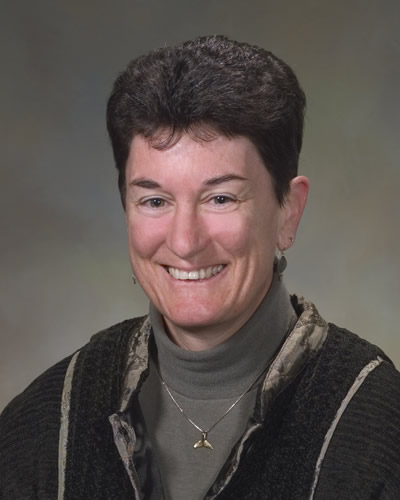
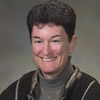
Penn State's Sue Rankin (Photo courtesy Rankin)
“I know one came out from the National Center for Transgender Equality a year after ours, but ours was more interested in knowing more about this umbrella term of transgender, what it is and where do people see themselves in their own experiences.”
Those who participated ranged from teens to one person who was over 70. Rankin says much of the previous academic work on trans issues was conducted “from the psychological viewpoint that there was something wrong.” She and Beemyn purposefully avoided that approach and say the findings were hugely surprising.
“I think everything about it surprised me because there was a learning curve with it for me,” Rankin says. “First by the huge response we got, then that the community was so willing to share … I was floored by that. It told me that we really need to look beyond our gender binary selves at the fluidity of gender. … Lots of people identify themselves in lots of different ways.
Rankin says she and Beemyn, who volunteered their time but were approached by three publishers once the work was finished, purposefully crafted the book so that it would stand up under “rigorous academic standards” but would also be readable and engaging to non-academics.



Out & About
Equality Chamber hosts Pride in Business Expo and Profits & Pours
Entrepreneurs, business leaders, professionals to meet at Mayor’s Office of LGBTQ Affairs

The Equality Chamber of Commerce is bringing together LGBTQ+ entrepreneurs, business leaders, professionals, advocates, and community partners on Thursday, Oct. 15 at 2:30 p.m. at the D.C. Mayor’s Office for LGBTQ Affairs (899 N. Capitol Street, NE).
This is an afternoon and evening focused on one essential question: How do we build businesses and a business community that can thrive? The Pride in Business Expo and Profits & Pours with Stephanie will create a powerful forum for connection, practical knowledge, and economic opportunity at the Mayor’s Office of LGBTQ Affairs. The Pride in Business Expo, taking place from 4-7 p.m., brings the region’s LGBTQ+ business community together to showcase businesses, build relationships, discover resources, and create new opportunities.
Out & About
Learn more about Virginia’s queer history
‘The Remarkable Visibility of Hannah Nokes’ event scheduled for Wednesday
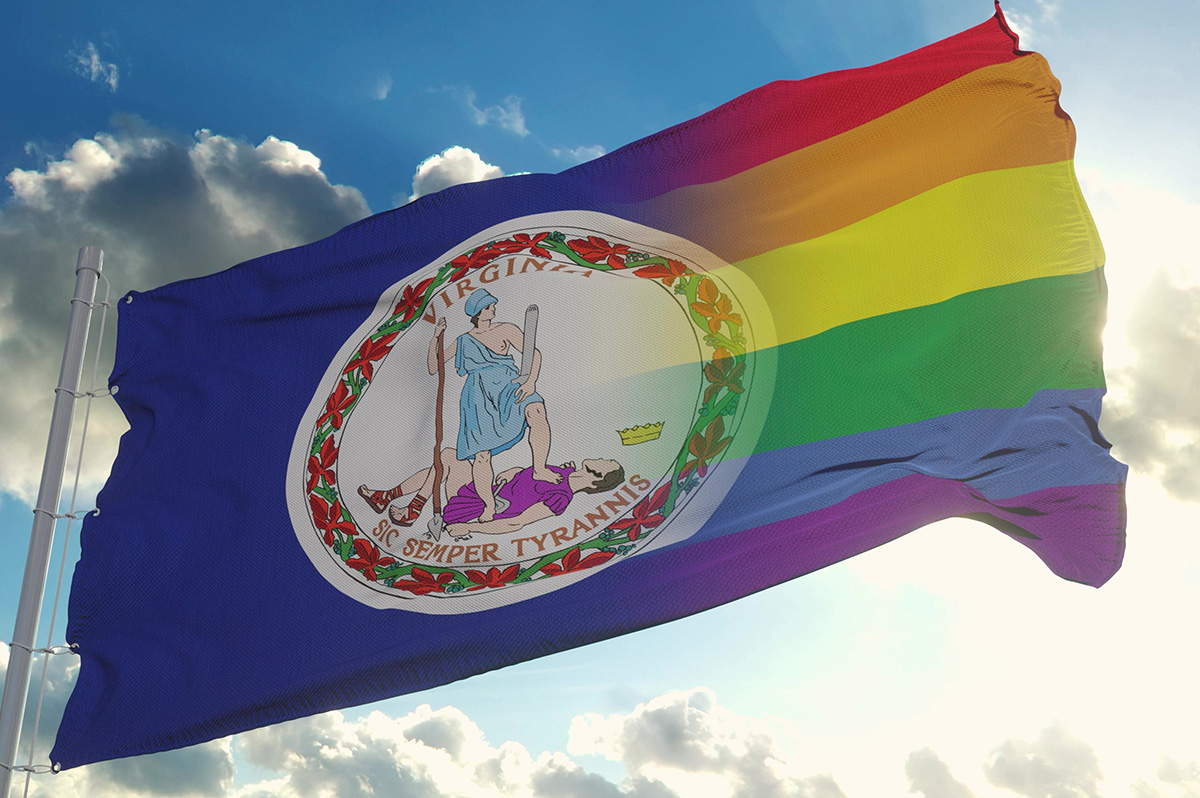
Queer Virginia Contributor Amy Bertsch will host “The Remarkable Visibility of Hannah Nokes” on Wednesday, Oct. 14 at 6 p.m. at Sprouse Rare Book Room inside the Kate Waller Barrett Branch Library (717 Queen St., Alexandria, Va.).
Amy will share the story of Hannah Nokes, an African-American transgender woman who made headlines in 1933 when she testified in a high-profile murder trial. Learn about Nokes’s life, her place in history, and the broader social context of her remarkable story. Her story is among those featured in the book “Queer Virginia: New Stories in the Old Dominion.”
Register at the Alexandria Library website.
Out & About
Annapolis Pride arrives this weekend
Sixth annual LGBTQ celebration held in Maryland capital
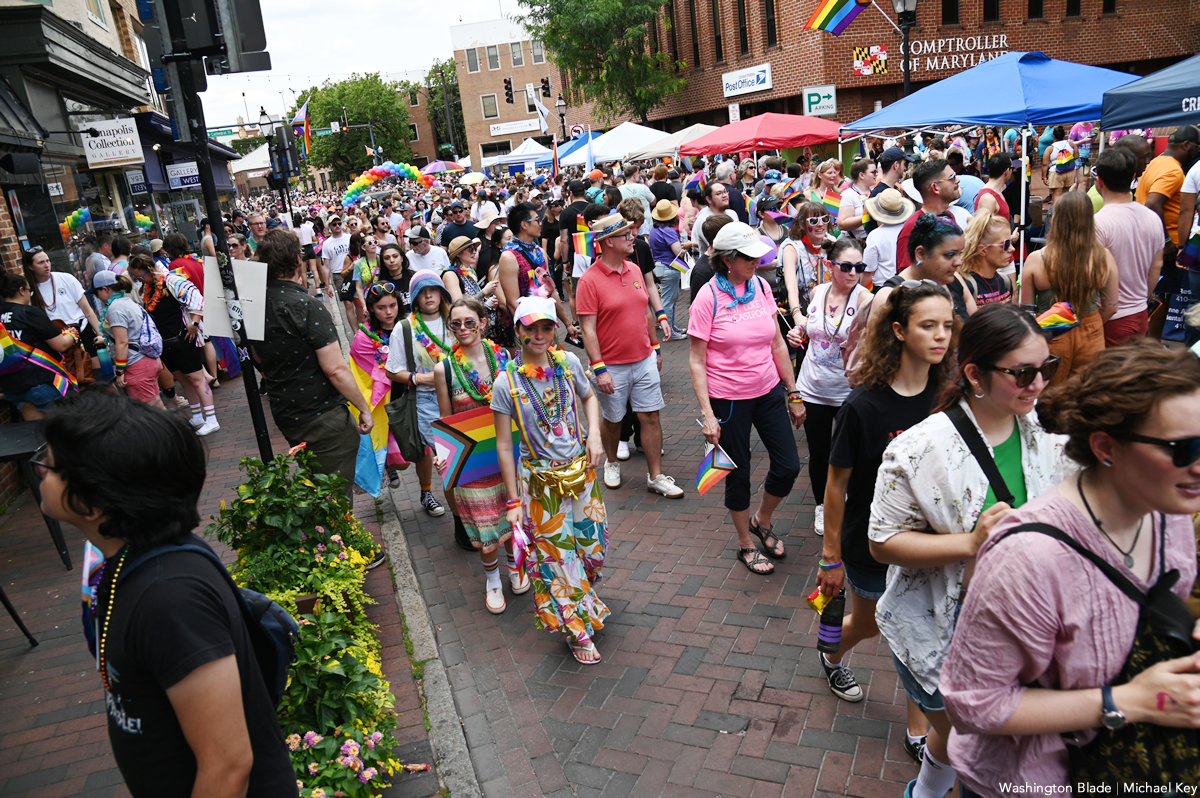
The Sixth Annual Annapolis Pride Parade and Festival will be held on Saturday, Oct. 3 at 11 a.m. on the streets adjacent to St. John’s College.
The theme of this year’s Annapolis Pride Parade and Festival celebration is “United in Pride, Together We Thrive!” Saturday’s parade will begin on St. John’s Street adjacent to St. John’s College, continue along Calvert Street to Northwest Street, to Church Circle, and onto West Street. The parade route then turns onto Amos Garrett Boulevard and eventually ends on Constitution Avenue near Maryland Hall.
Those with disabilities will be able to watch the parade from a special viewing porch at the Graduate Hotel at 126 West St. An Annapolis Pride volunteer will be there and available to assist.
For more details, visit the festival’s website.

Equality Chamber hosts Pride in Business Expo and Profits & Pours

Learn more about Virginia’s queer history

Annapolis Pride arrives this weekend

Calendar: October 2-8

Renee Good’s family files two federal lawsuits

529 openly LGBTQ candidates running in Brazilian election

Meet the LGBTQ candidates running for U.S. House, Senate

Ana Brnabić becomes world’s first openly lesbian head of state

Vote now! Best Of LGBTQ DC readers’ choice awards

Gay Va. couple hopeful voters will enshrine marriage equality in state constitution
-

 Brazil5 days ago
529 openly LGBTQ candidates running in Brazilian election
-
2026 Midterm Elections4 days ago
Meet the LGBTQ candidates running for U.S. House, Senate
-
Serbia4 days ago
Ana Brnabić becomes world’s first openly lesbian head of state
-
Arts & Entertainment4 days ago
Vote now! Best Of LGBTQ DC readers’ choice awards