Local
Library of Congress staffer fired, claims anti-gay bias
Says he was outed on Facebook, ‘stalked’ by superior at D.C. gay bar
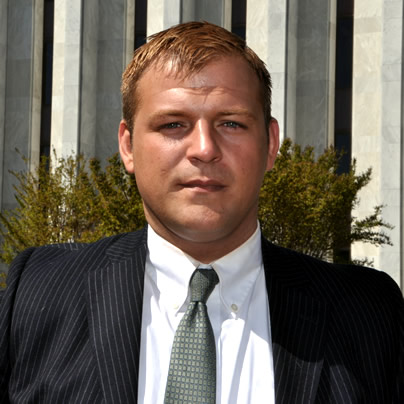
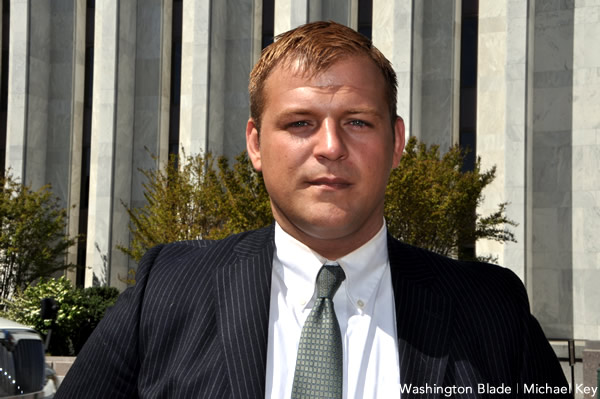
Peter TerVeer, 30, was fired last week from his job at the Library of Congress and claims his former boss cited biblical passages condemning homosexuality.
A gay man has charged in a discrimination complaint that he was fired last week from his job at the Library of Congress after being harassed and humiliated for more than a year by a supervisor who repeatedly cited passages from the Bible condemning homosexuality.
Peter TerVeer, 30, a management analyst at the Library of Congress’s Office of the Inspector General since 2008, says in his complaint that supervisor John R. Mech created a hostile work environment for him to such a degree that he suffered severe stress, forcing him to take disability leave last fall and earlier this year.
“I contend that I have been subjected to a hostile work environment by Mr. Mech since August 2009 on the basis of my sex (male), sexual orientation (homosexual), and religion (non-denominational Christian/Agnostic),” TerVeer states in an affidavit accompanying his complaint.
“I maintain that Mr. Mech has acted to impose his religious beliefs on me,” TerVeer says in the affidavit.
TerVeer’s attorney, Thomas Simeone, said he will likely file a discrimination related lawsuit against the library on TerVeer’s behalf regardless of how the federal Equal Employment Opportunity Commission (EEOC), which is deliberating over the complaint, rules on the matter.
Gayle Osterberg, director of communications for the Library of Congress, said TerVeer’s complaint is considered a personnel matter and the library never comments on personnel-related issues pertaining to an individual employee.
She said that under library rules, neither John Mech, an accountant and lead auditor for the library’s Office of The Inspector General, nor any other library employee familiar with TerVeer’s case would be permitted to comment on the case.
Simeone said a key factor in the case is that library officials promoted TerVeer three times and praised his work and that negative job performance reviews suddenly began after Mech learned TerVeer was gay.
Asked about a policy adopted by the Library of Congress in the 1990s prohibiting employment discrimination based on sexual orientation, Osterberg declined to confirm whether such a policy is still in effect.
“We adhere to Title 7, period,” she said, referring to a provision in existing U.S. civil rights law that bans job discrimination based on race, religion, national origin, sex and other criteria but not on sexual orientation.
An internal “Librarian’s Policy Statement Regarding Non-Discrimination” issued to Library of Congress Employees on May 6, 2010, reiterates the 1990s-era statement pertaining to sexual orientation discrimination.
“Discrimination on the basis of race, color, religion, sex (including sexual harassment), national origin, age, disability, sexual orientation, gender identity, and/or political affiliation will not be tolerated,” the statement says.
Osterberg declined to disclose whether that and previous sexual orientation non-discrimination statements were still in effect.
TerVeer’s complaint, filed with the EEOC, follows a September 2008 federal court decision finding that the Library of Congress violated federal law against sex discrimination by denying a job to a transgender woman.
In that case, the library had determined that the applicant was qualified and hired her shortly before she announced she was transitioning from male to female. When officials learned that David Schroer was transitioning to Diane Schroer they rescinded the job offer and refused to hire Schroer.
A U.S. District Court judge ruled in September 2008 that the library’s refusal to hire Schroer violated a federal law prohibiting sex discrimination, a development hailed by the ACLU as an important breakthrough for transgender rights. The library decided against appealing the case and agreed to an out-of-court settlement with Diane Schroer in which it paid her compensatory damages.
Library of Congress: ‘AWOL’ for 37 days?

Dome of the Library of Congress. (Washington Blade photo by Michael Key)
In a March 29, 2012 letter to TerVeer, Karl W. Schornagel, the library’s Inspector General and head of the division where TerVeer worked, said he approved TerVeer’s firing on grounds that TerVeer had been absent from work without approved leave or “AWOL” since Jan. 4, 2012.
Schornagel states in the letter that under library personnel rules, absence without approved leave is considered a form of misconduct that could lead to disciplinary action, including dismissal.
“I considered that you failed to report for duty as scheduled for over 37 consecutive workdays and failed to properly request approved leave despite being reminded of the proper procedures for requesting approved leave and advised of the consequences of your failure to report for duty as scheduled,” Schornagel said in his letter.
TerVeer told the Blade that library officials approved disability leave he had requested in October 2011 at the urging of his therapist and doctor based on the therapist’s determination that a hostile work environment at the library caused him to suffer severe mental stress.
According to TerVeer, the unpaid disability leave approved by the library expired in January 2012. He said library officials declined his request for a transfer to another office and demanded he return to duty with Mech remaining as his supervisor.
Simeone, TerVeer’s attorney, said library rules may have allowed TerVeer to apply for an extended disability leave. But he said TerVeer by that time had exhausted his financial resources following three months of unpaid leave and couldn’t afford to pay doctors and his therapist for the necessary examination and documentation needed to apply for extended disability leave.
“He was in a bind,” said Simeone. “He loved working there and he wanted to continue. And as you can tell, he needed the money. He tried to get a transfer to a new setting or a new area, but it was just not possible. They wouldn’t do that.”
Simeone said going back to the office where TerVeer knew he would be subjected to the same harassment and stress wasn’t an option he could accept.
Outed by boss’s daughter
TerVeer told the Blade he never intended to come out as gay at work when he first started his job at the library in February 2008. He said he had recently moved to D.C. from rural Western Michigan, which he said was devastated by the economic recession.
With a bachelor’s degree in business management from Hope College in Michigan and his enrollment at the University of Maryland for a degree in accounting and auditing, TerVeer said the start of his employment at the library’s Office of The Inspector General appeared to be a perfect fit for his chosen career path.
“The first year and a half, almost two years I was there I was closeted and essentially I was kind of the golden boy in the office,” he said. “He took me under his wing and we had a cordial discourse,” he said of Mech. “And he appeared to come off initially as really nice.”
TerVeer said the cordial relationship was based, in part, on their shared interest in sports and TerVeer’s role as captain of a school football team in Michigan. At one point Mech invited him to join his wife and son at a University of Maryland football game, TerVeer said.
As TerVeer tells it, his problems started just after that, when Mech invited him to “look up his daughter” in the late summer or early fall of 2009. Within days, said TerVeer, Mech’s daughter Katie contacted him on Facebook and asked to become Facebook friends.
He said he accepted her request after using the appropriate Facebook privacy controls to hide information on his own Facebook page that identified him as gay. But a short time later, Facebook put in place changes in its settings in such a way that TerVeer’s link to a Facebook group in support of gay adoptions became publicly visible, TerVeer said.
“I get home one day and she saw it and commented and she said, ‘You’re not one of those weirdoes are you?’ I said I am actually, in fact, one of those weird ones if you’re referring to the fact that I’m gay.”
TerVeer said Katie Mech initially said she wasn’t troubled by this discovery, saying she had a good friend in San Francisco who’s gay.
However, the following day TerVeer said he discovered that she had both “de-friended” and blocked him from her Facebook page. Within days of that, John Mech began raising his religious beliefs with TerVeer in emails and in face-to-face conversations with him, TerVeer said.
“All of a sudden now, every time I’m going into his office he’s starting off with a religious conversation. Then it comes out where he pointed out he was a believer with a literal translation of the Bible,” said TerVeer. “Then he goes specifically into homosexuality.”
TerVeer said he knew then that Katie Mech informed her father that he is gay.
In his affidavit, TerVeer said things came to a head on June 21, 2010.
“He came into my office on that date and said he wanted to educate me on hell and that it was a sin to be a homosexual,” TerVeer says in the affidavit. “He said he hoped I repented because the Bible was very clear about what God does to homosexuals.”
Among other things, TerVeer says in the affidavit that Mech quoted the Old Testament passage of Leviticus, stating, “If a man lies with a man as one lies with a woman, both of them have done what is detestable. They must be put to death; their blood will be on their heads.”
TerVeer says in the affidavit, “He stated that as a homosexual I could never succeed because it was against God’s law.”
Four days later, on June 25, 2010, Mech spoke with TerVeer about TerVeer’s annual performance review and TerVeer expressed concern that his ratings were lower than he believed they should be, he says in the affidavit.
According to the affidavit, he politely told Mech he was concerned that the lower performance review might be biased because of Mech’s strongly expressed religious beliefs toward homosexuality.
“Mr. Mech became extremely upset and vehemently denied that my homosexuality and his personal views had an impact on his rating of me,” TerVeer says in the affidavit. “He accused me of attempting to injure his career and reputation and to ‘bring down the Library.’”
Gay official ‘stalks’ TerVeer
TerVeer says in his affidavit that beginning in July 2010 through the middle of 2011 Mech appeared to be “piling on” work assignments in an effort to set him up to fail. He said one particular project he was assigned to handle by himself had been previously worked on by six full-time employees and took more than a year to complete, yet he was told to complete it during a shorter period of time.
“I believe that Mr. Mech gave me this assignment to set me up for failure and to give him a better opportunity to identify and manufacture deficiencies in my performance,” TerVeer says in the affidavit. “I believe he decided in advance to give me negative ratings in my next performance review and began to create a record of alleged ‘job deficiencies’ to support this.”
In an effort to appeal what he believed to be an unfairly negative job performance rating calling for denying him a normally routine “step” pay increase, TerVeer said he approached Mech’s supervisor, Nicholas Christopher, the assistant inspector general for audits. “Mr. Christopher declined to change my performance evaluation and denied me a WIGI [Within Grade Increase]” in pay, he says in the affidavit.
When he indicated he was in the process of filing a possible discrimination complaint, TerVeer said that both Mech and Christopher appeared to warn him against doing so, saying he could face consequences such as additional poor performance ratings.
In a staff meeting on June 28, 2011, TerVeer says in the affidavit that Mech demanded that he explain, “what I was doing” concerning his stated intention to appeal the low job performance rating.
“He berated and humiliated me in front of my co-workers,” TerVeer says in the affidavit. “He interrogated me regarding the exact nature of my appeal and who I was filing the action against.”
After beginning his disability leave in the fall of 2011, TerVeer said he was startled when Christopher appeared at the D.C. gay bar Number Nine, where TerVeer had been working as a security staffer, and began to take a video of him with his cell phone.
TerVeer and his lawyer at the time, Brennan McCarthy, said TerVeer’s therapist believed working a job at a gay bar provided a friendly, supportive work environment and was an important part of his recovery from the stress-related ailment that required he take a leave from his job at the library.
In a Feb. 16, 2012 letter to Vicki Magnus, acting deputy director of the library’s Office of Opportunity, Inclusiveness and Compliance, which investigates discrimination complaints, McCarthy expressed concern that Christopher had “commenced a pattern of harassment, including stalking Mr. TerVeer at his second job and videotaping Mr. TerVeer while working.”
McCarthy said Christopher appeared to have begun harassing TerVeer after Christopher learned that TerVeer was considering filing a discrimination complaint.
“Following that revelation, Mr. Christopher took all steps possible not only to keep Mr. TerVeer from filing his complaint with your office, but also stated that poor performance reviews are ‘what happens’ when someone tried to bring down the Library of Congress (i.e., files an EEOC complaint),” McCarthy said in his letter.
Sources familiar with the Library of Congress have told the Blade that it’s widely known at the library that Christopher is gay. Christopher states in the publicly accessible part of his Facebook page that his “relationship status” is “single” and he’s “interested in” men.
He also describes his religious views on his Facebook page as being “vociferously atheist.”
Christopher didn’t respond to a Blade message asking whether he was troubled over TerVeer’s allegation that Mech had been reciting biblical passages to TerVeer at work condemning his homosexuality.





District of Columbia
Center Arts Gallery celebration, auction to take place on Oct. 17
D.C. LGBTQ+ Community Center to mark event’s 10th anniversary

The D.C. LGBTQ+ Community Center is hosting its 10th anniversary celebration of the opening of its Center Arts Gallery on Saturday, Oct. 17, at the Center’s offices at 1827 Wiltberger St., N.W., from 6 – 9 p.m.
“For 10 years, the D.C. LGBTQ+ Community Center’s Arts Gallery has been more than a place where art is displayed,” a statement released by the center says.
“It has been a space where LGBTQ+ artists are seen, celebrated, and connected to community, and where their work has given expression to the stories of joy, resistance, grief, beauty, survival, courage, and imagination,” the statement adds.
It says those attending the event would have an opportunity to bid on donated artwork in an auction and to meet and interact with “the artists whose creativity has helped bring Center Arts Gallery to life, enjoy wonderful food and music, and celebrate a decade of LGBTQ+ artistic expression.”
But the statement posted on the LGBTQ+ Community Center’s website says free general admission tickets may have been sold out, with $75 VIP tickets still available. It says the proceeds from ticket sales will be used to help support the LGBTQ+ Community Center’s operations.
Attendees and others were also invited to an event after party at the LGBTQ bar and cafe Spark Social from 9-11 p.m. at 2009 14th St., N.W.

The Comings & Goings column is about sharing the professional successes of our community. We want to recognize those landing new jobs, new clients for their business, joining boards of organizations and other achievements. Please share your successes with us at [email protected].
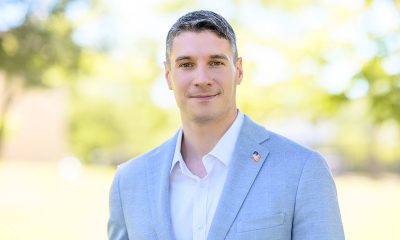
Congratulations to Richard Garrett on being honored by Delaware Gov. Matt Meyer with the Order of the First State. Garrett is executive director of the Children’s Beach House, in Lewes, Del. Upon accepting the honor he said, “I am deeply honored to be recognized by Governor Meyer with the Order of the First State, but I hope this occasion also shines a light on children who are struggling in some of the same ways I struggled as a child and teenager. Perseverance, connection, patience, and the presence of caring adults made all the difference in my life. For 24 years, my greatest privilege has been helping Children’s Beach House create that same sense of belonging and possibility for children and families across Delaware. They are strong, smart, resilient, and resourceful—and they deserve every opportunity to discover just how much they are capable of becoming.”
He told the Blade, “In many ways, my own childhood helps explain why this work has been so deeply personal to me. I grew up in a family that struggled financially, and I had a speech impediment so severe that, as a young child, I often could not be understood without one of my siblings acting as an interpreter. Thankfully, I had strong parents and a mother who was an educator. She spent countless hours helping me practice consonant blends and trying to master the “R” and “S” sounds. Just as importantly, she understood that being around other children my own age would teach me things that no adult could. What made a difference in my life were competent, caring adults who built relationships with me and gave me the sense of safety and belonging I needed. People like Sister Kathleen Swan, OSF; Father Gerald M. Dunne, OSFS, Dr. Susan Cassidy and her husband, John Bronson, to name a few! In many respects, my story mirrors the work we do every day at Children’s Beach House. The children and families we serve are strong, smart, resilient, and resourceful. Sometimes what they need most is for someone to recognize those strengths, stand beside them, and give them the relationships and opportunities they need to flourish.”
Over the years Garrett has grown the Children’s Beach House’s annual budget from approximately $650,000 in 2003 to $4.5 million while strengthening impact, visibility, and organizational infrastructure. He raised $2.5 million in Delaware foundation capital grants, and established a $7 million endowment for the Margaret H. Rollins Center, a $1 million capital endowment, and increased the general operating endowment to $6 million.
In addition to all that Garrett is the founder and owner of Midway Motion and Fitness. He is also looking forward to the groundbreaking of Midway Pickleball in 2027. He is treasurer of the Community Foundation Board of Kiwanis Club of Coastal Delaware. He began his career as executive director of the Delaware County Children’s CAMP, Media, Pa.; and was director of Student Affairs for the Williamson Free School of Mechanical Trades, Media, Pa.
Garrett earned his bachelor’s degree in psychology from Neumann University, Aston, Pa.; and did his graduate studies in vocational education, Temple University.
District of Columbia
Physician: addiction doesn’t always look the way you think it does
Yngvild Olsen headed HHS’s Center for Substance Abuse Treatment during Biden-Harris administration
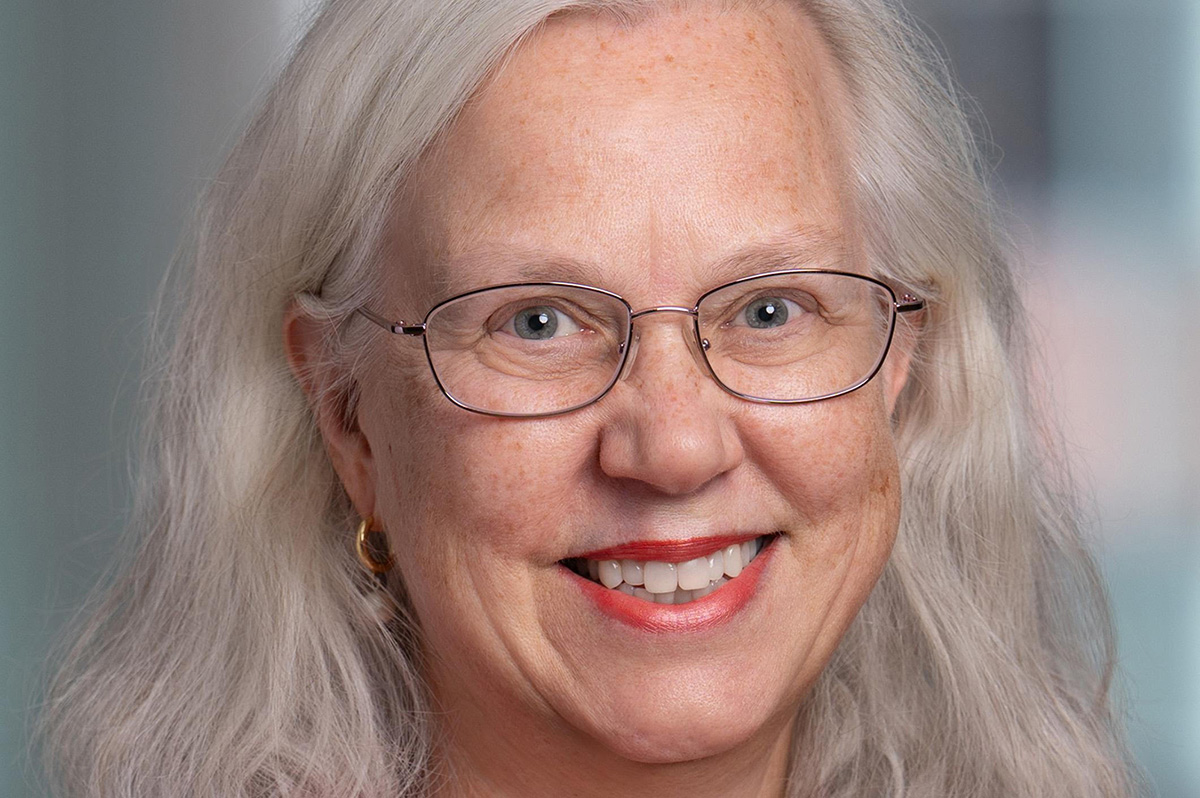
Many people think the telltale signs of drug addiction include sweating and vomiting. But a prominent addiction medicine physician says the best signals aren’t always so visible.
Dr. Yngvild Olsen says more accurate signs come from the brain, specifically the compulsion to keep using drugs, including opioids, despite damage to education, career and relationships.
While it may be harder to understand the true nature of drug addiction, it’s never been more important because of the increased fatality risk of even microscopic amounts of fentanyl, which can be found in many illegal drugs.
Olsen, who headed the Center for Substance Abuse Treatment at the Department of Health and Human Services in the Biden-Harris administration, has worked in addiction treatment for more than two decades. She is now a healthcare advisor with the law and professional consulting firm Manatt, Phelps & Phillips and a physician at the Institute for Behavior Resources/Reach Health Services in Baltimore.
Olsen met with Youthcast Media Group to discuss her career, the opioid epidemic and what to know about fentanyl. The physician, a graduate of Harvard Medical School and the John Hopkins Bloomberg School of Public Health, cited her field experiences as key in shaping her perspective on addiction treatment and recovery. This interview is edited for clarity and length.
What made you believe this work in addiction treatment is important?
I had a couple of experiences really early on in my career that very significantly shaped my interest in addiction and addiction medicine, and my belief that I had a role, and that I could really help people get better from that disease. So the first was during the summer between my first and second year in medical school. I spent the summer on the Eagle Butte and Pine Ridge reservations in South Dakota and really saw firsthand just the devastating impact that substance use — in that case, alcohol — had on not only individuals, but their families and whole communities, and just how profound that impact had been for people who had lost their lives, who had lost family members, who had physically, emotionally and spiritually negative impacts of just feeling very hopeless and and trying to find solace in their substance use, particularly their alcohol use, and doing that without really finding it. I think that was really the lesson that experience taught me.
What did you learn about treatment practices during your medical education? How was that helpful to your career?
When I was a resident in general primary care at Boston Medical Center, I was really fortunate to have a group of mentors who also were general internists, like I was training to be, who were very interested and focused on medical education and research in substance use. And so they modeled for me many of the interactions that we had with patients. I got to do a research study with one of them looking at smoking cessation among people with opiate use disorder, taking methadone. And really importantly, I got to spend a month with one of them at the Boston City Public Health Department’s Opioid Treatment Program, or what some people call a methadone clinic, because he was their medical director. I got to see people recover, and who had recovered, who had gotten their lives back together, gotten their families back together, had new families (or) businesses. It was unbelievably helpful to see that people could recover, that they did recover, and that I, as a physician, could be part of their treatment. I saw people get better, and recover, with medications like methadone and buprenorphine, and other services designed individually for them. That was really helpful and kind of a big eye-opening moment for me.
What factors contribute to addiction and why is it considered a complex disease?
People come into treatment for their addiction — or when they’re not in treatment, but are in an emergency department or on the street — with a lot of shame. They have a lot of shame about this disease that they have, that for so long, they were told, ‘Well, you know, you should just stop. Why can’t you just stop?’ Well, we know that addiction is a disease. It’s a complex disease that has lots of different factors related to it. So there’s a big genetic component that combines with environmental factors and other risk factors. For example, people have what’s called adverse childhood experiences. Some of these are if they grow up with lots of physical or sexual abuse or emotional abuse or have parents who are in jail. That’s really traumatic and so all those childhood experiences that increase stress are a big risk factor.
What is the easiest opioid to get addicted to?
It used to be heroin. That was a big problem, particularly in the Northeast and other parts of the country. That shifted to prescription opioids, beginning around the year 2000. So for about 10 years, it was really prescription opioids that were a big problem — people misusing them. And then it switched back to heroin. And then in about 2015, fentanyl came on the scene, and that really changed the game, given just how unbelievably potent fentanyl is, so it doesn’t take a lot to cause an overdose. Now there are all those other synthetic opioids, like the orphines and nitazenes and all those combinations of other substances, but fentanyl is really what’s still kind of driving a really big part of the overdose crisis.
Do LGBTQ individuals face heightened challenges when battling addictions? How do addiction specialists like you account for those challenges?
We certainly know that the prevalence of overdose and the challenges of substances is higher in the LGBTQ+ community. Where I see patients, we did a big LGBTQ+ training and had a grant to specifically provide services to that population. Where we were located, in Baltimore City, there is a big transgender community not that far from us. Particularly in the LGBTQ+ population, they have multiple stigmas. So it just compounds multiple stressors. And stress is a risk factor for substance use, and particularly a risk factor for recurrence of a substance use disorder. And so when you have all these negative factors building up in people, that can make it that much more challenging for people to find the services that they find meaningful and that are welcoming and supportive of them. So we tried very hard — and we still do — to make sure that we are a welcoming and safe space, because I think it is that safety that is really paramount.
What advice would you give someone worried about a friend or family member’s substance use?
There are two things. One is: I would talk to that person about your concerns and how that person’s personality changes or their behavior changes when they’re using or in withdrawal, and how that might be impacting their health and how they’re feeling. And then second: you can let them know that there are actual treatments that are really helpful, that can make them feel better and that can help them get back to who they were before they started using. It’s important not to be accusatory because … [people] have a lot of shame already, and so when somebody starts accusing them, that shame just gets worse. And a lot of times, people who have a substance use disorder or are using opioids won’t necessarily agree that they have a problem when you first start to talk to them. But talk to them again every time something happens and say, ‘I’m really worried about you because this now has happened and I see it as being tied to your substance use.’ And let them know that there are people who can help and that they could actually feel a lot better.
This work is part of a partnership between the Washington Blade Foundation and Youthcast Media Group, funded in part through a FY26 Community Development Grant from the Office of D.C. Mayor Muriel Bowser. Adrian Malone is a senior at Bard High School Early College DC, one of Youthcast Media Group’s journalism class partners. Shreya Jyotishi, YMG assistant manager of content and programming, is a former Washington Blade intern and 2026 graduate of American University.

Center Arts Gallery celebration, auction to take place on Oct. 17

Comings & Goings

‘Hidden in Plain Sight:’ The story of Odessa Madre

‘Governments that attack LGBTQ+ rights learn from each other’

Horror genre has evolved into space to explore queer identity

ICC unseals arrest warrants for Taliban officials accused of persecuting LGBTQ people, women

Physician: addiction doesn’t always look the way you think it does

Calendar: October 9-15

Solidarity beyond the parade: the actual cost of Pride

Essential queer horror classics for Halloween
-

 Afghanistan4 days ago
ICC unseals arrest warrants for Taliban officials accused of persecuting LGBTQ people, women
-
District of Columbia4 days ago
Physician: addiction doesn’t always look the way you think it does
-
Calendar4 days ago
Calendar: October 9-15
-
Opinions3 days ago
Solidarity beyond the parade: the actual cost of Pride