Living
Best of Gay D.C. 2012: Community
Readers pick the winners in 11th annual poll
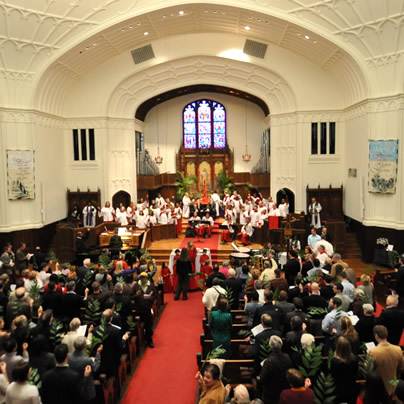

Best Place of Worship: Foundry United Methodist Church (Washington Blade photo by Michael Key)
Best House of Worship: Foundry United Methodist Church
1500 16th Street, NW

Best Spa/Salon: Aura Spa/Bang Salon (Washington Blade photo by Michael Key)
Best Spa/Salon: Bang Salon/Aura Spa
1519 15th Street, NW
Aura Spa/Bang Salon Metropole
1517 15th Street, NW
auraspa.net

Best Men’s Clothing Store: Universal Gear (Washington Blade photo by Michael Key)
Best Men’s Clothing Store: Universal Gear
1529 14th Street, NW
202-319-0136

Best Gym: VIDA (Washington Blade photo by Michael Key)
Best Gym: Vida Fitness
Various locations
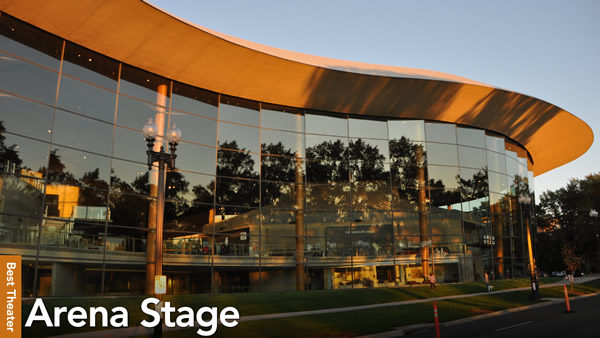
Best Theater: Arena Stage (Washington Blade photo by Michael Key)
Best Theater: Arena Stage
1101 6th Street, SW
202-488-3300
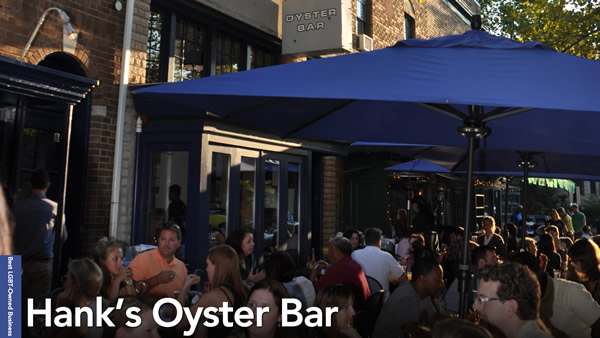
Best LGBT-Owned Business: Hank’s Oyster Bar (Washington Blade photo by Michael Key)
Best LGBT-owned Business: Hank’s Oyster Bar
Various locations

Best LGBT Social Group: Burgundy Crescent (Washington Blade photo by Michael Key)
Best LGBT Social Group: Burgundy Crescent Volunteers

Best Sports Team: Just the Tip of Stonewall Kickball. (Washington Blade photo by Michael Key)
Best Sports Team: Just the Tip Stonewall Kickball
Just the Tip is one of many hilariously named teams in the Stonewall Kickball league.
Stonewall Kickball, led by Martin Espinoza and Mark Gustafson, gives about 470 participants a chance to play and raise money for the D.C. Center for the LGBT Community. The league was started after Espinoza and Gustafson were turned off by other leagues because of their competitiveness and homophobia.
Games are played on Sunday afternoons in Stead Park with drinks before at JR.’s (1519 17th St., N.W.), and afterward at Cobalt (1639 R St., N.W.). Wednesday nights are devoted to Open Bar and Penny Wars, a fund-raising competition between teams.
Stonewall Kickball is holding an All-Starts Game on Saturday at 2:30 p.m. between JR.’s Bar and Cobalt. The teams’ rosters are posted on the Facebook event page. One of the refs will be from Just the Tip and JR.’s will feature two Just the Tip players.
For more information on Stonewall Kickball, visit the league’s page, stonewallsports.com/kickball or their Facebook group. (JE)
Best Art Gallery: Phillips Collection
Originally called the Phillips Memorial Art Gallery, The Phillips Collection was opened to the public in 1921 by Duncan Phillips and his mother Eliza, in memory of his father and brother.
Phillips served as the museum’s director until he died in 1966. His wife, Marjorie, an artist herself, took over as director after his death and their son, Laughlin, succeeded her.
The museum’s permanent collection features more than 3,000 works ranging from masterpieces of French impressionism and American modernism to contemporary art from artists such as Edgar Degas, Henri Matisse and Georgia O’Keeffe. The Phillips has the world’s largest, most significant collection of works by Arthur Dove and the largest American collection of works by Pierre Bonnard. (JE)
Phillips Collection
1600 21st Street, N.W.
Best Comedy Club: D.C. Improv
D.C. Improv hasn’t changed a lot since it opened its doors 20 years ago. And that’s not necessarily a bad thing. It’s the place you go if you’re looking for the old school comedy club experience. The venue is tight, the bar food is unremarkable and the drinks are fine. Luckily the talent can be amazing. Of course, there’s always the chance that a comic will bomb. But that’s part of the fun, right?
Located on Connecticut Avenue below Dupont Circle, D.C. Improv has drawn big names over the years (Ellen DeGeneres, Dave Chappelle), and continues to book established and emerging comics. Upcoming acts include Chris Coccia and Ari Shaffir. It also consistently promotes gay acts and gay-themed shows.
Note to the bashful: The place is small, so sit as far from the stage as possible. These comics will make you part of their act (reporter speaks from experience). (PF)
D.C. Improv
1140 Connecticut Ave. NW

Best Home Furnishings: Miss Pixie’s (Washington Blade photo by Michael Key)
Best Home Furnishings: Miss Pixie’s
Pixie Windsor opened Miss Pixie’s in Adams Morgan in 1997; in 2005 she settled into the current location and just finished a renovation after signing a new five-year lease.
The renovation, among other things, opened up the sightlines in the store allowing customers to more easily see and shop the treasures she brings into the store.
“The back room no longer looks like a place to put the tables, instead it is welcoming and encourages the customer to continue shopping,” she says.
The one thing that hasn’t changed is the bright pink storefront. And while the contents of the store always change, it will always be filled with off-the-beaten-path items that appeal to 20-40 something Washingtonians who don’t necessarily want the same old same old in every room of the house.
Windsor recommends keeping an eye on the Miss Pixie’s website (misspixies.com) for fun and exciting things, like design seminars, a chance to decorate the store bathroom and she may have let it slip that HGTV may have emailed recently. (JH)
Miss Pixie’s
1626 14th Street NW
202-232- 8171
Best Second-Hand Shop: Buffalo Exchange
Buffalo Exchange offers a distinctly New Age slant to the traditional used clothing store.
Buyers and sellers get a fair price for a wide variety of vintage and contemporary fashions. But founders Kerstin and Rebecca Block also emphasize the environmental advantages of the resale fashion industry. Buffalo Exchange promotes itself as a sustainable business that protects the environment by reusing and recycling clothing.
LGBT customers also value Buffalo Exchange for its sense of fun and are staggering to the store to be part of the Celebrity Zombie Invasion now underway at the store. (BTC)
Buffalo Exchange
1318 14th Street Northwest
202-299-9148
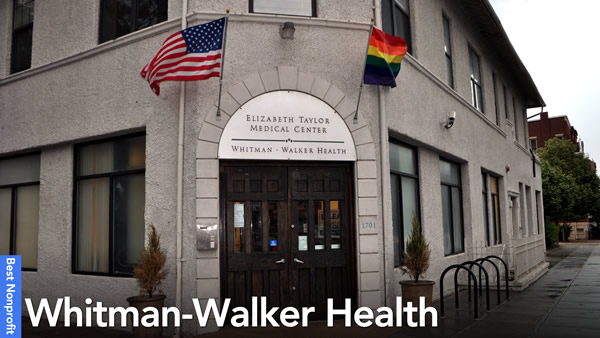
Best Nonprofit: Whitman-Walker Health (Washington Blade photo by Michael Key)
Best Nonprofit: Whitman-Walker Health
Since 1973, Whitman-Walker Health has been providing high-quality and culturally sensitive care to Washington’s LGBT and HIV/AIDS community. It began operations as an offshoot of the Washington Free Clinic and offered services in the basement of the Georgetown Lutheran Church. Today, it offers medical and legal services to thousands of clients from state-of-the-art medical facilities in the District.
The clinic gets its name from two queer Civil War-era health activists — celebrated gay 19th century poet Walt Whitman who came to Washington in December 1862 to care for his wounded brother George and remained for several years to tend to injured soldiers and veterans and Dr. Mary Edwards Walker who graduated from Syracuse Medical College in 1855, the only woman in her class. Denied an officer’s commission because of her gender, Walker volunteered her services as a surgeon and worked in a variety of Army hospitals. She wore a modified military uniform that included trousers, a man’s coat and two pistols. (BTC)
Whitman-Walker Health
1701 14th St., NW
202-745-7000
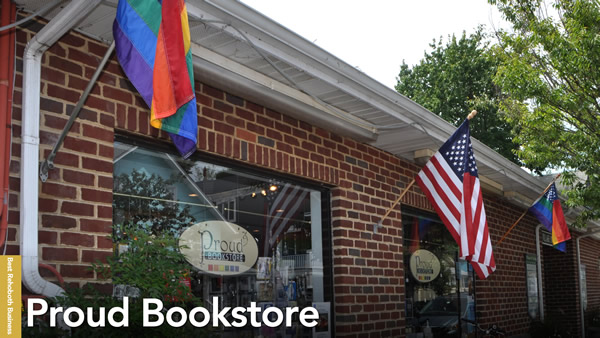
Best Rehoboth Business: Proud Bookstore (Washington Blade photo by Michael Key)
Best Rehoboth Business: Proud Bookstore
Opening and operating a small business is never easy — especially in recent years with the economic downturn — so congratulations to all of this year’s nominees in this category: Annie’s Bananies, Frogg Pond, Royal Treat and Stingray Sushi.
And hats off to winner Jacques LeClair, owner of Rehoboth’s Proud Bookstore, for opening a gay bookstore and not only surviving the recession, but thriving. Not long after opening, the store moved into a larger space and is filled with LGBT-themed books, gifts, cards, T-shirts and more. Jacques himself is usually behind the counter ready with a friendly welcome for visitors and locals alike. The store has quickly become a gathering place for locals to grab a newspaper and catch up on the latest happenings. (KN)
Proud Bookstore
149 Rehoboth Ave.
Rehoboth Beach, DE 19971
Best Local Blog: DCist
Everybody loves DCist.com. Or so it seems. The local blog has won readers’ favorite from Washington City Paper, the Washingtonian and now the Blade.
“Generally speaking, I’m incredibly flattered,” says DCist editor-in-chief Martin Austermuhle. “As simple as it sounds, I like it when people read what we do and enjoy it. It’s very nice coming from the Blade too — it’s a paper I’ve always liked a lot.”
Around since 2005, DCist gets about 50,000 unique hits a day. With two full-time employees and about 30 contributors, the blog covers everything from news to food to the arts. Its staff supported same-sex marriage in D.C.
“As much as D.C. is seen as a center of influence, at heart it’s a small town,” says Austermuele. “That said, there’s never a day that we’re not learning something about a city that we’re convinced we’ve already figured out. (PF)

Best Hotel: Donovan House (Washington Blade photo by Michael Key)
Best Hotel: Donovan House
Located on Thomas Circle, Donovan House projects sophistication and urban panache in a sea of more style-challenged accommodations.
But Donovan House is more than a pretty face. As a Kimpton Hotel, the gay-friendly Donovan House enjoys a longstanding relationship with the LGBT community, and can boast a 100 percent score on the Human Rights Campaign Equality Index for the last 10 years.
Founded in San Francisco in 1981 at the height of the gay Mecca’s AIDS crisis, Kimpton Hotels lost a lot of employees to the disease, prompting the company to support LGBT organizations prior to other corporations, says Donovan House General Manager Mark Jennings. Kimpton Hotels regularly partners with the Red Ribbon Campaign in raising money to help nonprofit groups nationwide promote HIV awareness and prevention. (PF)
Donovan House
1155 14th Street, NW
202-737-1200

Best Theater Production: The Normal Heart (Photo courtesy of Arena Stage)
Best Theater Production: ‘The Normal Heart’
“The Normal Heart” by playwright-cum-activist Larry Kramer came to Arena Stage this summer. To see a faultless production of Kramer’s very political account of the harrowing early days of the AIDS crisis performed so close to the Capital building was thrilling.
Staged by New York director George C. Wolfe, it featured inspired performances by Patrick Breen as Ned Weeks (a slightly less angry onstage version of Kramer) and handsome Luke Macfarlane as Felix, Ned’s beatific dying lover. TV’s Patricia Wettig was frustration incarnate as the dying men’s doctor, furious with the establishment’s refusal to fund those on the front line. Chris Dinolfo, a local actor who is gay, made an impact as young David, the first character in the play to die from AIDS.
Almost three decades after its premiere, Kramer’s beautiful protest/memorial conjures up the terror and devastation surrounding the onset of what was then informally called the gay plague. Today Kramer’s play feels less angry. Mostly it’s heartbreakingly sad. (PF)
Best Yoga Studio: Yoga District
Whether you’re looking to do the downward dog for the first time or hone already considerable yogi skills, there’s something for you at Yoga District. With numerous classes focusing on everything from toning to alignment to flexibility, Yoga District promises practices that are relevant to your needs whatever your experience level.
Founded by Jasmine Chehrazi, Yoga District is a local cooperative of yoga studios located in Dupont Circle; H Street, NE; Bloomingdale; 14th Street Corridor and downtown. The studios are famously no frills and their classes respect both the needs of the individuals as well as the group.
Popular with vast swathes of yoga loving locals, Yoga District offers affordable and by-donation classes in community-run yoga centers committed to eco-friendly practices led by knowledgeable instructors. Since its inception, Yoga District’s mission has been that every being deserves the holistic benefits of yoga as a practical tool of empowerment, health and physical fitness. (PF)
Yoga District
1635 Connecticut Ave., NW
(and other locations)
202-265-9642

Best Women’s Clothing Store: Proud Threads (Photo courtesy of Proud Threads)
Best Women’s Clothing Store: Proud Threads
Misty Branch says she and her girlfriend, Sarah Moecker, saw a need for high-quality, non-rainbow-themed LGBT clothing.
“So we decided to do something about it,” the owner of online women’s clothing store Proud Threads says.
For now, Proud Threads primarily sells T-shirts mostly for gay women online and at Pride festivals. Their website (proudthreads.com) shows a selection of cute T-shirts and baseball shirts featuring clever slogans and graphics, playfully celebrating LGBT pride in a hip, quirky way.
Up and running since May, Proud Threads is still in its early days. Branch says getting started has had its bumps. “We began with a lot of designs that we’ll never, never show anyone. Sarah is the designer and I’m her ruthless critic. At first she didn’t like it but later she stopped taking it personally and the product has improved.” (PF)






Real Estate
Surviving spring cleaning
Create a space that feels comfortable, welcoming, and easy to maintain

Whether or not you are getting ready to sell your home, spring is finally upon us — you know, the time of year when you can open the windows to a warm breeze and commit to decluttering and thoroughly cleaning your home.
While decluttering, you will be faced with the challenge of what to keep and what to discard. Mysterious items may appear: the missing charger, the set of keys that open nothing, or, with any luck, that one important document you know you put “in a safe place.” The journey often turns into an archaeological dig through the layers of your daily life. Along the way, you will likely encounter objects that have been misplaced or are no longer needed, and you’ll wonder why you kept them in the first place.
The kitchen junk drawer, for example, is a universal catch-all that defies categorization. You might open it looking for a rubber band and instead discover a lone screw of unknown origin, a tube of hardened Super Glue, and at least four pens that no longer work.
Closets offer another layer of surprises, where you can find things that don’t seem to belong at all: cash in a coat pocket, a single glove, a book you meant to read, or a box filled with cables for devices you no longer own.
It’s guaranteed that if you only have one of a pair of something, its mate will appear shortly after you have thrown away the one you had. And, if you were intentionally searching for an item, it will turn up in the last place you look, simply because once you found it, you stopped looking.
Linen closets and bathroom cabinets can also harbor oddities. Now is the time to discard half-used or duplicate products you don’t remember buying, travel-sized toiletries from trips long past, or expired medications.
Under furniture is where things get truly mysterious. Reaching beneath a couch or bed in search of a dropped item often yields a collection of the unexpected: assorted coins, dust-covered pet toys, a missing sock, and perhaps something that makes you pause, like a long-lost piece of jewelry or an object you were convinced had disappeared forever.
Organizing garages and basements takes the experience to another level, where consolidating tools or seasonal decorations stored there can quickly turn into an encounter with objects that defy explanation. Why is there a box of tiles from a renovation that happened a decade ago? Do you really need the instruction manuals for appliances you no longer own? What could possibly be in the box that hasn’t been opened since you moved in?
Even searches within a home office – looking through files, drawers of old electronics, or stacks of paperwork—can yield similarly strange results. I recently found several flash drives with client files from 2014, a cache of notebooks containing names and phone numbers of prospects who left the area 15 years ago, and Turbo Tax installation CDs from as far back as 1997.
If decluttering hasn’t defeated you, then thoroughly cleaning your house may not be as overwhelming as you might think. Breaking it into manageable steps makes the process far simpler and even satisfying. A consistent method is the key to success.
Before you reach for cleaning supplies, take one last walk through each room and gather items that belong elsewhere for return to their proper place. Put away clothing and take out trash. This step instantly makes your home look better and clears the way for more effective cleaning. Working from top to bottom, dust ceiling fans, light fixtures, shelves, and blinds first so that any debris falls to the floor for addressing later. Use a microfiber cloth or handheld Swiffer to trap dust rather than spreading it around. Don’t forget overlooked areas like the tops of door frames, windowsills, and baseboards.
Move on to surfaces. Wipe down countertops and furniture with appropriate cleaners. Squeegee windows to let the sun shine in. Pay special attention to kitchen appliances. Stovetops, microwaves, and refrigerator handles tend to collect grime quickly, as do the tops of upper cabinets. In bathrooms, disinfect sinks, toilets, tubs, and showers.
Lastly, vacuum carpets, rugs, draperies, and upholstered surfaces thoroughly, including along edges and under furniture where dust accumulates. For hard floors, sweep first, then mop using a cleaner suitable for the surface type. This final step pulls the whole cleaning effort together and leaves your home feeling and smelling fresh.
Ultimately, cleaning your house doesn’t have to be a daunting chore. With a clear plan and a little consistency, you can create a space that feels comfortable, welcoming, and easy to maintain – at least until this time next year.
Valerie M. Blake is a licensed Associate Broker in D.C., Maryland, and Virginia with RLAH @properties. Call or text her at 202-246-8602, email her at [email protected] or follow her on Facebook at TheRealst8ofAffairs.

Large SUVs are fine for long-distance travel. But in the city? Not so much.
That’s where subcompacts come in. They fit anywhere. Yet they often remind me of sensible shoes: practical, dependable and kinda dull.
Now, though, more and more small crossovers are starting to channel their inner Christian Louboutin. Stylish. Sassy. And with some swagger to make things interesting.
CHEVROLET TRAX
$22,000
MPG: 28 city/32 highway
0 to 60 mph: 9.1 seconds
Cargo space: 54.1 cu. ft.
PROS: Affordable. Updated. Roomier than expected.
CONS: So-so acceleration. No all-wheel drive. Some road noise.
The Chevrolet Trax has undergone a stunning redo. Longer. Lower. Sharper. And more muscular — especially in sporty trims like the RS, which adds darker accents and a bit of attitude.
It’s like watching an understudy get a breakout moment.
Under the hood sits a three-cylinder turbo. No, that’s not NASCAR material, but it’s perfectly adequate for daily life. Around town, the Trax felt light, easy to maneuver and surprisingly smooth. While I wasn’t going to be chasing lap times like Brad Pitt in “F1,” this pint-sized SUV kept up with traffic comfortably.
Another plus: Chevy re-tuned the suspension. Rough pavement softens. Long drives are relaxed.
Inside, the dashboard is more upscale than the price tag suggests. A large infotainment display dominates the center stack, and wireless smartphone connectivity is standard. Rear passenger room is generous thanks to the longer wheelbase, and cargo space is decent.
Inexpensive, yes. And now stylish enough to earn an ovation.
MAZDA CX-30

$26,000
MPG: 24 city/31 highway
0 to 60 mph: 8.0 seconds
Cargo space: 45.2 cu. ft.
PROS: Sexy exterior. Chic cabin. Sporty handling.
CONS: Limited rear visibility. Smallish cargo area.
Mazda has mastered the art of making affordable cars feel expensive, and the CX-30 might be its best performance yet. Sculpted curves. Dramatic fenders. Rich paint colors that shimmer under sunlight. Park this crossover next to competitors and it looks like it wandered in from a more upscale showroom.
The base four-cylinder engine is lively enough. But the real fun starts with the optional turbo. Press the throttle and the CX-30 surges forward with gusto, whipping you from 0 to 60 mph in as little as 5.9 seconds. Suddenly, merging onto the highway feels less like commuting and more like making an entrance worthy of Lady Gaga.
Handling also shines, with sharp steering, minimal body roll and controlled cornering. To me, the CX-30 is one of the few small rides that genuinely rewards enthusiastic driving.
Inside, the cabin feels premium. Soft-touch materials, elegant stitching and a minimalist dashboard create a refined atmosphere.
There are tradeoffs. Backseat legroom is tighter than some rivals, and outward visibility can feel limited due to the thick roof pillars.
But if you enjoy driving — really enjoy it — the CX-30 stands apart.
VOLVO XC40

$40,000
MPG: 23 city/30 highway
0 to 60 mph: 8.1 seconds
Cargo space: 57.5 cu. ft.
PROS: Euro styling. High-quality materials. Top safety gear.
CONS: Bit jarring over potholes. Average fuel economy.
For a more sophisticated look, there’s the Volvo XC40. Crisp lines. Upright stance. Signature “Thor’s hammer” LED headlights that give the front-end an unmistakable presence.
Under the hood, the XC40 pairs a four-cylinder turbo with standard all-wheel drive. While the XC 40 won’t outrun a true sports car, it moves with purpose. Think quiet confidence — like Jodie Foster in practically all her movies.
The ride balances comfort and composure nicely. Firm enough for zigzagging through congested traffic, but smooth enough to endure long highway drives.
Inside, the cabin is modern, airy and beautifully assembled. Volvo uses soft textiles, brushed metal and minimalist trim pieces to create an upscale aura. The vertically oriented touchscreen integrates Google apps, like Maps and Assistant. Once you get used to it, the system feels intuitive and tech-forward.
Volvo also excels at clever practicality. Door pockets are enormous. There’s even a removable trash bin in the center console.
While the XC40 may cost more than its mainstream rivals, it offers something they can’t quite replicate. Effortless cool.

In September 2024, I wrote about the District’s Lead-Free D.C. initiative, an ambitious effort to remove lead pipes and make drinking water safer for every resident in our city. Since that original article, a number of important developments have taken shape that affect everyone living in the District. Key drivers in the legal landscape surrounding this issue such as disclosure, testing, and infrastructure planning have been sharpened. The city’s sweeping pipe replacement efforts are continuing to evolve against the backdrop of broader federal drinking-water rules and funding changes.
What was once largely public health conversation for the future is now a practical reality for many property owners and renters. The water service line replacement project has moved from planning and is presently underway throughout the city.
Elevated levels of lead in drinking water is a perplexing challenge in many U.S cities. Researchers documented elevated lead levels in D.C.’s water system more than two decades ago, spotlighting how old infrastructure can pose a hidden health risk even in one of America’s wealthiest cities. Local leaders responded with pipe replacement plans that have continued in the years since.
The Lead-Free D.C. initiative remains the central effort to reduce that risk by replacing water supply lines. These are the pipes that carry water to your home or rental property from the street. D.C. Water estimates that tens of thousands of lead or galvanized service lines still exist in the city and must be systematically replaced to eliminate this exposure.
What Has Changed Since September 2024
Over the past 18 months, several shifts have rippled through policy, practice, and the daily experience of both landlords and tenants:
- Local Disclosure and Tenant Rights: The city has strengthened disclosure requirements. Today, property owners are expected to provide clear written disclosures about known lead service lines, any testing that has been done, and records of past replacements. Tenants also have the right to request lead testing of their tap water, and landlords are responsible for ordering and passing along the test kit, and are required by law to share results with tenants when requested.This reflects an ongoing push toward transparency and an informed occupancy.
- Pipeline Replacement Planning: D.C. Water and the District Government are continuing to roll out their block-by-block lead service line replacement work, with construction schedules publicly available through a Lead-Free D.C. construction dashboard. The goal is to remove by 2030 all lead service lines on both the public and private side, though timelines and funding mechanisms are still being refined as the work continues. D.C.’s Lead-Free DC initiative stipulates that DC Water is responsible to replace the public portion of a lead service line at no cost to the property owners. This is the section running from the water main under the street to the property owner’s lot line. When DC Water is already replacing the public side as part of a scheduled infrastructure project, it will also offer to replace the private-side service line (into the building) at no cost to the owner, as long as the owner grants access and signs a right-of-entry agreement. In these cases, DC Water pays the contractor directly, and the entire lead service line is removed in one coordinated effort.
When no public-side project is scheduled, owners may still qualify for full private-side replacement coverage through the District’s Lead Pipe Replacement Assistance Program (LPRAP). If approved, the program covers the cost of replacing the private-side lead pipe, with funds paid directly to the contractor. Property owners are typically responsible for selecting the contractor, coordinating the work, and covering any costs outside the approved scope of work. Funding is subject to availability, and eligible applicants may be placed on a waiting list depending on annual program budgets.
- Implementation Best Practices: To avoid challenges and misunderstandings regarding the responsibilities during such a significant undertaking, fully investigating the program and how it works is a good first start as is regular and clear communications.
It’s helpful for both property owners and residents to have a clear understanding of what D.C. Water and construction crews will be doing during a lead service line replacement and what follow-up work may remain once the project is complete. Like any major infrastructure upgrade, the process can involve temporary water shutoffs, excavation around the building, and some restoration afterward, such as repairing landscaping or sections of sidewalk. While these short-term disruptions can be inconvenient, they’re a normal and necessary part of modernizing the city’s water system and ensuring safer drinking water for the long term.
- Federal Drinking Water Rules: On the national stage, the U.S. Environmental Protection Agency (EPA) finalized in October 2024 the Lead and Copper Rule Improvements (LCRI). The LCRI requires public water systems across the country to inventory and plan to replace lead service lines, and to remove all lead pipes within about a decade. It also strengthens testing, monitoring, and public notification requirements and lowers the action level for lead exposure, building on earlier revisions to the Lead and Copper Rule.
While these federal changes do not rewrite Washington, D.C.’s specific legal requirements for landlords and tenants, they do help shape funding opportunities, compliance expectations, and the broader national push to eliminate lead plumbing, which can affect utilities, state programs, and local infrastructure planning.
Federal drinking water regulations are subject to administrative review, litigation, and potential revisions as presidential administrations change. While the EPA’s 2024 Lead and Copper Rule Improvements remain in effect as of this writing, aspects of implementation, enforcement timelines, or funding mechanisms may evolve through future rulemaking, court decisions, or congressional action. These federal rules do not override Washington, D.C.’s independent authority to adopt and enforce its own public health, housing, and water safety requirements, which continue to govern landlord and tenant obligations within the District regardless of federal regulatory shifts.
What Landlords Should Know
For landlords in D.C., these evolving expectations matter in 3 key ways:
- Disclosure Is Now a Must: You are expected to provide prospective tenants with upfront information about lead service lines, known test results, and replacement history before lease signing. Existing tenants must also be informed if you learn anything new about the plumbing system.
- Testing Should Be Welcomed, Not Avoided: When tenants request a lead water test, you’re now required to provide D.C. Water’s approved kit and cooperate with the process. The test results give both sides clear information about water quality and whether additional remediation is advisable.
- Capital Investment May Be Unavoidable: Even if much of the public-side work is funded by D.C. Water, private-side service line replacement costs and restoration work may still fall to the property owner if the home still has lead service lines. Planning for both the expense and the logistics is key to be able to take advantage of this program being offered to D.C. homeowners.
What This Means for Tenants
For renters, the changes bring clearer rights and fewer unknowns. Tenants no longer have to guess whether lead pipes serve their home; they can request testing, receive timely results, and rely on official disclosures when deciding where to live and how to protect their health.
Transparent communication with the landlord, responsiveness to testing requests, and participation in replacement programs turn regulatory requirements into real-world safeguards. In that way, landlord action directly shapes tenant trust, housing stability, and long-term public health outcomes.
At a moment when the District is investing heavily in its infrastructure, landlords who plan ahead and participate help to ensure that these public resources translate into safer housing, stronger neighborhoods, and a city better equipped for the future.
Why This Still Matters
Lead-free water shouldn’t be a luxury. Continued investment by federal and local governments in Washington, D.C.’s water infrastructure reflects a shared commitment to the city’s long-term health and livability. Modernizing service lines helps ensure that people can raise families here, age in place, and remain part of their communities without the added health concerns associated with lead exposure.
Landlords who take the time now to understand, disclose, and plan for lead service line replacement not only comply with evolving expectations, but they also strengthen the long-term value and marketability of their properties.
Scott Bloom is owner and senior property manager of Columbia Property Management.

Surviving spring cleaning

Iconic Eddie Izzard takes on 23 characters in ‘Hamlet’

How Pepper the courthouse dog helps victims of abuse

Women’s FEST returns to Rehoboth Beach next week

Belarusian lawmakers approve bill to crackdown on LGBTQ rights

Supreme Court rules against Colo. law banning conversion therapy for minors

Senegalese president signs bill that further criminalizes homosexuality

Trans activists gather on National Mall for Transgender Day of Visibility

Md. lawmakers reaffirm legislative priorities

The cost of speaking one’s mind
-

 U.S. Supreme Court4 days ago
Supreme Court rules against Colo. law banning conversion therapy for minors
-
Senegal4 days ago
Senegalese president signs bill that further criminalizes homosexuality
-
District of Columbia4 days ago
Trans activists gather on National Mall for Transgender Day of Visibility
-
Maryland4 days ago
Md. lawmakers reaffirm legislative priorities