Local
D.C. task force to release anti-bullying recommendations
City agencies, schools and grantees must adopt anti-bullying policies under 2012 law
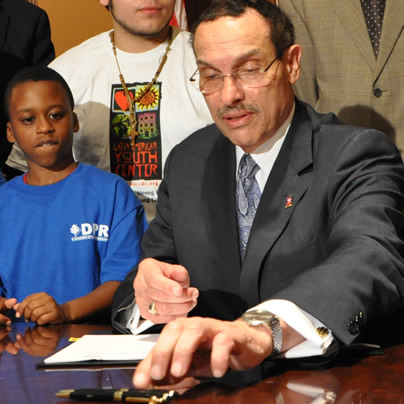
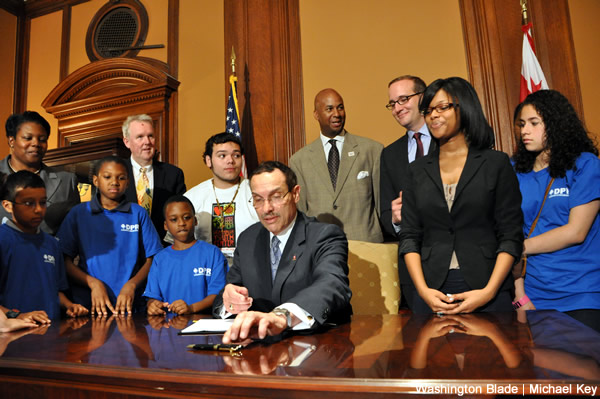
Mayor Vincent Gray signs the Youth Bullying Prevention Act of 2012. (Washington Blade photo by Michael Key)
The recommendations the Youth Bullying Prevention Task Force developed with the Urban Institute and AmericaSpeaks will focus on three prevention models: ensuring anti-bullying prevention efforts reach every D.C. resident, focusing specifically on youth who are either at-risk for bullying or are more likely to become bullies and working with bullying victims and those who have victimized them.
Elliot Imse of the D.C. Office of Human Rights told the Washington Blade on Wednesday that task force members decided to approach the issue from a public health perspective.
“The city council and the mayor’s office really wanted us to make this a citywide policy that goes above and beyond responding to incidents when they happen,” he said. “So the researchers took the unique approach and realized as we talk about all the aspects of bullying and the consequences of bullying to victims; it really does come down to public health issues, mental health issues, the risk of suicide, the risk of homeless, things like that, and really decided to take a public health approach to it.”
The Bullying Prevention Act of 2012 that Gray signed into law last June requires all city agencies, educational institutions and grantees that work directly with young people to implement an anti-bullying policy by September.
It also created the Youth Bullying Prevention Task Force and charged it with developing a model policy upon which the aforementioned groups can create their own anti-bullying protocols. D.C. Public Schools, the Metropolitan Police Department, the Department of Parks and Recreation, the Sexual Minority Youth Assistance League, Metro Teen AIDS and the D.C. Trans Coalition are among the dozens of agencies and organizations with representatives on the task force.
“I can’t think of a more noble or impactful goal than to end bullying of our youth and continue to create environments where our young people learn and thrive in health and safety,” Gray said before he signed the anti-bullying measure into law.
Imse said the task force’s recommendations are part of what he described as one of the country’s most comprehensive bullying prevention efforts.
“We know bullying happens at school, of course that’s where we need to focus a lot of our energy,” he said. “But bullying happens in recreation centers, in our libraries, in our transit system and really we need to be addressing it from that level so that the government of the District is really doing everything it can to prevent bullying in the first place. These bullying incidents add up, the health effects pile on regardless of whether it’s in school or not. So what this policy does is try to address bullying in all the public spaces that the government can.”
Shawn Gaylord of the Gay, Lesbian and Straight Education Network, who sits on the task force, applauded D.C. officials for their efforts to combat bullying in the nation’s capital.
“The recommendations that will be presented tomorrow are truly groundbreaking in their reach and will help make D.C. a safer place for all young people,” he told the Blade on Wednesday. “GLSEN is proud to have been a part of this effort from the very beginning and we look forward to continuing to partner alongside Mayor Gray and the Office of Human Rights on this important initiative.”
“Every day in our city, LGBTQ youth go to school and access other services knowing that they will likely endure teasing, harassment and even physical abuse before they return home,” SMYAL Executive Director Andrew Barnett added. “These comprehensive recommendations are an important milestone in our journey to address bullying and harassment in the District and to create safer spaces for all of our youth. Now, we must ensure the recommendations are quickly and fully adopted and implemented by every agency that serves young people.”


District of Columbia
Mayor Bowser signs bill requiring insurers to cover PrEP
‘This is a win in the fight against HIV/AIDS’

D.C. Mayor Muriel Bowser on March 20 signed a bill approved by the D.C. Council that requires health insurance companies to cover the costs of HIV prevention or PrEP drugs for D.C. residents at risk for HIV infection.
Like all legislation approved by the Council and signed by the mayor, the bill, called the PrEP D.C. Amendment Act, was sent to Capitol Hill for a required 30-day congressional review period before it takes effect as D.C. law.
Gay D.C. Council member Zachary Parker (D-Ward 5) last year introduced the bill.
Insurance coverage for PrEP drugs has been provided through coverage standards included in the Affordable Care Act, known as Obamacare. But AIDS advocacy organizations have called on states and D.C. to pass their own legislation requiring insurance coverage of PrEP as a safeguard in case federal policies are weakened or removed by the Trump administration, which has already reduced federal funding for HIV/AIDS-related programs.
Like legislation passed by other states, the PrEP D.C. Amendment Act requires insurers to cover all PrEP drugs approved by the U.S. Food and Drug Administration.
Studies have shown that PrEP drugs, which can be taken as pills or by injection just twice a year, are highly effective in preventing HIV infection.
“I think this is a win for our community,” Parker said after the D.C. Council voted unanimously to approve the bill on its first vote on the measure in February. “And this is a win in the fight against HIV/AIDS.”
District of Columbia
Blade editor to be inducted into D.C. Society of Professional Journalists Hall of Fame
Kevin Naff marks 24 years with publication this year
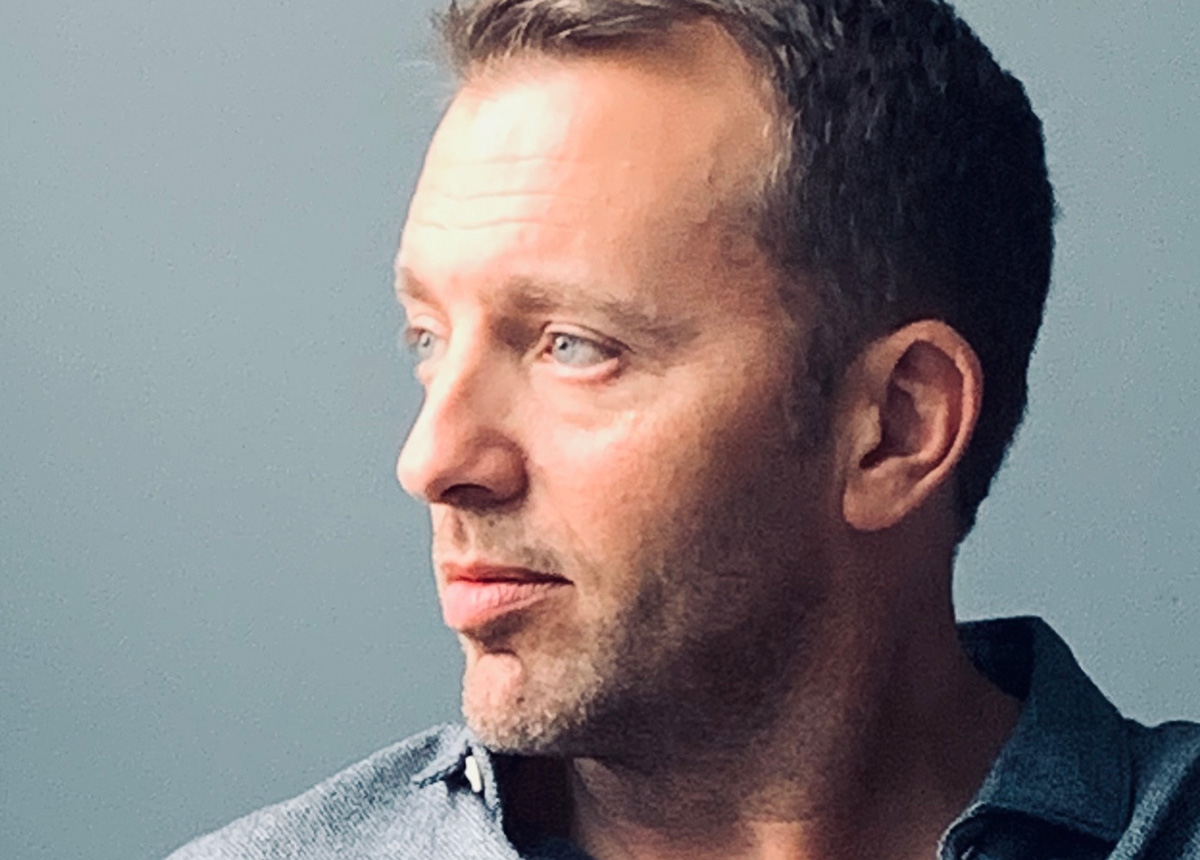
Longtime Washington Blade Editor Kevin Naff will be inducted into D.C.’s Society of Professional Journalists Hall of Fame in June, the group announced this week.
Hall of Fame honorees are chosen by the Society of Professional Journalists’ Washington, D.C., Pro Chapter. Naff and two other inductees — Seth Borenstein, a Washington-based national science writer for the AP and Cheryl W. Thompson, an award-winning correspondent for National Public Radio — will be celebrated at the chapter’s Dateline Awards dinner on Tuesday, June 9, at the National Press Club. The dinner’s emcee will be Kojo Nnamdi, host of WAMU radio’s weekly “Politics Hour.”
“I am tremendously honored by this recognition,” Naff said. “I have spent a lifetime in the D.C. area learning from so many talented journalists and am humbled to be considered in their company. Thank you to SPJ and to all the LGBTQ pioneers who came before me who made this possible.”
Naff joined the Blade in 2002 after years in print and digital journalism. He worked as a financial reporter for Reuters in New York before moving to Baltimore in 1996 to launch the Baltimore Sun’s website. He spent four years at the Sun before leaving for an internet startup and later joining the mobile data group at Verizon Wireless working on the first generation of mobile apps.
He then moved to the Blade and has served as the publication’s longest-tenured editor. In 2023, Naff published his first book, “How We Won the War for LGBTQ Equality — And How Our Enemies Could Take It All Away.”
Previous Hall of Fame inductees include luminaries in journalism like Wolf Blitzer, Benjamin Bradlee, Bob Woodward, Andrea Mitchell, and Edgar Allen Poe. The Blade’s senior news reporter Lou Chibbaro Jr. was inducted in 2015.
Maryland
Supreme Court ruling against conversion therapy bans could affect Md. law
Then-Gov. Larry Hogan signed statute in 2018
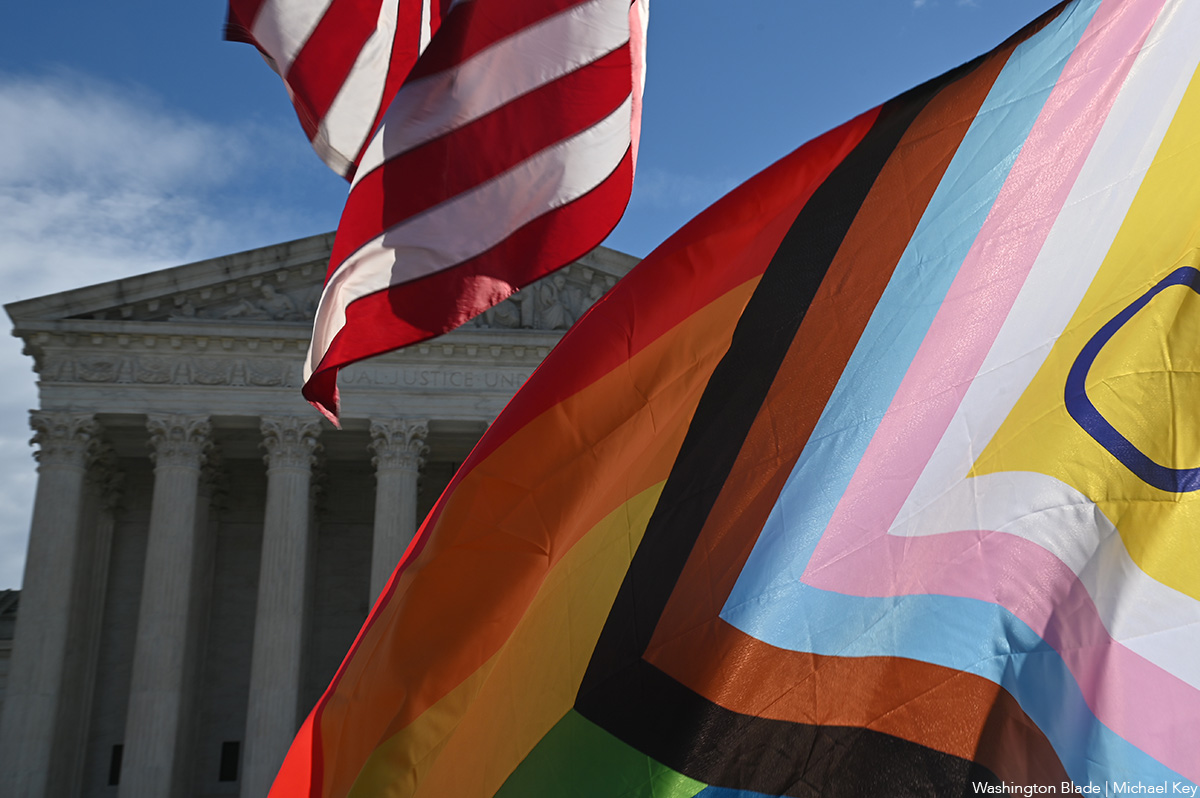
By PAMELA WOOD, JOHN-JOHN WILLIAMS IV, and MADELEINE O’NEILL | The U.S. Supreme Court on Tuesday ruled against a law banning “conversion therapy” for LGBTQ kids in Colorado, a ruling that also could apply to Maryland’s ban on the discredited practice.
An 8-1 high court majority sided with a Christian counselor who argues the law banning talk therapy violates the First Amendment. The justices agreed that the law raises free speech concerns and sent it back to a lower court to decide whether it meets a legal standard that few laws pass.
Justice Neil Gorsuch, writing for the court’s majority, said the law “censors speech based on viewpoint.” The First Amendment, he wrote, “stands as a shield against any effort to enforce orthodoxy in thought or speech in this country.”
The rest of this article can be read on the Baltimore Banner’s website.

Mayor Bowser signs bill requiring insurers to cover PrEP

JD Vance to travel to Hungary next week

Pam Bondi ousted as attorney general

VIDEO: Gay journalist detained for booing Trumps at ‘Chicago’ opening night

Idaho Gov. signs harshest anti-trans bathroom bill in the country

‘Out for McDuffie’ event held at D.C. gay bar

‘Jonah’ an undeniably compelling but unusual memory play

The Oscar-losing performance that’s too good to miss

Thousands attend ‘No Kings’ protests in D.C.