Local
D.C. shelter accused of rejecting trans women
Lawsuit, human rights office complaint filed against facility near U.S. Capitol
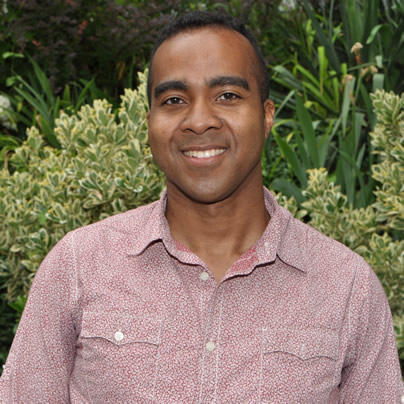
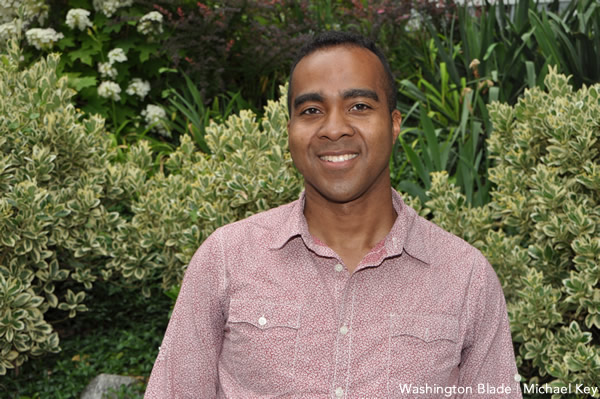
Sterling Washington, director of the Mayor’s Office of GLBT Affairs, told the director of a D.C. shelter for homeless women that refusing to admit transgender women violates the D.C. Human Rights Act, according to a lawsuit. (Washington Blade photo by Michael Key)
A shelter for homeless women located three blocks from the U.S. Capitol is violating the D.C. Human Rights Act by refusing to admit transgender women unless they provide “documentation” of a legal name change or gender reassignment surgery, according to separate complaints against the facility by two transgender women.
In a lawsuit filed April 5 in D.C. Superior Court and a complaint filed with the D.C. Office of Human Rights on March 22, the two women charge that employees at the John L. Young Women’s Shelter at 119 D Street, N.W. said they could not be admitted because of their status as transgender women.
An attorney with the D.C. Trans Coalition filed the lawsuit on behalf of Lakiesha Washington against New Hope Ministries, Inc. of Woodbridge, Va., which operates the John L. Young Women’s Shelter under a city funded contract.
The lawsuit says Washington, who was homeless, attempted to gain admission to the shelter on April 3, when the lawsuit says the alleged discriminatory action took place.
An unidentified female employee at the shelter asked Washington, “Are you a woman or a man,” the lawsuit says. “Ms. Washington replied, ‘I’m a transgender woman.’ The employee then asked Ms. Washington if she had any documentation, to which Ms. Washington replied that she did not.”
The lawsuit says the employee then told Washington, “We don’t do transgenders here. You have to leave.”
In a separate discrimination complaint filed with the Office of Human Rights, D.C. Trans Coalition member Andy Bowen says a shelter employee provided more details when Bowen asked about the facility’s policy regarding transgender women in a Feb. 5 phone conversation.
“The respondent stated that I would need to provide proof of a sex change,” Bowen said in her complaint with the OHR. “When I asked what would constitute proof, respondent answered that I would need to furnish documents of a name change or proof of surgery.”
Bowen told the Blade on Monday that she initiated her phone call to the shelter after learning that the John Young Shelter “has a history of refusing service to transgender women.”
John Shetterly, executive director of New Hope Ministries, told the Blade on Monday that he was looking into the allegations in the lawsuit and the OHR complaint and would be able to provide the shelter’s assessment of what happened within days.
The lawsuit states that Sterling Washington, director of the Mayor’s Office of GLBT Affairs, contacted Shetterly by phone on March 18, more than two weeks before Lakiesha Washington was refused entry to the Young Shelter. It says Sterling Washington informed Shetterly of reports he received that the shelter was refusing services to transgender women.
The lawsuit says Sterling Washington told Shetterly that the shelter’s action violated the D.C. Human Rights Act, which bans discrimination based, among other things, on gender identity and expression.
“Nevertheless, Mr. Shetterly did not take action to bring John L. Young into compliance with the law, and Ms. Washington suffered injury as a result,” the suit says.
The lawsuit calls on the court to “[t]emporarily, preliminarily, and permanently enjoin defendant…from continuing to discriminate against transgender women.” It also calls for the court to order New Hope Ministries to pay a civil penalty to the city’s general fund and to grant the plaintiff an award of attorney’s fees and other expenses associated with the litigation.
Court records show the court has scheduled a hearing on April 12 to consider a motion filed on Washington’s behalf by attorney Jeffrey Light for a temporary restraining order to force the Young Shelter to stop refusing admission to transgender women while the lawsuit is pending.
Elliot Imse, a spokesperson for the D.C. Office of Human Rights, said the office would have to make a legal determination on whether New Hope Ministries is exempt from the Human Rights Act based on its religious status before the office can begin to review the case on the merits.
The Human Rights Act provides an exemption, under certain circumstances, to religious organizations that allows them to limit “employment, or admission to” the organization based on religious beliefs.
In its most recent IRS 990 report released to the public, which covers the period of July 1, 2010 to June 30, 2011, New Hope Ministries says it generated $1.25 million in revenue and incurred $918,015 in expenses. The report shows that $817,509 of its revenue came from “government grants.”
The report doesn’t say from which government entity the grant money came. The Blade has made inquiries with New Hope Ministries, the Office of Mayor Vincent Gray, and the D.C. Office of Partnerships and Grants Services to determine if any of the grants came from the D.C. government. Officials with those offices couldn’t immediately be reached.

District of Columbia
Over 2,000 turn out for Hands Around the Kennedy Center protest
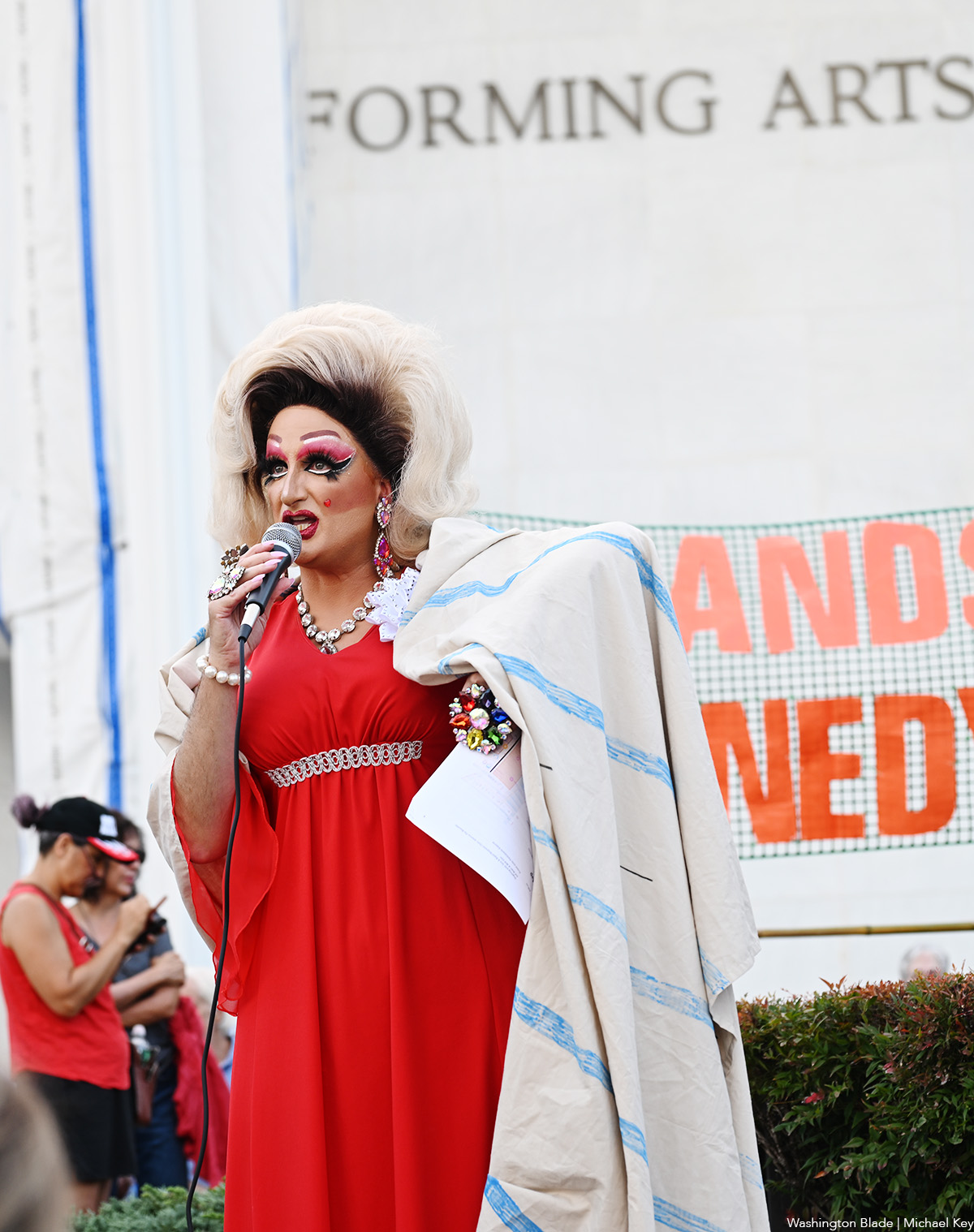
Drag performer Tara Hoot serves as MC, Gay Men’s Chorus of DC performs, attendees shout for Trump to keep ‘hands off’ Kennedy Center
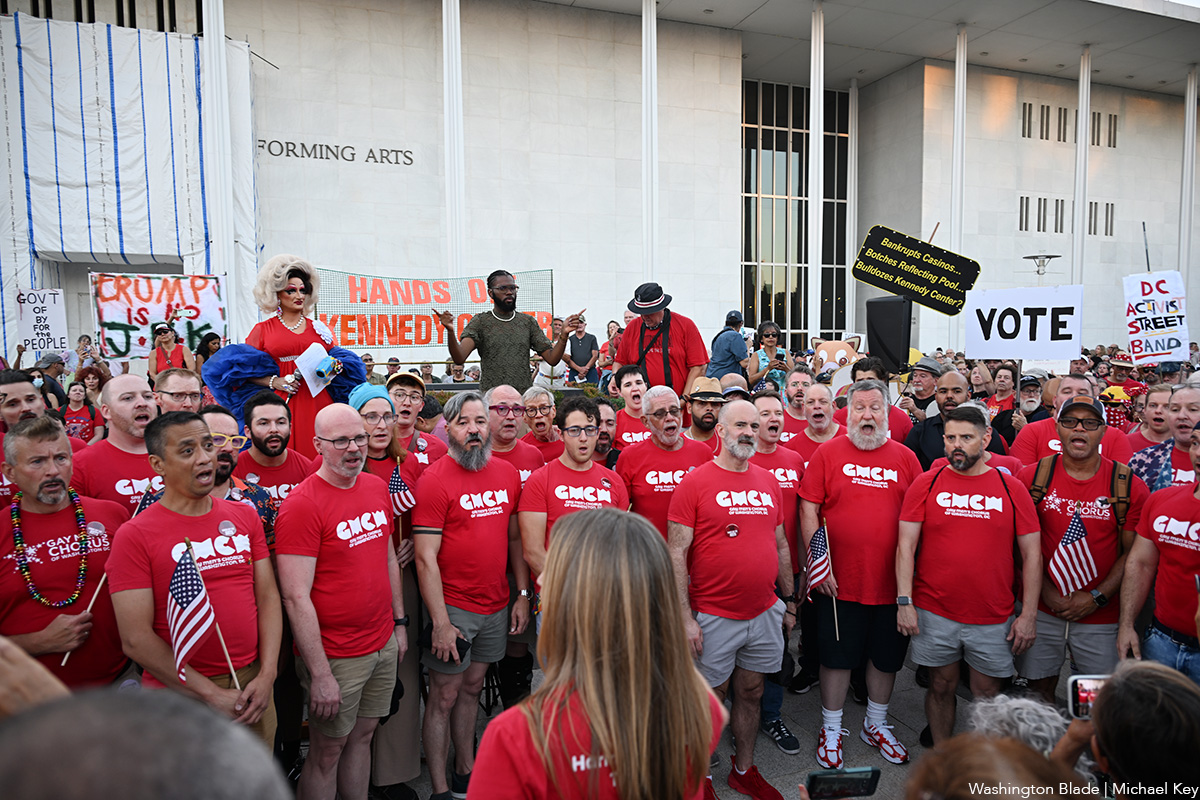
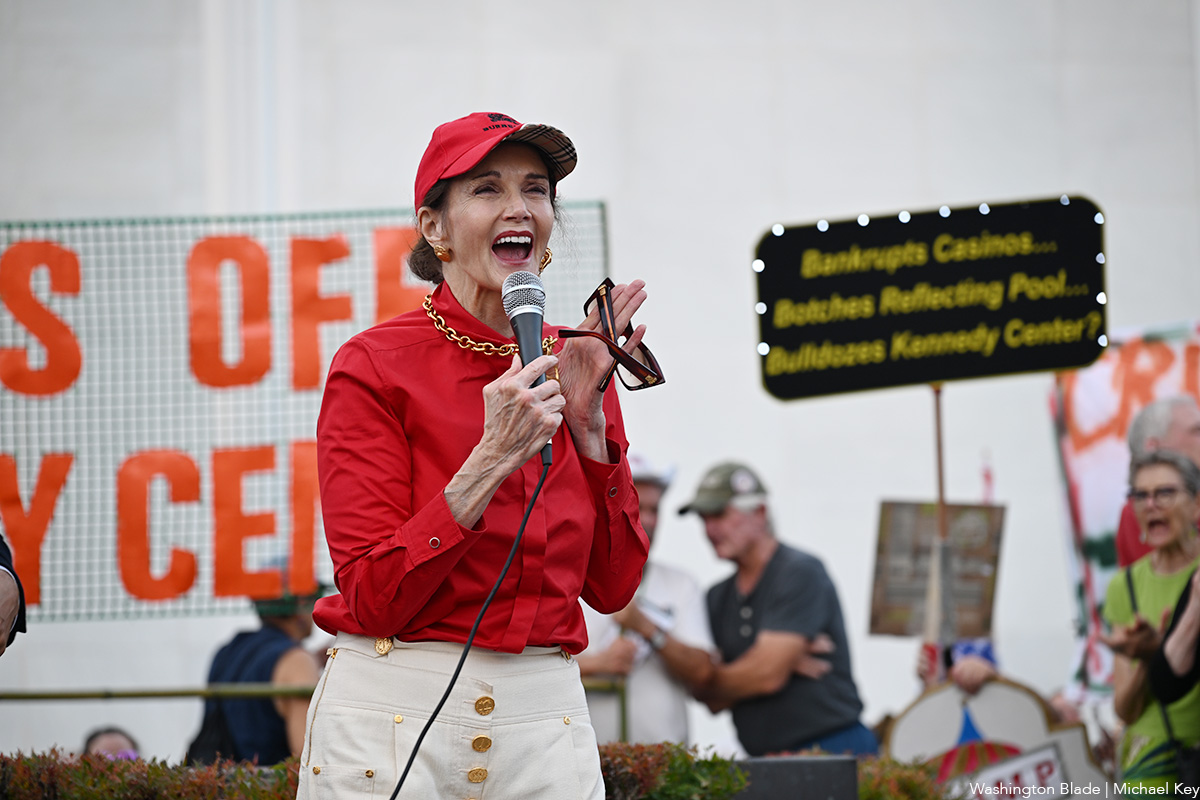
More than 2,000 supporters of the John F. Kennedy Center for the Performing Arts turned out on Sept. 18, for a rally in support of the performing arts center and a vocal protest against President Donald Trump’s threats to permanently close the center and possibly demolish it.
The event was organized by a group called Hands Off the Arts, which initially called for participants to form a “human chain” around the Kennedy Center’s main building following a rally on the plaza in front of the building.
However, due to a decision by the Trump-controlled Kennedy Center’s board of trustees to close the center earlier in the week and install fencing around part of the building, participants could only form the chain around part of the building, according to organizers.
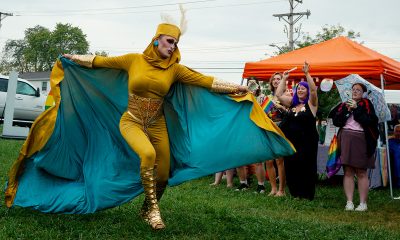
Drag performer Tara Hoot, who co-organized the event and served as master of ceremonies for the rally preceding the “human chain,” said the large turnout could have fully surrounded the building at least twice had the fencing not prevented a full encirclement.
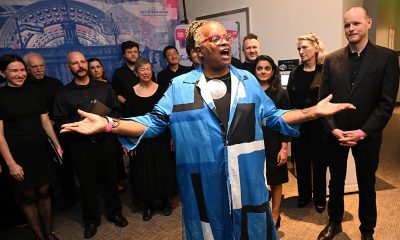
Among the musicians and singing groups that performed at the rally was the Gay Men’s Chorus of Washington, which, like other rally performers, had performed at the Kennedy Center in past years. They drew loud applause after singing one of their favorite songs from the Broadway musical show Ragtime, which includes the lyrics, “Will justice be demanded by 10 million men? Make them hear you. When they hear you, I’ll be near you again.”
View on Threads
Prior to their performance, Gay Men’s Chorus of Washington’s artistic director, Thea Kano, spoke at the rally, reminding participants that shortly after the Trump takeover of the center last year, Kennedy Center officials cancelled a concert the chorus was scheduled to perform there for World Pride 2025.
A Kennedy Center spokesperson said the cancellation was due to a scheduling conflict, but chorus members and LGBTQ activists believe it resulted from policies put in place by Trump and his leadership team at the Kennedy Center following Trump’s statements that he would end controversial “woke” performances that he claimed the majority of Americans disapprove of.
“Now this building sits empty in silence,” Kano told the crowd at the rally. “Let us raise our voices together and bring back the Kennedy Center as it was intended, a place where American culture could be celebrated and elevated, embracing the vibrancy with the spectrum of identify without censure and without politics,” she said.
Among the others who spoke at the rally were U.S. Rep. Don Beyer (D-Va.), U.S. Rep. Jonathan Jackson (D-Ill.), and D.C. Councilmember Robert White (D-At-Large).
Most speakers, along with LGBTQ participants in the hands-around-the-building event expressed strong opposition to Trump’s demand that the Kennedy Center name be changed from the John F. Kennedy Center for the Performing Arts to the Donald J. Trump and the John F. Kennedy Center for the Performing Arts.
At Trump’s request, his appointed board initially made that name change and placed Trump’s name on the front wall of the building along with the Kennedy name. But following legal action taken by opponents who pointed out that Congress must approve such a name change, a judge ordered the removal of Trump’s name from the building. Trump has said he will take steps to reverse that order and has said he will stop plans to renovate the Kennedy Center building and possibly demolish it if his name is not restored in the Kennedy’s Center’s official name.
Throughout the Sept. 18 rally, LGBTQ participants repeatedly responded to the Trump threats by shouting, “Hands Off!”
Chris Raleigh, one of the founders of Hands Off the Arts and a lead organizer of the Sept. 18 event at the Kennedy Center who spoke at the event told the Washington Blade that more similar events are being planned and he welcomes the support the event has received from the LGBTQ community.
“The LGBTQ community was here first, and we’re following them,” he said. “They’ve been the spearhead; they’ve been the vanguard. And I’m so thankful for heroes like Tara Hoot,” he said, adding, “It’s because they know what it means and how this is a safe place – the theater – for many LGBTQ people.”
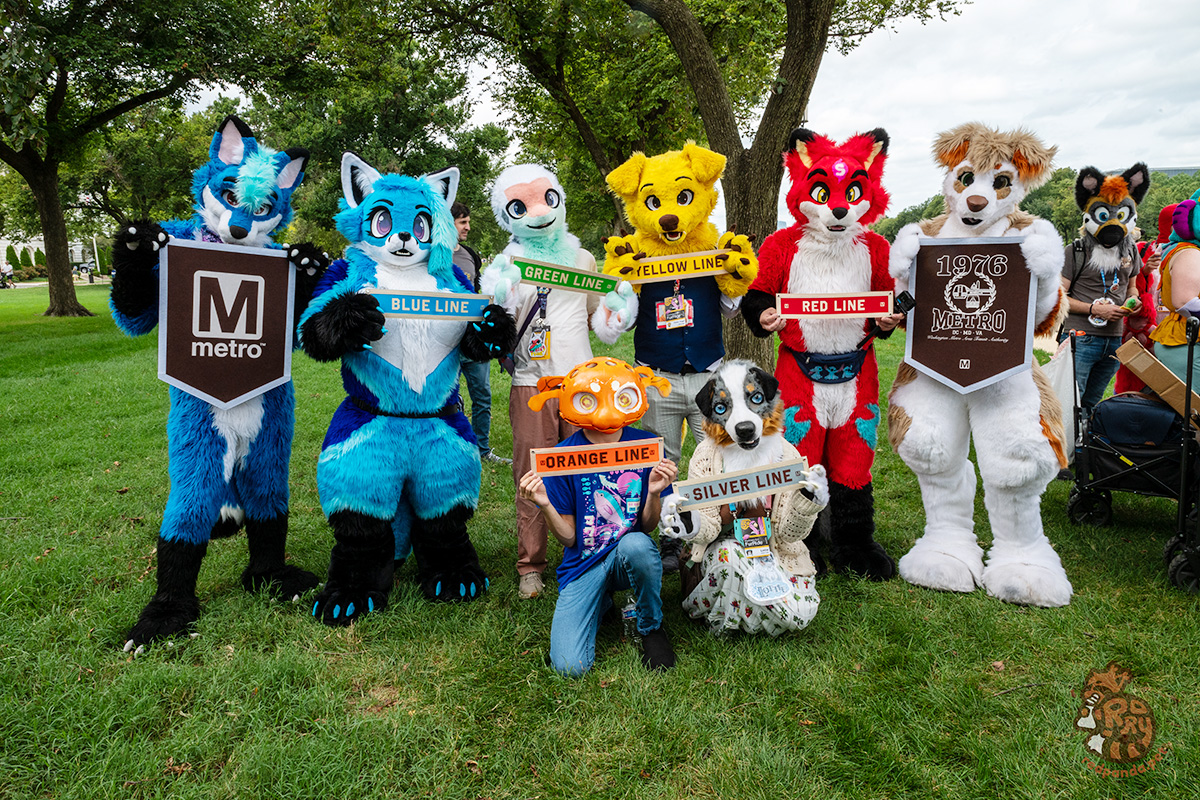
The DMV’s own furry group was on full display on the Metro on Sept. 12.
Shutterpaws is a volunteer-led 501(c)(3) non-profit organization located in Maryland.
The furry group has been doing the FurRide event since 2024 and has blown up in popularity for furries around DMV. They showcased themselves on the Silver and Blue Lines near the Smithsonian on Sept. 12.
“A lot of careful planning goes into running these events, with the goal being a seamless and enjoyable experience for everyone who attends,” says Zayre, a Shutterpaws staff member. “There’s a lot that you learn just by trial and error, and as Shutterpaws hosts more and more events, our team of event organizers continues to learn and refine our approach to keep things running smoothly and finding new ways to engage with our community.”
With a larger growth of participation in the community comes many challenges with the group, especially when it comes to the Metro rides and organizing.
“The biggest challenge that we face as organizers is keeping things fresh and finding new and engaging venues to host events,” says Zayre. “Recently we saw a lot of success hosting a meet at On Target Battlezone, an indoor NERF gun battle arena where our crew was welcome to show up and play both with and without a fur suit.”
Nevertheless, Shutterpaws receive overwhelming support from the community and partners.
“Across the DMV there are so many amazing places to host a Shutterpaws event so we can pursue our mission of helping connect fur suiters and photographers, and we’re blown away with the amount of support we’ve received from our community partners,” says Zayre.
Shutterpaws plans to do more events for anyone in the DMV who is interested.
Their next event in collaboration with DC Fur Meet will take place at Pitchers (2317 18th St., N.W.) on Saturday. Visit Shutterpaws’ website for more information.
Delaware
Republican challenger misgenders McBride during forum, forced to leave
Jewish Federation of Delaware hosted event on Thursday
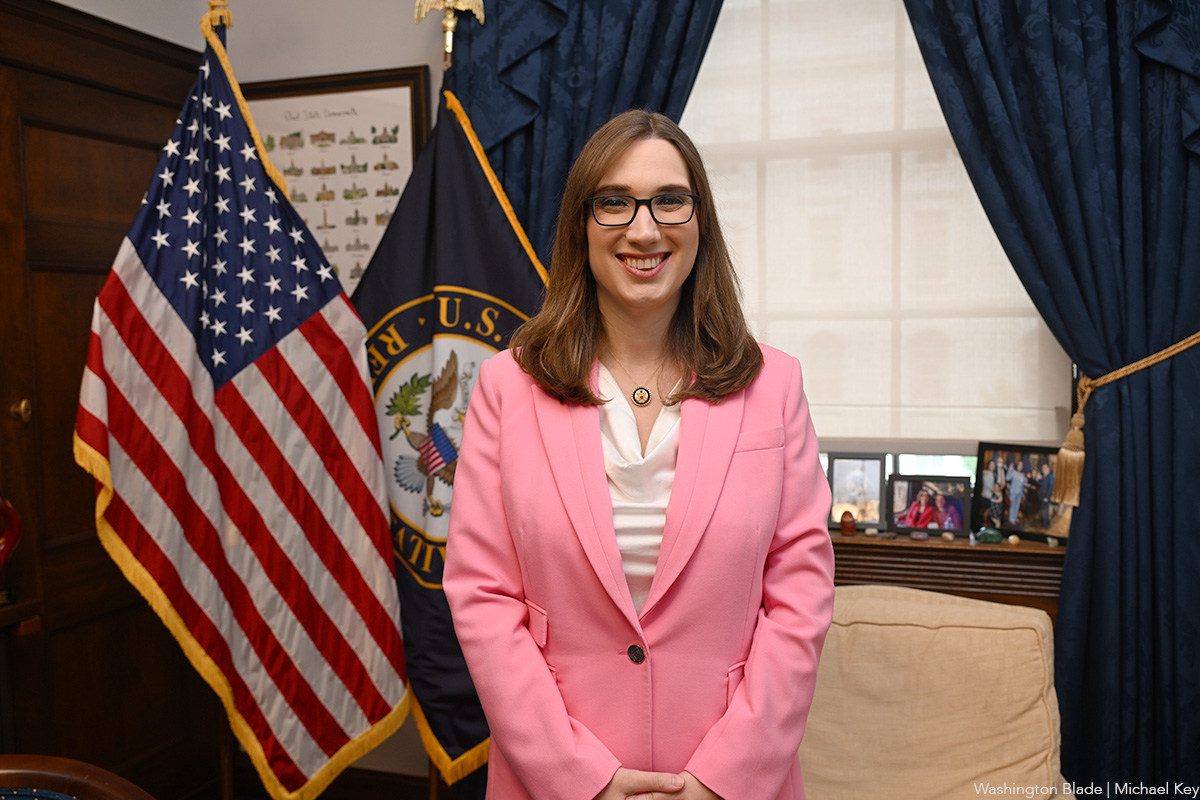
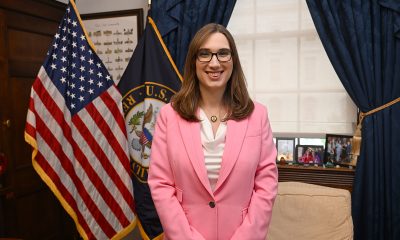
Republican “Dr. Joe” Arminio, the Republican nominee for the First State’s at-large U.S. House of Representatives seat, attempted to misgender the the country’s first and only transgender member of Congress while at a forum on Thursday.
This story was first broken by WDEL out of Wilmington, Del.
Arminio used the terms “his” and later “gentleman” when referring to U.S. Rep. Sarah McBride (D-Del.) during his time on the mic before he was asked to leave the forum, hosted by the Jewish Federation of Delaware at the Siegel Jewish Community Center in Talleyville on Thursday night.
At that point, the crowd of about 100 people largely started booing Arminio, who then finished, “I would like to show respect to the speaker, that would be nice.”
The first time Republican US House candidate “Dr. Joe” Arminio referred to Rep. Sarah McBride (D) as a man during Thursday’s debate at the Siegel Jewish Community Center in Talleyville. He was warned for his comment. #netde https://t.co/j4EaMOL84W
— Sean Greene (@SeanGreeneWDEL) September 18, 2026
Moderator Ken Grant waited until Arminio was finished, then said, “this is your final warning, if you fail to show respect to anyone else on this stage, you’ll be asked to leave.”
During the answer to his next question at the forum, Arminio responded to what he called an “error.”
“I committed an error before, and I do acknowledge it,” Arminio said. “It’s not the first error I’ve made in this campaign, or at any point in my future life.”
Despite the apology and acknowledgement that he had committed what was, at the very least, a social taboo, he did it again 12 minutes later.
While talking about rising healthcare costs being a “catastrophe,” Arminio pointed to U.S. Sen. Chris Coons (D-Del.) and McBride.
“The reason it is is because gentlemen like the two up here with me in the Democratic Party, and the Republican Party … ” Arminio said.
Despite his direct attacks on McBride’s gender identity, she responded to the situation with grace, attempting to intervene to allow Arminio to still have a chance to speak despite not heeding the moderator’s warnings.
“I don’t want this gentleman to not have the ability … ,” McBride began.
However, Republican Senate candidate Michael Katz interrupted her shortly before Arminio was removed from the forum, which was meant to inform the Delaware electorate on the candidates’ issues.
Katz had his opening statement next and directly condemned Arminio’s comments.
“I would like to apologize to everybody here and everybody else on this stage. As a physician, I believe in our common humanity and respect for each other. I feel that pain over those comments, and my apologies.”
Following the forum, Katz called for Arminio to exit the race via social media.
“Those who seek to represent Delaware must demonstrate integrity, judgment, decency, and respect — even toward people with whom they profoundly disagree,” Katz’s post read on Facebook. “For these reasons, I am calling on Joseph Arminio to withdraw his candidacy for the United States House of Representatives.”
This is not the first time McBride has been the victim of misgendering.
In 2025, House Foreign Affairs Committee Chair Rep. Keith Self (R-Texas) introduced the sole representative from Delaware as “Mr. McBride” during a meeting.
This is also not the first time McBride has faced vitriol from the other side of the aisle — both in terms of personal and legislative attacks on her trans identity.
In 2025, the House voted to ban trans girls and women from playing school sports with other girls, while U.S. Rep. Nancy Mace (R-S.C.) pushed for legislation barring trans women from using women’s bathrooms.
House Speaker Mike Johnson (R-La.) instituted a similar rule barring McBride — and all other trans women — from women’s restrooms on Capitol Hill.
McBride has also been a vocal opponent of Executive Order 14168, “Defending Women from Gender Ideology Extremism and Restoring Biological Truth to the Federal Government,” signed by President Donald Trump on his first day in office. The directive prohibits the federal government from recognizing the gender identity of trans people.
She has criticized Executive Order 14183, “Prioritizing Military Excellence and Readiness,” which would ban trans service members from serving in the Armed Forces. The directive is still being challenged in the courts to determine its constitutional legitimacy, but it has been allowed to remain in effect as the judicial system considers its legality.
The Washington Blade sat down with McBride in May to reflect on a tense year for LGBTQ politics, where she, in typical McBride fashion, answered questions about the hate she has received.
“Our politics are too often defined by hate,” McBride told the Blade. “I’m glad Delaware and Delawareans are showing that a different kind of politics is possible.”

United States Conference on HIV/AIDS grapples with federal budget cuts

For lesbian victims of domestic violence, competent care is scare

UN human rights chief sounds alarm over ‘comprehensive onslaught’ against LGBTQ rights

White House press pool pushes back after Trump bars three outlets

PHOTOS: Shenandoah Valley Pride

Queer mega stars coming to D.C. this fall

Republican challenger misgenders McBride during forum, forced to leave

Activists protest outside Turkish Embassy in D.C.

A roundup of fall events not to be missed