Sports
Hudson Taylor: From athlete to ally
Hudson Taylor on his advocacy work — and the future for out athletes
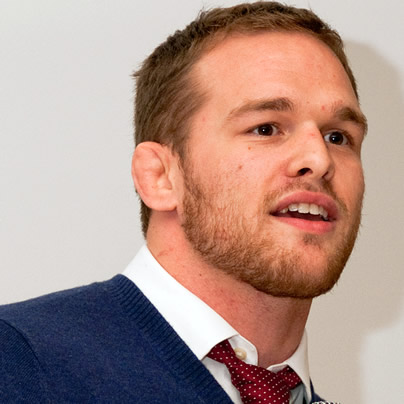
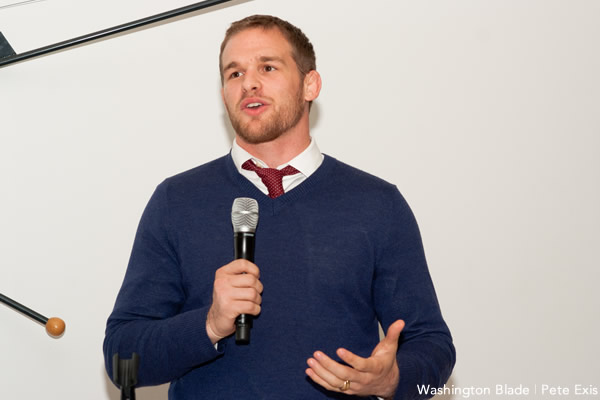
Hudson Taylor founded Athlete Ally in August 2010. (Washington Blade file photo by Pete Exis)
By ROBERT KLEMKO
Hudson Taylor, a former University of Maryland wrestler and current Columbia University assistant wrestling coach, saw the need in 2010 for a social advocacy group pushing for LGBT equality in sports. He founded Athlete Ally, a nonprofit organization focused on ending homophobia and transphobia in sports, three years ago.
We caught up with Taylor and got his thoughts on the success of the organization and the future for out professional athletes.
ROBERT KLEMKO: When did Athlete Ally explode from your part-time pursuit to this nationally recognized organization?
HUDSON TAYLOR: We started Athlete Ally in August 2010. The first year-and-a-half to two years was pretty slow. We were growing at the college level quite a bit. But the real expansion came when Ravens linebacker Brendon Ayanbadejo came on and we started getting more athletes getting involved last fall. After him, more and more athletes started lending their voice to LGBT acceptance in sports. In the NFL, Scott Fujita and Chris Kluwe came shortly after. Those are obviously three prominent voices in the NFL and for LGBT acceptance in sports.
FIND MORE OF THE WASHINGTON BLADE SPORTS ISSUE HERE.
KLEMKO: Did you recruit these guys, or did they come to you?
TAYLOR: We recruited the majority of the athletes we work with. We adopted a shotgun approach: If we have an athlete who speaks out for marriage equality or they have a relative who’s gay, we reach out and say ‘Are you interested in getting involved?’ For all the guys who’ve signed up we’ve gotten probably triple the amount of nos. We also got a ton of our athletes from Maryland connections; Kristi Tolliver, Robbie Rogers and D’Qwell Jackson included.
KLEMKO: Do you have a staff?
TAYLOR: Our board is very much a working board. We have 13 board members who are almost full time working on Athlete Ally. We’ve been very fortunate to have a very dedicated board. Then we have five interns and two college graduates that we’ve just hired, and we’ll be hiring more. What we’ve found is there are a lot of college kids who are eager to get involved.
KLEMKO: You went from recruiting the voices to becoming an authority on the topic. What’s the next step?
TAYLOR: When all of this started, I realized there’s never been a successful social advocacy group for the minority without the majority support. We knew we needed the voices. Now our next phase is really trending down to the K-12 age group. We’ve become the official partners of the NBA, working with their incoming players, and we have great reach in college, but the cycle starts far sooner than college. So when we think about these attitudes we need to start educating when they first pick up a baseball or a football.
KLEMKO: Where are you with the 18-and-under demographic?
TAYLOR: We haven’t made any partnerships with any school districts in a really major way. … Here’s the plan: We’re currently creating a curriculum to train college athletes to go back into their high schools and middle schools and train the younger generation. Those guys are going to have more impact than any of these guys could. There’s a certain amount of cultural capital that athletes have with the ability to change hearts and minds in these difficult environments.
KLEMKO: Who reaches out to you the most, personally?
TAYLOR: A lot of folks that I’ve known growing up have reached out to me because either they are closeted or they have friends or family who are closeted. It became clear that a huge number of people I’ve known are affected by homophobia in sports. There have been closeted professional athletes who have reached out, but we’re still at the very beginning… there’s still a lot of fear and uncertainty for the closeted gay athlete.
KLEMKO: For the athlete who wants to help, but doesn’t want to attach his name to Athlete Ally, what’s your advice?
TAYLOR: The biggest question is, how do we explicitly go about creating an inclusive environment to everyone? Joining Athlete Ally is on one end of the spectrum, but you can also as an athlete pick five words in your life to eliminate. Say something to a teammate next time you hear an anti-gay word in the locker room. That’s a start.
KLEMKO: Is the bigger obstacle for your mission in the front offices, or in the locker rooms?
TAYLOR: I think it’s really difficult to make an overarching statement about that. No two experiences are exactly alike. Fears and apprehension that one closeted athlete has can be completely different from another. That said, the average NBA career is 4.7 years. It’s even shorter for NFL players. So if coming out is going to hurt an athlete’s belief that they can make a team and stay in the league, that’s an obstacle. On the other hand, you can have a really supportive owner or franchise but if you’re on a team that is using anti-gay language every day, a closeted athlete is not going to feel safe to come out in that space.
KLEMKO: Jason Collins popped the NBA’s cherry. How do we get the ball rolling in the NFL?
TAYLOR: Until we have a critical mass of athletes speaking out, you’re not going to see more athletes coming out. Some of the most vocal athletes have been NFL players, but when you look at how many guys have spoken out, it’s still a very small percentage. Were going to need more players, coaches and owners speaking out for real change to happen.
Robert Klemko is a University of Maryland graduate and a writer for TheMMQB.com, Sports Illustrated magazine’s online NFL destination by Peter King.






Sports
New IOC policy bans trans women from Olympics
New regulation to be in effect at 2028 summer games in Los Angeles
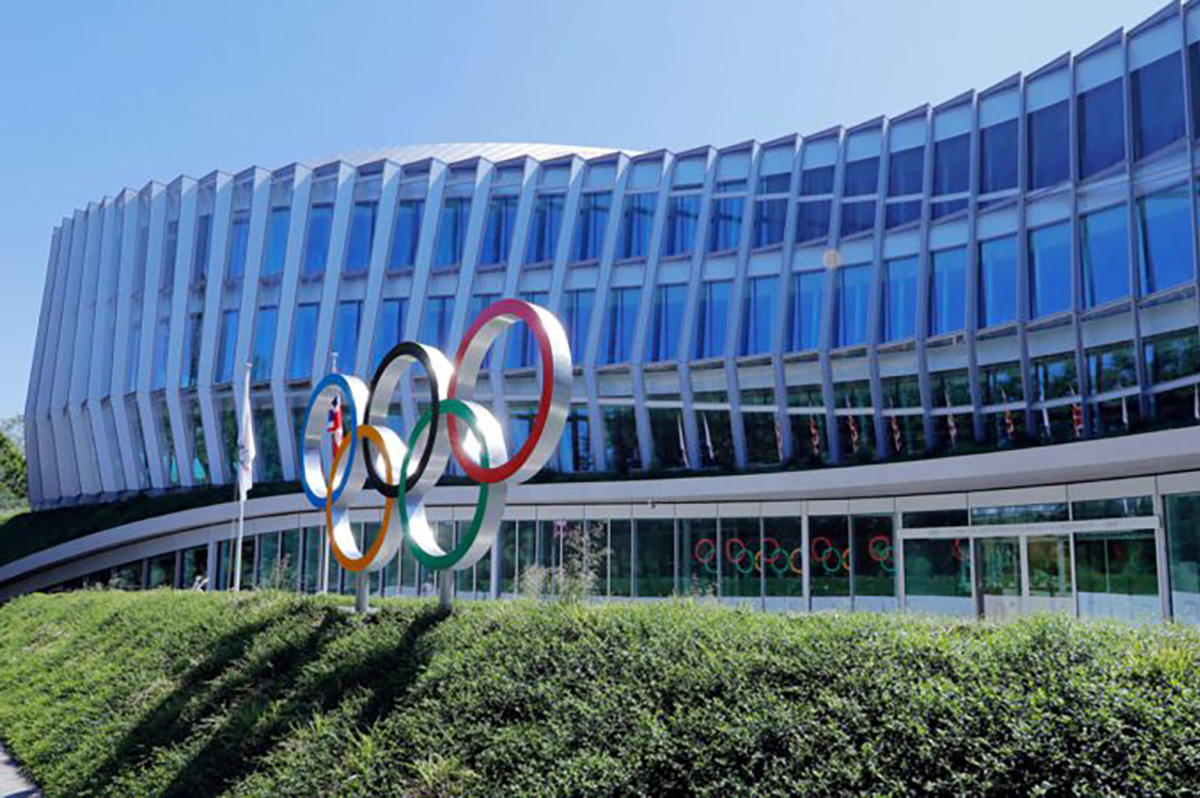
The International Olympic Committee on Thursday announced it will not allow transgender women from competing in female events at the Olympics.
“For all disciplines on the Sports Program of an IOC event, including individual and team sports, eligibility for any Female Category is limited to biological females,” reads the new policy.
The policy states “eligibility for the Female Category is to be determined in the first instance by SRY Gene screening to detect the absence or presence of the SRY Gene.”
“On the basis of the scientific evidence, the IOC considers that the SRY (sex-determining Region Y) Gene is fixed throughout life and represents highly accurate evidence that an athlete has experienced or will experience male sex development,” it reads. “Furthermore, the IOC considers that SRY Gene screening via saliva, cheek swab or blood sample is unintrusive compared to other possible methods. Athletes who screen negative for the SRY gene permanently satisfy this policy’s eligibility criteria for competition in the Female Category.”
The policy states the test “will be a once-in-a-lifetime test” unless “there is reason to believe a negative reading is in error.”
The new regulation will be in place for the 2028 Summer Olympics in Los Angeles.
“I understand that this a very sensitive topic,” said IOC President Kirsty Coventry on Thursday in a video. “As a former athlete, I passionately believe in the rights of all Olympians to take part in fair competition.”
“The policy that we have announced is based on science and it has been led by medical experts with the best interests of athletes at its heart. The scientific evidence is very clear: male chromosomes give performance advances in sport that rely on strength, power, or endurance,” she added. “At the Olympic Games, even the smallest margins can be the difference between victory and defeat. So, it is absolutely clear that it would not be fair for biological males to compete in the female category. In addition, in some sports it would simply not be safe.”
(Video courtesy of the IOC)
Laurel Hubbard, a weightlifter from New Zealand, in 2021 became the first trans woman to compete at the Olympics.
Imane Khelif, an Algerian boxer, won a gold medal at the 2024 Summer Olympics in Paris. Khelif later sued JK Rowling and Elon Musk for cyberstalking after they questioned her gender identity.
Ellis Lundholm, a mogul skier from Sweden, this year became the first openly trans athlete to compete in any Winter Olympics when he participated in Milan Cortina Winter Olympics in Italy.
President Donald Trump in February 2025 issued an executive order that bans trans women and girls from female sports teams in the U.S.
The U.S. Olympic and Paralympic Committee last July banned trans women from competing in female sporting events. Republican lawmakers have demanded the IOC ban trans athletes from women’s athletic competitions.
“I’m grateful the Olympics finally embraced the common sense policy that women’s sports are for women, not for men,” said U.S. Sen. Tom Cotton (R-Ark.) on X.
An IOC spokesperson on Thursday referred the Washington Blade to the press release that announced the new policy.
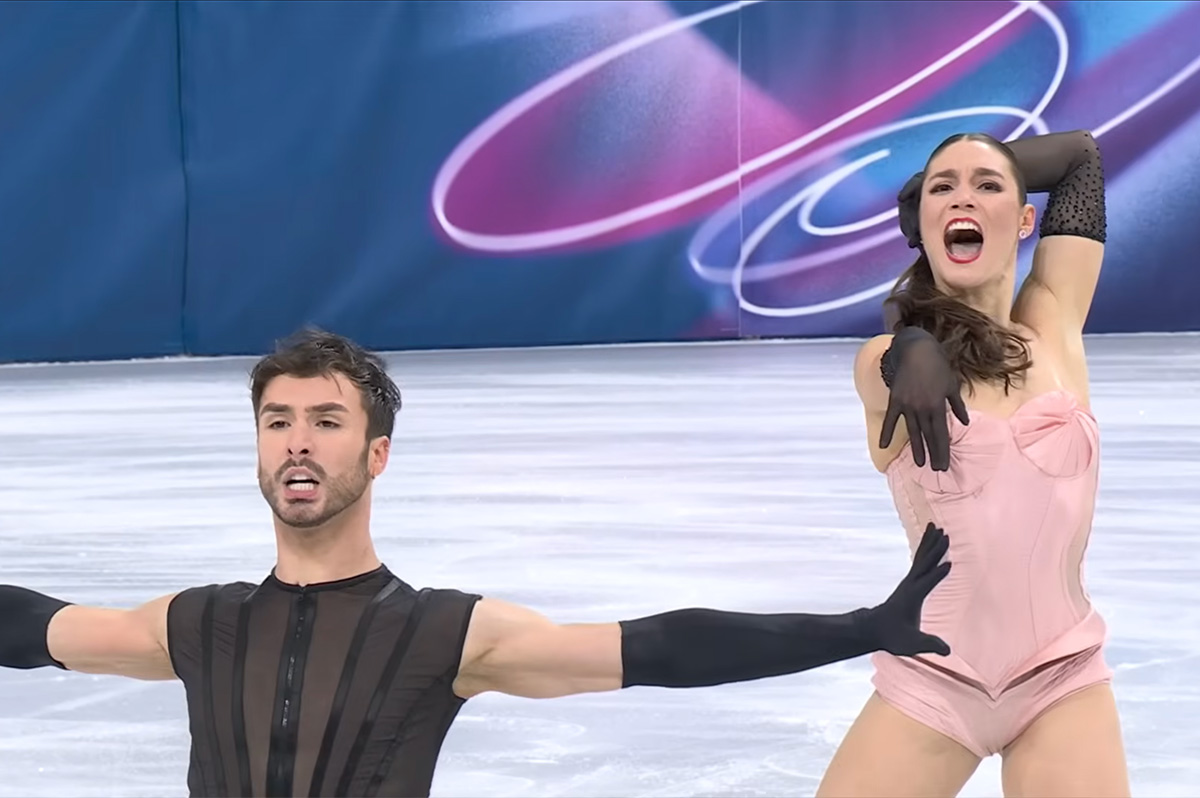
More than a dozen LGBTQ athletes won medals at the Milan Cortina Winter Olympics that ended on Sunday.
Cayla Barnes, Hilary Knight, and Alex Carpenter are LGBTQ members of the U.S. women’s hockey team that won a gold medal after they defeated Canada in overtime. Knight the day before the Feb. 19 match proposed to her girlfriend, Brittany Bowe, an Olympic speed skater.
French ice dancer Guillaume Cizeron, who is gay, and his partner Laurence Fournier Beaudry won gold. American alpine skier Breezy Johnson, who is bisexual, won gold in the women’s downhill. Amber Glenn, who identifies as bisexual and pansexual, was part of the American figure skating team that won gold in the team event.
Swiss freestyle skier Mathilde Gremaud, who is in a relationship with Vali Höll, an Austrian mountain biker, won gold in women’s freeski slopestyle.
Bruce Mouat, who is the captain of the British curling team that won a silver medal, is gay. Six members of the Canadian women’s hockey team — Emily Clark, Erin Ambrose, Emerance Maschmeyer, Brianne Jenner, Laura Stacey, and Marie-Philip Poulin — that won silver are LGBTQ.
Swedish freestyle skier Sandra Naeslund, who is a lesbian, won a bronze medal in ski cross.
Belgian speed skater Tineke den Dulk, who is bisexual, was part of her country’s mixed 2000-meter relay that won bronze. Canadian ice dancer Paul Poirier, who is gay, and his partner, Piper Gilles, won bronze.
Laura Zimmermann, who is queer, is a member of the Swiss women’s hockey team that won bronze when they defeated Sweden.
Outsports.com notes all of the LGBTQ Olympians who competed at the games and who medaled.
Sports
US wins Olympic gold medal in women’s hockey
Team captain Hilary Knight proposed to girlfriend on Wednesday
The U.S. women’s hockey team on Thursday won a gold medal at the Milan Cortina Winter Olympics.
Team USA defeated Canada 2-1 in overtime. The game took place a day after Team USA captain Hilary Knight proposed to her girlfriend, Brittany Bowe, an Olympic speed skater.
Cayla Barnes and Alex Carpenter — Knight’s teammates — are also LGBTQ. They are among the more than 40 openly LGBTQ athletes who are competing in the games.
The Olympics will end on Sunday.

Thousands attend ‘No Kings’ protests in D.C.

Blade contributor, husband exchange vows in D.C.

Ghanaian president welcomed to Philadelphia amid backlash over anti-LGBTQ bill

PHOTOS: ‘No Kings’ rally and march

‘Out for McDuffie’ event held at D.C. gay bar

Pa. House passes bill to codify marriage equality in state law

Introducing the Torchbearers Awards honoring queer, trans women and nonbinary people

New IOC policy bans trans women from Olympics

A surtax would end this war quickly

‘No Kings’ protests set for D.C.
-

 Pennsylvania5 days ago
Pa. House passes bill to codify marriage equality in state law
-
a&e features5 days ago
Introducing the Torchbearers Awards honoring queer, trans women and nonbinary people
-
Sports5 days ago
New IOC policy bans trans women from Olympics
-
Opinions5 days ago
A surtax would end this war quickly