Arts & Entertainment
Calendar: Feb. 7-13
Parties, exhibits, concerts and more for the week ahead
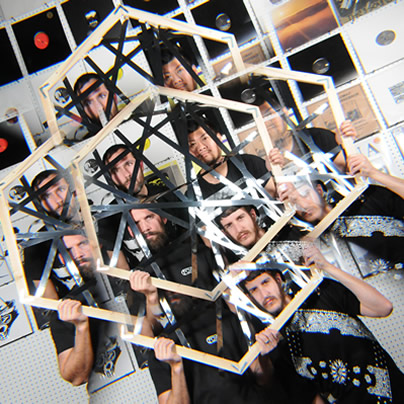
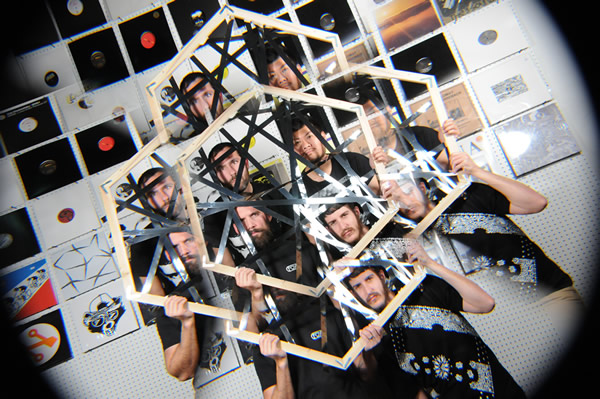
Honey Soundsystem, a San Francisco gay DJ collective, spins at Flash this weekend. (Photo by Shanna Doherty, courtesy the group)
LGBT events calendar for the week ahead in Washington.
Friday, Feb. 7
Larry Cohen hosts a free social anxiety workshop for the LGBT community at (4808 43rd Pl., N.W.) tonight at 7 p.m. The workshop covers what social anxiety is, what causes and maintains it and the cognitive-behavioral therapy approach to overcoming it. Attendees are not required to speak or interact. Registration is required. For details and to register, visit socialanxietyhelp.com.
The D.C. Center (2000 14th St., N.W.) hosts a trans support group meeting tonight at 7 p.m. The facilitated group discussion is open to all members of the community including partners, friends and allies. For details, visit thedccenter.org.
Gay District, a facilitated group discussion focused on building understanding of gay culture and personal identity for men ages 18 through 35, meets at the D.C. Center (2000 14th St., N.W.) tonight from 8:30-9:30 p.m. For details, visit thedccenter.org.
Team D.C., Capital Pride, Human Rights Campaign and Gays and Lesbians in Foreign Affairs Agencies are sponsoring a “Pride House International” event tonight to watch the opening ceremonies of the Olympics at HRC headquarters (1640 Rhode Island Ave., N.W.) at 7 p.m. Former pro hockey player Sean Avery will be a guest. RSVP at action.hrc.org. There is a $10 suggested donation to benefit the Russia LGBT Sports Foundation.
The 9 Songwriter Series is tonight from 7:30-10 p.m. at Ebenezer’s Coffeehouse (201 F Street, N.E.) and features performances by local gay songwriters such as Stewart Lewis, Tom Goss and more. Cost is $10. Details at facebookcom/wearethe9 or ebenezerscoffeehouse.com.
Otter Crossing is tonight at Green Lantern (just off Thomas Circle at 1335 Green Court, N.W.) with DJ Tommy Cornelis. For ages 21 and up. $5 cover after 10 p.m. Find the event on Facebook for details.
Saturday, Feb. 8
The D.C. Center (2000 14th St., N.W.) holds free and confidential HIV testing today from 4-7 p.m. For more details, visit thedccenter.org.
Duplex Diner and the Dupont Social Club present “Valentine’s Day is a Drag!” at Duplex Diner (2004 18th St., N.W.) tonight from 6:30-11 p.m. There will be drag queen waitresses and bartenders, DJs, raffles and performances all night long. Dinner seatings are at 6:30 and 8:30 p.m. There is a $20 suggested donation to benefit SMYAL.
RuPaul’s Drag Race contestant MiMi Imfurst performs at Town (2009 8th St., N.W.) tonight. Doors open at 10 p.m. Cover is $8 from 10-11 p.m. and $12 after 11 p.m. Drinks are $3 before 11 p.m. Drag show starts at 10:30 p.m. Admission is limited to guests 21 and over. For details, visit towndc.com.
Cobalt (1639 R St., N.W.) hosts “Bearzerk” tonight from 10 p.m.-3 a.m. Music will be by Dean Douglas Sullivan, Tommy Cornelis and more. Well and domestic drinks are $5 and Jameson, Jager and fireballs are $6. Doors open at 10 p.m. Covr is $5 and $7 after midnight. Admission is limited to guests 21 and over.
GLOV hosts the second annual Deoni Jones memorial and rally today at 4 p.m. at St. Luke’s Church (4925 East Capital Street, S.E.). Jones was a victim of an anti-trans hate crime.
Sunday, Feb. 9
Chick Chat, an ages 50-and-over lesbian singles group, meets at the Walters Art Museum (600 North Charles St., Baltimore) at the main entrance near Centre and Cathedral streets today at 1 p.m. For details and to RSVP, email [email protected].
Fairlington United Methodist Church (3900 King St., Alexandria, Va.) hosts “God’s Love Spoken Here,” a special service celebrating its one-year anniversary as a reconciling congregation, this morning at 9:30 and 11 a.m. For details, visit fairlingtonumc.org.
The NeedlExchange presents Honey Soundsystem, a queer DJ collective from San Francisco, at Flash (645 Florida Ave., N.W.) tonight from 9 p.m.-2 a.m. Admission is limited to guests 21 and over. Tickets are $15. To purchase tickets, visit tnxandhny.eventbrite.com.
Monday, Feb. 10
Us Helping Us (3636 Georgia Ave., N.W.) holds a support group for gay black men to discuss topics that affect them today, share perspectives and have meaningful conversations. For details, visit uhupil.org.
Nellie’s Sports Bar (900 U St., N.W.) hosts poker night tonight at 8 p.m. Win prizes. Free to play. For more information, visit nelliessportsbar.com.
Tuesday, Feb. 11
The D.C. Center hosts a “Center Arts Reception” at MOVA Lounge (2204 14th St., N.W.) this evening from 5:30-8 p.m. Hosted by Regie Cabico, the reception celebrates art and cultural programs at the D.C. Center. There is a $10 suggested donation. For more details, visit thedccenter.org.
D.C. Bi Women hosts its monthly meeting in the upstairs room of Dupont Italian Kitchen (1637 17th St., N.W.) from 7-9 p.m. tonight. For more details, visit thedccenter.org.
“A Kiss for Gabriela,” a HIPS film screening in honor of the late Gabriela Leite, is tonight at 6 p.m. at Busboys and Poets (2021 14th St., N.W.). RSVP to [email protected] for details.
Wednesday, Feb. 12
The Lambda Bridge Club hosts duplicate bridge at the Dignity Center (721 8th St., S.E.) at 7:30 p.m. tonight. No reservations needed and newcomers welcome. If you need a partner, call 703-407-6540.
Big Gay Book Group meets tonight at 1155 F St., N.W. Suite 200 at 7 p.m. to discuss “The Days of Anna Madrigal” by Armistead Maupin, a story about Anna Madrigal, a 92-year-old transgender landlady who embarks on a road-trip to reconnect to her past. For details, email [email protected].
Rainbow Response, an LGBT intimate partner violence prevention group, meets in the third floor conference room at 5 Thomas Circle N.W. today from 6-7 p.m. For details, visit thedccenter.org.
Thursday, Feb. 13
Washington National Opera Bravo Club presents “An Evening with Jake Heggie” at 1915 17th St., N.W. tonight at 7 p.m. Heggie has composed operas including “Dead Man Walking,” “The End of the Affair” and “Moby-Dick.” Wine and hors d’oeuvres begin at 7 p.m. The conversation begins at 8 p.m. Tickets are $20. To purchase tickets, go here.
The 15th Annual Washington D.C. International Wine and Food Festival begins at Ronald Reagan Building and International Trade Center (1300 Pennsylvania Ave., N.W.) today through Saturday. Enjoy tastings of high quality food and wine, food pairings and wine education. Tickets range from $45-120. For more information and to purchase tickets, visit wineandfooddc.com.
“Allied in Greek,” an amateur drag competition and Trevor Project fundraiser, is tonight from 7-9 p.m. at Lisner Auditorium (730 21st Street, N.W.). Allied in Pride, the George Washington University LGBT student advocacy organization, and the GW Greek Community are joining efforts on the event which will feature contestants in drag who will lip sync to a song. Chanel Devereaux, a local drag queen, will be on the judging panel. Half of the proceeds will go to the Trevor Project. Tickets are $5 general admission. Find out more by searching for “Allied in Greek” on Facebook.



Theater
‘Jonah’ an undeniably compelling but unusual memory play
Studio production draws on scenes from the past, present, and from imagination
‘Jonah’
Through April 19
Studio Theatre
1504 14th St., N.W.
$55-$95 (discounts available)
Studiotheatre.org
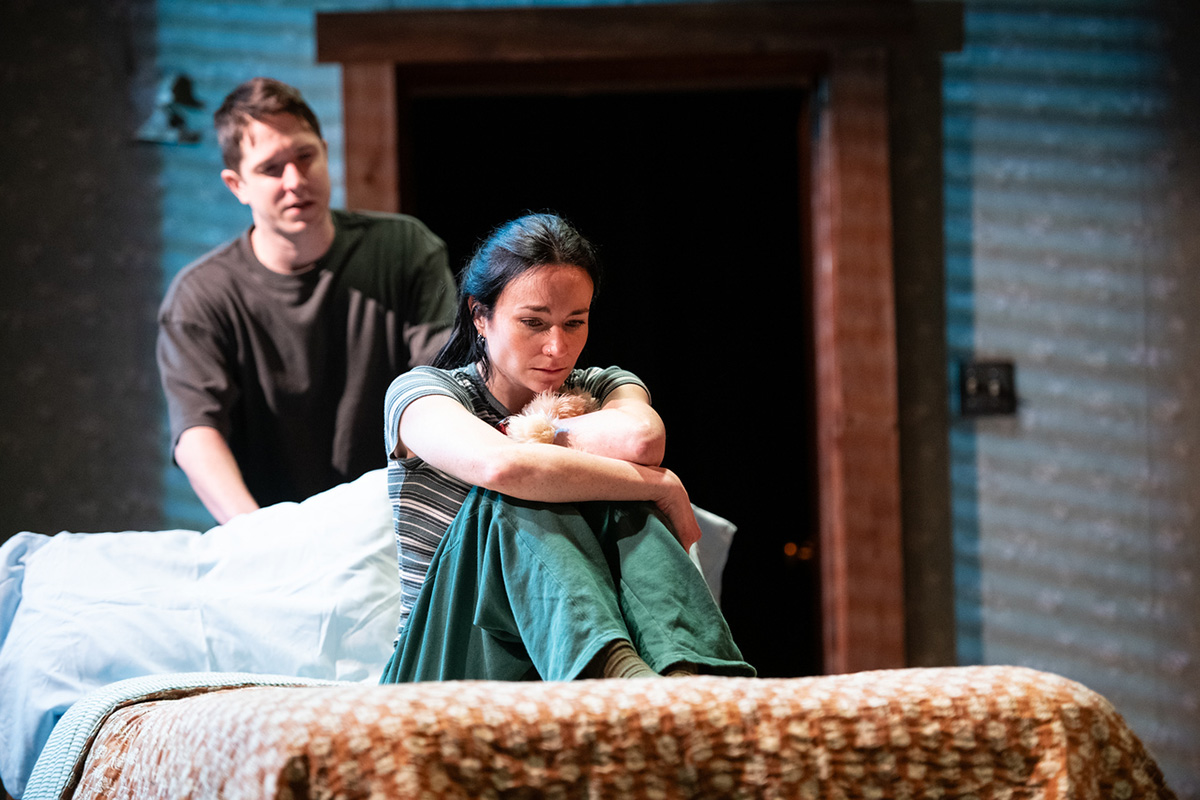
Written by Rachel Bonds, “Jonah” is an undeniably compelling but unusual memory play with scenes pulled from the past, some present, and others seemingly imagined. Despite its title, the play is about Ana, a complicated young woman processing past trauma from the fragile safety of her usually quiet bedroom.
Studio Theatre’s subtly powerful production (through April 19) is finely realized. Director Taylor Reynolds smartly helms an especially strong cast and an inspired design team.
As Ana, out actor Ismenia Mendes radiates a quiet magnetism. She nails the intelligent woman with a hard exterior that sometimes melts away to reveal a warm curiosity and sense of humor despite a history of loss.
When we first meet Ana, she’s a scholarship student at a boarding school where she’s very much on the radar of Jonah, a sensitive day student (charmingly played by Rohan Maletira). Initially reluctant to know him, Ana soon breaks the ice by playfully lifting her shirt and flashing him. It’s a budding romance oozing with inexperience. And just like that, there’s a blast of white light and woosh, Jonah’s gone. Literally sucked out of an upstage door.
Clearly romanticized, the scenes between Ana and Jonah are a perfect memory captured in time that surely must be too good to be entirely true.
“Jonah,” a well-made nonlinear work, is pleasing to follow. Each of Bond’s scenes end with a promise that more will be revealed. And over its almost two hours, Ana’s story deftly unfolds in some satisfying ways, ultimately piecing together like a puzzle.
Next, Ana is a college writing student. She’s alone in her dorm room when volatile stepbrother Danny (Quinn M. Johnson) visits the campus. Growing up in Detroit, Danny was Ana’s protector taking the brunt of her stepfather’s abuse after the untimely death Ana’s mother. Now, he’s sort of a clinging nuisance; nonetheless, they maintain a trauma rooted relationship.
And finally, 40ish and still guarded, Ana is a published writer. While working in her bedroom at a rural writer’s retreat, she’s joined by a nerdy stranger, Steven (Louis Reyes McWilliams). At first annoyed by this fellow writer’s presence, Ana is ultimately won over by his dogged devotion, sincerity, and kind words. What’s more, he’s not unacquainted with abuse, and he’s willing to delve into discussions of intimacy. Again, is it too good to be true?
Chronology be damned, these three male characters come and go, dismissed and recalled. It’s through them that Ana’s emotional journey is reflected. They pursue, but she allows them into her life in different ways for different reasons.
Bonds, whose plays have been produced at Studio in the past (world premiere of “The Wolfe Twins” and “Curve of Departure”), and Reynolds who scored a huge success directing Studio’s production of “Fat Ham” in 2023, are well matched. Reynolds’s successful intimate staging and obvious respect for the script’s serious themes without losing its lighter moments are testimony to that.
Essential to the play is Ana’s bedroom created by set designer Sibyl Wickersheimer. It’s a traditional kind of bedroom, all wooden furniture with a neat and tidy kind of farmhouse feel to it. There are two large window frames with views of darkness. It could be anywhere. The only personal items are writing devices and maybe the lived-in bedding, but other than that, not a lot indicates home.
Movies
The Oscar-losing performance that’s too good to miss
‘If I Had Legs I’d Kick You’ now streaming
Now that Oscar season is officially over, most movie lovers are ready to move on and start looking ahead to the upcoming crop of films for the standouts that might be contenders for the 2026 awards race.
Even so, 2025 was a year with a particularly excellent slate of releases: Ryan Coogler’s “Sinners” and Paul Thomas Anderson’s “One Battle After Another,” which became rivals for the Best Picture slot as well as for total number of wins for the year, along with acclaimed odds-on favorites like “Hamnet,” with its showcase performance by Best Actress winner Jessie Buckley, and “Weapons,” with its instantly iconic turn by Best Supporting Actress Amy Madigan.
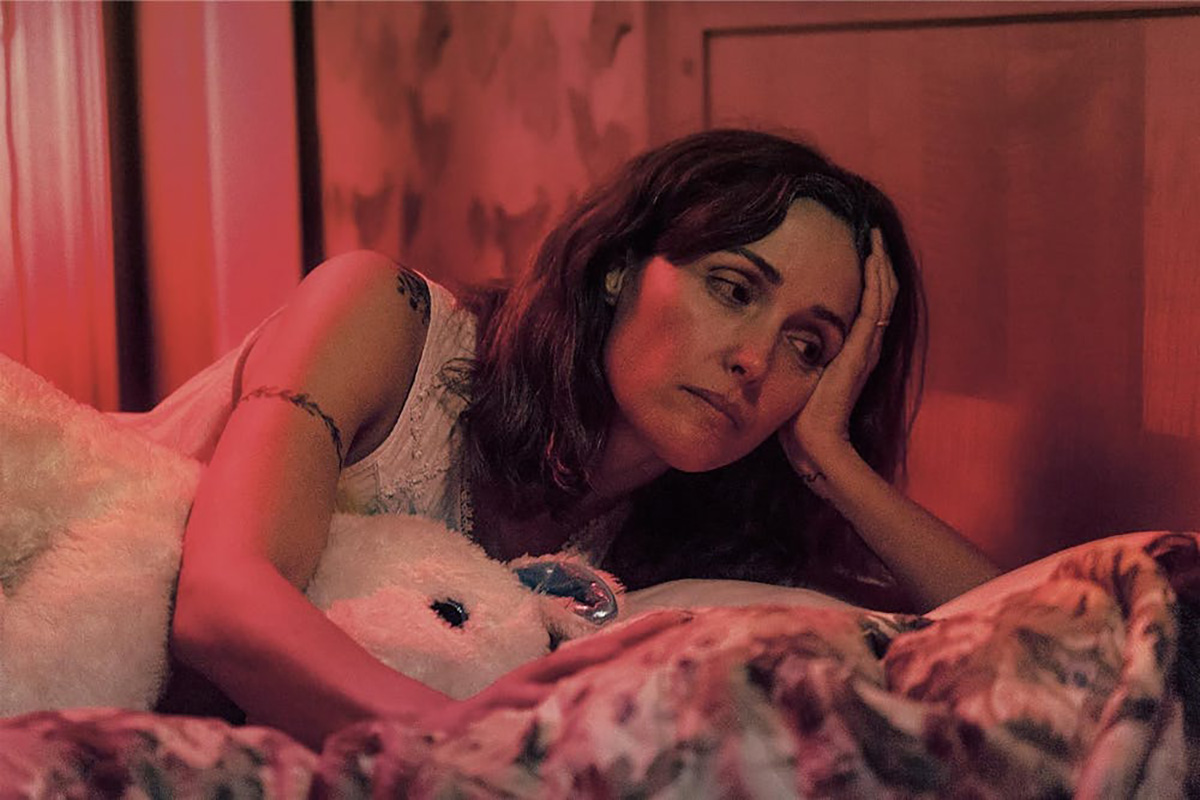
But while these high-profile titles may have garnered the most attention (and viewership), there were plenty of lesser-seen contenders that, for many audiences, might have slipped under the radar. So while we wait for the arrival of this summer’s hopeful blockbusters and the “prestige” cinema that tends to come in the last quarter of the year, it’s worth taking a look back at some of the movies that may have come up short in the quest for Oscar gold, but that nevertheless deserve a place on any film buff’s “must-see” list; one of the most essential among them is “If I Had Legs I’d Kick You,” which earned a Best Actress Oscar nod for Rose Byrne. A festival hit that premiered at Sundance and went on to win international honors – for both Byrne and filmmaker Jane Bronstein – from other film festivals and critics’ organizations (including the Dorian Awards, presented by GALECA, the queer critics association), it only received a brief theatrical release in October of last year, so it’s one of those Academy Award contenders that most people who weren’t voters on the “FYC” screener list for the Oscars had limited opportunity to see. Now, it’s streaming on HBO Max.
Written and directed by Bronstein, it’s not the kind of film that will ever be a “popular” success. Surreal, tense, disorienting, and loaded with trigger-point subject matter that evokes the divisive emotional biases inherent in its premise, it’s an unsettling experience at best, and more likely to be an alienating one for any viewer who comes to it unprepared.
Byrne stars as Linda, a psychotherapist who juggles a busy practice with the demands of being mother to a child with severe health issues; her daughter (Delaney Quinn) suffers from a pediatric feeding disorder and must take her nutrition through a tube, requiring constant supervision and ongoing medical therapy – and she’s not polite about it, either. Seemingly using her condition as an excuse to be coddled, the child is uncooperative with her treatment plan and makes excessive demands on her mother’s attention, and the girl’s father (Christian Slater) – who spends weeks away as captain of a cruise ship – expects Linda to manage the situation on the home front while offering little more than criticism and recriminations over the phone.
Things are made even more stressful when the ceiling collapses in their apartment, requiring mother and child to move to a seedy beachside motel. Understandably overwhelmed, Linda turns increasingly toward escape, mostly through avoidance and alcohol; she finds her own inner conflicts reflected by her clients – particularly a new mother (Danielle Macdonald) struggling with extreme postpartum anxiety – and her therapy sessions with a colleague (Conan O’Brien, in a brilliantly effective piece of against-type casting) threaten to cross ethical and professional boundaries. Growing ever more isolated, she eventually finds a thread of potential connection in the motel’s sympathetic superintendent (A$AP Rocky) – but with her own mental state growing ever more muddled and her daughter’s health challenges on the verge of becoming a lifelong burden, she finds herself drawn toward an unthinkable solution to her dilemma.
With its cryptic title – which sounds like the punchline to a macabre joke and evokes expectations of “body horror” creepiness – and its dreamlike, disjointed approach, “If I Had Legs I’d Kick You” feels like a dark comedic thriller from the outset, but few viewers are likely to get many laughs from it. Too raw to be campy and too cold to invite our compassion, it’s a film that dwells in an uncomfortable zone where we are too mortified to be moved and too appalled to look away. Though it’s technically a drama, Bronstein presents it as a horror story, of sorts, driven by psychological rather than supernatural forces, and builds it on an uneasy structure that teases us with expectations of “body horror” grotesquerie while forcing us to identify with a character whose lack of (presumably) universal parental instinct feels transgressive in a way that is somehow even more disquieting than the gore and mutilation we imagine might be coming at any moment of the film.
And we do imagine it, even expect it to come, which is as much to do with the near-oppressive claustrophobia that results from Bronstein’s use of near-constant close-ups as it does with the hint of impending violence that pervades the psychological tension. It’s not just that our frame of vision is kept tight and limited; her tactic keeps us uncertain of what’s going on outside the edges, creating a near-constant sense of something unseen lurking just beyond our view. Yet it also helps to put us into Linda’s state of mind; for almost the entire film, we never see the face of her daughter – nor do we ever know the child’s name – and her husband is just a strident voice on the other end of a phone call, and the effect places us squarely into her dissociated, depressed, and desperate existence.
Anchoring it all, of course, is Byrne’s remarkable performance. Vivid, vulnerable, and painfully real, it’s the centerpiece of the film, the part that emerges as greater than the whole; and while Oscar may have passed her over, she delivers a star turn for the ages and gives profound voice to a dark side of feminine experience that is rarely allowed to be aired.
That, of course, is the key to Bronstein’s seeming purpose; inspired by her own struggles with postpartum depression, her film feels like both a confession and an exorcism, a parable in which the expectations of unconditional motherly love fall into question, and the burden placed on a woman to subjugate her own existence in service of a child – and a seemingly ungrateful one, at that – becomes a powerful exploration of feminist themes. It’s an exploration that might go too far, for some, but it expresses a truth that those of us who are not mothers (and many of us who are) might be loath to acknowledge.
Uncomfortable though it may be, Bronstein’s movie draws us in and persuades our emotional investment despite its difficult and unlikable characters, thanks to her star player and her layered, puzzle-like screenplay, which captures Linda’s scattered psyche and warped perceptions with an approach that creates structure through fragments, clues and suggestions; and while it may not land quite as squarely, in the end, as we might hope, its bold and transgressive style – coupled with the career-topping performance at its center – are more than enough reason to catch this Oscar “also-ran” before putting this year’s award season behind you once and for all.
Friday, March 27
Center Aging Monthly Luncheon With Yoga will be at 12 p.m. at the DC Center for the LGBT Community. Email Mac at [email protected] if you require ASL interpreter assistance, have any dietary restrictions, or questions about this event.
Go Gay DC will host “LGBTQ+ Happy Hour” at 7 p.m. at Dupont Italian Kitchen. This is a chance to relax, make new friends, and enjoy happy hour specials at this classic retro venue. Attendance is free and more details are available on Eventbrite.
Trans and Genderqueer Game Night will be at 7 p.m. at the DC Center for the LGBT Community. This is a relaxing, laid-back evening of games and fun. All are welcome and there’ll be card and board games on hand. Feel free to bring your own games to share. For more details, visit the DC Center’s website.
Trans Discussion Group will be at 7 p.m. on Zoom. This event is intended to provide an emotionally and physically safe space for trans people and those who may be questioning their gender identity/expression to join together in community and learn from one another. For more details, email [email protected].
Saturday, March 28
Go Gay DC will host “LGBTQ+ Community Brunch” at 11 a.m. at Freddie’s Beach Bar & Restaurant. This fun weekly event brings the DMV area LGBTQ+ community, including allies, together for delicious food and conversation. Attendance is free and more details are available on Eventbrite.
The DC Center for the LGBT Community will host “Sunday Supper on Saturday” at 2 p.m. It’s more than just an event; it’s an opportunity to step away from the busyness of life and invest in something meaningful, and enjoy delicious food, genuine laughter, and conversations that spark connection and inspiration. For more details, visit the Center’s website.
Black Lesbian Support Group will be at 1 p.m. on Zoom. This is a peer-led support group devoted to the joys and challenges of being a Black Lesbian. For more details, email [email protected].
Monday, March 30
“Center Aging: Monday Coffee Klatch” will be at 10 a.m. on Zoom. This is a social hour for older LGBTQ adults. Guests are encouraged to bring a beverage of choice. For more information, contact Adam ([email protected]).
“Tea Time! A Local DC Drag Comedy Show” will be at 3 p.m. at Spark Social. This is a live drag comedy show where drag legends TrevHER & Tiara Missou Sidora host spill all the tea in the DMV. This event is free and more details are available on Eventbrite.
Tuesday, March 31
Visibili-TEA Party will be at 6 p.m. at Restoration Station. Guests are encouraged to come sip, celebrate, and shine together. This event is a Trans Day of Visibility celebration and a special collaboration between Auntie’s Home and Damien Ministries. This is a boozy tea party with intention and the dress code reflects the vibe. More details are available on Eventbrite.
Wednesday, March 1
Job Club will be at 6 p.m. on Zoom upon request. This is a weekly job support program to help job entrants and seekers, including the long-term unemployed, improve self-confidence, motivation, resilience and productivity for effective job searches and networking — allowing participants to move away from being merely “applicants” toward being “candidates.” For more information, email [email protected] or visit thedccenter.org/careers.
Thursday, April 2
The DC Center’s Fresh Produce Program will be held all day at the DC Center for the LGBT Community. People will be informed on Wednesday at 5 p.m. if they are picked to receive a produce box. No proof of residency or income is required. For more information, email [email protected] or call 202-682-2245.
Virtual Yoga Class will be at 7 p.m. on Zoom. This free weekly class is a combination of yoga, breathwork and meditation that allows LGBTQ+ community members to continue their healing journey with somatic and mindfulness practices. For more details, visit the DC Center’s website.

‘Jonah’ an undeniably compelling but unusual memory play

The Oscar-losing performance that’s too good to miss

Trump tells Fox News he won the ‘gay vote’ — but polls tell a different story

Anti-trans visa ruling echoes Nazi regime destroying trans documents

Japanese Supreme Court to consider marriage equality

D.C. goes gaga for Gaga

Menaka Guruswamy celebrated as India’s first openly LGBTQ MP

HRC to host National Rainbow Seder

Gay priest credited with boosting church support for LGBTQ Catholics