National
Lawsuit challenges Alabama same-sex marriage ban
Case brought on behalf of gay widower
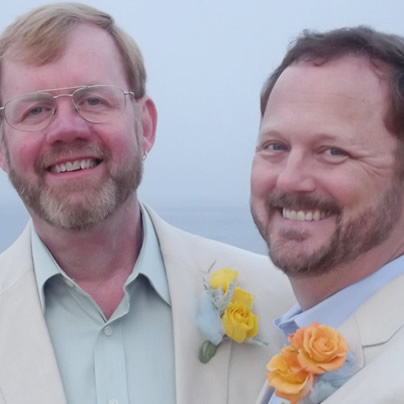
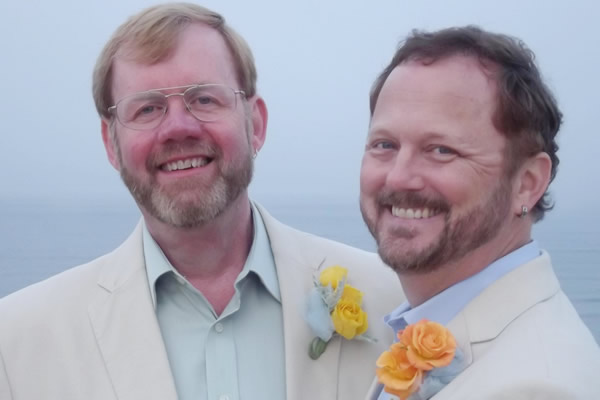
David Fancher (on left) and Paul Hard at their wedding. (Photo courtesy of the Southern Poverty Law Center)
The Southern Poverty Law Center on Thursday filed a federal lawsuit that challenges Alabama’s same-sex marriage ban.
The organization, which is based in Montgomery, Ala., brought the case on behalf of Paul Hard, who married Charles David Fancher in Massachusetts in May 2011. Fancher died in a car accident less than three months later after he hit an overturned UPS truck on I-65 outside of Montgomery – a wrongful death lawsuit was later filed in his name.
Alabama law says a surviving spouse is entitled to receive the majority of any settlement money, but the state does not recognize Hard and Fancher’s wedding because voters in 2006 overwhelmingly approved a constitutional amendment defining marriage as between a man and a woman.
“They create two, unequal, classes of married couples living in the State of Alabama: those married couples who enjoy all the protections afforded to people who are married, including the right of a surviving spouse to recover proceeds in a wrongful death action, and those married couples, like Paul and David, who do not,” reads the lawsuit. “The obvious purpose of the Sanctity Laws is to punish and demean citizens who have entered one type of marriage, but not the other.
Alabama is among the 32 states that ban same-sex marriage.
Out state Rep. Patricia Todd (D-Birmingham), who married her long-time partner in Massachusetts in 2013, last November introduced a bill that would have repealed Alabama’s gay nuptials ban.
Six gay and lesbian couples in neighboring Florida last month filed a lawsuit challenging their state’s same-sex marriage ban.
The American Civil Liberties Union and the ACLU of Missouri on Wednesday filed a lawsuit in state court on behalf of eight same-sex couples who are seeking recognition of their marriages legally performed in other jurisdictions. The Forum for Equality Louisiana on the same day filed an identical lawsuit in a federal court in New Orleans on behalf of four gay and lesbian couples who legally married outside the Pelican State.
A federal judge on Wednesday ruled Kentucky must recognize same-sex marriages legally performed in other jurisdictions.
A judge last month found Oklahoma’s gay nuptials ban unconstitutional. The U.S. Supreme Court less than two weeks earlier blocked any future same-sex marriages from taking place in Utah pending the outcome of an appeal of U.S. District Court Judge Robert Shelby’s December ruling that struck down the state’s gay nuptials ban.
Nevada Attorney General Catherine Cortez Masto on Feb. 10 announced she will no longer defend her state’s same-sex marriage ban in court.
A ruling in a federal lawsuit that challenges Virginia’s gay nuptials ban is expected in the coming days.
Alabama Chief Justice Roy Moore last week urged all 50 state governors to allow their legislatures to call for a convention to ratify an amendment to the U.S. Constitution that would define marriage as “the union of one man and one woman.” Gov. Robert Bentley last September said he would not allow the Alabama National Guard to extend benefits to members’ same-sex partners in spite of a directive the Pentagon issued after the U.S. Supreme Court ruled a portion of the Defense of Marriage Act is unconstitutional.
“The moral foundation of our country is under attack,” Moore told the Associated Press.
Attorney General Eric Holder on Feb. 10 announced the Justice Department will now recognize same-sex marriages in civil and criminal cases and extend full benefits to gay spouses of police officers and other public safety personnel killed while on duty. This new policy applies to Alabama and the 31 other states that currently do not recognize same-sex marriage.



National
Queen Jean is Tony’s first transgender winner
Designer/activist wins for work on ‘Cats: The Jellicle Ball’
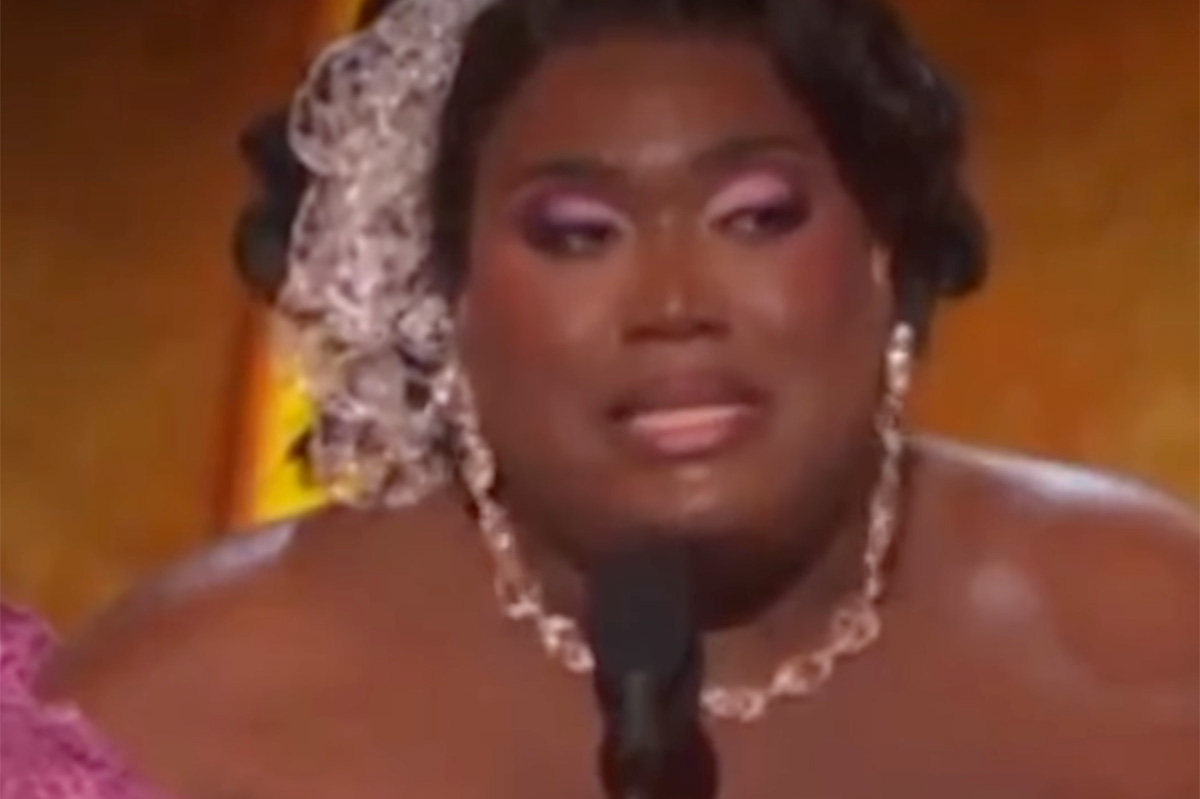
It was a historic night at the 79th annual Tony Awards on Sunday as Queen Jean won the award for Best Costume Design of a Musical, making her the first out transgender person to win a Tony.
“This experience has been monumental. We are here for the legacy of queer people, trans people,” she said. “We are taking up space in ways we have to take up space. We have to shift the paradigm. So I just want to say, thank you all so much for this incredible honor. The world right now is deeply, deeply combating so many ailments, and we know as a society that when we come together, we can make real, permanent change.”
She won the award for her work on “Cats: The Jellicle Ball” and was also nominated for best costume design of a play for “Liberation.”
In addition to her stage work, Queen Jean is the founder of Black Trans Liberation, an organization that supports trans and gender-nonconforming people in New York City.
National
Madonna turns Times Square into massive dance floor
Pop icon celebrates Pride month with surprise performance

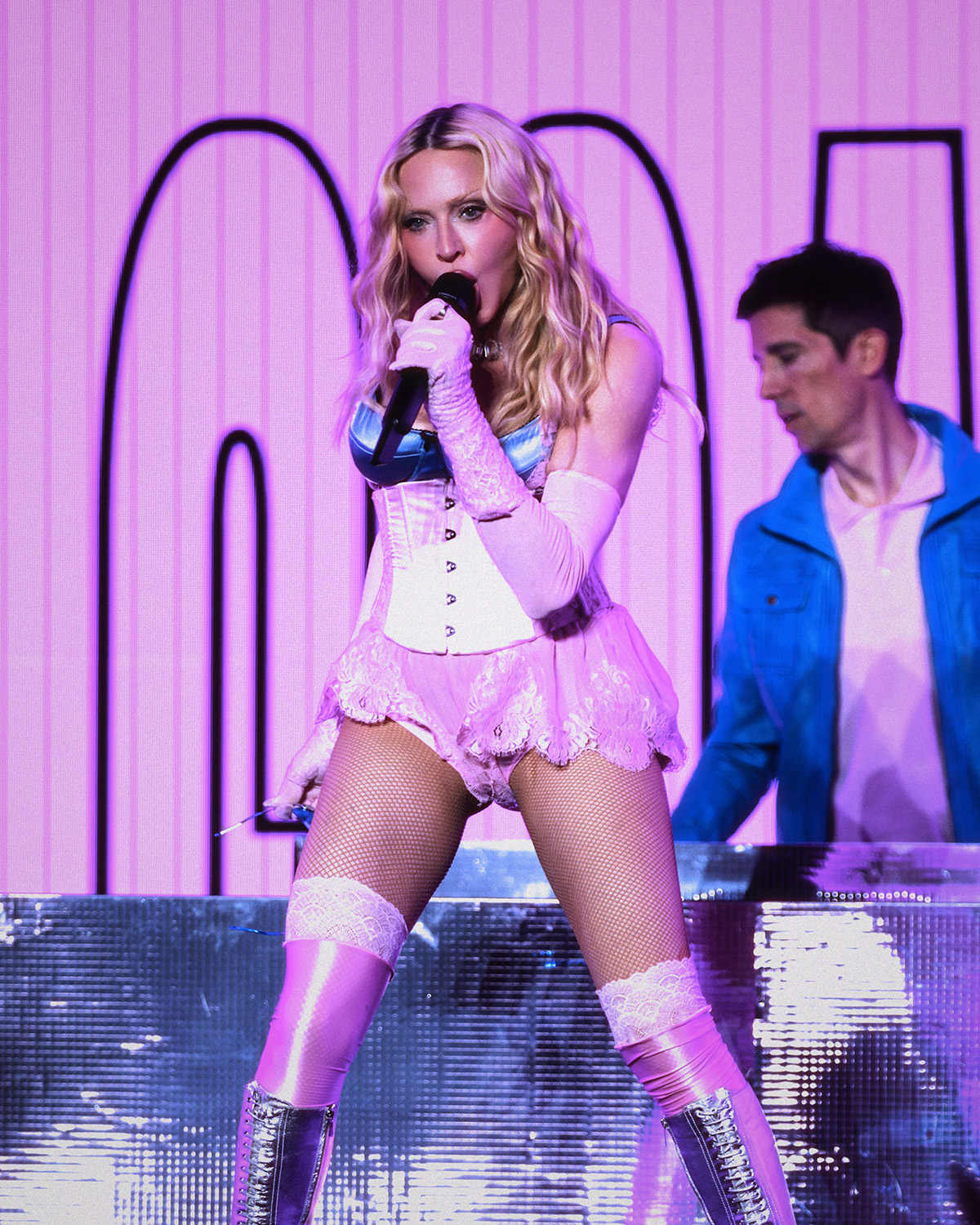
Pop icon Madonna celebrated Pride month with a pop-up performance in New York City’s Times Square on Thursday to the delight of 50,000 fans.
She performed for about 15 minutes high above street level, including several songs from her new album “Confessions II” due on July 3, along with a trio of songs from the first “Confessions on a Dance Floor.”
In addition to the brand new “Love Sensation,” she performed “I Feel So Free” and “Bring Your Love,” plus “Hung Up,” “Get Together” and “I Love New York.” She wished the crowd a happy Pride season; the event was shared with audiences through Grindr’s first-ever livestream.

National
Gallup finds LGBTQ support among Americans is dropping
Marriage equality support lowest since 2016
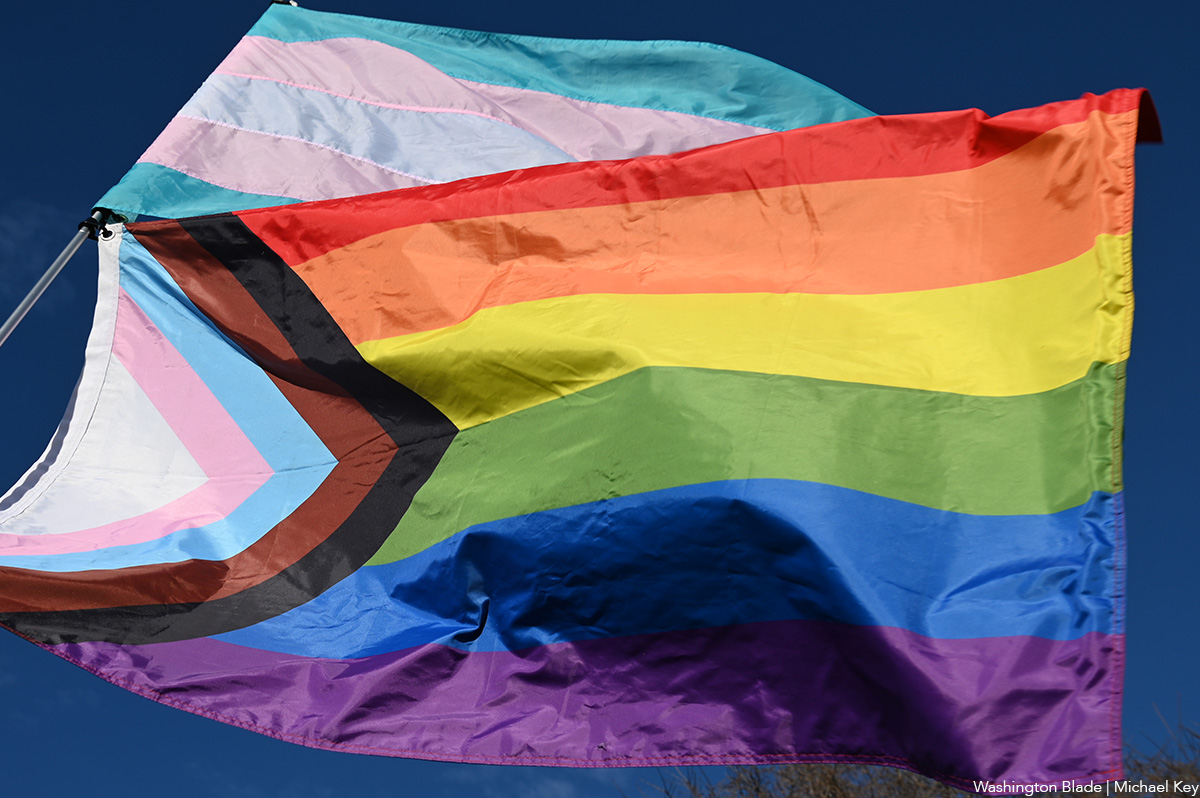
Gallup, one of the leading organizations in public opinion polling, has found that LGBTQ support among Americans is dropping.
The poll, whose data was collected using Gallup’s annual Values and Beliefs survey, was conducted in May and was published on Wednesday. The data was collected through telephone interviews from a sample of more than 1,000 adults living in all 50 states and D.C. using random digit dialing.
It highlights declining attitudes surrounding LGBTQ issues in multiple areas — from support for same-sex marriage to views on gender identity and the morality of one’s sexuality.
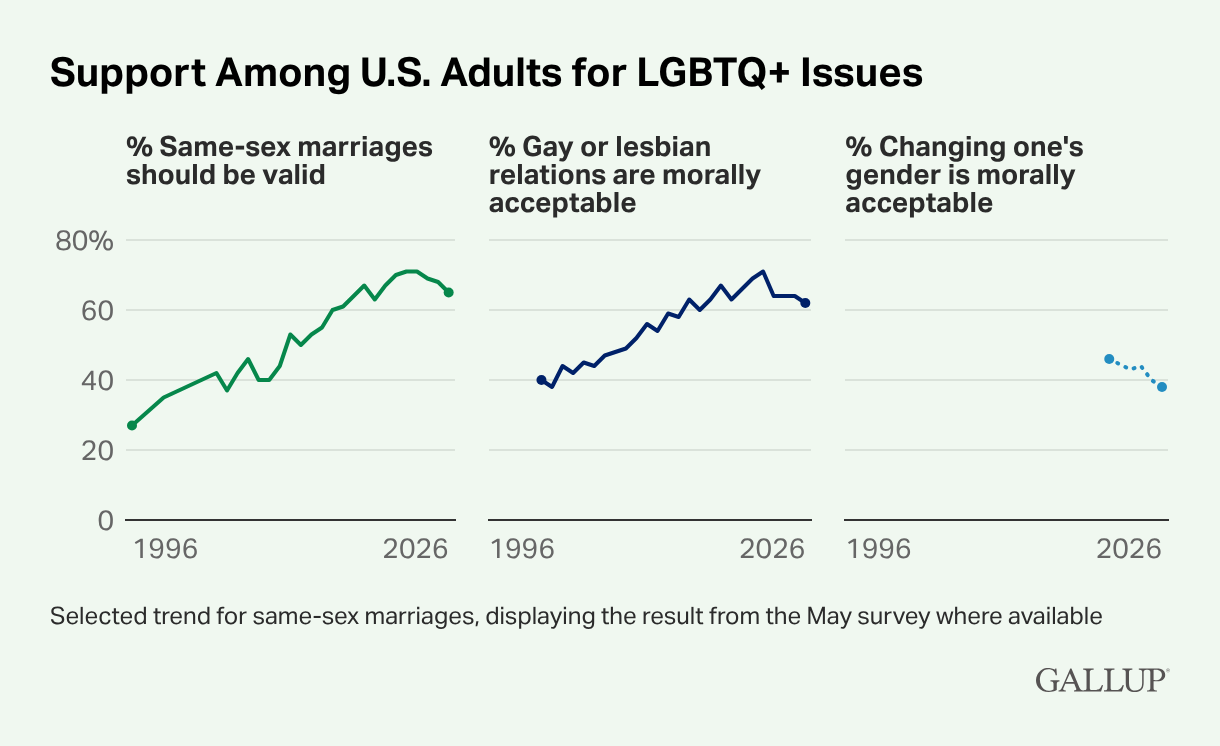
One of the most striking findings was that support for marriage equality fell six points from its 2022-2023 high.
The survey also found that 62 percent of Americans view gay and lesbian relations as morally acceptable, the lowest level since 2016 just after same-sex marriage was legalized nationwide by the U.S. Supreme Court.
One newer question on the poll found that the perceived morality of changing one’s gender has dropped eight points since 2021, indicating the American public is less supportive of transgender people.
The data attributes much of the decline to shifting Republican views alongside the party itself. Conservative leaders have pushed back against diversity, equity, and inclusion programs that were intended to foster greater acceptance of LGBTQ people and other historically disadvantaged groups.
President Donald Trump has been a guiding force behind waves of anti-LGBTQ sentiment, particularly when it comes to trans rights. The president has enacted multiple executive orders, including Executive Order 14168, “Defending Women from Gender Ideology Extremism and Restoring Biological Truth to the Federal Government,” which mandates that gender be defined by one’s sex assigned at birth. He also signed Executive Order 14183, “Prioritizing Military Excellence and Readiness,” which barred qualified trans applicants from joining the military and led to the removal of trans service members already serving in the armed forces.
Additionally, he signed Executive Order 14201, “Keeping Men Out of Women’s Sports,” which prohibits trans female athletes from participating on women’s and girls’ sports teams.
In February, Gallup found that an estimated 9 percent of Americans identified as part of the LGBTQ community in some form.
The organization also found that 23 percent of adults under age 30 identify as LGBTQ, compared with 10 percent of those ages 30 to 49 and 3 percent or less among those ages 50 and older.

PHOTOS: Fairfax City Pride

EXCLUSIVE: Pelosi reflects on four decades of LGBTQ advocacy

D.C. prepares to party as Pride celebrations kick off Saturday

David Archuleta, Monroe Alise named D.C. Pride parade marshals