Sports
Washington Prodigy takes one for the team
Local women’s football team enjoys breaking barriers
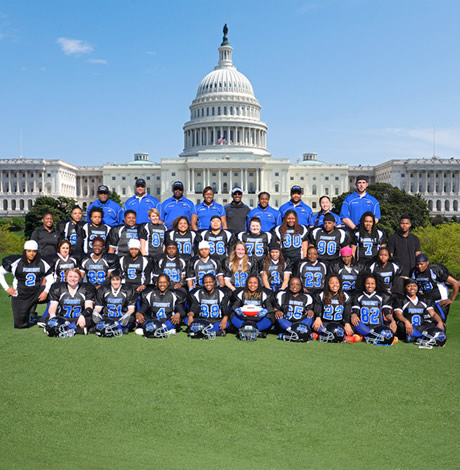
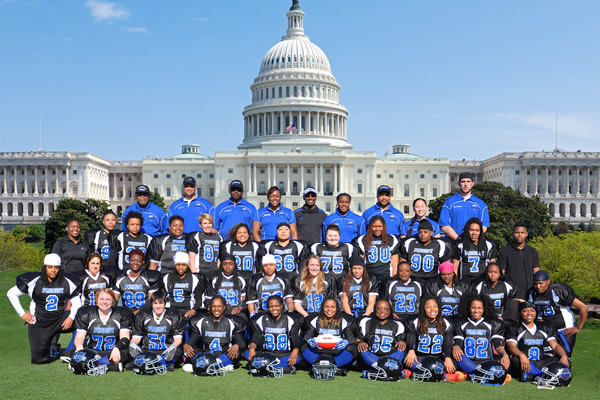
Official team photo of Washington Prodigy. (Photo courtesy the team)
Throwing like a girl is taken as an insult more often than not. But for members of Washington Prodigy, a local all-female football team, the phrase is a compliment.
Washington Prodigy was conceived from a small group of like-minded women on another local female football team, the D.C. Divas. Some players weren’t happy with the direction the team was going.
“The attitude on the team was changing and became less about football,” Jordyn White, general manager and defensive player, says. “It didn’t seem player focused.”
Tiffany Matthews, Washington Prodigy owner and middle linebacker, decided it didn’t have to be the end of the road for those players who wanted to leave D.C. Divas. She began to talk to other team owners and decided that she wanted to try starting a team herself.
In 2012, Washington Prodigy was formed. But it wasn’t an easy task to get the team going.
“Funding came out of my pocket,” Matthews says. “The first season was the hardest part. Players were paying for uniforms. We didn’t have sponsors because no one knew who we were.”
Matthews, who has been playing football since she was young, says women’s football has grown significantly over the years.
“When I first started there weren’t any women playing,” she says. “We get a lot of girls on the team who are younger where it’s more OK now for them. Its almost co-ed.”
More women getting involved in football is White’s favorite part of being on the team. She loves watching the new girls join the team and grow in their success.
“People come from all different athletic backgrounds and for some, it’s nothing like they’ve ever done. Seeing them cultivate all that teaching and having that ‘a-ha’ moment is exciting to watch.”
The stereotype that women can’t play football because it’s a male-dominated sport is one Washington Prodigy encounters often. Player Crystal Boyd thinks it’s totally false.
“We can do anything a man can do,” Boyd says. “We can compete just like they can if we’re given the platform to do it. We’re just as competitive as they are.”
White wants people to understand that women are able to play football just like men do because they aren’t playing against men.
“There are women stronger and more aggressive than other women just like there are men,” she says. “I see it as being equal.”
The team is a diverse mix of local women. Players range from ages 21-45 and work in various professions as well as some having families. Players are a mix of straight and LGBT with Matthews, White and Boyd all being LGBT. The team’s diversity has Washington Prodigy wanting all women to know that they can play too.
“We’re not a special, select breed or type of woman,” White says. “Any woman who has the desire to play can play. We are just a selection of women excited to do something that a few years ago wasn’t even possible.”
Still women playing football, which at one time seemed a fantasy, is still hard for people to accept.
“The biggest struggle is proving that we can play the sport,” Matthews says. “They say girls can’t play and that it’s too tough, but any sport is tough.”
The team is part of the Independent Women’s Football League and Team D.C. Their season, which runs from January through April, leads them all over the East Coast to play against other all-female football teams.
Matthews’ favorite aspect is the sense of community it brings.
“I met my two best friends playing football,” she says. “It’s like a big family because of everything we have to deal with as women. That’s my favorite part, other than trying to knock someone out.”





Sports
New IOC policy bans trans women from Olympics
New regulation to be in effect at 2028 summer games in Los Angeles
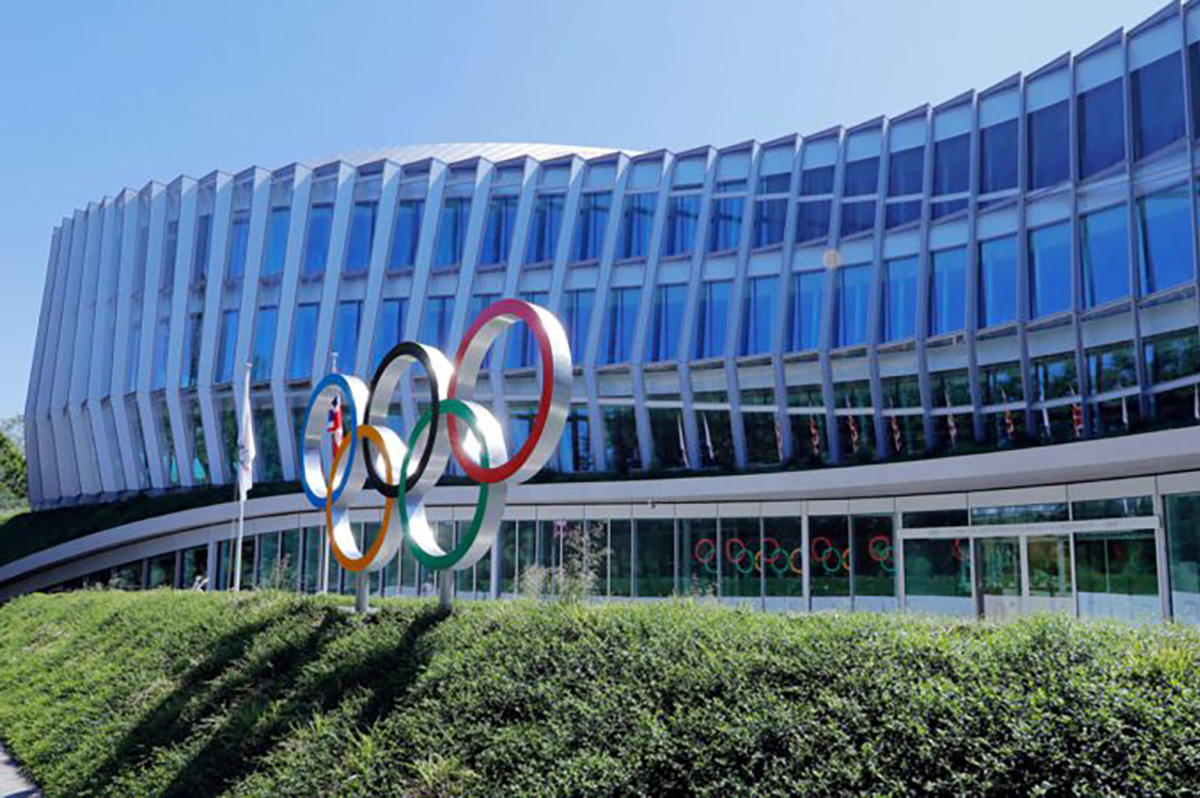
The International Olympic Committee on Thursday announced it will not allow transgender women from competing in female events at the Olympics.
“For all disciplines on the Sports Program of an IOC event, including individual and team sports, eligibility for any Female Category is limited to biological females,” reads the new policy.
The policy states “eligibility for the Female Category is to be determined in the first instance by SRY Gene screening to detect the absence or presence of the SRY Gene.”
“On the basis of the scientific evidence, the IOC considers that the SRY (sex-determining Region Y) Gene is fixed throughout life and represents highly accurate evidence that an athlete has experienced or will experience male sex development,” it reads. “Furthermore, the IOC considers that SRY Gene screening via saliva, cheek swab or blood sample is unintrusive compared to other possible methods. Athletes who screen negative for the SRY gene permanently satisfy this policy’s eligibility criteria for competition in the Female Category.”
The policy states the test “will be a once-in-a-lifetime test” unless “there is reason to believe a negative reading is in error.”
The new regulation will be in place for the 2028 Summer Olympics in Los Angeles.
“I understand that this a very sensitive topic,” said IOC President Kirsty Coventry on Thursday in a video. “As a former athlete, I passionately believe in the rights of all Olympians to take part in fair competition.”
“The policy that we have announced is based on science and it has been led by medical experts with the best interests of athletes at its heart. The scientific evidence is very clear: male chromosomes give performance advances in sport that rely on strength, power, or endurance,” she added. “At the Olympic Games, even the smallest margins can be the difference between victory and defeat. So, it is absolutely clear that it would not be fair for biological males to compete in the female category. In addition, in some sports it would simply not be safe.”
(Video courtesy of the IOC)
Laurel Hubbard, a weightlifter from New Zealand, in 2021 became the first trans woman to compete at the Olympics.
Imane Khelif, an Algerian boxer, won a gold medal at the 2024 Summer Olympics in Paris. Khelif later sued JK Rowling and Elon Musk for cyberstalking after they questioned her gender identity.
Ellis Lundholm, a mogul skier from Sweden, this year became the first openly trans athlete to compete in any Winter Olympics when he participated in Milan Cortina Winter Olympics in Italy.
President Donald Trump in February 2025 issued an executive order that bans trans women and girls from female sports teams in the U.S.
The U.S. Olympic and Paralympic Committee last July banned trans women from competing in female sporting events. Republican lawmakers have demanded the IOC ban trans athletes from women’s athletic competitions.
“I’m grateful the Olympics finally embraced the common sense policy that women’s sports are for women, not for men,” said U.S. Sen. Tom Cotton (R-Ark.) on X.
An IOC spokesperson on Thursday referred the Washington Blade to the press release that announced the new policy.
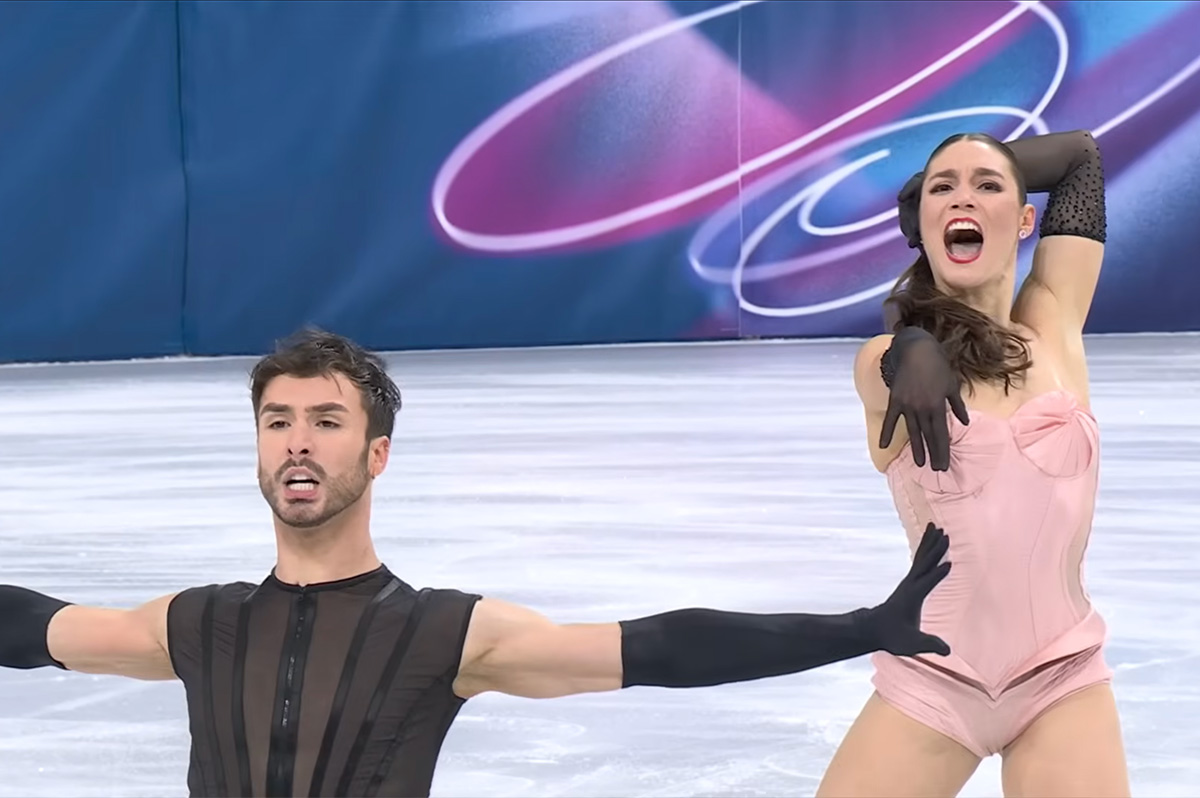
More than a dozen LGBTQ athletes won medals at the Milan Cortina Winter Olympics that ended on Sunday.
Cayla Barnes, Hilary Knight, and Alex Carpenter are LGBTQ members of the U.S. women’s hockey team that won a gold medal after they defeated Canada in overtime. Knight the day before the Feb. 19 match proposed to her girlfriend, Brittany Bowe, an Olympic speed skater.
French ice dancer Guillaume Cizeron, who is gay, and his partner Laurence Fournier Beaudry won gold. American alpine skier Breezy Johnson, who is bisexual, won gold in the women’s downhill. Amber Glenn, who identifies as bisexual and pansexual, was part of the American figure skating team that won gold in the team event.
Swiss freestyle skier Mathilde Gremaud, who is in a relationship with Vali Höll, an Austrian mountain biker, won gold in women’s freeski slopestyle.
Bruce Mouat, who is the captain of the British curling team that won a silver medal, is gay. Six members of the Canadian women’s hockey team — Emily Clark, Erin Ambrose, Emerance Maschmeyer, Brianne Jenner, Laura Stacey, and Marie-Philip Poulin — that won silver are LGBTQ.
Swedish freestyle skier Sandra Naeslund, who is a lesbian, won a bronze medal in ski cross.
Belgian speed skater Tineke den Dulk, who is bisexual, was part of her country’s mixed 2000-meter relay that won bronze. Canadian ice dancer Paul Poirier, who is gay, and his partner, Piper Gilles, won bronze.
Laura Zimmermann, who is queer, is a member of the Swiss women’s hockey team that won bronze when they defeated Sweden.
Outsports.com notes all of the LGBTQ Olympians who competed at the games and who medaled.
Sports
US wins Olympic gold medal in women’s hockey
Team captain Hilary Knight proposed to girlfriend on Wednesday

The U.S. women’s hockey team on Thursday won a gold medal at the Milan Cortina Winter Olympics.
Team USA defeated Canada 2-1 in overtime. The game took place a day after Team USA captain Hilary Knight proposed to her girlfriend, Brittany Bowe, an Olympic speed skater.
Cayla Barnes and Alex Carpenter — Knight’s teammates — are also LGBTQ. They are among the more than 40 openly LGBTQ athletes who are competing in the games.
The Olympics will end on Sunday.

VIDEO: Gay journalist detained for booing Trumps at ‘Chicago’ opening night

Idaho Gov. signs harshest anti-trans bathroom bill in the country

Award-winning D.C. chef reaching new culinary heights

Trans-driven ‘Serpent’s Skin’ delivers campy sapphic horror

Now more than ever: the importance of LGBTQ activism

‘Out for McDuffie’ event held at D.C. gay bar

‘Jonah’ an undeniably compelling but unusual memory play

The Oscar-losing performance that’s too good to miss

Thousands attend ‘No Kings’ protests in D.C.