Sports
Female coaches face double threat of sexism, homophobia
Only 40 percent of women’s teams coached by women
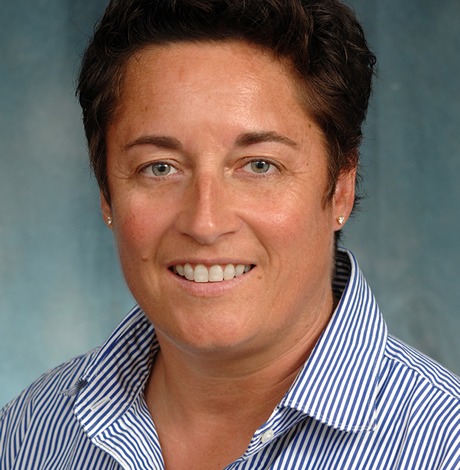
Some have questioned whether Shannon Miller’s outspokenness as a lesbian factored into the University of Minnesota Duluth not renewing her contract as ice hockey coach. (UMD staff photo)
Seemingly, 2014 was a banner and historic year for female coaches.
For the first time ever, four women coaches met in the conference finals of the WNBA; Becky Hammon became the NBA’s first full-time female assistant coach as a member of the San Antonio Spurs’ staff; and Rachel Balkovec cracked the Major League Baseball locker room, becoming MLB’s first-ever female strength and conditioning coach (for the St. Louis Cardinals).
But the news for women coaches isn’t as good as it appears. According to research conducted by the NCAA, only 40 percent of women’s sports teams are coached by women (down from 90 percent when Title IX was introduced in 1972), and there are fewer than 300 total women coaches leading men’s teams — a miniscule 2 percent.
Add to that the recent news of Iowa’s prominent field hockey coach Tracey Greisbaum being fired or the decision to not renew the contract of Minnesota Duluth’s ice hockey coach Shannon Miller, despite her leading the team to five NCAA championships and developing 28 Olympians in her time, and there’s clearly a problem.
Some have questioned whether Miller’s outspokenness as an out lesbian had anything to do with her dismissal, and it’s definitely a worry that has to be on the mind of any female coach when discussing her sexual orientation. It’s why many female coaches who are gay stay closeted for fear of losing their jobs.
“The thinking has always been — for both straight and lesbian coaches — keep your head down, do your job, win, and you’ll succeed. These two coaches have shown that that truism doesn’t hold up,” says Nancy Hogshead-Makar, CEO of Champion Women, which advocates equality, accountability and transparency in sports. “Particularly in Shannon Miller’s case, I believe she was fired because she was so successful. Her success gave her a power base that the male coaches and (athletic directors) wouldn’t ever have.”
Roger Brigham, who in 1982 became one of the first sports reporters to come out as gay, has long championed equality for all in sports. He feels female coaches have been under attack for decades and only recently are people becoming aware of the institutional and cultural discrimination they face.
“They are routinely underpaid when their salaries are compared with male peers and they are held to a double standard on conduct that essentially infantilizes female athletes with its implication that the female athletes are not as emotionally tough as males and therefore need to be protected,” he says. “Female coaches also have to deal with the presence of the male-monopoly in the massive sacred cow that is known as football. In short, women coaches, heterosexual or gay, are faced with a system that is stacked against them.”
Brigham says that the cases of Greisbaum and Miller will have a general chilling effect and may make more coaches reluctant to leave the closet, but also hopes both expose the built-in homophobia and sexism in the institutions and will activate people to fight those things harder.
“I would also hope that the cases would make closeted coaches realize the sense of security a closet provides is false and the greatest control they can have over their lives and careers is by being as open and honest about who they are as they can possibly be,” he says. “Look at the support the athletes of both coaches expressed when their coaches came under attack. Clearly the athletes knew the sexual orientation of their coaches and it was a non-issue for them.”
Hogshead-Makar, who is also a civil rights lawyer, said Greisbaum’s case makes it clear that lesbian coaches will be evaluated differently, based on gender stereotypes. It’s something she is fighting to change and she wants to start with Mark Emmert’s leadership at the NCAA.
“Mark Emmert is not friendly to women; I cannot think of a single decision that has benefitted women. In my four years with the Women’s Sports Foundation, and almost a year at Champion Women, our efforts to get the NCAA to adopt female-friendly policies were regularly ignored,” she says. “It was a completely different story under his predecessor, Myles Brand.”
The first step in improving the disparity, Hogshead-Makar notes, is recognizing the male bias in sports.
“If hiring committees receive training on bias, they’re more likely to hire diverse candidates,” she says. “I view male bias in sports as harming both women and particularly women of color, and the LGBT community, equally. I don’t think there can be success in one of these areas without the other.”
Brigham feels the best thing to do would be to erase the incredible imbalance created by football, requiring every school that has a football team to spend an equal amount on women’s football and have one female coach for every male coach.
“That kind of financial burden might be enough to make athletics directors and university presidents realize that way too much is spent in one sport and steps should be taken to reduce costs through smaller rosters, smaller coaching staffs and rule changes,” he says. “Of course, none of that is likely to happen. The number of women coaches will increase the day we eliminate sexism in all aspects of society and schools take proactive steps to adopt equal opportunity employment practices.”
Rick Leddy, senior director of communications for the National Association of Basketball Coaches, understands the problem but says not every school should be lumped into the bias.
“I have worked at a Division II school for more than three decades with many openly gay coaches, athletic administrators and athletes who were extremely successful and highly respected by me and our campus community in general,” he says. “It’s my hope that our society in general will become more accepting of all people, regardless of gender, ethnicity, religion or sexual preference and that everyone will have greater opportunities overall, including in sports and the coaching profession.”
According to Hogshead-Makar, there’s still a long way to go. She says homophobia is still a driving force in the decisions made in intercollegiate athletics and until something changes, the number of women coaches will continue to be small.





Sports
New IOC policy bans trans women from Olympics
New regulation to be in effect at 2028 summer games in Los Angeles
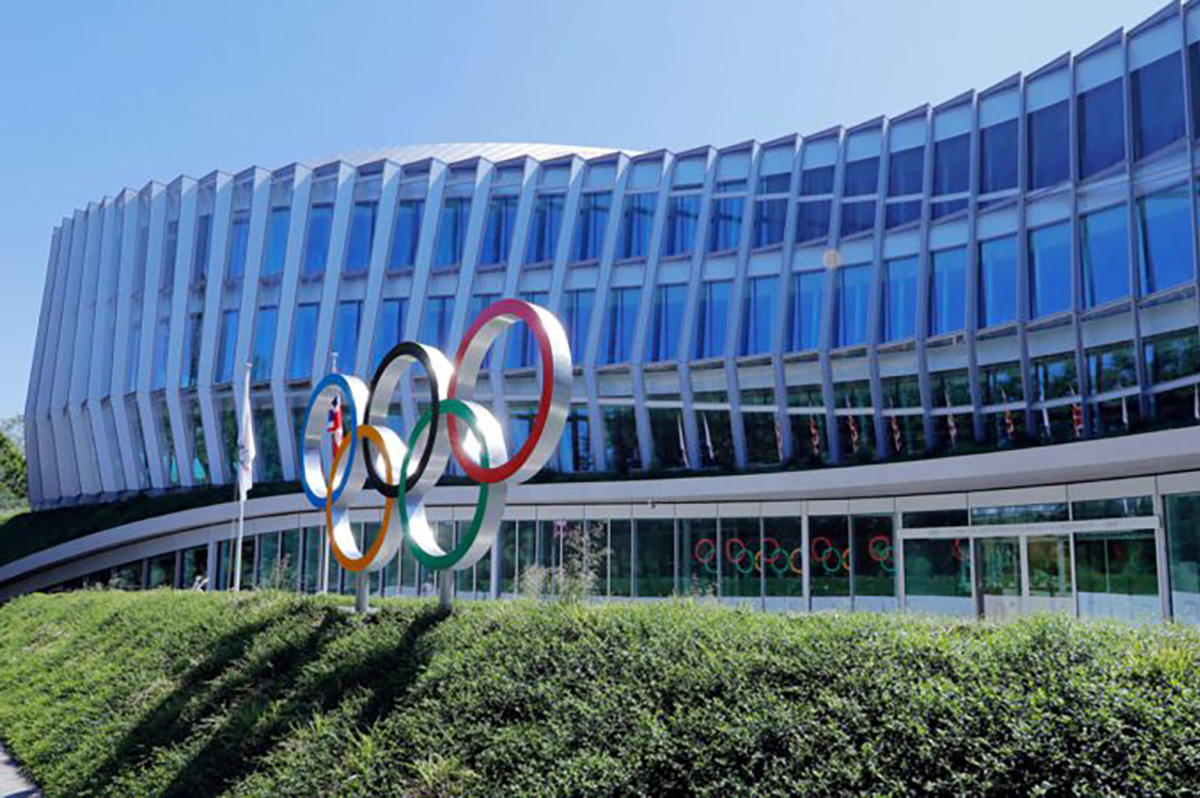
The International Olympic Committee on Thursday announced it will not allow transgender women from competing in female events at the Olympics.
“For all disciplines on the Sports Program of an IOC event, including individual and team sports, eligibility for any Female Category is limited to biological females,” reads the new policy.
The policy states “eligibility for the Female Category is to be determined in the first instance by SRY Gene screening to detect the absence or presence of the SRY Gene.”
“On the basis of the scientific evidence, the IOC considers that the SRY (sex-determining Region Y) Gene is fixed throughout life and represents highly accurate evidence that an athlete has experienced or will experience male sex development,” it reads. “Furthermore, the IOC considers that SRY Gene screening via saliva, cheek swab or blood sample is unintrusive compared to other possible methods. Athletes who screen negative for the SRY gene permanently satisfy this policy’s eligibility criteria for competition in the Female Category.”
The policy states the test “will be a once-in-a-lifetime test” unless “there is reason to believe a negative reading is in error.”
The new regulation will be in place for the 2028 Summer Olympics in Los Angeles.
“I understand that this a very sensitive topic,” said IOC President Kirsty Coventry on Thursday in a video. “As a former athlete, I passionately believe in the rights of all Olympians to take part in fair competition.”
“The policy that we have announced is based on science and it has been led by medical experts with the best interests of athletes at its heart. The scientific evidence is very clear: male chromosomes give performance advances in sport that rely on strength, power, or endurance,” she added. “At the Olympic Games, even the smallest margins can be the difference between victory and defeat. So, it is absolutely clear that it would not be fair for biological males to compete in the female category. In addition, in some sports it would simply not be safe.”
(Video courtesy of the IOC)
Laurel Hubbard, a weightlifter from New Zealand, in 2021 became the first trans woman to compete at the Olympics.
Imane Khelif, an Algerian boxer, won a gold medal at the 2024 Summer Olympics in Paris. Khelif later sued JK Rowling and Elon Musk for cyberstalking after they questioned her gender identity.
Ellis Lundholm, a mogul skier from Sweden, this year became the first openly trans athlete to compete in any Winter Olympics when he participated in Milan Cortina Winter Olympics in Italy.
President Donald Trump in February 2025 issued an executive order that bans trans women and girls from female sports teams in the U.S.
The U.S. Olympic and Paralympic Committee last July banned trans women from competing in female sporting events. Republican lawmakers have demanded the IOC ban trans athletes from women’s athletic competitions.
“I’m grateful the Olympics finally embraced the common sense policy that women’s sports are for women, not for men,” said U.S. Sen. Tom Cotton (R-Ark.) on X.
An IOC spokesperson on Thursday referred the Washington Blade to the press release that announced the new policy.
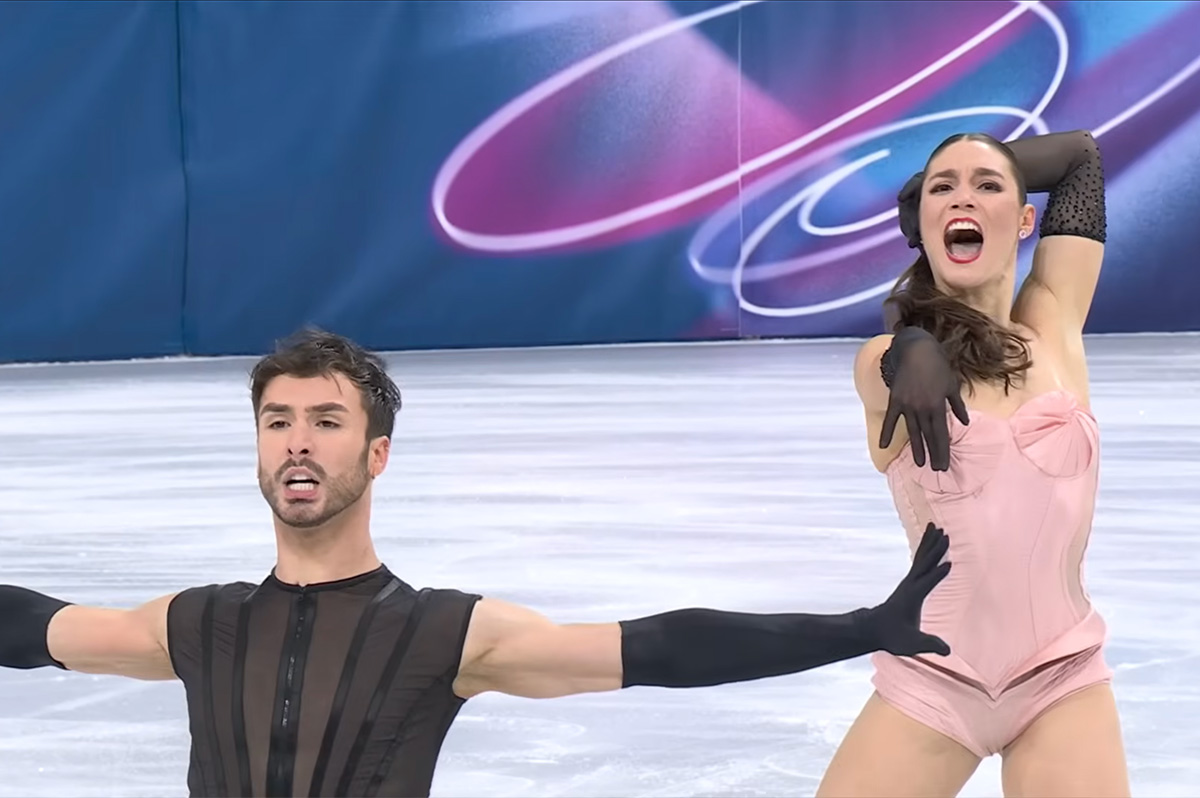
More than a dozen LGBTQ athletes won medals at the Milan Cortina Winter Olympics that ended on Sunday.
Cayla Barnes, Hilary Knight, and Alex Carpenter are LGBTQ members of the U.S. women’s hockey team that won a gold medal after they defeated Canada in overtime. Knight the day before the Feb. 19 match proposed to her girlfriend, Brittany Bowe, an Olympic speed skater.
French ice dancer Guillaume Cizeron, who is gay, and his partner Laurence Fournier Beaudry won gold. American alpine skier Breezy Johnson, who is bisexual, won gold in the women’s downhill. Amber Glenn, who identifies as bisexual and pansexual, was part of the American figure skating team that won gold in the team event.
Swiss freestyle skier Mathilde Gremaud, who is in a relationship with Vali Höll, an Austrian mountain biker, won gold in women’s freeski slopestyle.
Bruce Mouat, who is the captain of the British curling team that won a silver medal, is gay. Six members of the Canadian women’s hockey team — Emily Clark, Erin Ambrose, Emerance Maschmeyer, Brianne Jenner, Laura Stacey, and Marie-Philip Poulin — that won silver are LGBTQ.
Swedish freestyle skier Sandra Naeslund, who is a lesbian, won a bronze medal in ski cross.
Belgian speed skater Tineke den Dulk, who is bisexual, was part of her country’s mixed 2000-meter relay that won bronze. Canadian ice dancer Paul Poirier, who is gay, and his partner, Piper Gilles, won bronze.
Laura Zimmermann, who is queer, is a member of the Swiss women’s hockey team that won bronze when they defeated Sweden.
Outsports.com notes all of the LGBTQ Olympians who competed at the games and who medaled.
Sports
US wins Olympic gold medal in women’s hockey
Team captain Hilary Knight proposed to girlfriend on Wednesday

The U.S. women’s hockey team on Thursday won a gold medal at the Milan Cortina Winter Olympics.
Team USA defeated Canada 2-1 in overtime. The game took place a day after Team USA captain Hilary Knight proposed to her girlfriend, Brittany Bowe, an Olympic speed skater.
Cayla Barnes and Alex Carpenter — Knight’s teammates — are also LGBTQ. They are among the more than 40 openly LGBTQ athletes who are competing in the games.
The Olympics will end on Sunday.

Mayor Bowser signs bill requiring insurers to cover PrEP

JD Vance to travel to Hungary next week

Pam Bondi ousted as attorney general

VIDEO: Gay journalist detained for booing Trumps at ‘Chicago’ opening night

Idaho Gov. signs harshest anti-trans bathroom bill in the country

‘Out for McDuffie’ event held at D.C. gay bar

‘Jonah’ an undeniably compelling but unusual memory play

The Oscar-losing performance that’s too good to miss

Thousands attend ‘No Kings’ protests in D.C.