Sports
Out behind the scenes in pro sports
Managers, umps and more enjoy life after the closet in sports
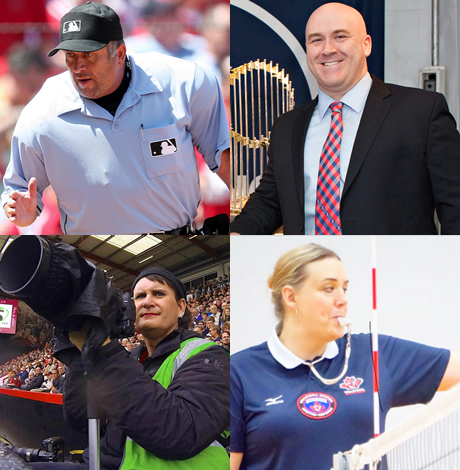
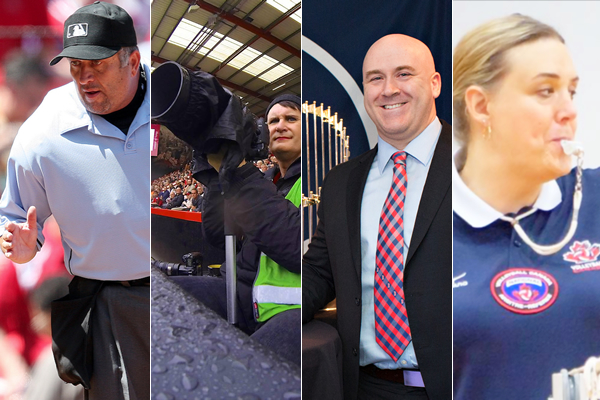
(Photos courtesy of the subjects)
When professional athletes and coaches come out as LGBT, their stories make international headlines, but what many sports fans don’t realize is that it isn’t just players and coaches making waves of progress in the sports world. Those working behind the scenes and on the sidelines for some of the world’s favorite sports and teams are inspiring others with their coming-out stories.
David Baggs, senior manager and creator of the Red Sox Sales Academy
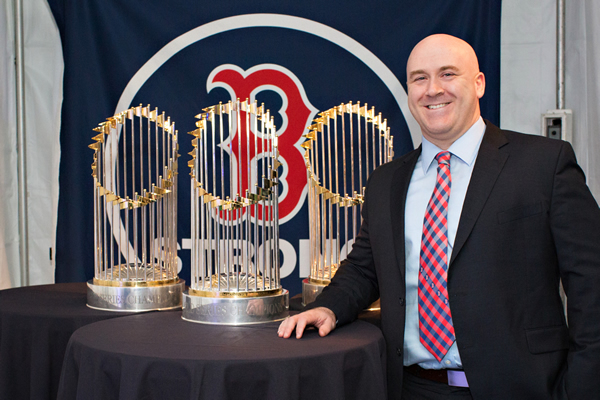
David Baggs
David Baggs thought being gay and working in sports was impossible. This summer, inspired by a talk Billy Bean gave to the Red Sox, Baggs realized he was wrong.
Baggs, 41, has worked in sports for 11 years, managing sales for teams like the L.A. Dodgers, Tampa Bay Rays, 49ers and now the Boston Red Sox. He’s been out to his family and friends since the start of his career, but just came out professionally.
“I’m looking around the room to my colleagues who I’m not out to yet, and people are tearin’ up and they’re visually moved,” Baggs recalls of Bean’s talk. “He’s kinda funny about it, but it’s also very moving. That week I decided to send a video to our president basically coming out to him.”
On June 2, Baggs published a letter in Outsports coming out publicly in an effort to inspire other LGBT community members within the sports world.
“I tried to keep my personal life to myself and felt like I couldn’t share that with my colleagues. That’s now a ridiculous idea,” Baggs says. “Don’t expect anyone to be authentic with you if you don’t share anything with them. If I were to go back, I’d say get it over with. You’ll blossom as a professional because you’re not worrying about what other people think. You can just tell them what you’re doing after work instead of making up some stupid story.”
Baggs says he has encountered overwhelmingly positive reaction since coming out, receiving supportive notes and Facebook posts from former colleagues, former Legends boss and current San Francisco 49ers President Al Guido, the Legends/Levi Stadium staff and the Tampa Bay Rays.
“I’m thankful for everywhere I’ve worked, but the Red Sox provided the support which eventually made me comfortable enough to come out,” Baggs says. “I think it is important that within the sports world there are leaders who are willing to stand up for their employees, colleagues, fans and be supportive within their communities for LGBTQ issues. If you are in a position to potentially move the conversation forward you’re basically obliged to do it within the sports world.”
Sophie Cook, Bournemouth football photographer (UK), Brighton News LGBT TV correspondent
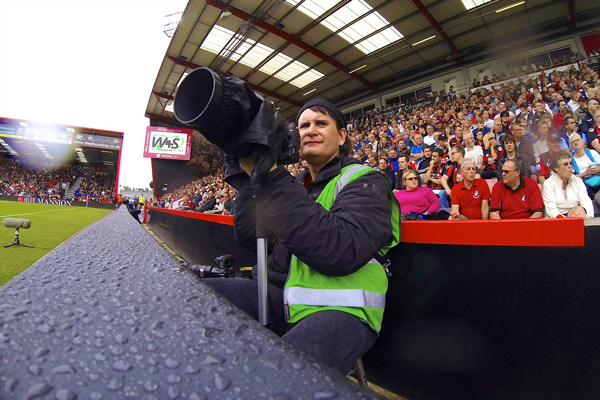
Sophie Cook
As Sophie Cook, 49, stood in the pitch while her team, AFC Bournmouth was promoted to the Premier League and crowned football league champions, she was terrified. For her and the players showering her in Champagne, this was the greatest day in the history of their club, a day they had waited for all their lives. But it might also be the last time Cook worked as a football photographer. Over the summer she planned to tell the team she no longer wanted to be called Steve.
Cook, a single parent of three from Brighton, England, started out as a shirt sponsor for a semi-pro football team. Realizing she’d only get good pictures of the shirts if she took them herself, Cook became the team’s photographer. After taking their pictures for eight seasons, Cook switched to the pro game with AFC Bournemouth. In July, 2015 she stood in front of the newly promoted team and came out as the first trans person to work in the Premier League.
In a phone call before the meeting, the other line went silent, but the manager of the club assured Cook she still had a job.
“How can I make this easier for you,” manager Eddie Howe asked. Cook replied that she’d need to meet with the team.
“He can never be expected to understand what I was going through, but just by asking, ‘What can I do to make this easier for you?’ That’s all you can ask of someone when you come out,” Cook says.
Howe stood in front of the team with Cook and re-introduced her.
“You’ll probably notice our photographer has changed a little from last season, lost a bit of weight, and grown her hair out a bit,” Howe said. “I’d like you all to meet Sophie.”
Captain Tommy Elphick started clapping and the rest of the team quickly joined in.
“Well let’s go train!” Elphick said. And that was it. “I was expecting rainbows and things to come flying out of the sky, but they got the new information and it really wasn’t a big deal,” Cook says. “It was all dealt with really nicely. It feels amazing to be part of the history of a club that I love.”
Cook is now the first European news anchor as an LGBT consultant for Brighton’s Latest TV.
“It’s a great experience and for me the most amazing part of that is that I’m in the center of the LGBT community in the most diverse city in all of the U.K.,” Cook says. “Twenty-five percent of the population in Brighton is LGBT and my boss wants me to make 25 percent of the programming LGBT, which is a very important thing. This weekend we have Brighton Pride and to be out on the streets reporting on it, interviewing people and trying to bring that diversity to people’s TV screens is such an honor and something I’m very excited about for in the future.”
Dale Scott, MLB umpire
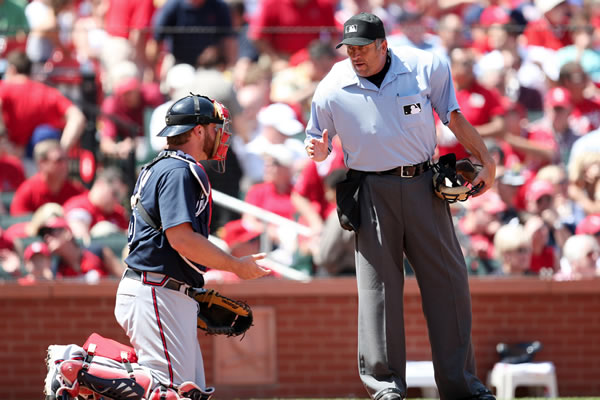
After 31 seasons of umpiring for the MLB, working three World Series, three All-Star games and numerous divisional and league championship series, Dale Scott never thought coming out would be one of the biggest moments of his career.
When Referee Magazine editors asked him to send pictures for their 2014 story on him, Scott didn’t think twice about the picture he chose of him and his partner, Michael Rausche. After all, he and Rausch had been together for 28 years, and Scott had been out quietly to friends, family and a few co-workers for his whole career. What Scott didn’t realize was how big of an impact he made by coming out publicly.
Scott’s coming out was even joked about on “Late Night” by Jimmy Fallon. He began receiving congratulations on the field and over emails, texts and even international calls.
“It has truly been a very uplifting and positive experience,” Scott says.
In 2010, Scott was able to add Rausch as his domestic partner in his new umpires union contract, making their relationship official in the MLB.
“The first 10 years of my Major League umpire career, I would have been horrified if a story had come out that I was gay,” he told Outsports. “At first I was uncomfortable because I had spent my whole life hiding that fact from people even though I wasn’t hiding it from myself or my friends.”
Like Baggs, Scott credits the ease of his coming out to MLB vice president Billy Bean.
“He is someone who has opened the door in all of baseball at both the major and minor league levels and I’m very proud to call him a friend,” Scott says.
Scott and Rausche celebrate 30 years together this October.
Stephanie Shostak, Volleyball Alberta president
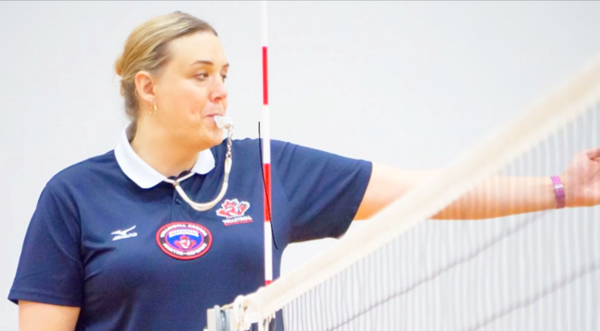
Stephanie Shostak
Halfway through her referee certification process in 2013, Canadian Stephanie Shostak considered hanging up her whistle. She knew there had never been anyone like her in her field.
At 41, Shostak would be the first high-level referee to ever come out as transgender.
“I didn’t know how anyone would take it,” Shostak says. “I didn’t know what the response would be from Volleyball Canada or U.S. Volleyball. I knew of other athletes that came out gay, lesbian or bisexual, same with coaches and refs, but I’d never encountered anyone being transgender. It played into my decision but I loved the sport so much that I couldn’t walk away from it.”
That summer, Shostak sent a memorandum coming out to Volleyball Canada and U.S. Volleyball. After receiving support from both organizations and being re-elected as VAO president, Shostak decided to write an article coming out to the public this past April.
“I thought it would be worthwhile to do the article if I could just help one individual,” Shostak says.
Since then she’s helped many trans people, making sure they all know someone like them.
After Shostak refereed a national championship in Canada this year, she met two parents who said they saw her article and wanted to introduce her to their daughter, who is also transgender. Shostak recognized the young woman from the court of the team she just refereed.
The girl asked her parents, “Why are you talking to the ref?”
They told her, “This is Stephanie, who you read about in the article last week.”
The girl’s eyes lit up and she started to cry, hugging Shostak and saying thank you.
“It’s impacts like that I totally didn’t expect,” Shostak says. “There’s a lot of negativity regarding transgender people in the U.S. and occasionally in Canada, so I just wanted to share some positivity.”
Steve Reed, Washington Nationals director of human resources
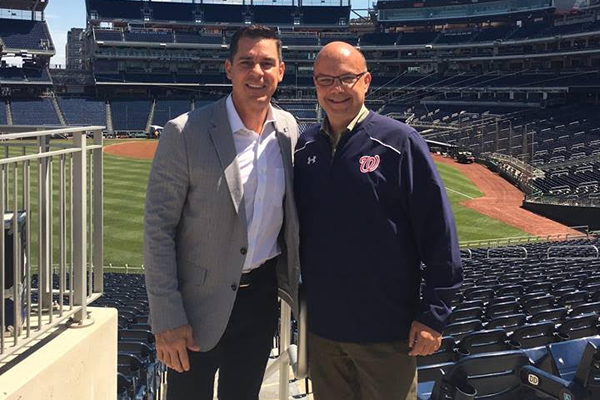
Billy Bean and Steve Reed
Two-and-a-half years ago, Steve Reed left his hometown of Kansas City, Mo., to run the human resources department of the Washington Nationals. The now 49-year-old wasted no time letting co-workers know who he is, asking his boss if he could bring his then boyfriend to an office party.
The Nationals welcomed Reed and invited his boyfriend to the party.
Now single, Reed has been comfortable being out personally and professionally for the last 10 years, but doesn’t think labels are always necessary.
“People shouldn’t be classified as either gay/straight or any other category that society wants to assign,” Reed says. “People should be judged for who they are as individuals. Those labels are not the total summation of who a person is.”
Like Scott and Baggs, Reed also draws inspiration from his friendship with MLB Vice President Billy Bean, but he’s also developed relationships with other LGBT colleagues and members of the sports world. Now in his third season with the Nationals, he’s making sure 1,700 other employees are comfortable in their jobs too.
“I love the people,” Reed says. “Whereas our employees are there to ensure the guest has a great experience, my job is to make sure the employees have a great experience. We have a great staff and I am lucky to work with such a great team.”




Sports
New IOC policy bans trans women from Olympics
New regulation to be in effect at 2028 summer games in Los Angeles
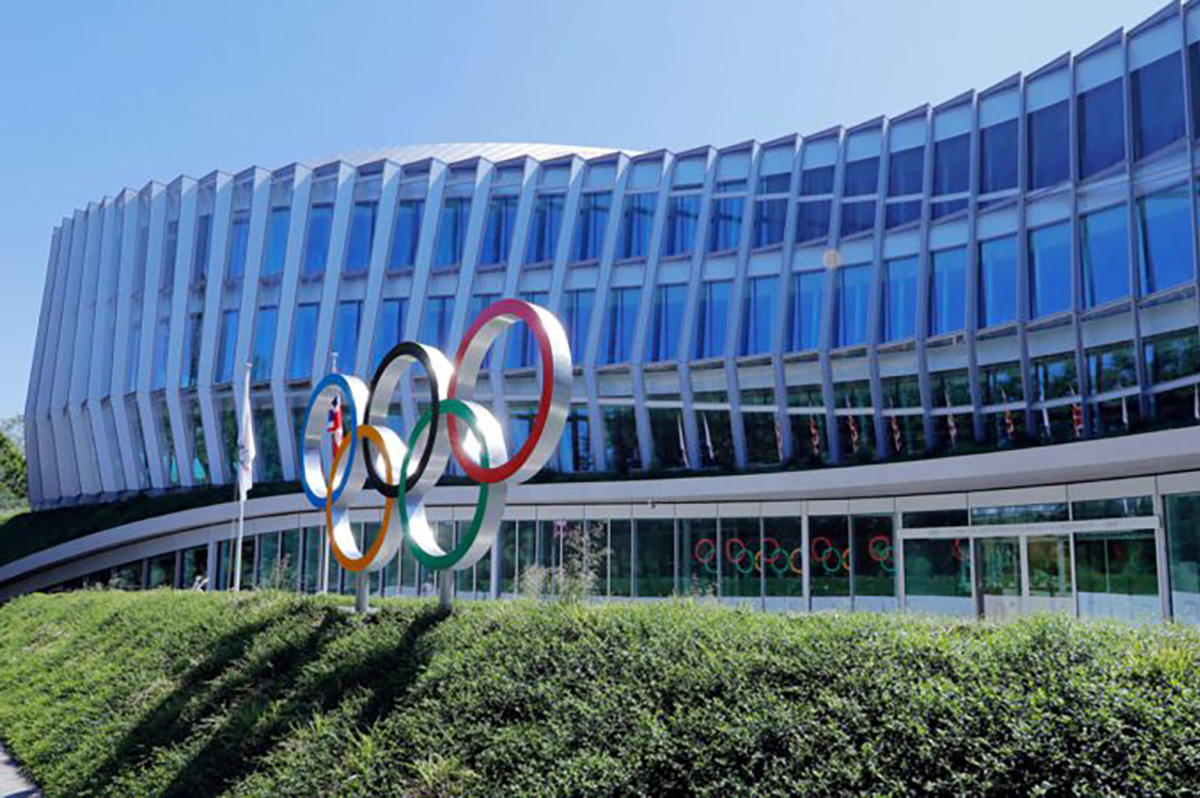
The International Olympic Committee on Thursday announced it will not allow transgender women from competing in female events at the Olympics.
“For all disciplines on the Sports Program of an IOC event, including individual and team sports, eligibility for any Female Category is limited to biological females,” reads the new policy.
The policy states “eligibility for the Female Category is to be determined in the first instance by SRY Gene screening to detect the absence or presence of the SRY Gene.”
“On the basis of the scientific evidence, the IOC considers that the SRY (sex-determining Region Y) Gene is fixed throughout life and represents highly accurate evidence that an athlete has experienced or will experience male sex development,” it reads. “Furthermore, the IOC considers that SRY Gene screening via saliva, cheek swab or blood sample is unintrusive compared to other possible methods. Athletes who screen negative for the SRY gene permanently satisfy this policy’s eligibility criteria for competition in the Female Category.”
The policy states the test “will be a once-in-a-lifetime test” unless “there is reason to believe a negative reading is in error.”
The new regulation will be in place for the 2028 Summer Olympics in Los Angeles.
“I understand that this a very sensitive topic,” said IOC President Kirsty Coventry on Thursday in a video. “As a former athlete, I passionately believe in the rights of all Olympians to take part in fair competition.”
“The policy that we have announced is based on science and it has been led by medical experts with the best interests of athletes at its heart. The scientific evidence is very clear: male chromosomes give performance advances in sport that rely on strength, power, or endurance,” she added. “At the Olympic Games, even the smallest margins can be the difference between victory and defeat. So, it is absolutely clear that it would not be fair for biological males to compete in the female category. In addition, in some sports it would simply not be safe.”
(Video courtesy of the IOC)
Laurel Hubbard, a weightlifter from New Zealand, in 2021 became the first trans woman to compete at the Olympics.
Imane Khelif, an Algerian boxer, won a gold medal at the 2024 Summer Olympics in Paris. Khelif later sued JK Rowling and Elon Musk for cyberstalking after they questioned her gender identity.
Ellis Lundholm, a mogul skier from Sweden, this year became the first openly trans athlete to compete in any Winter Olympics when he participated in Milan Cortina Winter Olympics in Italy.
President Donald Trump in February 2025 issued an executive order that bans trans women and girls from female sports teams in the U.S.
The U.S. Olympic and Paralympic Committee last July banned trans women from competing in female sporting events. Republican lawmakers have demanded the IOC ban trans athletes from women’s athletic competitions.
“I’m grateful the Olympics finally embraced the common sense policy that women’s sports are for women, not for men,” said U.S. Sen. Tom Cotton (R-Ark.) on X.
An IOC spokesperson on Thursday referred the Washington Blade to the press release that announced the new policy.
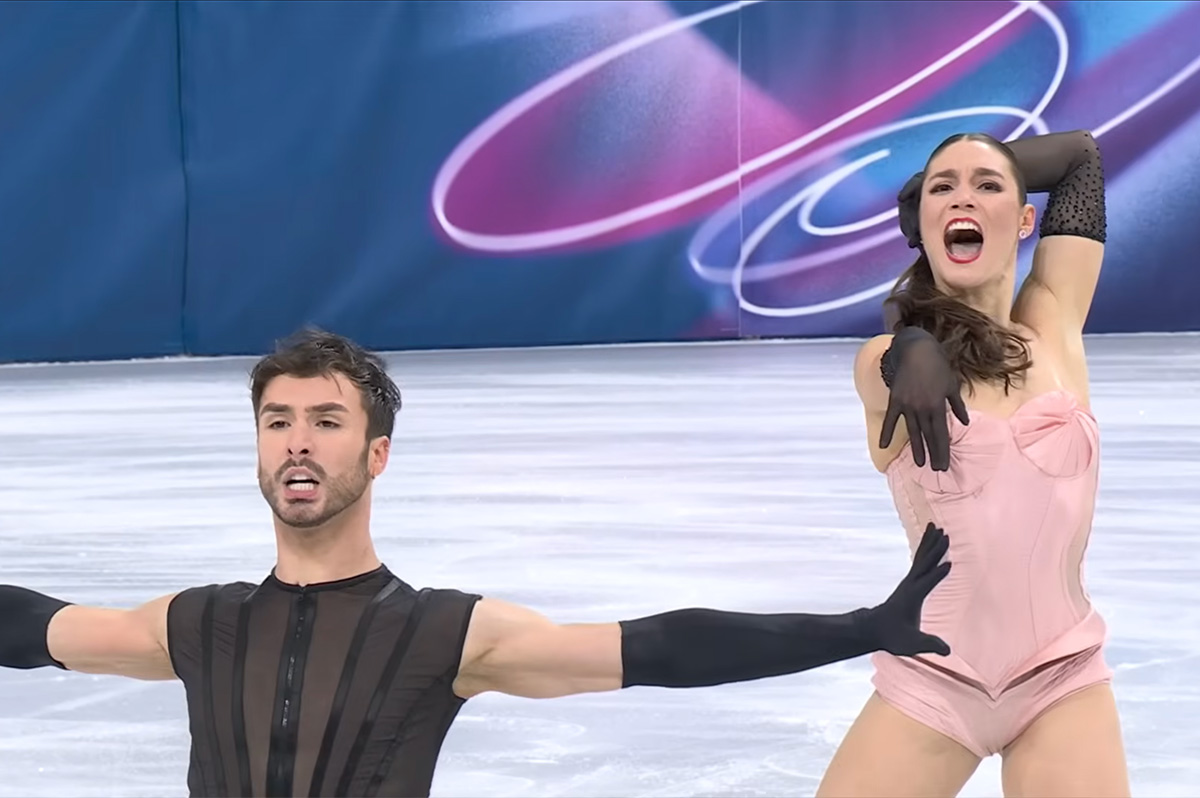
More than a dozen LGBTQ athletes won medals at the Milan Cortina Winter Olympics that ended on Sunday.
Cayla Barnes, Hilary Knight, and Alex Carpenter are LGBTQ members of the U.S. women’s hockey team that won a gold medal after they defeated Canada in overtime. Knight the day before the Feb. 19 match proposed to her girlfriend, Brittany Bowe, an Olympic speed skater.
French ice dancer Guillaume Cizeron, who is gay, and his partner Laurence Fournier Beaudry won gold. American alpine skier Breezy Johnson, who is bisexual, won gold in the women’s downhill. Amber Glenn, who identifies as bisexual and pansexual, was part of the American figure skating team that won gold in the team event.
Swiss freestyle skier Mathilde Gremaud, who is in a relationship with Vali Höll, an Austrian mountain biker, won gold in women’s freeski slopestyle.
Bruce Mouat, who is the captain of the British curling team that won a silver medal, is gay. Six members of the Canadian women’s hockey team — Emily Clark, Erin Ambrose, Emerance Maschmeyer, Brianne Jenner, Laura Stacey, and Marie-Philip Poulin — that won silver are LGBTQ.
Swedish freestyle skier Sandra Naeslund, who is a lesbian, won a bronze medal in ski cross.
Belgian speed skater Tineke den Dulk, who is bisexual, was part of her country’s mixed 2000-meter relay that won bronze. Canadian ice dancer Paul Poirier, who is gay, and his partner, Piper Gilles, won bronze.
Laura Zimmermann, who is queer, is a member of the Swiss women’s hockey team that won bronze when they defeated Sweden.
Outsports.com notes all of the LGBTQ Olympians who competed at the games and who medaled.
Sports
US wins Olympic gold medal in women’s hockey
Team captain Hilary Knight proposed to girlfriend on Wednesday
The U.S. women’s hockey team on Thursday won a gold medal at the Milan Cortina Winter Olympics.
Team USA defeated Canada 2-1 in overtime. The game took place a day after Team USA captain Hilary Knight proposed to her girlfriend, Brittany Bowe, an Olympic speed skater.
Cayla Barnes and Alex Carpenter — Knight’s teammates — are also LGBTQ. They are among the more than 40 openly LGBTQ athletes who are competing in the games.
The Olympics will end on Sunday.

Thousands attend ‘No Kings’ protests in D.C.

Blade contributor, husband exchange vows in D.C.

Ghanaian president welcomed to Philadelphia amid backlash over anti-LGBTQ bill

PHOTOS: ‘No Kings’ rally and march

‘Out for McDuffie’ event held at D.C. gay bar

Pa. House passes bill to codify marriage equality in state law

Introducing the Torchbearers Awards honoring queer, trans women and nonbinary people

A surtax would end this war quickly

New IOC policy bans trans women from Olympics

‘No Kings’ protests set for D.C.
-

 Pennsylvania5 days ago
Pa. House passes bill to codify marriage equality in state law
-
a&e features4 days ago
Introducing the Torchbearers Awards honoring queer, trans women and nonbinary people
-
Opinions5 days ago
A surtax would end this war quickly
-
Sports4 days ago
New IOC policy bans trans women from Olympics