Sports
Solidarity in the water
Gay Ugandan swimmers embraced at Canadian championships
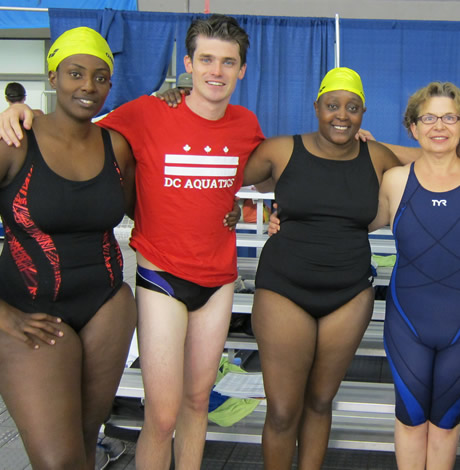
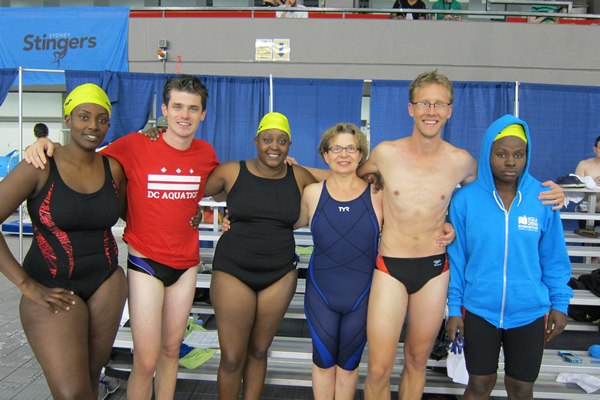
Clare Byarugaba, Kevin Muehleman, Didi Baks, Shoshanna Ehrlich, Nate Freeman and Adebayo Katiiti at the IGLA world championships in Edmonton (Photo by Kevin Majoros)
The rapid progression of LGBT rights and support for the LGBT sports movement in the United States over the past few years has ignited a hope in many of us that the same progression will happen in other countries around the world.
When I arrived at the pool two weeks ago in Edmonton, Canada for the International Gay & Lesbian Aquatics world championships (IGLA), I was excited to meet the five members of the Uganda Kuchus Aquatic Team who would be competing with us over five days of competition. Kuchu is Ugandan slang for “gay.”
I was greeted with hugs and shy smiles at our meeting which evolved into a kinship over the week through the commonality of sports.
Just six months earlier, Nate Freeman, an American human rights lawyer working in Kampala, Uganda had begun the process of obtaining visas and funding to bring the swimmers to Canada to compete.
The IGLA Board, led by co-presidents Kris Pritchard and Elisabeth Turnbull-Brown, stepped forward with funding along with the host team, Edmonton’s Making Waves Swim Club providing free meet registration and housing. Several of the swim teams under the IGLA umbrella also donated money to the cause.
Uganda is one of the countries that criminalizes same-sex sexual acts and just a few days before the meet, two of the swimmers were sitting in a Ugandan jail cell after being arrested at a Pride event.
One thing that probably surprised many people at the swim meet was that the presence of the Ugandan swimmers changed the atmosphere of the entire event.
“Having the Uganda Kuchus at IGLA this year was inspiring for many of us at the meet. The very existence of teams like the Kuchus is an act of bravery that deserves our support,” says Evan Cobb of Team New York Aquatics. “One of the best outcomes of their participation was how it changed the conversation at the meet itself. To me it seemed like more than ever before, IGLA participants were talking about how sports play a role in the struggle for LGBT rights and dignity around the world and that we as athletes have a big role to play.”
It’s hard to say why any of us get involved in particular causes, but I like to point to the “Popcorn Theory” that was presented in the book, “In a Heartbeat: Sharing the Power of Cheerful Giving” by Leigh Anne and Sean Tuohy of “Blind Side” fame.
“It’s about noticing others and assigning that person value and potential,” they write. “You can’t help everyone, but you can try to help the hot ones who pop up in front of you. It requires that you perceive the person standing right in front of you and extend a hand in kindness.”
That speaks to what one of the Ugandan swimmers stated during a discussion panel when the moderator asked what people in the West could do to help the Ugandan cause. She replied, “We don’t need your help, we need your solidarity.”
One person who embodied that solidarity was swimmer Shoshanna Ehrlich of Liquid Assets New England Swimming in Boston. Not only did she spearhead the drive to raise $3,000 with her teammates, she was also seen poolside on a daily basis encouraging the Ugandan swimmers and offering tips on their swimming techniques.
“We have a lot of privilege here in the United States and we have a moral responsibility to contribute to the human rights of others,” Ehrlich says. “I wanted to offer as much swimming and emotional support as I could. They have risked so much just being here.”
Indeed. One Ugandan swimmer said that members of his family had asked him not to return and warned that he could be killed if he did. His future remains unclear.
As the week progressed, I bristled as the Ugandan swimmers were inundated with daily interviews from Canadian news outlets, often about deep topics and often right before they were stepping up on the blocks to compete.
I also smiled as I watched swimmers from all over the world engage with them on a human level. The week was filled with a mix of emotions as we enjoyed what we were experiencing, but also knew that it would be coming to an end. The Ugandans would be returning to an environment of persecution.
On night three of the competition, 20 members of the D.C. Aquatics Club hosted the Ugandan delegation for dinner and the two teams spent time enjoying a meal and watching the Olympic swimming together. I smiled again as my teammates engaged the Ugandans in typical swimmer conversations.
“Their presence at the meet really made me think about the human rights I have been afforded in the United States,” says D.C. Aquatics swimmer Kevin Muehleman. “Our conversation was light and I asked how their swims were going and what they would be swimming the next day. It was important not to make a spectacle of them.”
While it was clear that everyone was affected by the presence of the Ugandan swimmers, it really hit home on the final day when we were joined at the pool by M.P. Randy Boissonnault and his caseworker, Nathalie Gahimbare. They had been instrumental in obtaining the visas to allow the swimmers to travel to Canada.
At the end of the competition, the Uganda Kuchus Aquatic Team had won the world title in the small-team category. After they received their victory plaque, they performed a rap to the song “I Know Who I Am” that left the audience in tears.
Saying goodbye is never easy but we will remain connected in solidarity through social media. My heart is heavy, but it is filled with hope.



Sports
New IOC policy bans trans women from Olympics
New regulation to be in effect at 2028 summer games in Los Angeles
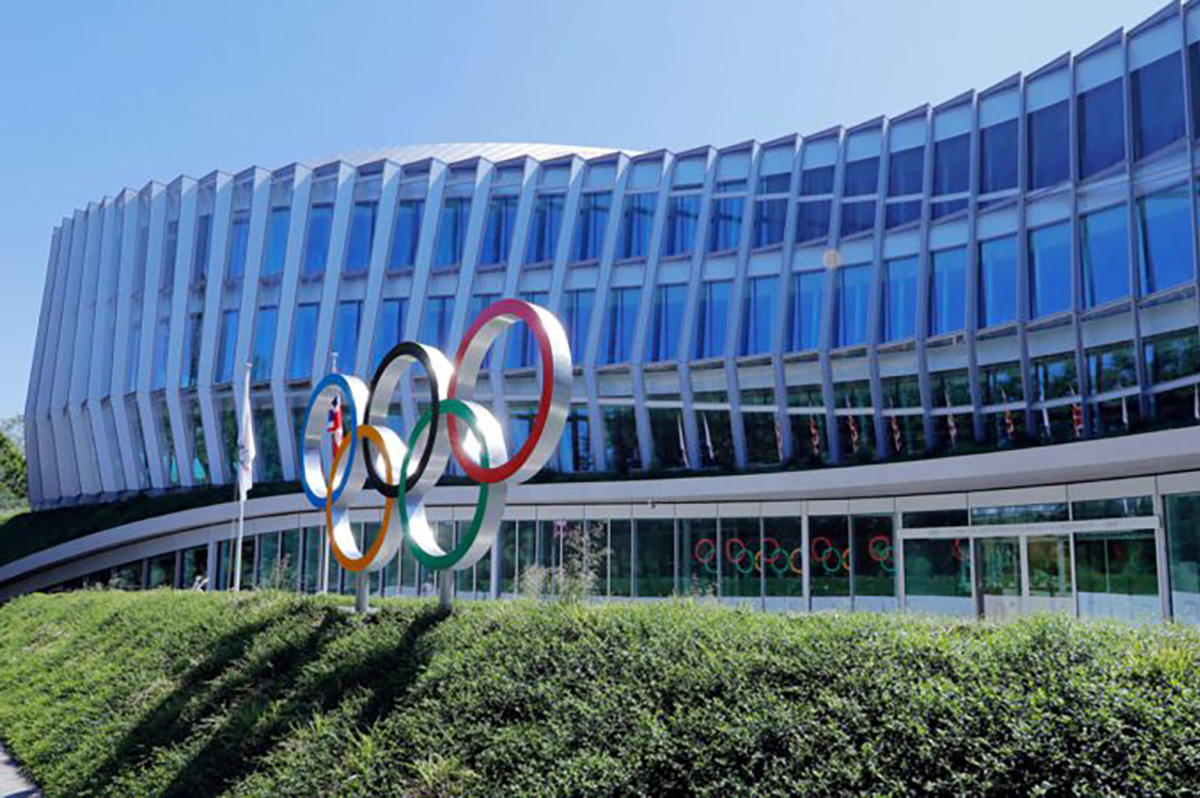
The International Olympic Committee on Thursday announced it will not allow transgender women from competing in female events at the Olympics.
“For all disciplines on the Sports Program of an IOC event, including individual and team sports, eligibility for any Female Category is limited to biological females,” reads the new policy.
The policy states “eligibility for the Female Category is to be determined in the first instance by SRY Gene screening to detect the absence or presence of the SRY Gene.”
“On the basis of the scientific evidence, the IOC considers that the SRY (sex-determining Region Y) Gene is fixed throughout life and represents highly accurate evidence that an athlete has experienced or will experience male sex development,” it reads. “Furthermore, the IOC considers that SRY Gene screening via saliva, cheek swab or blood sample is unintrusive compared to other possible methods. Athletes who screen negative for the SRY gene permanently satisfy this policy’s eligibility criteria for competition in the Female Category.”
The policy states the test “will be a once-in-a-lifetime test” unless “there is reason to believe a negative reading is in error.”
The new regulation will be in place for the 2028 Summer Olympics in Los Angeles.
“I understand that this a very sensitive topic,” said IOC President Kirsty Coventry on Thursday in a video. “As a former athlete, I passionately believe in the rights of all Olympians to take part in fair competition.”
“The policy that we have announced is based on science and it has been led by medical experts with the best interests of athletes at its heart. The scientific evidence is very clear: male chromosomes give performance advances in sport that rely on strength, power, or endurance,” she added. “At the Olympic Games, even the smallest margins can be the difference between victory and defeat. So, it is absolutely clear that it would not be fair for biological males to compete in the female category. In addition, in some sports it would simply not be safe.”
(Video courtesy of the IOC)
Laurel Hubbard, a weightlifter from New Zealand, in 2021 became the first trans woman to compete at the Olympics.
Imane Khelif, an Algerian boxer, won a gold medal at the 2024 Summer Olympics in Paris. Khelif later sued JK Rowling and Elon Musk for cyberstalking after they questioned her gender identity.
Ellis Lundholm, a mogul skier from Sweden, this year became the first openly trans athlete to compete in any Winter Olympics when he participated in Milan Cortina Winter Olympics in Italy.
President Donald Trump in February 2025 issued an executive order that bans trans women and girls from female sports teams in the U.S.
The U.S. Olympic and Paralympic Committee last July banned trans women from competing in female sporting events. Republican lawmakers have demanded the IOC ban trans athletes from women’s athletic competitions.
“I’m grateful the Olympics finally embraced the common sense policy that women’s sports are for women, not for men,” said U.S. Sen. Tom Cotton (R-Ark.) on X.
An IOC spokesperson on Thursday referred the Washington Blade to the press release that announced the new policy.
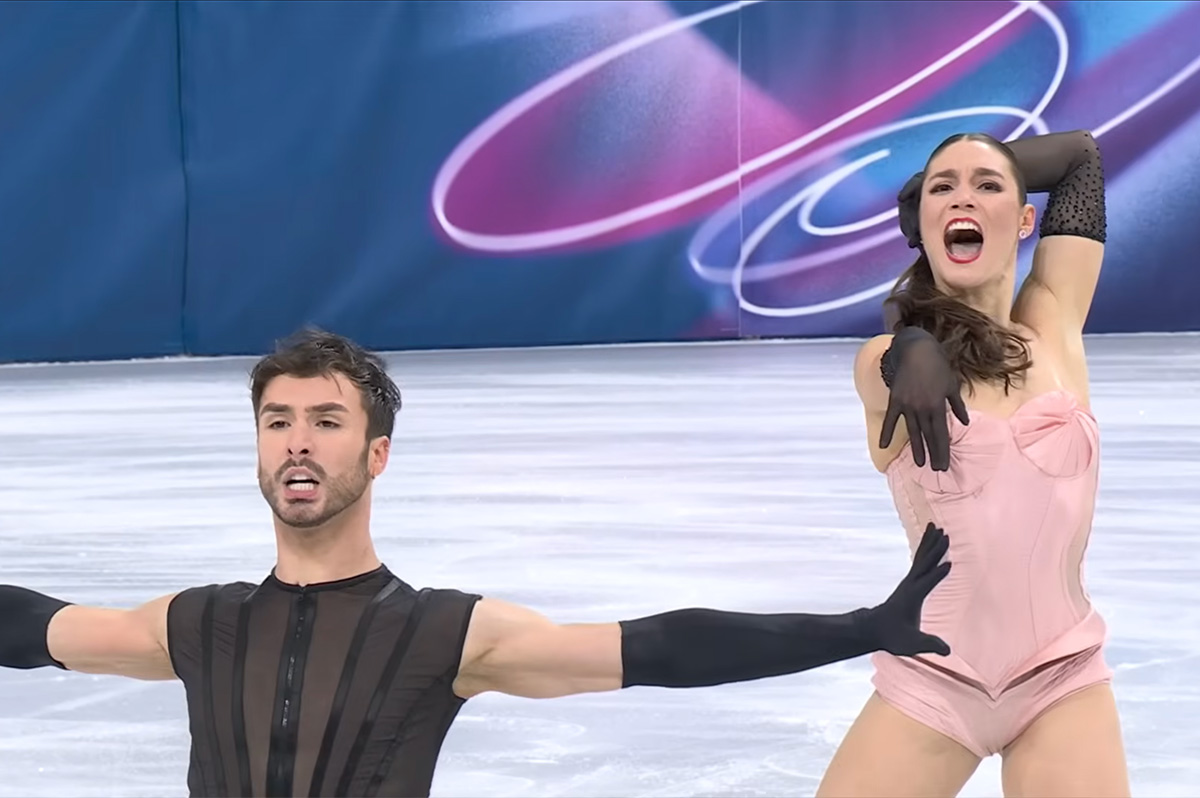
More than a dozen LGBTQ athletes won medals at the Milan Cortina Winter Olympics that ended on Sunday.
Cayla Barnes, Hilary Knight, and Alex Carpenter are LGBTQ members of the U.S. women’s hockey team that won a gold medal after they defeated Canada in overtime. Knight the day before the Feb. 19 match proposed to her girlfriend, Brittany Bowe, an Olympic speed skater.
French ice dancer Guillaume Cizeron, who is gay, and his partner Laurence Fournier Beaudry won gold. American alpine skier Breezy Johnson, who is bisexual, won gold in the women’s downhill. Amber Glenn, who identifies as bisexual and pansexual, was part of the American figure skating team that won gold in the team event.
Swiss freestyle skier Mathilde Gremaud, who is in a relationship with Vali Höll, an Austrian mountain biker, won gold in women’s freeski slopestyle.
Bruce Mouat, who is the captain of the British curling team that won a silver medal, is gay. Six members of the Canadian women’s hockey team — Emily Clark, Erin Ambrose, Emerance Maschmeyer, Brianne Jenner, Laura Stacey, and Marie-Philip Poulin — that won silver are LGBTQ.
Swedish freestyle skier Sandra Naeslund, who is a lesbian, won a bronze medal in ski cross.
Belgian speed skater Tineke den Dulk, who is bisexual, was part of her country’s mixed 2000-meter relay that won bronze. Canadian ice dancer Paul Poirier, who is gay, and his partner, Piper Gilles, won bronze.
Laura Zimmermann, who is queer, is a member of the Swiss women’s hockey team that won bronze when they defeated Sweden.
Outsports.com notes all of the LGBTQ Olympians who competed at the games and who medaled.
Sports
US wins Olympic gold medal in women’s hockey
Team captain Hilary Knight proposed to girlfriend on Wednesday
The U.S. women’s hockey team on Thursday won a gold medal at the Milan Cortina Winter Olympics.
Team USA defeated Canada 2-1 in overtime. The game took place a day after Team USA captain Hilary Knight proposed to her girlfriend, Brittany Bowe, an Olympic speed skater.
Cayla Barnes and Alex Carpenter — Knight’s teammates — are also LGBTQ. They are among the more than 40 openly LGBTQ athletes who are competing in the games.
The Olympics will end on Sunday.

Supreme Court rules against Colo. law banning conversion therapy for minors

Thousands attend ‘No Kings’ protests in D.C.

Blade contributor, husband exchange vows in D.C.

Ghanaian president welcomed to Philadelphia amid backlash over anti-LGBTQ bill

PHOTOS: ‘No Kings’ rally and march

Introducing the Torchbearers Awards honoring queer, trans women and nonbinary people

New IOC policy bans trans women from Olympics

‘No Kings’ protests set for D.C.

Border to border: modern slavery and human trafficking in refugee movements across East Africa

Celebrate cherry blossoms the drag way
-

 a&e features5 days ago
Introducing the Torchbearers Awards honoring queer, trans women and nonbinary people
-
Sports5 days ago
New IOC policy bans trans women from Olympics
-
District of Columbia5 days ago
‘No Kings’ protests set for D.C.
-
Opinions5 days ago
Border to border: modern slavery and human trafficking in refugee movements across East Africa